Swamp Willowherb
Epilobium pallidiflorum
Last updated:
Swamp willowherb (Epilobium pallidiflorum), also listed by NZPCN under the name tarawera, is the tallest native willowherb, a robust rhizomatous herb 0.25 to 1.4 m tall with narrow, lance-shaped leaves and large white flowers that often flush pink after pollination. It grows in swamps, fens and along slow streams, ponds, lake margins and lagoons, usually among sedges, rushes and raupō, mostly in coastal and lowland areas of the North, South and Chatham Islands. It is also native to south-eastern Australia. NZPCN rates it an excellent plant for wetland restoration. Explore more native flowering plants in our native plant guide.
Plant Description
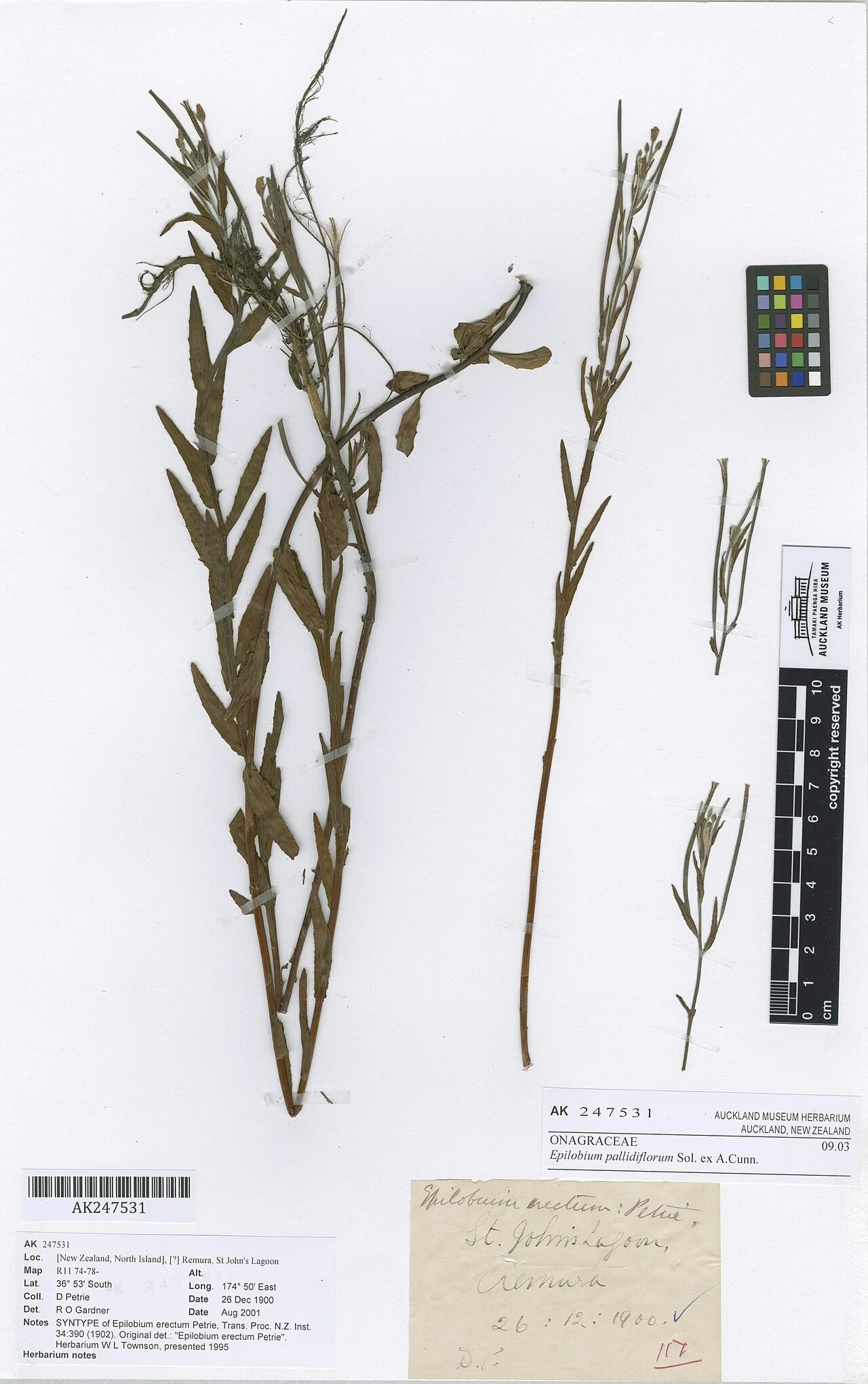
Epilobium pallidiflorum is a robust, rhizomatous perennial herb 0.25 to 1.4 m tall, often well branched from the base and above. In open sites it produces leafy stolons from near the base. The plant is covered in fine flattened hairs, densely so in the inflorescence. Its leaves are mostly opposite, dark green and somewhat shiny, narrowly lanceolate to lanceolate, 30 to 80 mm long and 5 to 13 mm wide, with finely toothed margins and prominent side veins.
The inflorescence nods gracefully to one side, but the open flowers stand erect. Petals are white, often flushed pink or rose-purple after fertilisation, 7.5 to 14 mm long, and the floral tube carries a conspicuous ring of long hairs inside. The grey-hairy capsules are 4.5 to 9.5 cm long on stalks 1 to 2 cm long, releasing brown seeds with a white or straw-coloured tuft of hairs. Flowering runs from about November to May.
NZPCN describes it as distinctive and unlikely to be confused with any other native or naturalised Epilobium in New Zealand, thanks to its tall erect branched stems, narrow leaves, nodding buds with erect white flowers, shallowly four-lobed stigma and clearly stalked capsules.
Quick Facts
| Scientific Name | Epilobium pallidiflorum |
|---|---|
| Height | 0.25-1.4 m |
| Spread | Spreads by rhizomes and stolons |
| Water Needs | Very high; obligate wetland plant |
| Light | Full sun to light shade |
| Frost Tolerance | Moderate; mostly coastal and lowland |
| Salt Tolerance | No information available |
| Growth Rate | Fast |
| Lifespan | Perennial |
Climate Best Suited to
Suits mild coastal and lowland climates throughout New Zealand wherever there is permanent wetland. Local water supply matters more than regional climate.
Regional Suitability
| City | Climate Suitability |
|---|---|
| Auckland | High |
| Wellington | High |
| Christchurch | High |
| Dunedin | Medium |
Plant Habitat
Swamp willowherb is native to the North, South and Chatham Islands of New Zealand and also to New South Wales, Victoria, South Australia and Tasmania. In New Zealand it ranges from coastal to montane elevations but is mostly coastal and lowland.
It grows in swamps and fens and along the banks of slow-flowing streams and rivers, ponds, lake margins and lagoons, usually in relatively open sites among sedges (Carex), rushes (Juncus) and especially raupō (Typha orientalis).
Growing Requirements
Soil Requirements
It roots into permanently wet, often peaty or silty wetland soils.
- Wet, organic or silty soil
- Tolerates waterlogging
- Moderate to high fertility
Light Requirements
It favours relatively open wetland sites, so give it plenty of light.
- Full sun
- Light shade tolerated
Water Requirements
It is rated OBL (obligate wetland) on the national wetland plant list, meaning it almost always grows in wetlands.
- Keep permanently wet
- Shallow water at pond edges suits it
- Never allow to dry out
Planting and Establishing
Plant swamp willowherb directly into a swamp, wet pond margin or boggy hollow, or grow it in a pot partly submerged in a pond as NZPCN suggests. Plant in spring so it establishes before summer.
In restoration plantings, place it among sedges, rushes and raupō where it has room to spread by stolons and rhizomes.
Ecological Role
Swamp willowherb is a characteristic herb of open lowland wetlands, where it grows alongside sedges, rushes and raupō. Its large white flowers are the showiest of the New Zealand willowherbs, though the insects that visit them are not documented in the sources consulted.
Its minute seeds carry a tuft of hairs and are dispersed by wind (Thorsen et al. 2009), allowing it to colonise new wetlands and restored sites.
Uses & Significance
Garden Uses
Best used in larger water gardens and wetland restoration projects rather than small borders, because it spreads.
- Wetland restoration plantings
- Pond and lake margins
- Bog gardens and stormwater wetlands
Ecological Value
It adds flowering diversity to native wetland plantings, which are often dominated by sedges, rushes and flax.
- Native wetland herb of open swamps and fens
- Spreads to fill gaps in restoration sites
- Wind-dispersed seed colonises new wetlands
Landscaping Uses
Swamp willowherb gives height and a long season of white to pink flowers at the water's edge, contrasting with the strap leaves of raupō and the fine foliage of sedges.
Plant it in drifts in a constructed wetland, but keep it away from small ornamental ponds where its spread could become a nuisance.
Seasonal Care Calendar
Spring
New stems grow from rhizomes and stolons.
- Plant new stock
- Clear old dead stems
Summer
Flowering is at its peak from November onwards, with white flowers flushing pink after pollination.
- Keep water levels up
- Deadhead to limit seeding if needed
Autumn
Flowering continues to about May, and long capsules split to shed plumed seed through to June.
- Collect seed
- Thin excessive spread
Winter
Top growth dies back or becomes untidy in cold weather.
- Cut back old stems
- Divide clumps in late winter
When to Prune and How Much
Cut old flowering stems down to the base in late autumn or winter to tidy the plant and limit self-seeding.
Remove stolons and rhizomes that spread beyond their allotted area, especially in smaller ponds.
How to Grow Swamp Willowherb
NZPCN states that swamp willowherb is easily grown from fresh seed and rooted pieces. It does best when planted into a swamp or grown in a pot partially immersed in a pond, and while it is reasonably attractive in flower, NZPCN considers it at best a plant for specialist native growers because it can get weedy. For wetland restoration, however, it is excellent, and plants raised from seed or divisions establish quickly when placed in permanently wet ground. Each capsule produces many seeds, so a few capsules supply plenty of seedlings. For restoration projects, collect seed or pieces from wetlands in the same district so the planting reflects local genetic stock. Keep potted plants standing in water until they are planted out, as they should never dry out.
From Seed
Capsules ripen between December and June. Sow the seed fresh for best germination.
- Collect capsules as they turn brown and begin to split
- Separate the seed from its silky hairs
- Sow on the surface of a moist seed mix
- Stand the tray in a saucer of water so the mix stays wet
- Pot seedlings on and keep them standing in water until planting out
By Division
Rooted pieces from rhizomes or leafy stolons establish readily in wet ground.
- Lift a section of rhizome or a rooted stolon in late winter or spring
- Cut it into pieces each with roots and a shoot
- Pot into wet mix or plant directly into a swamp margin
- Keep permanently wet until established
Pests & Diseases
No specific pests or diseases of swamp willowherb are recorded in the sources consulted.
Threats to its habitat include wetland drainage and invasion by exotic wetland weeds, which can crowd out native herbs in open swamps.
Cultural Significance
NZPCN lists tarawera as a common name for this species, alongside swamp willowherb. The sources consulted do not record any traditional Māori use, so none is described here.
It was named by Allan Cunningham; the epithet pallidiflorum comes from the Latin for pale and flower, meaning pale-flowered, a reference to its white blooms.
Bonus Tip
When restoring a wetland, plant swamp willowherb in the open gaps between sedges and raupō rather than under them. NZPCN notes it usually grows in relatively open sites, and given space it will spread to fill those gaps quickly.
Related Plants
Explore other native plants that share similar characteristics or habitats with Swamp Willowherb (Epilobium pallidiflorum), offering further insights into New Zealand's diverse flora. These related species provide context and opportunities for complementary planting in your garden.
Epilobium insulare
Epilobium insulare
Epilobium margaretiae
Epilobium margaretiae
Epilobium microphyllum
Epilobium microphyllum
Epilobium nerteroides
Epilobium nerteroides
Epilobium pernitens
Epilobium pernitens
Rock Willowherb
Epilobium petraeum
Grassland Willowherb
Epilobium pictum
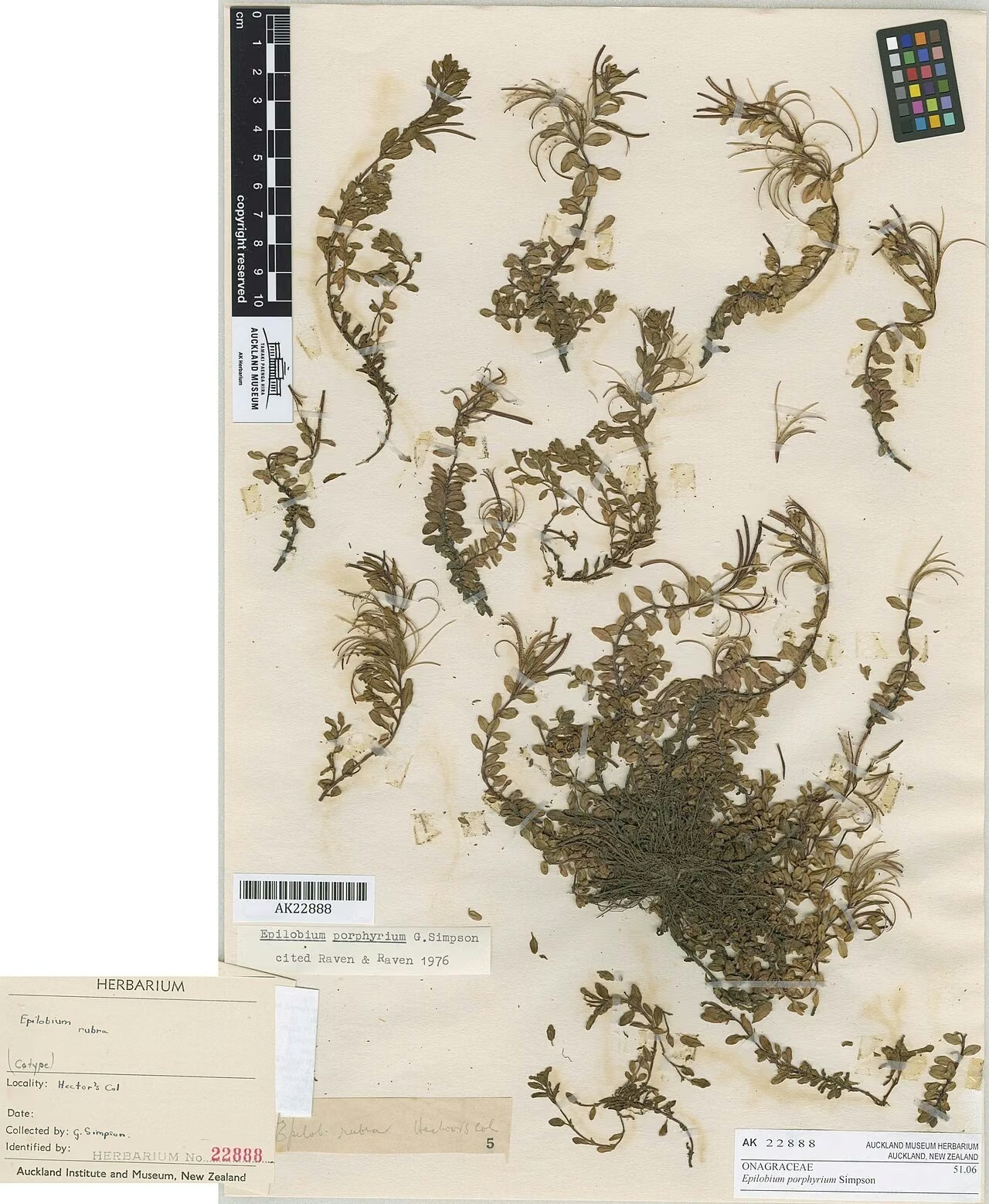
Epilobium porphyrium
Epilobium porphyrium
Plant Conservation
Swamp willowherb is ranked Not Threatened (2023) with the qualifier SO (Secure Overseas), as it is also native to south-eastern Australia.
Despite its secure status, the lowland wetlands it depends on have been greatly reduced in New Zealand. Protecting and restoring swamps, fens and lake margins, and including it in wetland plantings, supports this species.
Frequently Asked Questions
What does swamp willowherb look like?
It is a tall, erect, well-branched herb up to 1.4 m with narrow lance-shaped leaves, nodding flower buds that open into upright white flowers with petals 7.5 to 14 mm long, and long grey-hairy seed capsules 4.5 to 9.5 cm long.
Is Epilobium pallidiflorum good for wetland restoration?
Yes. NZPCN calls it an excellent plant to establish in wetland restoration plantings, where it suits the conditions and has room to spread.
Is swamp willowherb only found in New Zealand?
No. It is indigenous rather than endemic, also occurring in New South Wales, Victoria, South Australia and Tasmania, which is why it is ranked Not Threatened with the Secure Overseas qualifier.
Can you grow swamp willowherb in a garden pond?
Yes. NZPCN says it does best planted into a swamp or in a pot partly immersed in a pond, though it can become weedy and is best suited to specialist growers.
Sources and Further Reading
The botanical, growing, and conservation details for Swamp Willowherb (Epilobium pallidiflorum) on this page draw on the New Zealand plant references below. Consult them for full technical records and the latest distribution data.