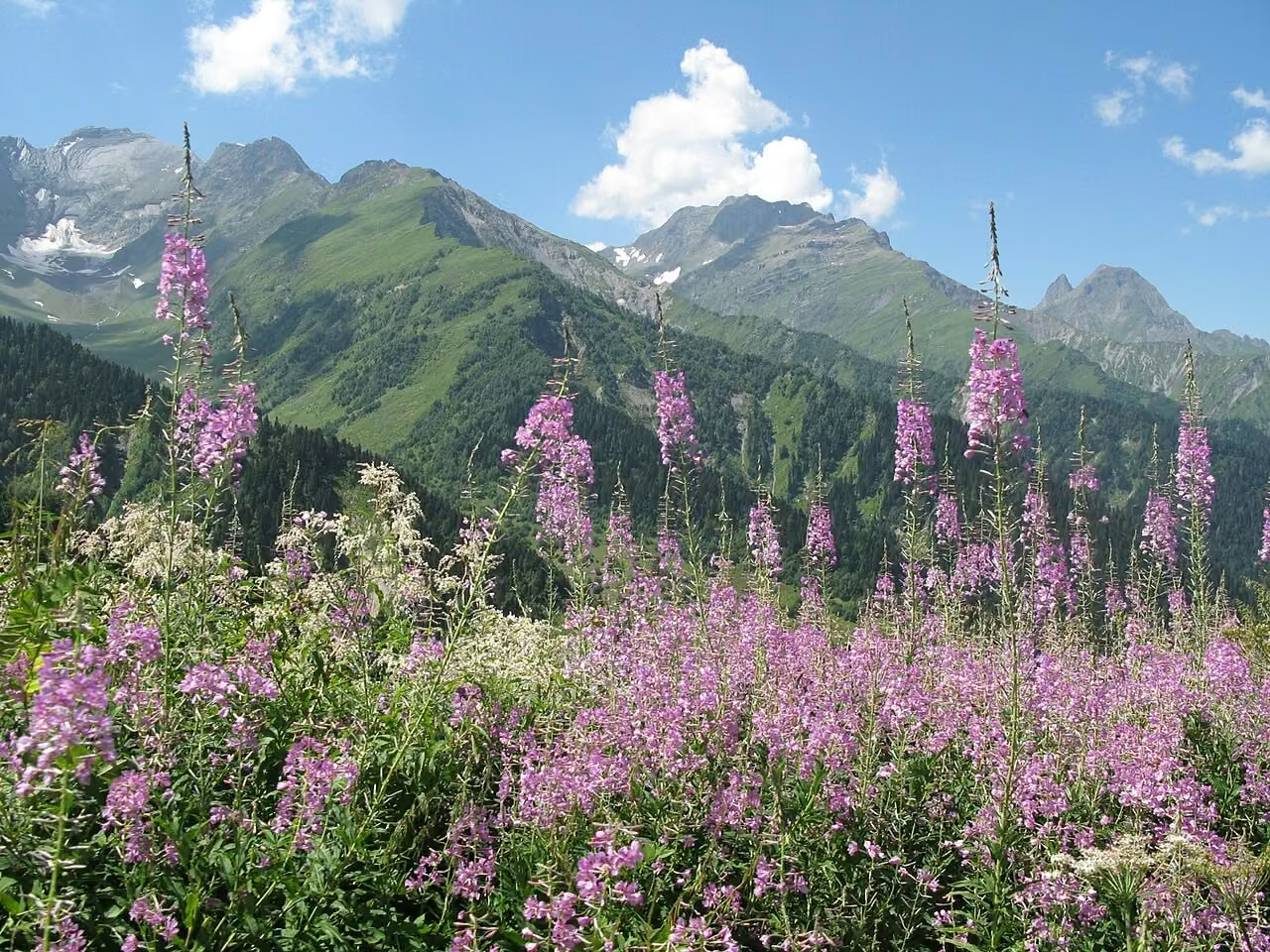
Willowherb
Epilobium microphyllum
Last updated:
Epilobium microphyllum is a small, tufted willowherb endemic to New Zealand, recognised by its numerous wiry, purple-black stems up to about 28 cm long, its tiny rounded leaves only 2 to 8 mm long, and its dark seed capsules striped with bands of silvery hairs. It grows on gravelly and shingly riverbeds, flats and outwash plains from about Kawhia and East Cape south, and is locally abundant around Cook Strait and on the eastern South Island, from sea level to 1200 m. Its tiny white flowers appear from December to February. It is ranked Not Threatened nationally. Explore more native flowering plants in our native plant guide.
Plant Description
Epilobium microphyllum is a tufted, creeping herb with a woody base from which numerous wiry stems branch and ascend. The stems are usually purple-black or black, rarely pale brown, at first sprawling, and carry two lines of short hairs. NZPCN gives a stem length of 120 to 150 mm, occasionally to 280 mm; the Flora of New Zealand gives 8 to 25 cm.
The leaves are opposite, widely spaced along the stems and on very short stalks. They are leathery, hairless on the upper surface, usually broadly elliptic to almost round, only 2 to 8 mm long and 1 to 3 mm wide, dark green often with purple-red margins and usually purple-red underneath, with faintly toothed or smooth edges and a tiny point at the tip. The white flowers are just 3 to 4 mm across, with petals 2 to 2.9 mm long.
The seed capsules, 0.9 to 2.2 cm long, are the best field character: they carry conspicuous bands of short, flattened hairs along the lines where they split, so they look striped light and dark. NZPCN notes it is easily told from the mat-forming E. brunnescens by its purple-black, ascending, wiry stems and dark, silvery-striped capsules.
Quick Facts
| Scientific Name | Epilobium microphyllum |
|---|---|
| Height | 0.08-0.28 m (stem length) |
| Spread | Small tufts, about 0.2-0.3 m |
| Water Needs | Low to moderate; free-draining gravels |
| Light | Full sun |
| Frost Tolerance | High; grows to 1200 m |
| Salt Tolerance | No information available |
| Growth Rate | Moderate |
| Lifespan | Perennial |
Climate Best Suited to
Suits the drier, sunny climates of the eastern South Island and the windy Cook Strait region, coping with frost and summer drought on open gravels. Humid climates encourage powdery mildew.
Regional Suitability
| City | Climate Suitability |
|---|---|
| Auckland | Low |
| Wellington | High |
| Christchurch | High |
| Dunedin | Medium |
Plant Habitat
Epilobium microphyllum is endemic to New Zealand and recorded from the North, South and Chatham Islands. In the North Island it ranges from about Kawhia and East Cape southwards, and it is locally abundant around the Cook Strait region. In the South Island it is found mainly in the east.
It grows on gravelly or shingly riverbeds, river flats and outwash plains from sea level to 1200 m, typically in open, sparsely vegetated ground where the stones drain quickly and competition is low.
Growing Requirements
Soil Requirements
In the wild it roots among river gravels and shingle, so it needs sharp drainage rather than rich soil.
- Gravel, shingle or very gritty mix
- Low to moderate fertility
- Avoid heavy, waterlogged soil
Light Requirements
It is a plant of open riverbeds and outwash plains with little shade.
- Full sun
- Good air movement to reduce mildew
Water Requirements
River gravels dry quickly in summer but are often moist below the surface. In cultivation keep it on the dry side of moist.
- Water during long dry spells only
- Do not let pots sit in water
- Water at the base rather than over the foliage
Planting and Establishing
Plant Epilobium microphyllum in an open, sunny spot in a gravel garden, rock garden or shallow pot filled with gritty, free-draining mix. NZPCN recommends it for exactly these situations.
Space plants so air can circulate between them, and top-dress with fine gravel to mimic its riverbed home and keep the crown dry.
Ecological Role
Epilobium microphyllum is part of the specialised flora of braided riverbeds and outwash plains, an open, frequently disturbed habitat where small, stress-tolerant herbs establish among the stones between floods. Its minute seeds carry a tuft of hairs and are dispersed by wind (Thorsen et al. 2009), letting it recolonise fresh gravels.
The pollinators of its tiny white flowers are not recorded in the sources consulted.
Uses & Significance
Garden Uses
A neat, unusual small plant for collectors, valued for its dark wiry stems and striped seed capsules rather than showy flowers.
- Gravel and rock gardens
- Shallow pots and troughs
- Braided riverbed themed plantings
Ecological Value
It belongs to the distinctive braided river flora of eastern New Zealand, a habitat under pressure from weeds and river management.
- Endemic to New Zealand
- Colonises open shingle and outwash gravels
- Regionally Naturally Uncommon in Otago and Wellington
Landscaping Uses
Use Epilobium microphyllum among stones and pebbles where its fine black stems and purple-red leaf undersides show up against pale gravel.
It combines well with other small riverbed natives in a dry, sunny scree or gravel bed, and is best grown where taller plants will not overshadow it.
Seasonal Care Calendar
Spring
New wiry shoots grow from the woody base, and the first capsules can form from October.
- Remove dead stems
- Refresh gravel top-dressing
Summer
Tiny white flowers appear from December to February, followed by striped capsules.
- Water only in prolonged drought
- Watch for powdery mildew
Autumn
Capsules continue ripening until about March and release plumed seed.
- Collect seed as capsules split
- Sow fresh seed
Winter
Plants sit quietly through frost and cold on open gravels.
- Keep potted plants out of persistent wet
- No feeding needed
When to Prune and How Much
Little pruning is needed. Trim off old flowering stems once seed has been shed to keep the tuft tidy.
Cut out any stems affected by powdery mildew promptly to slow its spread.
How to Grow Willowherb
NZPCN states that Epilobium microphyllum is easily grown from rooted pieces and fresh seed. Fruiting runs from October to March, so ripe capsules are available over a long season, and the minute seeds carry a tuft of silky hairs that lets them blow away quickly once a capsule splits, so collect capsules just as they begin to open. Division of rooted pieces from an established tuft is the quickest way to get a flowering plant. Whichever method you use, grow young plants in a gritty, free-draining mix in full sun with good air movement, because the species is prone to powdery mildew in humid conditions. Use cultivated plants as your source where possible, and if you are restoring a riverbed site, source material from the same river catchment.
From Seed
Fresh seed germinates readily. Sow it soon after collection rather than storing it.
- Collect capsules as they start to split between October and March
- Tease the seeds from their hairy tufts
- Sow on the surface of a gritty seed mix and press in lightly
- Keep just moist in bright light with good ventilation
- Prick out seedlings into small pots of gritty mix once they have several leaf pairs
By Division
Rooted pieces can be separated from the edge of an established tuft in spring or early summer.
- Lift the edge of a healthy tuft or ease out a rooted stem
- Separate a piece with its own roots
- Pot into a mix of pumice, grit and a little compost
- Keep lightly moist in a sunny, airy spot until new growth appears
Pests & Diseases
NZPCN warns that Epilobium microphyllum is prone to powdery mildew in humid climates. Good air movement, full sun and avoiding overhead watering are the best prevention.
In the wild, competition from weeds that invade braided riverbeds and outwash plains is a broader threat to its open gravel habitat; no specific insect pests are recorded in the sources consulted.
Cultural Significance
No traditional Māori name or use is recorded for Epilobium microphyllum in the sources consulted.
It was named by the French botanist Achille Richard, and the epithet microphyllum simply means small-leaved. NZPCN featured it as its Plant of the Month in December 2007.
Bonus Tip
To find this plant in the wild, look for its dark seed capsules rather than its flowers: the silvery bands of hairs along each capsule make the fruit look striped, a character NZPCN singles out as the easiest way to separate it from other small willowherbs on riverbed gravels.
Related Plants
Explore other native plants that share similar characteristics or habitats with Willowherb (Epilobium microphyllum), offering further insights into New Zealand's diverse flora. These related species provide context and opportunities for complementary planting in your garden.
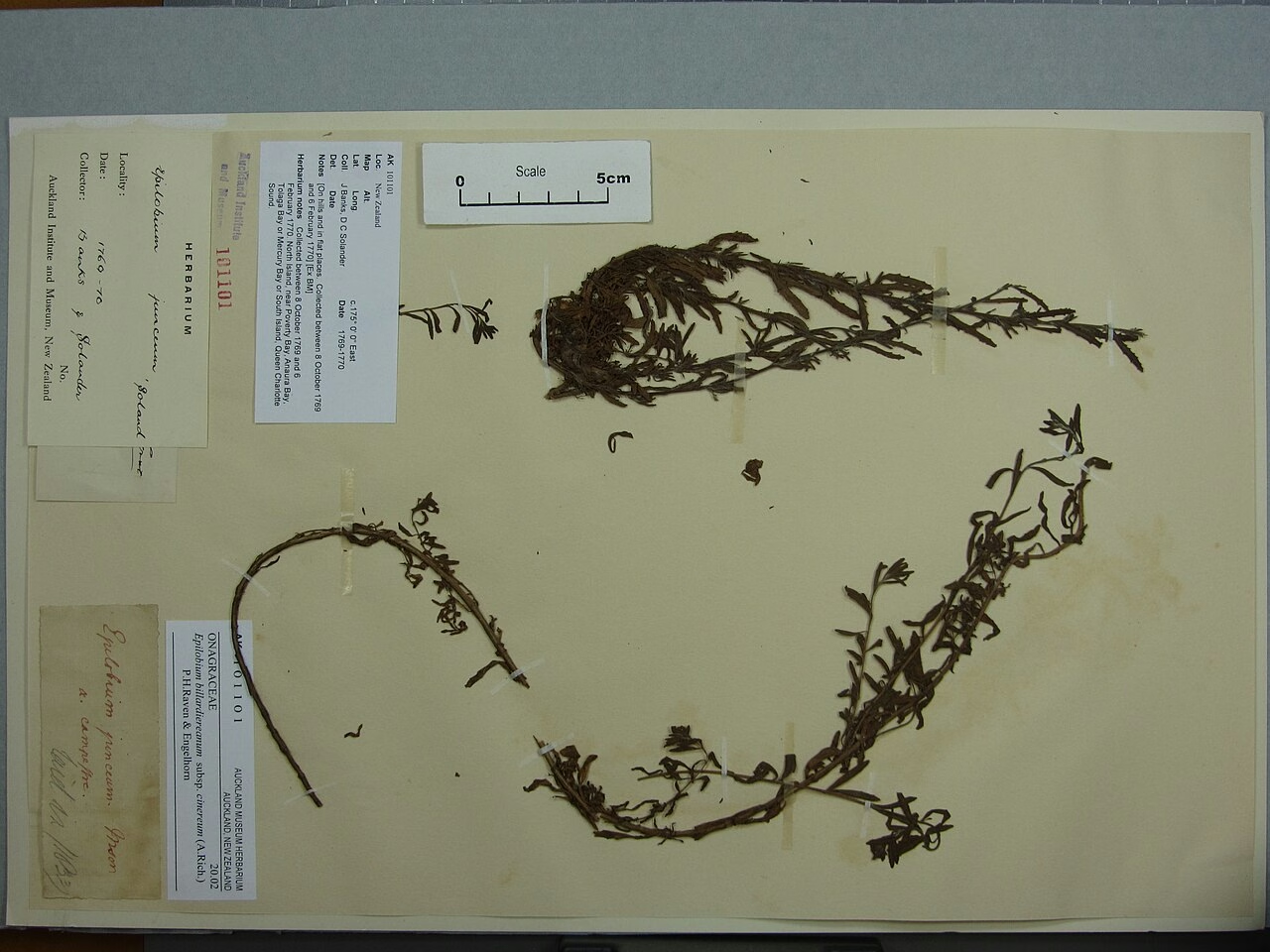
Epilobium cinereum
Epilobium cinereum
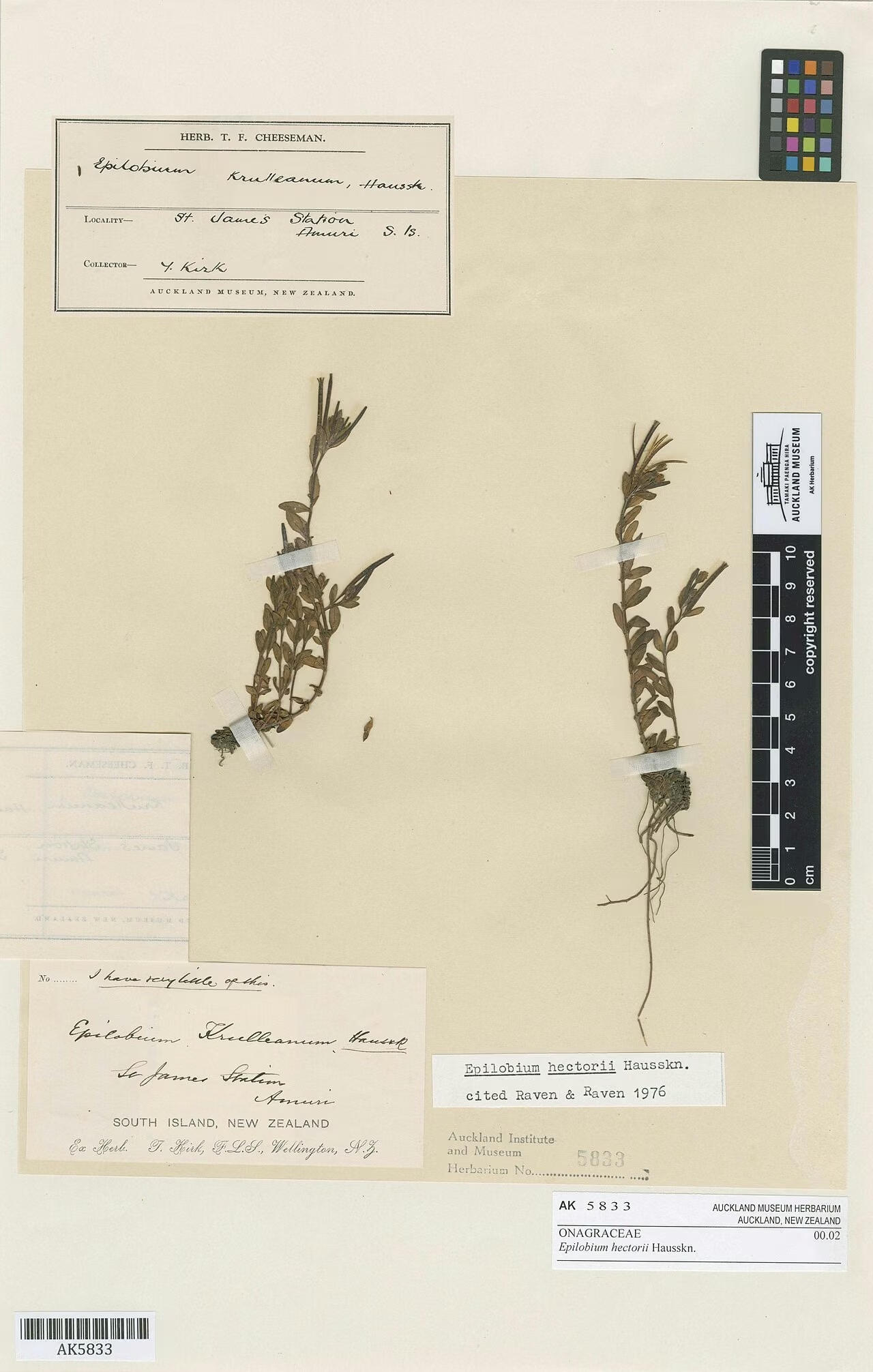
Epilobium hectorii
Epilobium hectorii
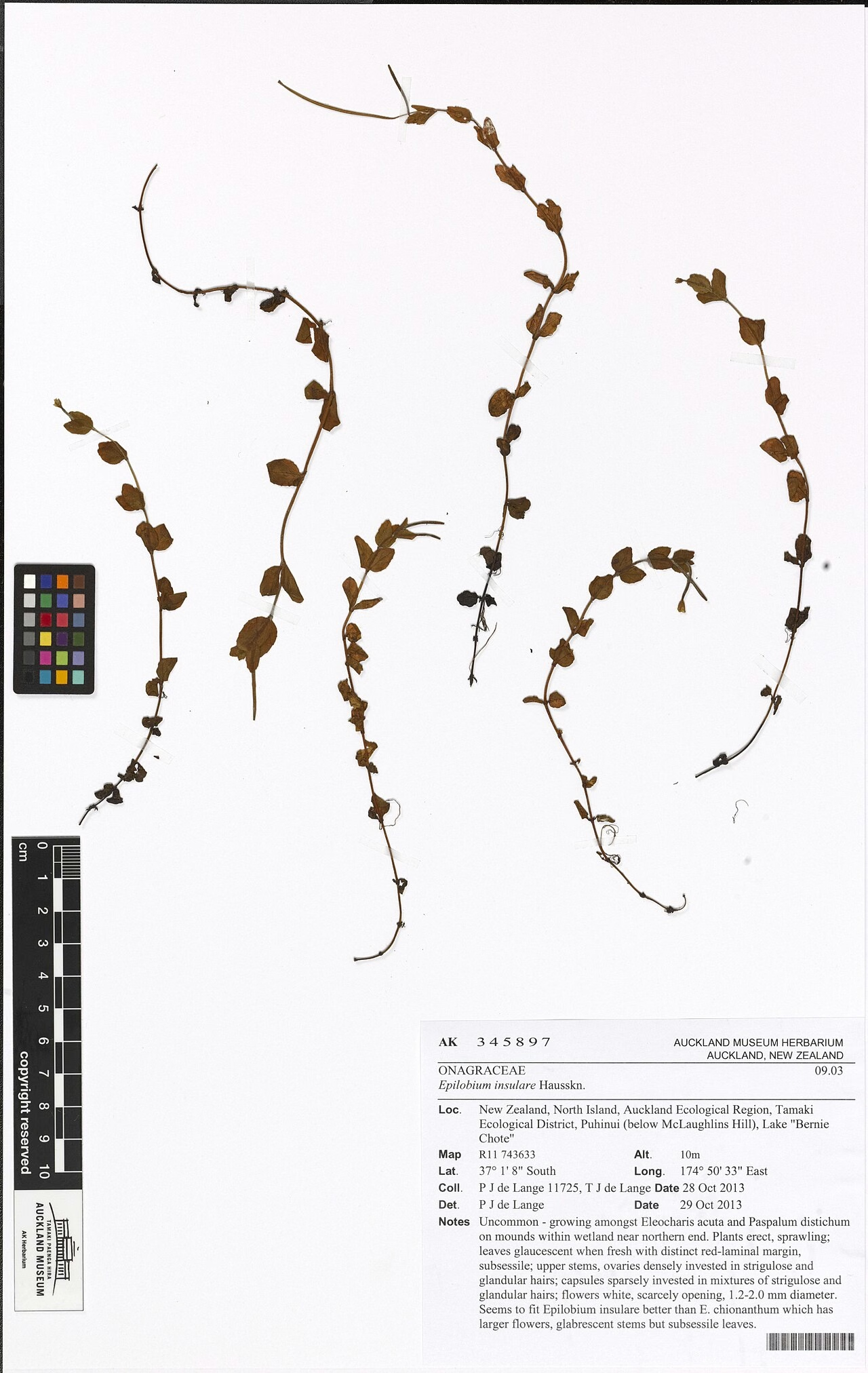
Epilobium insulare
Epilobium insulare
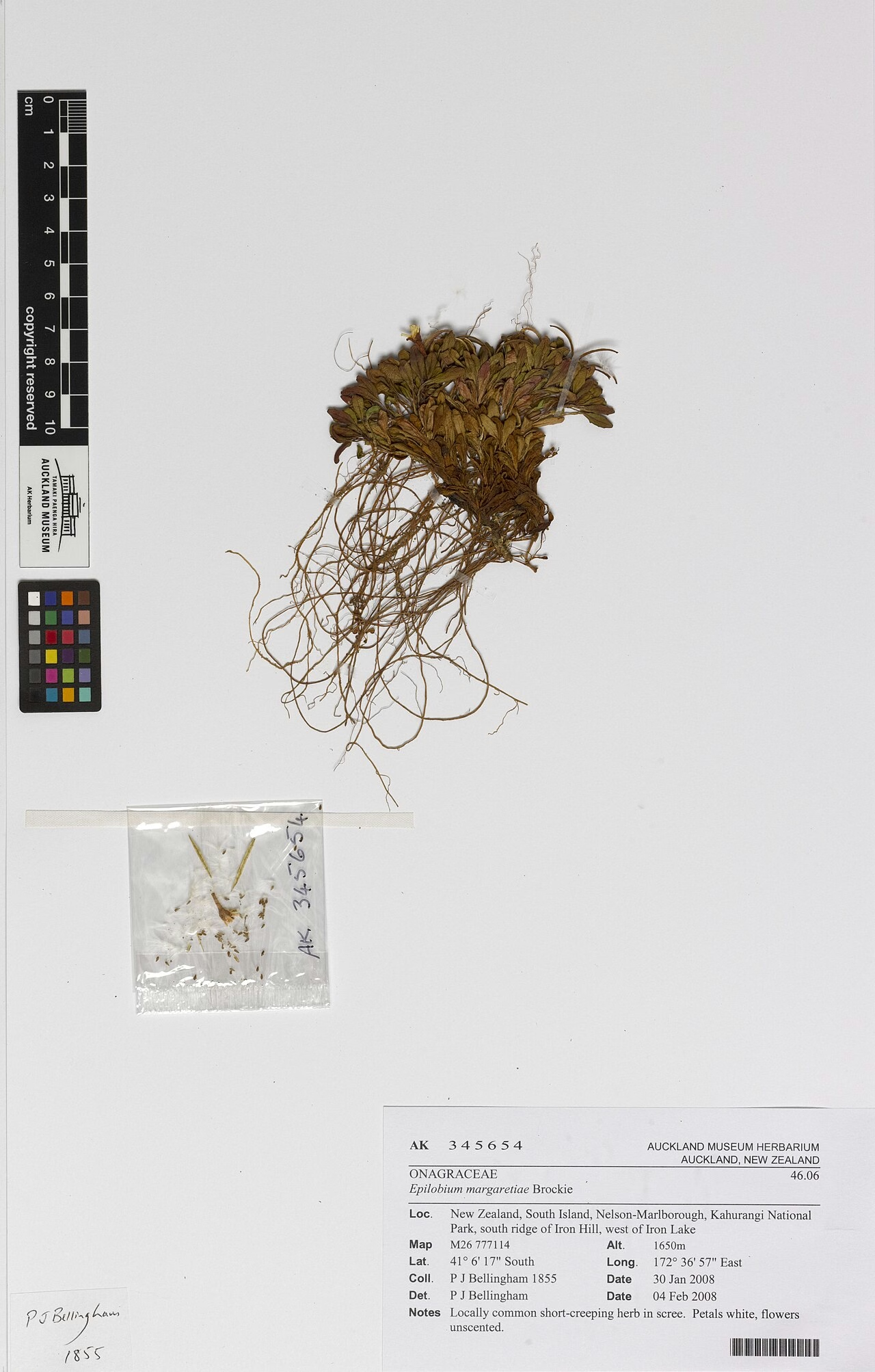
Epilobium margaretiae
Epilobium margaretiae
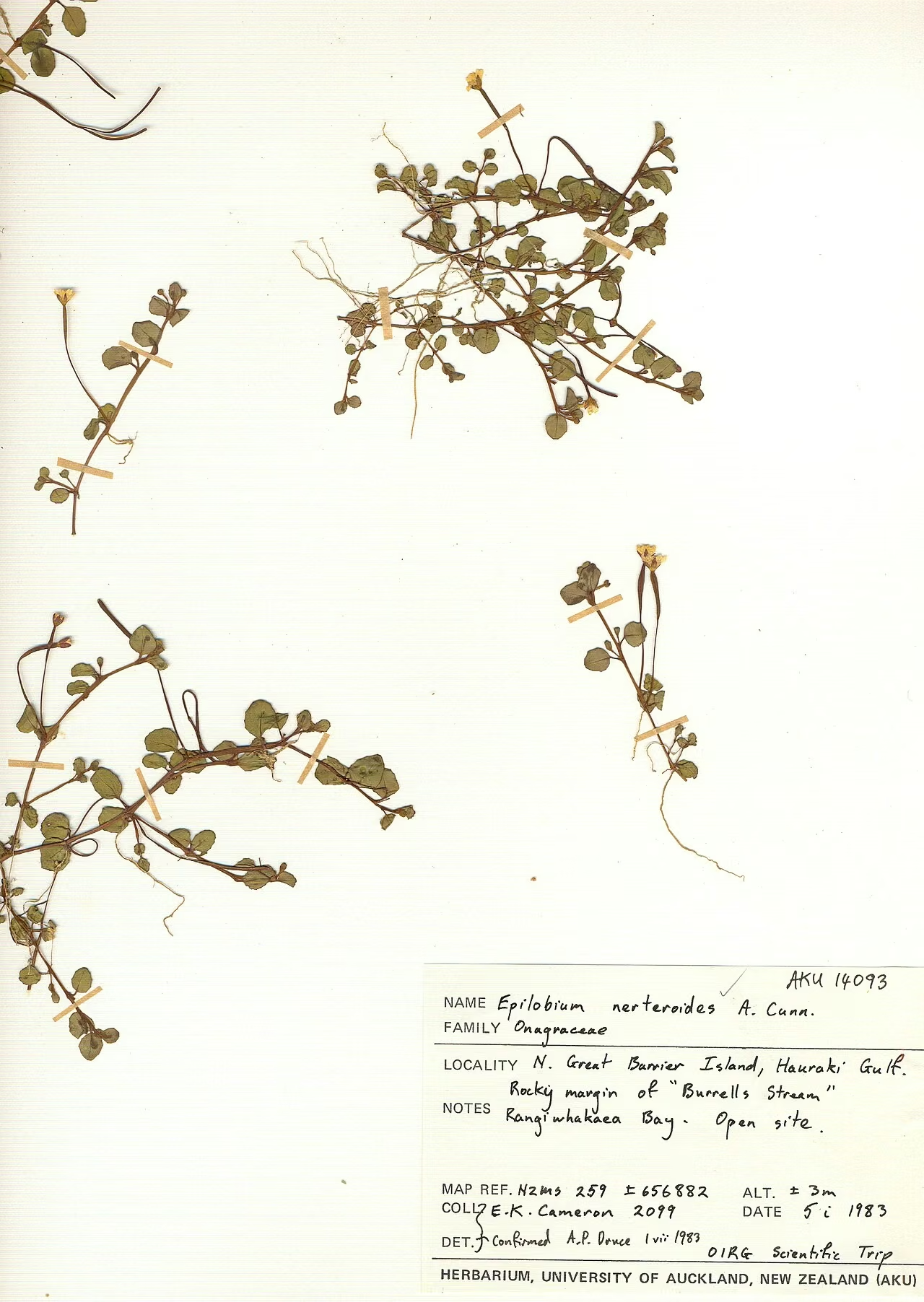
Epilobium nerteroides
Epilobium nerteroides
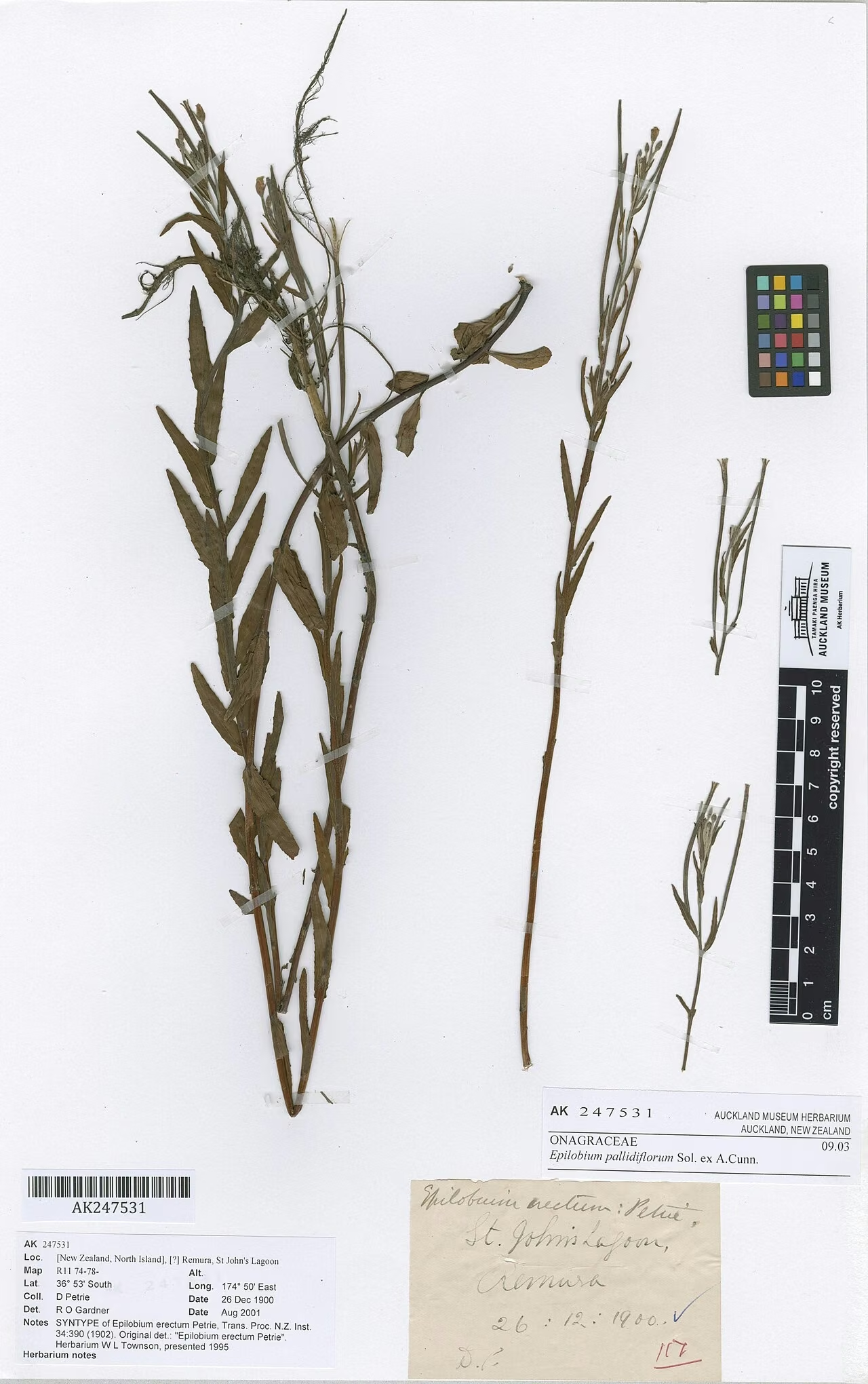
Swamp Willowherb
Epilobium pallidiflorum
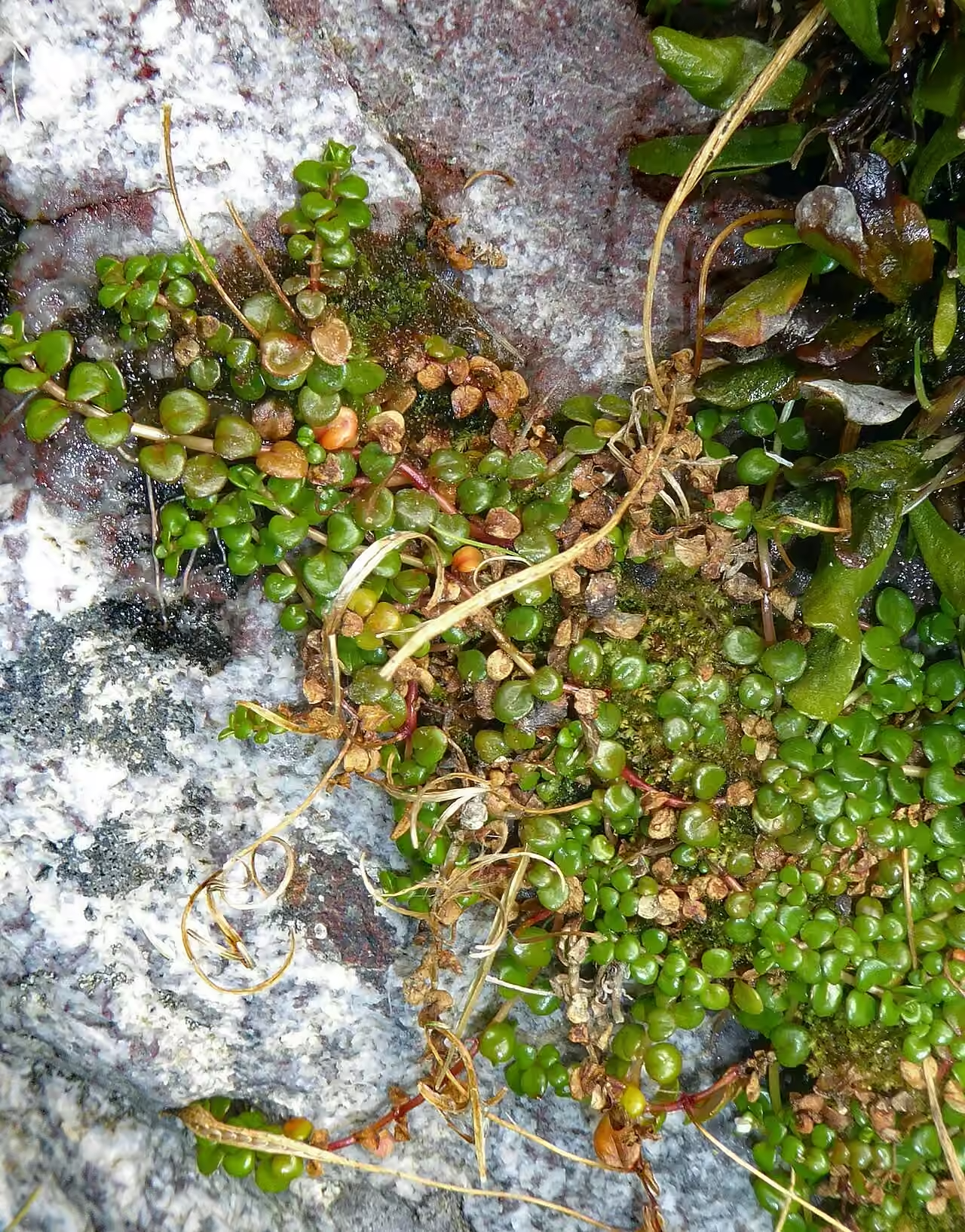
Epilobium pernitens
Epilobium pernitens
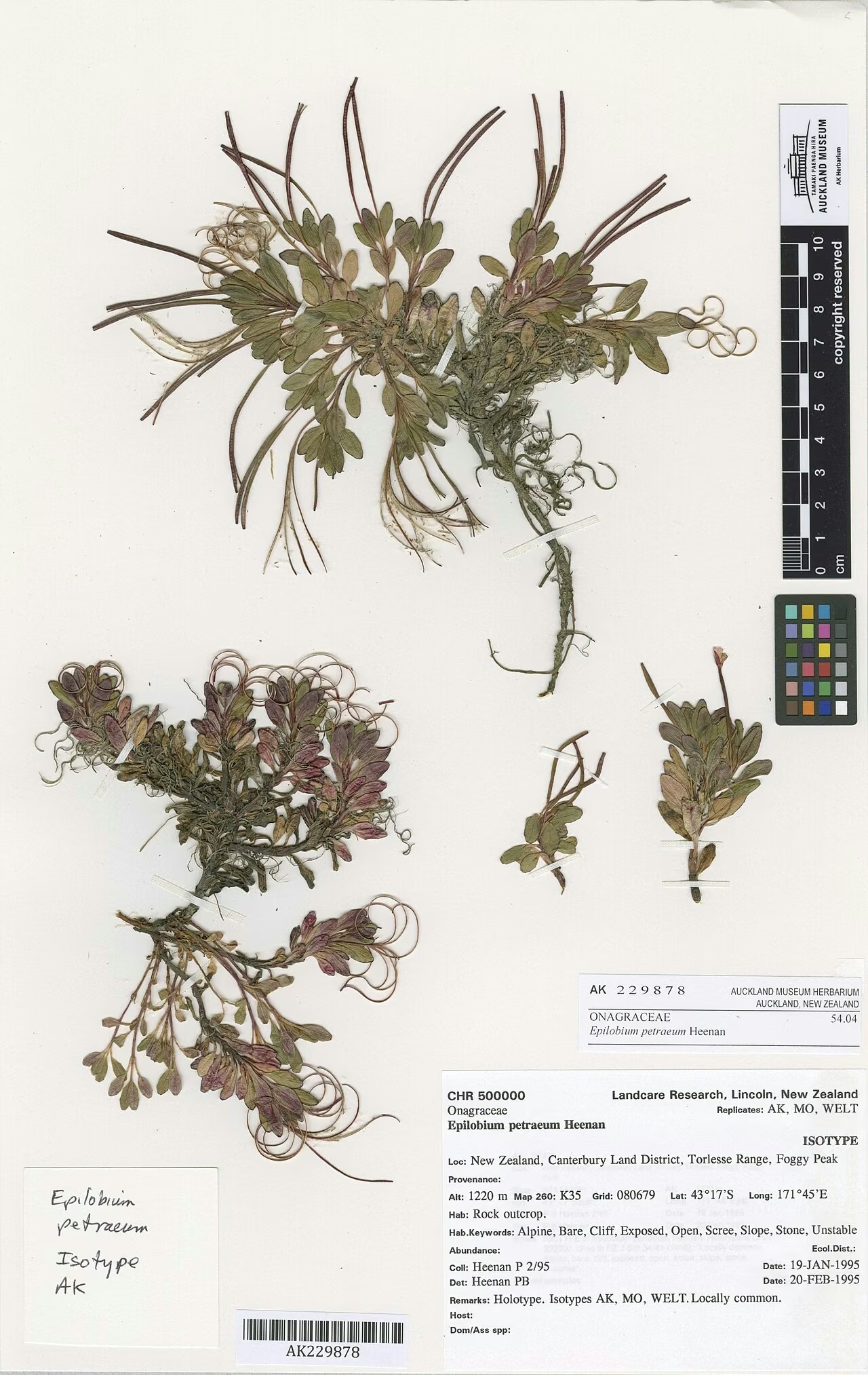
Rock Willowherb
Epilobium petraeum
Plant Conservation
Epilobium microphyllum is ranked Not Threatened (2023) and has held that ranking since 2004. Regionally, it is assessed as Naturally Uncommon in both Otago and the Wellington region (2025).
Its braided river and outwash plain habitats are affected by weed invasion and changes to river flows. Controlling weeds on riverbeds and protecting open gravel habitat benefit this and many other specialised riverbed plants.
Frequently Asked Questions
How do you identify Epilobium microphyllum?
Look for many ascending, wiry, purple-black stems with widely spaced, tiny rounded leaves that are often purple-red underneath, and dark purple-black seed capsules striped light and dark by bands of silvery hairs along their seams.
Where does Epilobium microphyllum grow in New Zealand?
It occurs on the North, South and Chatham Islands, from about Kawhia and East Cape southwards. It is locally abundant around Cook Strait and mainly found in the east of the South Island, on gravelly riverbeds and outwash plains up to 1200 m.
Can Epilobium microphyllum be grown in a rock garden?
Yes. NZPCN describes it as easily grown from rooted pieces and fresh seed, and attractive in an open spot, a rock garden or a pot, but warns it is prone to powdery mildew in humid climates.
How is Epilobium microphyllum different from Epilobium brunnescens?
Epilobium brunnescens is a flat, creeping mat-former, whereas E. microphyllum has ascending, wiry, purple-black stems and distinctive dark capsules striped with silvery hairs.
Sources and Further Reading
The botanical, growing, and conservation details for Willowherb (Epilobium microphyllum) on this page draw on the New Zealand plant references below. Consult them for full technical records and the latest distribution data.