Willowherb
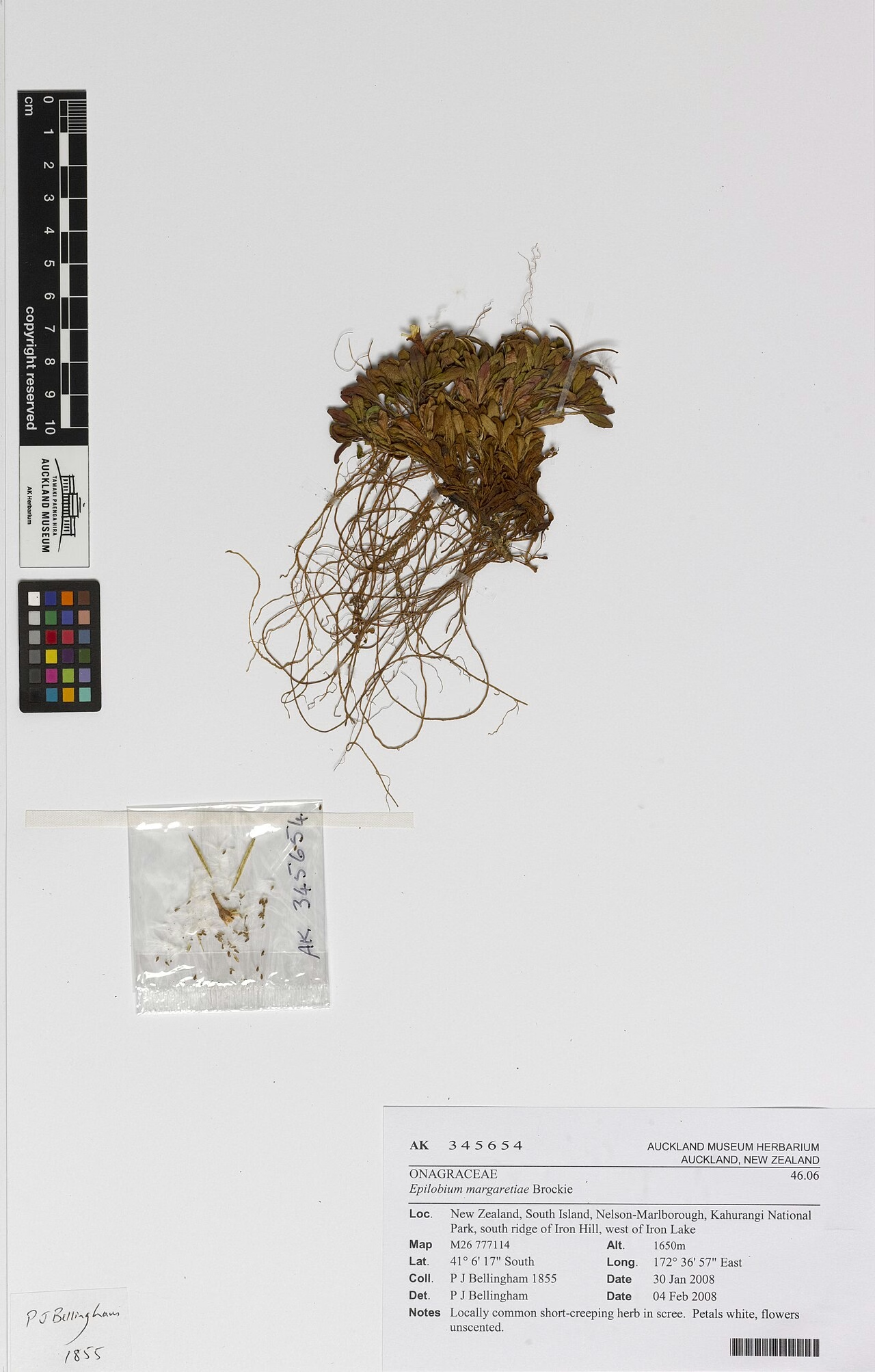
Epilobium margaretiae
Last updated:
Epilobium margaretiae is a small creeping alpine willowherb found only in the mountains of Nelson, from Kahurangi National Park and Mt Arthur to the Travers and Bryant Ranges. Its hairless reddish stems, 2 to 15 cm long, branch and root at the nodes, carrying consistently opposite, narrow leaves and white flowers with an unusually deep floral tube. It grows high on steep ridge lines and crests at 1300 to 1700 m, in bare metamorphic rock rubble and fellfield, and flowers in December and January. It is ranked At Risk - Naturally Uncommon because of its very small natural range, and it is difficult to cultivate. Explore more native ground covers in our native plant guide.
Plant Description
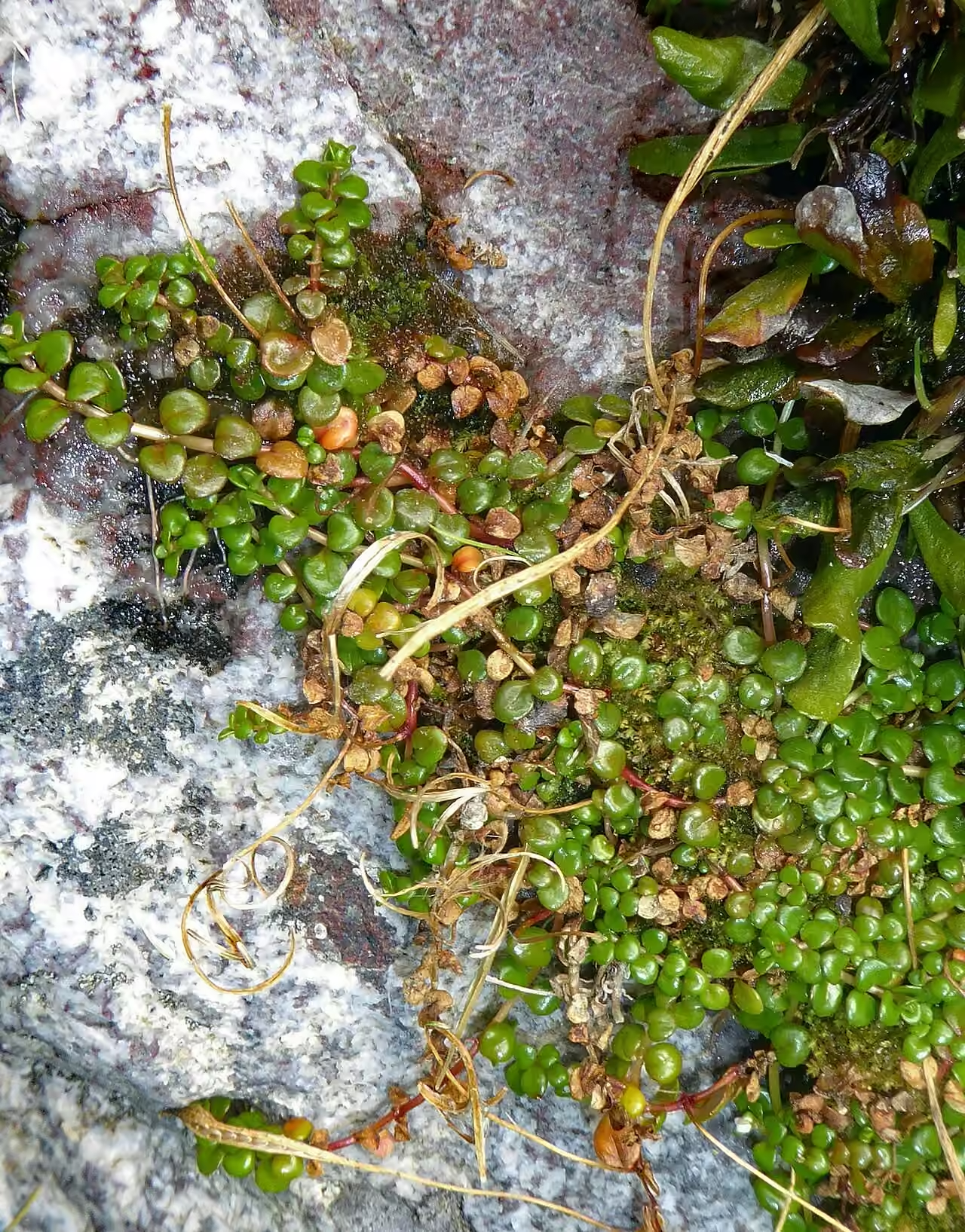
Epilobium margaretiae is a creeping, hairless (glabrous) herb. Its reddish stems are 2 to 15 cm long, branching and rooting at the nodes, so the plant forms small spreading patches among stones. The leaves are consistently opposite and oblanceolate, about 3 to 16 mm long and 2 to 5 mm wide.
The flowers have a long, hairless floral tube 3 to 5 mm deep and white petals 7 to 9 mm long and 3.5 to 4.6 mm wide; NZPCN also lists yellow among its flower colours. The capsules are hairless, 1 to 2 cm long, on short fruiting stalks 0.2 to 1 cm long, and release minute plumed seeds that are dispersed by wind.
NZPCN gives its consistently opposite leaves and very long floral tube as the key features separating it from other New Zealand willowherbs. Its combination of a creeping, hairless habit and high-alpine rubble habitat on Nelson's ridge crests also helps identify it.
Quick Facts
| Scientific Name | Epilobium margaretiae |
|---|---|
| Height | Low and creeping; stems 0.02-0.15 m long |
| Spread | Small creeping patches rooting at the nodes |
| Water Needs | Sharp drainage; high alpine rainfall and snow |
| Light | Full sun, exposed ridges |
| Frost Tolerance | High; high alpine |
| Salt Tolerance | No information available |
| Growth Rate | Slow |
| Lifespan | Perennial |
Climate Best Suited to
A high-alpine plant of Nelson's mountains, adapted to cold winters, snow cover, strong winds and a short growing season. It is not suited to lowland garden climates.
Regional Suitability
| City | Climate Suitability |
|---|---|
| Auckland | Low |
| Wellington | Low |
| Christchurch | Low |
| Dunedin | Low |
Plant Habitat
Epilobium margaretiae is endemic to the north-west of the South Island, in the Nelson mountains. Recorded locations include Kahurangi National Park, Mt Arthur, Mt Peel, the Iron Hills, the Travers and Bryant Ranges and the Mole Tops.
It is a high-alpine plant of 1300 to 1700 m, confined to steep ridge lines and crests, where it grows in bare, open metamorphic rock rubble and fellfield.
Growing Requirements
Soil Requirements
It roots into loose, bare metamorphic rock rubble on exposed ridges, with very little true soil.
- Coarse, unstable rock rubble
- Extremely free-draining
- Very low fertility
Light Requirements
Its ridge-crest fellfield habitat is open and fully exposed.
- Full sun
- No shading vegetation
Water Requirements
Water drains instantly through rubble, but the Nelson mountains receive frequent rain, cloud and winter snow.
- Moisture from rain and snowmelt
- No standing water
Planting and Establishing
This species is not recommended for planting. NZPCN describes it as difficult to cultivate and advises that it should not be removed from the wild.
Anyone wishing to see it should visit the high ridges of Kahurangi National Park or the Nelson Lakes area in early summer, taking care not to disturb the loose rubble where it grows.
Ecological Role
Epilobium margaretiae is part of the specialised fellfield flora of the Nelson mountains, growing in open, mobile rubble where few other plants can establish. Its creeping stems root at the nodes, which helps it hold its place on shifting stones.
Its minute plumed seeds are dispersed by wind along the ridges. Pollinators of its long-tubed white flowers are not documented in the sources consulted.
Uses & Significance
Garden Uses
It has no real garden use, as it is difficult to grow and should not be collected from the wild.
- Best appreciated in the wild
- Of interest to alpine botanists and photographers
Ecological Value
It is one of many narrow-range endemics that make the north-west Nelson mountains a centre of plant diversity.
- Endemic to the Nelson mountains
- Part of high-alpine fellfield communities
- Colonises bare rock rubble on ridge crests
Landscaping Uses
Epilobium margaretiae is not used in landscaping. Its value lies in its natural setting among grey metamorphic rubble on Nelson's high ridges, where its reddish stems and white flowers stand out against the stone.
Gardeners wanting a similar look should choose readily grown native alpine willowherbs or other small creeping natives that are available from nurseries.
Seasonal Care Calendar
Spring
Plants are usually under snow or just emerging as the snow melts on the high ridges.
- Not a time for viewing
Summer
Flowering is in December and January, with white long-tubed flowers on the creeping stems.
- Best time to see it on Nelson ridge tracks
Autumn
Capsules ripen from January to March and release wind-dispersed seed.
- Leave seed to disperse naturally
Winter
Its ridge-top habitat is exposed to cold, wind and snow.
- No intervention needed
When to Prune and How Much
Pruning does not apply, as the species is not cultivated. In the wild it should be left completely undisturbed.
When walking on ridges where it grows, keep to tracks where possible, as the loose rubble and small creeping plants are easily dislodged.
How to Grow Willowherb
NZPCN's only advice on propagating Epilobium margaretiae is blunt: it is difficult, and the plant should not be removed from the wild. No reliable propagation protocol is published in the sources consulted. This sets it apart from many New Zealand willowherbs, which grow easily from fresh seed. The challenge probably lies in reproducing its high-alpine conditions: loose metamorphic rubble at 1300 to 1700 m, cold winters with snow, cool summers and exposure to strong winds. Because it is ranked At Risk - Naturally Uncommon and confined to a handful of Nelson ridge systems, any propagation should be left to recognised conservation or botanic garden programmes working with permits from the Department of Conservation. The notes below describe what such a programme would likely attempt, based on the plant's biology rather than on documented success.
From Seed
The plant sets minute, wind-dispersed seeds in capsules that ripen from January to March. Seed is the least damaging material to collect, but only under permit and in small quantities.
- Obtain a Department of Conservation permit before any collection
- Collect a small number of ripe capsules in late summer
- Sow on the surface of a very gritty, low-nutrient alpine mix
- Keep cool, bright and well ventilated
- Record results, as success rates are not documented
From Rooted Stem Pieces
The creeping stems root at the nodes, so a rooted piece is a possible alternative to seed for an authorised conservation programme, though NZPCN advises against removing material from the wild.
- Use only under permit in a recognised conservation programme
- Pot a rooted node into pure grit and pumice
- Grow on in a cool alpine house with strong airflow
Pests & Diseases
No specific pests or diseases are recorded for Epilobium margaretiae in the sources consulted.
NZPCN does not identify current threats; its ranking reflects its naturally narrow range rather than any known decline.
Cultural Significance
No traditional Māori name or use is recorded for Epilobium margaretiae in the sources consulted.
The species was described by Brockie in 1965. The feminine form of the epithet margaretiae suggests it honours someone named Margaret, but the sources consulted do not say who she was.
Bonus Tip
To see this plant, time a tramp to the high ridges around Mt Arthur or the Travers Range for December or January, when it flowers. Look closely at bare, loose rubble on the ridge crests rather than in tussock, and photograph it rather than touching or collecting it.
Related Plants
Explore other native plants that share similar characteristics or habitats with Willowherb (Epilobium margaretiae), offering further insights into New Zealand's diverse flora. These related species provide context and opportunities for complementary planting in your garden.
Mountain Willowherb
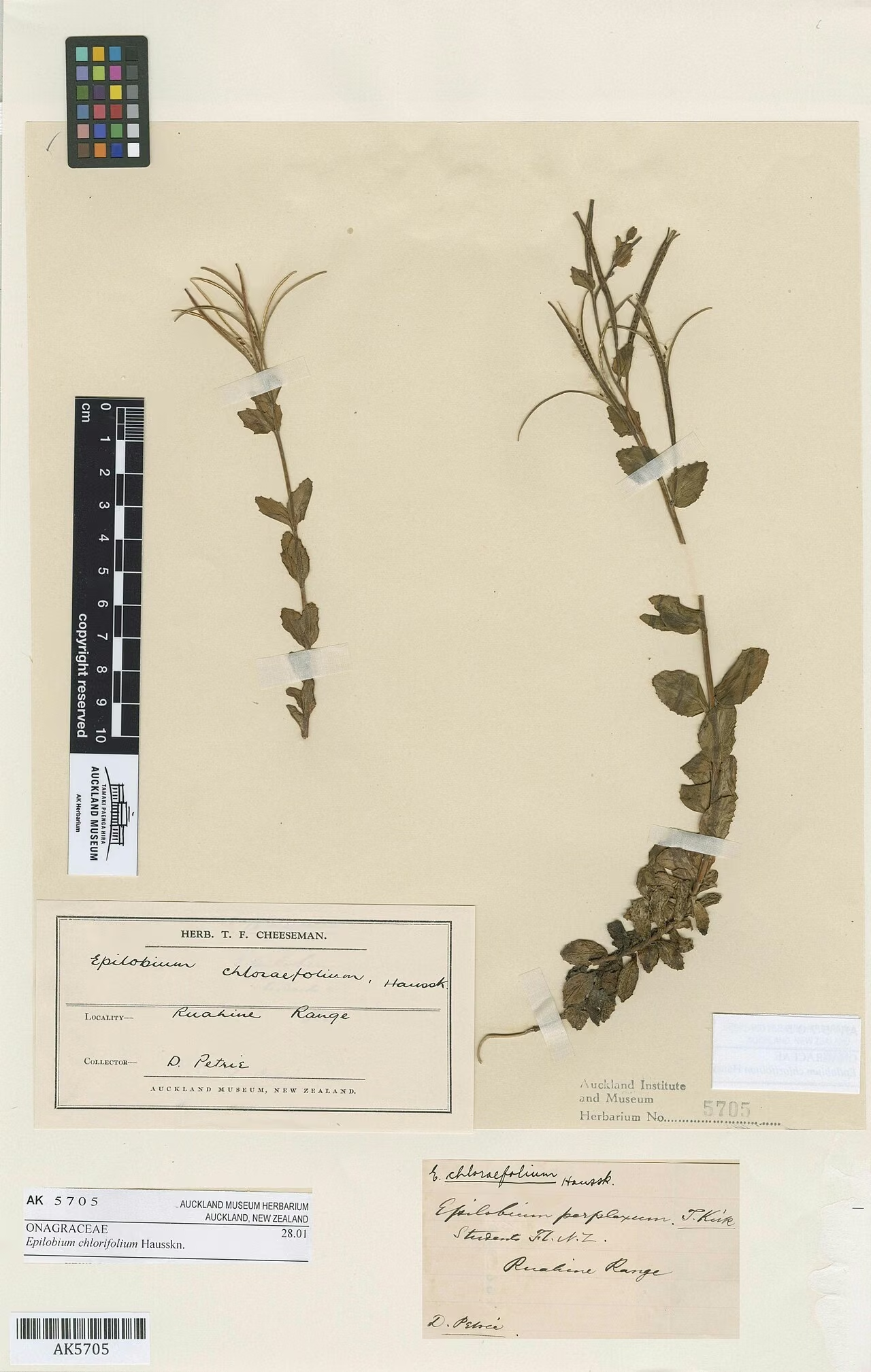
Epilobium chlorifolium
Epilobium cinereum
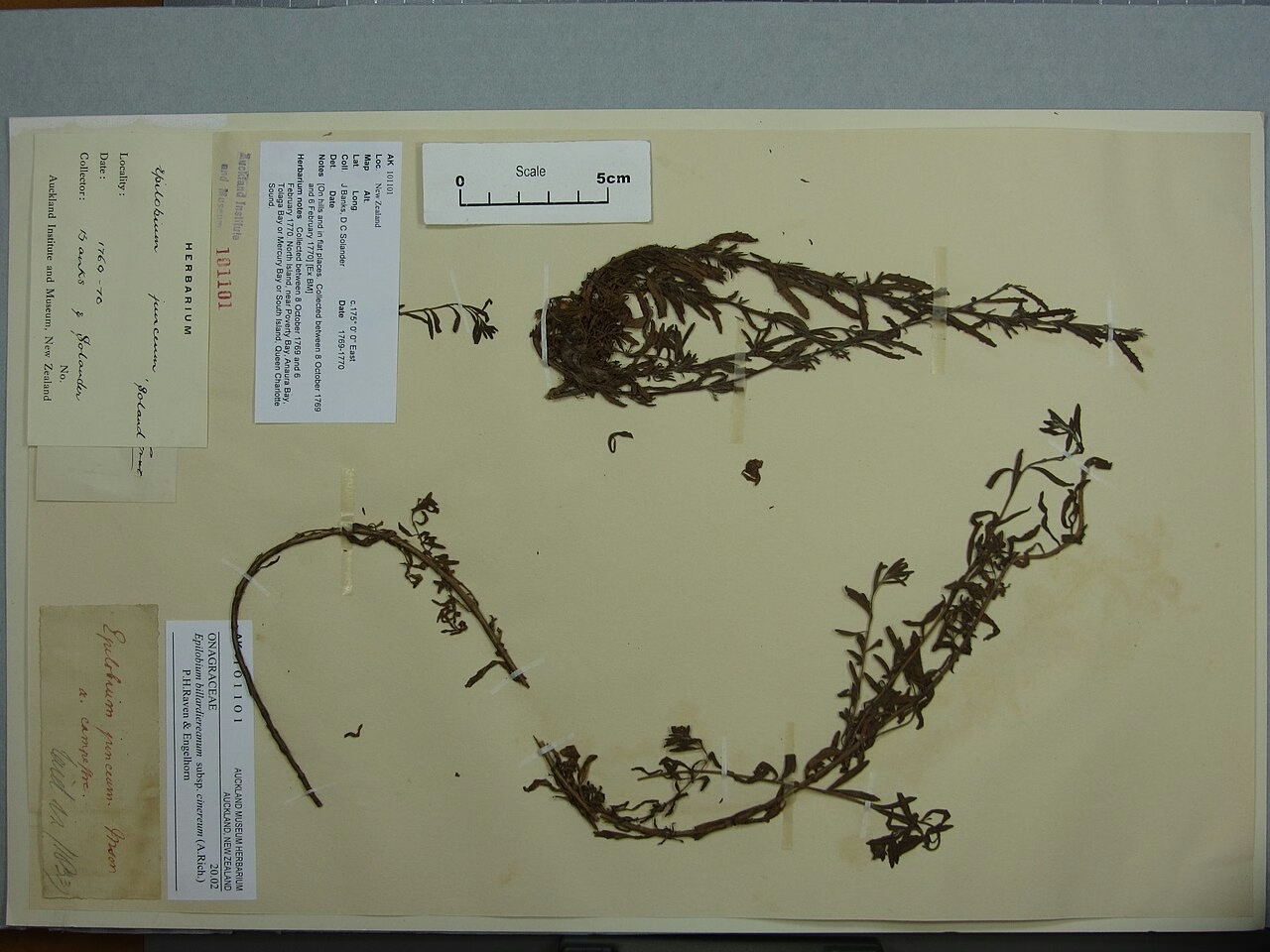
Epilobium cinereum
Epilobium hectorii
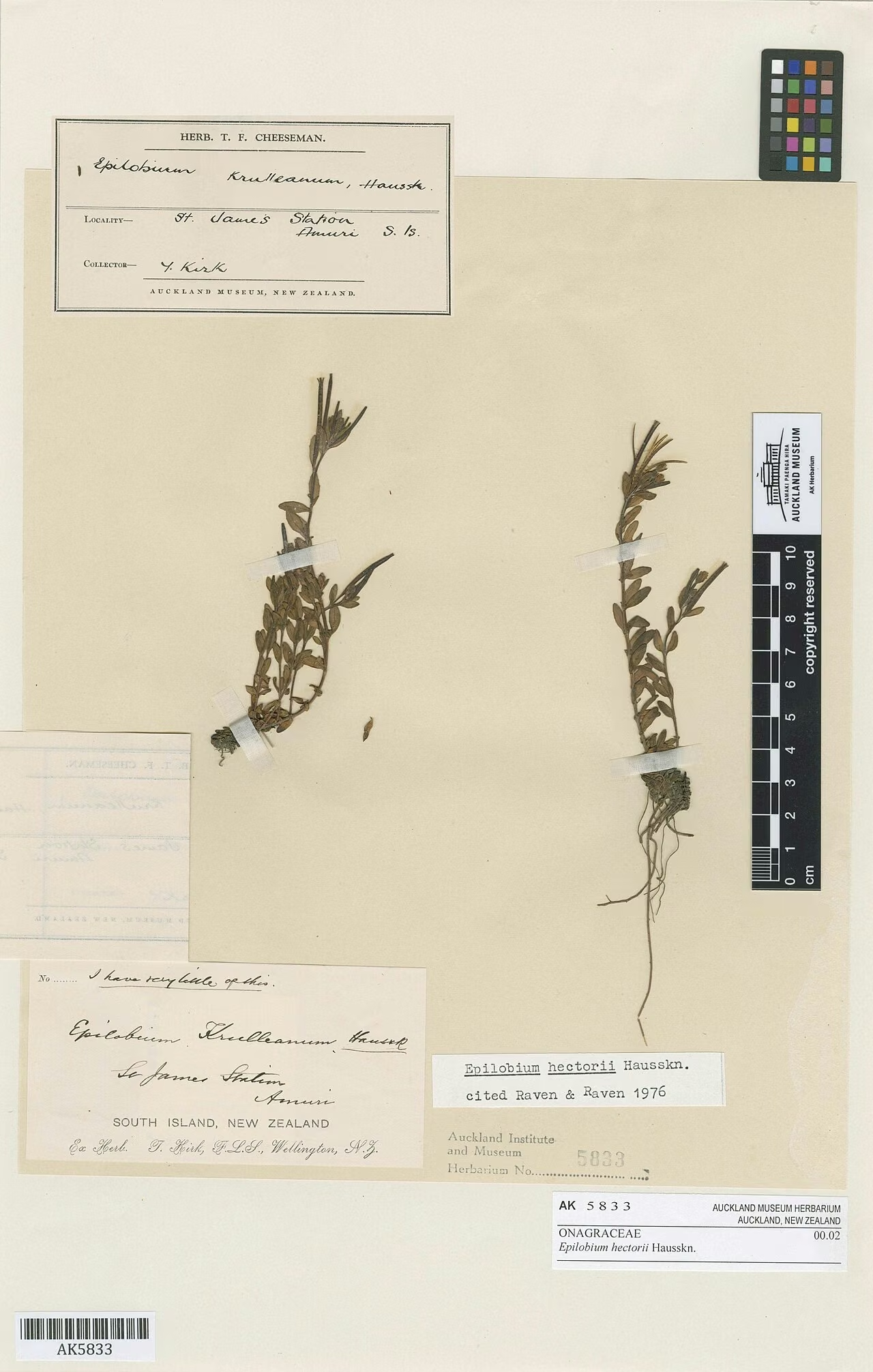
Epilobium hectorii
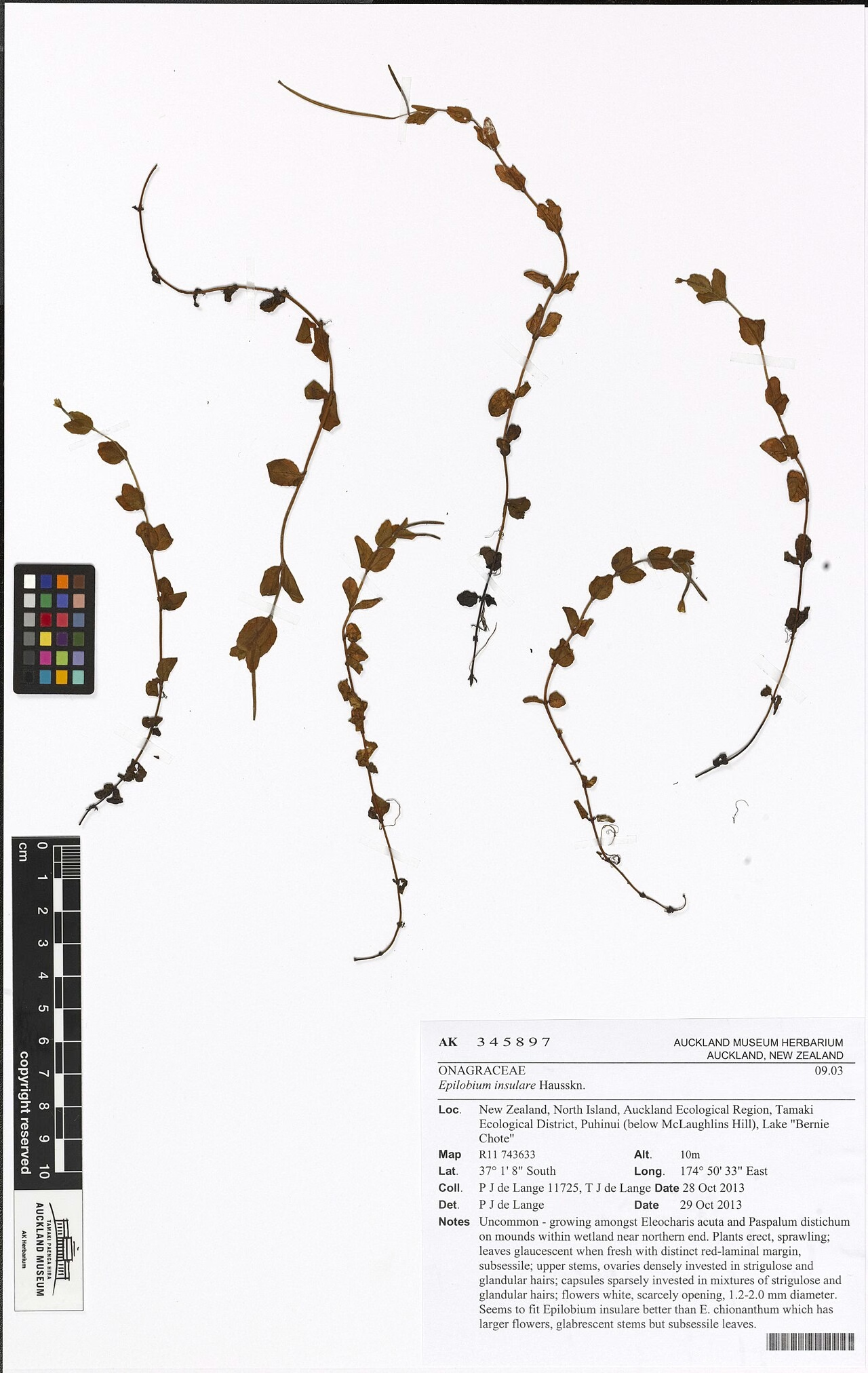
Epilobium insulare
Epilobium insulare
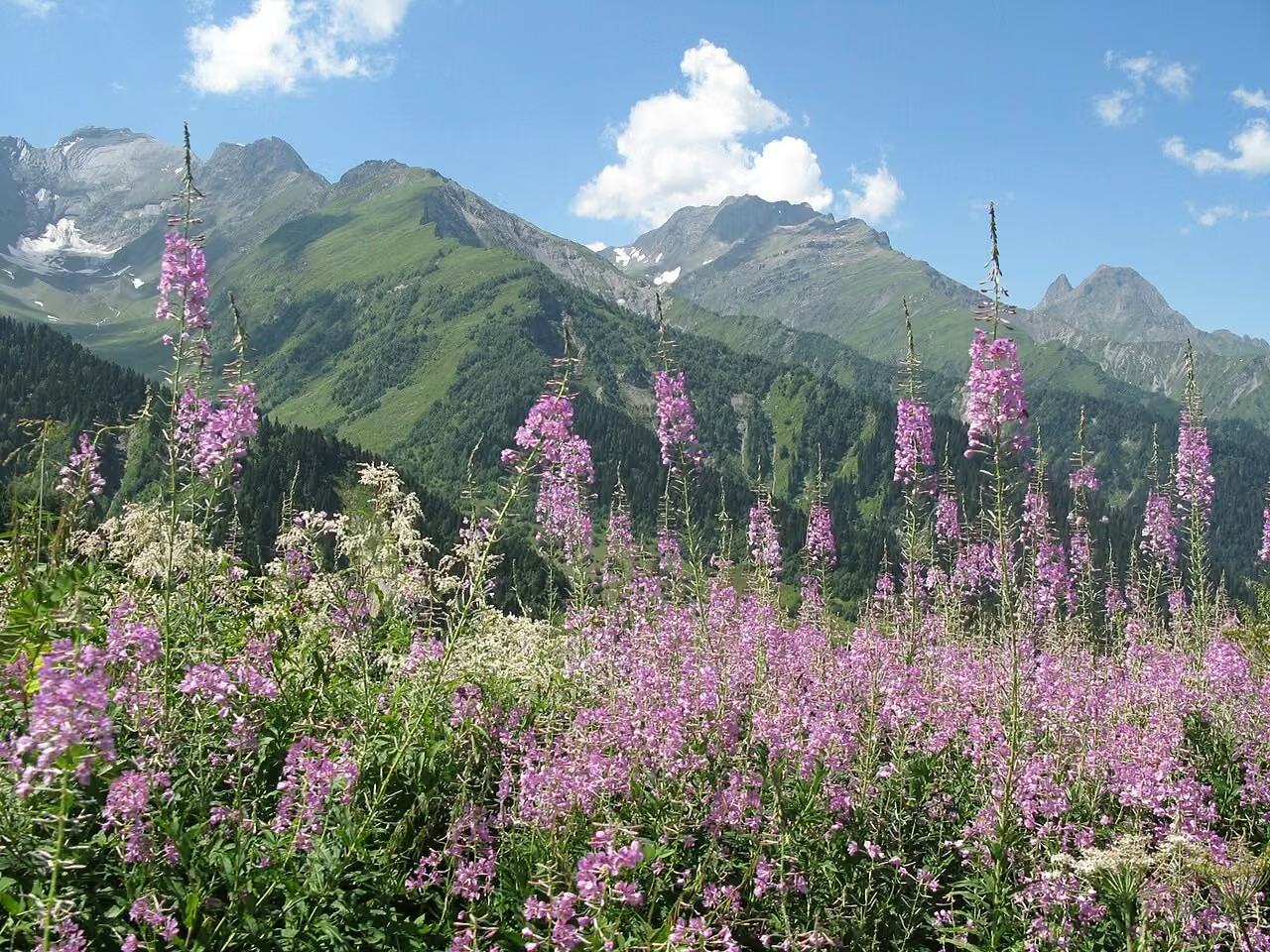
Epilobium microphyllum
Epilobium microphyllum
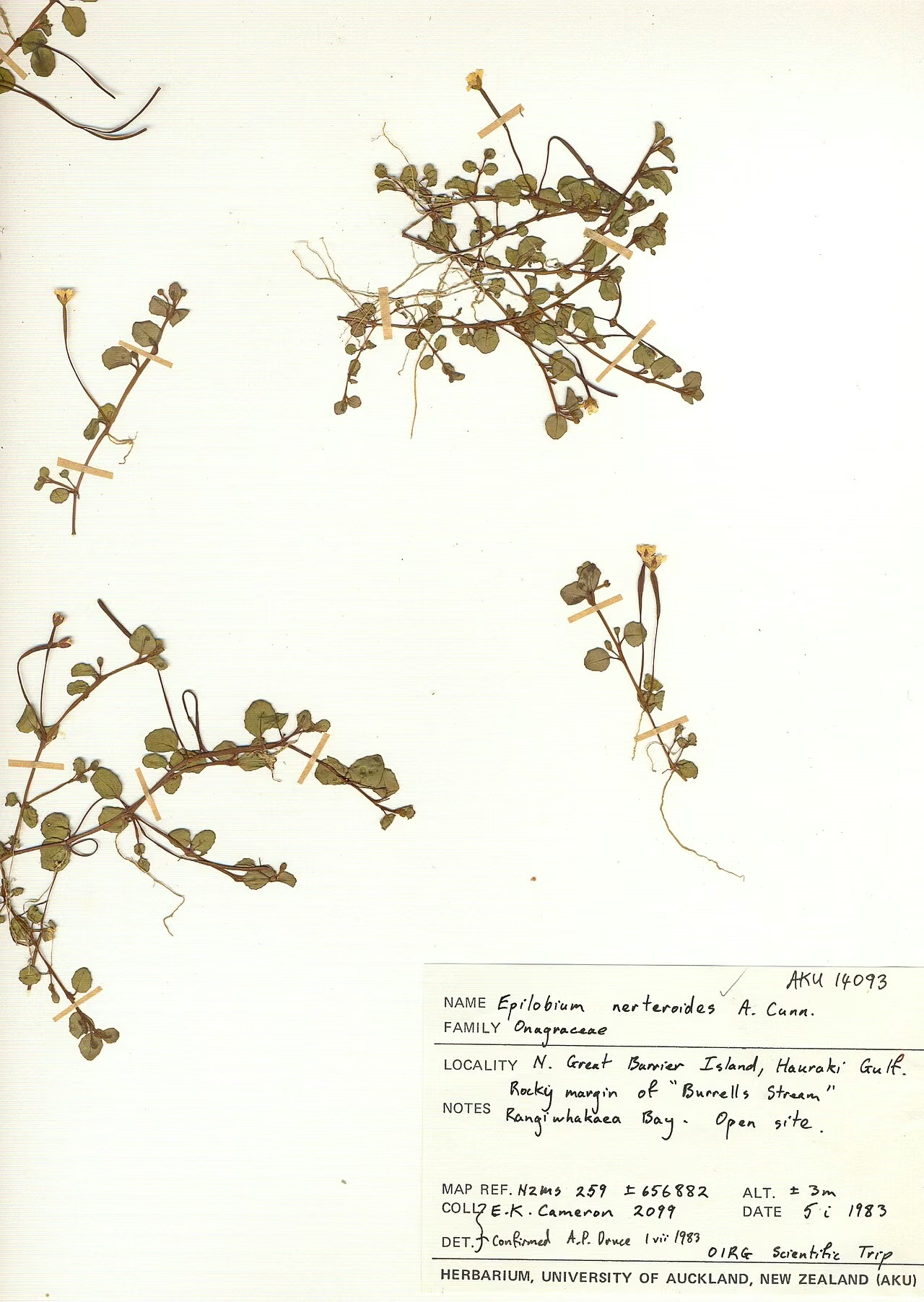
Epilobium nerteroides
Epilobium nerteroides
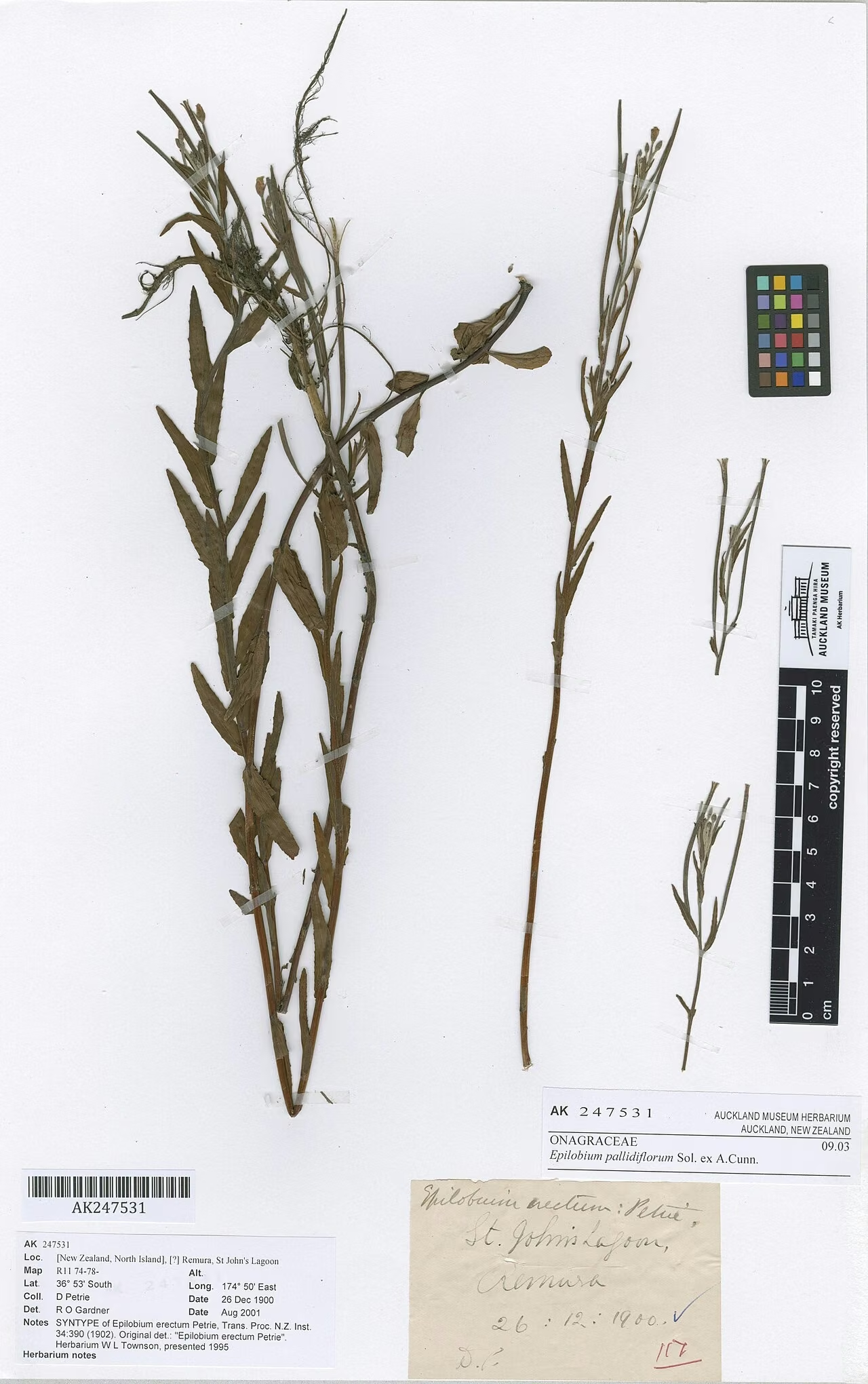
Swamp Willowherb
Epilobium pallidiflorum
Epilobium pernitens
Epilobium pernitens
Plant Conservation
Epilobium margaretiae has been ranked At Risk - Naturally Uncommon since 2009 (Range Restricted in 2004), most recently in 2023 with the qualifiers RR (range restricted) and Sp (sparse). NZPCN notes it is not threatened but is listed because it is a narrow-range endemic with limited geographic extent.
Much of its known range lies within Kahurangi and Nelson Lakes National Parks. Leaving plants undisturbed and keeping trampling and browsing animals in check on high ridges help keep its populations secure.
Frequently Asked Questions
Where does Epilobium margaretiae grow?
It is endemic to the mountains of Nelson, recorded from Kahurangi National Park, Mt Arthur, Mt Peel, the Iron Hills, the Travers and Bryant Ranges and the Mole Tops, on ridge crests at 1300 to 1700 m.
How do you identify Epilobium margaretiae?
NZPCN highlights its consistently opposite leaves and very long floral tube, 3 to 5 mm deep. It is also a creeping, hairless plant with reddish stems rooting at the nodes and white petals 7 to 9 mm long.
Is Epilobium margaretiae threatened?
It is ranked At Risk - Naturally Uncommon because it is a narrow-range endemic with limited geographic extent, not because it is known to be declining.
Can I grow Epilobium margaretiae?
NZPCN describes it as difficult to cultivate and says it should not be removed from the wild, so it is not a practical garden plant.
Sources and Further Reading
The botanical, growing, and conservation details for Willowherb (Epilobium margaretiae) on this page draw on the New Zealand plant references below. Consult them for full technical records and the latest distribution data.