Willowherb
Epilobium billardiereanum
Last updated:
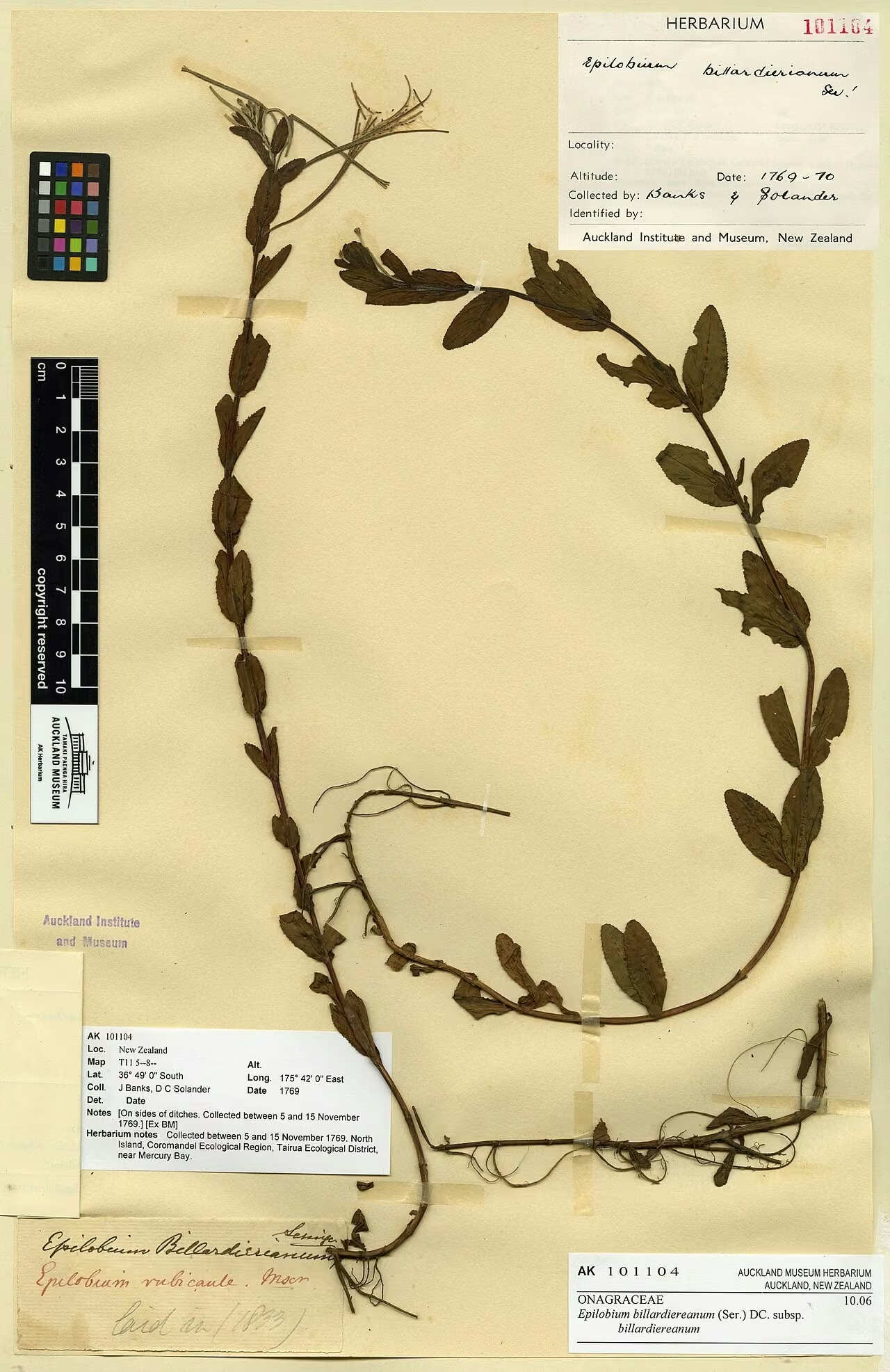
Epilobium billardiereanum is a sprawling willowherb of damp coastal sand. Its decumbent stems form open, roughly circular patches up to 1 m across, with glossy, finely toothed, often red-tinged leaves and small white flowers that flush rose-purple after fertilisation. It grows on sparsely vegetated damp sand flats and the sandy margins of slow streams, lagoons, ponds and lakes on the North, South, Stewart and Chatham Islands, and also in south-eastern Australia. Once regarded as Not Threatened, it was reassessed in 2023 as At Risk - Declining. NZPCN says it is easy to grow in full sun in damp sandy soil. Explore more native ground covers in our native plant guide.
Plant Description
NZPCN describes Epilobium billardiereanum as a decumbent to prostrate, widely spreading perennial herb forming rather open, more or less circular patches up to 1 m in diameter. It is usually low, but stems can reach 0.95 m where they push up through surrounding vegetation, and the flowering branches are weakly ascending. The stems are nearly hairless to weakly hairy, with woody bases that often shed conspicuous flakes of bark in established plants.
The leaves are mostly opposite, subsessile, yellow-green to green and often red-tinged, glossy and hairless, 5 to 40 mm long and 6 to 20 mm wide, narrowly ovate to ovate, with densely and evenly toothed margins carrying 16 to 40 fine teeth on each side. The flowering shoots are densely covered in grey, flattened hairs without glandular hairs. Petals are 3.7 to 7 mm long, white, flushing rose-purple after fertilisation, and the floral tube often has a conspicuous ring of long hairs inside. Capsules are 30 to 75 mm long and densely hairy, releasing brown seeds about 1 mm long with a white coma 7 to 10.5 mm long that breaks off readily.
Its fine, evenly spaced leaf teeth and larger flowers separate it from Epilobium rotundifolium, while its sprawling habit, white flowers and coastal sandy habitat distinguish it from the upright, grey-hairy, rose-purple-flowered Epilobium cinereum.
Quick Facts
| Scientific Name | Epilobium billardiereanum |
|---|---|
| Height | Usually low and sprawling; up to 0.95 m where it climbs through other plants |
| Spread | Up to 1 m |
| Water Needs | High; damp sandy soil |
| Light | Full sun |
| Frost Tolerance | Moderate |
| Salt Tolerance | No information available, though it grows in coastal sites |
| Growth Rate | Fast |
| Lifespan | Perennial |
Climate Best Suited to
Suits mild, temperate coastal climates with reliable moisture in the soil. It grows from Northland to Stewart Island and the Chatham Islands, so it copes with both warm and cool coastal conditions.
Regional Suitability
| City | Climate Suitability |
|---|---|
| Auckland | High |
| Wellington | High |
| Christchurch | High |
| Dunedin | Medium |
Plant Habitat
Epilobium billardiereanum is indigenous to the North Island, South Island, Stewart Island/Rakiura and the Chatham Islands, and also occurs in New South Wales, Victoria, South Australia and Tasmania. Regional assessments rate it Regionally Declining in Northland, Regionally Endangered in Auckland and Regionally Naturally Uncommon in Wellington.
It is usually found on sparsely vegetated damp sand flats, or on sandy ground bordering slow-flowing streams, lagoons, ponds and lake margins. It is mainly coastal, though on the Chatham Islands it also occurs inland.
Growing Requirements
Soil Requirements
NZPCN advises planting it in damp sandy soil, which matches the moist sand flats where it grows naturally.
- Damp sand or sandy loam
- Low fertility is fine
- Avoid heavy, sour clay
Light Requirements
It grows on open, sparsely vegetated sand and does best in full sun.
- Full sun
- Keep clear of overhanging shrubs and rank grass
Water Requirements
Its natural sites stay damp through the year, so it needs consistent soil moisture.
- Keep soil moist
- Suits the edges of ponds and swales
- Water during dry summers if planted away from water
Planting and Establishing
Plant in spring on damp, sandy ground in full sun, such as the margin of a pond, rain garden or coastal swale. Rooted pieces establish quickly and spread outward to form a patch.
In restoration of coastal dune hollows and lagoon margins, plant into sparsely vegetated sand where competition from exotic grasses is low.
Ecological Role
It is a pioneer of open, damp sand, colonising bare ground around coastal wetlands before denser vegetation closes in. Its tiny seeds carry a white plume that detaches readily, allowing wind dispersal to new sand flats.
The pollinators of its small white flowers are not recorded in the sources consulted.
Uses & Significance
Garden Uses
NZPCN notes it is easily grown, making it a practical choice for damp, sunny, sandy spots.
- Pond and lagoon margins
- Coastal rain gardens and swales
- Damp sandy ground cover
Ecological Value
It belongs to the specialised flora of coastal damp sand flats, a habitat that has been greatly reduced by development and weeds.
- Indigenous to New Zealand and Australia
- Colonises bare damp sand
- Declining, so plantings help secure local populations
Landscaping Uses
Use it as a low, informal ground cover at the edge of water features on sandy soils, where its red-tinged glossy leaves and small white flowers soften the margin.
Combine it with other native plants of coastal wetlands, such as small sedges and rushes, keeping the planting open enough that it is not shaded out.
Seasonal Care Calendar
Spring
Flowering begins in October as the stems lengthen and spread.
- Plant rooted pieces
- Clear competing weeds
Summer
Flowering continues through summer, with white flowers turning rose-purple after fertilisation.
- Keep soil damp
- Remove smothering grass
Autumn
Fruiting runs from December to July, so capsules are splitting through autumn.
- Collect fresh seed
- Sow promptly
Winter
Plants persist on their woody stem bases through winter, with fruit still ripening into July.
- No feeding needed
- Mark the patch so it is not disturbed
When to Prune and How Much
Little pruning is needed. Trim back long, straggling stems after fruiting to keep the patch compact, or leave them to root and widen the patch.
Old woody bases naturally shed flaking bark; this is normal and not a sign of disease.
How to Grow Willowherb
NZPCN describes Epilobium billardiereanum as easily grown from rooted pieces and fresh seed, adding that it does best planted in full sun in a damp sandy soil. Both methods work well because the plant flowers over a long season, from October to March, and keeps producing capsules from December to July, while its spreading stems readily root where they lie on damp sand. Because it is now ranked At Risk - Declining, and regionally endangered in Auckland, take material only with permission and from plants of local origin, so that plantings reinforce rather than blur local populations. Grow young plants in a sandy mix kept constantly moist and stand them in full light.
From Seed
Sow seed fresh, as the white coma breaks off readily and seed is easily lost once capsules open.
- Collect capsules as they begin to split
- Sow on the surface of a sandy seed mix
- Stand the tray in a saucer of water to keep it moist
- Place in full light
- Pot on seedlings when they have a few pairs of leaves
From Rooted Pieces
Stems that have rooted into the sand can be detached and grown on. This is the quickest way to get a flowering patch, and a single well-rooted piece can then spread outward across open damp sand by rooting from its sprawling stems.
- Lift a rooted stem section in spring
- Pot into a damp sandy mix
- Keep moist and in good light
- Plant out once actively growing
Pests & Diseases
No specific pests or diseases are recorded for Epilobium billardiereanum in the sources consulted. In cultivation keep it moist, as drought stress weakens plants.
In the wild the main pressure is likely to be loss of open, damp sand habitat to weeds and development, though NZPCN does not list species-specific threats.
Cultural Significance
No traditional Māori name or use is recorded for Epilobium billardiereanum in the sources consulted.
The species was named by Augustin Pyramus de Candolle in honour of Jacques Houttou de Labillardiere (1755 to 1834), a French botanist whose collections from Australia and the Pacific were among the earliest made by Europeans in the region.
Bonus Tip
If you have a pond with a sandy beach edge or a coastal swale that stays damp, this is one of the few native willowherbs that will happily colonise it. Keep the sand open and weed-free and it will spread on its own from rooting stems.
Related Plants
Explore other native plants that share similar characteristics or habitats with Willowherb (Epilobium billardiereanum), offering further insights into New Zealand's diverse flora. These related species provide context and opportunities for complementary planting in your garden.
Epilobium alsinoides
Epilobium alsinoides

Epilobium angustum
Epilobium angustum
Aston's Willowherb
Epilobium astonii
Epilobium atriplicifolium
Epilobium atriplicifolium
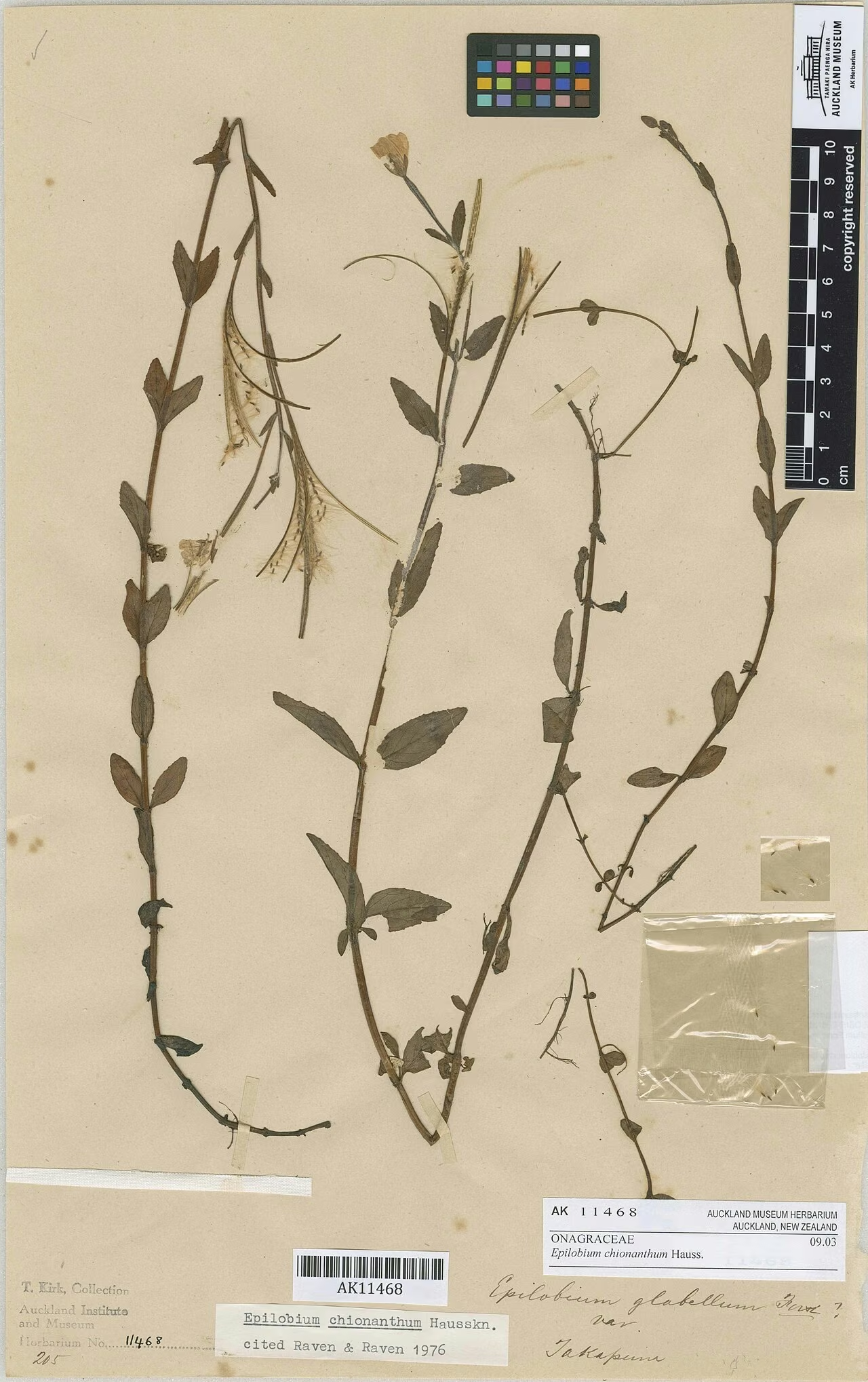
Marsh Willowherb
Epilobium chionanthum
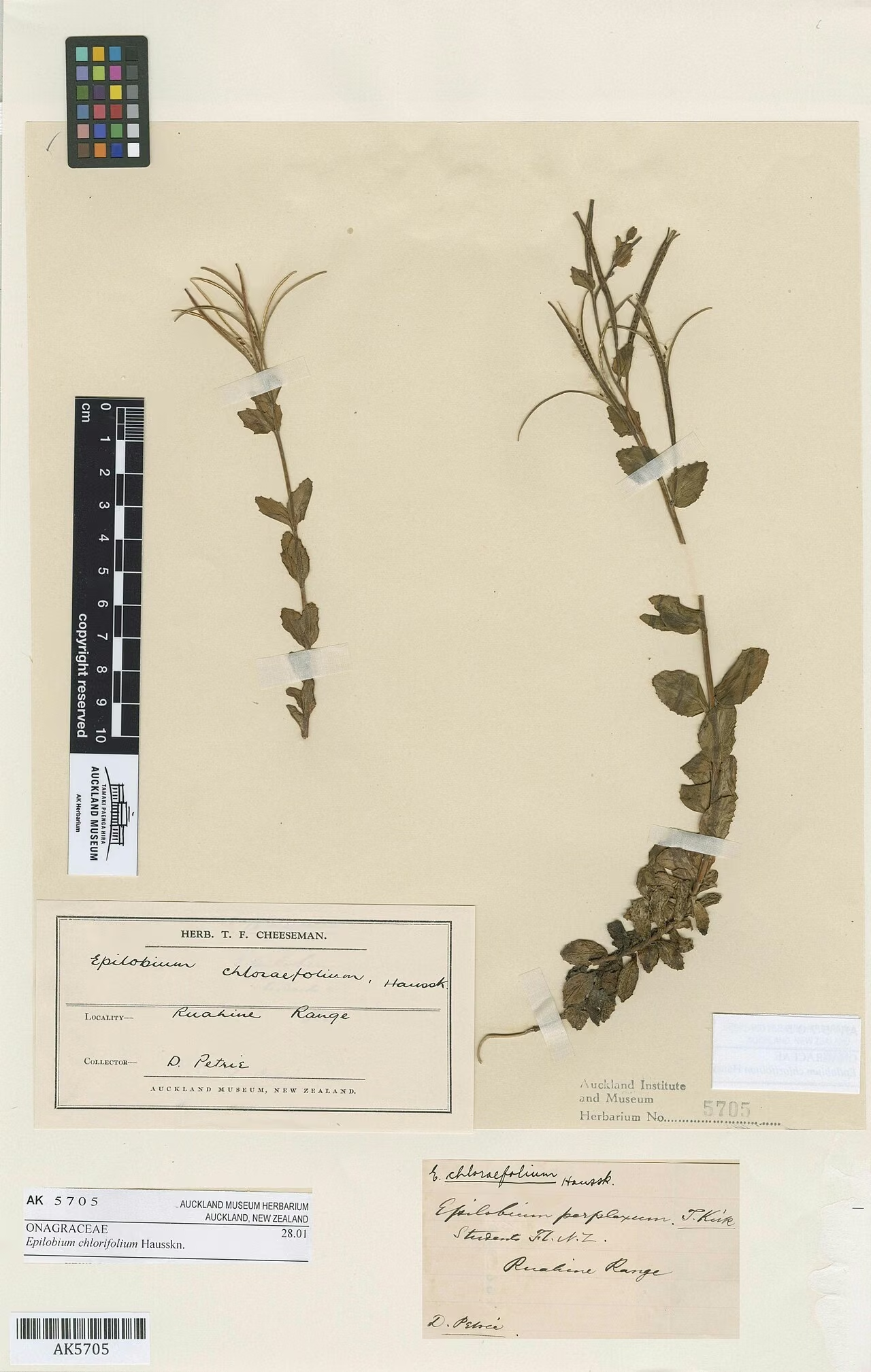
Mountain Willowherb
Epilobium chlorifolium
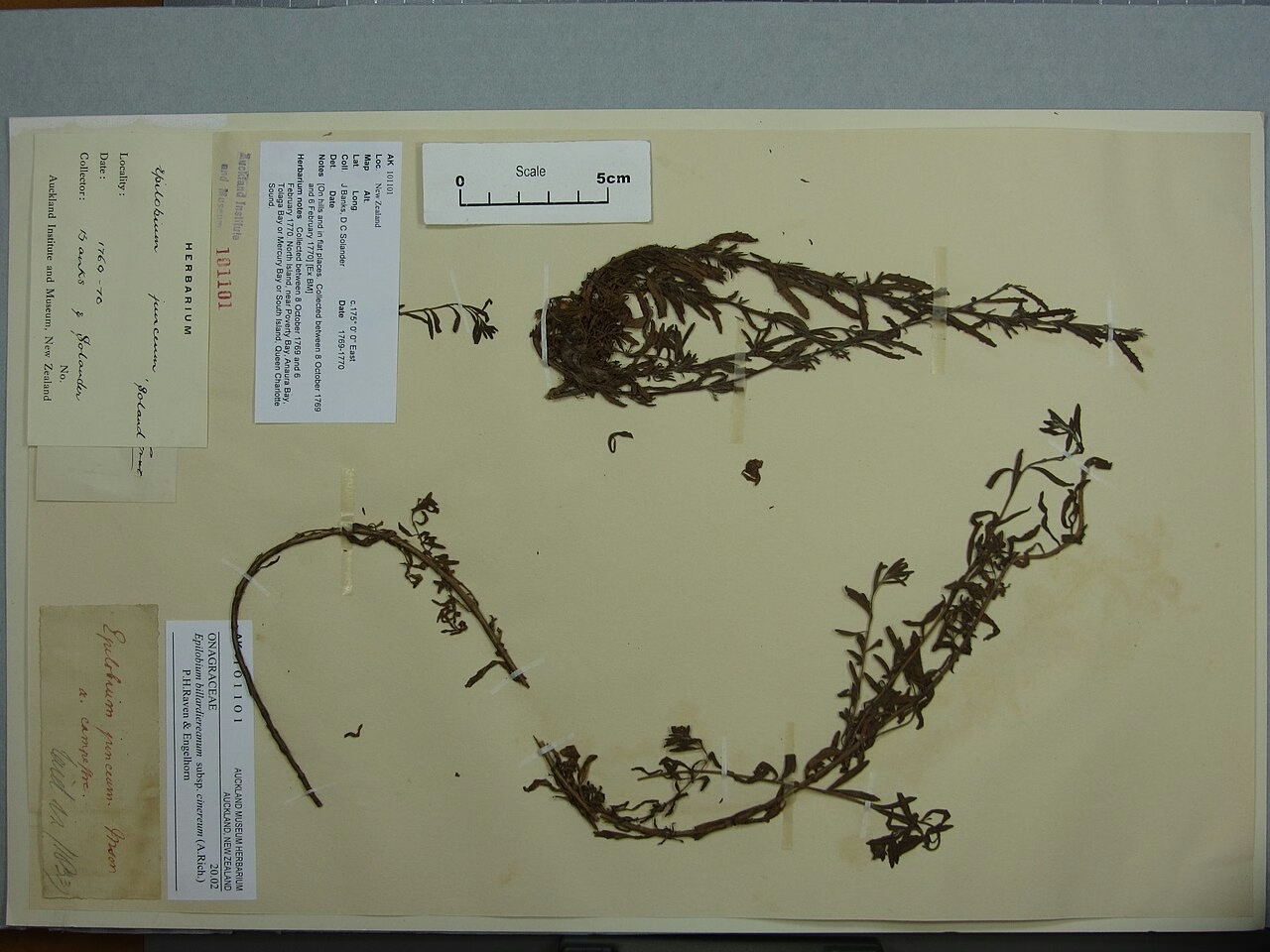
Epilobium cinereum
Epilobium cinereum
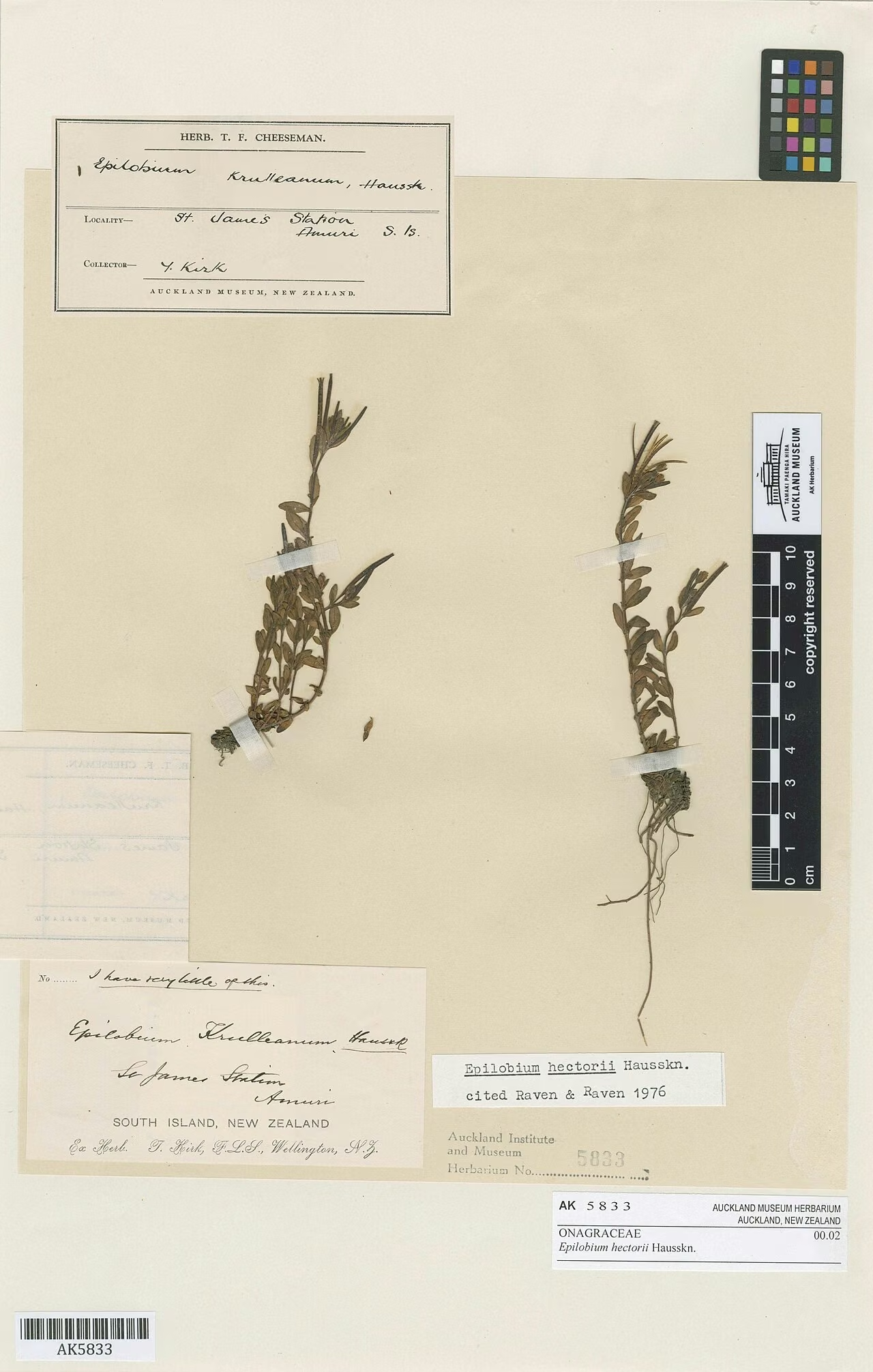
Epilobium hectorii
Epilobium hectorii
Plant Conservation
NZPCN ranks Epilobium billardiereanum At Risk - Declining (2023), carrying the data-poor qualifiers DPR, DPS and DPT, which flag uncertainty about recognition, population size and trend, and the qualifier SO because it is secure overseas in Australia. It was assessed as Not Threatened in 2017.
Protecting damp coastal sand flats and lagoon margins from drainage, development and invasive weeds is the main way to support it, along with planting locally sourced stock in suitable wetland restoration sites.
Frequently Asked Questions
What is the difference between Epilobium billardiereanum and Epilobium cinereum?
NZPCN describes E. billardiereanum as a decumbent, spreading coastal plant with densely and evenly toothed leaves and white flowers, whereas E. cinereum is a stiffly upright, greyish, heavily branched plant with rose-purple flowers. Some floras treat cinereum as a subspecies of E. billardiereanum.
Is Epilobium billardiereanum native to New Zealand?
Yes. It is indigenous, found on the North, South, Stewart and Chatham Islands, and also native to New South Wales, Victoria, South Australia and Tasmania.
Who is Epilobium billardiereanum named after?
It honours the French botanist Jacques Houttou de Labillardiere (1755 to 1834), who collected plants in Australia during the d'Entrecasteaux expedition.
Where does Epilobium billardiereanum grow in the wild?
It grows on sparsely vegetated damp sand flats and on sandy ground bordering slow-flowing streams, lagoons, ponds and lake margins, mostly near the coast.
Sources and Further Reading
The botanical, growing, and conservation details for Willowherb (Epilobium billardiereanum) on this page draw on the New Zealand plant references below. Consult them for full technical records and the latest distribution data.