Aston's Willowherb
Epilobium astonii
Last updated:
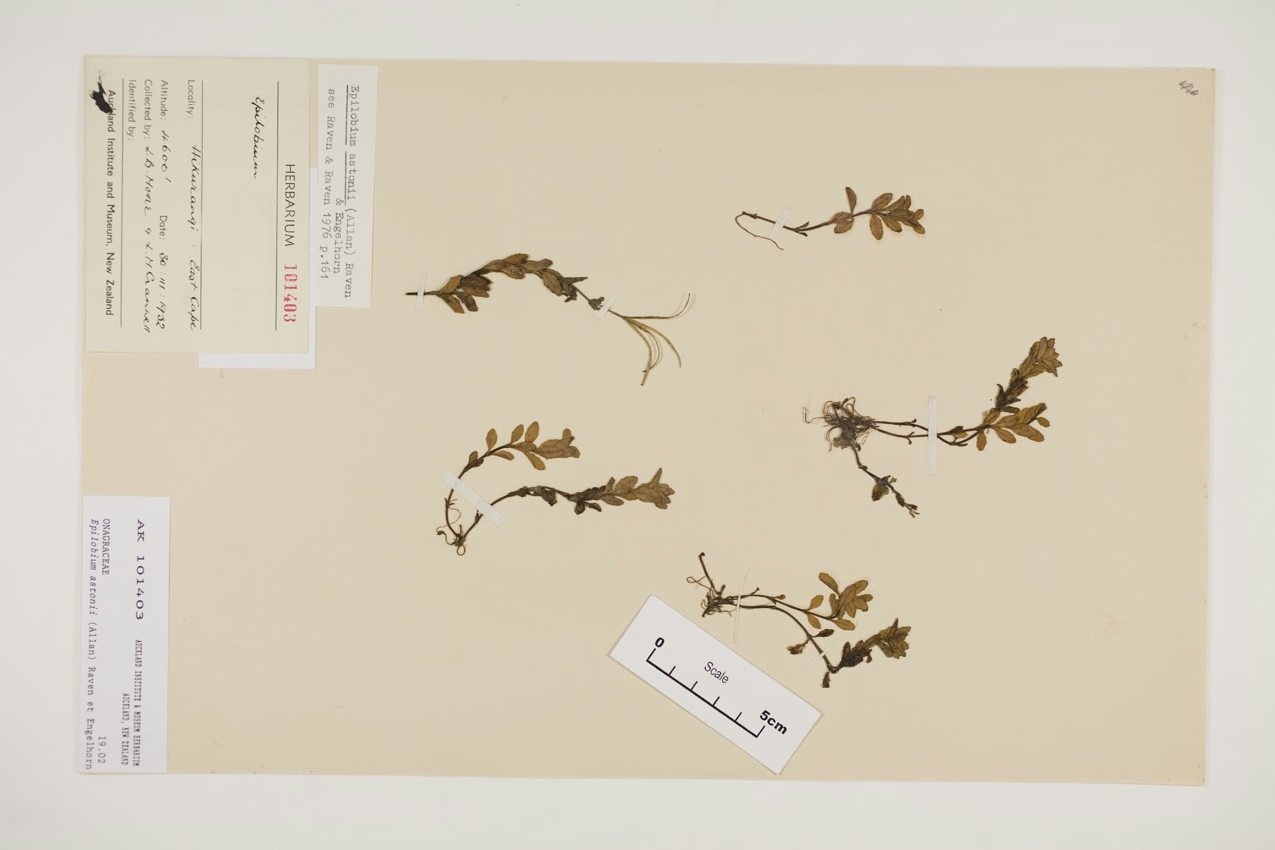
Aston's willowherb (Epilobium astonii) is a heavily branched, bushy willowherb that forms compact clumps up to about 30 cm tall and wide, with the whole plant covered in sticky glandular hairs. Its nodding flowers are white, flushing pink after pollination, and appear from December to February. It is endemic to the North Island's main axial ranges, from the Raukumara Range south to the northern Ruahine Range, growing on greywacke cliffs, gorge walls and exposed ridge-top boulders at 760 to 1370 m. It is ranked At Risk - Naturally Uncommon because of its narrow range, though it is common where it occurs. Explore more native flowering plants in our native plant guide.
Plant Description
Epilobium astonii is an erect, heavily branched perennial herb forming compact bushes up to about 300 mm tall and 300 mm across. The whole plant is hairy, with a mixture of erect plain and glandular hairs, and the stems are glandular-hairy all over. The leaves are opposite or nearly so (alternate in the flowering part), dull green, narrowly obovate with a pointed tip, 13 to 33 mm long and 7 to 15 mm wide, with finely toothed margins bearing 8 to 24 small teeth and three lateral veins on each side. The leaf stalks are 2 to 6 mm long with fine wings.
The flowers and flowering shoots nod. Petals are white, flushing pink after pollination, 7.3 to 13 mm long, with sepals 5 to 6.5 mm long. Flowering is from December to February and fruiting from January to April, when the long capsules split to release seeds carrying tufts of silky hairs.
Its closest relative is Epilobium pubens, from which it was originally described as a variety. E. pubens is slender and scarcely branched with much smaller sepals (2.5 to 2.8 mm) and petals (3.5 to 7 mm), and it is widespread rather than confined to high greywacke rock.
Quick Facts
| Scientific Name | Epilobium astonii |
|---|---|
| Height | 0.09-0.3 m |
| Spread | Up to 0.3 m |
| Water Needs | Low; quite drought tolerant |
| Light | Full sun |
| Frost Tolerance | High; subalpine to alpine |
| Salt Tolerance | No information available |
| Growth Rate | Moderate |
| Lifespan | Perennial |
Climate Best Suited to
Suits cool, montane to subalpine climates with good air movement. It dislikes high humidity, so it is poorly suited to warm, muggy lowland gardens.
Regional Suitability
| City | Climate Suitability |
|---|---|
| Auckland | Low |
| Wellington | Medium |
| Christchurch | Medium |
| Dunedin | Medium |
Plant Habitat
Aston's willowherb is endemic to the main axial ranges of the North Island, from the high points of the Raukumara Range south to the northern Ruahine Range. Recorded sites include Mount Hikurangi and Mount Honokawa in the Raukumara Range, the Kaimanawa Mountains and the Mangaohane Stream area of the Ruahine Range.
It is a subalpine to alpine plant of 760 to 1370 m, growing on greywacke and also limestone, typically on cliff faces, canyon and gorge walls and exposed boulders on ridgelines, where it forms colonies very locally.
Growing Requirements
Soil Requirements
In the wild it roots into crevices and thin soil on greywacke and limestone rock faces.
- Very free-draining, gritty soil
- Rock crevices and stony ground
- Low to moderate fertility
Light Requirements
It grows on exposed cliffs and ridges and does best in full sun.
- Full sun
- Open, airy position
Water Requirements
NZPCN notes that it is quite drought tolerant, reflecting its rock-face habitat where water drains away quickly.
- Water sparingly once established
- Avoid wet, poorly drained soil
- Keep foliage dry in humid weather
Planting and Establishing
Plant Aston's willowherb in a rock garden, crevice bed, scree or pot with very free-draining, gritty mix in full sun. A spot with good airflow is important because it dislikes high humidity.
Raised beds and troughs work well in wetter districts, and a stone-chip mulch keeps the base of the plant dry.
Ecological Role
On cliffs and gorge walls, Aston's willowherb is part of a specialised rock-face flora where few competitors can establish. Its plumed seeds are suited to wind dispersal, allowing it to reach new ledges and crevices.
The insects that pollinate its nodding white flowers are not recorded in the sources consulted.
Uses & Significance
Garden Uses
NZPCN describes it as easily grown, making it one of the more garden-worthy rare willowherbs.
- Rock and crevice gardens
- Alpine troughs and pots
- Collections of rare North Island endemics
Ecological Value
It is a narrow-range endemic of the North Island axial ranges and part of the distinctive cliff flora of the Raukumara, Kaimanawa and Ruahine Ranges.
- Endemic to a small part of the North Island
- Colonises cliff faces and gorge walls
- Cultivated plants provide a backup to wild populations
Landscaping Uses
Use Aston's willowherb as a small, rounded accent plant among rocks, where its dull green, sticky foliage and nodding white to pink flowers stand out against grey stone.
It pairs well with other small alpine natives in troughs and scree beds that share its need for sharp drainage and sun.
Seasonal Care Calendar
Spring
New growth develops on the compact bushy clumps.
- Trim away any dead stems
- Top-dress with grit
Summer
Flowering runs from December to February, with nodding white flowers that turn pink after pollination.
- Water only in prolonged drought
- Ensure good airflow in humid weather
Autumn
Capsules ripen from January to April and release plumed seed.
- Collect seed as capsules split
- Sow fresh
Winter
Plants tolerate cold and frost on their mountain cliffs.
- Keep potted plants out of persistent wet
- No feeding needed
When to Prune and How Much
Little pruning is required. Cut back spent flowering stems after seed has been shed to keep the clump compact.
Remove any dead or rotting shoots from the base, especially after wet, humid spells.
How to Grow Aston's Willowherb
NZPCN notes that Aston's willowherb is easily grown in a pot or rock garden in full sun, that it dislikes high humidity and that it is quite drought tolerant, but it does not describe a specific propagation method. Seed is the natural starting point, since plants flower from December to February and ripen capsules from January to April, and willowherb seed usually germinates readily when fresh. Cuttings of non-flowering shoots are also worth trying, as with other bushy willowherbs. Because this is a narrow-range endemic ranked At Risk, use seed or cuttings from cultivated plants rather than collecting on its cliffs, which are in any case difficult and dangerous to reach. Grow young plants in a gritty, very free-draining mix with plenty of light and air movement to avoid rot and mildew.
From Seed
Collect capsules from cultivated plants as they start to split in late summer or autumn.
- Gather capsules as they begin to split
- Sow seed fresh on the surface of a gritty seed mix
- Lightly press in and keep just moist
- Place in bright light with good ventilation
- Pot seedlings individually into gritty mix once they have a few leaf pairs
From Cuttings
Short non-flowering shoots can be rooted in spring or early summer.
- Take 3 to 5 cm cuttings of non-flowering shoots
- Remove the lower leaves
- Insert into a mix of pumice and fine bark
- Keep lightly moist and out of hot sun, without enclosing in a humid case
- Pot on once roots have formed
Pests & Diseases
No specific pests are recorded for Aston's willowherb. In cultivation the main problems are rot and mildew in humid or poorly drained conditions.
In the wild its cliff habitat protects it from most browsing, and no specific threats are documented in the sources consulted beyond its naturally narrow range.
Cultural Significance
No traditional Māori name or use is recorded for Epilobium astonii in the sources consulted.
It was first described by H.H. Allan in 1961 as a variety of Epilobium pubens and was raised to a separate species by Peter Raven and Tamra Engelhorn in 1971. The species name honours a collector named Aston; the sources consulted do not give further details.
Bonus Tip
If your plant becomes leggy or rots in a humid summer, grow it in a clay pot of pure grit and pumice placed where breezes blow through, and water from below. This mimics the dry, airy cliff faces where it grows naturally.
Related Plants
Explore other native plants that share similar characteristics or habitats with Aston's Willowherb (Epilobium astonii), offering further insights into New Zealand's diverse flora. These related species provide context and opportunities for complementary planting in your garden.
Epacris alpina
Epacris alpina
Tamingi
Epacris pauciflora
Epilobium alsinoides
Epilobium alsinoides

Epilobium angustum
Epilobium angustum
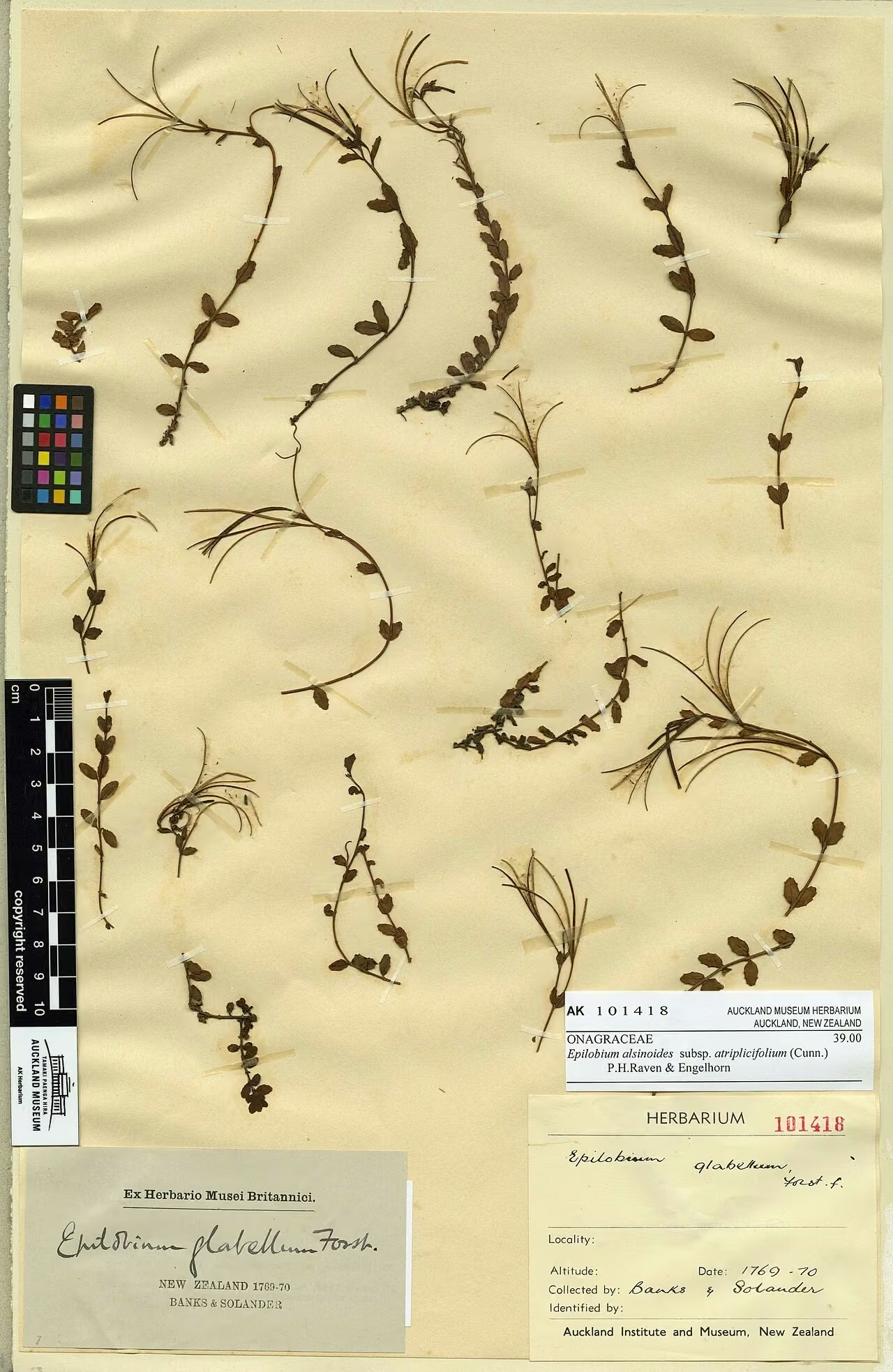
Epilobium atriplicifolium
Epilobium atriplicifolium
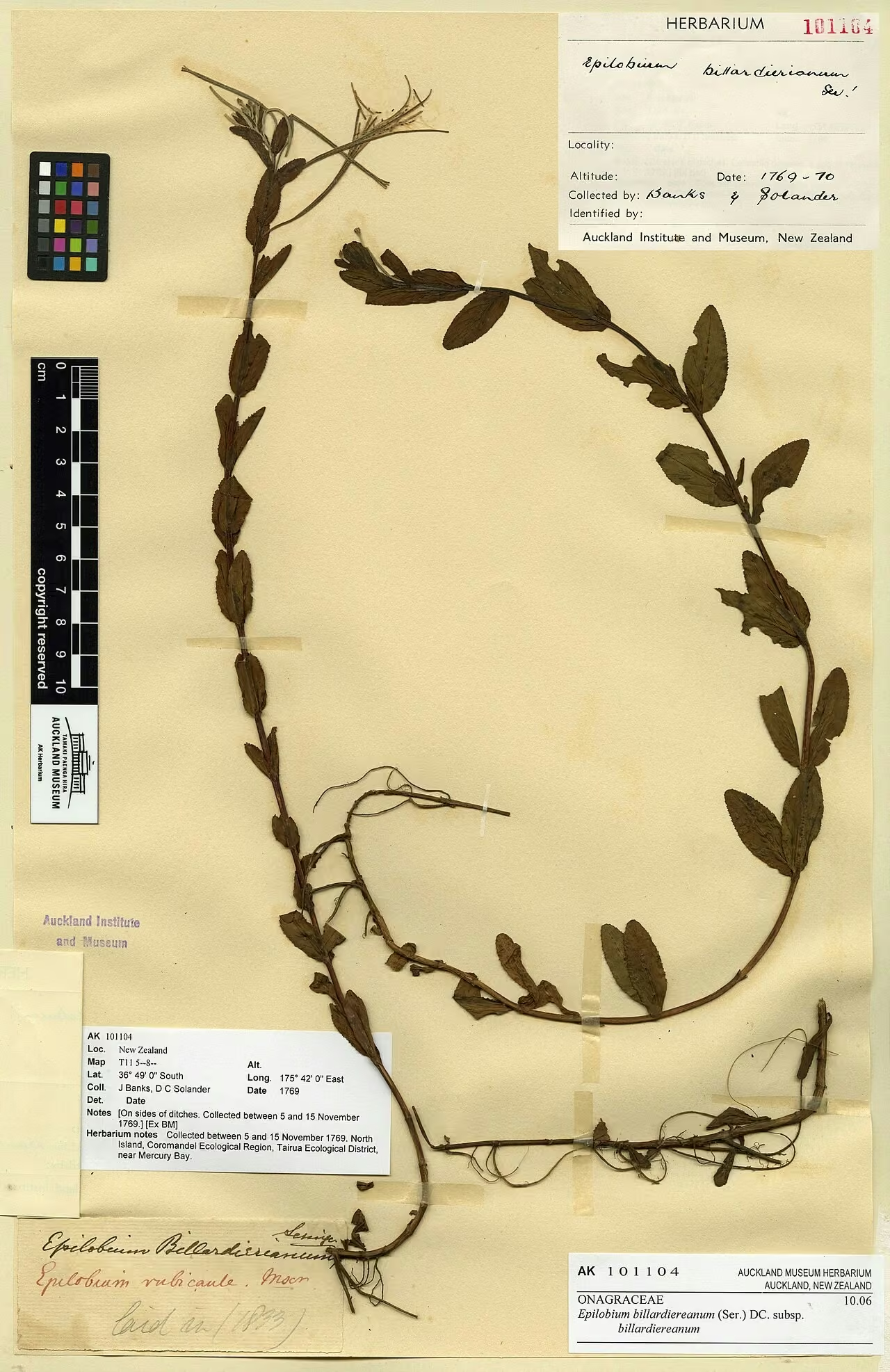
Epilobium billardiereanum
Epilobium billardiereanum
Marsh Willowherb
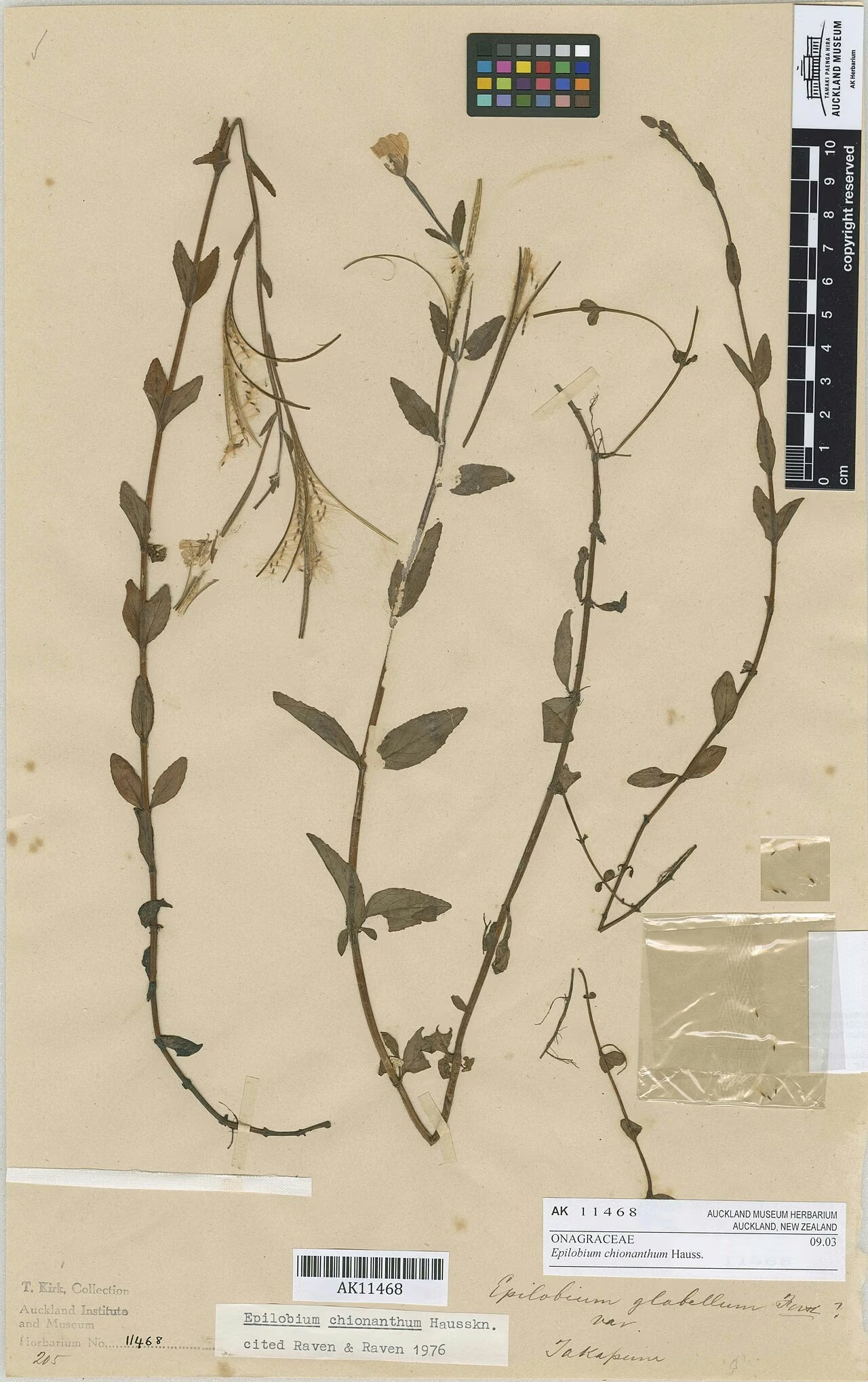
Epilobium chionanthum
Mountain Willowherb
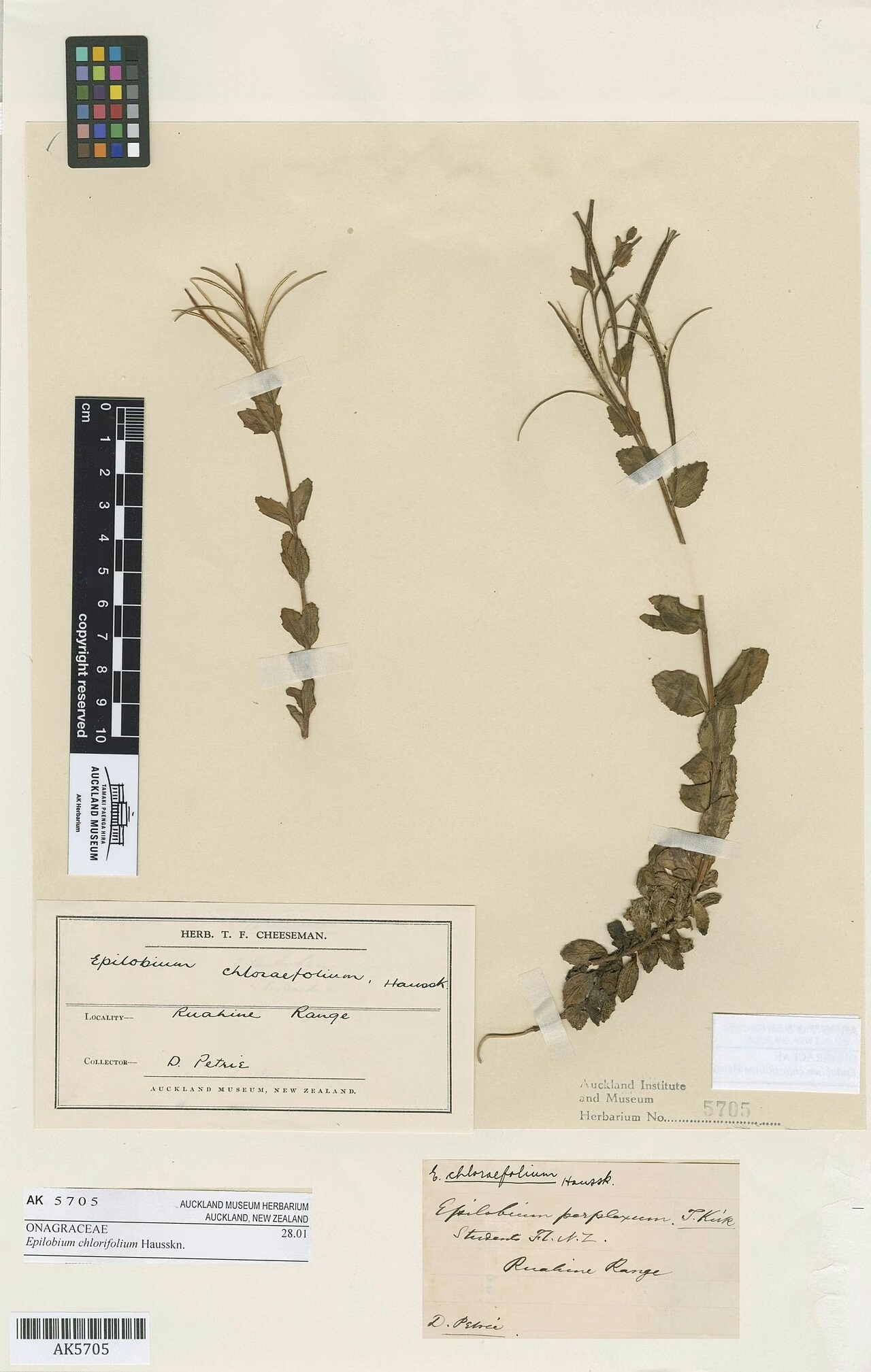
Epilobium chlorifolium
Plant Conservation
Epilobium astonii is ranked At Risk - Naturally Uncommon (2023) because of its narrow range and limited geographic extent, although NZPCN regards it as common where it occurs.
Much of its habitat lies in conservation land in the Raukumara, Kaimanawa and Ruahine Ranges. Keeping weeds and browsing animals in check in these ranges, and maintaining plants in cultivation, help secure it.
Frequently Asked Questions
Where does Aston's willowherb grow?
It is endemic to the North Island's main ranges, recorded from Mount Hikurangi and Mount Honokawa in the Raukumara Range, the Kaimanawa Mountains and the Mangaohane Stream area of the Ruahine Range, at 760 to 1370 m.
How is Epilobium astonii different from Epilobium pubens?
Aston's willowherb is a much larger, compact, bushy plant, whereas E. pubens is slender and scarcely branched. It also has longer sepals (5 to 6.5 mm) and petals (7.3 to 13 mm), and is restricted to subalpine greywacke rock habitats.
Can you grow Aston's willowherb in a garden?
Yes. NZPCN says it is easily grown in a pot or rock garden in full sun, is quite drought tolerant and dislikes high humidity.
Sources and Further Reading
The botanical, growing, and conservation details for Aston's Willowherb (Epilobium astonii) on this page draw on the New Zealand plant references below. Consult them for full technical records and the latest distribution data.