Willowherb
Epilobium atriplicifolium
Last updated:
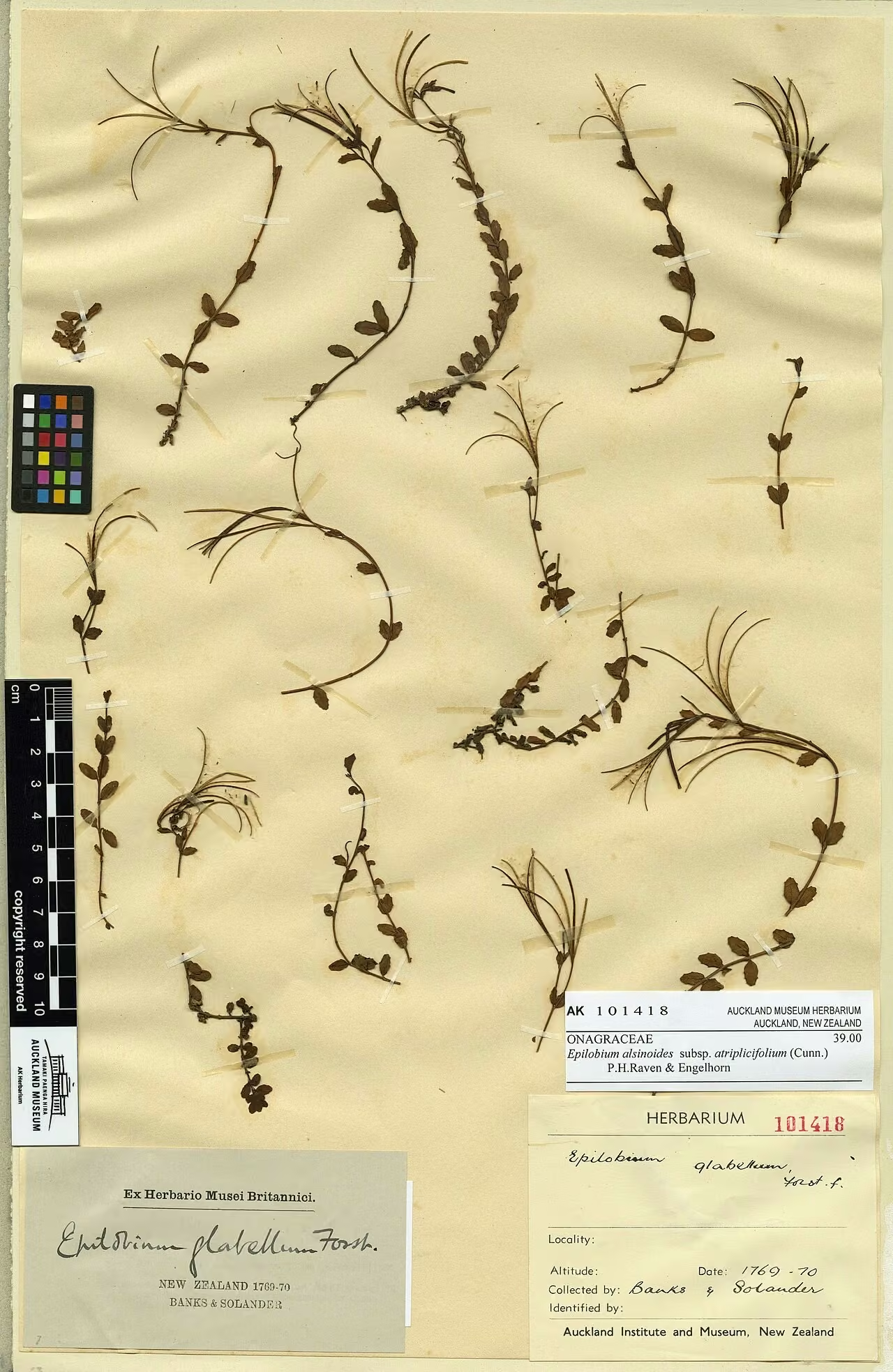
Epilobium atriplicifolium is a small, much-branched willowherb endemic to New Zealand. It forms matted clumps 2 to 36 cm tall, spreading by numerous leafy stolons, with dull bluish-green leaves only 8 to 18 mm long and tiny white flowers that sometimes flush pink after pollination. Its range is unusually wide, covering the North, South, Stewart, Chatham, Antipodes, Campbell and Auckland Islands, although it is scarce north of the Waikato. It grows in open grassland, tussock and damp places from the lowlands to the subalpine zone and is ranked Not Threatened. Some botanists treat it as a subspecies of Epilobium alsinoides. Explore more native flowering plants in our native plant guide.
Plant Description
Epilobium atriplicifolium is a variable, suberect to erect, much-branched and matted perennial herb 20 to 360 mm tall, with numerous leafy stolons arising from the base. Hairs on the stems run down in lines from the leaf stalk margins, or less often cover the stem all round. The leaves are opposite (alternate in the flowering part), usually much shorter than the stem sections between them, sessile or on stalks up to 2 mm long, dull bluish-green and hairless except for a few marginal hairs near the base. Each blade is 8 to 18 mm long and 4 to 5 mm wide, narrowly elliptic to ovate with a pointed tip and 1 to 6 small teeth on each side.
The erect flowers are scattered down the stem. Petals are only 2.8 to 6 mm long, white and sometimes flushing pink after pollination, and the longer stamens shed pollen directly onto the stigma, so the flowers are largely self-pollinating. Capsules are blue-green, 17 to 36 mm long and usually hairless, held on stalks that lengthen to 10 to 90 mm as the fruit ripens. The pale orange-brown seeds are 0.7 to 1.2 mm long with a white tuft of hairs (coma) 5 to 7 mm long that falls readily.
NZPCN separates it from allied willowherbs by its finely reticulate-papillate seeds and the very long fruiting stalks. Compared with Epilobium elegans it has narrower leaves and smaller flowers, and it is taller and less compact than Epilobium cockayneanum, a name the Flora of New Zealand database lists among its synonyms.
Quick Facts
| Scientific Name | Epilobium atriplicifolium |
|---|---|
| Height | 0.02-0.36 m |
| Spread | Matted clumps spreading by leafy stolons |
| Water Needs | Moderate; damp but not humid |
| Light | Full sun to light shade |
| Frost Tolerance | High; reaches subalpine and subantarctic sites |
| Salt Tolerance | No information available |
| Growth Rate | Fast |
| Lifespan | Perennial |
Climate Best Suited to
Suits cool temperate climates with clear, airy summers, from lowland to subalpine and subantarctic conditions. It struggles in warm, humid places, where powdery mildew is a problem.
Regional Suitability
| City | Climate Suitability |
|---|---|
| Auckland | Low |
| Wellington | Medium |
| Christchurch | High |
| Dunedin | High |
Plant Habitat
This willowherb is endemic to New Zealand and recorded from the North, South, Stewart and Chatham Islands and the subantarctic Antipodes, Campbell and Auckland Islands. It is seemingly scarce north of the Waikato, apparently naturally so, and the Northland regional assessment lists it as Regionally Extirpated, even though the original collection in 1833 came from damp woods near Kerikeri Falls.
The Flora of New Zealand describes the broader Epilobium alsinoides group as plants of lowland to montane grassland and open places. Herbarium specimens of this taxon come from tussock grassland, boulder-strewn grassland and subalpine shrubland at around 1200 to 1400 m, and from a gravelly lake shore in the mountains of Nelson.
Growing Requirements
Soil Requirements
It grows in thin grassland soils, gravels and open ground and is not fussy about fertility, provided the soil drains reasonably well.
- Moist, free-draining soil
- Gravelly or stony ground is suitable
- Low to moderate fertility
Light Requirements
As a plant of grassland and open places, it needs plenty of light to stay compact and flower well.
- Full sun preferred
- Tolerates light shade from nearby tussocks
Water Requirements
It favours moist ground but not stagnant, humid air; NZPCN warns it dislikes humidity.
- Keep soil evenly moist in dry spells
- Water at the base rather than over the leaves
- Avoid crowded, humid positions
Planting and Establishing
Plant in spring in an open, sunny spot with moist but well-drained soil. Rooted stolon pieces establish quickly and soon form a small mat.
Space it away from taller neighbours so air moves freely around the stems, which reduces the risk of powdery mildew.
Ecological Role
The flowers are adapted to self-pollination, with the anthers of the longer stamens shedding pollen straight onto the stigma as the flower opens. The plumed seeds are carried by wind, which helps explain how it has reached the scattered subantarctic islands.
As a small, mat-forming herb of open ground it fills gaps between tussocks and on disturbed gravels. Specific insect associations are not recorded in the sources consulted.
Uses & Significance
Garden Uses
It is a modest plant suited to naturalistic plantings rather than showy borders.
- Gaps in rock gardens
- Tussock grassland restoration
- Native botanical collections
Ecological Value
Its occurrence from the North Island to the Auckland Islands makes it one of the most widely spread of New Zealand's endemic willowherbs.
- Endemic to New Zealand
- Part of subantarctic island herbfields
- Colonises open, disturbed ground
Landscaping Uses
Use it as a fine-textured filler between rocks or tussocks, where its bluish-green leaves and tiny white flowers add detail at close range.
Its stoloniferous habit means it can spread, so give it room in a dedicated native grassland or scree planting rather than among slow alpine cushions.
Seasonal Care Calendar
Spring
New shoots and stolons grow from the base as soil warms.
- Divide or plant rooted pieces
- Clear away competing weeds
Summer
Flowering runs from November to March, with small white flowers scattered along the stems.
- Water in dry spells
- Watch for powdery mildew in muggy weather
Autumn
Capsules ripen from January to May on long stalks and split to release plumed seed.
- Collect seed as capsules open
- Sow fresh
Winter
Plants are hardy and persist through cold winters in grassland and on the subantarctic islands.
- No protection needed
- Keep potted plants from sitting in water
When to Prune and How Much
No formal pruning is needed. Cut back old flowering stems after the seed has been shed to keep the mat tidy.
Remove any stems affected by powdery mildew promptly and dispose of them away from the plant.
How to Grow Willowherb
NZPCN describes Epilobium atriplicifolium as easily grown from fresh seed and from rooted pieces. Both methods are straightforward because the plant flowers over a long season, from November to March, and produces plenty of capsules from January to May, while its leafy stolons root readily along the ground. The main difficulty in cultivation is not raising plants but keeping them healthy, since NZPCN notes it dislikes humidity and is prone to powdery mildew in humid climates. Raise seedlings and divisions in an open, well-ventilated spot rather than a closed propagating case. Because it is widespread and Not Threatened, small seed collections are reasonable, but take only a little from any population and follow the rules for the land where you collect.
From Seed
Fresh seed germinates well. Collect capsules as they begin to split and sow straight away, as the white coma detaches easily and the seed blows away.
- Pick capsules as they start to open in late summer or autumn
- Sow seed thinly on the surface of a fine seed-raising mix
- Press lightly without covering deeply
- Keep moist in a bright, airy place
- Prick out seedlings into small pots once they have two leaf pairs
By Division of Rooted Pieces
The leafy stolons root where they touch the ground, giving ready-made plants.
- In spring, lift a rooted stolon or piece of the clump
- Pot into a free-draining mix
- Water in and keep in light shade for a week
- Plant out once new growth appears
Pests & Diseases
Powdery mildew is the main problem in cultivation, especially in humid northern districts. Good spacing, sun and airflow are the best prevention.
In the wild no specific pests are documented in the sources consulted. As a small grassland herb it can be smothered by rank exotic grasses.
Cultural Significance
No traditional Māori name or use is recorded for Epilobium atriplicifolium in the sources consulted.
Allan Cunningham described it from material collected in 1833 in damp woods near Kerikeri Falls in the Bay of Islands. The Flora of New Zealand notes that a complex group of forms has been included under Epilobium alsinoides, and several later names, including E. cockayneanum and E. pratense, are now treated as synonyms.
Bonus Tip
If you garden in a humid district, grow it in a shallow pot on a sunny, breezy deck rather than in a sheltered bed. The extra airflow keeps powdery mildew at bay, and the long fruiting stalks make seed easy to collect for replacement plants.
Related Plants
Explore other native plants that share similar characteristics or habitats with Willowherb (Epilobium atriplicifolium), offering further insights into New Zealand's diverse flora. These related species provide context and opportunities for complementary planting in your garden.
Tamingi
Epacris pauciflora
Epilobium alsinoides
Epilobium alsinoides

Epilobium angustum
Epilobium angustum
Aston's Willowherb
Epilobium astonii
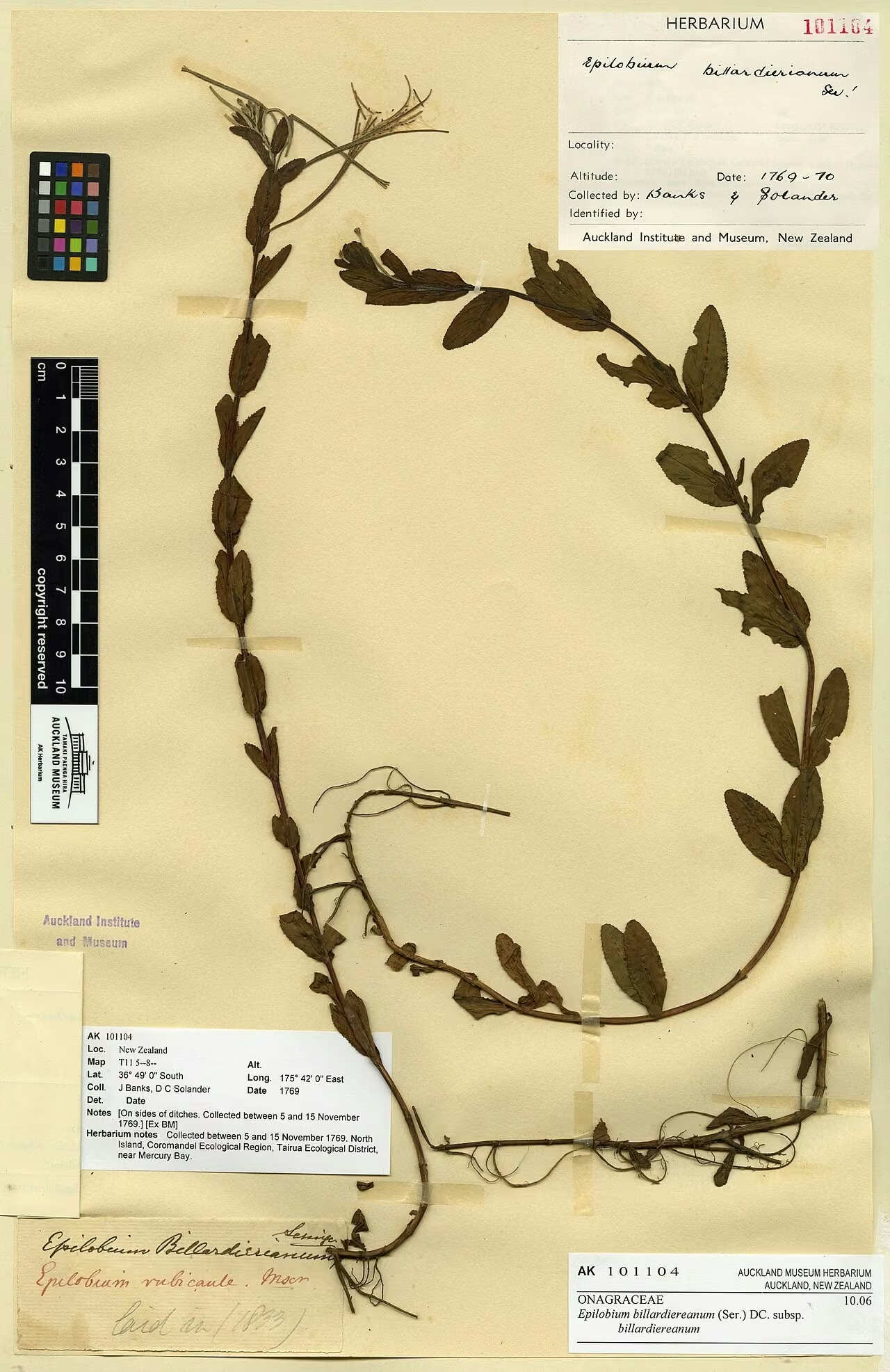
Epilobium billardiereanum
Epilobium billardiereanum
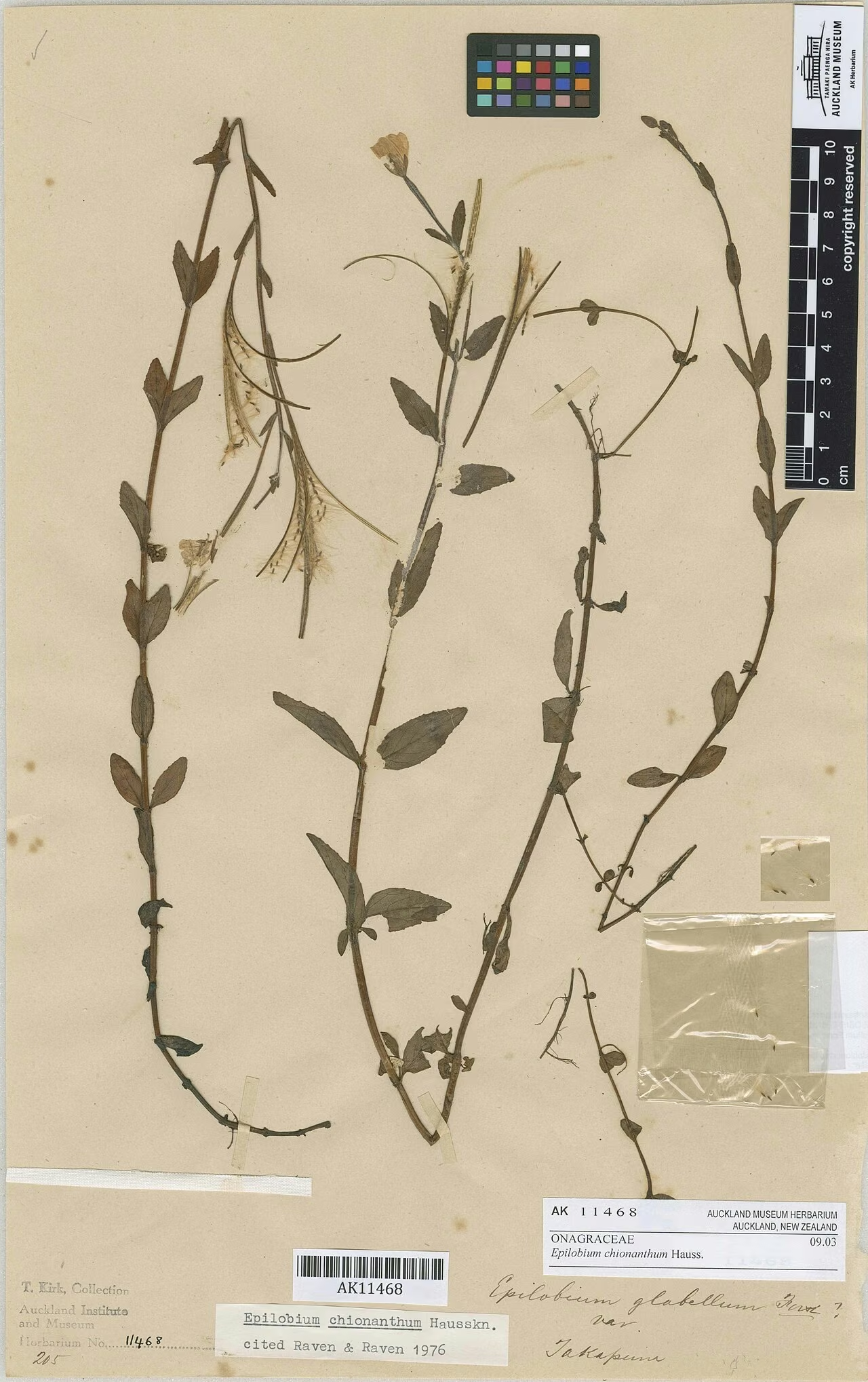
Marsh Willowherb
Epilobium chionanthum
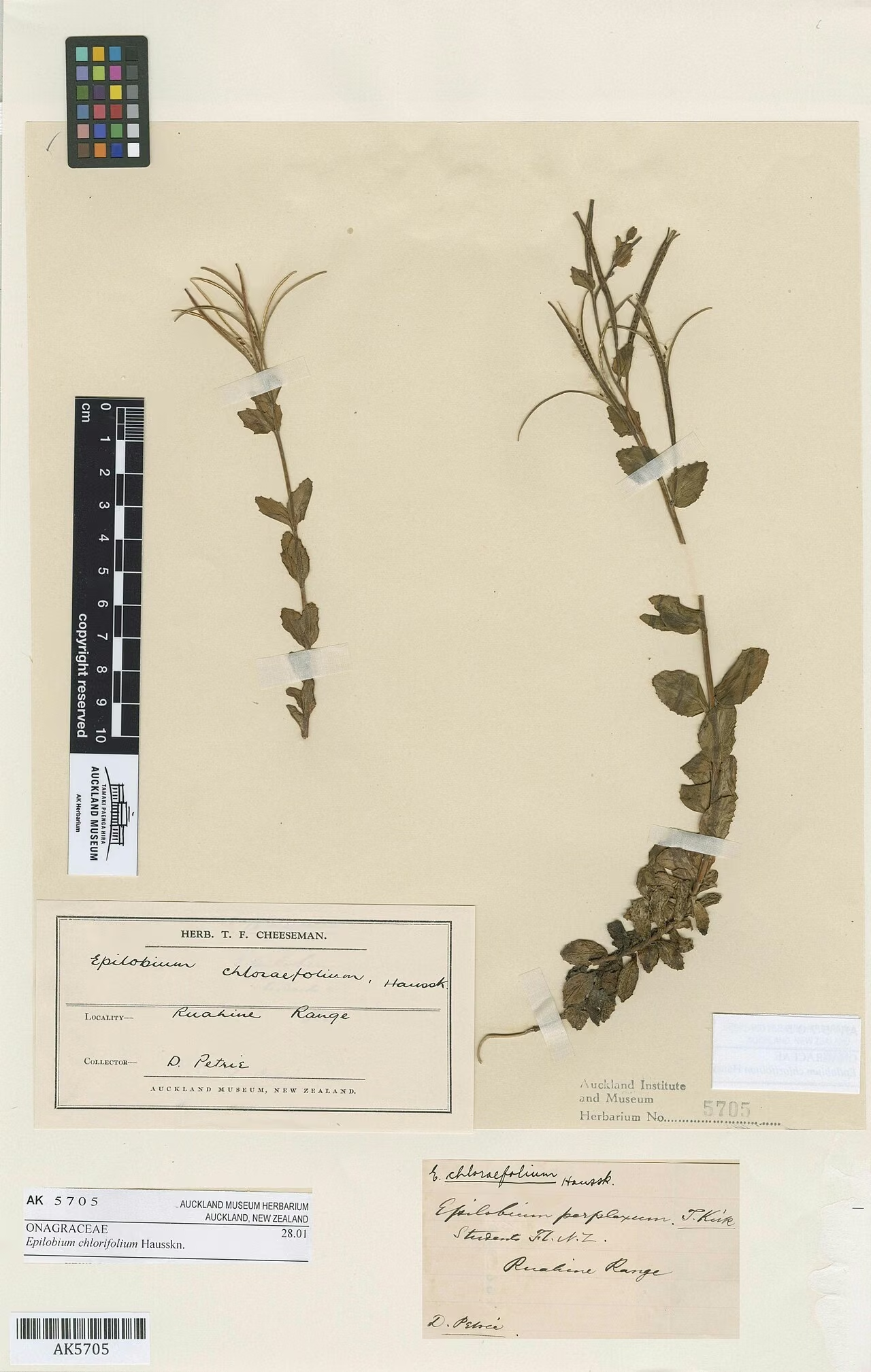
Mountain Willowherb
Epilobium chlorifolium
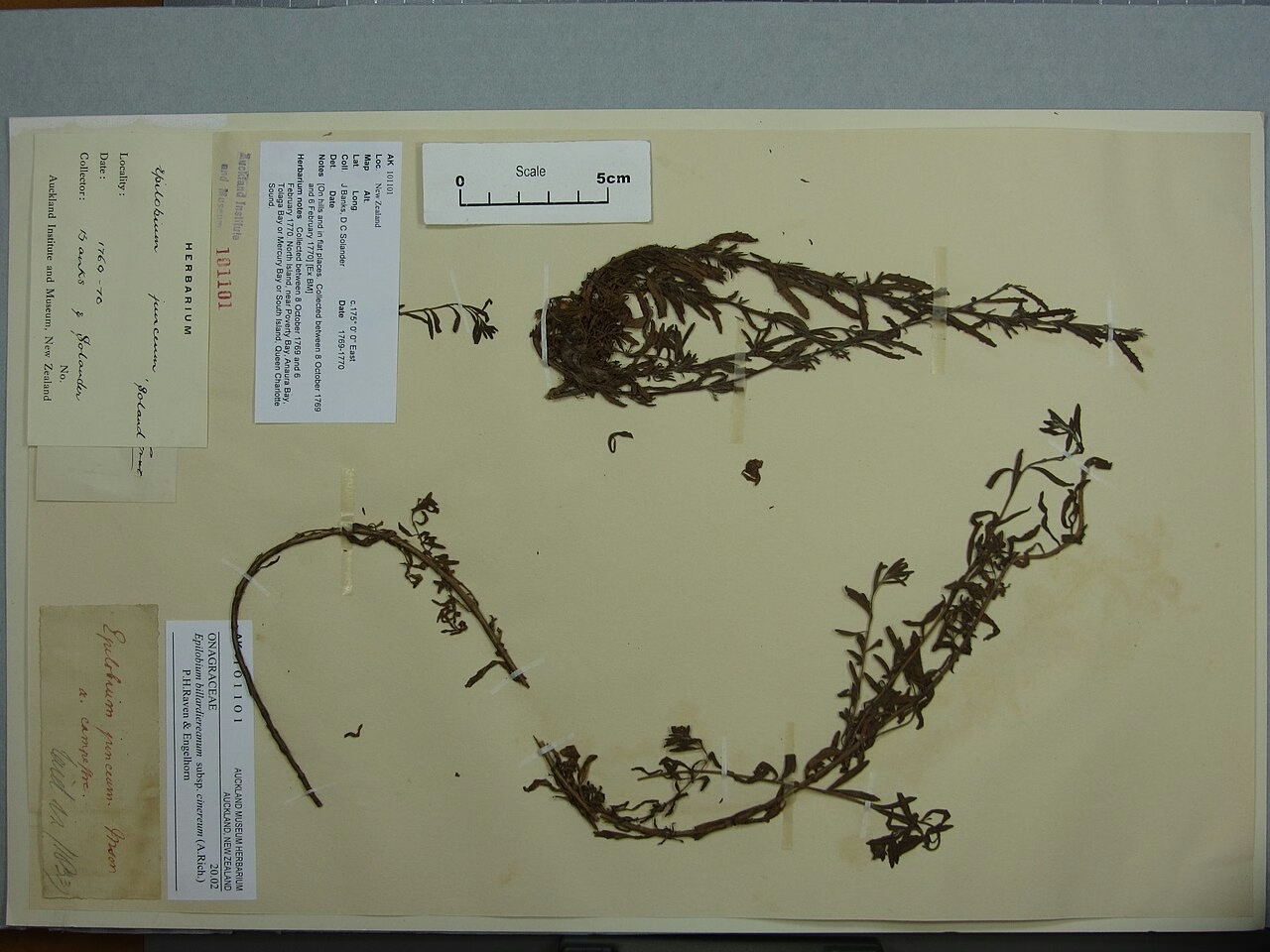
Epilobium cinereum
Epilobium cinereum
Plant Conservation
Epilobium atriplicifolium has been ranked Not Threatened in every national assessment from 2004 to 2023. Regionally it is listed as extirpated in Northland and as Regionally Naturally Uncommon in Wellington, reflecting its natural scarcity in the north.
Its wide range, including protected subantarctic islands, gives it a secure overall position. Keeping open grassland free of rank weeds benefits it along with other small native herbs.
Frequently Asked Questions
Is Epilobium atriplicifolium the same as Epilobium alsinoides?
They are closely related. The NZPCN treats E. atriplicifolium as a separate species, while the Flora of New Zealand database lists it as Epilobium alsinoides subsp. atriplicifolium.
Where does Epilobium atriplicifolium grow?
It is endemic to New Zealand and recorded from the North, South, Stewart and Chatham Islands as well as the subantarctic Antipodes, Campbell and Auckland Islands. It is seemingly scarce north of the Waikato and is regarded as extinct in Northland.
What does the name atriplicifolium mean?
It means leaves like Atriplex, the saltbush or orache genus, referring to the shape of its small leaves.
How do you grow Epilobium atriplicifolium?
NZPCN says it is easily grown from fresh seed and rooted pieces, but it dislikes humidity and is prone to powdery mildew in humid climates.
Sources and Further Reading
The botanical, growing, and conservation details for Willowherb (Epilobium atriplicifolium) on this page draw on the New Zealand plant references below. Consult them for full technical records and the latest distribution data.