Grass Tree
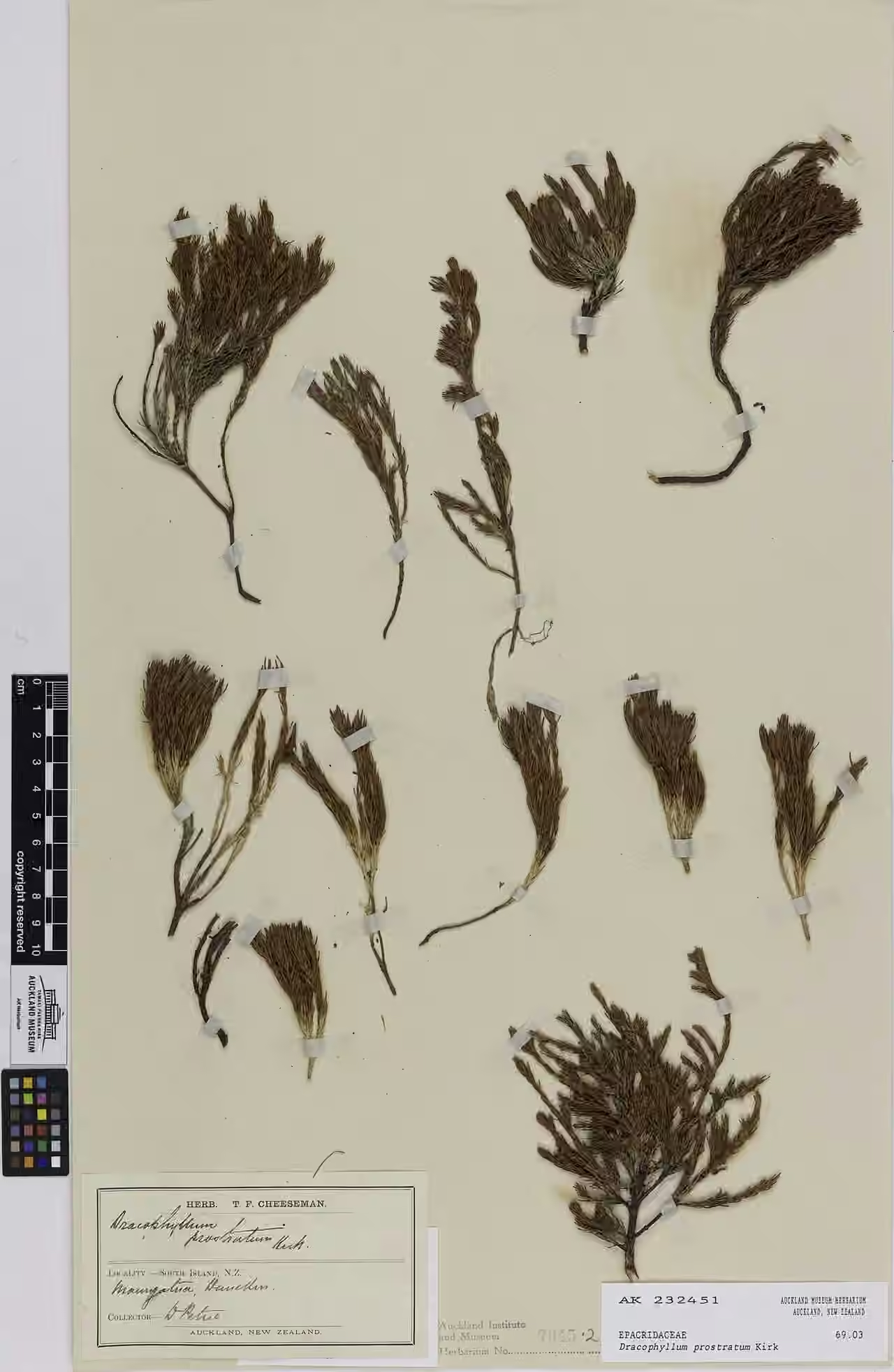
Dracophyllum prostratum
Last updated:
Dracophyllum prostratum is a tiny prostrate, trailing or cushion-forming shrublet in the heath family, endemic to the South Island south of Arthur's Pass. It stands only 10 to 100 mm tall, with creeping stems clothed in minute glaucous to light green leaves, and in early summer it bears single white flowers that stand just clear of the foliage. It grows in subalpine and alpine bogs, cushion fields, herbfield and short tussockland, typically over wet alpine flushes. It is ranked Not Threatened nationally, and is easily overlooked among mosses and other cushion plants. Explore more native ground covers in our native plant guide.
Plant Description
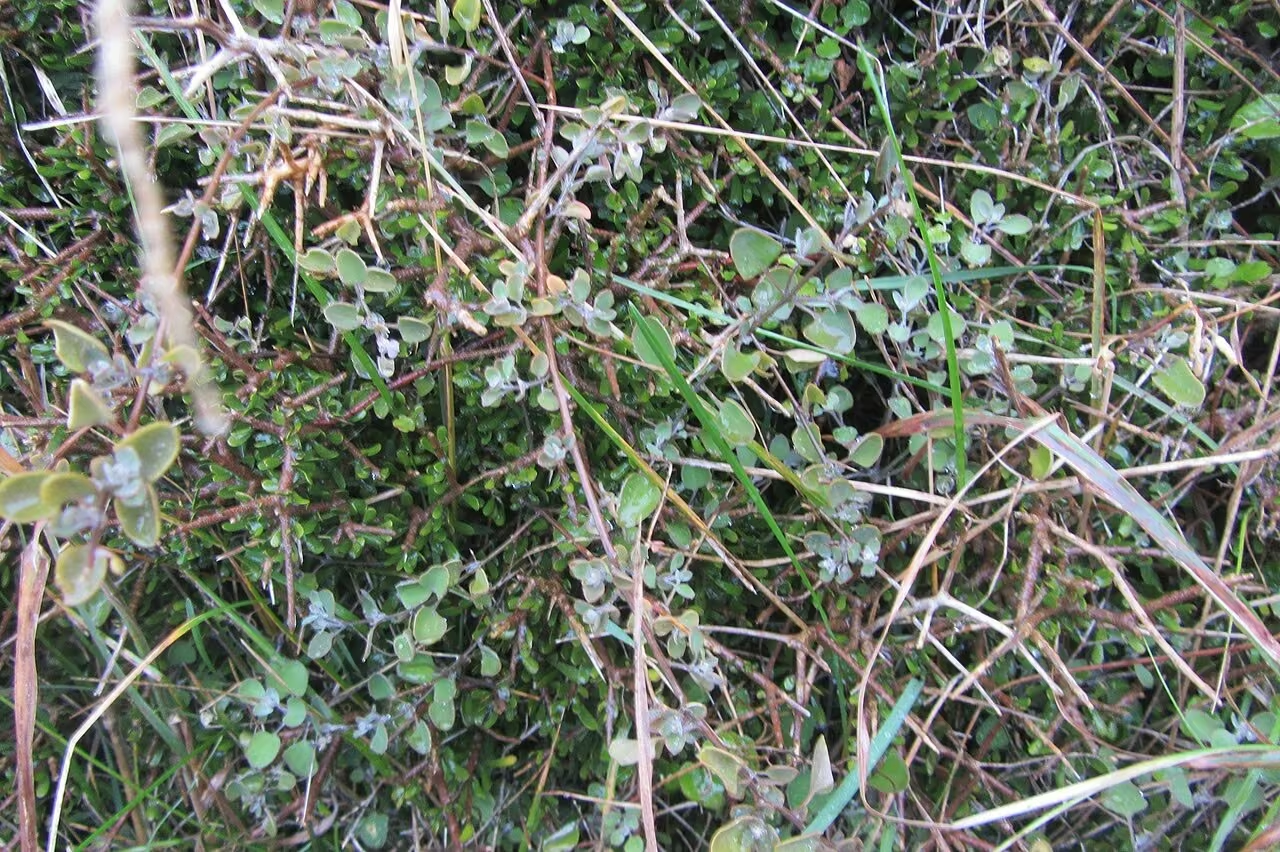
Dracophyllum prostratum is a prostrate, trailing or cushion-forming shrublet only 10 to 100 mm tall. Its rather stout stems creep along the ground for up to about 30 cm and have dark grey to blackish bark, which is smooth rather than fissured.
The leaves are spirally arranged, densely packed and leathery, only 2.5 to 7.3 mm long and 0.5 to 1 mm wide, linear to narrowly triangular, and glaucous to light green. Their margins carry numerous tiny teeth, 10 to 40 per 10 mm. From December to February small white flowers about 4 mm long appear singly at the twig ends, each with a cylindrical corolla tube and spreading lobes, standing beyond the leaves.
Its closest relative is Dracophyllum muscoides, a hard cushion plant. D. prostratum differs in its distinctly prostrate, trailing habit, smooth bark, more finely toothed leaves and flowers that consistently protrude beyond the foliage.
Quick Facts
| Scientific Name | Dracophyllum prostratum |
|---|---|
| Height | 10-100 mm |
| Spread | Creeping stems up to about 0.3 m long |
| Water Needs | Wet; grows over alpine flushes and in bogs |
| Light | Full sun, open alpine sites |
| Frost Tolerance | High; subalpine to alpine species |
| Salt Tolerance | No information available; an inland alpine plant |
| Growth Rate | Very slow |
| Lifespan | Long-lived perennial |
Climate Best Suited to
Suits cold, wet subalpine and alpine climates of the southern South Island with long snow cover and frequent frosts. It cannot tolerate warm, dry lowland conditions.
Regional Suitability
| City | Climate Suitability |
|---|---|
| Auckland | Low |
| Wellington | Low |
| Christchurch | Low |
| Dunedin | Low |
Plant Habitat
Dracophyllum prostratum is endemic to the South Island, where NZPCN records it from the mountains south of Arthur's Pass.
It is a plant of the subalpine and alpine zones, growing in shrubland, herbfield, fellfield, tussockland, bogs, cushion field and short grassland, usually where these have developed over alpine flushes and seepages. It is rated a facultative wetland plant.
Growing Requirements
Soil Requirements
It grows in wet, peaty and often seepage-fed alpine soils that stay saturated for much of the year.
- Acidic, low-fertility peat or silty flush soils
- Permanently damp ground
- No fertiliser
Light Requirements
As a mat-forming plant it depends on open, treeless sites where taller plants do not overtop it.
- Full sun
- Short surrounding vegetation
Water Requirements
Moving water in alpine flushes and the wet surface of bogs supply the constant moisture this species needs.
- Never allow the root zone to dry
- Cool water and soil temperatures are important
Planting and Establishing
Dracophyllum prostratum is not commercially available, and NZPCN strongly discourages collecting it from the wild, recommending that people photograph it instead.
If grown at all, it belongs in a specialist alpine bog setup in a cool climate, with a constantly moist, acidic peat medium, open sun and protection from summer heat. It is not suited to ordinary gardens.
Ecological Role
Its single white flowers are presumably visited by small alpine insects, though specific pollinator studies for this species were not found. Seeds of Dracophyllum are minute and spread by wind.
In alpine flushes and cushion bogs it grows among mosses, other cushion plants and small herbs, helping to form the low, living carpet that holds peat together and slows water movement.
Uses & Significance
Garden Uses
It has no practical garden use outside specialist alpine collections.
- Specialist alpine bog troughs only
- Field identification and photography
Ecological Value
It is part of the mat and cushion vegetation that characterises southern South Island alpine wetlands.
- Binds wet peat surfaces
- Adds to the diversity of alpine flush communities
- Provides microhabitat for invertebrates among its stems
Landscaping Uses
This species is not used in landscaping. In the wild its dull green to glaucous mats blend into the mosaic of cushion bog and short tussock, which is part of its appeal to alpine walkers who seek it out.
For a similar low, fine-textured effect in a garden, more adaptable native groundcovers suited to local conditions are a far better choice.
Seasonal Care Calendar
Spring
New growth begins as snow retreats from the flushes and bogs.
- Wet ground is fragile; keep to tracks
- No intervention needed
Summer
White flowers appear singly at the stem tips from December to February.
- Look for flowers standing above the tiny leaves
- Photograph rather than collect
Autumn
Fruits ripen from February to May and release minute wind-borne seed.
- Leave seed to disperse naturally
- Avoid trampling seedlings in bogs
Winter
Plants lie dormant beneath snow or exposed to hard frost.
- No action needed
- Cultivated plants need cold winters
When to Prune and How Much
No pruning is needed or advisable. The creeping stems are slow to replace and cutting them simply reduces the plant.
In cultivation, only dead stems should be removed, cutting carefully at the point where living growth begins.
How to Grow Grass Tree
NZPCN rates Dracophyllum prostratum as difficult to propagate, notes that it is not commercially available, and strongly discourages taking it from the wild. No proven propagation method for this species was found in the sources consulted. The notes below describe the general techniques specialist growers use for small alpine Dracophyllum, and should be treated as untested for this species. Only plants already in cultivation or material collected under permit for conservation work should be used.
From Seed
Fruits ripen between February and May. Dracophyllum seed is minute and dust-like and is shed quickly once capsules open, so timing matters. Germination in the genus is slow and irregular, and alpine species may benefit from a period of cold before sowing.
- Collect brown capsules just before they split and dry them in paper
- Sow the seed on the surface of a sieved, moist peat-based mix
- Leave the tray outdoors over a cold winter, or chill it for several weeks
- Keep the surface moist and the tray in bright but cool conditions
- Prick out seedlings only when they are large enough to handle
By Layering
The creeping stems sometimes root where they touch moist ground, so a rooted section of a cultivated plant may be separated and grown on. This is the gentlest option for an established plant.
- Pin a creeping stem of a cultivated plant onto moist peat
- Wait until roots have clearly formed, which may take a full season
- Sever the rooted section and pot it into a peaty, acidic mix
- Keep cool and constantly moist until it re-establishes
Pests & Diseases
No specific pests or diseases of Dracophyllum prostratum are recorded in the sources consulted. In wild populations the main risks are trampling of soft bog surfaces and changes to drainage.
In cultivation, plants are likely to fail from heat stress, drying out, or root rot if the water is stagnant and warm.
Cultural Significance
No Māori name or traditional use specific to Dracophyllum prostratum is recorded in the sources consulted.
The species was described by Thomas Kirk, and its name simply means prostrate, describing its creeping habit. The Flora of New Zealand still relies on H.H. Allan's 1961 description for this species, which shows how little detailed study it has received.
Bonus Tip
When searching for this species in an alpine bog, look for tiny white flowers that clearly poke out above the foliage on trailing stems. If the flowers are hidden among the leaves on a hard, domed cushion, you are more likely looking at Dracophyllum muscoides.
Related Plants
Explore other native plants that share similar characteristics or habitats with Grass Tree (Dracophyllum prostratum), offering further insights into New Zealand's diverse flora. These related species provide context and opportunities for complementary planting in your garden.
Marble Inaka
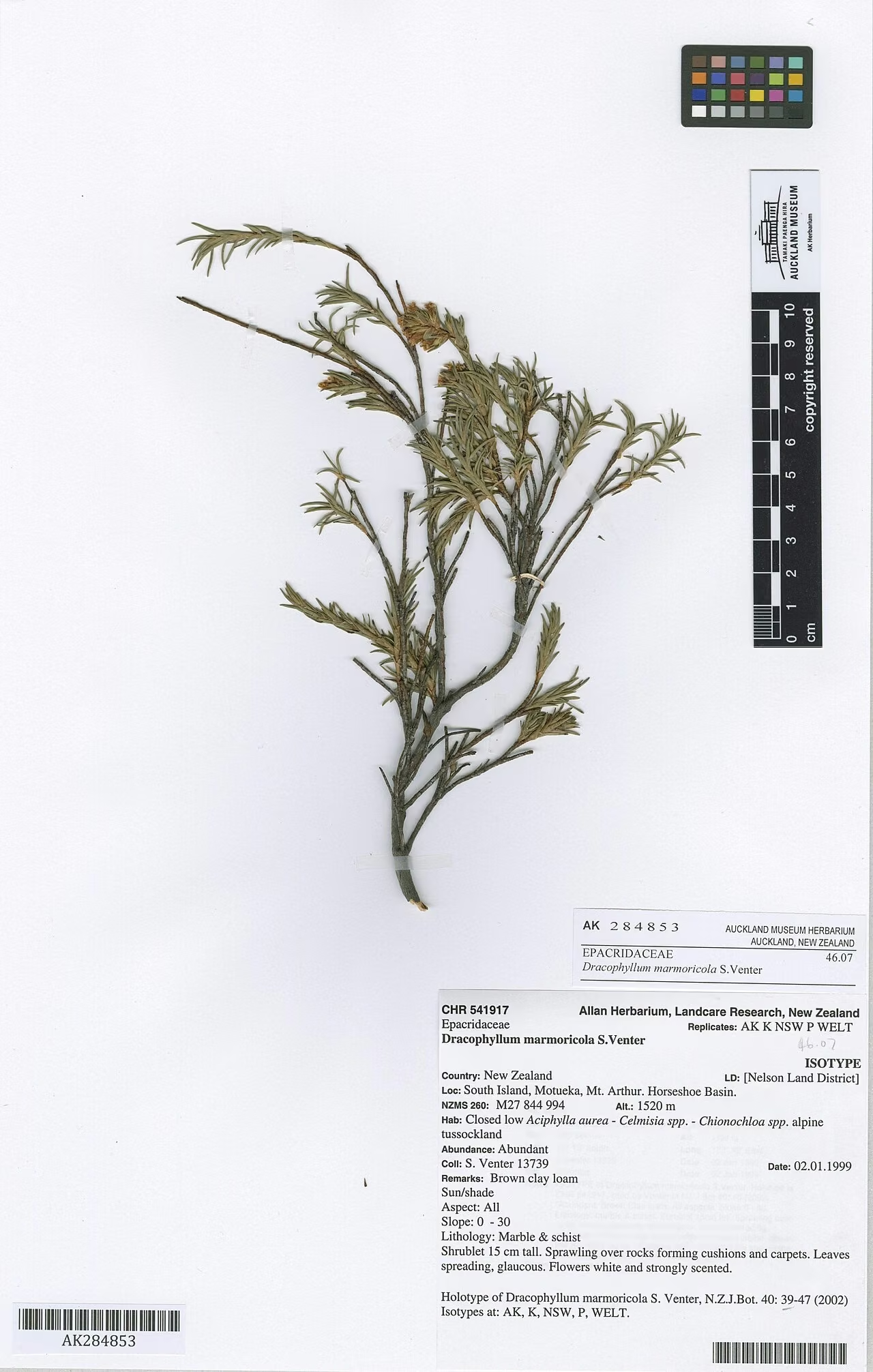
Dracophyllum marmoricola
Swamp Neinei
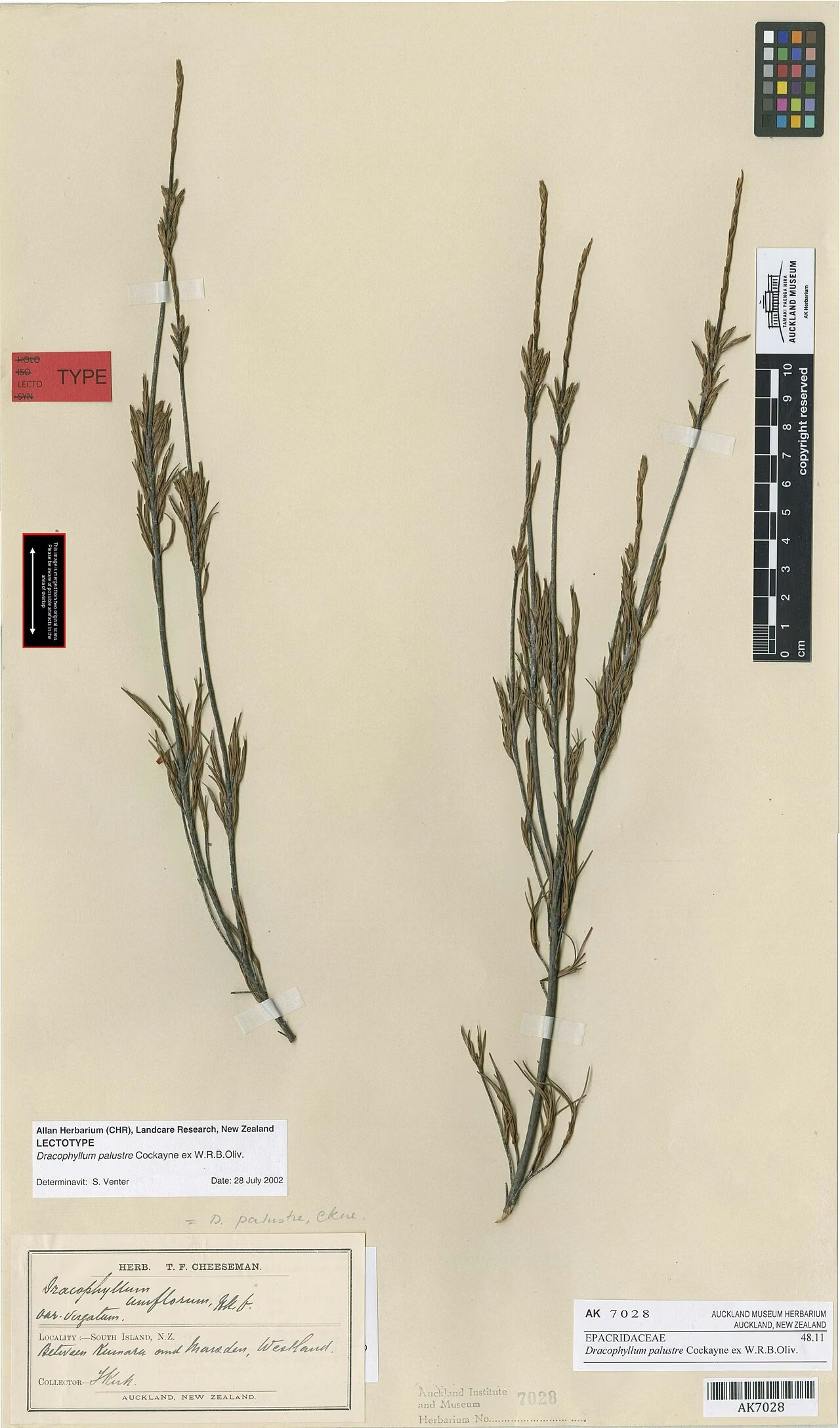
Dracophyllum palustre
Dracophyllum pearsonii
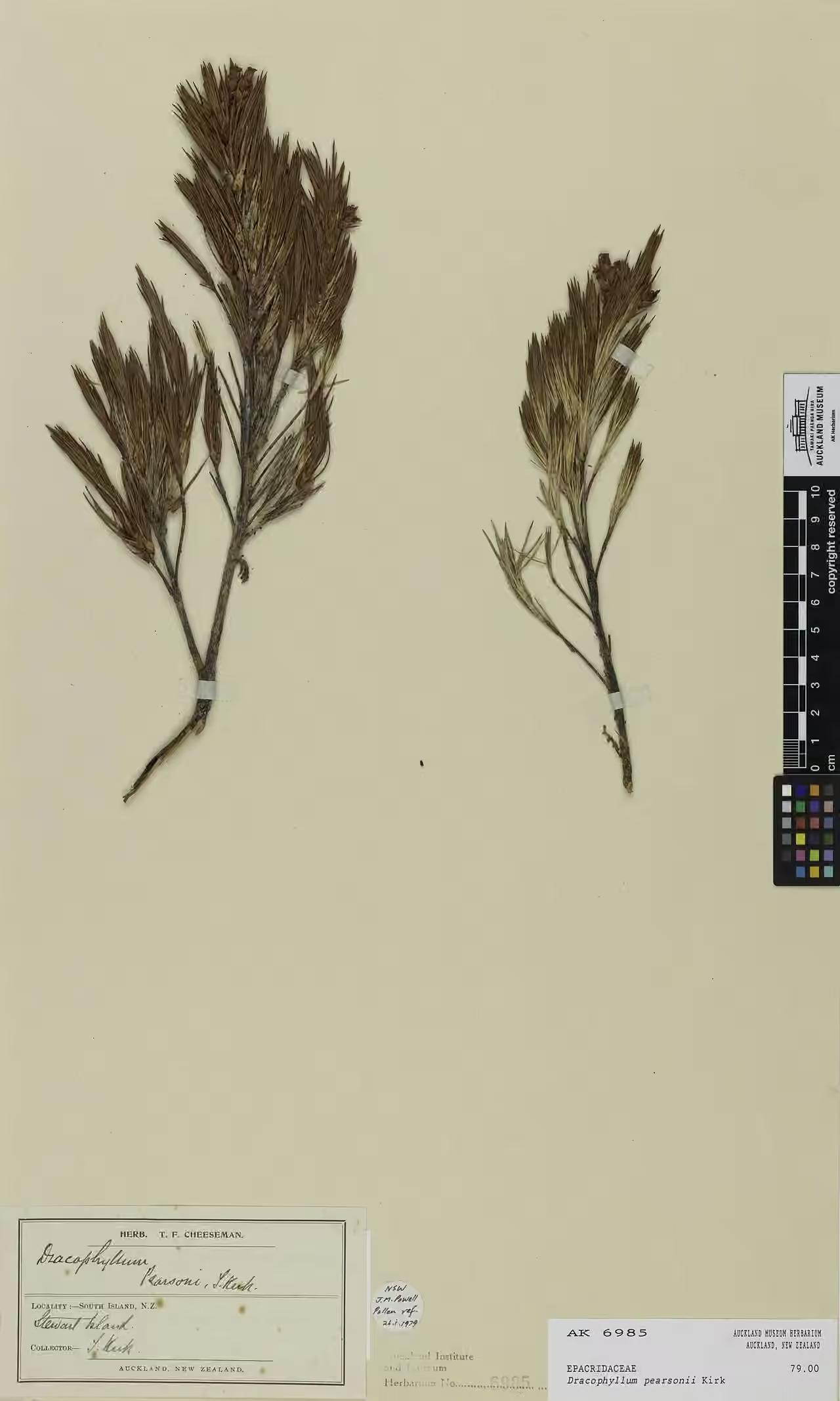
Dracophyllum pearsonii
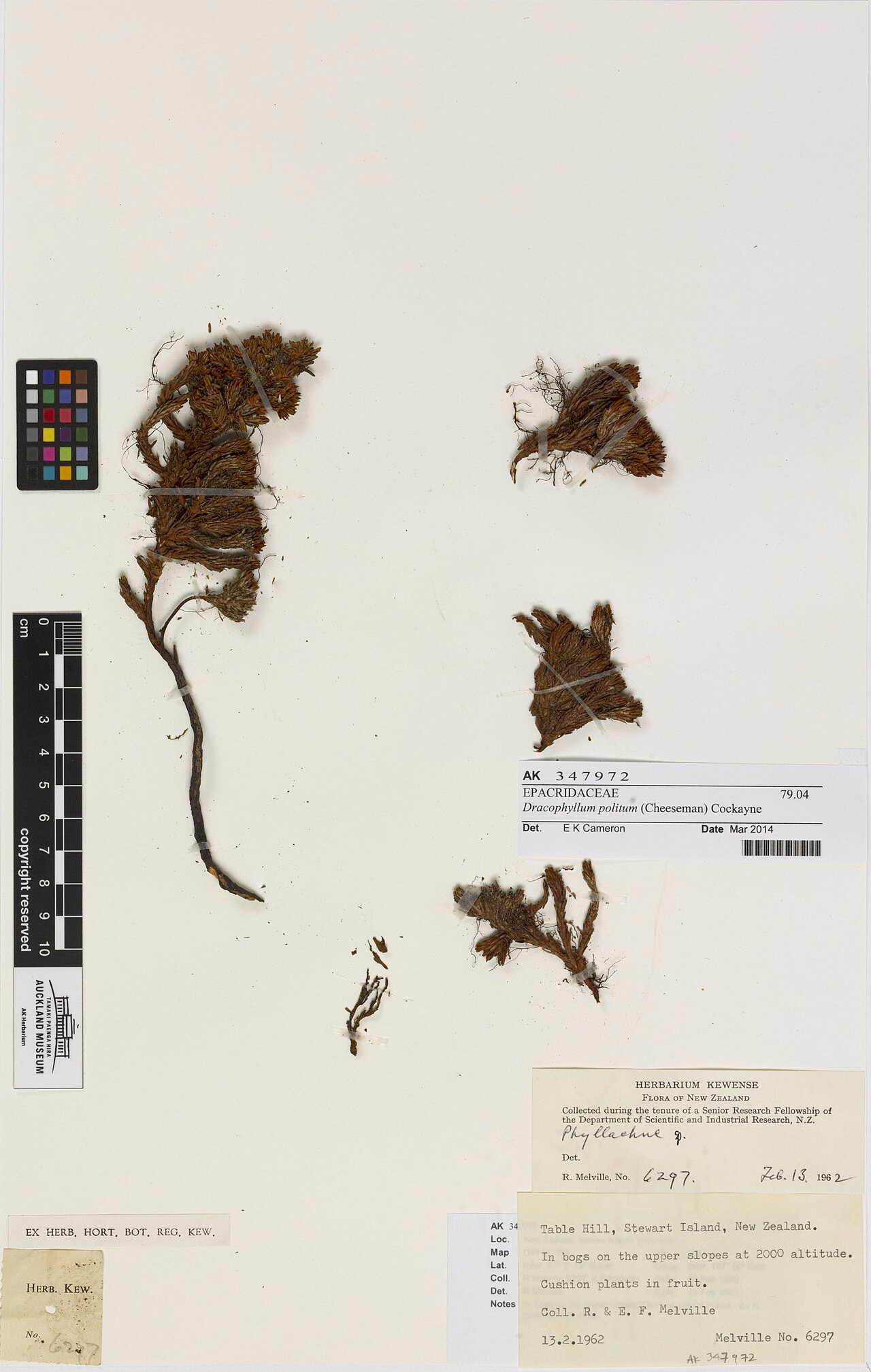
Dracophyllum politum
Dracophyllum politum
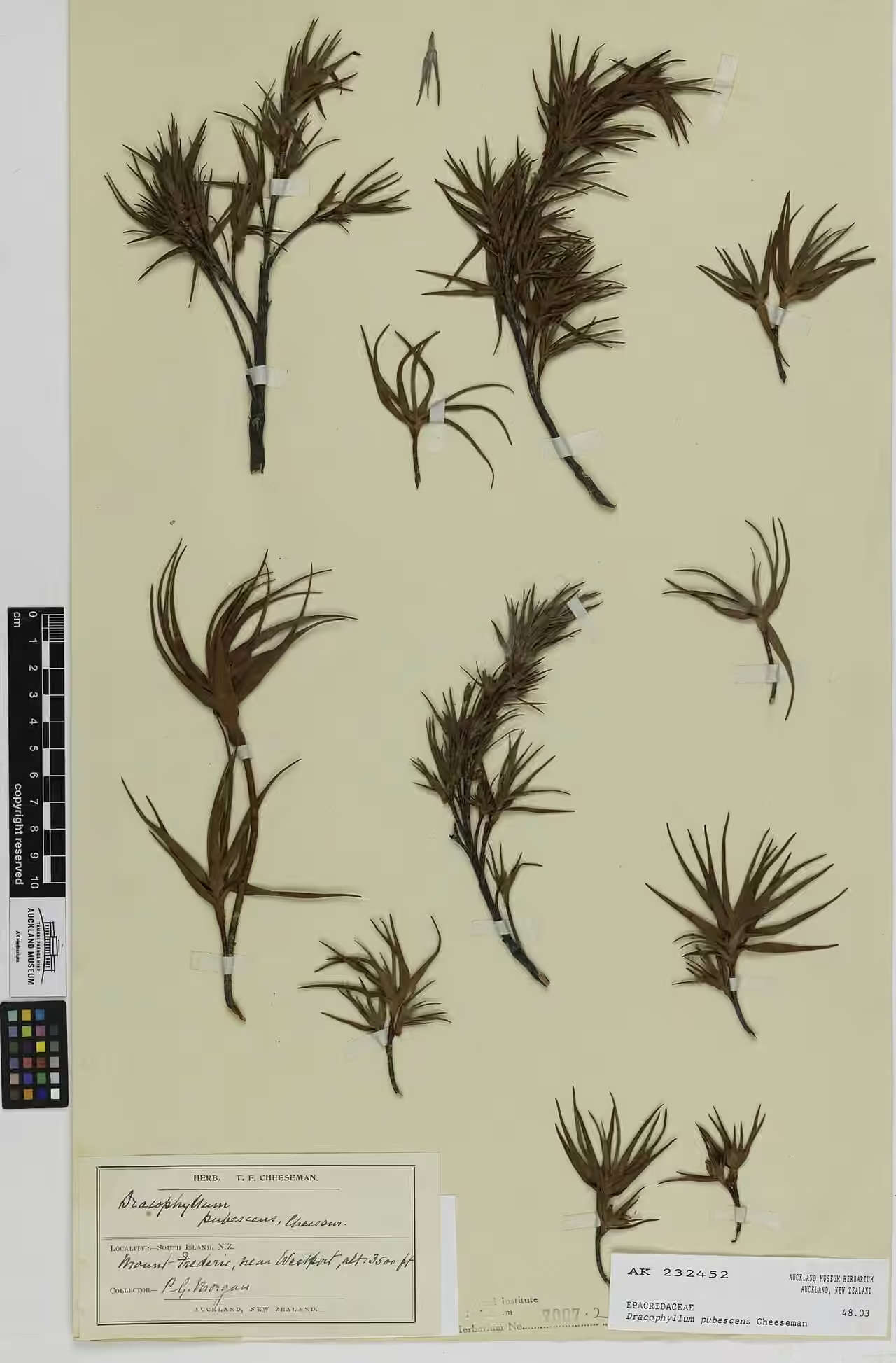
Dracophyllum pubescens
Dracophyllum pubescens
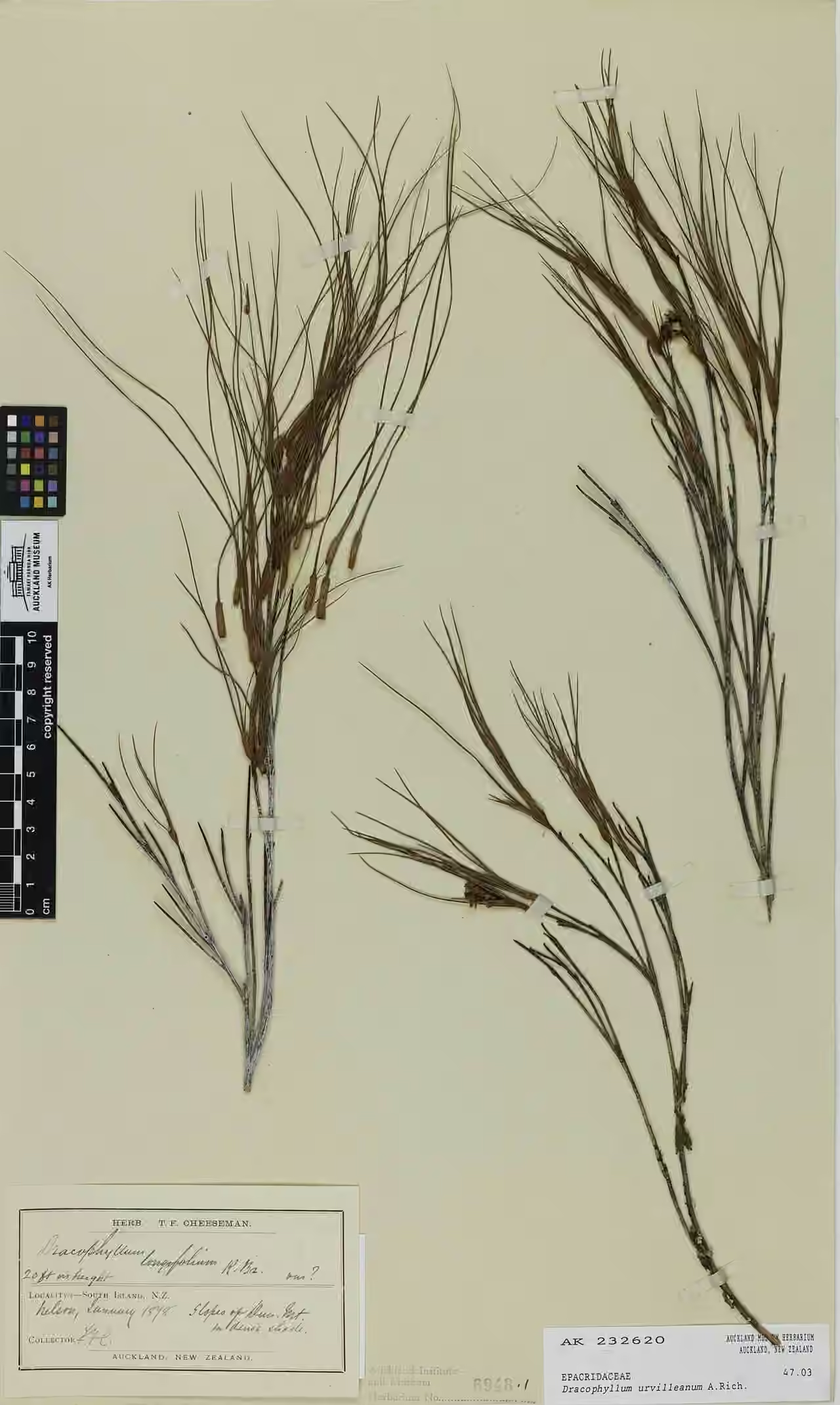
D'Urville's Grass Tree
Dracophyllum urvilleanum
Bamboo Orchid
Earina aestivalis
Chenopodium allanii
Chenopodium allanii
Plant Conservation
Dracophyllum prostratum is ranked Not Threatened in the 2023 national assessment. In Otago it is assessed as Regionally At Risk - Regionally Naturally Uncommon, reflecting its patchy occurrence in specialised wet alpine habitats there.
Keeping alpine wetlands intact, avoiding drainage, vehicle damage and trampling, and controlling invasive weeds in the high country all help protect it.
Frequently Asked Questions
How do you tell Dracophyllum prostratum from Dracophyllum muscoides?
D. prostratum is distinctly prostrate with smooth bark, has 10 to 40 marginal teeth per 10 mm of leaf compared with 5 to 10 in D. muscoides, and its flowers are always longer than the surrounding leaves.
Where is Dracophyllum prostratum found?
It is endemic to the South Island south of Arthur's Pass, growing in subalpine and alpine shrubland, herbfield, fellfield, tussockland, bogs, cushion field and short grassland over alpine flushes.
When does Dracophyllum prostratum flower?
It flowers from December to February, producing single small white flowers at the twig ends, and its fruits ripen from February to May.
Sources and Further Reading
The botanical, growing, and conservation details for Grass Tree (Dracophyllum prostratum) on this page draw on the New Zealand plant references below. Consult them for full technical records and the latest distribution data.