Swamp Neinei
Dracophyllum palustre
Last updated:
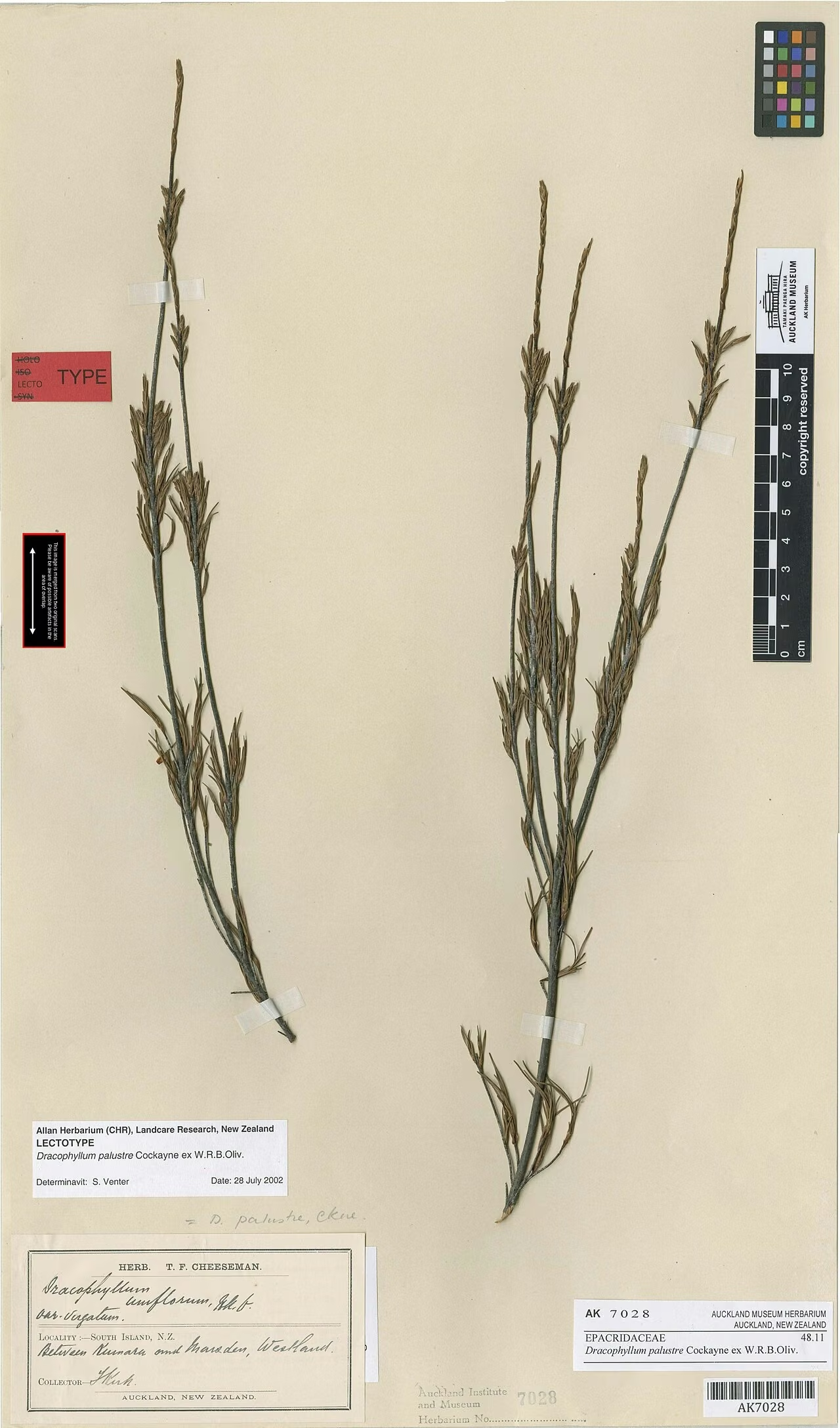
Swamp neinei (Dracophyllum palustre) is a slender, erect shrub of South Island wetlands, growing up to about 1 m tall. Its thin purplish-brown twigs carry sparse, almost thread-like leaves 1.4 to 5 cm long with blunt tips, clustered towards the branch ends, and small white to light pink tubular flowers borne singly in the leaf axils. It grows in open, poorly drained, boggy and swampy places from sea level to the alpine zone, most often in the northern half of the South Island but extending to western Southland. It is endemic and ranked Not Threatened, and its narrow, blunt leaves separate it from the stiffer Dracophyllum uniflorum. Explore more native shrubs in our native plant guide.
Plant Description
Dracophyllum palustre is a strict, erect shrub up to about 1 m tall, with slender branches and purplish-brown bark. The branchlets are very slender and sparingly leafy, giving the plant a wiry, broom-like appearance quite different from the dense foliage of many of its relatives.
The leaves are very narrow, almost thread-like, 14 to 27 mm long (occasionally to 50 mm) and only 0.5 to 1 mm wide, with nearly blunt tips. Each leaf has a sheathing base that encloses the stem, and the margins of the sheath carry fine hairs. Leaves are clustered towards the twig tips. The flowers are solitary in the leaf axils on short stalks, or occasionally in few-flowered racemes, with narrow-ovate sepals and a white to light pink corolla tube 4 to 5 mm long with pointed lobes.
It was formerly treated as Dracophyllum uniflorum var. virgatum. Dracophyllum uniflorum is a stouter shrub with rigid leaves 1.3 to 2 mm wide that taper to a sharp, pungent point, whereas swamp neinei has narrower, blunt-tipped leaves and grows in wetter, more open, boggy ground.
Quick Facts
| Scientific Name | Dracophyllum palustre |
|---|---|
| Height | Up to about 1 m |
| Spread | About 0.3-0.6 m; a narrow, upright shrub |
| Water Needs | High; permanently moist to boggy ground |
| Light | Full sun in open wetland |
| Frost Tolerance | High; ranges up to the alpine zone |
| Salt Tolerance | Low; no record of coastal salt exposure, although it occurs near sea level |
| Growth Rate | Slow |
| Lifespan | Long-lived perennial shrub |
Climate Best Suited to
Suits the cool, wet climates of the South Island, especially the high-rainfall north and west. It tolerates cold winters and grows from coastal lowlands to the alpine zone.
Regional Suitability
| City | Climate Suitability |
|---|---|
| Auckland | Low |
| Wellington | Low |
| Christchurch | Low |
| Dunedin | Low |
Plant Habitat
Swamp neinei is endemic to the South Island. NZPCN notes it is most commonly seen in the northern half of the island and that it extends south to western Southland. It ranges in altitude from sea level to the alpine zone, an unusually wide range for a wetland shrub.
Its habitat is mostly openly vegetated, poorly draining, boggy, swampy or permanently moist ground. In these sites it grows among other low wetland vegetation rather than under forest, relying on open conditions and constant moisture.
Growing Requirements
Soil Requirements
It grows on waterlogged, low-fertility peat and mineral soils that drain poorly.
- Acidic, peaty, nutrient-poor soils
- Permanently moist to saturated ground
- No fertiliser; rich soils favour competitors
Light Requirements
It inhabits openly vegetated wetlands where it receives full light among low vegetation.
- Full sun in open bog and heath
- Does not persist under a closed canopy
Water Requirements
Constant moisture is the defining feature of its habitat.
- Permanently wet or boggy soil
- Tolerant of seasonal waterlogging
- Drainage of wetlands removes its habitat
Planting and Establishing
Swamp neinei is not commercially available, and NZPCN advises that it is difficult to propagate and should not be removed from the wild. It is therefore not a practical garden plant.
For wetland restoration within its natural range, it would be best encouraged by protecting existing bogs and swamps where it grows, or by raising plants from locally collected seed under specialist guidance and planting them into open, permanently moist, low-fertility peat.
Ecological Role
Its small tubular flowers produce nectar over a long season, from October to July, offering food for insects at times when few other bog plants flower. The minute seeds are dispersed by wind across open wetland. Specific pollinators are not documented in the sources consulted.
As a slender shrub of open bogs and swamps it forms part of the low vegetation that develops on waterlogged ground, and its presence is a sign of an open, undrained wetland. Specific plant associates are not detailed in the sources consulted.
Uses & Significance
Garden Uses
It has little use in conventional gardens because it is difficult to propagate and needs permanently wet, infertile peat.
- Specialist bog gardens with acid peat
- Wetland restoration within its natural range
- Botanical and educational collections
Ecological Value
It is a characteristic shrub of South Island bogs and swamps.
- Long-season nectar source in wetland heath
- Part of the structure of open bog vegetation
- Indicator of low-nutrient, undrained wetlands
Landscaping Uses
Swamp neinei is not used in landscaping. In the wild its thin, upright stems with tufts of fine leaves add a delicate vertical element to otherwise low bog vegetation.
In a large constructed wetland or bog garden with genuinely acid, infertile peat, its slender form could contrast with rounded cushion plants and low sedges, but successful cultivation has not been documented in the sources consulted.
Seasonal Care Calendar
Spring
Flowering begins in October as new leaves form at the twig tips.
- First flowers appear
- Wetlands are at their wettest
Summer
Flowers continue and the first capsules ripen from December.
- Main flowering period
- Good time to see it in bogs
Autumn
Flowering continues well into autumn while capsules mature and release seed.
- Seed dispersal by wind
- Late flowers may still be present
Winter
Flowering can extend into July, and old capsules persist on the plant until September.
- Growth slows
- Upland plants may be under snow
When to Prune and How Much
No pruning is needed in the wild or in cultivation. The plant's open, wiry form is natural.
If grown in a specialist bog garden, simply remove dead stems. Avoid heavy cutting, as Dracophyllum species regrow slowly from old wood.
How to Grow Swamp Neinei
NZPCN describes Dracophyllum palustre as difficult to propagate and advises that it should not be removed from the wild. Like most Dracophyllum, it is rarely grown, and no detailed propagation protocol for this species was found in the sources consulted. The general methods used for wetland Dracophyllum are outlined below; seed collection on public conservation land requires a permit from the Department of Conservation.
From Seed
Capsules are present from December to September, so seed can be collected over a long period. The seeds are minute and wind dispersed, so gather capsules as they begin to split.
- Collect ripe capsules from local plants with permission
- Dry them in a paper bag to release the tiny seeds
- Surface-sow on moist, sieved sphagnum peat or a fine acid peat mix
- Keep the tray constantly damp, standing in a shallow saucer of rainwater
- Place in a cool, bright spot out of direct sun
- Expect slow and uneven germination over several months
- Grow seedlings on in acid peat, keeping them wet, until large enough to plant out
From Cuttings
Semi-hardwood cuttings of slender side shoots may be attempted in late summer or autumn, but rooting of Dracophyllum is generally slow and success rates are low.
- Take short, slender side shoots with a heel of older wood
- Insert into a moist mix of peat and fine sand
- Keep humid and cool with gentle bottom heat
- Leave undisturbed for several months before checking for roots
Pests & Diseases
No specific pests or diseases are recorded for swamp neinei. In its wet, open habitat, the main problems are physical rather than biological.
The main threats to its habitat are wetland drainage and conversion to farmland, nutrient enrichment that allows taller vegetation to crowd out low bog plants, and invasion of open wetlands by weedy shrubs and trees.
Cultural Significance
No Māori name or traditional use specific to this species is recorded in the sources consulted. The common name neinei is a Māori name generally applied to tree-like Dracophyllum species, and swamp neinei is a modern English-Māori combination referring to its wetland habitat.
The epithet palustre comes from the Latin palus, a swamp, and the genus name Dracophyllum means dragon leaf. The species was first named by Leonard Cockayne, with the name formally published by W.R.B. Oliver.
Bonus Tip
To pick swamp neinei in a South Island bog, look for an upright shrub with very sparse, thread-like leaves only about 1 mm wide that are blunt rather than prickly at the tip; if the leaves are stiffer, wider and sharply pointed, you are probably looking at Dracophyllum uniflorum.
Related Plants
Explore other native plants that share similar characteristics or habitats with Swamp Neinei (Dracophyllum palustre), offering further insights into New Zealand's diverse flora. These related species provide context and opportunities for complementary planting in your garden.
Doodia milnei
Doodia milnei
Mokimoki
Doodia mollis
Doodia squarrosa
Doodia squarrosa
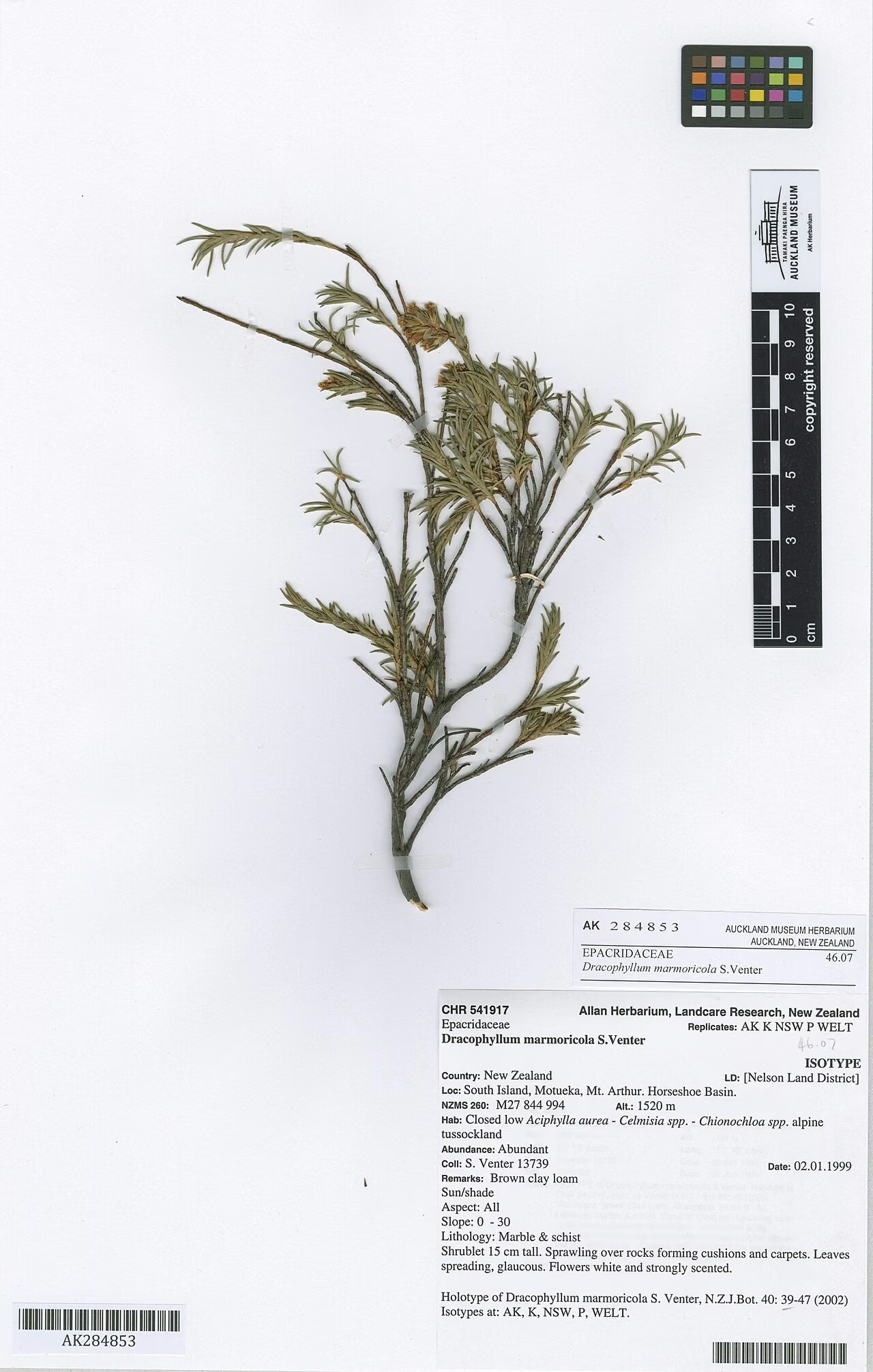
Marble Inaka
Dracophyllum marmoricola
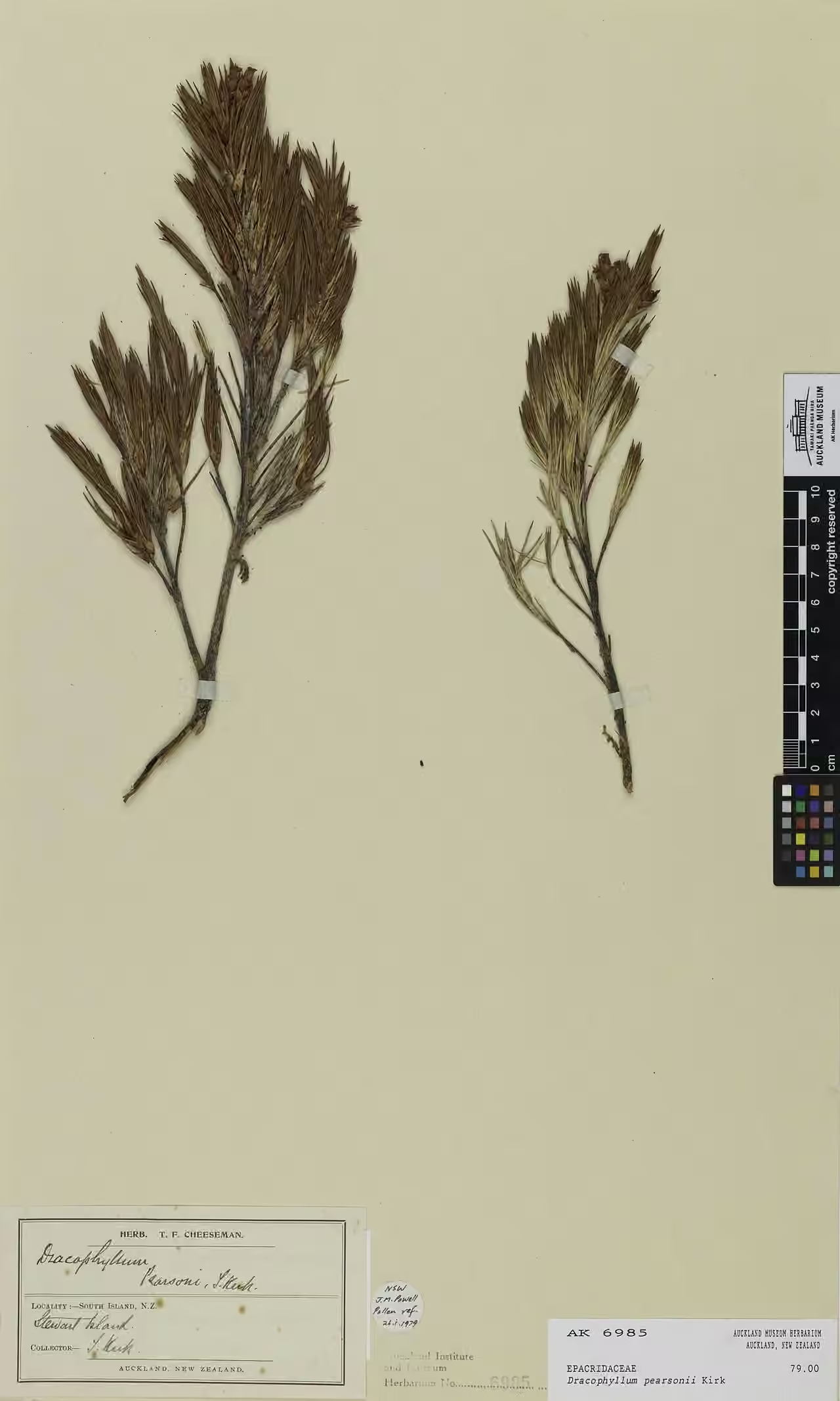
Dracophyllum pearsonii
Dracophyllum pearsonii
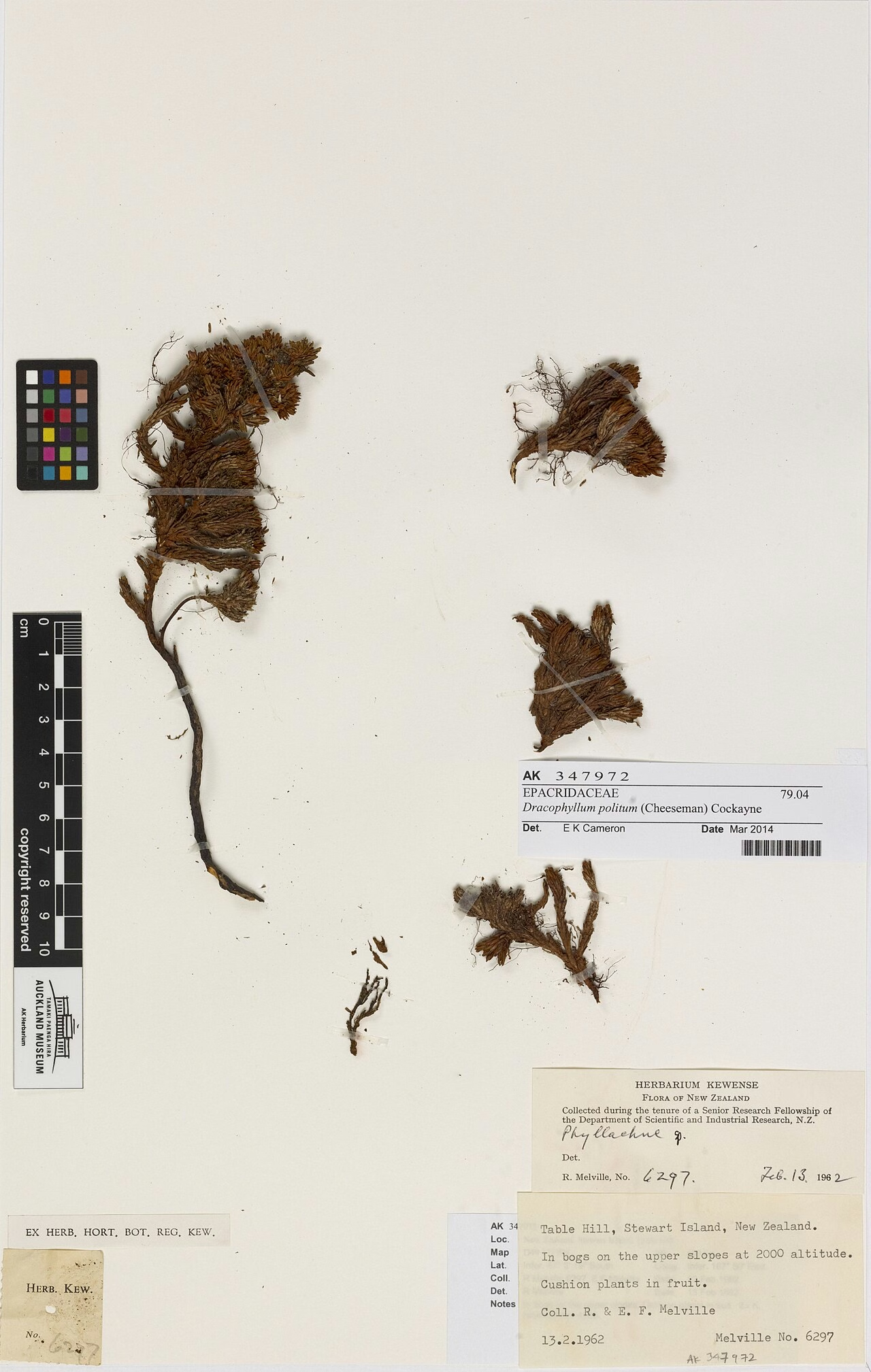
Dracophyllum politum
Dracophyllum politum
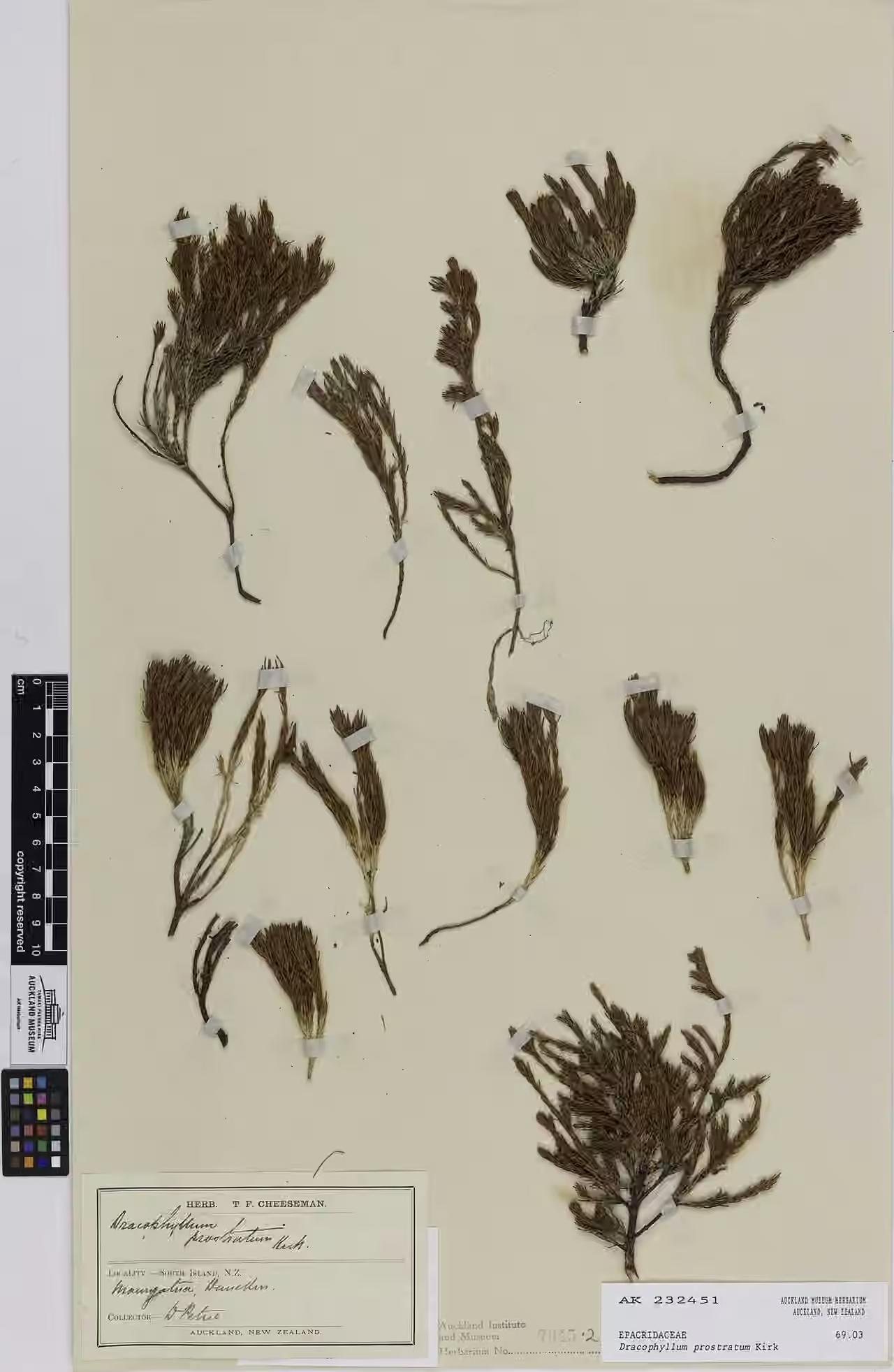
Dracophyllum prostratum
Dracophyllum prostratum
Dracophyllum pubescens
Dracophyllum pubescens
Plant Conservation
Dracophyllum palustre is ranked Not Threatened (2023). It is widespread across suitable wetlands in the northern South Island and extends to western Southland.
Although not threatened, it depends on wetlands, which have been greatly reduced in New Zealand. Protecting bogs and swamps from drainage, nutrient enrichment and weed invasion is the best way to keep its populations secure.
Frequently Asked Questions
Where does swamp neinei grow?
It is endemic to the South Island, most common in the northern half but reaching western Southland, and grows in open bogs, swamps and other permanently moist ground from sea level to the alpine zone.
How is Dracophyllum palustre different from Dracophyllum uniflorum?
Dracophyllum palustre has very narrow leaves about 0.5 to 1 mm wide with nearly blunt tips, while Dracophyllum uniflorum has stiffer, wider leaves 1.3 to 2 mm across that taper to a sharp point. Swamp neinei was once classed as a variety of D. uniflorum.
When does swamp neinei flower?
NZPCN records a long flowering season from October to July, with fruit present from December to September, so flowers or capsules can be found for much of the year.
Sources and Further Reading
The botanical, growing, and conservation details for Swamp Neinei (Dracophyllum palustre) on this page draw on the New Zealand plant references below. Consult them for full technical records and the latest distribution data.