Grass Tree
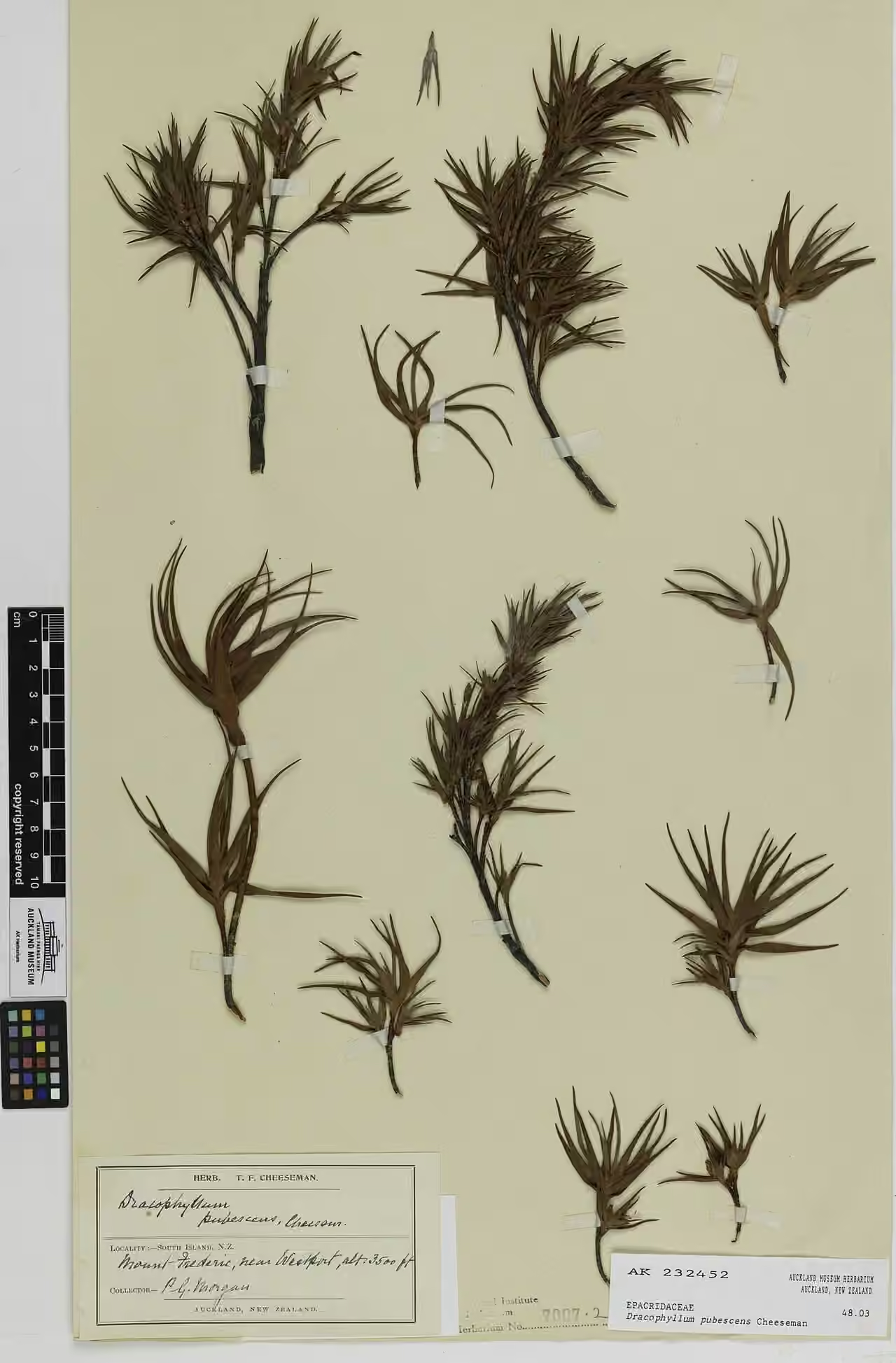
Dracophyllum pubescens
Last updated:
Dracophyllum pubescens is a low, multi-stemmed shrub in the heath family that grows naturally only in north-west Nelson. It reaches 0.5 to 0.8 m tall with sprawling to prostrate branches, and as its name suggests its leaves are covered in fine hairs and have a waxy, bluish-grey bloom. It grows from montane to subalpine elevations on exposed cliff faces and bluffs and in subalpine shrubland, herbfield, fellfield and grassland. Short spikes of three to five small white flowers appear in summer. It is ranked Not Threatened but has a small natural range. Explore more native shrubs in our native plant guide.
Plant Description
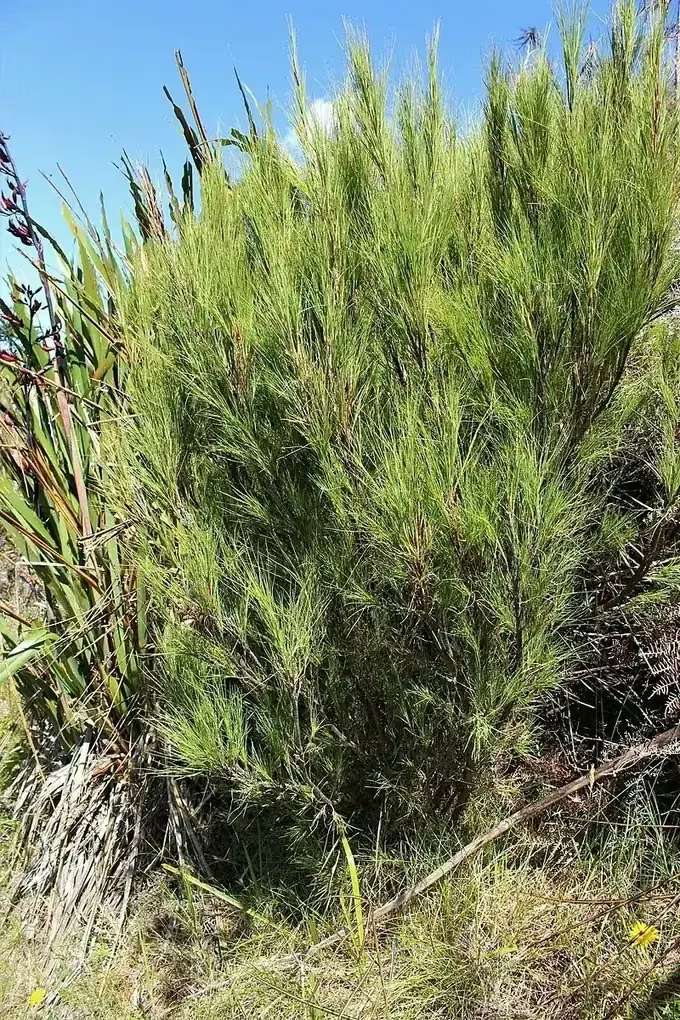
Dracophyllum pubescens is a multi-stemmed shrub 0.5 to 0.8 m tall, with stout, close-set branches that are decumbent to prostrate and carry dark reddish-brown bark. Leaves crowd toward the branch tips and are concave-convex in section with a corky texture and a waxy coating.
The foliage is dimorphic. Juvenile leaves are 60 to 80 mm long and 5 to 7 mm wide and more spreading, while adult leaves are 14 to 65 mm long and 2 to 6 mm wide and clustered at the ends of branches. Both kinds are glaucous and pubescent. From December to March small white flowers appear in short terminal racemes or spikes of three to five, occasionally singly, on lateral branchlets, followed by obovoid capsules from February to June.
The species most resembles Dracophyllum kirkii, another low mountain shrub. The distinctly hairy leaves and the several-flowered inflorescences of D. pubescens separate it from D. kirkii, which has glabrous leaves and solitary flowers.
Quick Facts
| Scientific Name | Dracophyllum pubescens |
|---|---|
| Height | 0.5-0.8 m |
| Spread | Sprawling; decumbent to prostrate branches |
| Water Needs | Moderate; high-rainfall mountain climate |
| Light | Full sun on exposed sites |
| Frost Tolerance | High; montane to subalpine species |
| Salt Tolerance | No information available; an inland mountain plant |
| Growth Rate | Slow |
| Lifespan | Long-lived perennial |
Climate Best Suited to
Suits the cool, wet and windy montane to subalpine climate of north-west Nelson, with frequent cloud and winter snow. It is not adapted to warm or humid lowland gardens.
Regional Suitability
| City | Climate Suitability |
|---|---|
| Auckland | Low |
| Wellington | Low |
| Christchurch | Low |
| Dunedin | Low |
Plant Habitat
Dracophyllum pubescens is endemic to the South Island and is confined to the north-west Nelson region, an area well known for its many locally endemic mountain plants.
It grows from montane to subalpine elevations, favouring exposed cliff faces and bluffs as well as subalpine shrubland, herbfield, fellfield and grassland. Its low, sprawling habit suits windswept rock faces and open ground.
Growing Requirements
Soil Requirements
In the wild it grows on thin, rocky soils on bluffs and in fellfield, where drainage is sharp but rainfall is high.
- Thin, stony, low-fertility soil
- Free drainage with regular moisture
- No fertiliser
Light Requirements
It occupies open, exposed sites with little or no shade.
- Full sun
- Tolerates strong wind exposure
Water Requirements
North-west Nelson's mountains receive high rainfall, so plants receive regular moisture even though their rocky sites drain quickly.
- Keep cultivated plants evenly moist
- Avoid stagnant, waterlogged conditions
Planting and Establishing
Dracophyllum pubescens is not commercially available and NZPCN discourages taking it from the wild. Planting is realistically limited to specialist alpine collections or conservation work.
A cool, open, sunny site with gritty, acidic, free-draining soil and steady moisture best matches its natural habitat. Plant into a rock crevice or scree bed where roots can run deep and stay cool, and avoid disturbing the roots once established.
Ecological Role
Its seeds are minute and wind-dispersed, which allows it to reach crevices on cliffs and bluffs. Specific pollinator records for this species were not found, though its small white tubular flowers are typical of insect-visited Dracophyllum.
On exposed bluffs and fellfield it is one of the woody plants that provides structure and shelter for smaller herbs, mosses and invertebrates in an otherwise harsh environment.
Uses & Significance
Garden Uses
It is a curiosity for alpine plant specialists rather than a garden plant.
- Specialist alpine rock gardens
- Botanical study of north-west Nelson endemics
Ecological Value
It contributes to the unusually rich endemic flora of north-west Nelson's mountains.
- Low woody cover on exposed bluffs
- Shelter for small alpine plants
- Part of a regional centre of plant endemism
Landscaping Uses
This species is not used in landscaping. In its natural setting the bluish, hairy foliage of the sprawling branches stands out against grey rock and tawny tussock.
Gardeners wanting a low native heath for a rockery would be better served by more readily available and easily grown species.
Seasonal Care Calendar
Spring
New shoots develop at the branch tips as temperatures rise.
- No intervention needed
- Watch for the soft, hairy new leaves
Summer
Small white flowers open in short spikes from December to March.
- Best time to identify the plant by its several-flowered racemes
- Photograph rather than collect
Autumn
Capsules ripen between February and June and shed minute seed.
- Seed collection only under permit or from cultivated plants
- Leave wild plants undisturbed
Winter
Plants endure snow, frost and wind with little growth.
- No action needed
- Ensure good drainage for any cultivated plants
When to Prune and How Much
Pruning is not needed. The plant's sprawling, multi-stemmed form develops naturally and Dracophyllum generally regrow poorly from hard cuts into old wood.
Remove only dead or broken branches on cultivated plants, cutting back to living tissue.
How to Grow Grass Tree
NZPCN describes Dracophyllum pubescens as difficult to propagate and discourages collection from the wild. No species-specific propagation protocol was found in the sources consulted, so the methods below outline the general approach used for mountain Dracophyllum and should be considered experimental for this species. Work only with plants already in cultivation or with material collected under permit, and expect slow growth and modest success rates. Patience and cool, airy conditions are the most important ingredients.
From Seed
The capsules ripen from February to June. Seeds are minute and wind-dispersed, so collect capsules as they brown but before they open. Germination of Dracophyllum seed is typically slow and uneven, and some mountain species respond to a cold period before sowing.
- Collect browning capsules in late summer or autumn and dry them in a paper bag
- Sow seed thinly on the surface of a fine, gritty, peat-based mix
- Give the tray a winter outdoors or several weeks of cold treatment
- Keep the mix just moist and the tray cool and well lit
- Grow seedlings on slowly for at least a year before potting individually
From Cuttings
Semi-hardwood cuttings of the leafy branch tips may root in a cool, humid frame, as with some other shrubby Dracophyllum, although results are not documented for this species.
- Take short tip cuttings from a cultivated plant in late summer
- Trim lower leaves and insert into a mix of peat and pumice
- Keep in a cool, humid and lightly shaded position
- Check for roots after several months before potting on
Pests & Diseases
No specific pests or diseases of Dracophyllum pubescens are recorded in the sources consulted.
In cultivation the most likely problems are root rot in warm, wet conditions and stress from summer heat. Wild plants on bluffs are relatively safe from browsing, but plants in more accessible grassland and shrubland could be damaged by browsing animals or trampling.
Cultural Significance
No Māori name or traditional use specific to Dracophyllum pubescens is recorded in the sources consulted.
Its scientific name refers to the soft hairs on its leaves, a feature unusual in a genus where most species have hairless foliage. It is one of many plants found only in north-west Nelson, a region of high botanical interest.
Bonus Tip
Run a fingertip gently along a leaf: the fine hairy surface of D. pubescens is the quickest field check to separate it from its closest relative, the smooth-leaved D. kirkii.
Related Plants
Explore other native plants that share similar characteristics or habitats with Grass Tree (Dracophyllum pubescens), offering further insights into New Zealand's diverse flora. These related species provide context and opportunities for complementary planting in your garden.
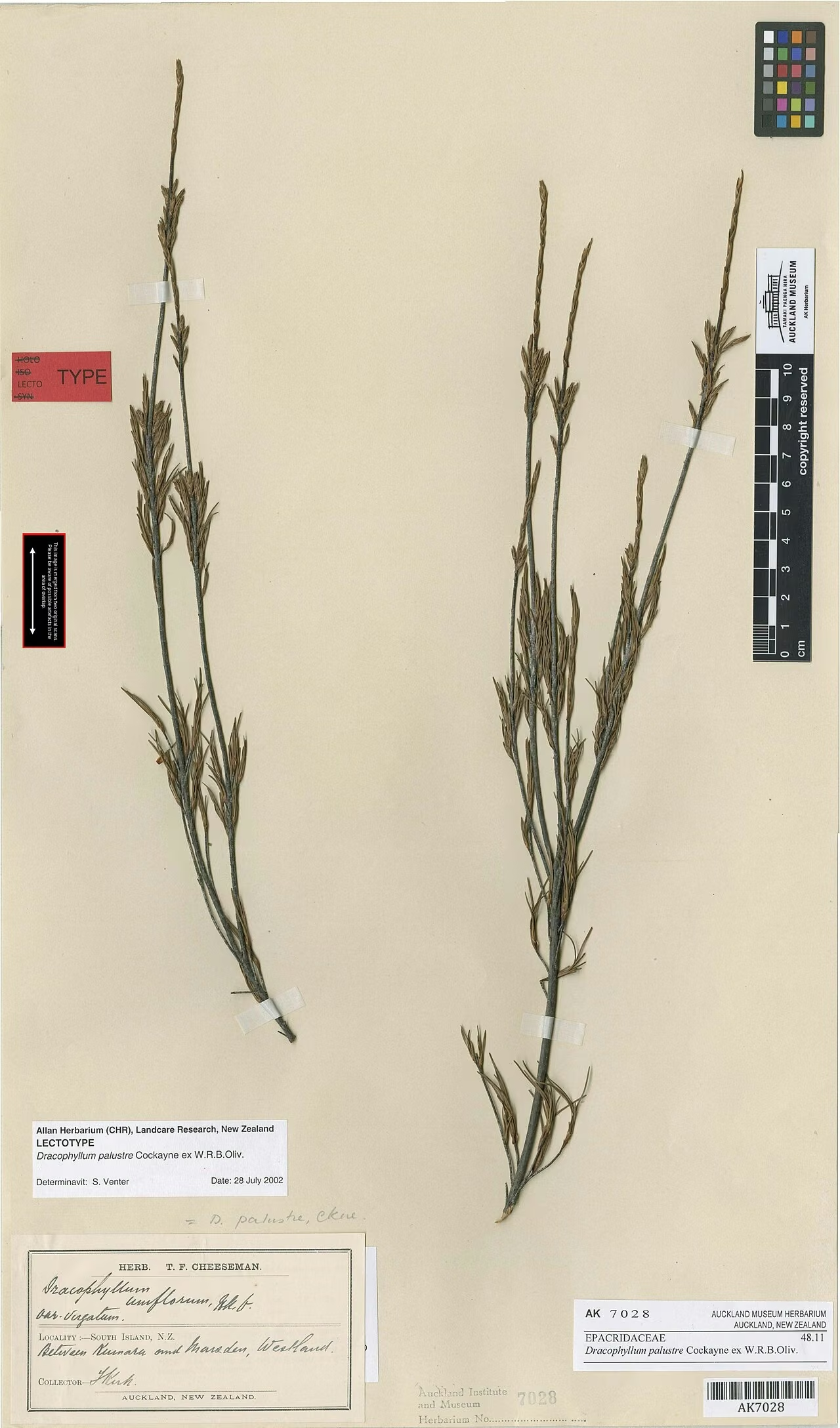
Swamp Neinei
Dracophyllum palustre
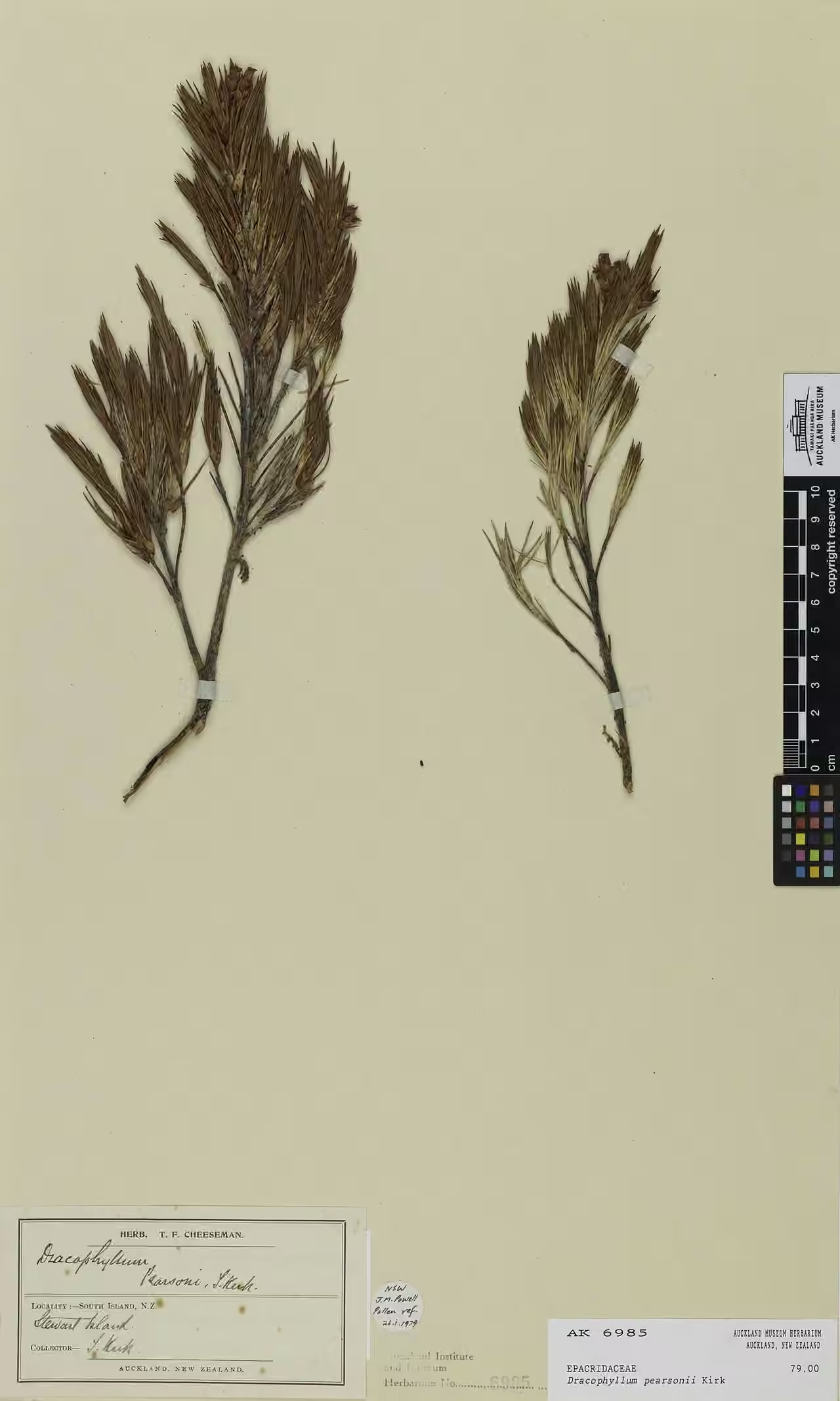
Dracophyllum pearsonii
Dracophyllum pearsonii
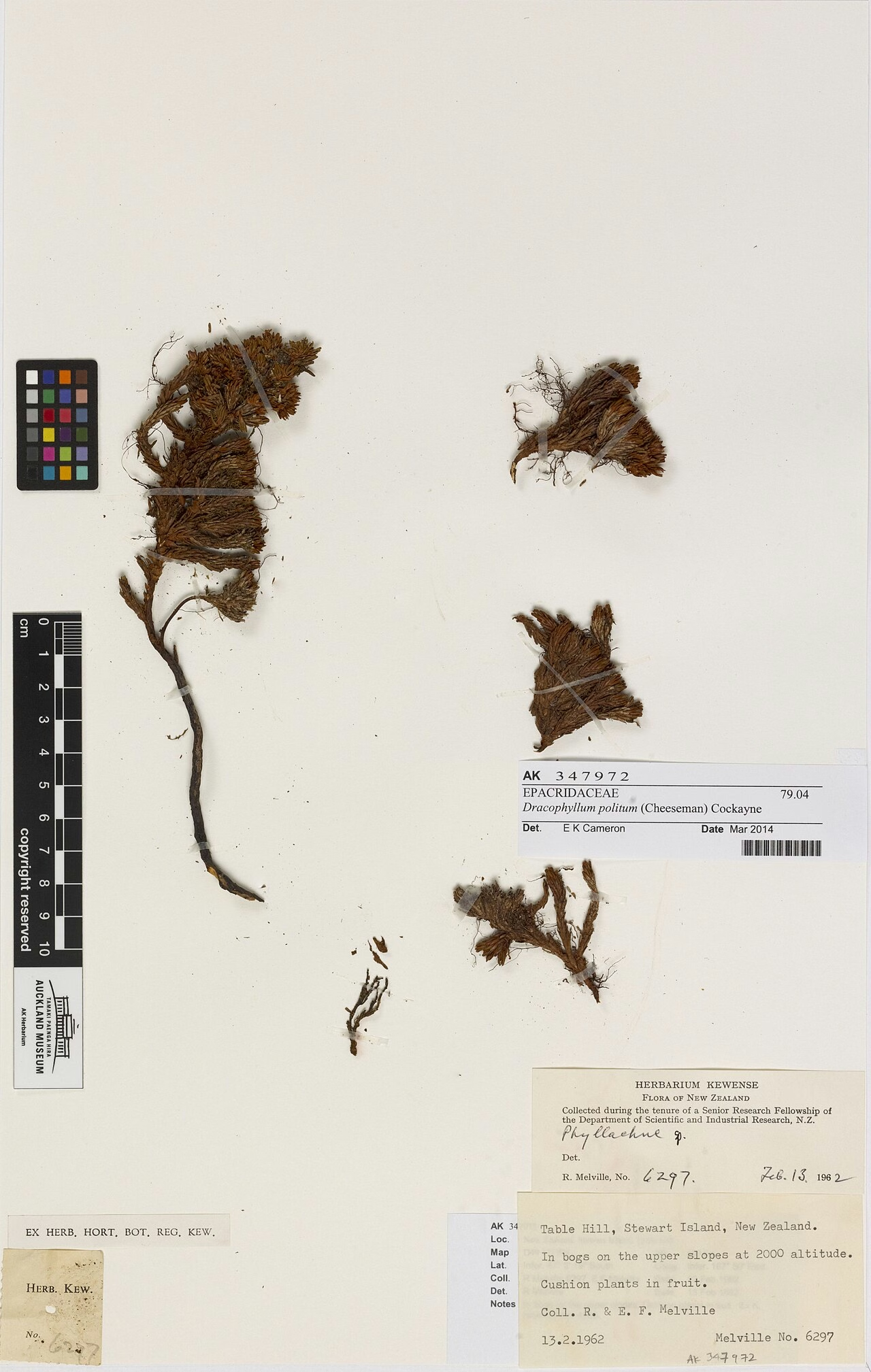
Dracophyllum politum
Dracophyllum politum
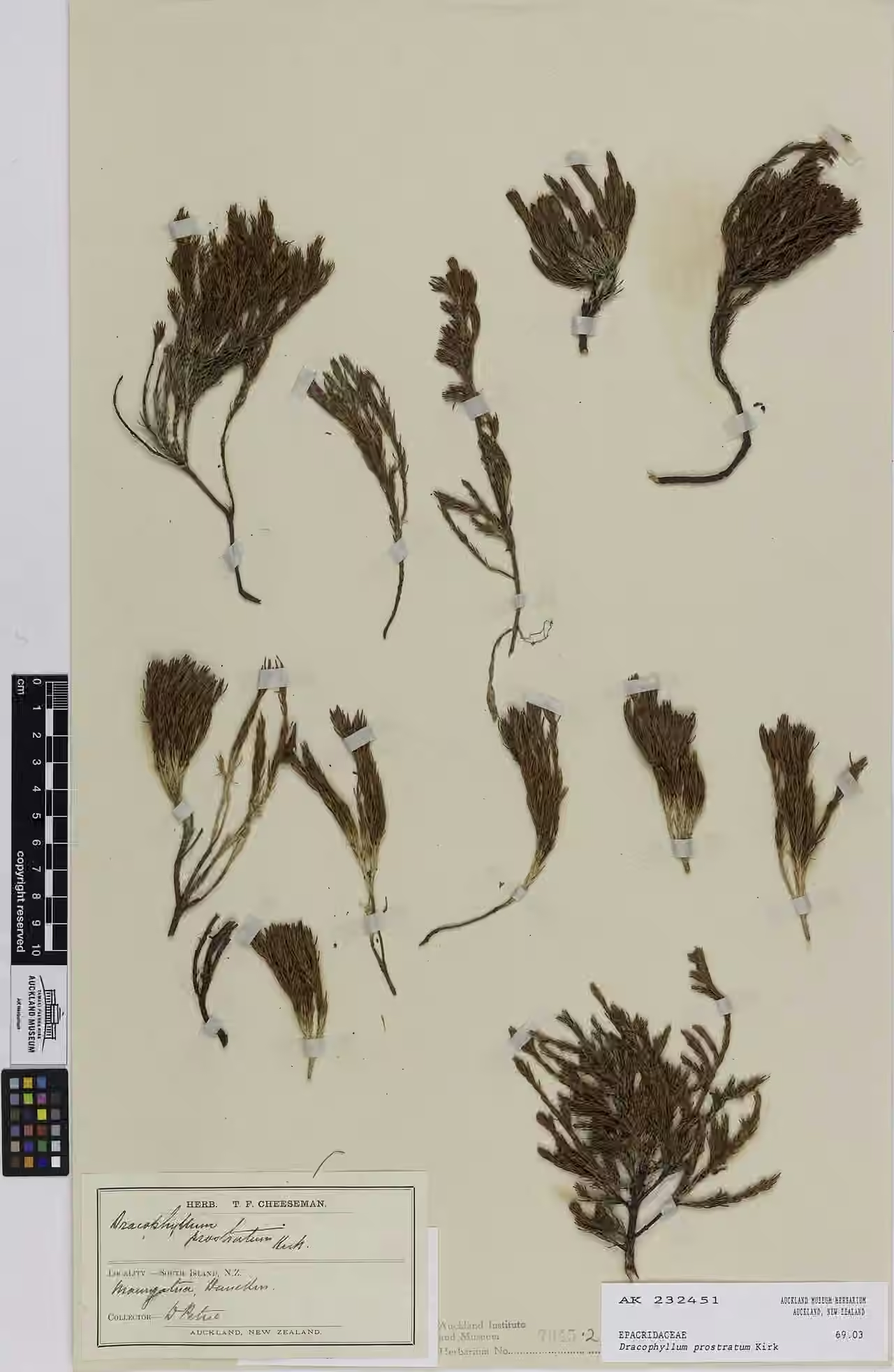
Dracophyllum prostratum
Dracophyllum prostratum
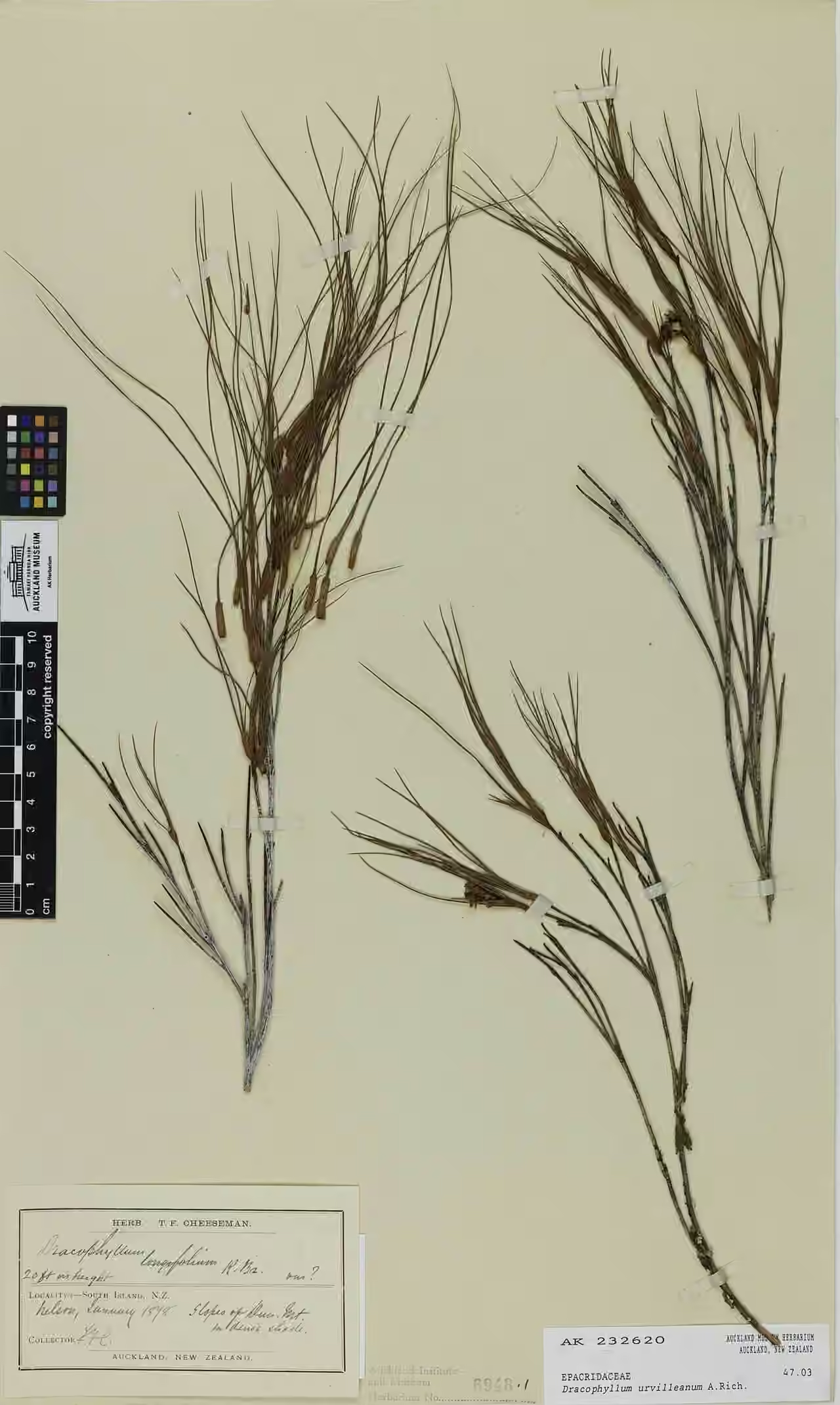
D'Urville's Grass Tree
Dracophyllum urvilleanum
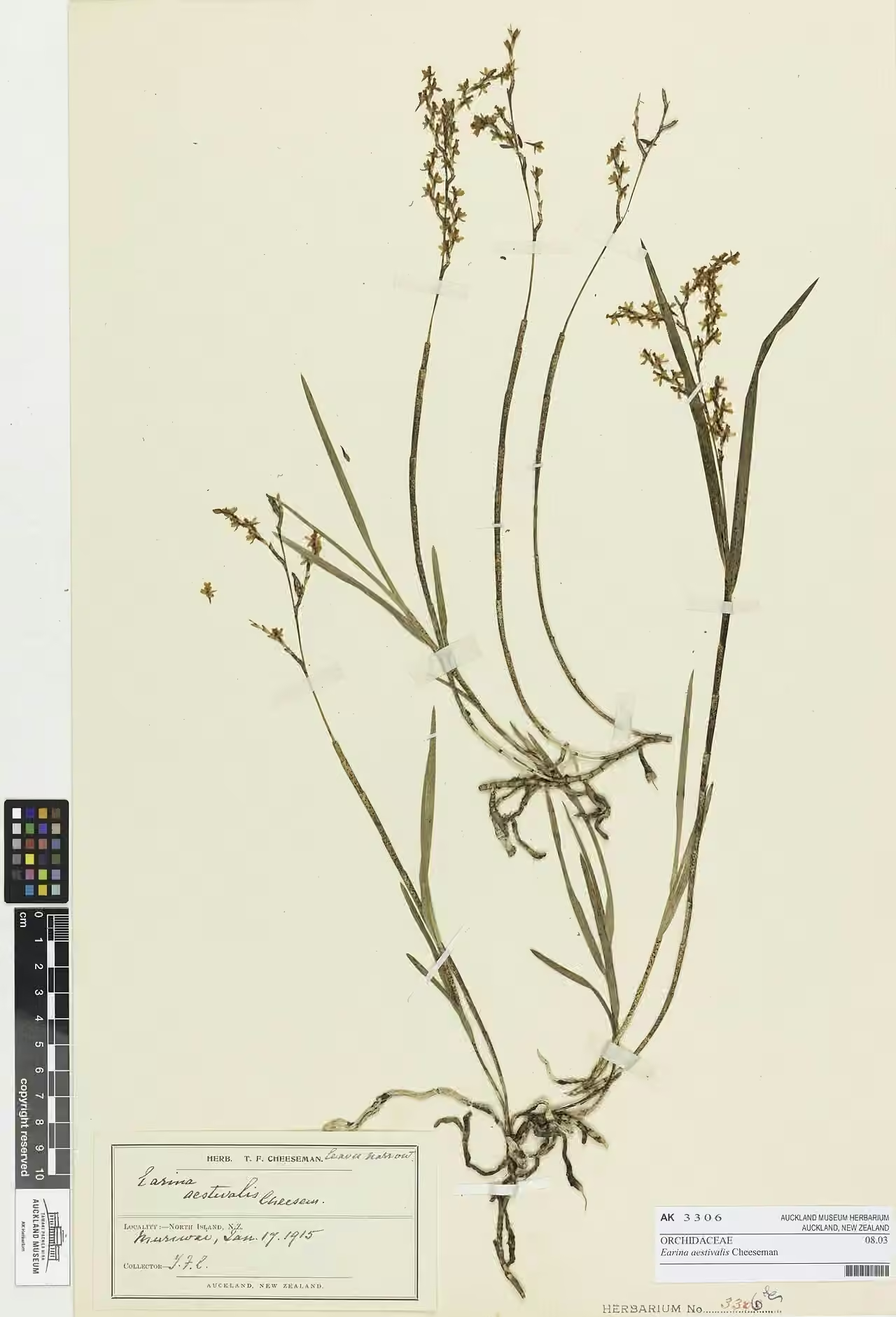
Bamboo Orchid
Earina aestivalis
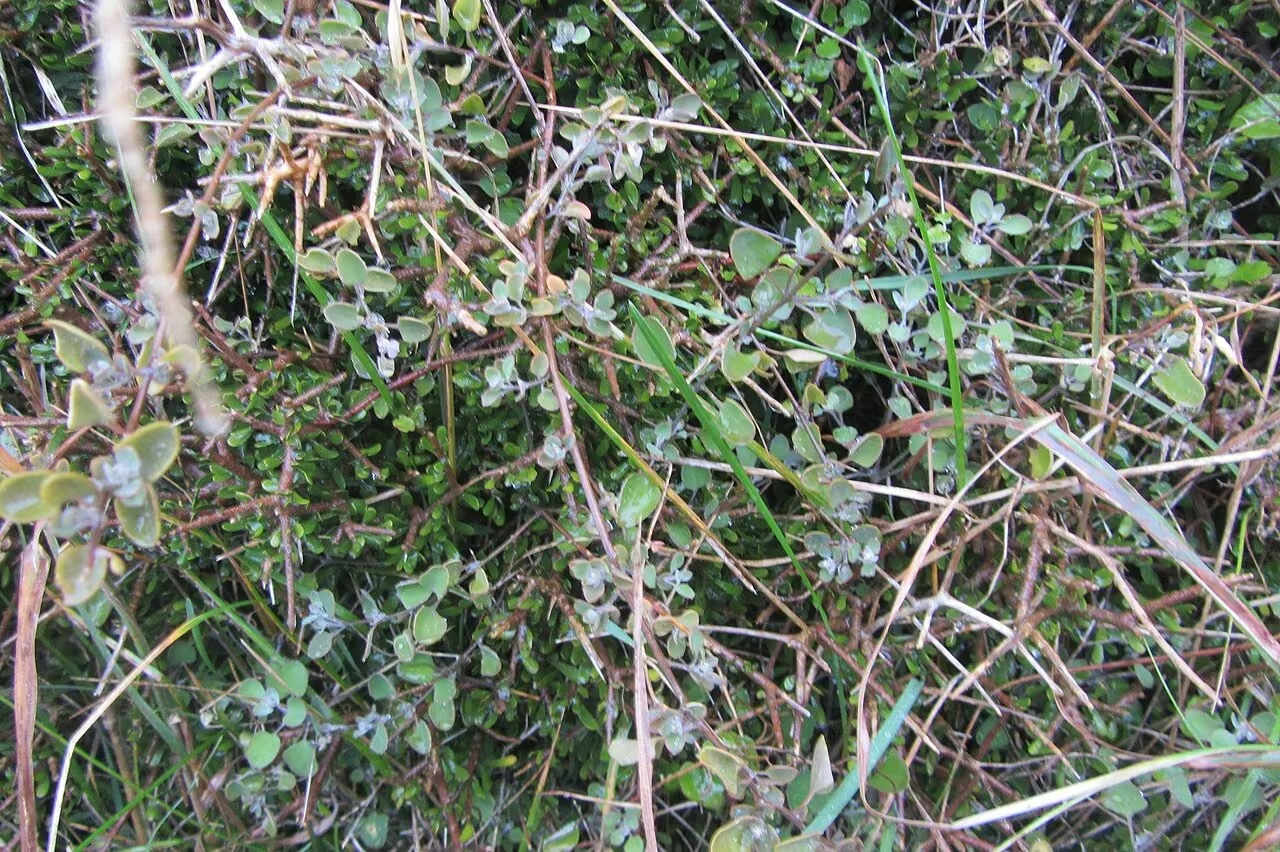
Chenopodium allanii
Chenopodium allanii
Needle-Leaf Dragon
Needle-Leaf Dragon
Plant Conservation
Dracophyllum pubescens is ranked Not Threatened in the 2023 assessment, as it has been in every assessment since 2004. Much of north-west Nelson's mountain country lies within Kahurangi National Park.
Because its range is small, it benefits from continued protection of the region's subalpine habitats, control of browsing animals and weeds, and care by trampers and climbers on bluffs where it grows.
Frequently Asked Questions
What makes Dracophyllum pubescens different from Dracophyllum kirkii?
Its closest relative, D. kirkii, has hairless leaves and solitary flowers. D. pubescens has distinctly hairy leaves and bears its flowers in short racemes of three to five.
Where does Dracophyllum pubescens grow?
It is found only in north-west Nelson in the South Island, on montane to subalpine cliff faces, bluffs, shrubland, herbfield, fellfield and grassland.
Does Dracophyllum pubescens have two kinds of leaves?
Yes. Juvenile leaves are longer and more spreading, 60 to 80 mm long, while adult leaves are shorter, 14 to 65 mm, and clustered at the branch tips. Both are glaucous and hairy.
Is Dracophyllum pubescens available from nurseries?
It is not a nursery plant. NZPCN describes it as difficult to propagate and discourages collecting from the wild.
Sources and Further Reading
The botanical, growing, and conservation details for Grass Tree (Dracophyllum pubescens) on this page draw on the New Zealand plant references below. Consult them for full technical records and the latest distribution data.