Grass Tree
Dracophyllum politum
Last updated:
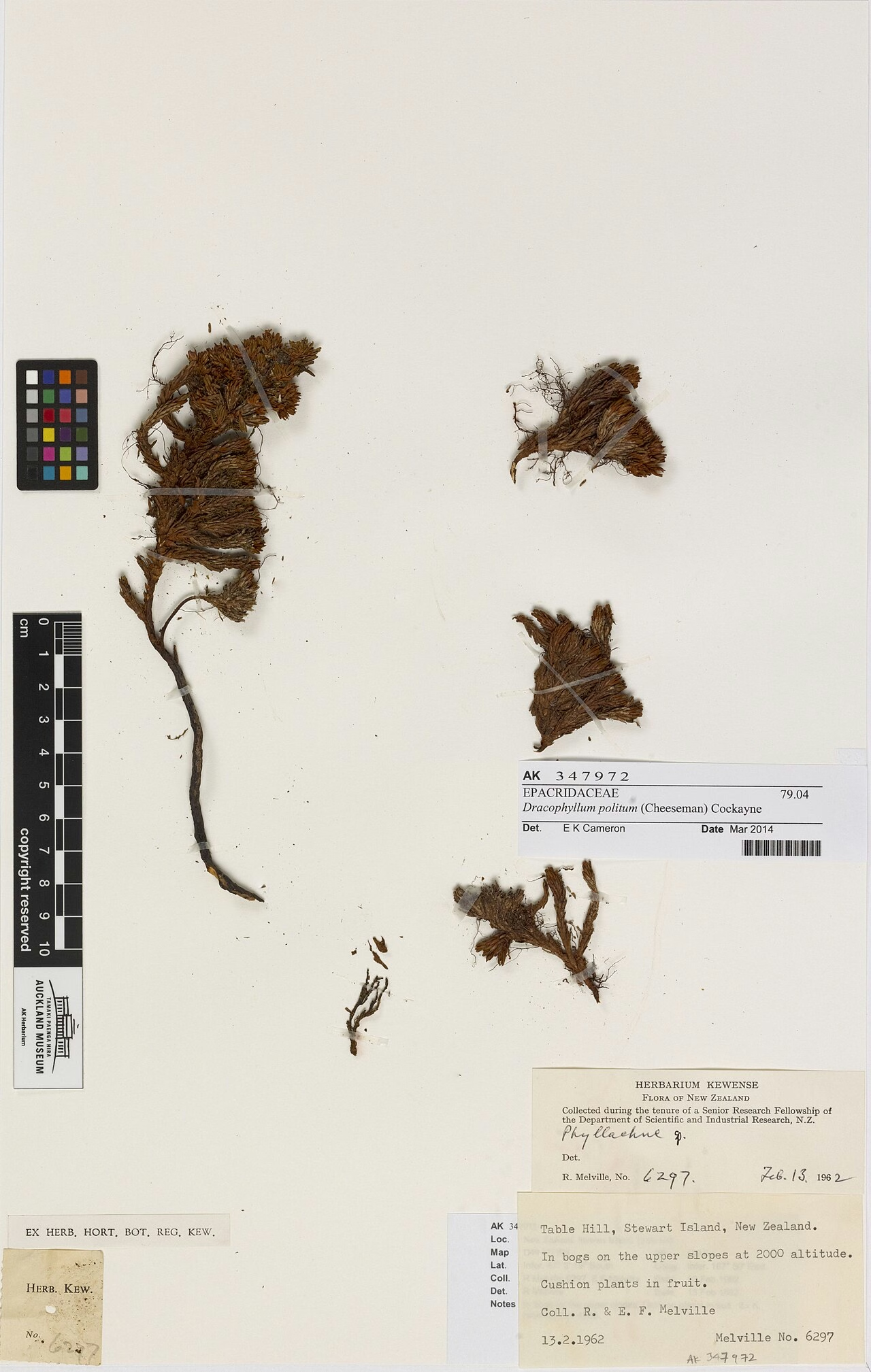
Dracophyllum politum is a cushion-forming member of the heath family (Ericaceae) endemic to New Zealand. It builds dense, firm domes up to 0.5 m tall and 1 m across, or sprawls as a prostrate shrublet, on exposed mountain summits, plateaus and bogs. It is known from scattered sites including Mount Goul in north-west Nelson, the Denniston area, Fiordland, Maungatua near Dunedin and Stewart Island/Rakiura. The species name means polished, a reference to its glossy, tightly overlapping leaves, which make the cushions shine when wet. It is Not Threatened nationally but uncommon in Otago. Explore more native ground covers in our native plant guide.
Plant Description
Dracophyllum politum is a dense cushion plant reaching about 0.5 m tall and 1 m in diameter, or in some sites a sprawling, much-branched prostrate shrublet. Older stems have grey-brown bark with broad fissures, while younger stems are reddish-brown. The branches are completely hidden beneath closely overlapping leaves.
The leaves are olive to dark green, 3.5 to 17 mm long and 0.7 to 1.5 mm wide, linear, rigid and slightly curved inward, with blunt tips and finely toothed margins. They are pressed flat against the branch and have a distinctly glossy, convex surface. The small white flowers appear singly at the tips of the branches between December and March, with a cylindrical corolla tube 3.5 to 4.5 mm long and inflexed lobes bearing prominent ridges near their tips. The dark brown, ridged fruits ripen from February to May.
Other cushion-forming Dracophyllum, such as D. muscoides and D. prostratum, have much smaller, duller leaves. The combination of a firm cushion habit, glossy appressed leaves with obtuse tips, and solitary flowers with blunt-tipped bracts identifies D. politum.
Quick Facts
| Scientific Name | Dracophyllum politum |
|---|---|
| Height | Up to 0.5 m |
| Spread | Cushions up to 1 m across |
| Water Needs | Consistently moist; often in boggy ground |
| Light | Full sun, fully exposed sites |
| Frost Tolerance | High; montane to alpine species |
| Salt Tolerance | No information available; an inland mountain plant |
| Growth Rate | Very slow |
| Lifespan | Long-lived perennial |
Climate Best Suited to
Suits cold, wet, exposed montane and alpine climates with frequent cloud, wind and snow. It is unsuited to warm lowland conditions.
Regional Suitability
| City | Climate Suitability |
|---|---|
| Auckland | Low |
| Wellington | Low |
| Christchurch | Low |
| Dunedin | Low |
Plant Habitat
Dracophyllum politum is endemic to the South Island and Stewart Island/Rakiura. NZPCN records it from Mount Goul in north-west Nelson, the Denniston area of North Westland, Fiordland National Park, Mount Maungatua in Otago (the type locality, at about 900 m) and Stewart Island.
It grows from montane to alpine elevations in fully exposed sites on gentle slopes, particularly mountain summits and plateaus. Here it is a sparse to locally common member of subalpine and alpine shrubland, herbfield, fellfield, grassland and bog, and it is rated a facultative wetland plant.
Growing Requirements
Soil Requirements
In the wild it grows on poorly drained, peaty, low-fertility soils of alpine plateaus and bogs, as well as on thin soils in fellfield.
- Acidic, peaty, nutrient-poor substrate
- Constantly moist root zone
- No added fertiliser or lime
Light Requirements
It favours completely open, exposed sites where nothing taller shades the cushions.
- Full sun and wind exposure
- Shading by invading shrubs or weeds weakens cushions
Water Requirements
As a facultative wetland plant it is usually found where the ground stays wet for much of the year, including bogs and seepage-fed plateaus.
- Keep the roots cool and moist at all times
- Pair moisture with good air movement to avoid rot
Planting and Establishing
This species is not available commercially and NZPCN advises against taking it from the wild. Planting is therefore limited to specialist or conservation situations using legally sourced material.
Any planting should mimic the plant's alpine bog habitat: an open, sunny position in a cool climate, a peaty, acidic and constantly moist medium, and protection from heat and drying winds in summer. Disturbing the roots of an established cushion is very likely to kill it.
Ecological Role
Like other Dracophyllum, D. politum has minute, wind-dispersed seeds that allow it to colonise open ground on exposed summits. Its small white tubular flowers are likely visited by native insects, but specific pollinator records for this species were not found.
Its dense cushions trap moisture and organic matter and give shelter to mosses, lichens, small herbs and invertebrates in harsh alpine sites. Because it grows so slowly, cushions damaged by trampling or vehicles take many years to recover.
Uses & Significance
Garden Uses
It has no practical role in ordinary gardens, but it is of interest to alpine plant enthusiasts and botanists.
- Specialist alpine or bog collections only
- Photography and study in the wild
Ecological Value
It is a structural component of exposed alpine bogs and fellfield in the southern South Island and Rakiura.
- Cushions stabilise peat and thin soils
- Shelter for small plants and invertebrates
- Contributes to the distinctive heath flora of subalpine plateaus
Landscaping Uses
Dracophyllum politum is not a landscaping plant. Its value lies in natural alpine landscapes, where its glossy dark green cushions contrast with tussock, herbs and bare rock on plateaus such as Maungatua.
Those wishing to evoke this look at lower altitudes would do better with hardy, readily available native groundcovers suited to their site than attempting this specialist species.
Seasonal Care Calendar
Spring
Growth resumes as snow melts on the summits and plateaus.
- Watch for new shoot tips
- Avoid walking on cushions on thawing ground
Summer
Small white flowers open singly at the branch tips from December to March.
- Best time to photograph flowering plants
- Keep cultivated plants cool and moist
Autumn
Dark brown ridged fruits ripen from February to May and release minute wind-dispersed seed.
- Seed collection only with permission and from cultivated stock
- Leave wild plants undisturbed
Winter
Cushions sit under snow or endure frost and wind with little growth.
- No intervention required
- Prevent waterlogging in pots
When to Prune and How Much
No pruning is needed. The dense cushion form develops naturally, and cutting into it opens the cushion to drying and rot.
If a cultivated plant has a dead patch, carefully remove only the dead material at the surface and allow surrounding shoots to grow over it slowly.
How to Grow Grass Tree
NZPCN describes Dracophyllum politum as difficult to propagate and says it should not be removed from the wild. No published propagation protocol specific to this species was found in the sources consulted, so the methods below describe the general approach alpine growers use for Dracophyllum and other cushion heaths. Success rates should be expected to be low, growth extremely slow, and anyone attempting it should work only with plants already held legally in cultivation or with material collected under permit for conservation work.
From Seed
Fruits ripen from February to May. The seeds are minute and wind-dispersed, so capsules need to be collected as they turn brown but before they split. Dracophyllum seed is generally slow and erratic to germinate, and seedlings are tiny and vulnerable to drying out and damping off.
- Collect ripening capsules in late summer or autumn and dry them in a paper bag
- Sow the dust-like seed on the surface of a sieved peat and fine grit mix
- Do not cover the seed; keep the tray cool, evenly moist and in bright light
- Expect germination to take months and be patient before discarding trays
- Grow seedlings on for at least a year before carefully pricking them out
From Cuttings
Small shoot tips taken from the edge of a cultivated cushion may root under cool, humid conditions, as with some other heaths. This species has no recorded success rate, so treat any attempt as an experiment.
- Take short shoot tips from a cultivated plant in late summer
- Insert them into a free-draining mix of peat and pumice
- Keep them in a cool, humid and shaded propagation frame
- Check gently for root formation after several months before potting on
Pests & Diseases
No specific pests or diseases of Dracophyllum politum are recorded in the sources consulted. In the wild the main risks are physical: trampling, vehicle damage and disturbance of fragile bog and fellfield surfaces.
In cultivation, root rot in warm, stagnant conditions and drying out in summer heat are the most likely causes of failure, as with other alpine heaths.
Cultural Significance
No Māori name or traditional use specific to Dracophyllum politum is recorded in the sources consulted. The genus as a whole includes the larger inaka and grass trees, but this small cushion species is not documented separately.
The species was first named by Thomas Cheeseman in 1906 as a variety of Dracophyllum rosmarinifolium and raised to species rank by Leonard Cockayne in 1909, using a type collected on Mount Maungatua near Dunedin.
Bonus Tip
To tell D. politum from other cushion heaths in the field, look closely at the leaves: if they are distinctly glossy, convex and blunt-tipped and pressed flat to the stem, you are probably looking at D. politum rather than the duller-leaved D. muscoides or D. prostratum.
Related Plants
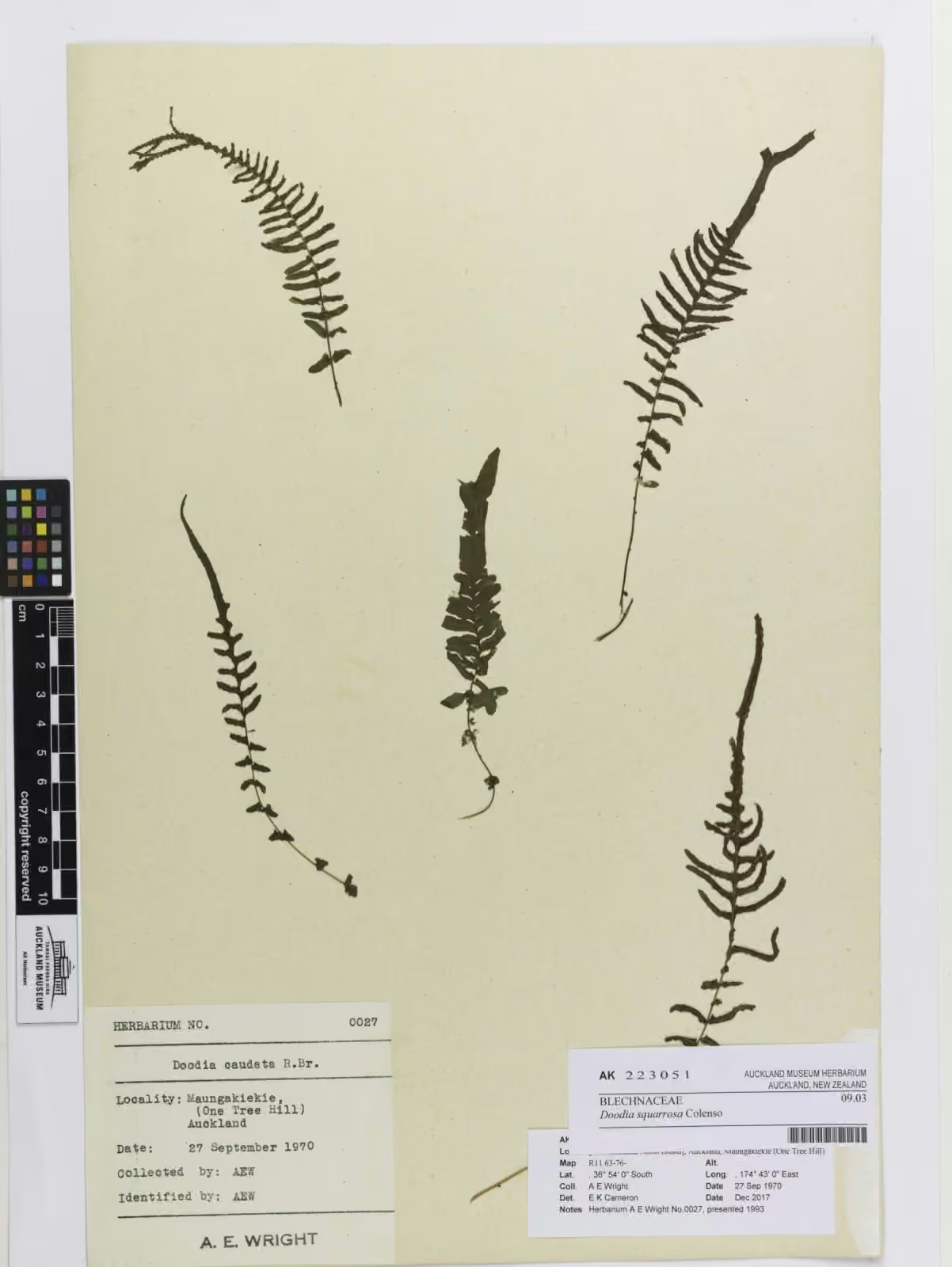
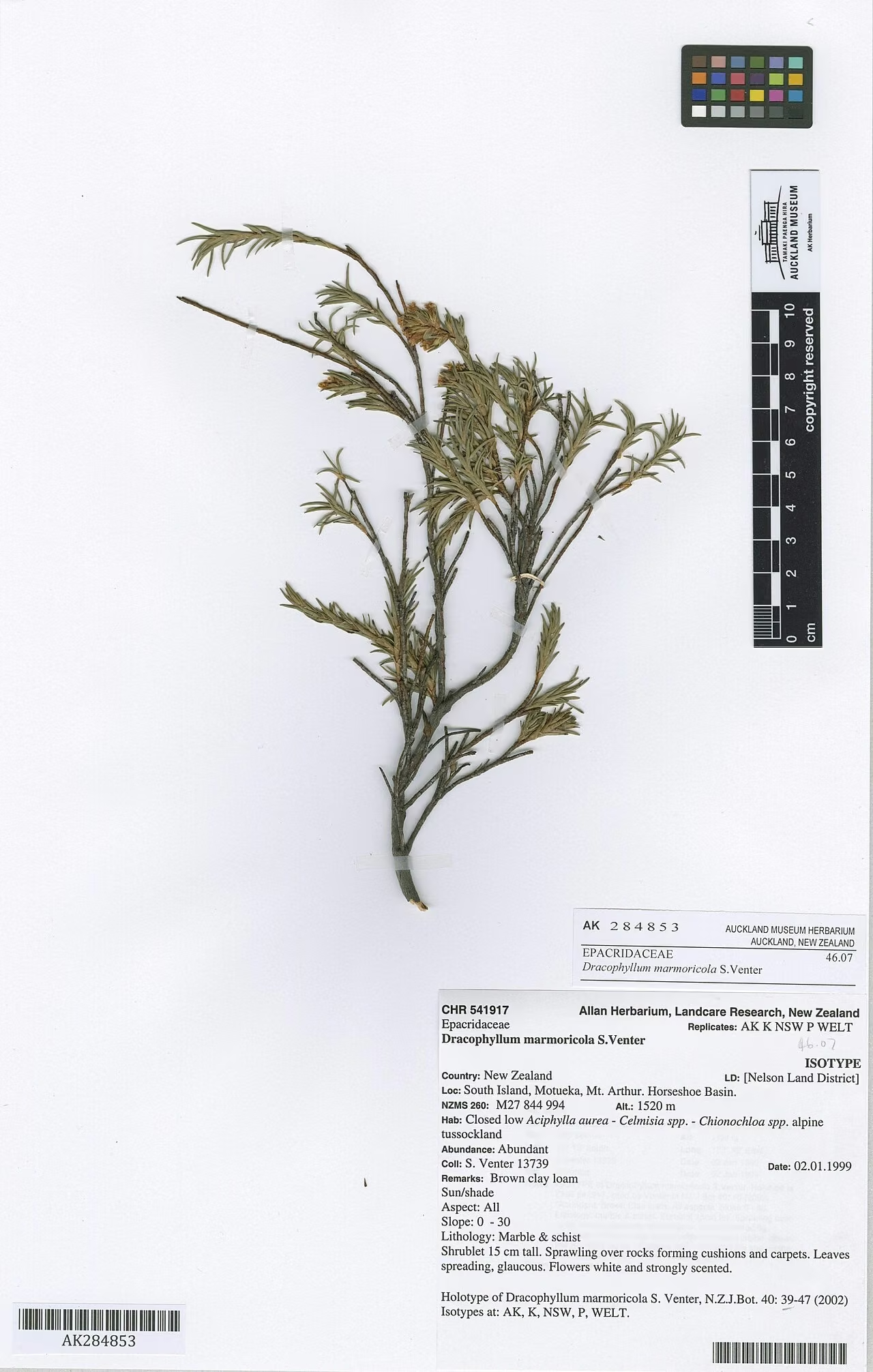
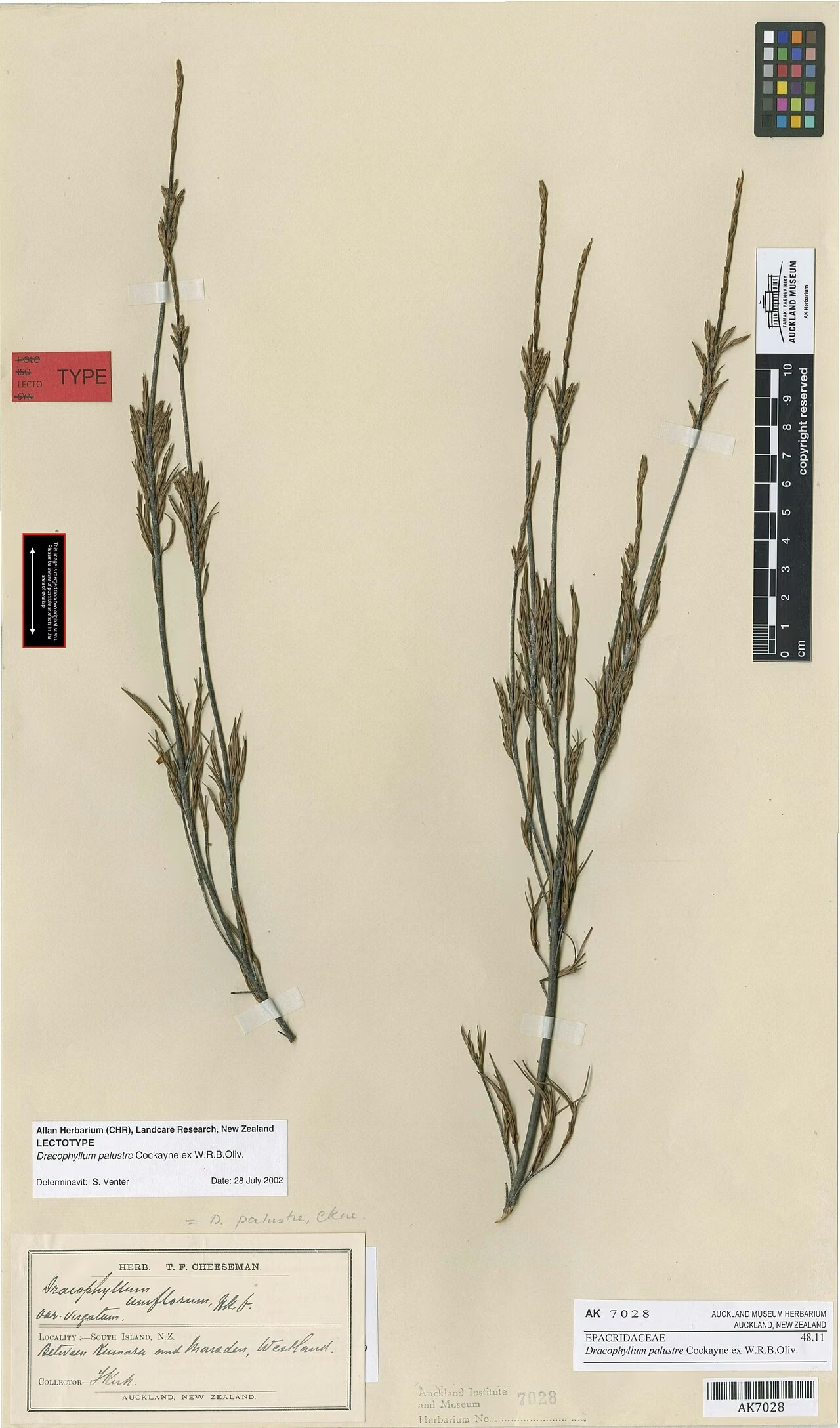
Explore other native plants that share similar characteristics or habitats with Grass Tree (Dracophyllum politum), offering further insights into New Zealand's diverse flora. These related species provide context and opportunities for complementary planting in your garden.
Doodia squarrosa
Doodia squarrosa
Marble Inaka
Dracophyllum marmoricola
Swamp Neinei
Dracophyllum palustre
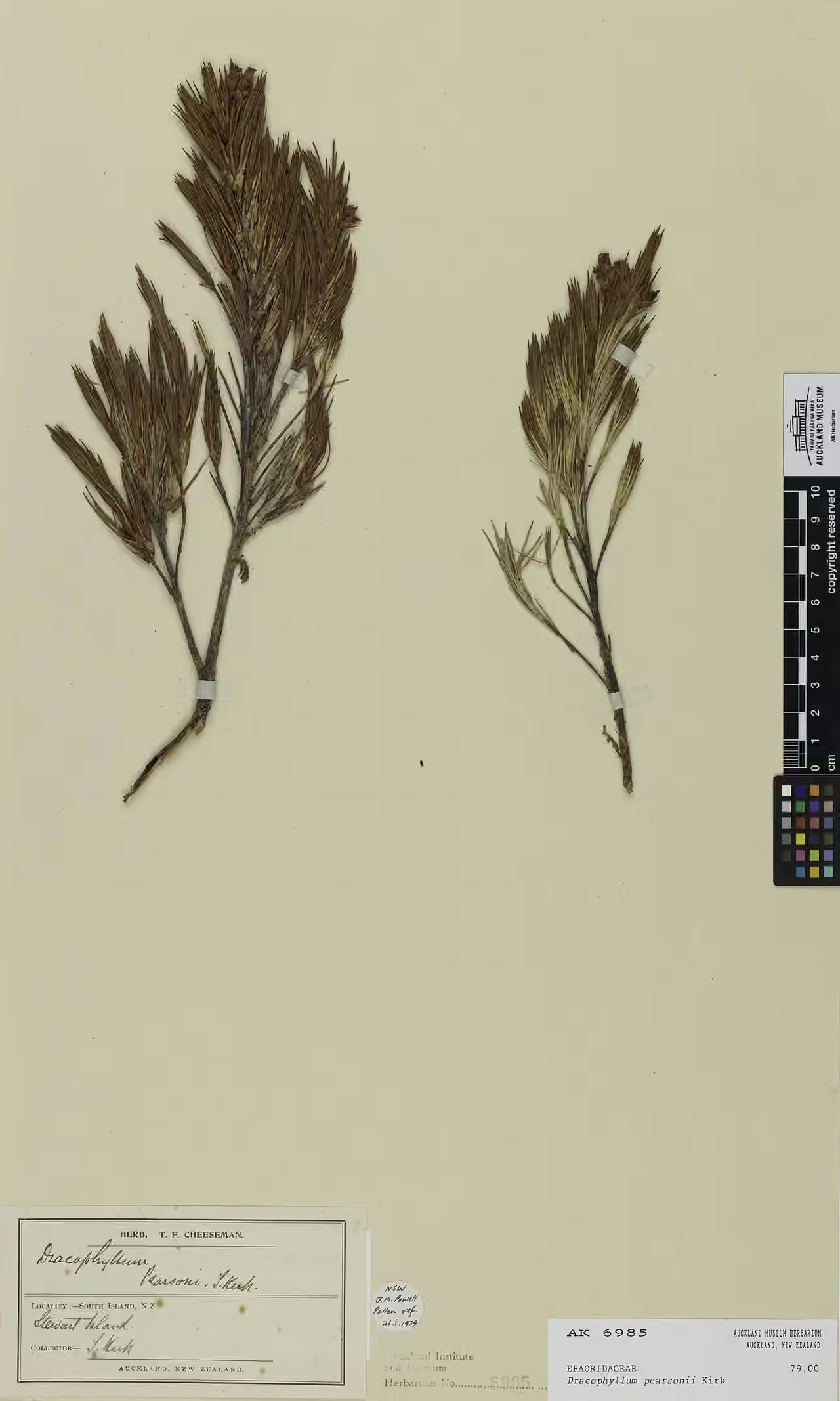
Dracophyllum pearsonii
Dracophyllum pearsonii
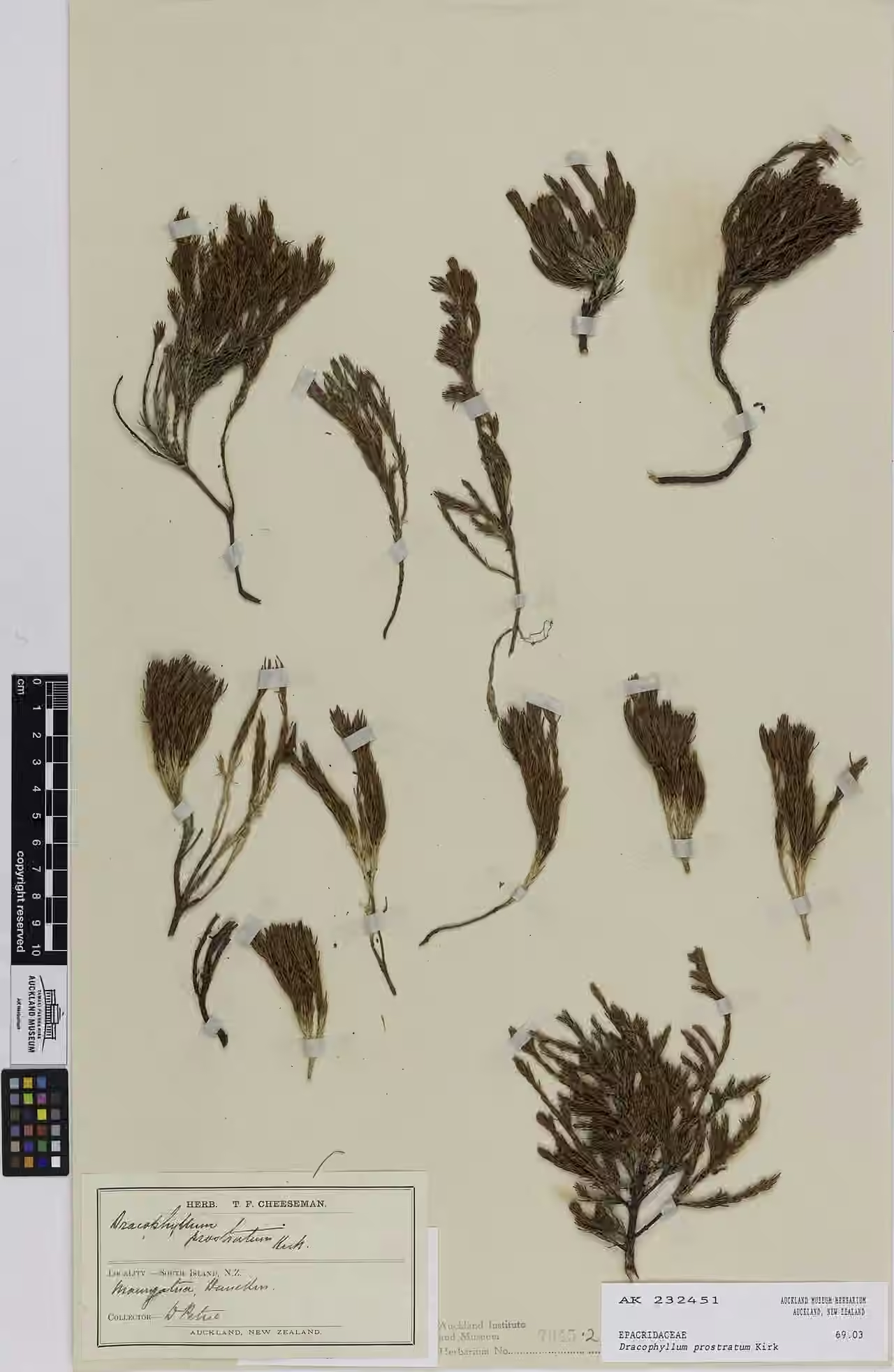
Dracophyllum prostratum
Dracophyllum prostratum
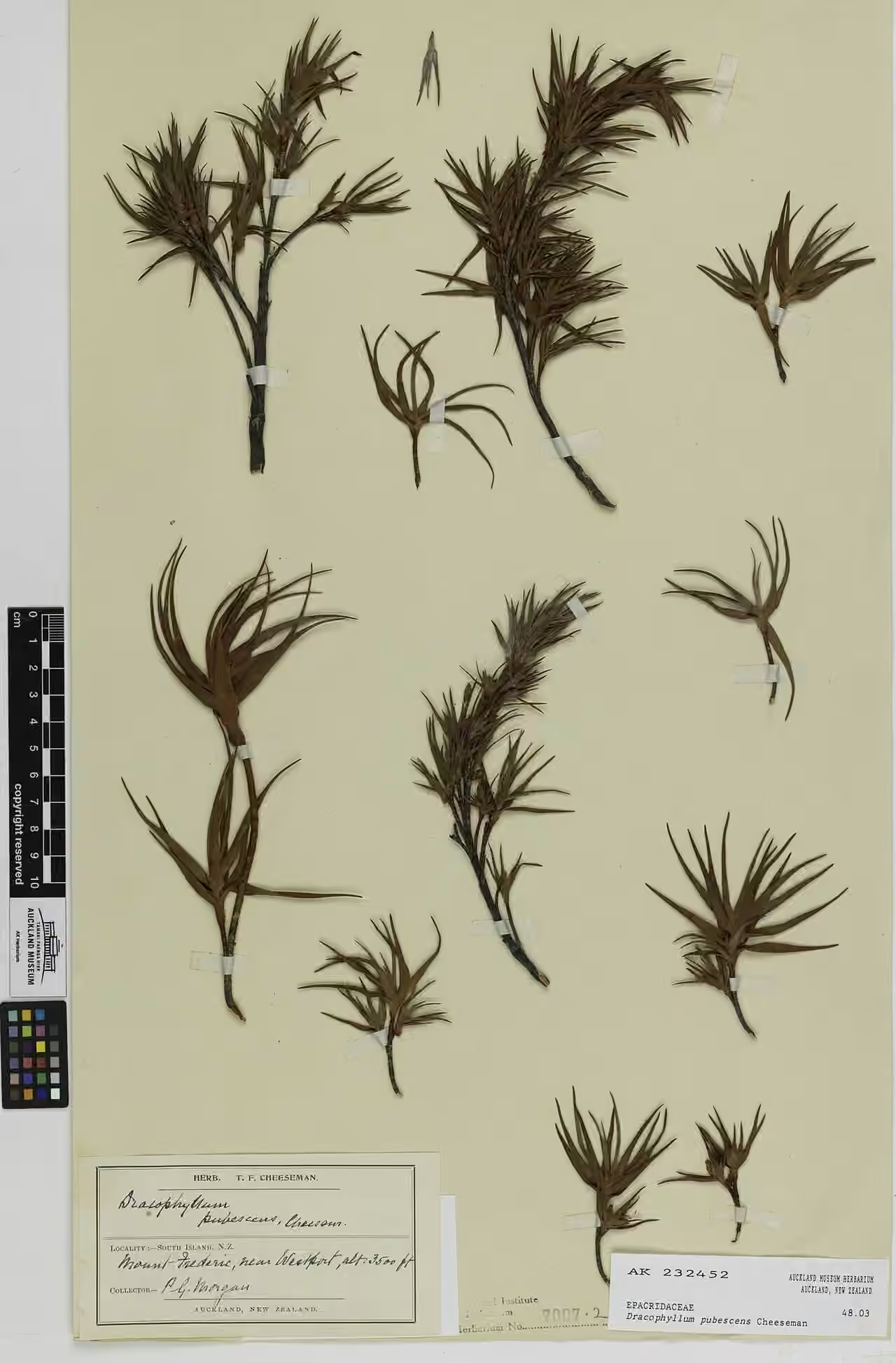
Dracophyllum pubescens
Dracophyllum pubescens
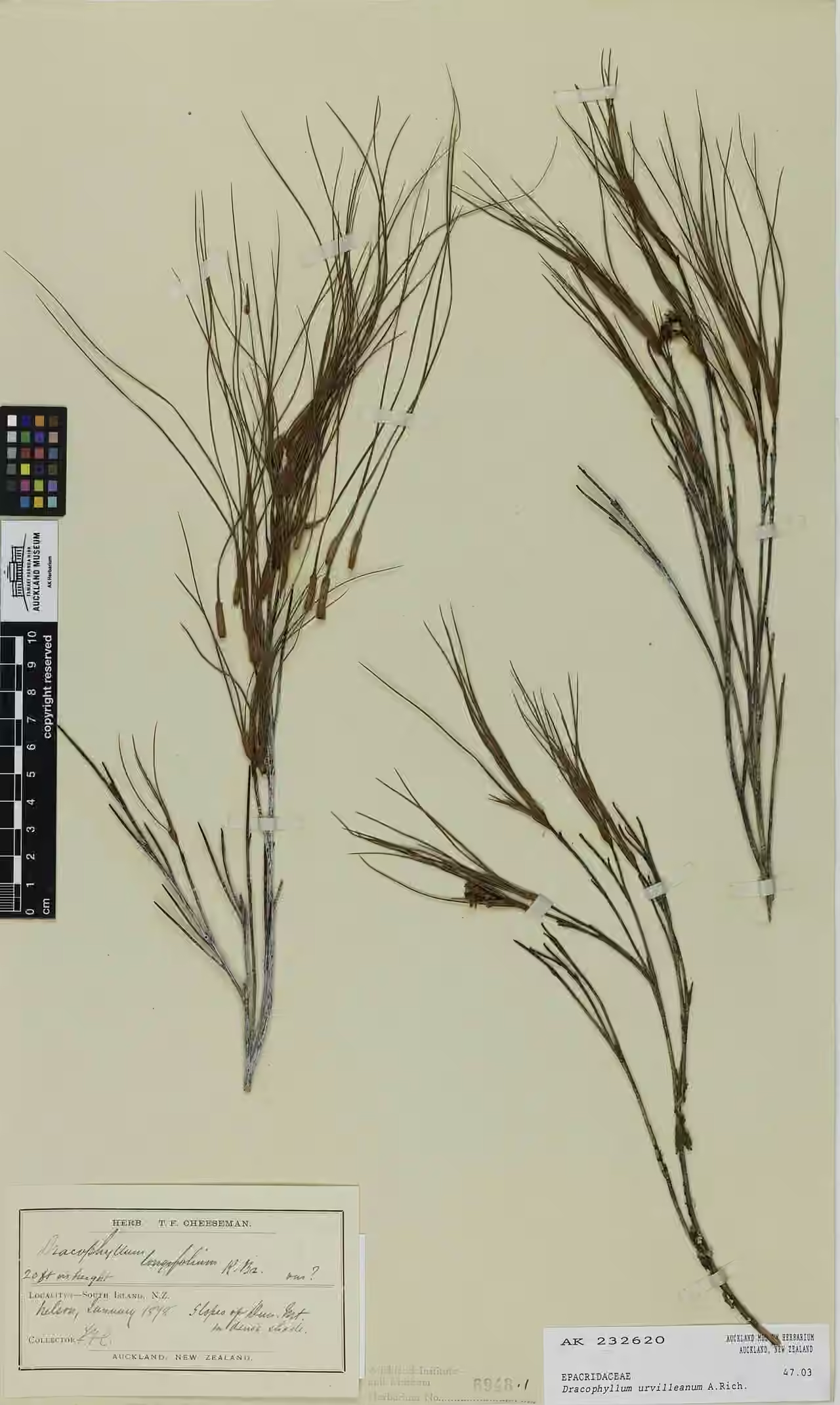
D'Urville's Grass Tree
Dracophyllum urvilleanum
Bamboo Orchid
Earina aestivalis
Plant Conservation
Dracophyllum politum is ranked Not Threatened in the 2023 national assessment, and has held that ranking since 2004. In Otago it is assessed as Regionally At Risk - Regionally Naturally Uncommon, reflecting its limited occurrence there, notably on Maungatua.
Protecting alpine plateaus and bogs from drainage, fire, vehicle tracks and trampling is the most useful thing people can do for this species. Stay on tracks in alpine bogs and photograph rather than collect plants.
Frequently Asked Questions
What does Dracophyllum politum look like?
It forms dense, olive to dark green cushions up to 1 m across, made of many short branches clothed in tiny glossy leaves pressed flat against the stems. Small white flowers sit singly at the branch tips in summer.
Where does Dracophyllum politum grow?
It grows on exposed, gently sloping mountain summits and plateaus from north-west Nelson and North Westland to Fiordland, Maungatua in Otago and Stewart Island/Rakiura, in alpine shrubland, herbfield, fellfield, grassland and bog.
Why is it called politum?
Politum is Latin for polished. The name refers to the smooth, shining surface of the leaves, which distinguishes it from other cushion Dracophyllum species.
Can Dracophyllum politum be grown in a garden?
NZPCN rates it as difficult to grow and says it should not be removed from the wild. It is not sold by nurseries and is best enjoyed in its alpine habitat.
Sources and Further Reading
The botanical, growing, and conservation details for Grass Tree (Dracophyllum politum) on this page draw on the New Zealand plant references below. Consult them for full technical records and the latest distribution data.