Prickly Rasp Fern
Doodia aspera
Last updated:
Prickly rasp fern (Doodia aspera, now Blechnum neohollandicum) is a creeping, harsh-textured fern native to Australia that was once recorded in a few places in Northland. Its long creeping rhizomes can form dense carpets, and its stiff once-divided fronds, 12 to 40 cm long, open pink before turning dark green. The only confirmed wild New Zealand population, near Waiomio by Kawakawa, was destroyed by pine plantation, and NZPCN now regards the species as probably extinct here, ranking it a Vagrant. Rasp ferns sold in gardens under this name may be Australian stock or hybrids with the common native rasp fern. Explore more native ferns in our native plant guide.
Plant Description
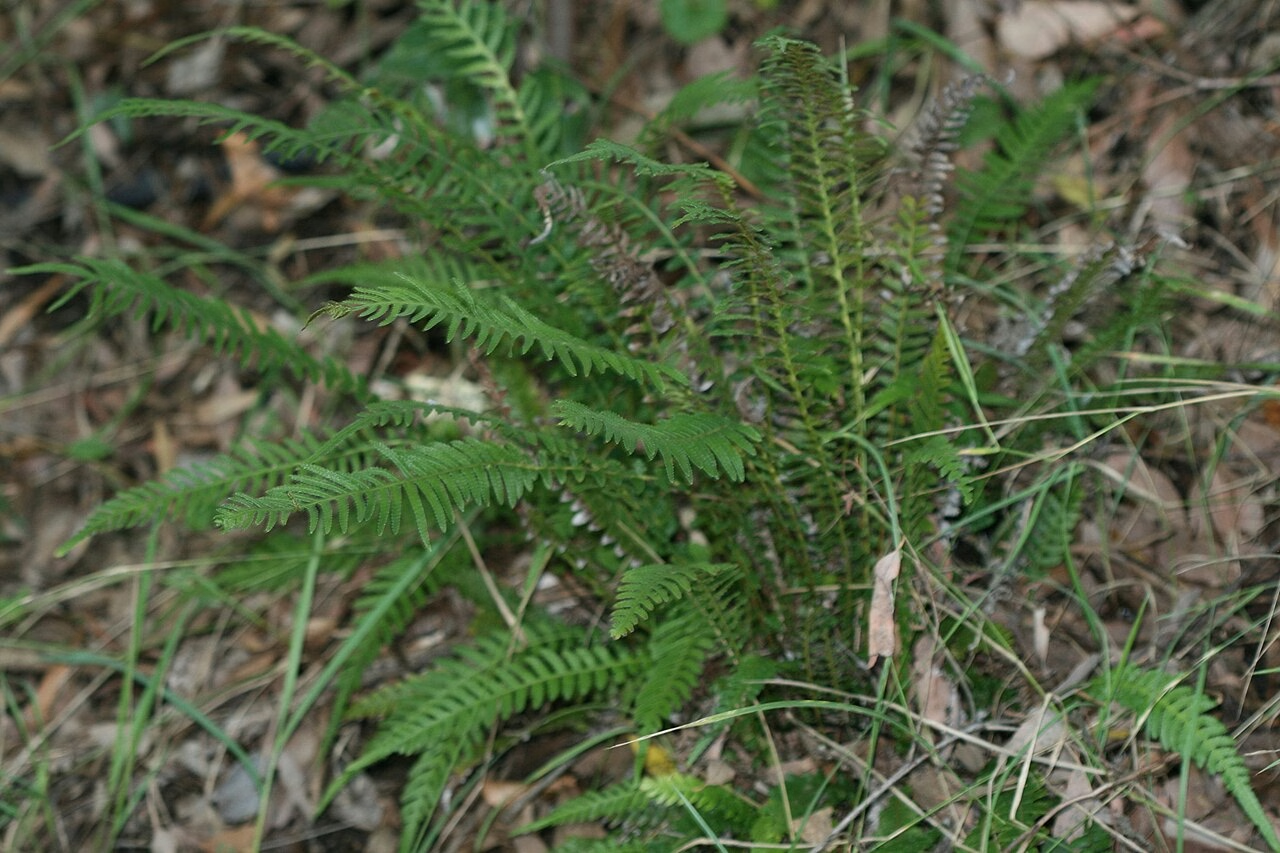
Doodia aspera is a terrestrial fern with long-creeping rhizomes up to about 10 mm thick, covered in the black remains of old stipes. The rhizomes branch and spread, so a plant can form a dense carpet a metre or more across. Fronds are 12 to 40 cm long and 2.5 to 10 cm wide, once-pinnate, and have a rather harsh, rasp-like texture, which gives rasp ferns their name.
Young fronds unfurl pink before maturing to dark green. Each frond has 15 to 38 pairs of pinnae, and all of them, except occasionally the basal pair, are fused to the rachis rather than stalked. Several pairs at the base of the blade are markedly reduced. The stipe and rachis lack hairs but are roughened with small tubercles, and the sori are elongated, in rows either side of the pinna midrib.
The very similar common rasp fern, Blechnum parrisiae (Doodia australis), has hairs on the stipe and rachis and its lower pinnae are free from the rachis. Plants from Tom Bowling Bay in the far north showed intermediate characters and aborted spores, indicating hybrids between the two.
Quick Facts
| Scientific Name | Doodia aspera |
|---|---|
| Height | Fronds 0.12-0.4 m long |
| Spread | Creeping rhizomes can spread 1 m or more |
| Water Needs | Moderate; copes with dry scrub once established |
| Light | Partial shade to filtered light under scrub |
| Frost Tolerance | Low; NZPCN notes it is cold sensitive |
| Salt Tolerance | Some; it was recorded in coastal scrub, but no specific data were found |
| Growth Rate | Moderate to fast once established |
| Lifespan | Perennial |
Climate Best Suited to
Suits warm, frost-free climates such as coastal Northland and eastern Australia. It is cold sensitive and unlikely to thrive where frosts are regular.
Regional Suitability
| City | Climate Suitability |
|---|---|
| Auckland | High |
| Wellington | Medium |
| Christchurch | Low |
| Dunedin | Low |
Plant Habitat
In New Zealand, Doodia aspera has only been confirmed from Northland. It was collected at Waiomio near Kawakawa at about 20 to 40 m altitude, where the population was later destroyed when the site was converted to pine plantation. A record from Raglan Harbour also exists, and the plants at Takapaukura/Tom Bowling Bay are considered hybrids with the common rasp fern. Outside New Zealand it is widespread in Australia.
Its New Zealand habitat was coastal scrub and inland mānuka scrub, and the Tom Bowling Bay hybrids grow under dry mānuka and kānuka. These are fairly dry, open, warm sites rather than deep, wet forest.
Growing Requirements
Soil Requirements
It grew on the dry, often poor soils under mānuka and kānuka scrub in Northland and adapts to most free-draining garden soils.
- Free-draining loam or clay loam
- Tolerates low fertility
- Leaf litter mulch helps the rhizomes spread
Light Requirements
Its natural habitat is under light scrub canopies, giving dappled light rather than deep shade.
- Partial shade or filtered sun
- Tolerates brighter light once established
- Strong light brings out pink new fronds
Water Requirements
As a plant of dry scrub it handles moderate dryness once established, but young plants need regular watering.
- Water regularly during the first summer
- Avoid waterlogged soils
- Mature patches cope with short dry spells
Planting and Establishing
Because the species is probably extinct in the wild in New Zealand, any plants bought under this name are likely to be of Australian origin or hybrids with the native rasp fern. If you want to plant for local ecology, the common native rasp fern (Blechnum parrisiae) is a better choice. Where Doodia aspera is grown, plant in spring in a sheltered, frost-free spot.
Space plants about 40 to 60 cm apart if a ground-covering carpet is wanted, as the creeping rhizomes will fill the gaps. Work leaf mould into the planting hole and mulch well.
Ecological Role
Like other ferns it reproduces by wind-borne spores and spreads vegetatively by its creeping rhizomes, which allows a single plant to form a large colony. In Australia it is common in open forest and on banks, which matches its preference for drier, lighter habitats.
In New Zealand it hybridises with the common rasp fern, Blechnum parrisiae, and the resulting hybrids produce aborted spores. Its loss from Waiomio means that its role in Northland ecosystems is now largely historical.
Uses & Significance
Garden Uses
Grown mostly as an ornamental ground cover fern for its colourful new growth.
- Spreading fern ground cover under trees
- Container or pot plant in frost-free areas
- Contrast planting where pink new fronds can be seen
Ecological Value
Its value in New Zealand is mainly scientific, as a rare vagrant and a parent of rasp fern hybrids.
- Represents the Australian element in the Northland fern flora
- Shows how hybridisation occurs between closely related rasp ferns
- Dense rhizome mats help hold soil on dry banks
Landscaping Uses
In warm gardens prickly rasp fern makes a carpet of stiff, upright fronds that flush pink with each new burst of growth. It works well under open trees, on dry shaded banks, and in large pots on a sheltered patio.
Because it spreads by rhizomes, give it room or contain it with an edging. Combine it with fine-textured grasses or small-leaved shrubs to show off the bold, rasp-like fronds.
Seasonal Care Calendar
Spring
New pink fronds unfurl from the creeping rhizomes as temperatures rise.
- Apply leaf mould mulch
- Water young plants regularly
Summer
Fronds mature to dark green and fertile fronds carry rows of sori.
- Keep newly planted patches watered
- Collect ripe spores if propagating
Autumn
Growth slows and older fronds may start to brown.
- Divide crowded patches while soil is still warm
- Remove dead fronds
Winter
The fern is largely static and vulnerable to frost damage.
- Protect from frost in cooler districts
- Avoid waterlogging
When to Prune and How Much
Little pruning is needed. Cut away brown or damaged fronds at the base in late winter or early spring, before the new pink fronds appear, so that the fresh growth is displayed cleanly.
If the patch spreads beyond its space, slice off the outer rhizomes with a spade and pot them up or discard them.
How to Grow Prickly Rasp Fern
NZPCN describes Doodia aspera as easy to propagate from spores and from rooted pieces of rhizome. Because it is probably extinct in the wild in New Zealand, any propagation should use cultivated stock, and growers wanting a locally native rasp fern should use Blechnum parrisiae instead. Note that hybrid plants, such as those at Tom Bowling Bay, produce aborted spores, so spores from doubtful plants may not germinate.
From Spores
Collect fertile fronds when the sori turn brown and the spores are ripe, usually in summer. Lay the fronds on clean paper in a dry place for a few days to release spores.
- Sterilise a fine seed-raising mix or peat-based medium with boiling water and let it cool
- Sprinkle spores thinly over the surface
- Cover the container with glass or plastic to keep humidity high
- Place in warm, bright, indirect light
- Keep moist with distilled or boiled water until green prothalli form
- Mist the prothalli to aid fertilisation and wait for young fronds
- Prick out sporelings into small pots once they have several fronds
By Rhizome Division
The creeping rhizomes root as they spread, so rooted sections can be cut from an established plant. This is the quickest way to multiply it.
- Choose a section of rhizome with healthy fronds and roots
- Cut it free with a sharp spade or knife in spring
- Pot into a free-draining mix with added leaf mould
- Keep in shade and water regularly until new fronds appear
- Plant out once well rooted
Pests & Diseases
No serious pests are recorded for this fern in New Zealand. In cultivation slugs and snails may chew young fronds, and scale insects or mealybugs can occur on plants kept indoors or in pots.
The main threat to the species here was habitat loss: its last known wild population near Kawakawa was destroyed by conversion of the site to pine plantation.
Cultural Significance
No Māori name or traditional use for Doodia aspera is recorded in the sources consulted, which is unsurprising given how rare it has been in New Zealand. The name rasp fern refers to the harsh, sandpaper-like texture of the fronds.
The genus Doodia was named after Samuel Doody, a seventeenth-century London apothecary. The species was first accepted as part of the New Zealand flora by Barbara Parris in 1972, and it is now treated as Blechnum neohollandicum, the epithet meaning of New Holland, an old name for Australia.
Bonus Tip
Before buying a plant labelled Doodia aspera for a restoration project, check its origin: NZPCN notes that garden plants may be Australian or hybrids with Doodia australis, so for planting in natural areas the native Blechnum parrisiae is the appropriate rasp fern.
Related Plants
Explore other native plants that share similar characteristics or habitats with Prickly Rasp Fern (Doodia aspera), offering further insights into New Zealand's diverse flora. These related species provide context and opportunities for complementary planting in your garden.
Plant Conservation
Doodia aspera is ranked Non-resident Native - Vagrant (2023), and Regionally Extirpated in Northland. NZPCN states it is probably now extinct in New Zealand, following the destruction of the Waiomio population by pine plantation.
Because it remains common in Australia, it is not globally at risk. Any rediscovery in Northland would be significant, and suspected plants should be reported to botanists for confirmation, especially as hybrids with the common rasp fern occur.
Frequently Asked Questions
Is prickly rasp fern native to New Zealand?
It is classed as indigenous because it once grew wild in Northland, but it is ranked a Vagrant and is probably now extinct here. It is still common in Australia, where it is widespread.
How do I tell Doodia aspera from the common rasp fern?
In Doodia aspera nearly all pinnae, except sometimes the lowest pair, are joined to the rachis, several lower pinnae pairs are much reduced, and the stalk and rachis are hairless but rough with small tubercles. The common native rasp fern (Blechnum parrisiae) has hairs on those parts.
What is the current scientific name of Doodia aspera?
New Zealand botanists now place it in Blechnum as Blechnum neohollandicum, because keeping Doodia separate would leave Blechnum as an unnatural group.
Is prickly rasp fern easy to grow?
NZPCN says it is easy to grow from spores and rooted pieces of rhizome and becomes fairly fast growing once established, although it is sensitive to cold.
Sources and Further Reading
The botanical, growing, and conservation details for Prickly Rasp Fern (Doodia aspera) on this page draw on the New Zealand plant references below. Consult them for full technical records and the latest distribution data.