Kirk's Crassula
Crassula kirkii
Last updated:
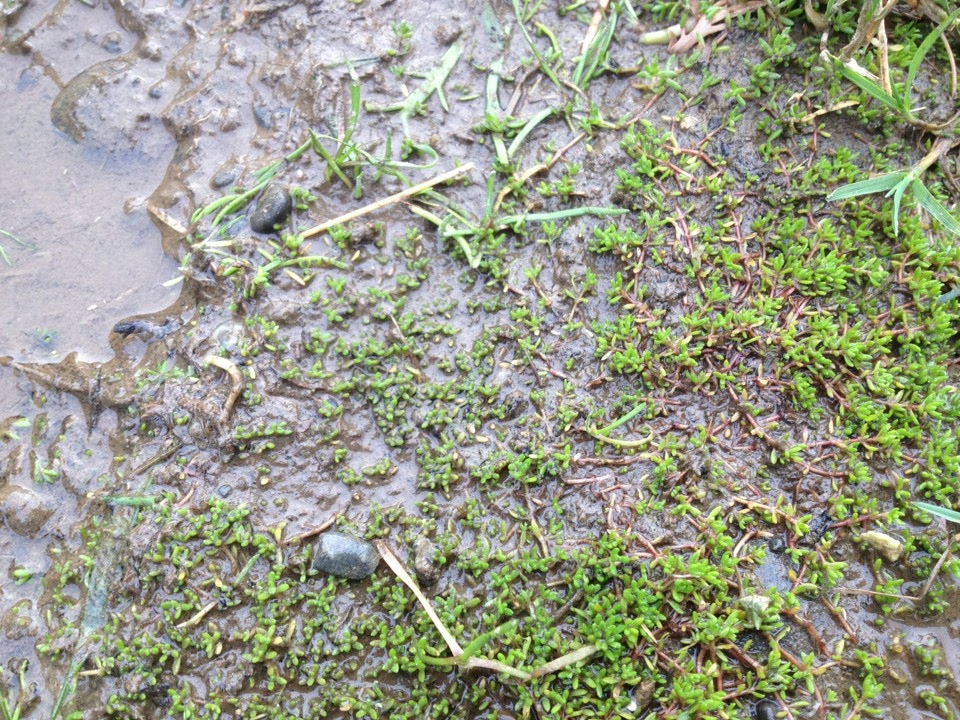
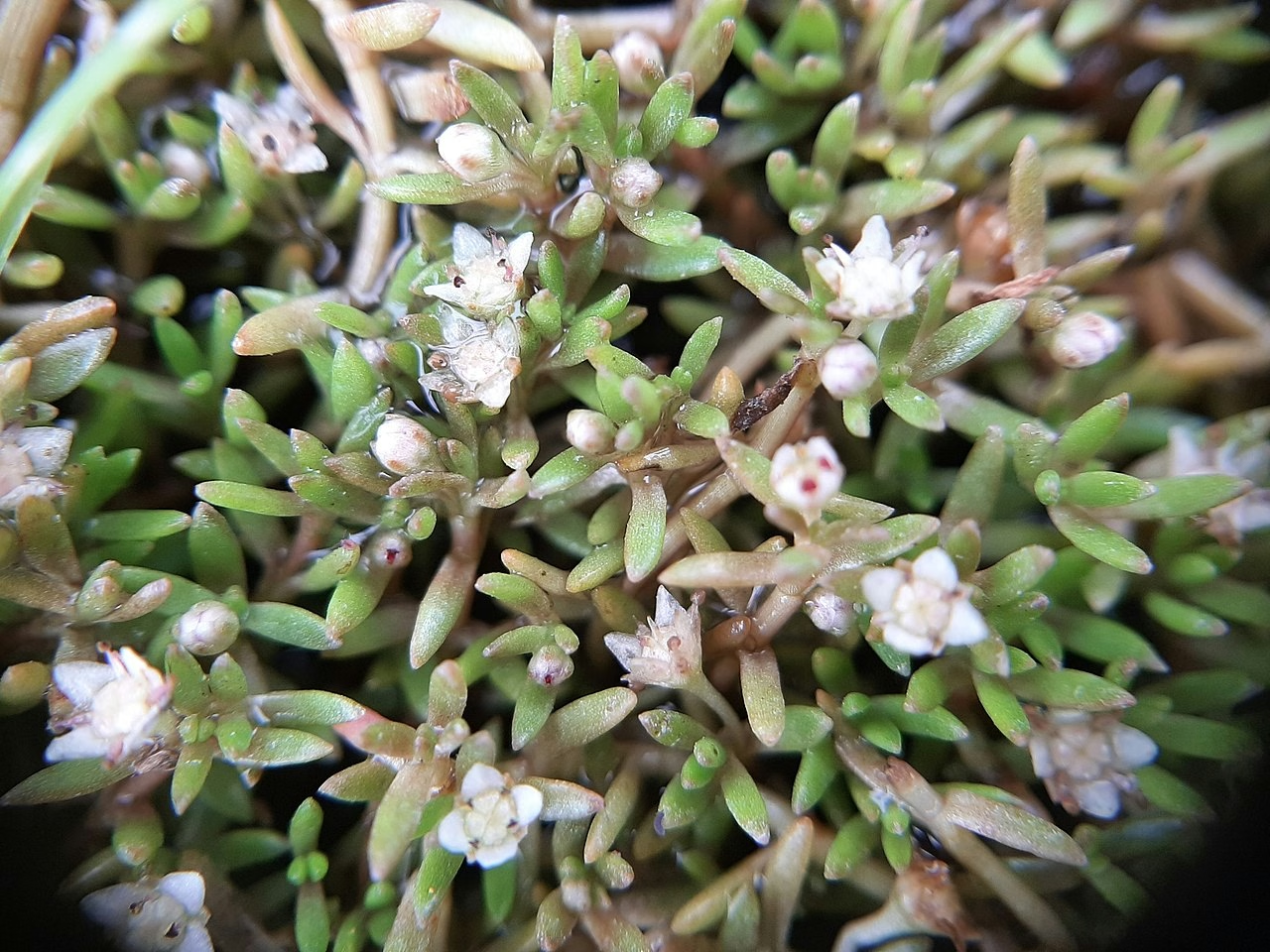
Kirk's crassula (Crassula kirkii) is a tiny, mat-forming succulent herb endemic to New Zealand. Its creeping stems root at the nodes and carry fleshy leaves only 1.5-5.5 mm long, building loose moss-green to reddish-green mats. Minute star-shaped, four-petalled flowers about 3 mm across sit in the leaf axils. It grows in brackish turf and stream sides near lagoons, estuaries and stream mouths on the south Wellington coast, the West Coast, Southland, Stewart Island and the Chatham Islands. Weed invasion and coastal development have caused declines, and it is ranked At Risk - Declining. Explore more native ground covers in our native plant guide.
Plant Description
Crassula kirkii is a creeping, mat-forming succulent herb in the stonecrop family (Crassulaceae). Its decumbent stems root freely at the leaf nodes and form small to large, loose mats that are moss-green to reddish-green, reddening in exposed sites. The paired fleshy leaves are 1.5-5.5 mm long and 0.8-1.7 mm wide, linear-elliptic to oblong or obovate-elliptic, with blunt to pointed tips.
The flowers are minute, star-like and borne singly in the leaf axils. Each has four petals and is about 2.8-3 mm across. NZPCN describes them as usually pink or pinkish-white and only rarely white or tinged green, while the NZ Flora describes the petals as white, sometimes greenish or pinkish tipped. The fruits are tiny follicles holding minute seeds, spread by wind, water and possibly by sticking to animals.
Its closest relative is Crassula ruamahanga, a widespread mat-former of damp lowland ground. C. kirkii is larger in all parts, has broader leaves and usually larger pink flowers, and is a higher polyploid (2n = c. 84 compared with 2n = c. 42). Its preference for brackish coastal sites is another useful clue.
Quick Facts
| Scientific Name | Crassula kirkii |
|---|---|
| Height | Under 5 cm |
| Spread | Small to large, extensive loose mats |
| Water Needs | High; permanently damp to wet ground |
| Light | Full sun; needs open sites |
| Frost Tolerance | Moderate; a coastal lowland plant |
| Salt Tolerance | High; grows in brackish turf near estuaries |
| Growth Rate | Fast in open, damp conditions |
| Lifespan | Perennial |
Climate Best Suited to
Suits cool, moist, temperate coastal climates of the lower North Island, West Coast, Southland and Chatham Islands, where brackish ground stays damp most of the year.
Regional Suitability
| City | Climate Suitability |
|---|---|
| Auckland | Low |
| Wellington | High |
| Christchurch | Medium |
| Dunedin | High |
Plant Habitat
Crassula kirkii is endemic to New Zealand. NZPCN records it from sites along the south Wellington coast, parts of the West Coast and Southland, Stewart Island/Rakiura and the Chatham Islands.
It is a plant of brackish places: stream sides and turf near coastal lagoons and estuaries, and at the mouths of coastal streams. It needs open, sunny ground with little competition and disappears where taller grasses, rushes or weeds close over it.
Growing Requirements
Soil Requirements
In the wild it grows in damp, silty or sandy brackish soils and turf that rarely dry out.
- Wet silt, sand or fine gravel
- Tolerates brackish, mildly saline conditions
- Low fertility is fine
- Must stay moist year-round
Light Requirements
A plant of open ground that needs full sun and no shading from taller plants.
- Full sun
- Keep surrounding vegetation short
Water Requirements
Keep it permanently damp. A shallow saucer or a bog garden edge suits it in cultivation.
- Never let the soil dry out
- Brief flooding is tolerated
- Rainwater is better than chlorinated tap water if available
Planting and Establishing
Plant rooted pieces into wet sand or silt at the edge of a pond, bog garden or damp hollow in full sun. Press each piece firmly onto the surface so the stems are in contact with moist soil, where they will quickly root at the nodes.
For restoration, only plant within its natural range and use local-source material, as populations from different regions may differ. Choose open brackish turf that is maintained free of rank grasses.
Ecological Role
Its tiny flowers are probably visited by small flies and other minute insects, but no pollination study was found. NZPCN notes that the follicles and seeds are dispersed by wind and water, and possibly by attachment to animals or birds, which suits a plant of estuaries and stream mouths.
It is part of the specialised brackish turf community that also includes tiny herbs such as Leptinella, Lilaeopsis and Selliera. These turfs depend on disturbance from tides, floods or grazing to stay open.
Uses & Significance
Garden Uses
A curiosity for native plant enthusiasts and an insurance plant for a declining species.
- Bog garden and pond edges
- Shallow pots stood in a saucer of water
- Coastal wetland restoration within its range
- Miniature native turf displays
Ecological Value
Cultivating and restoring Kirk's crassula helps protect a declining coastal specialist.
- Part of rare brackish turf communities
- Covers wet mud and silt between larger plants
- Ex situ insurance against local extinction
Landscaping Uses
Use it as a living carpet at the margin of a coastal pond or rain garden, where its reddish-green mats can spread over wet silt between stones. It combines well with other tiny native turf plants for a miniature salt-marsh look.
It is too small and too dependent on constant moisture for general landscaping; treat it as a detail plant in a carefully managed wetland feature.
Seasonal Care Calendar
Spring
Mats grow actively and flowering begins.
- Divide and replant
- Weed around mats
Summer
Flowers and fruits are present, and mats spread over moist ground.
- Keep soil constantly wet
- Watch for overgrowth by grasses
Autumn
Some flowers and fruits continue; mats may redden.
- Collect fresh seed
- Clear fallen leaves
Winter
Growth slows but the mats remain green to reddish.
- Protect potted plants from hard frost
- Keep weeds in check
When to Prune and How Much
No pruning is needed. If mats spread too far, simply pull or cut away the outer stems.
The most important maintenance is removing taller plants and weeds that would shade or smother the mat.
How to Grow Kirk's Crassula
NZPCN describes Crassula kirkii as easily grown from division of whole plants and from fresh seed. Division is the quickest and most reliable method, because every piece of stem with a node can root. Seed is tiny and best sown fresh. As this is an At Risk - Declining species, propagation material should come from cultivated plants or be collected with appropriate permission, and only small portions of wild mats should ever be taken.
By Division
Pieces of mat establish rapidly on wet soil at almost any time of year, though spring and early summer are best. Because stems root at the nodes, even small fragments will grow.
- Cut or pull off small clumps of rooted stems
- Lay them on the surface of a wet, sandy mix in a shallow pot
- Press them gently into the mix so the nodes touch the soil
- Stand the pot in a saucer of water in full sun
- Pot on or plant out once the mat has knitted together
From Seed
The minute seeds form in tiny follicles in the leaf axils. Sow them fresh on the surface of a moist mix, as they are too small to cover.
- Collect stems carrying ripe follicles and dry them over paper to catch the seed
- Sprinkle seed thinly on fine, wet seed-raising mix
- Do not cover; keep the surface constantly moist by standing the tray in water
- Grow seedlings on in bright light and prick out small clumps once they are large enough
Pests & Diseases
No specific pests are recorded. In gardens, the biggest threat is competition from weeds and grasses that overgrow the low mats. Slugs may graze the fleshy leaves.
Allowing pots to dry out quickly kills plants, so keep them standing in water during warm weather.
Cultural Significance
No Māori name or traditional use for Crassula kirkii is recorded in the sources consulted. The genus name comes from the Latin crassus, thick, referring to the fleshy leaves.
The species honours Thomas Kirk (1828-1898), who emigrated to New Zealand in 1863 and became one of the country's leading botanists. It was named Crassula kirkii by A.P. Druce and D.R. Given, based on a name originally published by H.H. Allan.
Bonus Tip
If you have a coastal property with a brackish stream mouth or lagoon edge, keeping a patch of turf short by occasional mowing or light grazing is often the best way to help this species, because it is lost as soon as taller vegetation takes over.
Related Plants
Explore other native plants that share similar characteristics or habitats with Kirk's Crassula (Crassula kirkii), offering further insights into New Zealand's diverse flora. These related species provide context and opportunities for complementary planting in your garden.
Craspedia incana
Craspedia incana
Craspedia lanata var. lanata
Craspedia lanata var. lanata
Craspedia robusta var. pedicellata
Craspedia robusta var. pedicellata
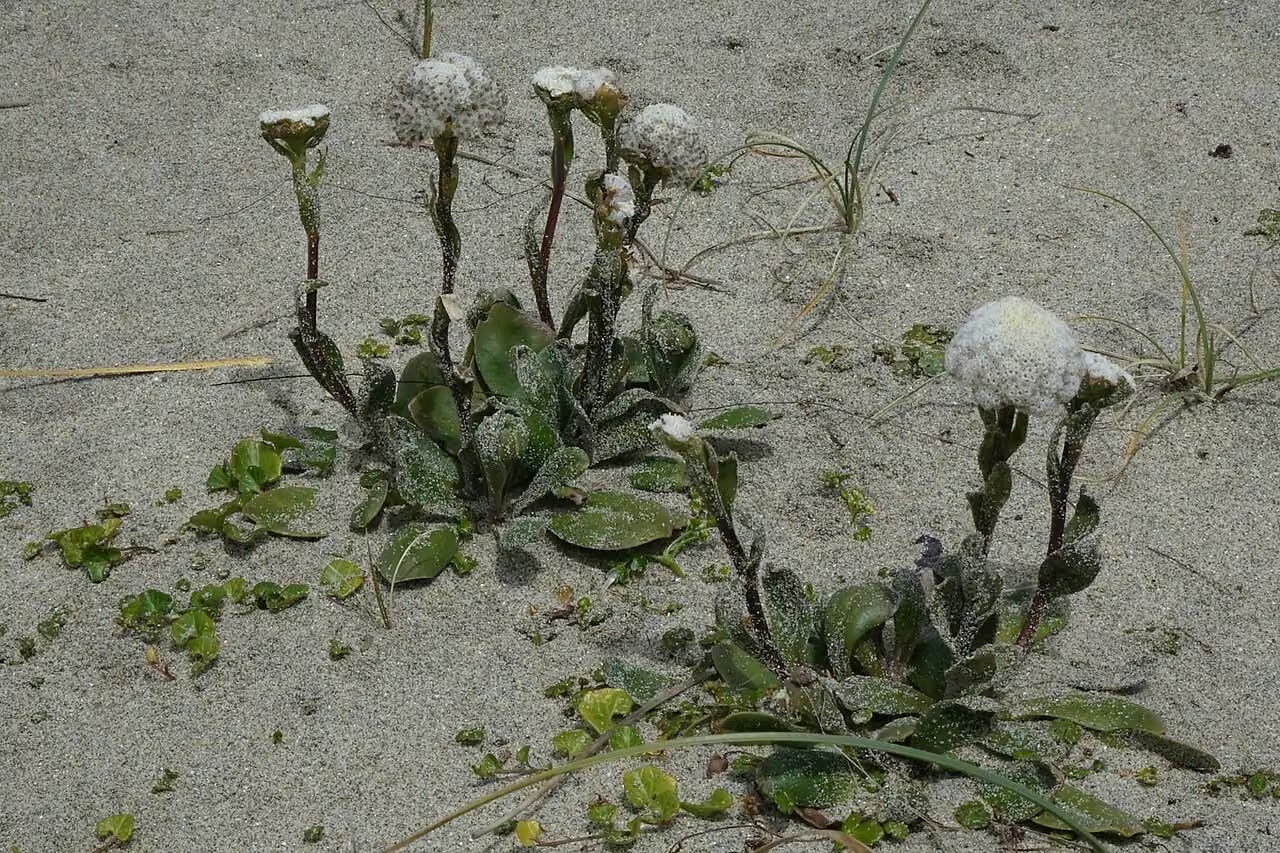
Craspedia robusta var. robusta
Craspedia robusta var. robusta
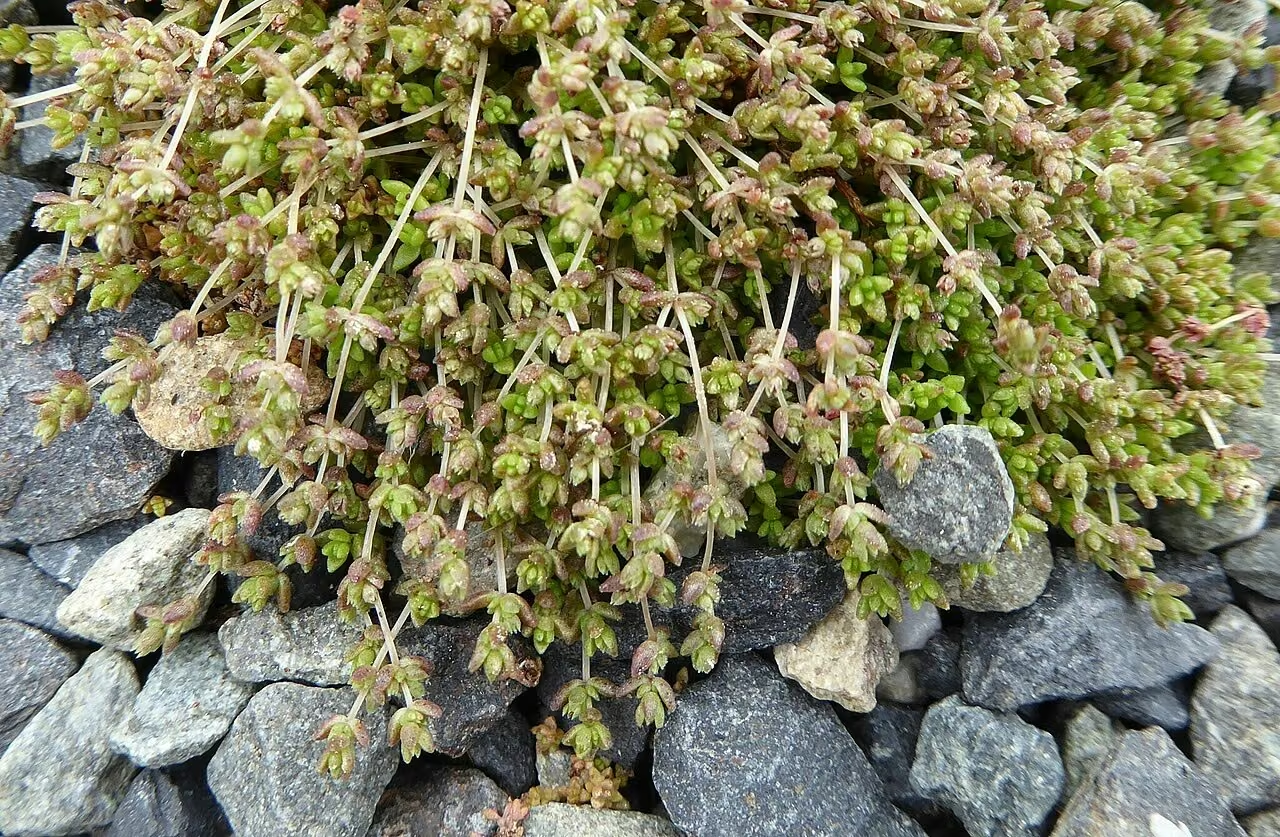
Crassula mataikona
Crassula mataikona
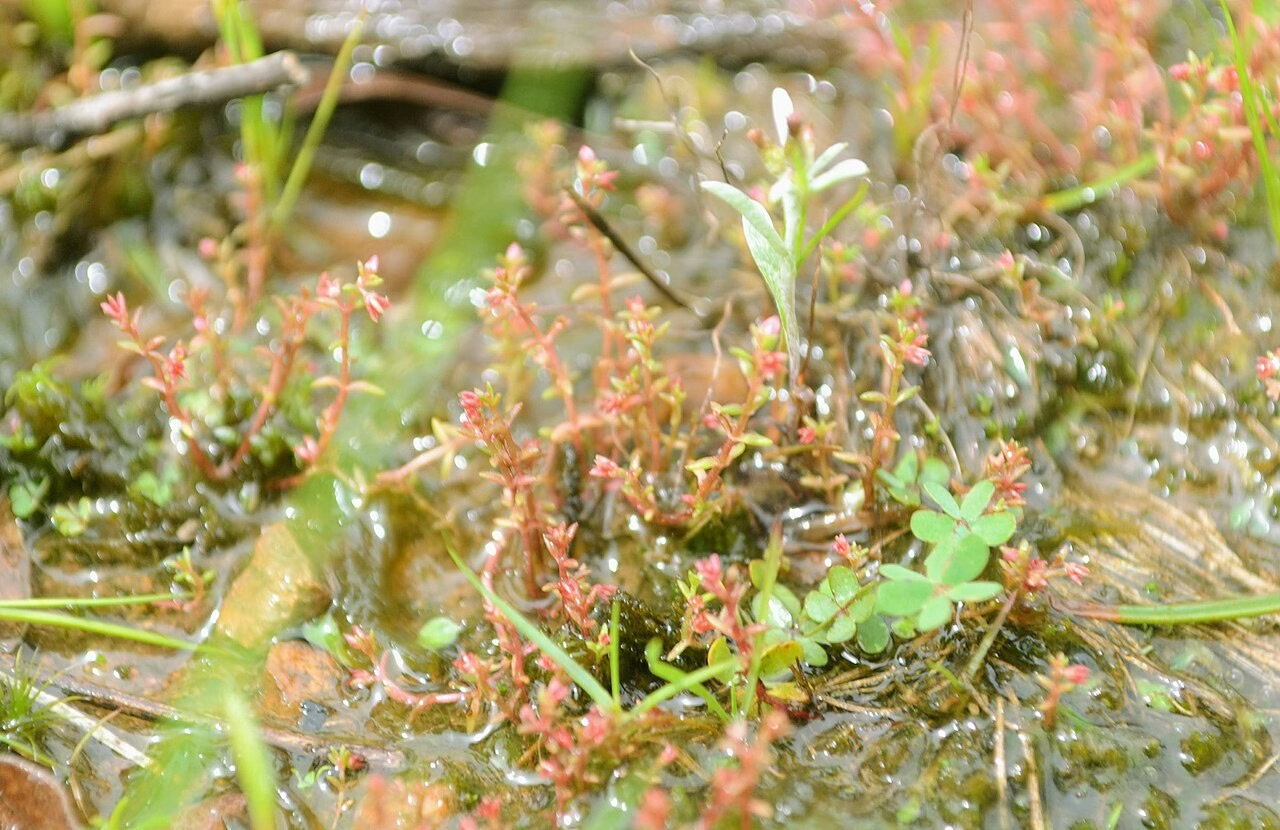
Crassula peduncularis
Crassula peduncularis
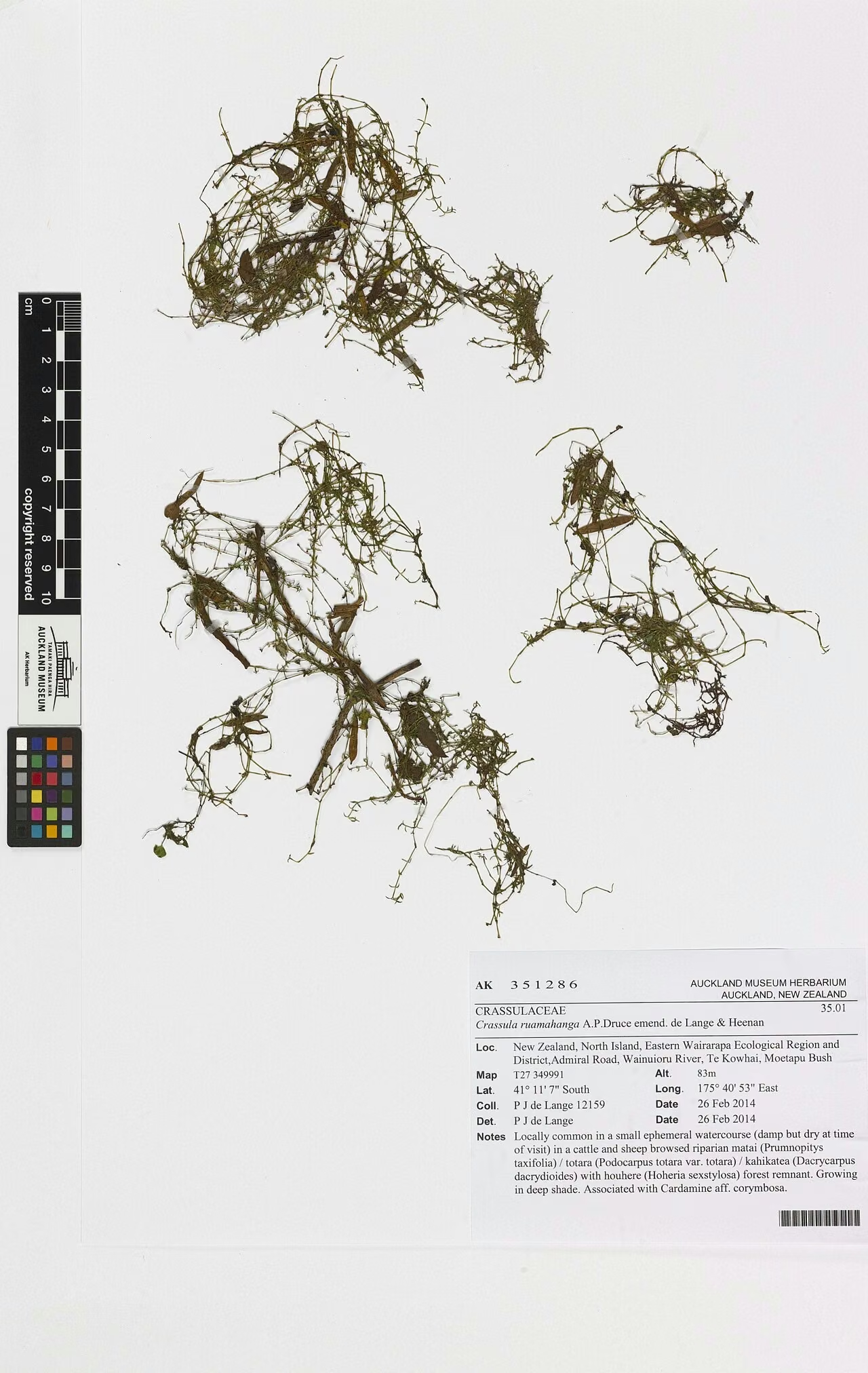
Crassula ruamahanga
Crassula ruamahanga
Sinclair's Stonecrop
Crassula sinclairii
Plant Conservation
Crassula kirkii is ranked At Risk - Declining (2023). Wellington region ranks it Regionally Endangered (2025). NZPCN reports that it has declined in the northern part of its range through weed invasion and coastal development.
Populations can be easily maintained where habitats are kept open and free of taller vegetation. Weed control around estuarine turf, careful siting of coastal works, and growing plants in cultivation as backup populations all help.
Frequently Asked Questions
Where does Kirk's crassula grow?
NZPCN records it on the south Wellington coast, parts of the West Coast and Southland, Stewart Island and the Chatham Islands, in brackish turf and stream sides near lagoons, estuaries and coastal stream mouths.
Why is Crassula kirkii declining?
Populations in the northern part of its range have declined because weeds and taller vegetation overrun its open brackish habitat, and because of coastal development.
How do you tell Crassula kirkii from Crassula ruamahanga?
NZPCN says C. kirkii is larger, with broader leaves and usually larger pink flowers. It also has about twice the chromosome number, roughly 2n = 84 against 42.
Who is Crassula kirkii named after?
It honours Thomas Kirk (1828-1898), a prominent New Zealand botanist, lecturer and author of The Forest Flora of New Zealand.
Sources and Further Reading
The botanical, growing, and conservation details for Kirk's Crassula (Crassula kirkii) on this page draw on the New Zealand plant references below. Consult them for full technical records and the latest distribution data.