Sinclair's Stonecrop
Crassula sinclairii
Last updated:
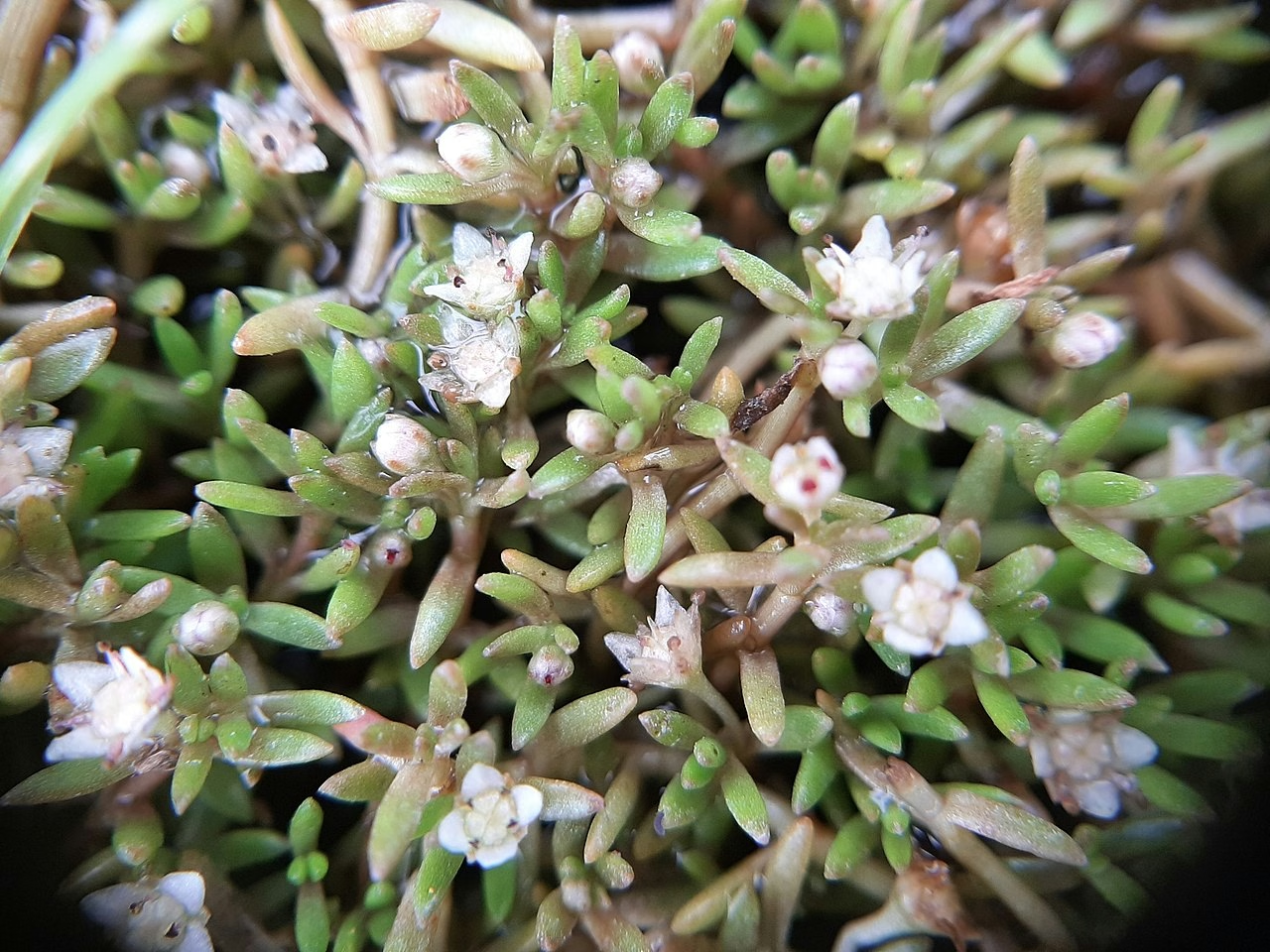
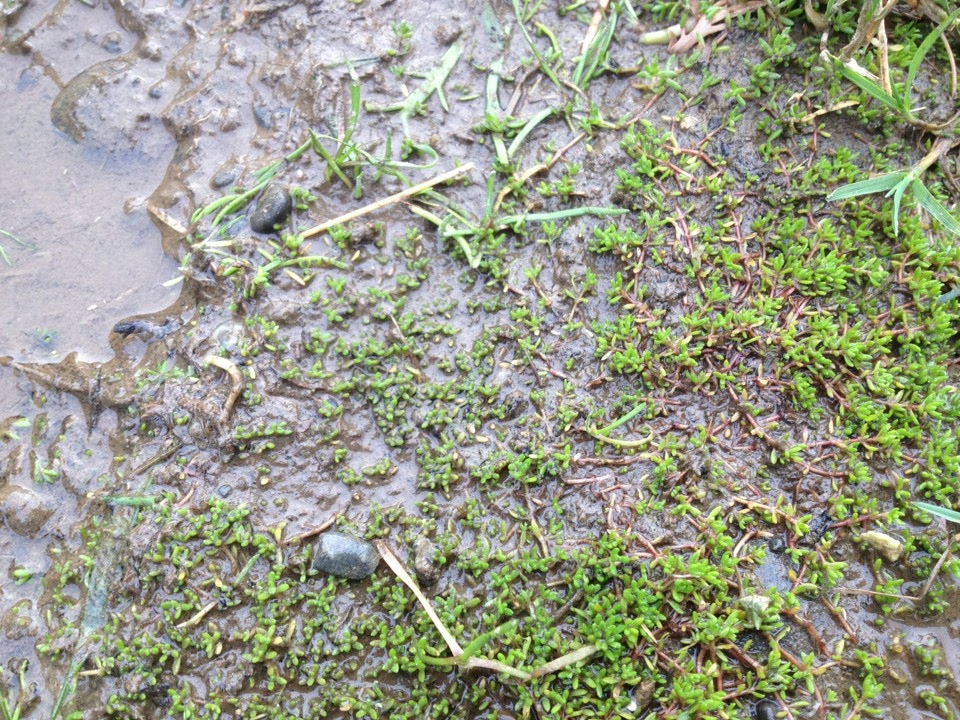
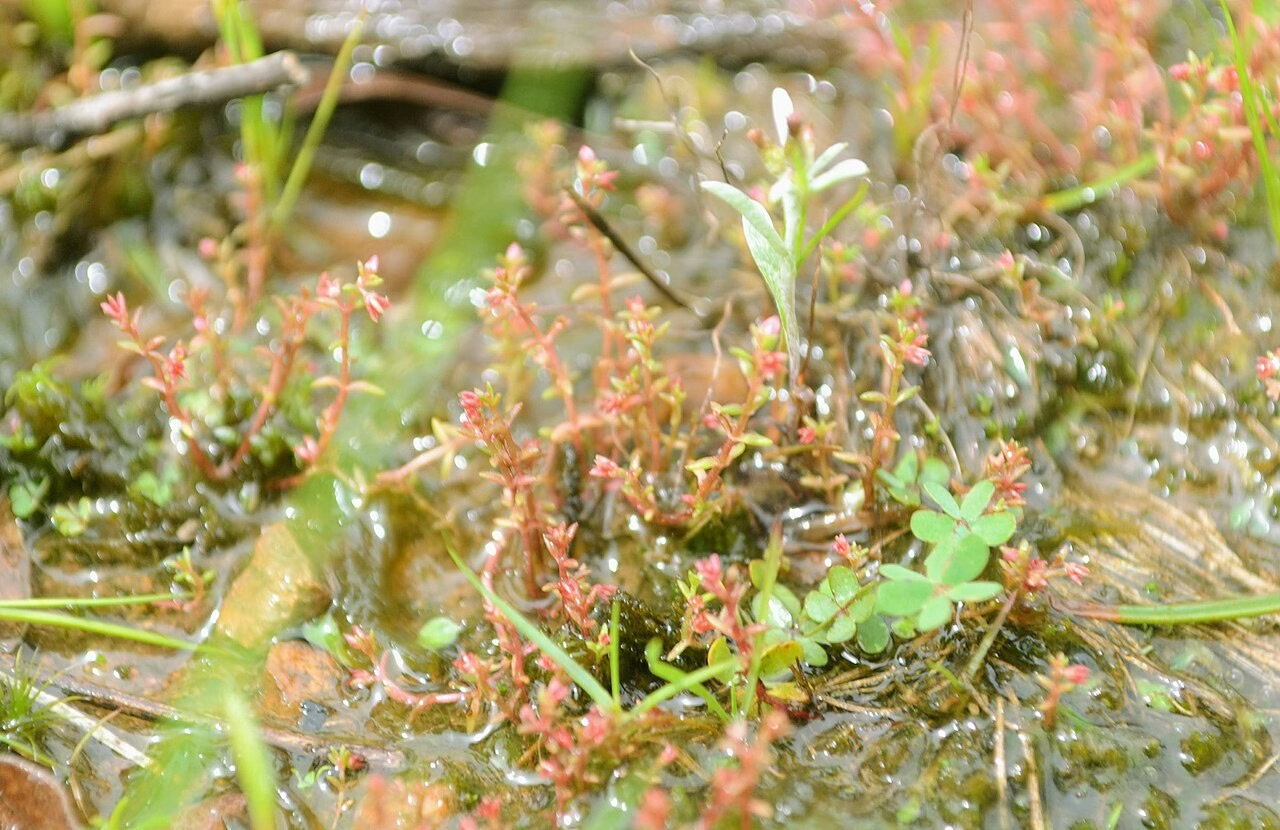
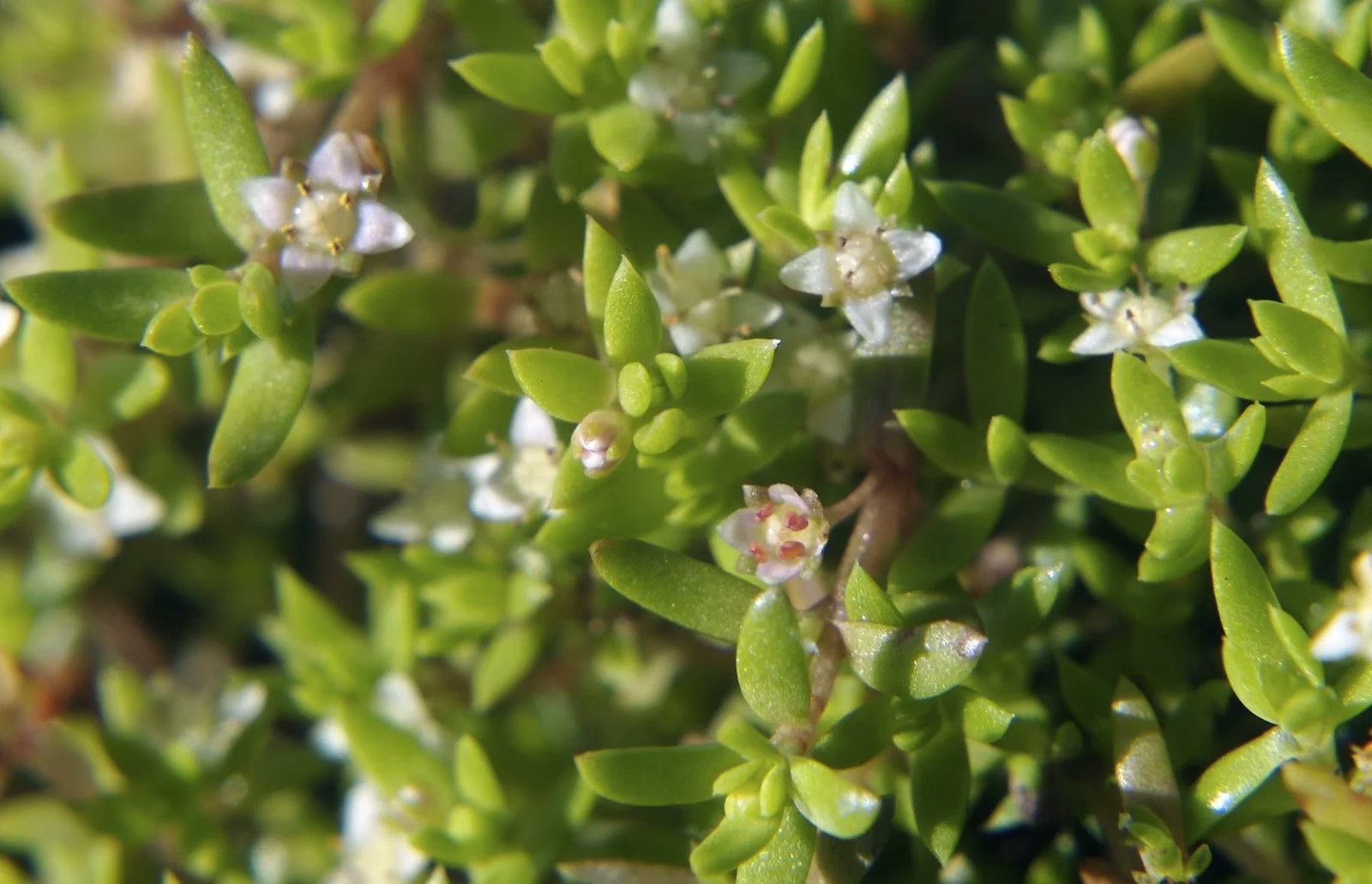
Sinclair's stonecrop (Crassula sinclairii) is a tiny perennial succulent endemic to New Zealand that lives mostly underwater. Its fine, much-branched stems root at the nodes and build small to extensive thread-like mats, with fleshy leaves only 0.5-2 mm long. From October to March it produces star-like, four-petalled white flowers, often flushed pink, about 3 mm across and sweetly fragrant. It grows from the coast to alpine tarns throughout the North, South, Stewart and Chatham Islands, usually in slow streams, ponds, lakes and brackish lagoons where it is submerged most of the year. It is ranked Not Threatened. Explore more native ground covers in our native plant guide.
Plant Description
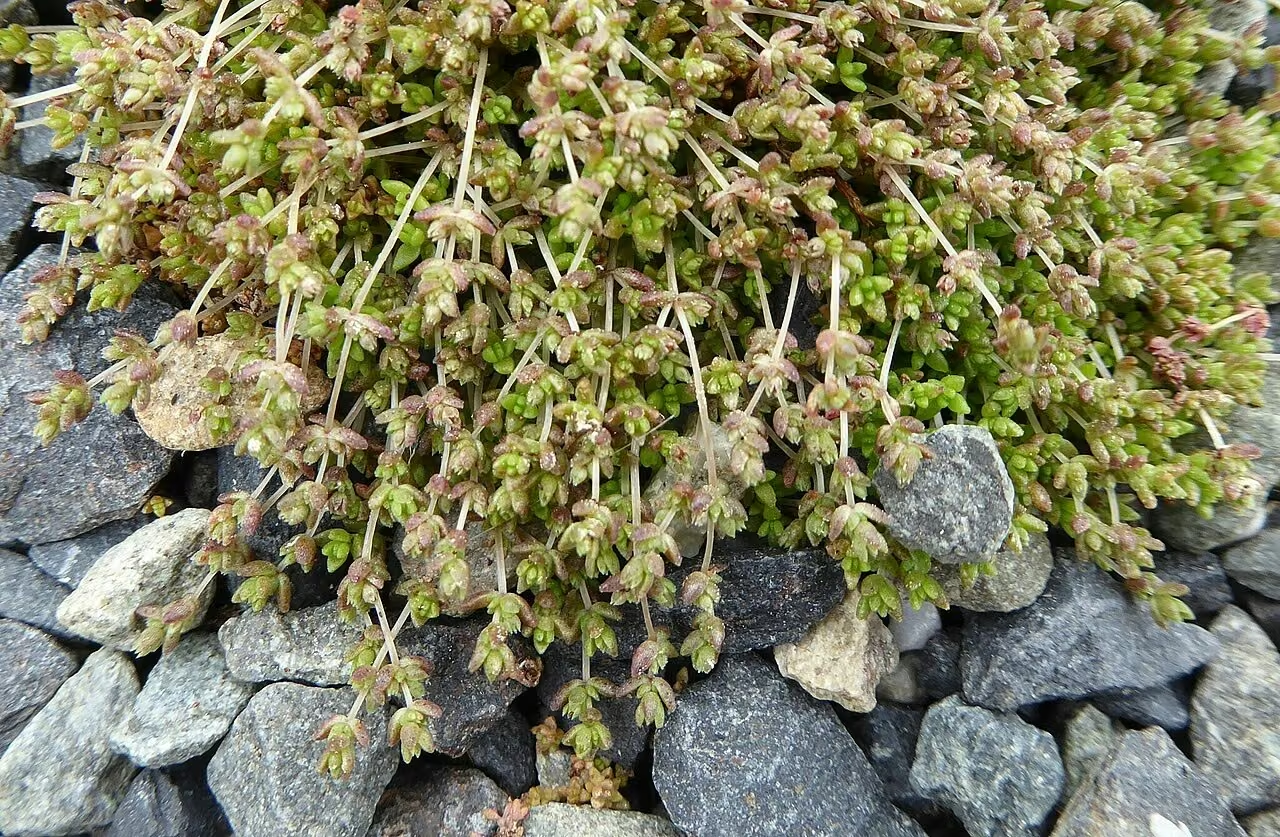
Crassula sinclairii is a perennial herb of the stonecrop family that forms small to large, extensive mats of fine, thread-like stems. The stems are almost prostrate except for slightly ascending tips, much branched and freely rooting at the nodes. The leaves are joined at the base, tiny (0.5-2 mm long, 0.2-0.5 mm wide and about 0.2 mm thick), lanceolate-oblong to oblanceolate, flattened above and strongly convex below, with an acute tip.
Flowers are borne singly in the leaf axils on stalks 0.5-3 mm long. They are star-like, four-parted, 2.5-3.5 mm in diameter and sweetly fragrant. The petals are broadly ovate, white and often flushed pink, and much longer than the calyx lobes. The follicles are smooth, with seeds 0.30-0.45 mm long.
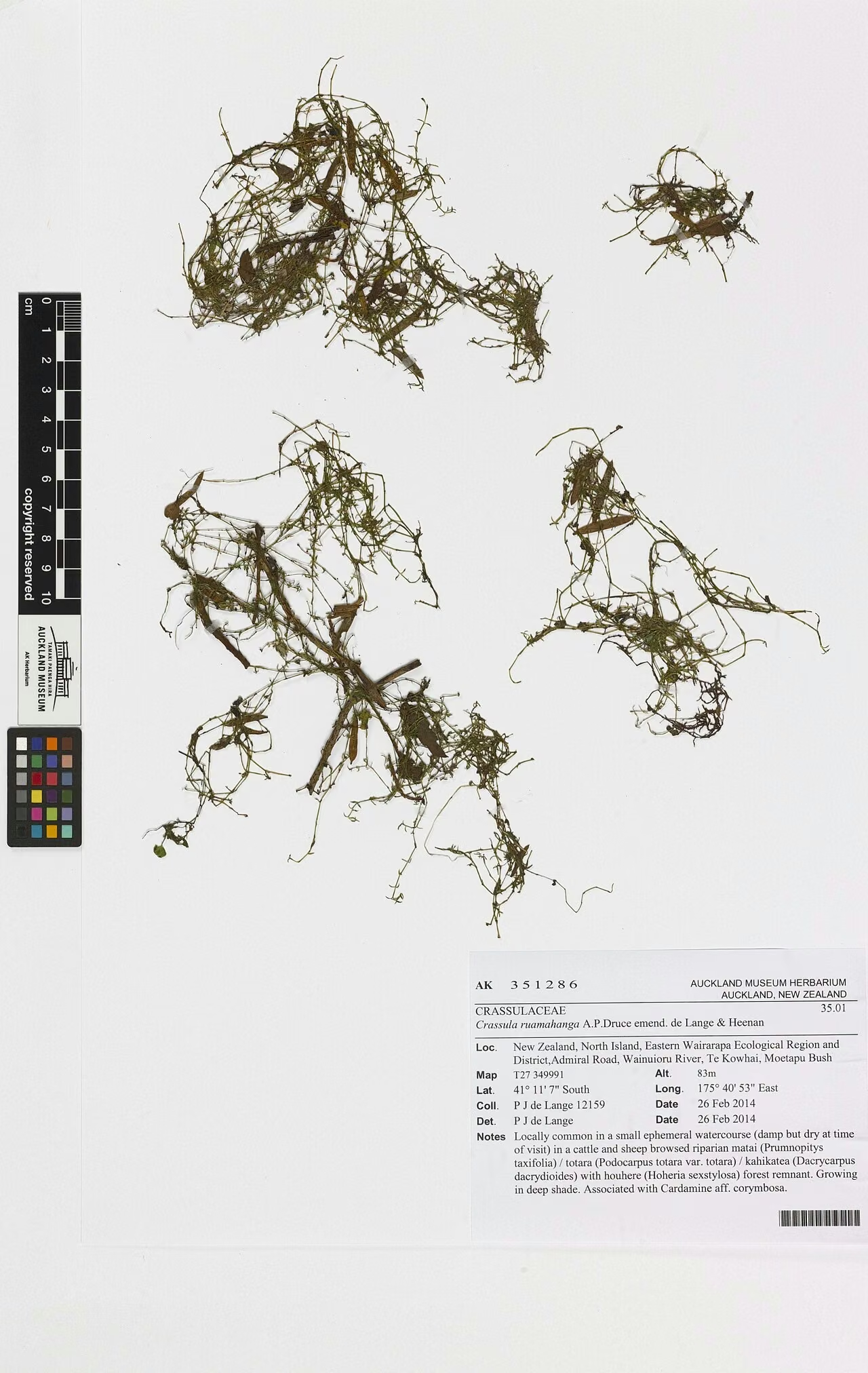
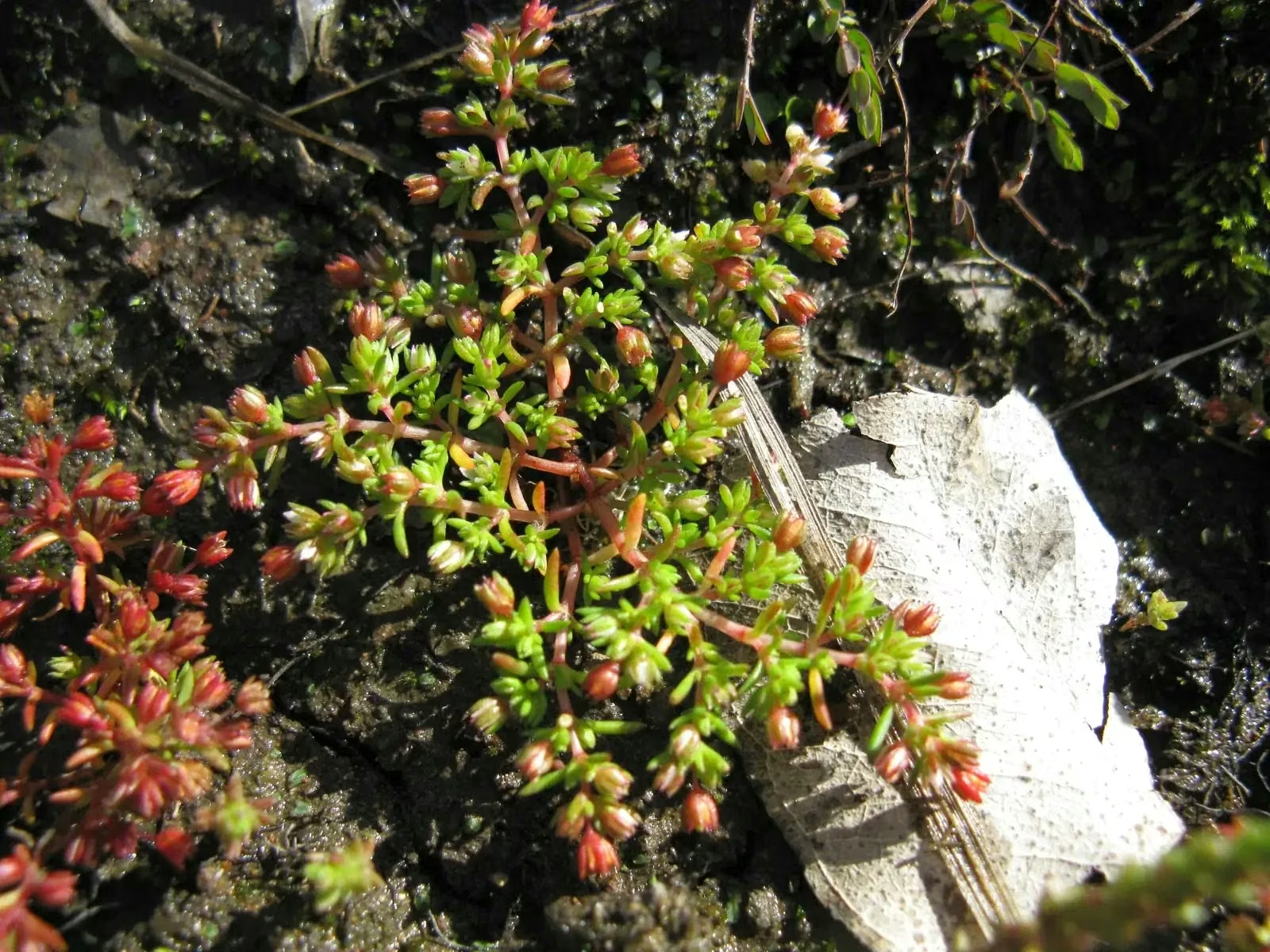
Its finely filamentous, mostly submerged habit and fragrant flowers that are large relative to its tiny leaves help separate it from the native Crassula of damp ground, such as C. ruamahanga and C. kirkii, which grow mainly as emergent mats on mud or turf.
Quick Facts
| Scientific Name | Crassula sinclairii |
|---|---|
| Height | A few centimetres; forms low submerged mats |
| Spread | Small to large, extensive mats |
| Water Needs | Aquatic; submerged most of the year |
| Light | Full sun to light shade in clear water |
| Frost Tolerance | High; reaches alpine tarns |
| Salt Tolerance | Moderate; also grows in brackish lagoons |
| Growth Rate | Moderate |
| Lifespan | Perennial |
Climate Best Suited to
Grows in almost any New Zealand climate where permanent fresh or brackish water is available, from warm lowland ponds to cold alpine tarns.
Regional Suitability
| City | Climate Suitability |
|---|---|
| Auckland | Medium |
| Wellington | Medium |
| Christchurch | High |
| Dunedin | High |
Plant Habitat
Crassula sinclairii is endemic to New Zealand and occurs on the North, South, Stewart and Chatham Islands. It ranges from the coast to the alpine zone.
It is a plant of slow-flowing rivers and creeks, ponds, tarns and lakes, and also brackish lagoons and waterways, usually in places where it is submerged for most of the year. Shallow water margins with a soft or sandy bottom and little competition from tall emergent plants suit it best.
Growing Requirements
Soil Requirements
It roots into the bottom sediments of ponds, lakes and slow streams.
- Sand, silt or fine gravel substrate
- Low-nutrient water is preferable to enriched water
- Tolerates fresh and brackish conditions
Light Requirements
Needs good light reaching it through clear, shallow water; it is shaded out by algae, cloudy water or tall emergent plants.
- Full sun to light shade
- Shallow, clear water
Water Requirements
Grow it permanently submerged or in saturated margins that flood most of the year.
- Shallow water from a few centimetres deep
- Slow-moving or still water
- Avoid stagnant, nutrient-rich ponds that turn green with algae
Planting and Establishing
Press rooted pieces into the sandy or silty bottom of a shallow pond margin, or plant them into a pot of sandy aquatic mix topped with fine gravel and lower it into shallow water. Spring is the best time, as growth and flowering begin.
For wetland restoration, include it in shallow-water zones of ponds and lagoon edges within its natural region, using locally sourced material.
Ecological Role
Its fragrant flowers suggest insect pollination, though no specific pollinator study was found. Flowers appear from October to March and fruit from November to June. Plants spread by rooting stem fragments that drift in water as well as by seed.
As part of the submerged turf of lakes, tarns and lagoons, its mats help stabilise soft sediment and provide cover for small aquatic invertebrates. It grows alongside other tiny native aquatic herbs in shallow-water communities.
Uses & Significance
Garden Uses
A specialist plant for native water gardens and aquatic collections.
- Shallow margins of natural or wildlife ponds
- Native-themed aquaria or pond tubs
- Restoration of shallow lake and lagoon edges
Ecological Value
It contributes to the diversity of native submerged plant communities, which are declining in many lowland waterways.
- Shelter for aquatic invertebrates
- Stabilises soft sediments
- Native alternative to introduced aquatic plants
Landscaping Uses
Use it as a fine green carpet in the shallow shelf of a wildlife pond, where the tiny white flowers can be seen from the edge in summer. It pairs well with other low native aquatics and with emergent plants planted further back.
It is not a bold plant; treat it as part of an authentic native pond community rather than a focal feature.
Seasonal Care Calendar
Spring
New growth extends from the mats and flowering starts in October.
- Plant or divide
- Check water clarity
Summer
Main flowering period, with fragrant white flowers on emergent or near-surface shoots.
- Keep water levels topped up
- Remove algae
Autumn
Flowering ends in March and fruits continue to ripen until June.
- Collect stem pieces for propagation
- Clear fallen leaves from the pond
Winter
Mats persist underwater with slow growth.
- Minimal care needed
- Avoid disturbing sediment
When to Prune and How Much
No pruning is required. If the mat spreads beyond its intended area, pull out sections by hand and replant or compost them.
Removing fallen leaves and controlling algae is more important than any trimming.
How to Grow Sinclair's Stonecrop
NZPCN says Sinclair's stonecrop is easily grown from rooted pieces but difficult to maintain in cultivation. Because its stems root at every node, division of the mat is simple and reliable. The challenge lies in providing clean, clear, shallow water with low nutrients and little competition from algae or vigorous aquatic plants. As it is an obligate wetland plant, potted plants must be kept submerged or permanently saturated at all times, and never allowed to dry out.
By Division
Rooted pieces can be separated from the mat in spring and summer. Even short fragments with one or two rooted nodes will establish. Taking pieces from the edge of a healthy mat leaves the centre intact and lets the parent plant recover quickly.
- Lift a small section of mat with its roots and sediment
- Separate into pieces with several rooted nodes
- Pot into a sandy, low-nutrient aquatic mix and top with fine gravel
- Submerge the pot in shallow, clear water in good light
- Plant into the pond margin once the pieces are growing
From Seed
Seed is produced between November and June but is tiny. No specific germination information was found for this species, so division is the recommended method; seed can be tried on saturated sand.
- Collect fruiting shoots and dry them over paper to release seed
- Sow on the surface of wet, fine sand in a shallow container
- Keep the sand saturated and gradually raise the water level as seedlings grow
Pests & Diseases
No specific pests are recorded. In ponds the main problems are algal growth and smothering by vigorous introduced aquatic weeds, which reduce light reaching the mats.
Waterfowl and introduced fish that stir up sediment can uproot or bury small plants.
Cultural Significance
No Māori name or traditional use for Crassula sinclairii is recorded in the sources consulted. The genus name is from the Latin crassus, thick, for the fleshy leaves.
The species honours Andrew Sinclair (c. 1796-1861), a Scottish naval surgeon who became Colonial Secretary of New Zealand and an enthusiastic plant collector. He drowned crossing the Rangitata River in 1861 while botanising with Julius von Haast.
Bonus Tip
Grow Sinclair's stonecrop in a shallow, wide tub or pond of rainwater rather than tap water and keep it out of full afternoon heat; cool, clear, low-nutrient water is the single most important factor in keeping it alive and flowering.
Related Plants
Explore other native plants that share similar characteristics or habitats with Sinclair's Stonecrop (Crassula sinclairii), offering further insights into New Zealand's diverse flora. These related species provide context and opportunities for complementary planting in your garden.
Plant Conservation
Crassula sinclairii is ranked Not Threatened (2023). Regionally it is Regionally Endangered in Wellington (2025), Regionally Data Deficient in Northland and Regionally Not Threatened in Otago.
Lowland populations are vulnerable to drainage, nutrient enrichment, algal blooms and invasive aquatic weeds that degrade shallow water habitats. Protecting water quality in lakes, tarns and lagoons is the most effective conservation measure.
Frequently Asked Questions
Is Crassula sinclairii an aquatic plant?
Yes. NZPCN describes it as aquatic in slow-flowing rivers, creeks, ponds, tarns, lakes and brackish lagoons, usually where it is submerged for most of the year. It is rated an obligate wetland plant.
Do Sinclair's stonecrop flowers have a scent?
Yes. Its small star-like white flowers, often flushed pink and 2.5-3.5 mm across, are described in the NZ Flora as sweetly fragrant.
Who was Crassula sinclairii named after?
It commemorates Andrew Sinclair (c. 1796-1861), Colonial Secretary of New Zealand and a keen naturalist who collected plants for Kew.
Is Crassula sinclairii good for aquariums or ponds?
NZPCN says it is easily grown from rooted pieces but difficult to maintain and not especially attractive, so it is mainly of interest to native aquatic plant enthusiasts.
Sources and Further Reading
The botanical, growing, and conservation details for Sinclair's Stonecrop (Crassula sinclairii) on this page draw on the New Zealand plant references below. Consult them for full technical records and the latest distribution data.