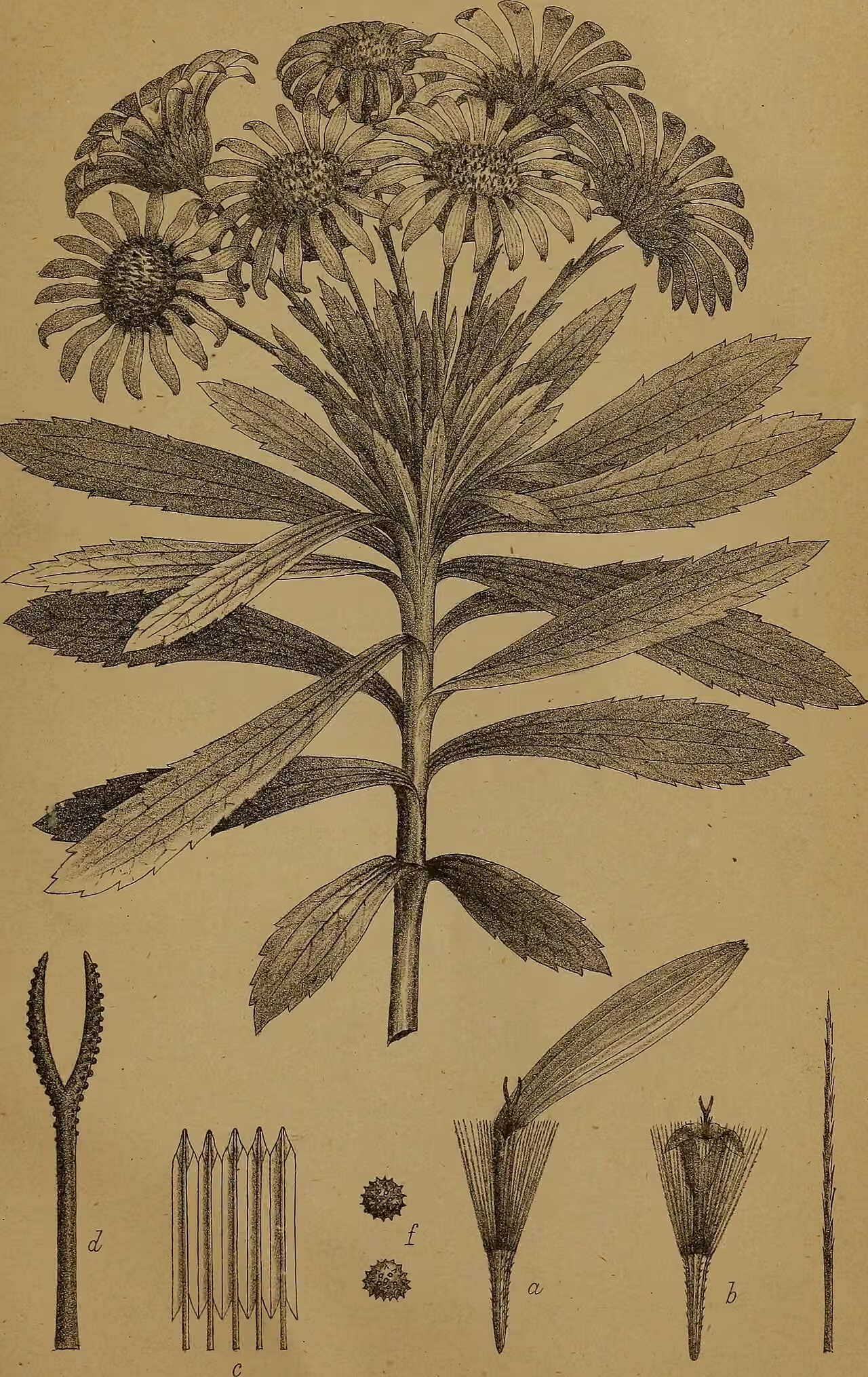
Woollyhead
Craspedia lanata var. lanata
Last updated:
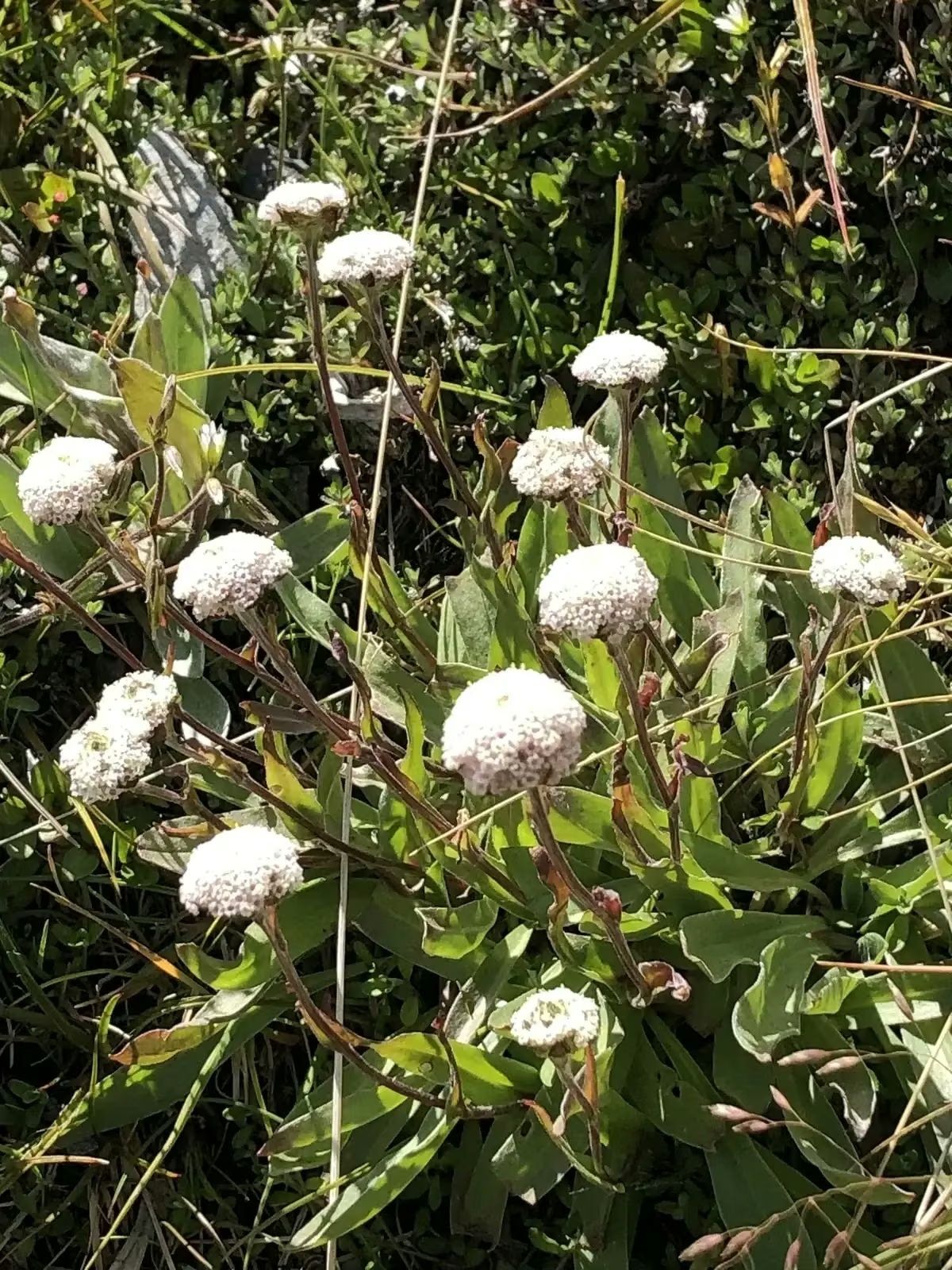
Woollyhead (Craspedia lanata var. lanata) is an endemic New Zealand daisy that forms low rosettes of leaves densely clad in greyish white wool. In summer it sends up woolly stems 6-30 cm tall, each topped by a globe-shaped cluster of tiny yellow or white florets about 1.5-2 cm across. It grows in South Island tussock grassland and herbfield between about latitude 41° 30' and 45° S, from the Wairau River area southwards. It is ranked Not Threatened, and its silvery foliage and drumstick flowers make it an attractive plant for rock and alpine gardens. Explore more native flowering plants in our native plant guide.
Plant Description
Craspedia lanata var. lanata is a rosette-forming perennial herb in the daisy family (Asteraceae). Its leaves and flowering stems are clad in a dense, appressed to slightly raised greyish white tomentum that gives the whole plant a silvery, felted look. The rosette leaves are obovate, roughly 5-10 cm long and 1.5-2.5 cm wide, and narrow gradually into a flat leaf stalk about 3 cm long. Leaves on the flowering stem are similar but smaller, becoming ovate and finally bract-like near the top.
Each stem, 6-30 cm tall, ends in a single compound head or glomerule about 1.5-2 cm in diameter, made up of many small capitula. The individual florets are about 4 mm long and yellow or white. The fruits (cypselae) are about 2 mm long, densely silky-hairy and carry a pappus of hairs about 4 mm long that lets the wind carry them away.
Woollyheads are notoriously variable and hybridise readily, so identification can be difficult. The dense greyish white wool over both leaves and stems is the best field character for C. lanata; species such as C. uniflora usually have greener leaves with woolly margins. The second variety, var. elongata, is recognised in the Flora of New Zealand, but I could not find a published description of how the two varieties differ, so naming a plant to variety is best left to a specialist.
Quick Facts
| Scientific Name | Craspedia lanata var. lanata |
|---|---|
| Height | Rosettes about 10 cm; flowering stems 6-30 cm |
| Spread | About 20-40 cm |
| Water Needs | Low to moderate; free drainage essential |
| Light | Full sun |
| Frost Tolerance | High; a montane to subalpine plant of the South Island |
| Salt Tolerance | Low; an inland grassland plant, no coastal records found |
| Growth Rate | Moderate |
| Lifespan | Perennial |
Climate Best Suited to
Suits cool, seasonally dry South Island inland climates with cold winters, frost and snow, and summers that are sunny rather than humid.
Regional Suitability
| City | Climate Suitability |
|---|---|
| Auckland | Low |
| Wellington | Medium |
| Christchurch | High |
| Dunedin | High |
Plant Habitat
The variety is endemic to the South Island. The Flora of New Zealand gives its range as tussock grassland to herbfield from about latitude 41° 30' (northern Marlborough and Nelson) south to about 45° (Central Otago and inland Canterbury). The type specimen was gathered by Munro in the upper Wairau River on 2 January 1853.
It grows in open montane to subalpine tussock grassland, herbfield and stony ground where competition from taller plants is low. The Otago regional assessment (2025) ranks it Regionally Not Threatened, reflecting its reasonably wide presence in the southern high country.
Growing Requirements
Soil Requirements
Woollyhead needs a gritty, free-draining soil that mimics the stony tussock-land soils it grows in naturally.
- Use a mix of topsoil with plenty of pumice, grit or fine scoria
- Low to moderate fertility; avoid rich, heavily fertilised beds
- Never let water pool around the woolly crown in winter
- A topdressing of fine gravel keeps the rosette dry and clean
Light Requirements
Grow it in full sun. In shade the woolly rosettes become loose and pale and the plant flowers poorly.
- At least six hours of direct sun a day
- Good air movement helps keep the felted leaves dry
Water Requirements
Water regularly until the plant is established, then only in prolonged dry spells. Its woolly coating helps it cope with dry, windy summers, but cold wet soil quickly rots the crown.
- Water at the base rather than over the hairy leaves
- Reduce watering sharply over autumn and winter
- In pots, let the top of the mix dry out between waterings
Planting and Establishing
Plant in spring once heavy frosts have passed, setting the rosette slightly proud of the surrounding soil so the crown sheds water. A rock garden pocket, raised scree bed or trough is ideal. Space plants about 25-30 cm apart so each rosette has room to expand and enough air around it to dry quickly after rain.
In wetter districts, a deep gravel collar around the neck of the plant and an open, raised position are the most useful precautions. Avoid planting among vigorous groundcovers that would overrun or shade the low rosettes.
Ecological Role
Like other Craspedia, its compound heads are made of many small tubular florets that are visited by a range of small native insects such as flies, bees and moths, although I found no study of the pollinators of this particular variety. The seeds are pappate cypselae dispersed by wind, as NZPCN records for the genus.
In tussock grassland it is one of many low inter-tussock herbs that occupy open, stony gaps. It does best where grazing, frost heave or thin soils keep taller vegetation from closing over it.
Uses & Significance
Garden Uses
A striking small perennial for anyone wanting silver foliage and long-stemmed drumstick flowers from a native plant.
- Rock gardens, scree beds and alpine troughs
- Gravel gardens in dry eastern districts
- Pots and containers with gritty mix
- Front of a sunny native border alongside small tussocks
Ecological Value
It adds native floral resources to dry grassland plantings and is suitable for high-country restoration within its natural range.
- Summer nectar and pollen for small native insects
- Wind-dispersed seed allows it to colonise open, disturbed ground
- Part of the inter-tussock herb community of South Island grasslands
Landscaping Uses
Use woollyhead where its silvery leaves can contrast with darker foliage, for example among green Acaena, bronze Carex or small Celmisia. Planted in drifts of three or five in a gravel bed, the rounded flower heads held well above the rosettes make a lively summer display.
Because the rosettes are low, place it at the front of beds or in raised troughs where the woolly texture can be seen up close. It suits dry-climate garden designs in Canterbury and Central Otago especially well.
Seasonal Care Calendar
Spring
New leaves expand from the rosette centre and the plant starts active growth.
- Plant or divide now
- Check drainage after winter rains
Summer
The main flowering season, with woolly stems carrying yellow or white globe heads.
- Water only in long dry spells
- Collect seed as heads turn fluffy
Autumn
Seed heads break up and the rosette firms up for winter.
- Remove spent stems if untidy
- Sow fresh seed
Winter
The rosette sits dormant and is very frost hardy, but vulnerable to sitting wet.
- Keep the crown free of fallen leaves
- Shelter potted plants from long rain
When to Prune and How Much
No regular pruning is needed. Cut flower stems off at the base once the seed has blown away, or earlier if you do not want seedlings.
Pull away any dead, brown leaves from beneath the rosette in spring so that moisture does not linger around the crown.
How to Grow Woollyhead
Woollyhead can be raised from fresh seed or by dividing established clumps, and both methods are used by native nurseries. Seed gives more plants and some natural variation, while division gives an exact copy of a good silvery form. Because the genus hybridises freely, seed collected from gardens where several Craspedia grow together may not come true, so collect from isolated plants if you want pure var. lanata.
From Seed
Seed ripens in late summer, when the round heads turn fluffy as the pappus hairs dry. Nurseries report that it germinates best in cool conditions in a free-draining mix, so autumn sowing outdoors or in an unheated tunnel house works well.
- Collect heads when they start to fluff and break apart, before the wind takes the seed
- Sow fresh seed thinly on the surface of a gritty seed-raising mix
- Cover very lightly with fine grit and keep evenly moist but never waterlogged
- Stand trays in a cool, bright spot; seedlings usually appear within several weeks
- Prick out into small pots once the first true leaves show and grow on in full sun
By Division
Older plants often produce several rosettes that can be separated. Divide in early spring as growth resumes so the pieces root quickly before summer.
- Lift the clump carefully with a fork
- Tease or cut it into rosettes, each with a good portion of roots
- Pot into gritty mix or replant at the same depth
- Water in and keep lightly moist and out of hot afternoon sun for two weeks
Pests & Diseases
The main problem in gardens is crown rot in wet, heavy or poorly drained soils, especially during mild, damp winters. Slugs and snails can graze young rosettes and emerging flower stems in spring.
Aphids occasionally cluster on flower stems. Good drainage, sun and air flow prevent most issues; there are no well-documented specific pests of this variety.
Cultural Significance
I found no Māori name or traditional use recorded specifically for Craspedia lanata. The genus name comes from the Greek kraspedon (an edge or fringe) and the epithet lanata means woolly.
Botanically, the plant was first named by Joseph Hooker in 1853 as Craspedia fimbriata var. lanata from material collected in the upper Wairau, and was raised to species rank by H.H. Allan in the 1961 Flora of New Zealand. Its history shows how hard the variable woollyheads have been to classify, a puzzle botanists are still working through today.
Bonus Tip
To keep the felted rosette looking its silvery best, topdress around it with pale crushed limestone or fine grey greywacke chip rather than bark mulch. The stones reflect light, keep the woolly leaves out of contact with damp soil and greatly reduce the risk of winter rot.
Related Plants
Explore other native plants that share similar characteristics or habitats with Woollyhead (Craspedia lanata var. lanata), offering further insights into New Zealand's diverse flora. These related species provide context and opportunities for complementary planting in your garden.
Red Leek Orchid
Corunastylis nuda
Craspedia incana
Craspedia incana
Craspedia robusta var. pedicellata
Craspedia robusta var. pedicellata
Craspedia robusta var. robusta
Craspedia robusta var. robusta
Kirk's Crassula
Crassula kirkii
Crassula mataikona
Crassula mataikona
Argentea Plant
Argentea Plant
Uniflora Plant
Uniflora Plant
Plant Conservation
Craspedia lanata var. lanata has been assessed as Not Threatened at every national assessment since 2004, most recently in 2023, and Otago (2025) also ranks it Regionally Not Threatened.
Like other tussock-land herbs, it can be lost locally where high country is converted to intensively farmed pasture or overrun by weeds such as Hieracium (hawkweed). Protecting remnant tussock grassland and using local-source seed in restoration plantings helps keep the variety common.
Frequently Asked Questions
Why is Craspedia lanata called woollyhead?
Its leaves and flowering stems are covered in a dense greyish white wool, and the genus name comes from the Greek kraspedon, an edge or fringe, referring to the woolly fringes of the leaves.
Where does Craspedia lanata grow in New Zealand?
The Flora of New Zealand records it from South Island tussock grassland to herbfield between about latitude 41° 30' and 45° S. The type was collected in the upper Wairau River in 1853.
What colour are woollyhead flowers?
The tiny florets, about 4 mm long, are yellow or white and are packed into a rounded head (glomerule) about 1.5-2 cm across at the top of each woolly stem.
Can I grow Craspedia lanata in my garden?
Yes. Nurseries grow it for rock and alpine gardens, where it needs full sun and gritty, free-draining soil. It dislikes prolonged winter wet around the crown.
Sources and Further Reading
The botanical, growing, and conservation details for Woollyhead (Craspedia lanata var. lanata) on this page draw on the New Zealand plant references below. Consult them for full technical records and the latest distribution data.