Stonecrop
Crassula mataikona
Last updated:
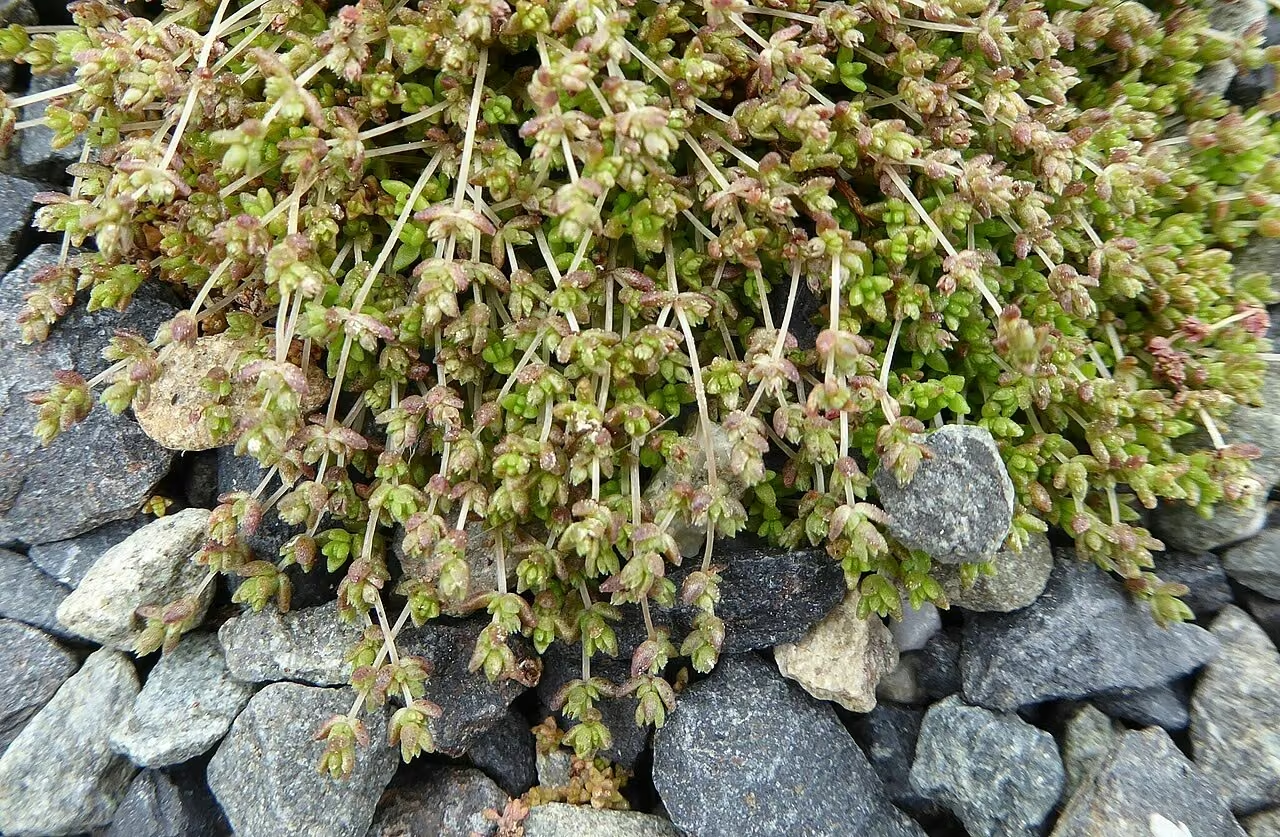
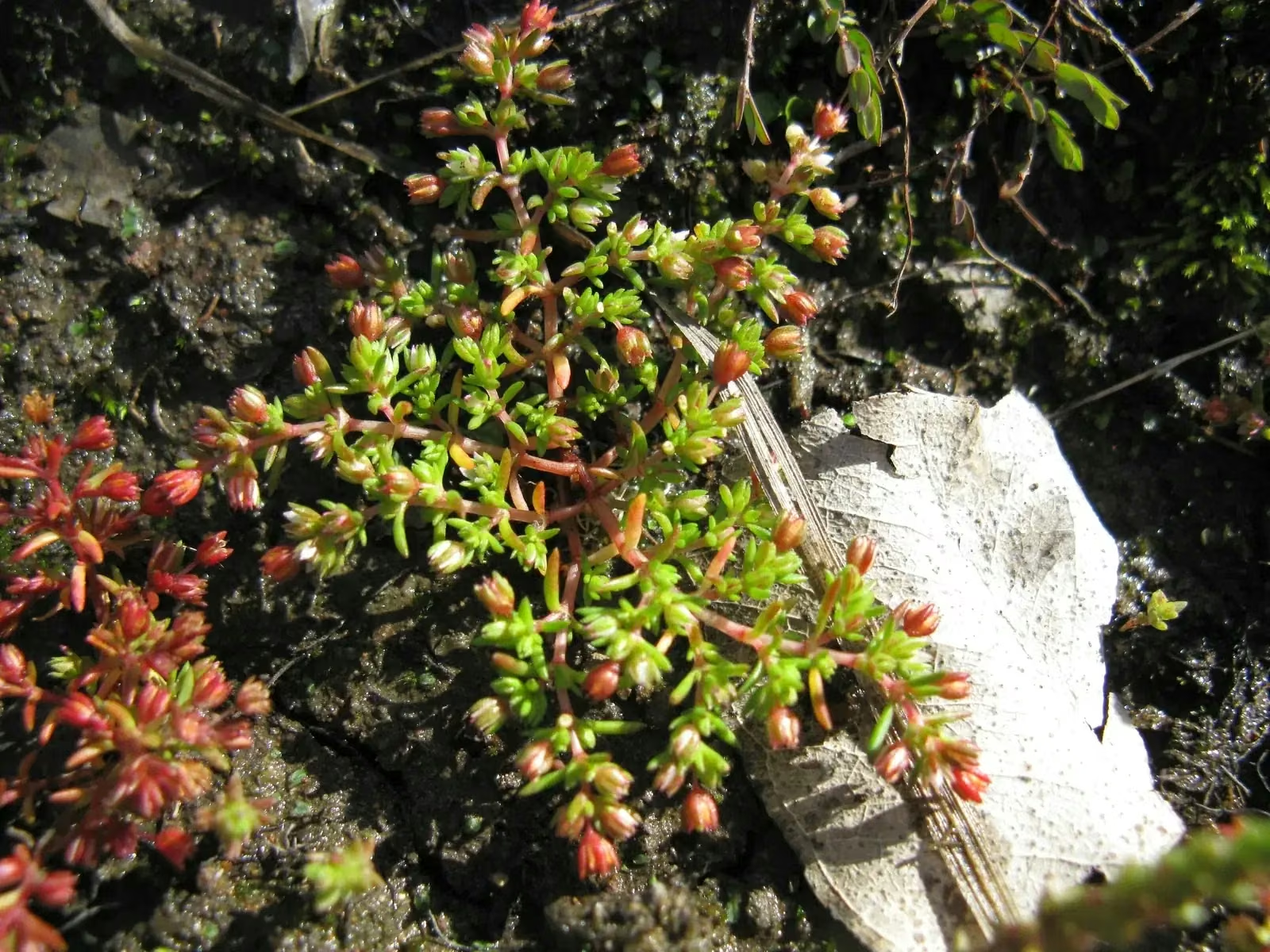
Crassula mataikona is a minute, moss-like succulent herb endemic to New Zealand. It forms small, diffuse clumps of trailing white or pinkish stems with fleshy leaves only 1.3-3 mm long, pale green or flushed pink in exposed sites. Single greenish flowers with pink-tipped petals, under 2 mm across, sit in the leaf axils. It grows in open, disturbed coastal turf, often among Zoysia grass, along parts of the North Island coast from Awakino to Wellington and the eastern South Island to Dunedin and Central Otago. Easily overlooked, it is ranked At Risk - Naturally Uncommon. Explore more native ground covers in our native plant guide.
Plant Description
Crassula mataikona is a short-lived, moss-like succulent herb in the stonecrop family. It forms diffuse, rather loose clumps of decumbent or trailing stems that are white or pinkish and root at the lower nodes in moist conditions. The fleshy leaves are about 1.3-3 mm long and 1-1.5 mm wide, pale green, turning pink in exposed or stressed plants.
The flowers are borne singly in the leaf axils. They are four-parted, only 1.2-1.8 mm in diameter, greenish with deep pink petal tips. The fruits are minute follicles with tiny seeds dispersed by wind, water and possibly by attachment.
NZPCN notes that it differs from the even smaller Crassula manaia by its larger size and the more obvious pale stems between leaf clusters. Its smaller, moss-like, decumbent habit and solitary axillary flowers separate it from C. sieberiana and C. colligata. It may also be confused with the naturalised C. colorata var. acuminata and C. alata, so careful examination is needed.
Quick Facts
| Scientific Name | Crassula mataikona |
|---|---|
| Height | Under 3 cm |
| Spread | Small, diffuse clumps a few centimetres across |
| Water Needs | Moderate; seasonally damp open ground |
| Light | Full sun |
| Frost Tolerance | Moderate; also occurs inland in Central Otago |
| Salt Tolerance | High; a coastal turf plant |
| Growth Rate | Fast |
| Lifespan | Short-lived perennial or annual |
Climate Best Suited to
Suits mild, windy coastal climates with seasonally dry summers, as well as the dry continental climate of inland Central Otago.
Regional Suitability
| City | Climate Suitability |
|---|---|
| Auckland | Low |
| Wellington | High |
| Christchurch | High |
| Dunedin | High |
Plant Habitat
Crassula mataikona is endemic to New Zealand. In the North Island it is known from the coast at Awakino, South Taranaki, eastern Wairarapa (including the type locality Mataikona), the Aorangi Range, Cape Palliser and Wellington. In the South Island it occurs in the Marlborough Sounds and along the eastern coastline to Dunedin, with inland sites in Central Otago. It has even been found on bowling greens in Christchurch and Dunedin.
NZPCN describes it as a coastal species of open ground, often among Zoysia-dominated turf. It requires frequent disturbance to keep its habitat sparsely vegetated and cannot persist once taller vegetation develops.
Growing Requirements
Soil Requirements
It grows on thin, open soils of coastal turf, rock platforms and short swards.
- Thin, sandy or gravelly soil
- Low fertility
- Damp in winter and spring, drier in summer
- Open bare patches with little competition
Light Requirements
A full-sun plant that is quickly lost under any shading vegetation.
- Full sun
- Keep neighbours short and sparse
Water Requirements
It thrives where the ground is moist for part of the year. In pots, keep it damp during active growth.
- Water regularly in cultivation
- Tolerates brief dry spells in turf
- Avoid stagnant waterlogging in pots
Planting and Establishing
Plant small rooted pieces into gaps in short turf, a sandy rock garden pocket or a shallow pan of gritty mix in full sun. It establishes quickly but must be kept free of aggressive weeds.
For conservation plantings, work with local botanists and use local-source material. Choose open sites, such as trampled or grazed coastal turf, where disturbance will keep competition low.
Ecological Role
No pollinator studies were found for this species; its tiny flowers may self-pollinate or be visited by minute insects. Seeds are carried by wind and water, and possibly attach to animals or people, which may explain its appearance on bowling greens.
It belongs to the low coastal turf community dominated by Zoysia and other tiny herbs. Such turfs are kept open by salt spray, wind, trampling, rabbits and grazing, and C. mataikona depends on that ongoing disturbance.
Uses & Significance
Garden Uses
A plant for specialist collectors and conservation plantings rather than general gardens.
- Shallow alpine pans or troughs
- Gaps in native coastal lawns
- Insurance populations for a naturally uncommon species
Ecological Value
It is part of New Zealand's distinctive coastal turf flora, a habitat with many rare species.
- Contributes to the diversity of Zoysia turf
- Colonises bare, disturbed patches
- Indicator of intact open coastal turf
Landscaping Uses
In landscape terms it is too tiny to make an impact, but it can be encouraged in a native coastal lawn of Zoysia, Leptinella and Dichondra kept short by mowing or foot traffic.
In a trough garden it creates a fine, moss-like texture with pink tints between stones.
Seasonal Care Calendar
Spring
Rapid growth and the start of flowering.
- Weed carefully around clumps
- Divide rooted pieces
Summer
Flowering and fruiting continue; exposed plants turn pink.
- Water potted plants
- Collect seed
Autumn
Seedlings may appear on damp, open ground.
- Sow seed
- Protect seedlings from weeds
Winter
Plants persist in moist turf, with some flowers recorded even in winter.
- Keep pots in a bright spot
- Remove smothering weeds
When to Prune and How Much
No pruning is needed. Its short lifespan means that maintaining a population depends on seed and new rooted pieces rather than on keeping individual plants.
Management should focus on keeping surrounding vegetation short and removing weeds.
How to Grow Stonecrop
NZPCN says Crassula mataikona is very easily grown from small rooted pieces or seed and establishes quickly. Because individual plants are short-lived, regular propagation is the way to keep it in cultivation. It is, however, readily smothered by aggressive weeds such as Cardamine and Oxalis, so pots and beds must be kept scrupulously weed-free. Always label it carefully, since it looks very similar to introduced Crassula species that may turn up as weeds in nursery pots.
From Cuttings
Small rooted pieces or stem fragments taken from a healthy clump root readily on a moist, gritty surface, especially in spring and summer.
- Snip off small pieces of stem with a few leaf clusters and any roots
- Lay them on a moist, sandy or gritty mix in a shallow pot
- Press them gently so the nodes touch the mix
- Keep damp and in bright light until new growth appears
- Plant out or divide again once the clump fills the pot
From Seed
Seed is produced over a long season and is very small. Surface-sow it so it receives light. Because plants are short-lived, sowing a small batch each year is a simple way to keep a supply of young plants coming on.
- Collect stems with ripening follicles and dry them on paper
- Scatter the dust-like seed on a fine, weed-free mix
- Mist to settle the seed without covering it
- Keep evenly moist in a sunny spot and thin seedlings if crowded
Pests & Diseases
No pests specific to this species are known. Weeds are the main problem: NZPCN identifies Cardamine and Oxalis as competitors that can overrun it, and its coastal habitat is often invaded by introduced plants.
Slugs may graze the fleshy leaves in damp weather.
Cultural Significance
No Māori name or traditional use for Crassula mataikona is recorded in the sources consulted. The species was named by botanist Tony Druce after Mataikona on the eastern Wairarapa coast.
It was formerly included under the names Crassula debilis and Tillaea debilis before being recognised as a distinct species. It was featured as Plant of the Month in the NZPCN newsletter Trilepidea in May 2014.
Bonus Tip
When searching coastal turf for this species, look in spring on hands and knees in short Zoysia swards near the sea, and check any tiny pink-tinged moss-like patches with a hand lens: four-petalled flowers with pink tips confirm a Crassula rather than a moss.
Related Plants
Explore other native plants that share similar characteristics or habitats with Stonecrop (Crassula mataikona), offering further insights into New Zealand's diverse flora. These related species provide context and opportunities for complementary planting in your garden.
Craspedia lanata var. lanata
Craspedia lanata var. lanata
Craspedia robusta var. pedicellata
Craspedia robusta var. pedicellata
Craspedia robusta var. robusta
Craspedia robusta var. robusta
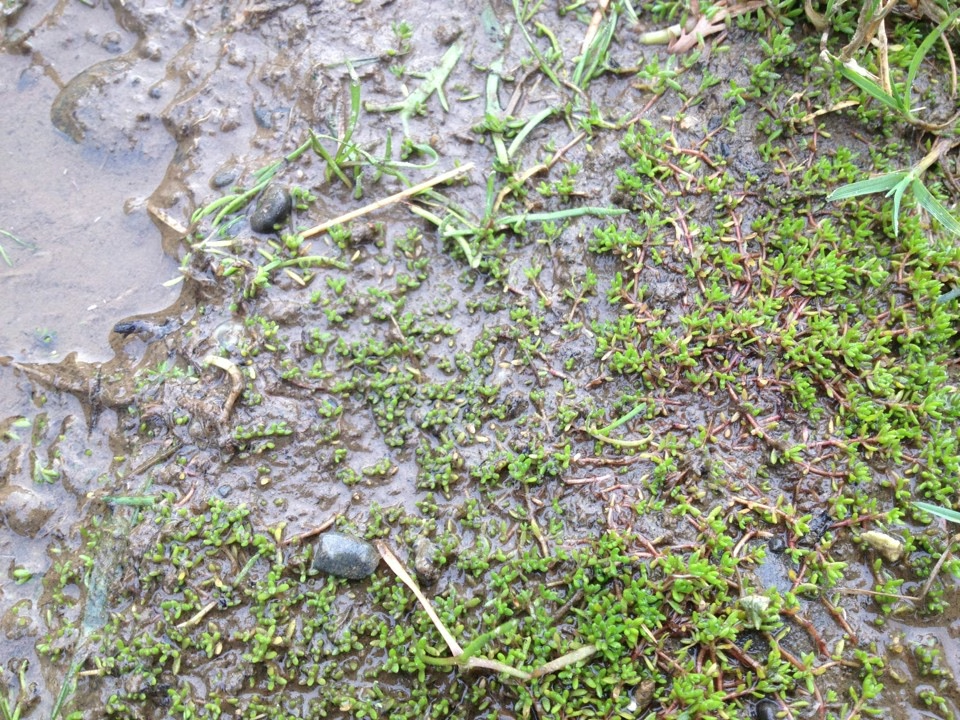
Kirk's Crassula
Crassula kirkii
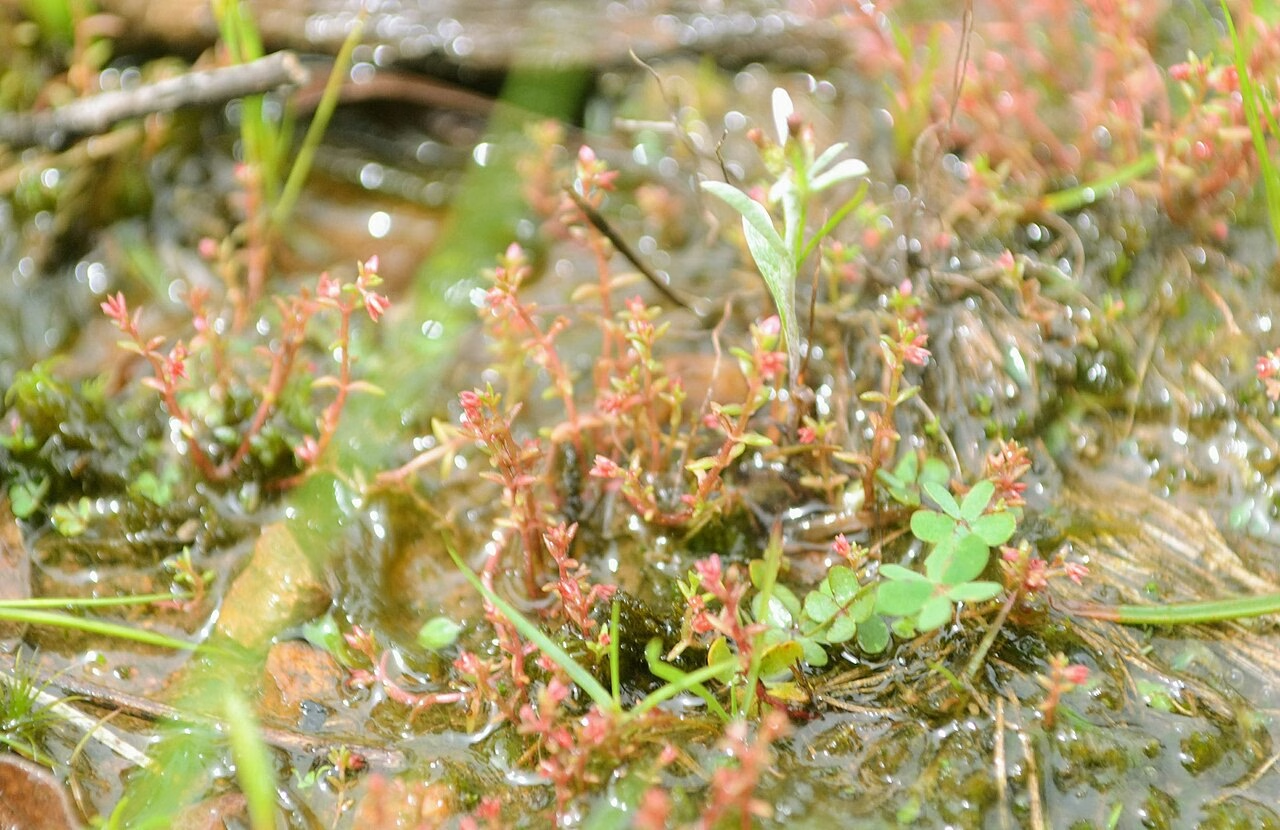
Crassula peduncularis
Crassula peduncularis
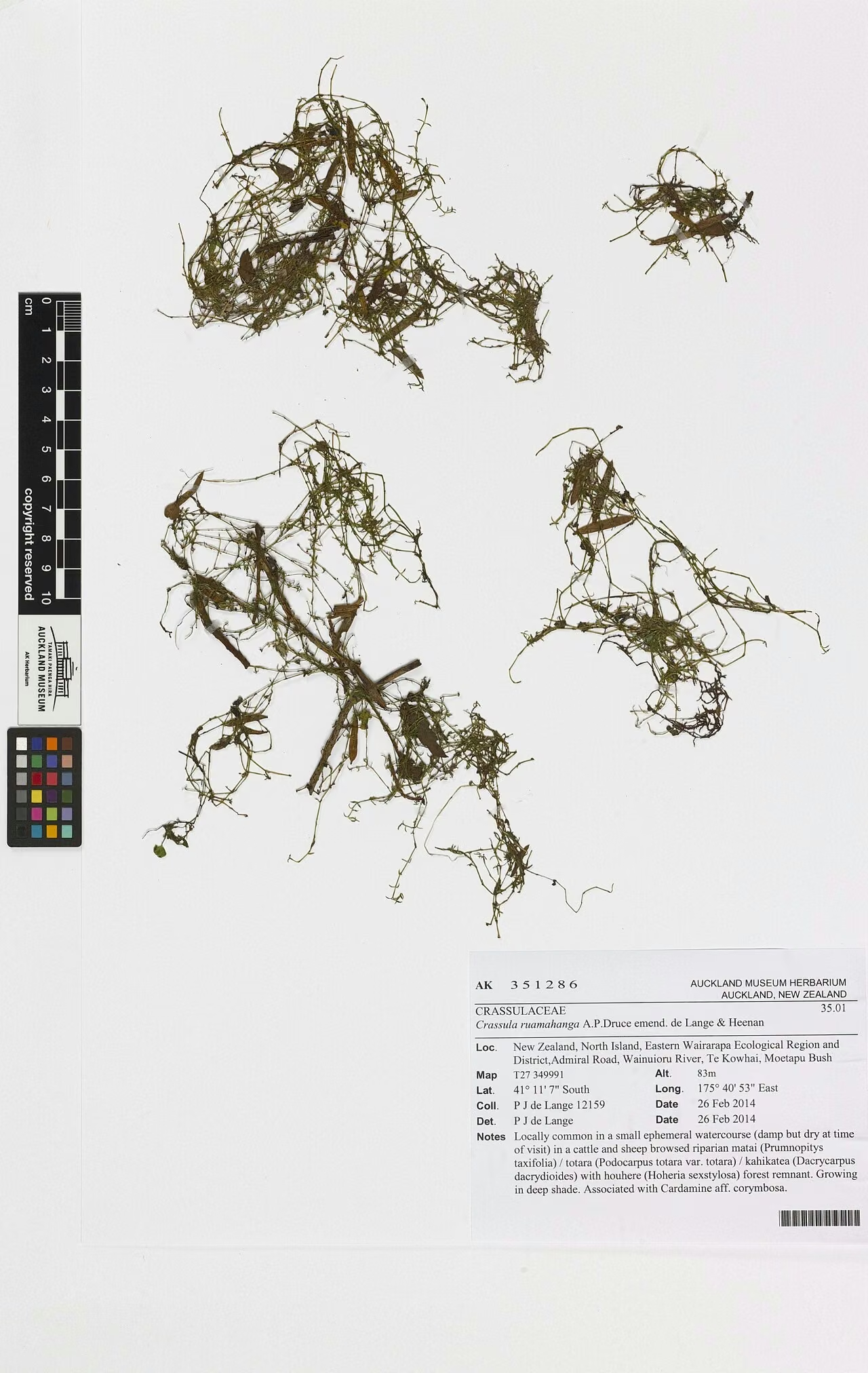
Crassula ruamahanga
Crassula ruamahanga
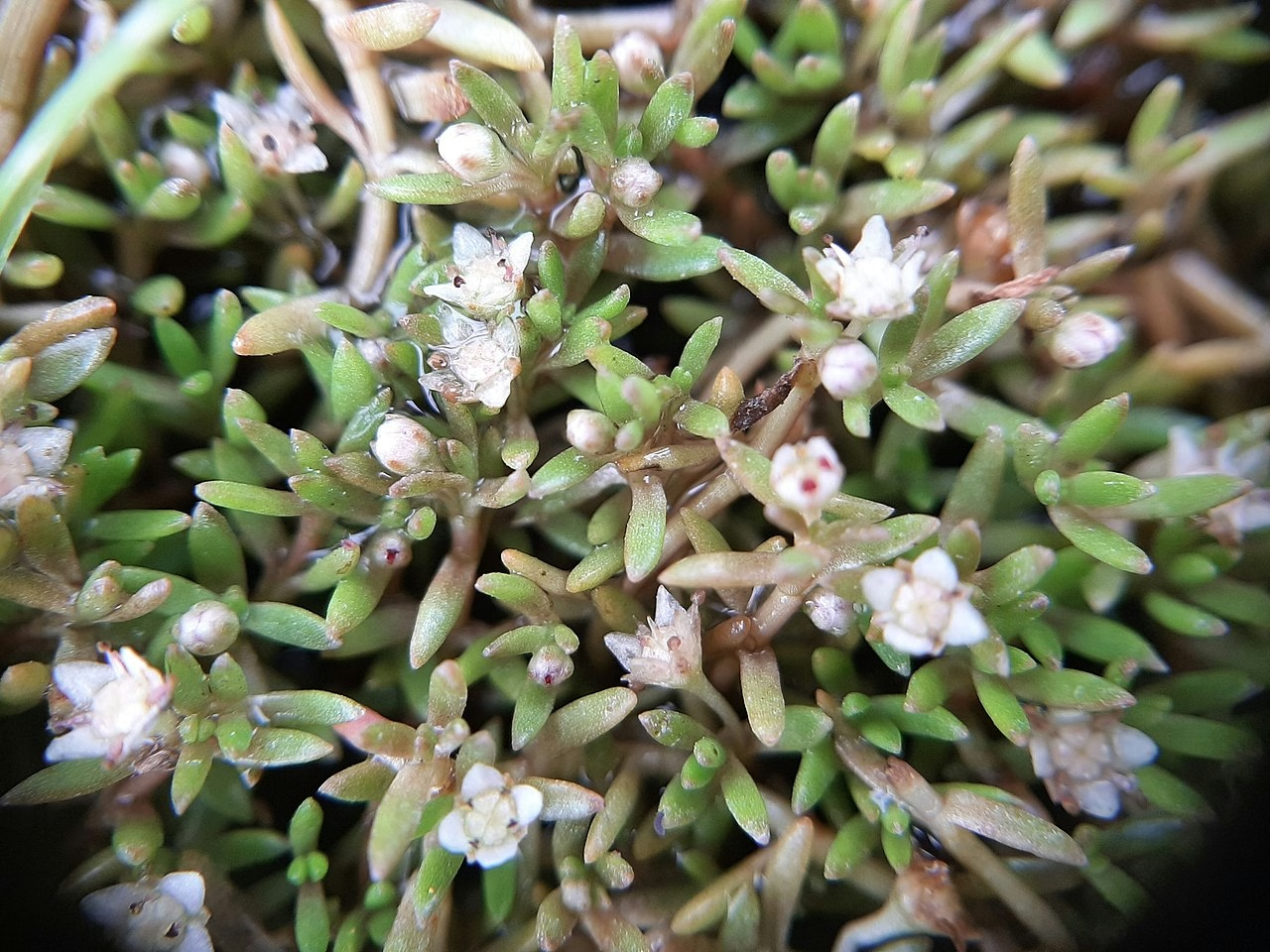
Sinclair's Stonecrop
Crassula sinclairii
Decumbens Plant
Decumbens Plant
Plant Conservation
Crassula mataikona is ranked At Risk - Naturally Uncommon (2023), with qualifiers Sp (Sparse) and DPR, DPS, DPT (Data Poor on recognition, size and trend). Otago ranks it Regionally Endangered and Wellington Regionally Naturally Uncommon (2025).
Its main threats are weed invasion and the loss of the disturbance that keeps coastal turf open. Because it is tiny and easily confused with other Crassula, it is probably under-recorded; careful survey and protection of coastal turf habitats are the key actions.
Frequently Asked Questions
Where is Crassula mataikona found?
NZPCN lists coastal North Island sites at Awakino, South Taranaki, eastern Wairarapa, the Aorangi Range, Cape Palliser and Wellington, and South Island sites from the Marlborough Sounds down the east coast to Dunedin and inland Central Otago.
How do I identify Crassula mataikona?
Look for a tiny, moss-like plant with trailing pale stems visible between leaf clusters, fleshy leaves 1.3-3 mm long and single greenish four-petalled flowers with pink tips, only 1.2-1.8 mm across.
Where does the name mataikona come from?
It is named after its type locality, Mataikona, on the Wairarapa coast in the eastern North Island. Crassula comes from the Latin crassus, thick, for the fleshy leaves.
Why is Crassula mataikona easily overlooked?
It is very small and NZPCN notes it is easily mistaken for seedlings of Crassula sieberiana or C. colligata, or for introduced Crassula species growing in the same places.
Sources and Further Reading
The botanical, growing, and conservation details for Stonecrop (Crassula mataikona) on this page draw on the New Zealand plant references below. Consult them for full technical records and the latest distribution data.