Woollyhead
Craspedia robusta var. robusta
Last updated:
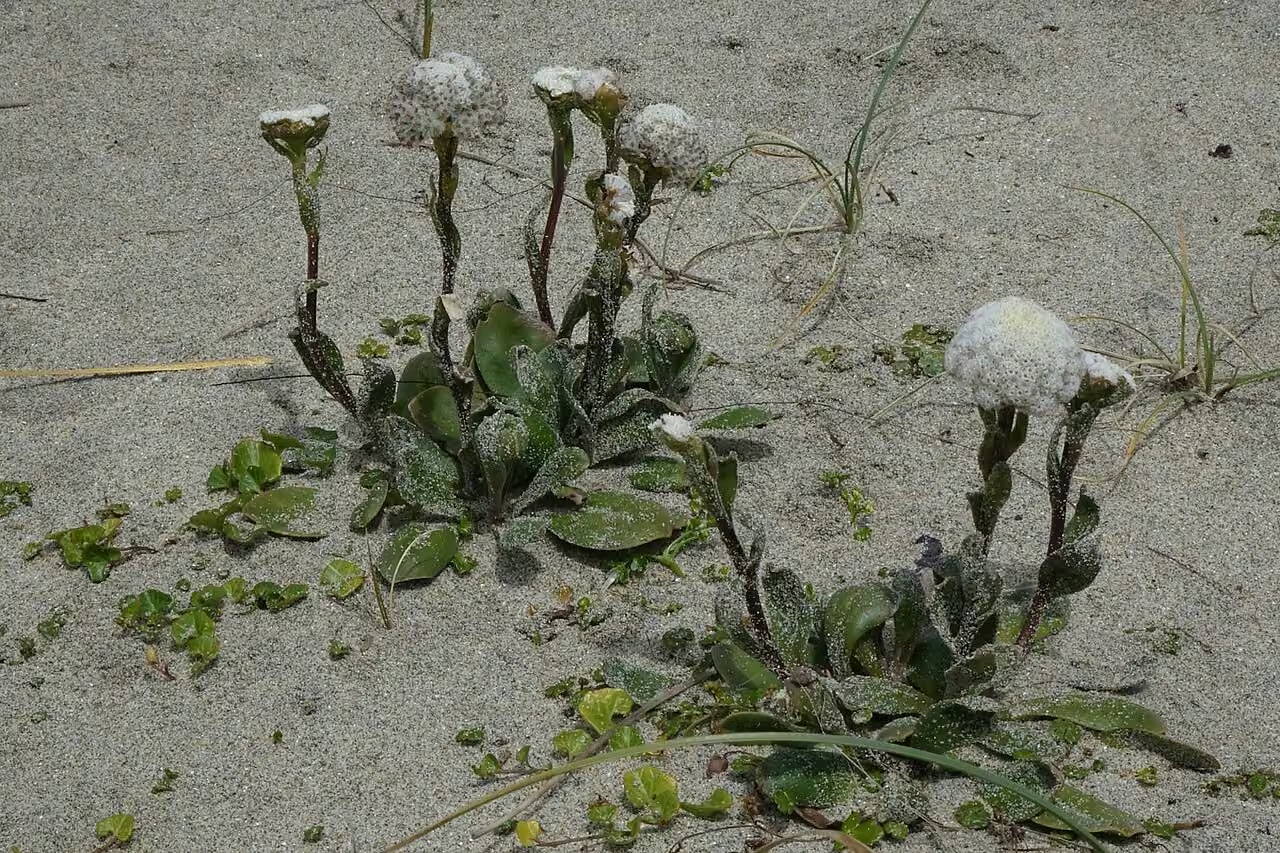
Craspedia robusta var. robusta is the typical form of the largest New Zealand woollyhead. It makes rosettes of leaves 10-20 cm long with fringed margins and sends up stout, deeply grooved stems up to 60 cm or more tall, each crowned by a rounded head of white florets 2.5-4 cm across. It is endemic to the western South Island, growing in coastal rock crevices and on the shore from Cape Foulwind southwards and being plentiful in Fiordland, where it also reaches the mountains. It is ranked Not Threatened and is a handsome, wind-tough plant for cool, moist gardens. Explore more native flowering plants in our native plant guide.
Plant Description
Craspedia robusta is a stout rosette herb in the daisy family. Its rosette leaves are 10-20 cm long and 2-4 cm wide, with a leaf stalk about as long as the blade. Leaf shape varies from narrowly elliptic-obovate with a small pointed tip to broadly obovate-spathulate, and the surfaces range from hairless to hairy, always with a fringe of hairs (cilia) along the margins. Lower stem leaves are oblong-spathulate to broadly obovate or ovate, up to 10 x 3 cm.
The flowering stems are the plant's most striking feature: stout, deeply grooved and up to 60 cm or more tall and about 5 mm in diameter. Each ends in a compound head 2.5-4 cm or more across, made of many small capitula with white florets about 4 mm long. The achenes are about 2 mm long, densely to sparsely clad in hairs that lie close to the surface, and carry a pappus for wind dispersal.
Its size, thick grooved stems and broad fringed leaves separate it from most other woollyheads. The Stewart Island var. pedicellata differs in having the capitula raised on stalks 4-8 mm long. Allan noted that the varieties are linked by intermediates, a result of habitat-driven variation and hybridisation.
Quick Facts
| Scientific Name | Craspedia robusta var. robusta |
|---|---|
| Height | Rosettes about 0.15-0.25 m; flower stems to 0.6 m or more |
| Spread | About 0.2-0.4 m |
| Water Needs | Moderate to high; from a very wet region |
| Light | Full sun to partial shade |
| Frost Tolerance | Moderate to high; also found at montane sites in Fiordland |
| Salt Tolerance | High; grows in coastal rock crevices and on the strand |
| Growth Rate | Moderate |
| Lifespan | Perennial |
Climate Best Suited to
Suits the cool, very wet and mild oceanic climate of Westland and Fiordland, with frequent rain, salt-laden wind and relatively few hard frosts on the coast.
Regional Suitability
| City | Climate Suitability |
|---|---|
| Auckland | Low |
| Wellington | Medium |
| Christchurch | Low |
| Dunedin | High |
Plant Habitat
Craspedia robusta is endemic to the South Island (and Stewart Island in the case of var. pedicellata). Allan's Flora describes it as growing in coastal rock crevices and on the strand from Cape Foulwind southwards along the west coast, plentiful in the Fiord region and only local further north. The type was collected by Lyall at Milford Sound/Piopiotahi.
It is not strictly coastal: specimens cited in the Flora come from Lake Harris Saddle on the Routeburn Track and from the mountains above Crooked Arm in Doubtful Sound/Patea, showing that it also grows in montane to subalpine herbfield in Fiordland and Mount Aspiring country.
Growing Requirements
Soil Requirements
In nature it roots into rock crevices and coastal gravels, so it needs a free-draining but moisture-retentive soil.
- Gritty loam with some organic matter
- Good drainage, but not droughty
- Tolerates low fertility and acid soils
- Rock crevice or wall planting suits it
Light Requirements
It grows in open, bright sites in the wild. Full sun is ideal in cool southern gardens, while partial shade helps in warmer districts.
- Full sun in Southland, Otago and the West Coast
- Afternoon shade north of Christchurch
Water Requirements
It comes from one of the wettest regions in New Zealand, so it does not tolerate prolonged summer drought. Keep it evenly moist while making sure water drains away freely.
- Water regularly through dry summers
- A gravel mulch conserves moisture around the roots
- Avoid stagnant, waterlogged soil
Planting and Establishing
Plant in autumn or spring into a sunny, sheltered-from-drought position with good drainage, such as a rock wall pocket, a coastal bank or a raised bed. Firm it in well and water thoroughly, then keep it moist through its first summer.
On exposed coastal sections in the south and west it can be planted directly among rocks, where its sturdy stems cope with wind and salt spray. Allow about 30 cm between plants.
Ecological Role
Its white heads are visited by small native insects, though I found no study of its pollinators. The seeds are pappate cypselae carried away by the wind, which lets the plant colonise new crevices and gravel ledges along the coast.
On rocky Fiordland and Westland shores it is part of the salt-tolerant crevice and strand flora, while at higher altitude it grows in herbfield with other mountain herbs. It needs open sites and is absent from closed forest.
Uses & Significance
Garden Uses
One of the most substantial woollyheads, valued for its tall white globes and wind-resistant stems.
- Coastal rock gardens and banks in the south
- Rock walls and crevice gardens
- Large containers in cool, moist climates
- Long-lasting cut and dried flower heads
Ecological Value
Within its natural range it is a useful component of coastal and alpine restoration and supports native insects.
- Nectar and pollen for small flies, bees and moths
- Colonises rock crevices and coastal gravels
- Adds to the herb diversity of Fiordland coastal communities
Landscaping Uses
Group three to five plants in a rocky coastal bed so the tall white heads rise above lower plants such as Leptinella, Selliera and Acaena. Its upright form works well against dark rock or a timber backdrop.
In a crevice garden, plant it at the base of a large stone where roots can run into cool, moist gaps, mimicking its wild habitat.
Seasonal Care Calendar
Spring
New leaves expand and the rosettes bulk up.
- Plant out or divide
- Top up gravel mulch
Summer
Stout grooved stems rise and the white heads open.
- Water during dry spells
- Stake only if very exposed
Autumn
Seed heads ripen and release fluffy seed.
- Collect seed for sowing
- Cut down spent stems
Winter
Rosettes persist with slow growth.
- Clear slug hiding places
- Check drainage after heavy rain
When to Prune and How Much
Remove flowering stems at ground level once they have finished or after you have collected seed. Old stems can also be cut and dried for floral arrangements.
Tidy away dead lower leaves in late winter. The plant needs no structural pruning.
How to Grow Woollyhead
No propagation notes specific to Craspedia robusta var. robusta were found, so these methods follow standard practice for New Zealand woollyheads, which nurseries raise from fresh seed and by dividing established clumps. Because the robust stems carry large heads with plenty of seed, seed is usually the easiest route. Collect from isolated plants if you want seed to come true, as woollyheads hybridise freely, and obtain any permits needed before collecting on conservation land such as Fiordland National Park.
From Seed
Seed is ready when the heads become fluffy in late summer or autumn. Fresh seed sown in a cool, moist position gives the best results.
- Harvest whole heads as they begin to break up
- Separate the seeds and sow on the surface of a free-draining seed mix
- Press seed in lightly and cover with a dusting of fine grit
- Keep trays moist in a cool, bright spot sheltered from heavy rain
- Transplant seedlings into individual pots once large enough to handle
- Grow on for a season before planting out
By Division
Large plants with multiple crowns can be divided in early spring, which reproduces a particular plant exactly. This is the best way to keep a plant with especially large heads or tall, sturdy stems, and it gives flowering-size plants sooner than seed.
- Dig up the clump and shake off loose soil
- Cut through the rootstock so each piece has a rosette and roots
- Replant immediately in moist, gritty soil
- Water well and keep sheltered until established
Pests & Diseases
There are no well-documented pests of this variety. In cultivation, slugs and snails can damage the broad leaves and emerging flower stems, particularly in damp southern gardens.
Root and crown rot can occur in heavy soils that stay waterlogged. Good drainage and an open, airy site prevent most problems.
Cultural Significance
No Māori name or traditional use specific to Craspedia robusta was found. The genus name comes from the Greek kraspedon, an edge or hem, for the fringed leaves, and robusta means sturdy.
Joseph Hooker described it in 1853 as Craspedia fimbriata var. robusta from material collected by David Lyall at Milford Sound during the survey voyage of HMS Acheron. Leonard Cockayne raised it to species rank in 1913.
Bonus Tip
The stout, deeply grooved stems and round white heads dry beautifully. Cut a few stems just as the heads are fully open, before they turn fluffy, and hang them upside down in a dry, airy place for natural everlasting arrangements.
Related Plants
Explore other native plants that share similar characteristics or habitats with Woollyhead (Craspedia robusta var. robusta), offering further insights into New Zealand's diverse flora. These related species provide context and opportunities for complementary planting in your garden.
Red Leek Orchid
Corunastylis nuda
Craspedia incana
Craspedia incana
Craspedia lanata var. lanata
Craspedia lanata var. lanata
Craspedia robusta var. pedicellata
Craspedia robusta var. pedicellata
Kirk's Crassula
Crassula kirkii
Crassula mataikona
Crassula mataikona
Crassula peduncularis
Crassula peduncularis
Crassula ruamahanga
Crassula ruamahanga
Plant Conservation
Craspedia robusta var. robusta is assessed as Not Threatened (2023), the same ranking it received in 2012 and 2017. Much of its range lies within Fiordland, Mount Aspiring and Westland Tai Poutini national parks.
Local threats include coastal development, trampling and the spread of invasive weeds along the shore. Protecting rocky coastal habitats and using local-source plants for coastal restoration on the West Coast helps keep it secure.
Frequently Asked Questions
Where does Craspedia robusta grow?
Allan's Flora of New Zealand records it on coastal rocks and shores of the South Island west coast from Cape Foulwind south, plentiful in the Fiordland region, with the type collected at Milford Sound.
How tall does Craspedia robusta get?
Its stout, grooved flowering stems reach up to 60 cm or more and about 5 mm thick, which is why it was named robusta, meaning sturdy.
How is var. robusta different from var. pedicellata?
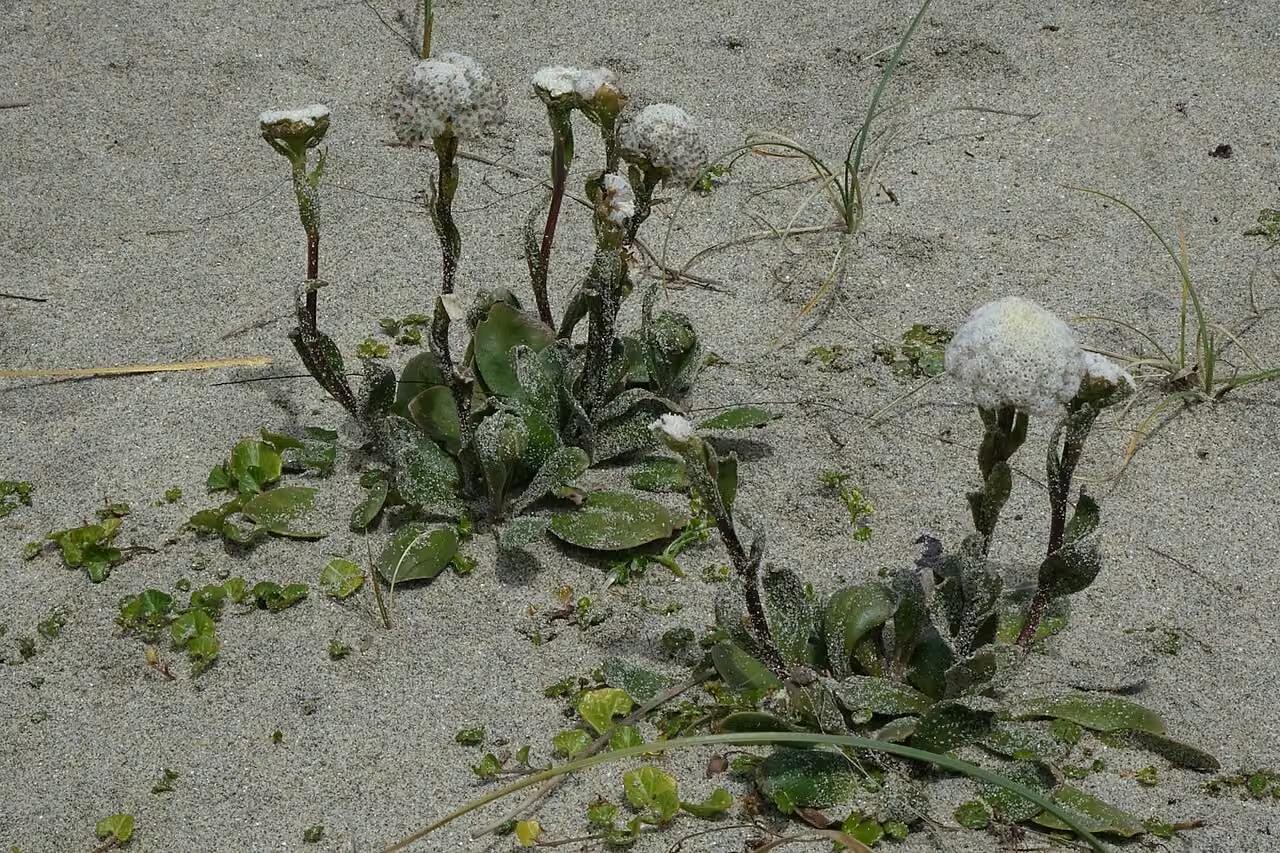
Var. pedicellata, from Stewart Island, has stalked capitula on pedicels 4-8 mm long and heads up to 5 cm across. The typical variety lacks those conspicuous stalks and is the mainland west coast form.
Is Craspedia robusta var. robusta threatened?
No. It was assessed as Not Threatened in 2012, 2017 and again in the 2023 national conservation assessment.
Sources and Further Reading
The botanical, growing, and conservation details for Woollyhead (Craspedia robusta var. robusta) on this page draw on the New Zealand plant references below. Consult them for full technical records and the latest distribution data.