Red Leek Orchid
Corunastylis nuda
Last updated:
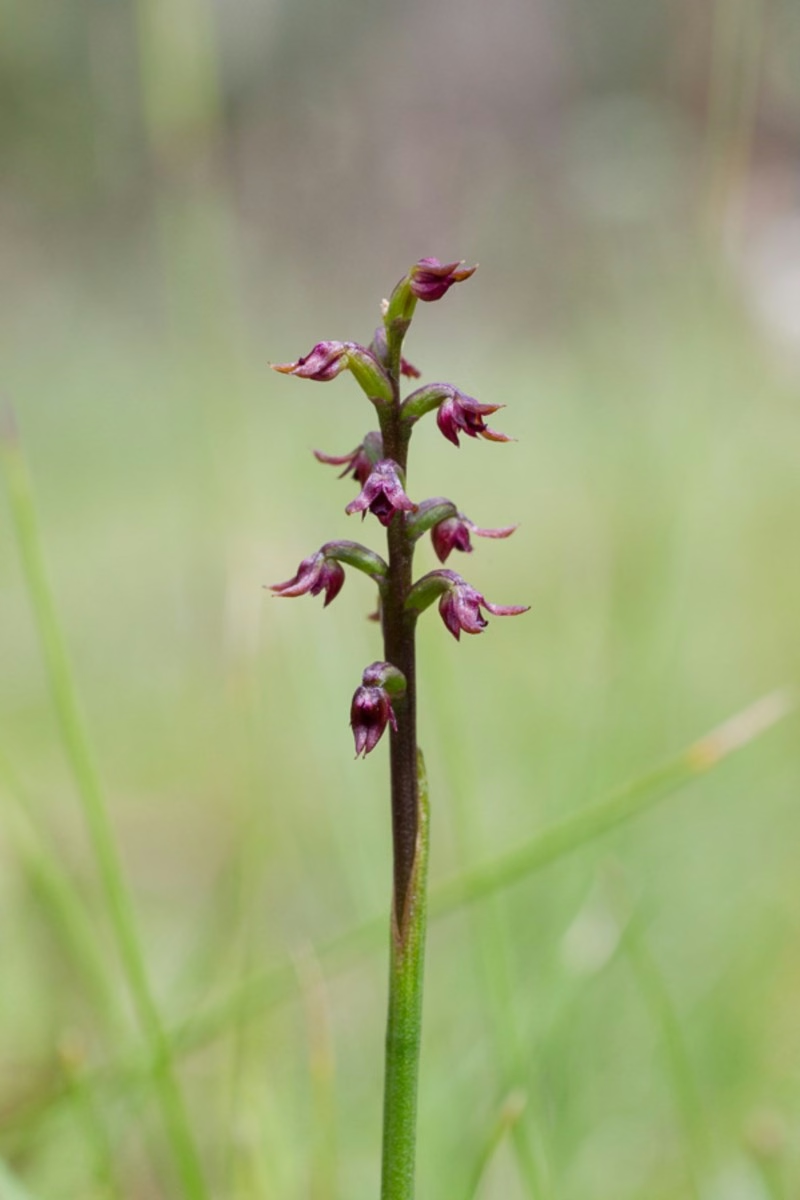
Red leek orchid (Corunastylis nuda) is a slender, rush-like ground orchid that grows 5 to 50 cm tall, with a dark green to reddish stem topped by a dense spike of 5 to 25 tiny dark red flowers. It is found from Great Barrier Island south through the North and South Islands and on the Chatham Islands, and also occurs in Australia. It grows in open, infertile places such as pakihi, peat bogs, clay bank scrub, skeletal soils over rock and short grassland. Easily overlooked, it is ranked Threatened - Nationally Vulnerable and should never be dug from the wild. Explore more native flowering plants in our native plant guide.
Plant Description
Corunastylis nuda is a terrestrial orchid with a rush-like habit, growing 5 to 50 cm tall. It arises from an underground tuber that is large relative to the aerial parts, and fibrous remains of old leaf sheaths persist at the base. The stem is 1 to 3 mm across and dark green, red-green or mottled reddish, and the single leaf is much reduced, so the plant looks almost leafless, which is what the epithet nuda (naked) refers to.
The flowers form a dense raceme of 5 to 25 closely spaced blooms. Each has narrow, dark red or reddish-green perianth parts held horizontally, with an upward-projecting bend or knee. The dorsal sepal is 2.5 to 3 mm long and deeply concave, and the longer lateral sepals are briefly fused at the base and tipped with small gland-like structures. The labellum is dark red (rarely reddish-green) with finely ciliate margins.
Its closest New Zealand relative is Corunastylis pumila, which has a yellow-green to green stem and leaf, a longer leaf, drooping flowers and a greenish labellum. Because both are small and dull-coloured, close examination of the flowers is needed for confident identification.
Quick Facts
| Scientific Name | Corunastylis nuda |
|---|---|
| Height | 0.05-0.5 m |
| Spread | A single slender stem from an underground tuber |
| Water Needs | Moderate; grows in bogs and pakihi as well as drier skeletal soils |
| Light | Full sun to light shade in open sites |
| Frost Tolerance | Moderate to high; recorded up to 900 m |
| Salt Tolerance | No information available |
| Growth Rate | Not documented |
| Lifespan | Perennial, regrowing from a tuber |
Climate Best Suited to
It grows from lowland to montane elevations (1 to 900 m) across a wide climatic range, from the warm north to the South Island and the cool Chatham Islands. Open, infertile sites matter more to it than climate.
Regional Suitability
| City | Climate Suitability |
|---|---|
| Auckland | Medium |
| Wellington | Medium |
| Christchurch | Low |
| Dunedin | Low |
Plant Habitat
Red leek orchid is indigenous to New Zealand and Australia. In New Zealand it occurs in the North Island from Great Barrier Island southward, in the South Island and on the Chatham Islands, from near sea level to about 900 m.
It favours open, low-fertility sites: shrublands including pakihi, skeletal soils over rock, peat bogs and infertile clay bank scrub. It also appears in short grasslands and sometimes pasture over a variety of soils. It is classed as a facultative wetland plant, equally at home in wet and dry ground.
Growing Requirements
Soil Requirements
It grows in poor, infertile soils, from peat to clay and thin soils over rock, and like most ground orchids depends on soil fungi.
- Low-fertility peat, clay or skeletal soils
- Avoid fertiliser, which favours competing plants
- Undisturbed soil is essential for its fungal partners
Light Requirements
It is a plant of open, low vegetation where competing plants are sparse.
- Open shrubland, pakihi and short grassland
- Disappears when taller vegetation closes over
Water Requirements
It tolerates both damp bogs and drier banks; no specific watering regime is documented.
- Grows in peat bogs and pakihi
- Also on free-draining skeletal soils
Planting and Establishing
Red leek orchid is not a garden plant. NZPCN states that it is difficult to grow and should not be removed from the wild, and it is not available from nurseries.
The best way to support it is to protect the open, infertile sites where it already grows, keeping them free of fertiliser, heavy disturbance and smothering weeds, and avoiding planting dense shrubs over known populations.
Ecological Role
Like all orchids, Corunastylis nuda produces dust-like seed without food reserves, which depends on specific soil fungi to germinate. Its fruiting season is long, from January to November. The pollinators of this species in New Zealand were not documented in the sources consulted.
It is a species of early-successional, open habitats such as pakihi and clay bank scrub, where low fertility keeps vegetation short. As shrubs grow up and shade the ground, or as land is developed, such sites and their orchids can be lost.
Uses & Significance
Garden Uses
This orchid has no practical garden use. Its value lies in the wild, where it can be appreciated by botanists and orchid enthusiasts.
- Photograph rather than collect
- Record sightings on iNaturalist NZ to help monitoring
- Protect known sites on private land
Ecological Value
It is part of the specialised flora of infertile open habitats, which hold many small, uncommon plants.
- Indicator of intact pakihi, bog and gumland-type vegetation
- Contributes to native orchid diversity
- Relies on and supports native soil fungi
Landscaping Uses
Red leek orchid is not suited to landscaping. Where it occurs on private land, landscaping decisions should aim to keep the site open and unfertilised, for example by avoiding topsoil, lawn fertiliser and dense shrub planting over the population.
Mowing regimes in short grassland sites should be discussed with local botanists, as timing can affect flowering and seeding.
Seasonal Care Calendar
Spring
Plants regrow from their tubers; fruit from the previous season may still be present.
- Fruit recorded until November
- Avoid disturbing known sites
Summer
Flowering starts in December, with dark red spikes rising above surrounding vegetation.
- Flowers from December
- Best time to look for it
Autumn
Flowering continues, and seed capsules ripen.
- Flowers and fruit present together
- Seed released as capsules split
Winter
Flowering can extend into August, an unusually long season for a New Zealand ground orchid.
- Flowers until August
- Tuber persists below ground
When to Prune and How Much
No pruning is applicable. In wild sites, any vegetation management should aim to keep surrounding cover short and open without damaging the orchid's stems or tubers.
If weeds or shrubs are being controlled around a population, cut them by hand rather than spraying herbicide near the orchids.
How to Grow Red Leek Orchid
NZPCN describes Corunastylis nuda as difficult to propagate and says it should not be removed from the wild. Like other terrestrial orchids, it relies on a partnership with soil fungi at every stage of its life, which is why plants dug from the wild almost always die and why it is not available from nurseries. The notes below explain how the species reproduces naturally and how specialist conservation propagation of orchids is generally approached, rather than giving home-garden instructions. Anyone interested in helping should work with the Department of Conservation, a regional council or an orchid society.
From Seed (specialist Only)
Orchid seed is microscopic and has no stored food, so in nature it germinates only when colonised by a compatible mycorrhizal fungus. Laboratory techniques can germinate orchid seed on sterile or fungus-inoculated media, but no published protocol specific to this species was found.
- Leave seed capsules on wild plants so seed can disperse naturally
- Only permitted conservation programmes should collect seed
- Specialists isolate a suitable fungus from the plant's own roots
- Seed is sown on nutrient agar with or without that fungus
- Seedlings are slowly weaned to soil containing the fungal partner
By Tuber
Each plant regrows annually from an underground tuber. In the wild some ground orchids produce replacement tubers, but this does not make digging them up a safe way to propagate them.
- Do not dig tubers from wild populations
- Mark known plants so they are not trampled or mown when flowering
- Keep the soil and its fungi undisturbed around existing plants
Pests & Diseases
No specific pests are recorded for this orchid. Like many ground orchids it is likely to be vulnerable to browsing by slugs, snails and grazing animals, but this has not been documented for this species.
The main threats are habitat loss and competition from weeds and taller vegetation rather than pests.
Cultural Significance
No Māori name or traditional use specific to Corunastylis nuda is recorded in the sources consulted.
The species was first described by Joseph Hooker in 1853 as Prasophyllum nudum, then transferred to Genoplesium and in 2002 to Corunastylis by the Australian orchidologists David Jones and Mark Clements. The common name leek orchid echoes its earlier placement in Prasophyllum, a genus name meaning 'leek leaf' in Greek.
Bonus Tip
When looking for this orchid, search open pakihi, clay banks and short scrub between December and autumn for what look like thin red rush stems. A close look will reveal the tiny dark red flowers. Logging your find on iNaturalist NZ with clear photos helps botanists track a nationally vulnerable species.
Related Plants
Explore other native plants that share similar characteristics or habitats with Red Leek Orchid (Corunastylis nuda), offering further insights into New Zealand's diverse flora. These related species provide context and opportunities for complementary planting in your garden.
Coprosma pseudociliata
Coprosma pseudociliata
Coprosma serrulata
Coprosma serrulata
Craspedia incana
Craspedia incana
Craspedia lanata var. lanata
Craspedia lanata var. lanata
Craspedia robusta var. pedicellata
Craspedia robusta var. pedicellata
Craspedia robusta var. robusta
Craspedia robusta var. robusta
Cushion Daisy
Cushion Daisy
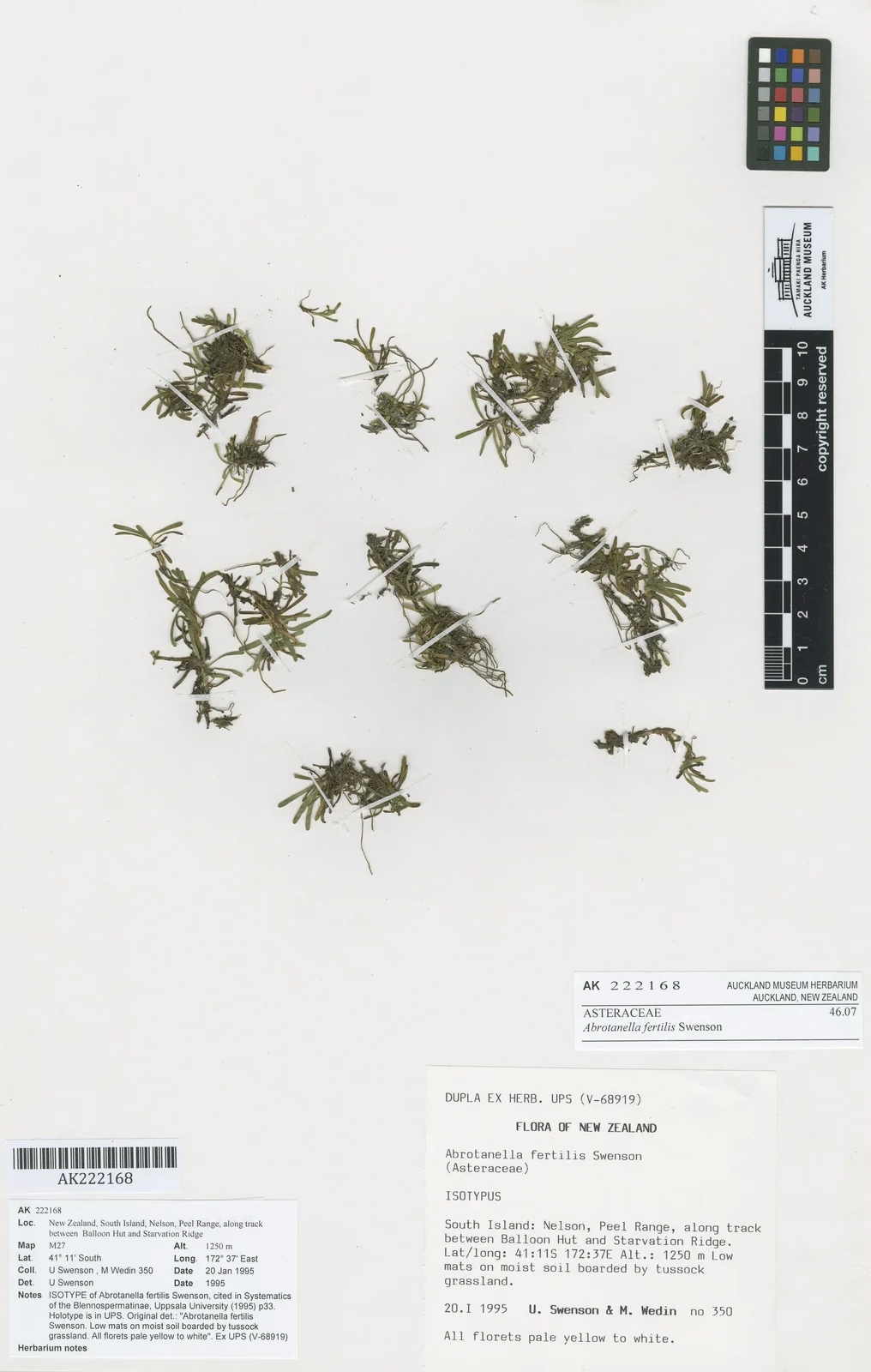
Fertilis Plant
Fertilis Plant
Plant Conservation
Corunastylis nuda is ranked Threatened - Nationally Vulnerable (2023), with qualifiers noting, among other things, its sparse distribution and that only part of its range is in New Zealand. It had previously been listed as At Risk - Naturally Uncommon (2009, 2012 and 2017). It is Regionally Critical in Wellington and Regionally Data Deficient in Auckland (2025).
NZPCN notes it has probably undergone a massive range reduction through habitat destruction, though it remains more widespread than C. pumila. Protecting pakihi, bogs and infertile scrub from development, drainage, fertiliser and weeds is the key to its survival.
Frequently Asked Questions
What does the red leek orchid look like?
It looks like a small reed or rush: an upright, mottled dark green to reddish stem 1 to 3 mm thick, ending in a crowded raceme of 5 to 25 tiny dark red or reddish-green flowers held horizontally.
How is Corunastylis nuda different from Corunastylis pumila?
Corunastylis nuda has a red-green to dark green stem and leaf rather than yellow-green, a much shorter leaf, horizontal rather than drooping flowers, and a red rather than greenish labellum.
Is the red leek orchid endemic to New Zealand?
No. It is indigenous to New Zealand but also occurs naturally in Australia. In New Zealand it is ranked Threatened - Nationally Vulnerable.
When does Corunastylis nuda flower?
NZPCN records an unusually long flowering season, from December through to August, with fruit present between January and November.
Sources and Further Reading
The botanical, growing, and conservation details for Red Leek Orchid (Corunastylis nuda) on this page draw on the New Zealand plant references below. Consult them for full technical records and the latest distribution data.