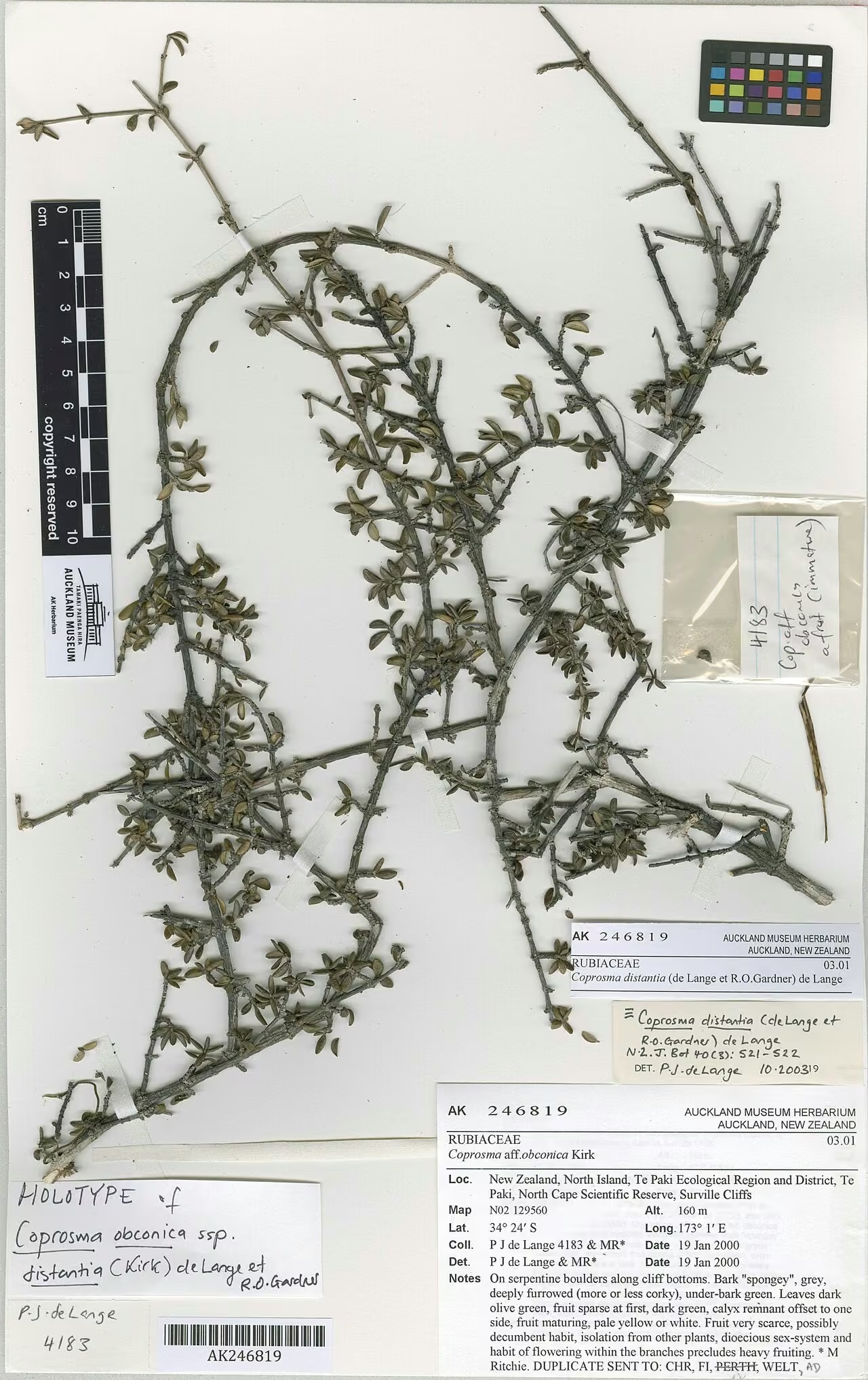
Coprosma
Coprosma distantia
Last updated:
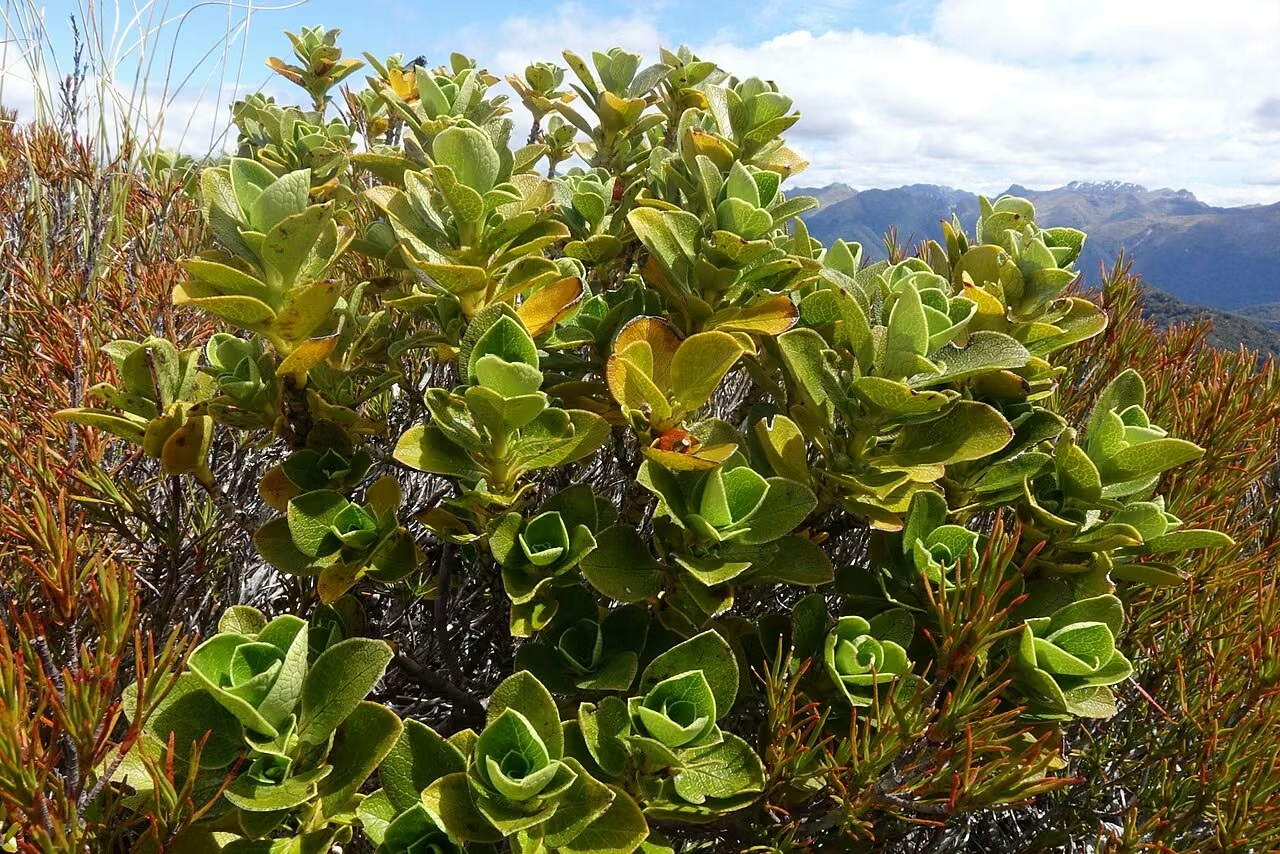
Coprosma distantia is a rare, prostrate, densely matted shrub found naturally only on the 120 ha of serpentinite rock at the Surville Cliffs in the North Cape Scientific Reserve, at the northern tip of the North Island. It grows just 0.1 to 0.2 m tall but spreads 2 to 5 m, with dark, corky bark and small, glossy, dark green leaves that end in a distinctive nipple-like bull nose. Female plants bear cream to pale lemon fruit. It is ranked At Risk - Naturally Uncommon because it is confined to one location, and although it is common there, seedlings have never been found in the wild. Explore more native ground covers in our native plant guide.
Plant Description
Coprosma distantia is a prostrate, densely matted shrub 0.1 to 0.2 m tall and 2 to 5 m across, with numerous long-trailing branches. The bark of mature twigs is dark silver-grey to almost black and rather corky. It persists for a long time, eventually cracking and shedding in small flat flakes to show dark green inner bark.
The adult leaves are of two types. On plants in sunny, exposed conditions the blades are 3.5 to 12 mm long and 1.5 to 2.5 mm wide (up to 3.5 mm), while in shaded sites they reach 20 mm by 4.5 mm. Both are broadly elliptic to oblanceolate, dark green to almost orange-green, glossy and paler underneath, with slightly curved margins. Juvenile leaves are mottled brown. Male and female flowers are on separate plants. The fruits are uniformly cream to pale lemon when fresh, and the seeds (pyrenes) are oblong-elliptic, 3.1 to 4.1 mm long and pale orange-yellow.
Together with its close relative Coprosma obconica, it is separated from all other New Zealand Coprosma by the leaf tip, which has a nipple-like bull nose prolongation. Coprosma obconica differs in its suberect to erect habit, its greenish-white or translucent white fruits variously striped or blotched with dark violet-purple, and its much smaller, prominently notched seeds.
Quick Facts
| Scientific Name | Coprosma distantia |
|---|---|
| Height | 0.1-0.2 m |
| Spread | 2-5 m |
| Water Needs | Low to moderate; grows on free-draining rock and clay |
| Light | Full sun; dislikes competition from taller plants |
| Frost Tolerance | Not documented; native to frost-free North Cape |
| Salt Tolerance | Not documented; grows on exposed coastal cliffs |
| Growth Rate | Very slow |
| Lifespan | Long-lived perennial shrub |
Climate Best Suited to
In the wild it experiences the warm, frost-free, windswept climate of the far north. Specific tolerance of colder climates has not been documented.
Regional Suitability
| City | Climate Suitability |
|---|---|
| Auckland | High |
| Wellington | Medium |
| Christchurch | Low |
| Dunedin | Low |
Plant Habitat
Coprosma distantia is known only from the approximately 120 ha exposure of serpentinite rock at the Surville Cliffs in the North Cape Scientific Reserve, at the northern tip of the North Island. It is very common within this small area.
It is restricted to ultramafic (serpentinite) rock, growing on cliff faces, boulderfields, talus slopes and on the dark red clay soils that develop on this rock type. It does not tolerate competition from taller shrubs and grasses, so it grows mainly in exposed sites.
Growing Requirements
Soil Requirements
In nature it is confined to serpentinite rock and the dark red clays derived from it, soils that are naturally hostile to many plants.
- Free-draining rocky or clay soil
- Low-fertility conditions
- Open ground without competing vegetation
Light Requirements
It grows mainly in exposed, sunny habitats, and its leaves become larger in shade.
- Full sun for compact growth
- Keep clear of taller shrubs and grasses
Water Requirements
Cliffs, talus and boulderfields drain quickly, though the clay soils can hold moisture.
- Water young plants until established
- Avoid waterlogged ground
Planting and Establishing
Coprosma distantia is grown by a few specialist nurseries and botanic gardens. Give it an open, sunny position in free-draining soil where it can spread into a flat mat without being overgrown.
It is very slow-growing, so be patient and keep surrounding weeds and grasses away. Cultivated stock appears to be a single female clone, so it will not set viable seed unless a male is present, though it freely forms sterile fruit.
Ecological Role
Its fleshy fruits are dispersed by frugivory, according to NZPCN. Flowering is recorded from April to October and fruiting from January to November, a long season for the genus.
Despite viable seed being frequently seen, seedlings have not been found in the wild, which is why its ranking carries the qualifier Recruitment Failure. It is one of the specialised plants of the Surville Cliffs ultramafic flora, an unusual plant community shaped by serpentinite rock.
Uses & Significance
Garden Uses
A collector's plant and conservation curiosity rather than a common landscape shrub.
- Ground cover in specialist native collections
- Rock gardens and trailing over low walls
- Botanic garden displays of threatened plants
Ecological Value
It is a characteristic plant of the Surville Cliffs serpentinite, one of New Zealand's most distinctive plant communities.
- Endemic to a single 120 ha site
- Part of the specialised ultramafic flora of North Cape
- Forms dense mats on exposed cliffs and talus
Landscaping Uses
With its glossy dark green leaves and almost black, corky stems, Coprosma distantia makes a low, textured mat suitable for trailing over rocks in warm northern gardens.
Because it grows so slowly, use it in small, prominent spots rather than as a fast ground cover for large areas.
Seasonal Care Calendar
Spring
Late flowering may continue into October, and fruit can be present.
- Weed around the mat
- Take semi-hardwood cuttings
Summer
Fruit may be present, as fruiting is recorded from January.
- Water young plants in dry spells
- Keep competing grasses back
Autumn
Flowering begins from April.
- Plant new specimens
- Check for scale insects
Winter
Flowering continues through winter in its mild northern home.
- Take hardwood cuttings
- Avoid waterlogging
When to Prune and How Much
Pruning is seldom needed because growth is very slow. Simply remove any dead stems.
Avoid cutting back the trailing leaders, which form the spreading mat.
How to Grow Coprosma
NZPCN describes Coprosma distantia as moderately easy to propagate from semi-hardwood or hardwood cuttings, and says seed should germinate easily. The main challenge is that plants are very slow-growing, even slower than Coprosma obconica. All cultivated material appears to come from a single female clone brought into cultivation by the late A.P. (Tony) Druce from plants he collected at the Surville Cliffs in 1979. That clone freely forms fruits that are sterile, and occasionally hybrid fruit where it grows near other Coprosma species, so seed from garden plants is unreliable. For conservation, new wild-sourced material should only be collected with Department of Conservation permission.
From Cuttings
Cuttings are the standard method and reproduce the female clone in cultivation.
- Take semi-hardwood cuttings in late summer or hardwood cuttings in winter
- Trim to 5 to 8 cm and remove the lower leaves
- Insert into a free-draining mix of sand and pumice and keep humid
- Grow on slowly in pots for at least a year before planting out, as growth is very slow
From Seed
Seed from wild plants should germinate easily, according to NZPCN. Fruit on cultivated plants is usually sterile, or may be hybrid if other Coprosma grow nearby.
- Use seed only from authorised wild collections or from known male and female pairs
- Clean the flesh from ripe cream to pale lemon fruit
- Sow fresh in a free-draining mix
- Keep moist and warm until seedlings appear
Pests & Diseases
No specific pests are recorded. In the wild, browsing animals are listed as a risk to the Surville Cliffs flora.
The greater threat comes from weeds: pampas grass (Cortaderia selloana), needle bush (Hakea sericea) and downy hakea (Hakea gibbosa) are slowly spreading across the ultramafic area and could crowd out this low, competition-intolerant shrub.
Cultural Significance
No Māori name or traditional use specific to Coprosma distantia is recorded in the sources consulted.
Botanists recognised the plant long before it was named; Audrey Eagle's 1982 book listed it under the tag name Coprosma sp. (s). Peter de Lange and Rhys Gardner described it in 2002 as a subspecies of Coprosma obconica, and later that year it was raised to species rank as Coprosma distantia.
Bonus Tip
If you grow Coprosma distantia near other Coprosma, do not use the seed from its fruit to raise new plants. The cultivated female clone can produce hybrid fruit, so propagate it from cuttings to keep plants true to type.
Related Plants
Explore other native plants that share similar characteristics or habitats with Coprosma (Coprosma distantia), offering further insights into New Zealand's diverse flora. These related species provide context and opportunities for complementary planting in your garden.
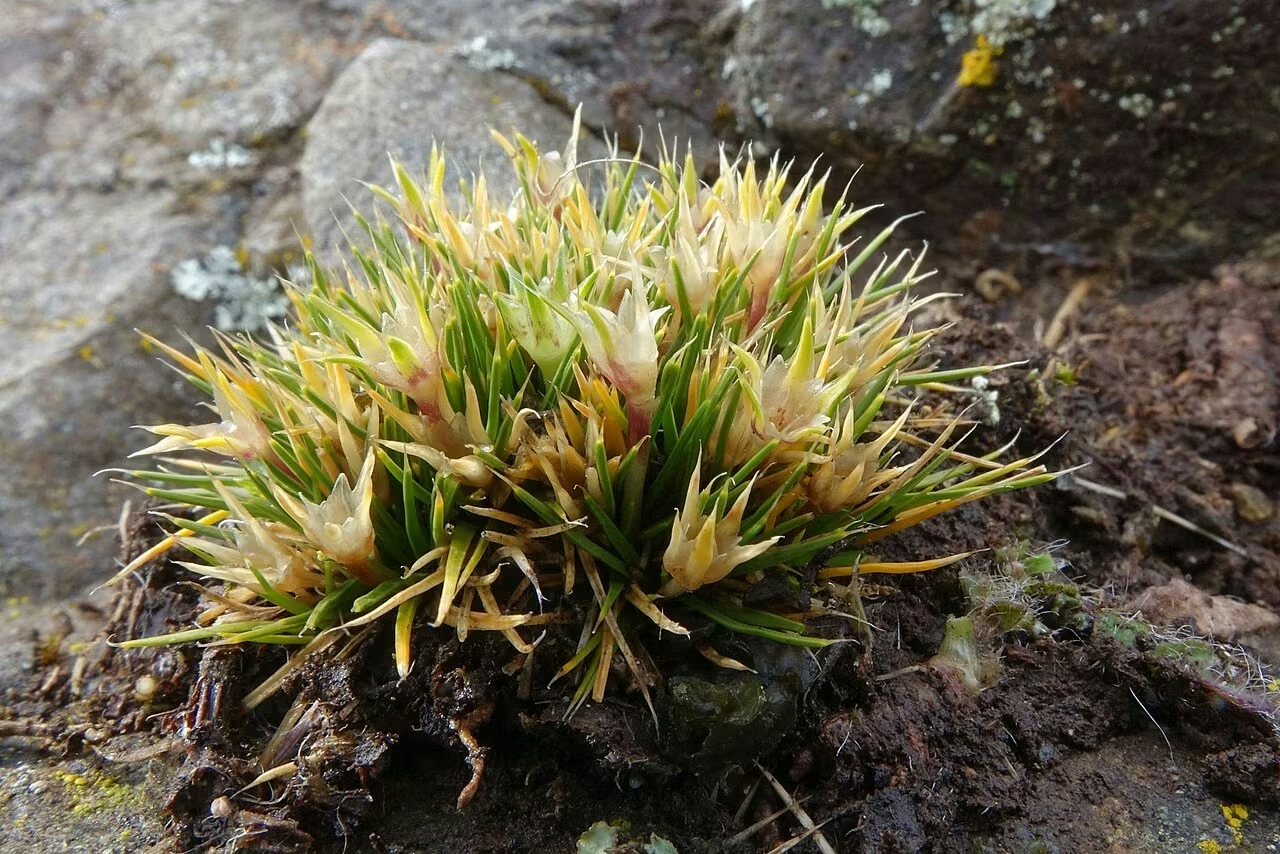
Colobanthus strictus
Colobanthus strictus
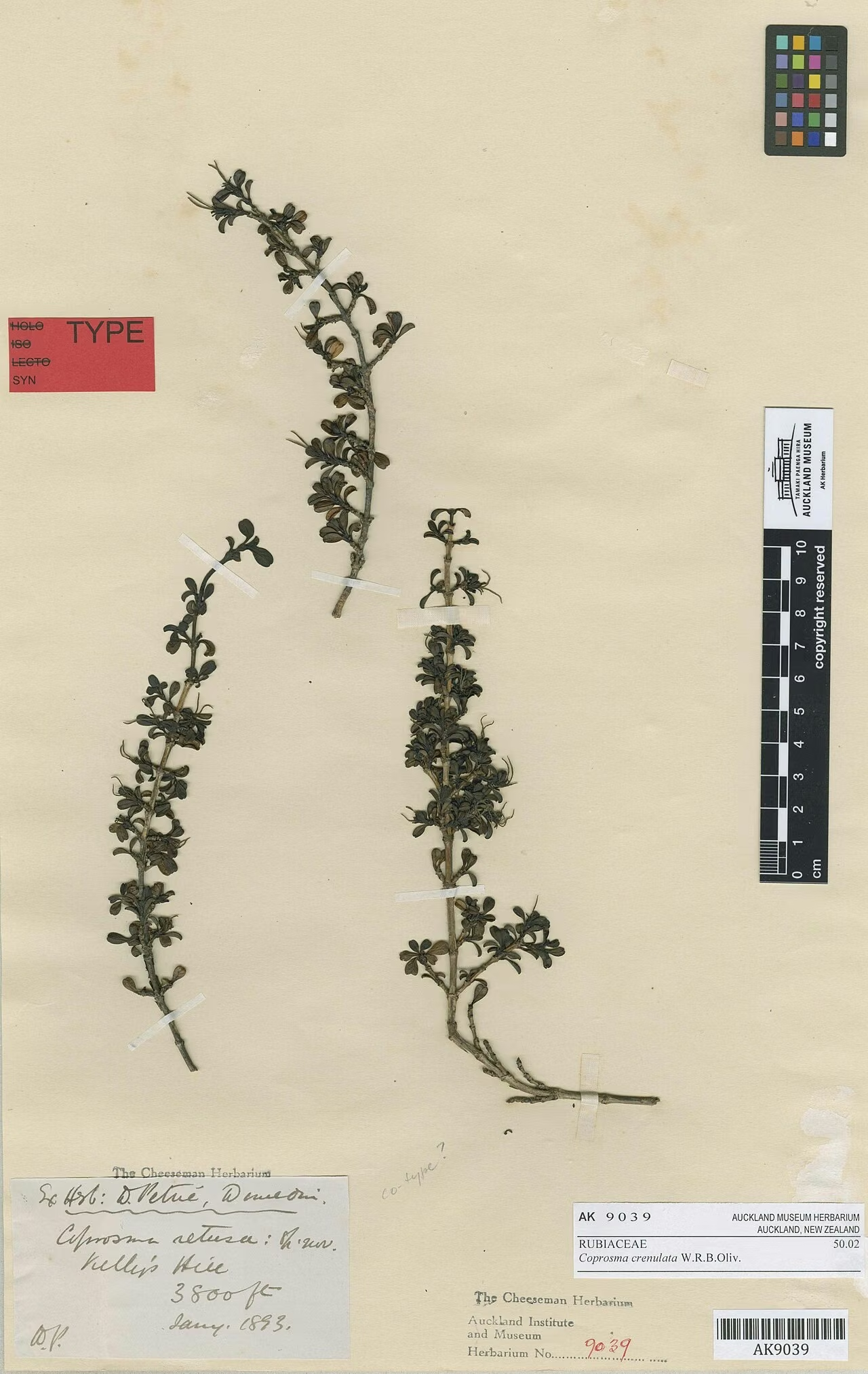
Coprosma crenulata
Coprosma crenulata
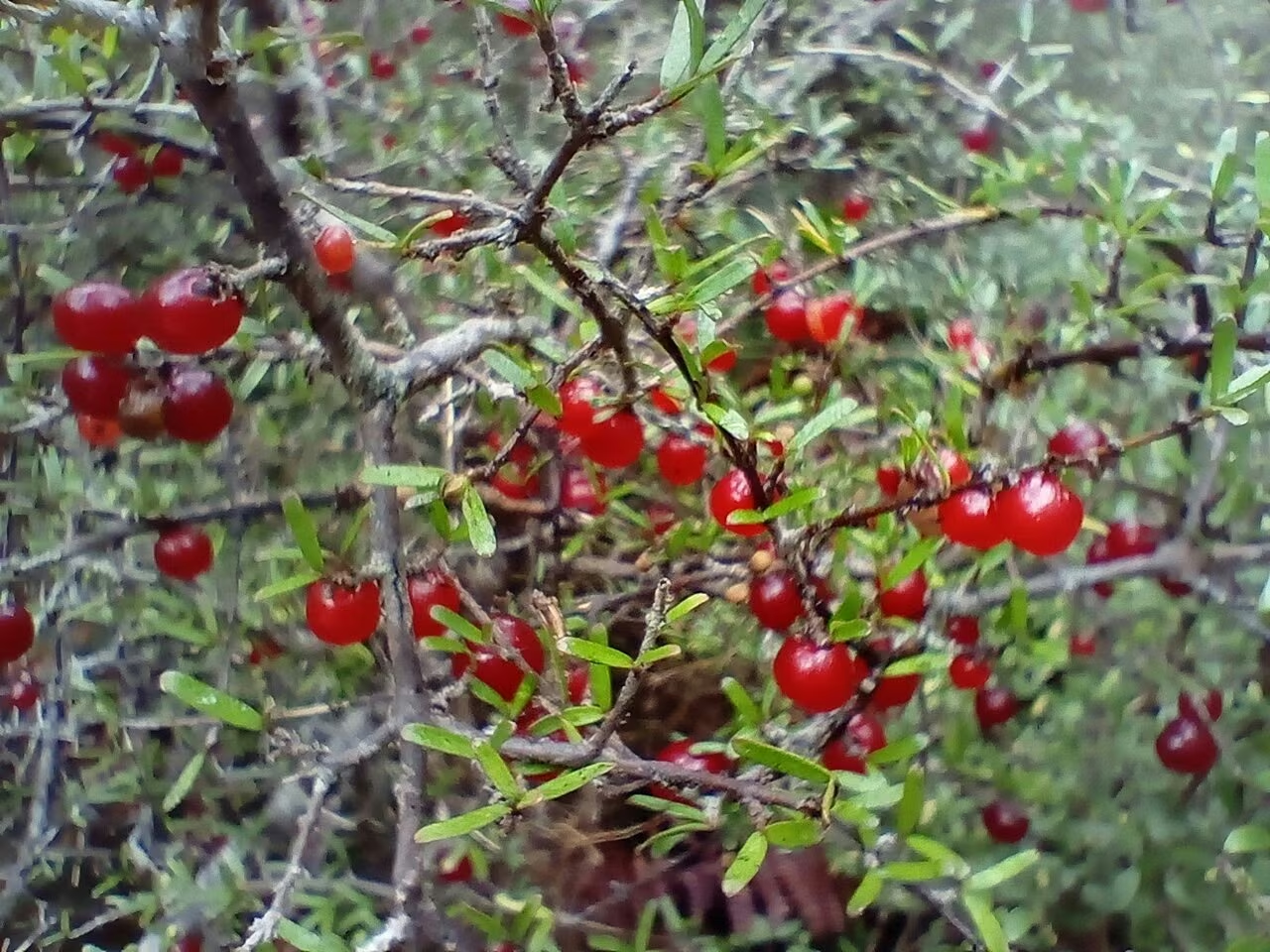
Coprosma decurva
Coprosma decurva
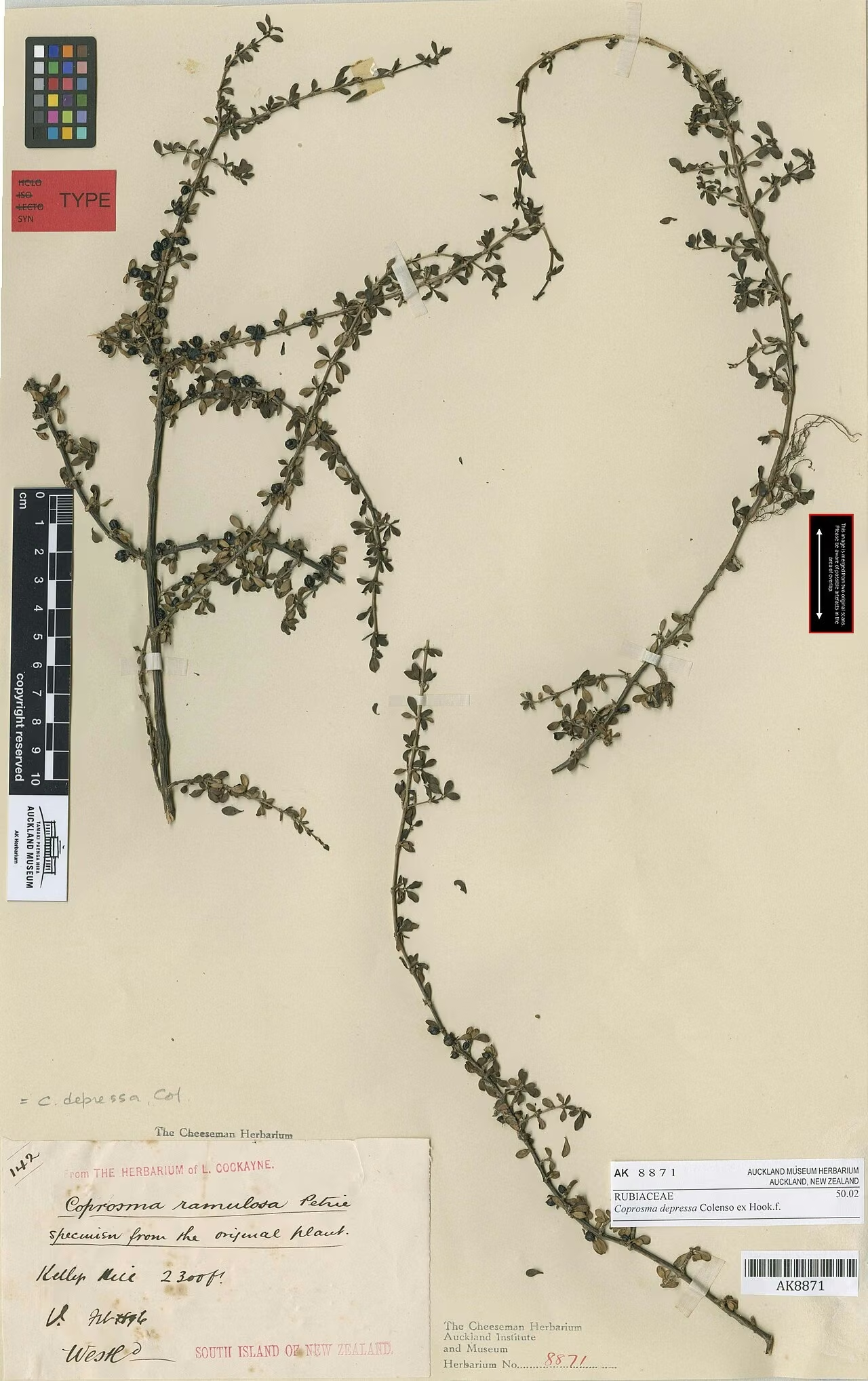
Coprosma depressa
Coprosma depressa
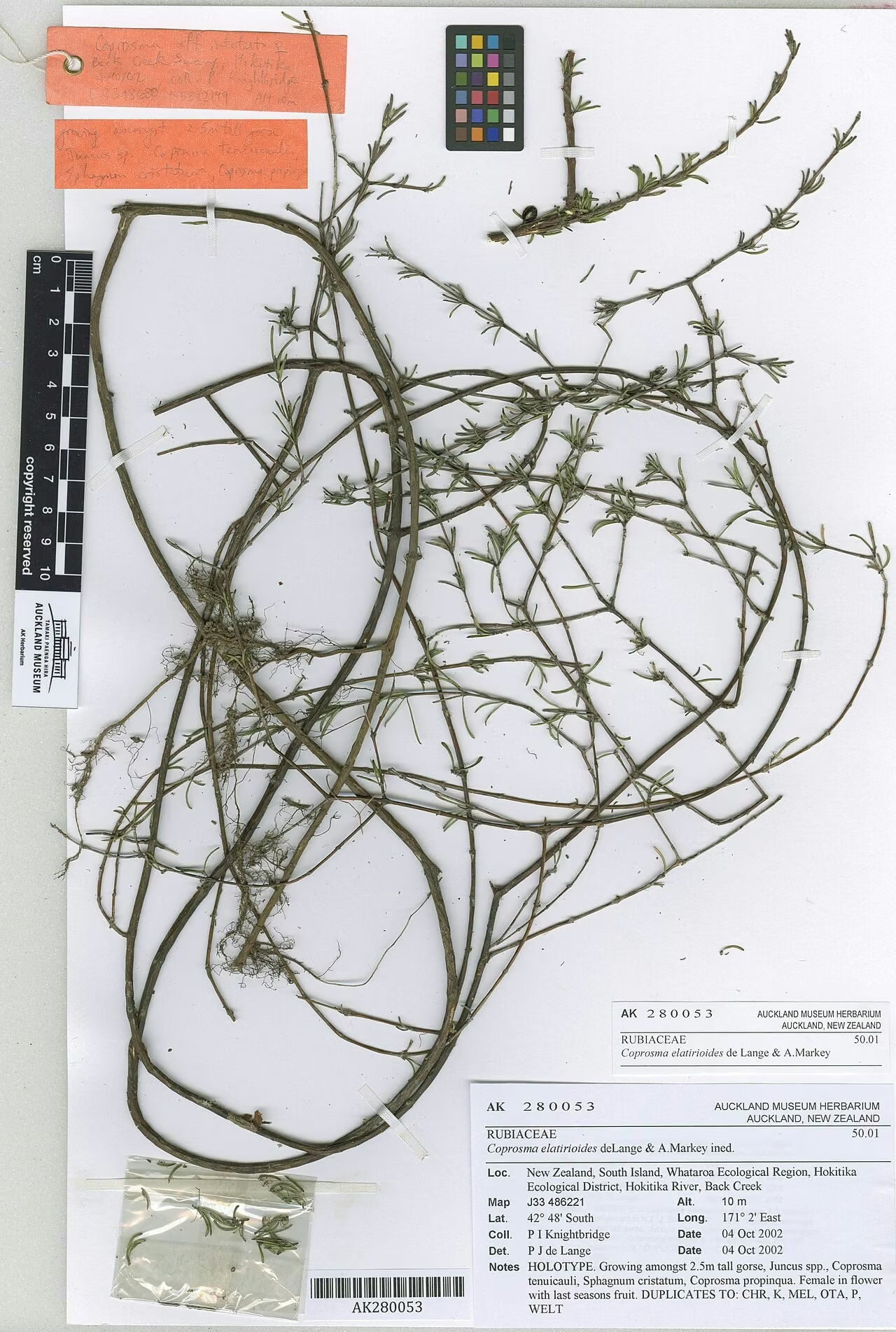
Coprosma elatirioides
Coprosma elatirioides
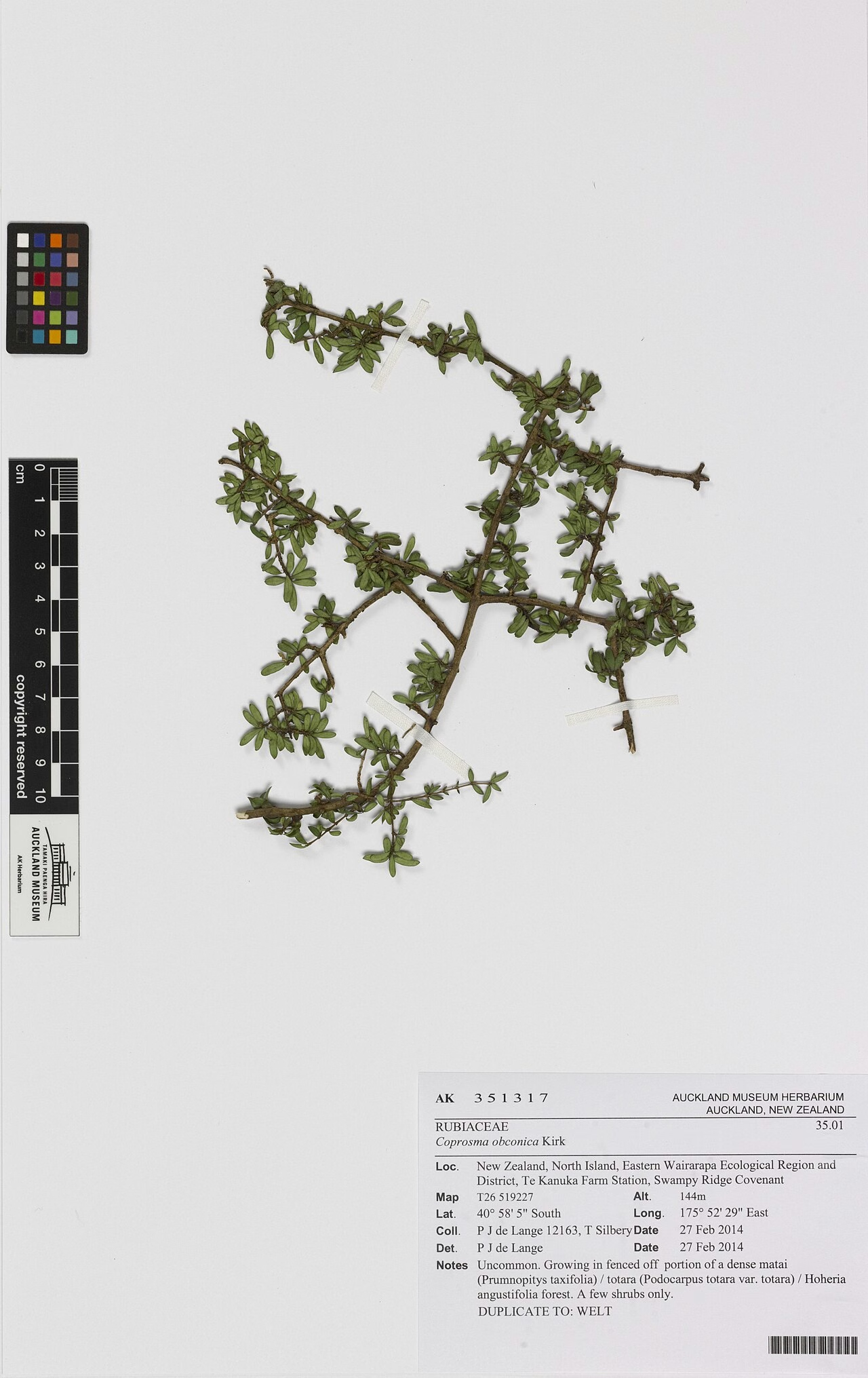
Coprosma obconica
Coprosma obconica
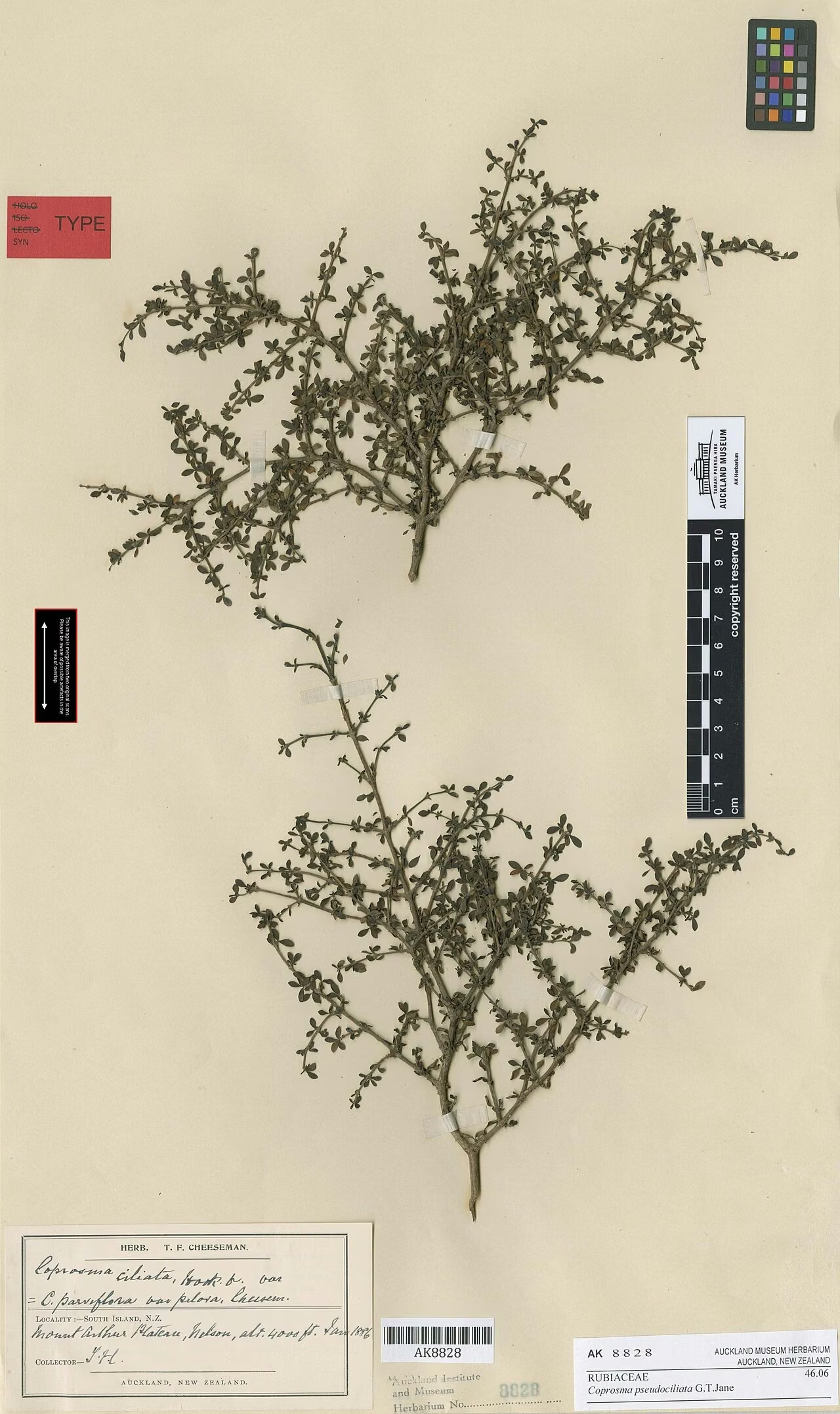
Coprosma pseudociliata
Coprosma pseudociliata
Coprosma serrulata
Coprosma serrulata
Plant Conservation
Coprosma distantia is ranked At Risk - Naturally Uncommon (2023) with the qualifiers OL (one location) and RF (recruitment failure). It has been considered Naturally Uncommon since 2009, and is Regionally Naturally Uncommon in Northland (2026).
No serious active threats are present, and the species is very common on the serpentinite. However, the whole Surville Cliffs ultramafic flora is at some level of risk from the slow spread of pampas and hakea, from fire and from browsing animals. Weed control and fire prevention in the North Cape Scientific Reserve are the most important protections.
Frequently Asked Questions
Where does Coprosma distantia grow?
It is known only from the roughly 120 ha exposure of serpentinite rock at the Surville Cliffs, in the North Cape Scientific Reserve. There it grows on cliff faces, boulderfields, talus slopes and the dark red clay soils formed on this rock.
How is Coprosma distantia different from Coprosma obconica?
Coprosma obconica is a suberect to erect shrub with whitish fruit striped or blotched violet-purple and much smaller, notched seeds. Coprosma distantia is prostrate and matted, with uniformly cream to pale lemon fruit, and grows on ultramafic rock.
Can you grow Coprosma distantia?
Yes. It is grown by a few specialist nurseries and several botanic gardens and strikes moderately easily from semi-hardwood or hardwood cuttings, but it is very slow-growing. Cultivated plants all appear to come from one female clone.
Why is Coprosma distantia At Risk?
It is ranked At Risk - Naturally Uncommon because it occurs at one location (qualifier OL) and shows recruitment failure (RF): viable seed is often seen, but seedlings have not been found in the wild.
Sources and Further Reading
The botanical, growing, and conservation details for Coprosma (Coprosma distantia) on this page draw on the New Zealand plant references below. Consult them for full technical records and the latest distribution data.