Colobanthus
Colobanthus strictus
Last updated:
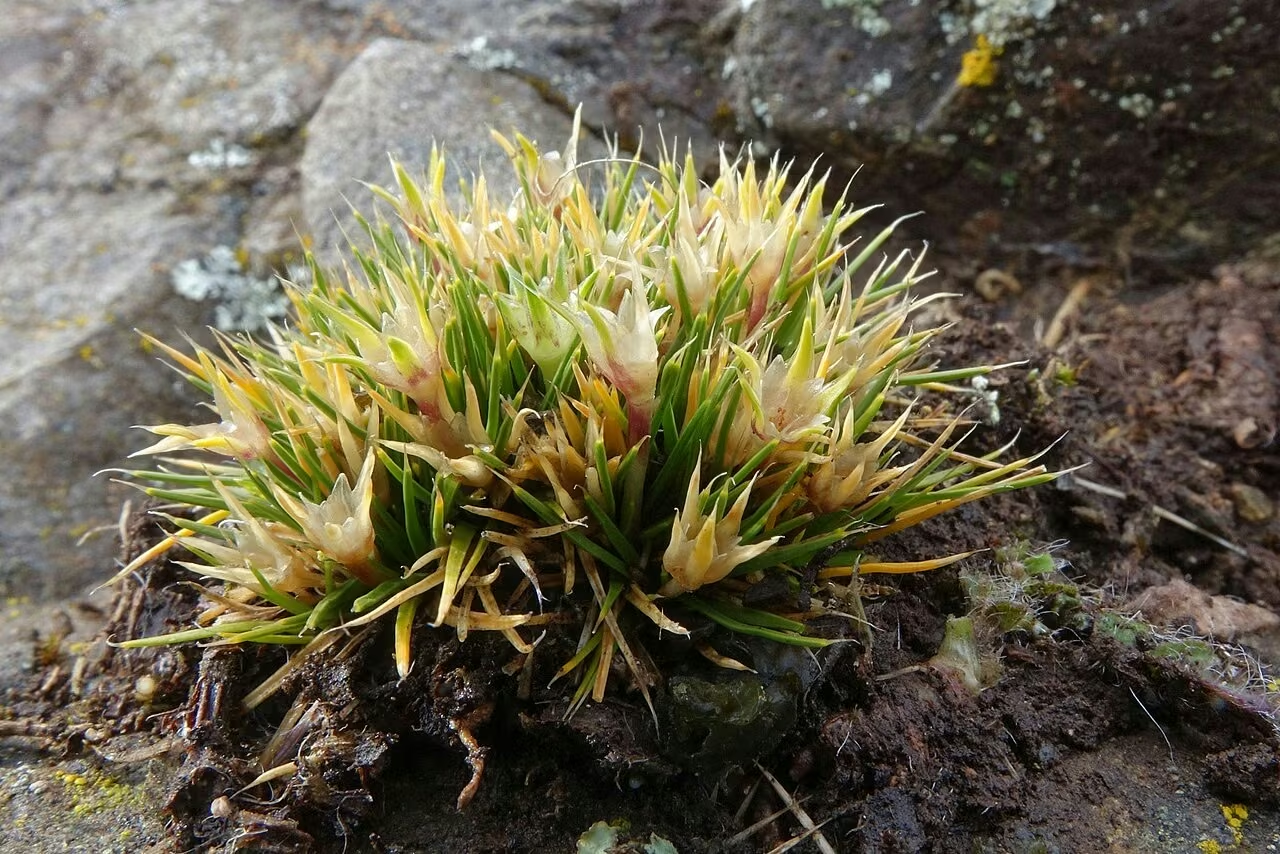
Colobanthus strictus is a small endemic herb in the carnation family (Caryophyllaceae) that forms cushions or mats several centimetres across. Its very short, crowded branches each carry a tuft of stiff, erect, yellowish leaves 10 to 20 mm long that taper gradually to a long needle-like tip. It grows in rock crevices and shingly places, often among tussock and sometimes in almost boggy ground, mainly in the mountains east of the South Island's main divide, with North Island records from the Ruahine and Aorangi ranges. It is ranked Not Threatened nationally but is Regionally Declining in Otago. Explore more native ground covers in our native plant guide.
Plant Description
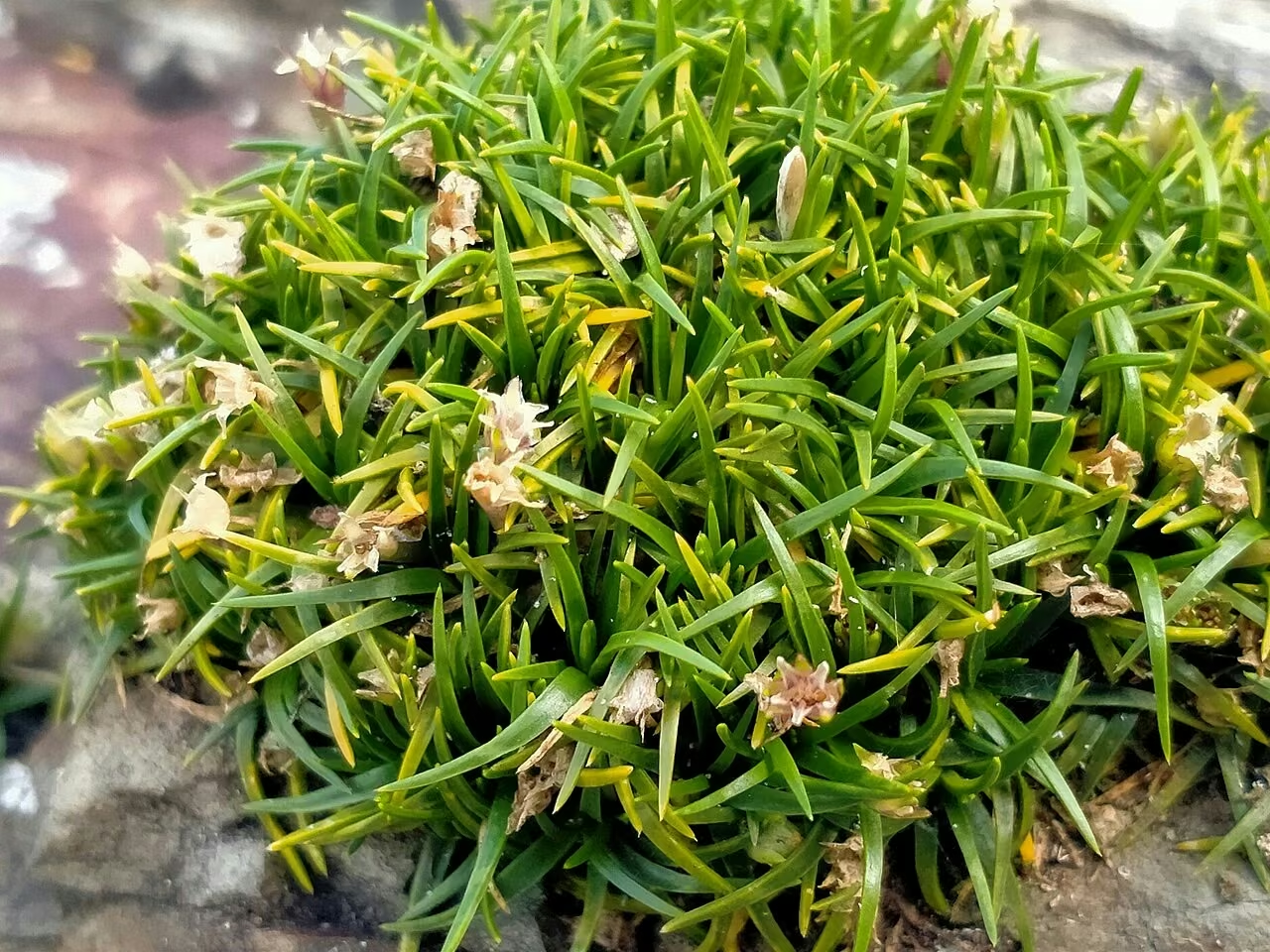
Colobanthus strictus forms a cushion or mat several centimetres across. The branches are many, very short and very close together, and each bears a tuft of erect, usually stiff leaves. The leaves are yellowish and narrow-linear, with a short sheath and a blade 10 to 20 mm long (reaching 30 mm in cultivation) that tapers gradually into a needle-like tip much longer than the width of the leaf below it.
The flower stalks are about as long as the leaves, so the flowers sometimes project above them. There are no petals. The five sepals are 4 to 8 mm long, broad at the base with a membranous margin that is often folded in towards the top, and taper gradually into a long needle-like point. The capsule has five valves and is much shorter than the calyx when mature.
The erect, stiff, yellowish leaves with long gradually tapering tips separate it from Colobanthus muelleri, a coastal species with green, recurved leaves ending abruptly in a short point. The long leaves and long sepals also distinguish it from the small-leaved alpine cushions C. canaliculatus and C. monticola.
Quick Facts
| Scientific Name | Colobanthus strictus |
|---|---|
| Height | Leaf tufts 10-20 mm tall |
| Spread | Cushion or mat several cm across |
| Water Needs | Moist; tolerates near-boggy ground |
| Light | Full sun in open tussock and shingle |
| Frost Tolerance | High; mainly a mountain plant |
| Salt Tolerance | Low to moderate; occasionally near the sea |
| Growth Rate | Slow |
| Lifespan | Perennial |
Climate Best Suited to
It suits the drier, continental climate of the eastern South Island mountains and basins, with cold winters, frosts and warm summers.
Regional Suitability
| City | Climate Suitability |
|---|---|
| Auckland | Low |
| Wellington | Low |
| Christchurch | Medium |
| Dunedin | Medium |
Plant Habitat
In the South Island, Colobanthus strictus occurs east of the main divide, and in the North Island it is recorded from the Ruahine Range and the Aorangi (Haurangi) Range in the southern Wairarapa. Thomas Cheeseman collected the type in January 1898 on stony flats in the Hooker Valley at about 2000 ft (around 600 m). Herbarium specimens also come from Central Otago, North Canterbury, Banks Peninsula and the upper Awatere valley in Marlborough.
Allan (1961) describes its habitat as crevices of rock or shingly places, often among tussock grasses and sometimes where the ground is almost boggy. It is found especially in the mountains but occasionally near the sea.
Growing Requirements
Soil Requirements
It grows in rock crevices, stony river flats and shingly ground, sometimes where seepage keeps the soil damp.
- Stony or gravelly mineral soil
- Low fertility
- Tolerates damp, seepy ground as well as well-drained rock
Light Requirements
Its habitats are open tussock grassland, shingle and rock where it gets plenty of sun.
- Full sun
- Can grow among tussocks if not smothered
Water Requirements
Its FAC wetland rating and record from almost boggy ground show it tolerates wetter conditions than many Colobanthus.
- Keep evenly moist in cultivation
- Good drainage around the crown is still advisable
Planting and Establishing
Allan's note that the leaves reach 30 mm in cultivation shows this species has been grown, though it is not a common nursery plant. Plant it in a sunny trough or rock garden in a gritty mix that stays slightly moist.
It suits gardens in the eastern South Island, where its natural climate is matched most closely. Never collect plants from the wild.
Ecological Role
NZPCN records that Colobanthus seeds are winged and dispersed by water and possibly by wind and ballistic release. Its frequent occurrence on stony river flats, such as the type locality in the Hooker Valley, suits water dispersal.
Its pollinators are not documented in the sources consulted. It occupies small open gaps among tussock and on shingle, habitats where low-growing native herbs are often displaced by introduced grasses and weeds.
Uses & Significance
Garden Uses
A specialist plant for alpine and native herb collections.
- Troughs and rock gardens
- Tussock grassland demonstration plantings
- Damp gravel beds that mimic river flats
Ecological Value
It is part of the native herb flora of eastern South Island tussock grassland, river flats and rock.
- Endemic to New Zealand
- Grows in open gaps between tussocks
- Its regional decline in Otago makes surviving populations worth protecting
Landscaping Uses
In a tussock-themed garden, Colobanthus strictus can fill small gaps between gravel and low tussocks, its upright yellowish tufts giving fine texture.
It is too small to use as a ground cover over large areas, so treat it as a detail plant near paths where it can be seen.
Seasonal Care Calendar
Spring
Flowering can begin in October.
- Weed around plants to keep them open
- Top-dress with grit
Summer
Flowering continues and capsules ripen from November.
- Collect seed from cultivated plants
- Keep moist during dry spells
Autumn
Flowering and fruiting end around April.
- Leave some seed to self-sow
- Remove invading grasses
Winter
Plants rest through frosty winters.
- No pruning or feeding needed
- Ensure the crown does not sit in water
When to Prune and How Much
No pruning is needed. Remove old flowering stems by hand if desired.
If grasses grow into the mat, pull them out carefully rather than cutting the cushion.
How to Grow Colobanthus
Colobanthus strictus has been grown in cultivation, as shown by Allan's record of leaves reaching 30 mm in cultivated plants, but no detailed propagation account was found in the sources consulted. The methods below adapt general practice for small cushion-forming members of the carnation family to this species. Its long flowering season, from October to April, and fruiting from November to April, give a good window to collect seed. The capsule is much shorter than the long-pointed sepals at maturity, so check inside the calyx to see whether seed has ripened. Use only material from cultivated plants or collected with permission for restoration projects.
From Seed
Fresh seed sown in autumn usually gives the most natural cycle for plants from cold climates.
- Collect ripe capsules between November and April
- Sow on the surface of a gritty seed mix and cover lightly with fine grit
- Keep the tray outdoors in a bright, sheltered spot and do not let it dry out
- Pot on seedlings when they have formed small tufts of leaves
By Division
Because the mat is made of many short branches each with a tuft of leaves, small sections with roots can be teased away from a cultivated plant.
- Lift an established cultivated mat in early spring
- Separate small rooted tufts by hand or with a clean knife
- Replant into a gritty, moisture-retentive mix
- Keep lightly shaded and moist until new growth appears
Pests & Diseases
No specific pests or diseases are recorded. Competition from introduced grasses and weeds in tussock grassland and on river flats is the main pressure on small herbs like this in the wild.
In cultivation, slugs may graze young seedlings, and crown rot can occur in warm, stagnant conditions.
Cultural Significance
No Māori name or traditional use is recorded for Colobanthus strictus in the sources consulted.
Thomas Cheeseman first treated it as Colobanthus muelleri var. strictus in his 1906 Manual of the New Zealand Flora, then raised it to species in 1921. The name strictus is Latin for upright or stiff, describing the erect leaves.
Bonus Tip
When comparing Colobanthus on the eastern side of the Southern Alps, look at the leaf tips: in Colobanthus strictus the leaf narrows gradually into a long, fine needle point, whereas in the coastal C. muelleri the leaf ends abruptly in a short colourless point. This single feature separates the two most often confused species.
Related Plants
Explore other native plants that share similar characteristics or habitats with Colobanthus (Colobanthus strictus), offering further insights into New Zealand's diverse flora. These related species provide context and opportunities for complementary planting in your garden.
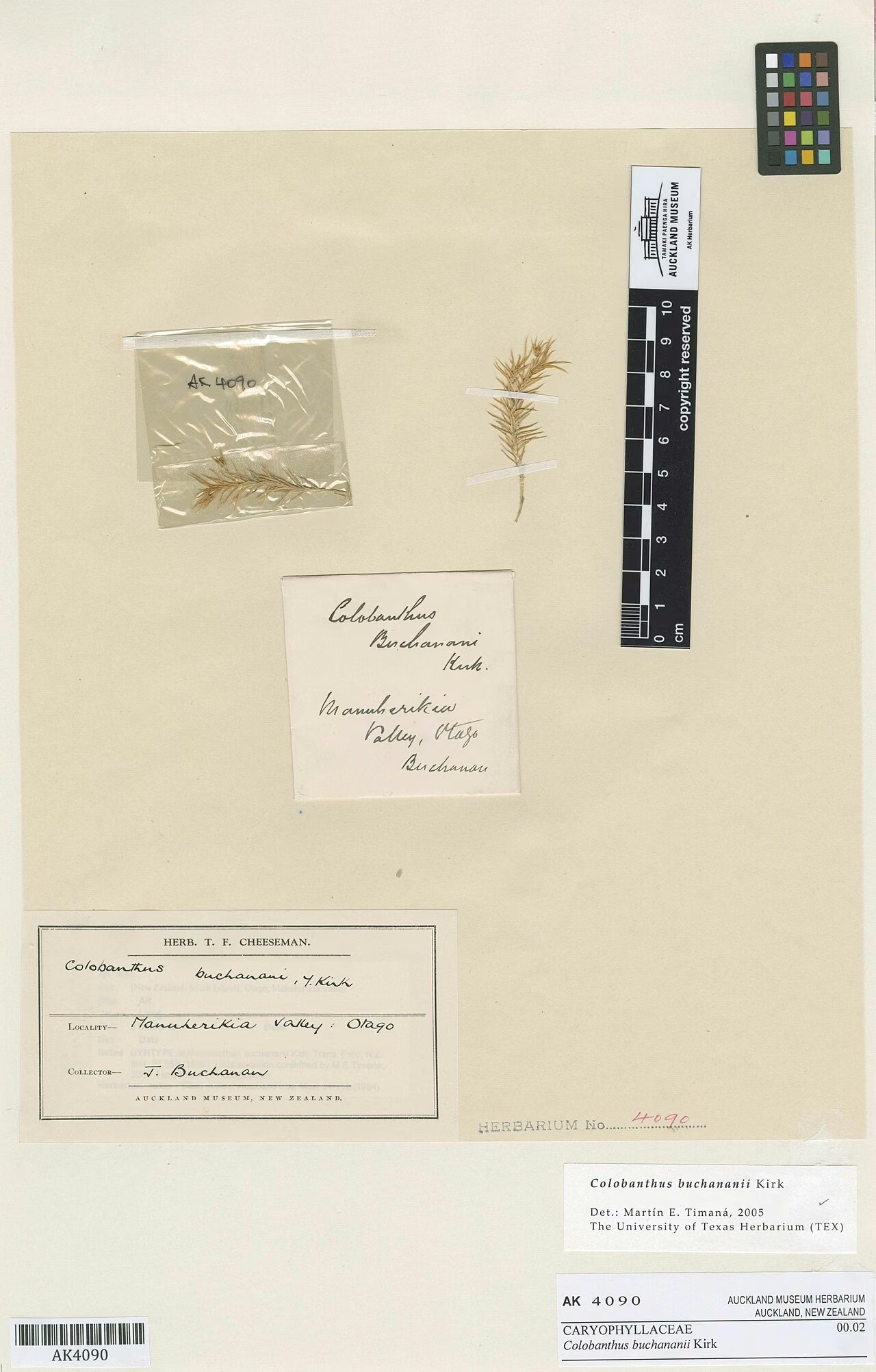
Colobanthus buchananii
Colobanthus buchananii
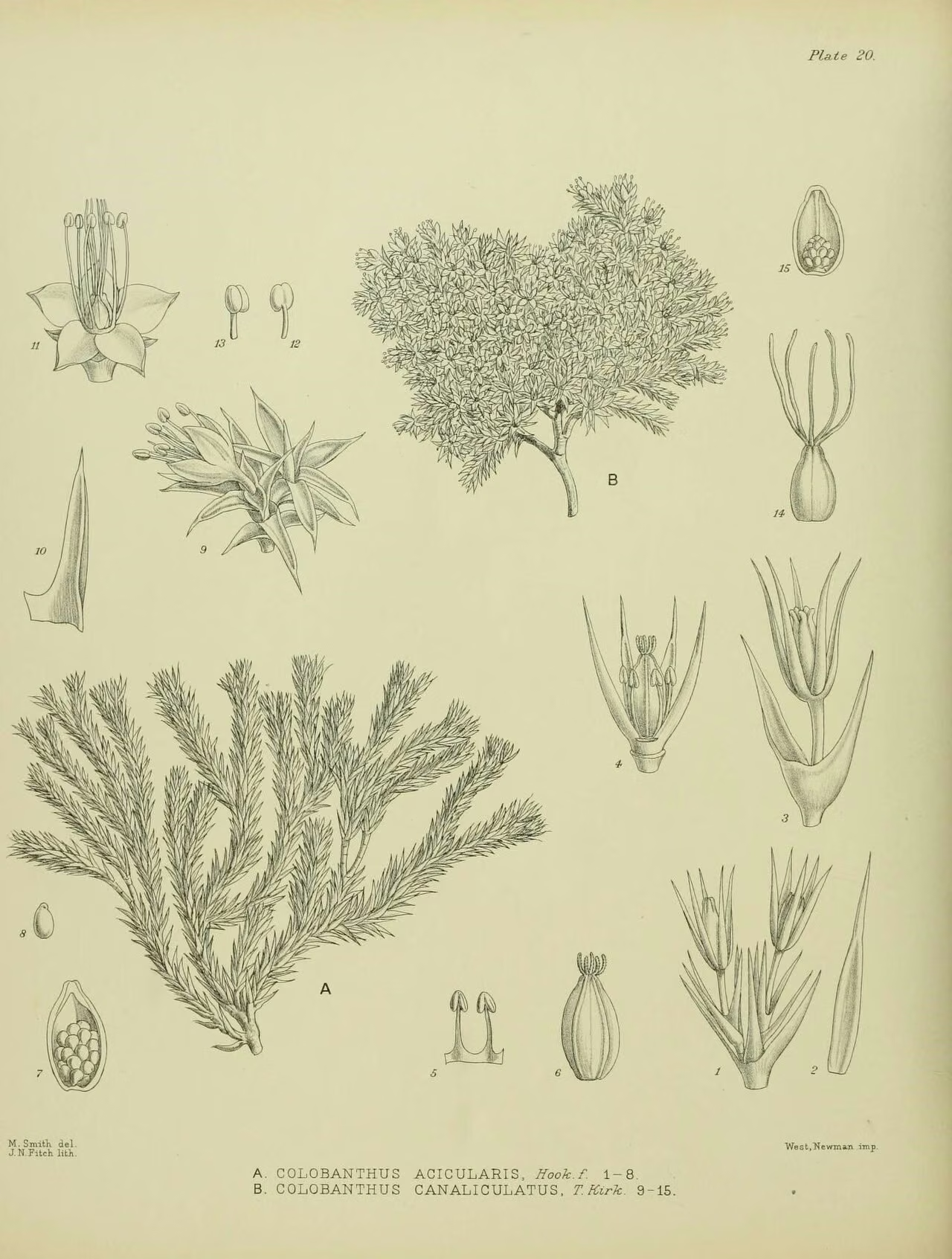
Colobanthus canaliculatus
Colobanthus canaliculatus
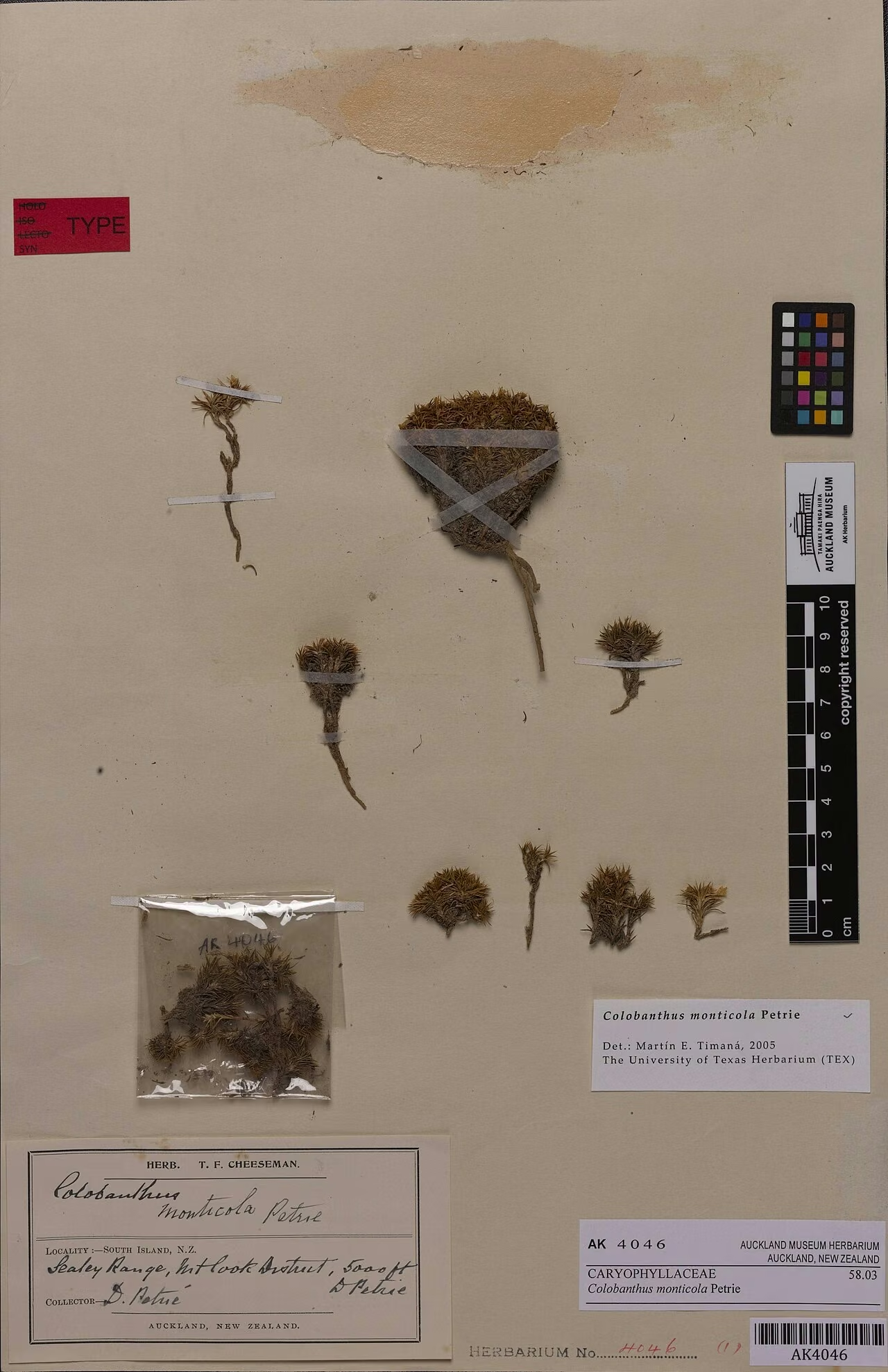
Colobanthus monticola
Colobanthus monticola
Colobanthus muelleri
Colobanthus muelleri
Coprosma crenulata
Coprosma crenulata
Coprosma decurva
Coprosma decurva
Coprosma depressa
Coprosma depressa
Coprosma distantia
Coprosma distantia
Plant Conservation
Colobanthus strictus is ranked Not Threatened nationally (2023). The 2025 Otago regional assessment ranks it Regionally Declining, with qualifiers including data poor on recognition, size and trend, and sparse, while the Wellington region lists it as Regionally Data Deficient.
Loss and weed invasion of tussock grassland, river flats and shingle habitats are likely pressures in the eastern South Island. Protecting these open habitats and recording sightings would help clarify its status.
Frequently Asked Questions
What does Colobanthus strictus look like?
It forms small cushions or mats made of tufts of stiff, upright, yellowish leaves 10 to 20 mm long, each ending in a long fine needle tip. The petal-less flowers have five long-pointed sepals 4 to 8 mm long.
Where is Colobanthus strictus found?
Allan's Flora records it east of the main divide in the South Island and in the Ruahine and Aorangi (Haurangi) ranges in the North Island. It was described from stony flats in the Hooker Valley near Aoraki/Mt Cook.
Is Colobanthus strictus a wetland plant?
It is rated FAC (facultative) on the national wetland plant list, meaning it grows both in wetlands and on dry ground. Allan notes it sometimes grows where the ground is almost boggy.
Is Colobanthus strictus endangered?
Nationally it is Not Threatened (2023), but the 2025 Otago regional assessment ranks it Regionally Declining, and Wellington lists it as Regionally Data Deficient.
Sources and Further Reading
The botanical, growing, and conservation details for Colobanthus (Colobanthus strictus) on this page draw on the New Zealand plant references below. Consult them for full technical records and the latest distribution data.