Coprosma
Coprosma serrulata
Last updated:
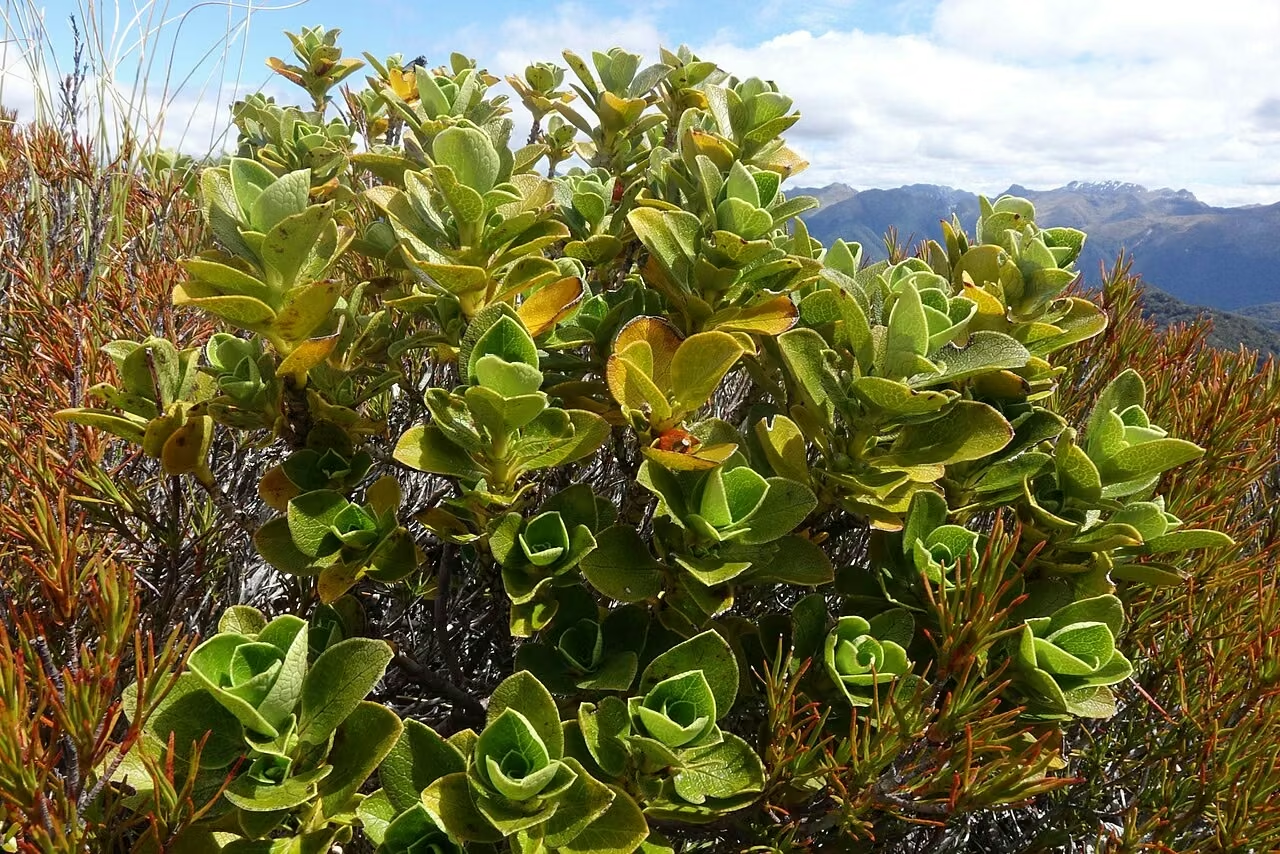
Coprosma serrulata is a low, sprawling mountain shrub endemic to the South Island, growing to about 1 m tall in montane and lower subalpine country from Marlborough and North-west Nelson southward. It is one of the most distinctive coprosmas, with large, thick, leathery leaves 40 to 70 mm long, wrinkled above with sunken veins, and margins so finely toothed that a lens is needed to see them. Its spreading branches carry flaking white bark, and female plants bear red berries 7 to 8 mm long in autumn and winter. It is Not Threatened but rarely grown, as it dislikes warm, humid conditions. Explore more native shrubs in our native plant guide.
Plant Description
Coprosma serrulata is an erect to depressed, bushy shrub up to about 1 m tall, with spreading branches. The bark is white and papery and flakes away, and several small dark teeth are present on the stem between the leaf bases, a detail that helps confirm identification.
The leaves are the standout feature: thick and coriaceous (leathery), dark green, 40 to 70 mm long and 25 to 40 mm wide, rounded to broadly obovate with a rounded to almost squared-off tip. The upper surface is wrinkled, with sunken veins, and the cartilaginous margin is finely scalloped and toothed (crenulate-serrulate), though you need magnification to see this clearly. Male flowers are clustered on short stalks with 4 to 5 corolla lobes, while female flowers are solitary and tubular. Flowering is in September and October.
Female plants produce red, broadly oblong drupes 7 to 8 mm long between April and July. NZPCN regards it as not likely to be confused with any other Coprosma, because no other mountain species has such large, thick, finely notched leaves.
Quick Facts
| Scientific Name | Coprosma serrulata |
|---|---|
| Height | Up to about 1 m |
| Spread | Sprawling; often wider than tall, no precise figure published |
| Water Needs | Moderate; moist but well-drained soil |
| Light | Sun to light shade; prefers a cool aspect in gardens |
| Frost Tolerance | High; montane to lower subalpine |
| Salt Tolerance | No information available; an inland mountain plant |
| Growth Rate | Slow |
| Lifespan | Long-lived perennial |
Climate Best Suited to
It suits cool, mountain climates with cold winters and mild summers. NZPCN notes it does not tolerate warm or humid conditions, so northern lowland gardens are a poor fit.
Regional Suitability
| City | Climate Suitability |
|---|---|
| Auckland | Low |
| Wellington | Low |
| Christchurch | Medium |
| Dunedin | High |
Plant Habitat
Coprosma serrulata is endemic to New Zealand's South Island, ranging from Marlborough and North-west Nelson southward along the mountains.
It occupies montane to lower subalpine zones, in forest clearings, shrubland, grassland, herbfield and on talus (rock debris) slopes. It typically grows among other low shrubs and grasses rather than as an isolated plant.
Growing Requirements
Soil Requirements
In cultivation NZPCN recommends deep, fertile, well-drained soil, reflecting the stony but humus-rich ground it occupies in the mountains.
- Deep, fertile and free-draining
- Add grit or gravel to heavy soils
- Avoid waterlogging, especially in warm weather
Light Requirements
In the wild it grows in open clearings and shrubland, but garden plants do best in a cool position that avoids heat stress.
- South-facing (shady) aspect recommended in gardens
- Tolerates sun in cool, mountain districts
Water Requirements
Keep the soil evenly moist but never stagnant; it comes from mountain sites with regular rain and cool temperatures.
- Water during dry summer spells
- Ensure drainage is sharp
- Cool roots help in warmer gardens
Planting and Establishing
Plant in autumn or early spring in a cool, south-facing position, such as the shady side of a rock garden or a bank. Prepare deep, fertile, free-draining soil and add stones around the plant to keep the roots cool.
Because it is slow-growing and only about 1 m tall, place it near the front of a border or in a rockery where its unusual leaves can be seen. Plant male and female plants together for fruit.
Ecological Role
Coprosma serrulata is wind-pollinated, with flowers in early spring. Its relatively large red drupes are well suited to fruit-eating birds, and in its mountain habitat the native ground-feeding and fruit-eating birds of shrubland are likely dispersers, though specific dispersal studies were not found.
As a low shrub among grasses, herbs and other small shrubs, it forms part of the mosaic of montane and subalpine vegetation, including on unstable talus slopes where its sprawling branches help hold loose rock and soil.
Uses & Significance
Garden Uses
A connoisseur's shrub for cool gardens, grown for its striking leathery foliage and red fruit.
- Alpine and rock gardens in cool districts
- Shady banks and south-facing borders
- Specialist native plant collections
- Foliage contrast with fine-leaved alpines
Ecological Value
In mountain shrublands it adds fruit and cover in a habitat with relatively few woody plants.
- Red fruit for birds in autumn and winter
- Low cover for lizards and invertebrates
- Helps stabilise talus and stony slopes
Landscaping Uses
The bold, wrinkled leaves of Coprosma serrulata provide a strong contrast with the fine textures of tussocks, hebes and small-leaved coprosmas. Use it as a low anchor plant in a cool rock garden or mountain-themed planting.
Its white, flaking bark is an extra feature in winter. Because it dislikes warmth, avoid hot, reflective sites against walls or paving.
Seasonal Care Calendar
Spring
Flowering occurs in September and October as new leaves expand.
- Flowers September to October
- Plant out once frosts ease in cold districts
Summer
Keep plants cool and evenly moist through the warm months.
- Water in dry spells
- Watch for heat stress in warm gardens
Autumn
Red berries start to ripen on female plants from April.
- Fruit from April
- Collect fresh fruit to sow
Winter
Fruit persists into July and the shrub is fully frost hardy.
- Fruit until July
- Flaking white bark shows well
When to Prune and How Much
Very little pruning is needed. Its slow growth means cuts heal and regrow slowly, so limit pruning to removing dead or damaged stems.
If plants become leggy in shade, a light trim in late winter or early spring will encourage branching.
How to Grow Coprosma
NZPCN describes Coprosma serrulata as easily grown from fresh seed and semi-hardwood cuttings, although the resulting plants are slow to develop. The key to success is keeping both seed trays and cuttings cool, since this mountain species does not like warm or humid conditions. Seed produces both male and female plants in unrecorded proportions, while cuttings let you select a known female for fruit or a known male to pollinate it.
From Seed
Collect red fruit from female plants between April and July and sow it fresh. Sowing in autumn lets the seed experience natural winter chilling outdoors, which suits many mountain plants.
Coprosma seed can germinate slowly and unevenly, so do not discard a tray too early; give it at least several months of patient watering before giving up.
- Squash ripe fruit and wash off the flesh
- Sow onto a gritty, free-draining seed mix and cover lightly
- Place the tray outdoors in a cool, shaded spot
- Keep moist and protect from birds and mice
- Prick out seedlings into individual pots once large enough to handle
From Cuttings
Semi-hardwood cuttings taken from late summer to autumn are reliable. Avoid a hot propagating bench, which can cause the thick leaves to rot.
- Take 8 to 10 cm cuttings of firm current-season growth
- Reduce large leaves by half to limit water loss
- Insert into a gritty propagating mix
- Keep cool and humid in light shade
- Pot on when well rooted, usually after several months
Pests & Diseases
No significant pests are recorded for this species. The most common problem in cultivation is decline in warm, humid conditions, which can show as yellowing leaves and dieback.
Scale insects can occasionally infest coprosmas, especially stressed plants; keeping the plant cool and healthy is the best prevention.
Cultural Significance
No Māori name or traditional use specific to Coprosma serrulata is recorded in the sources consulted.
The species was named by Joseph Dalton Hooker and published by John Buchanan in 1871. The genus name Coprosma means 'dung smell', after the odour of some species, and serrulata refers to the finely toothed leaf margins.
Bonus Tip
If you garden in a warm district, try Coprosma serrulata in a large pot of gritty, fertile mix placed on the shaded south side of the house. Keeping its roots and leaves cool in summer is the single most important factor in getting this mountain coprosma to thrive.
Related Plants
Explore other native plants that share similar characteristics or habitats with Coprosma (Coprosma serrulata), offering further insights into New Zealand's diverse flora. These related species provide context and opportunities for complementary planting in your garden.
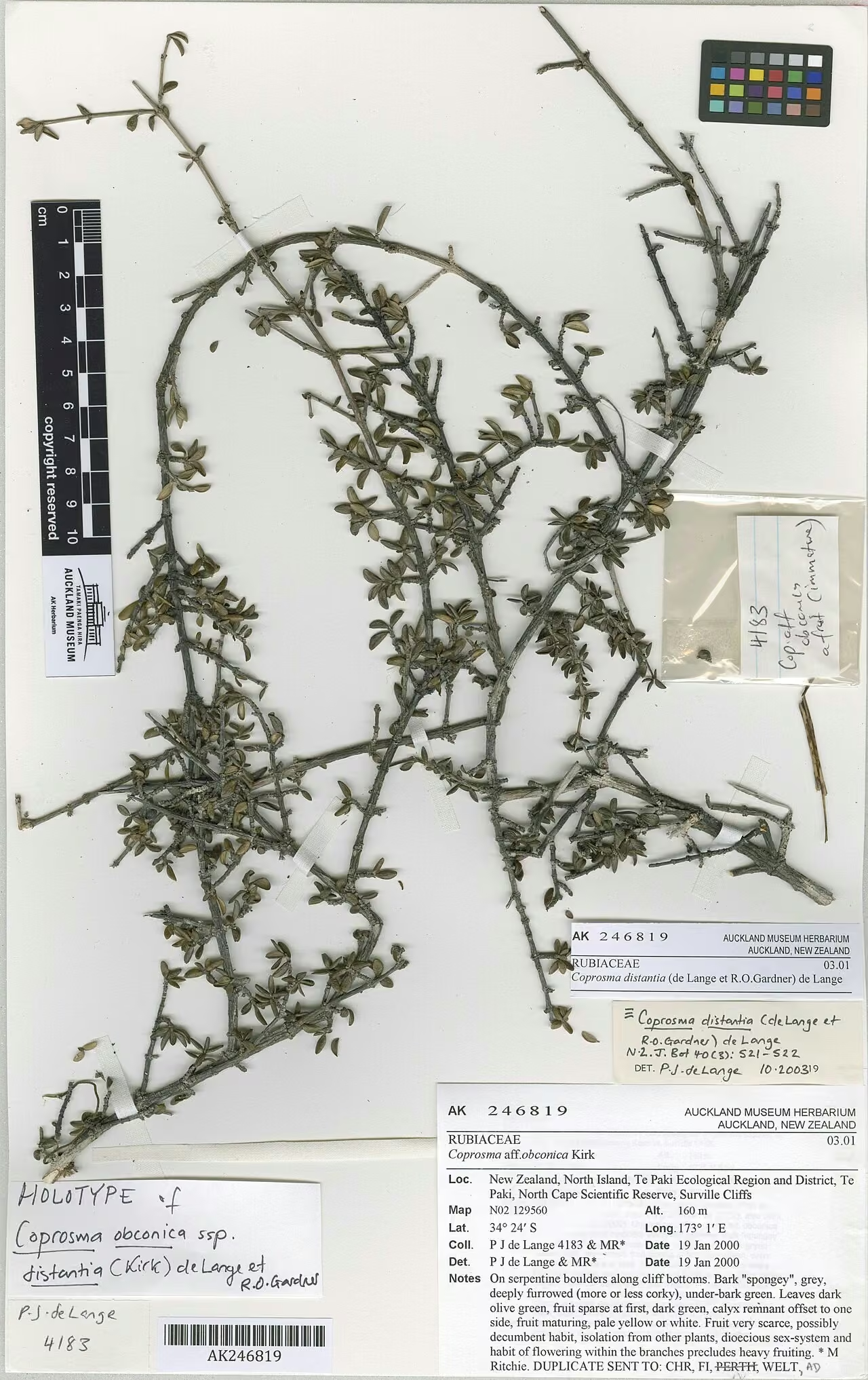
Coprosma distantia
Coprosma distantia
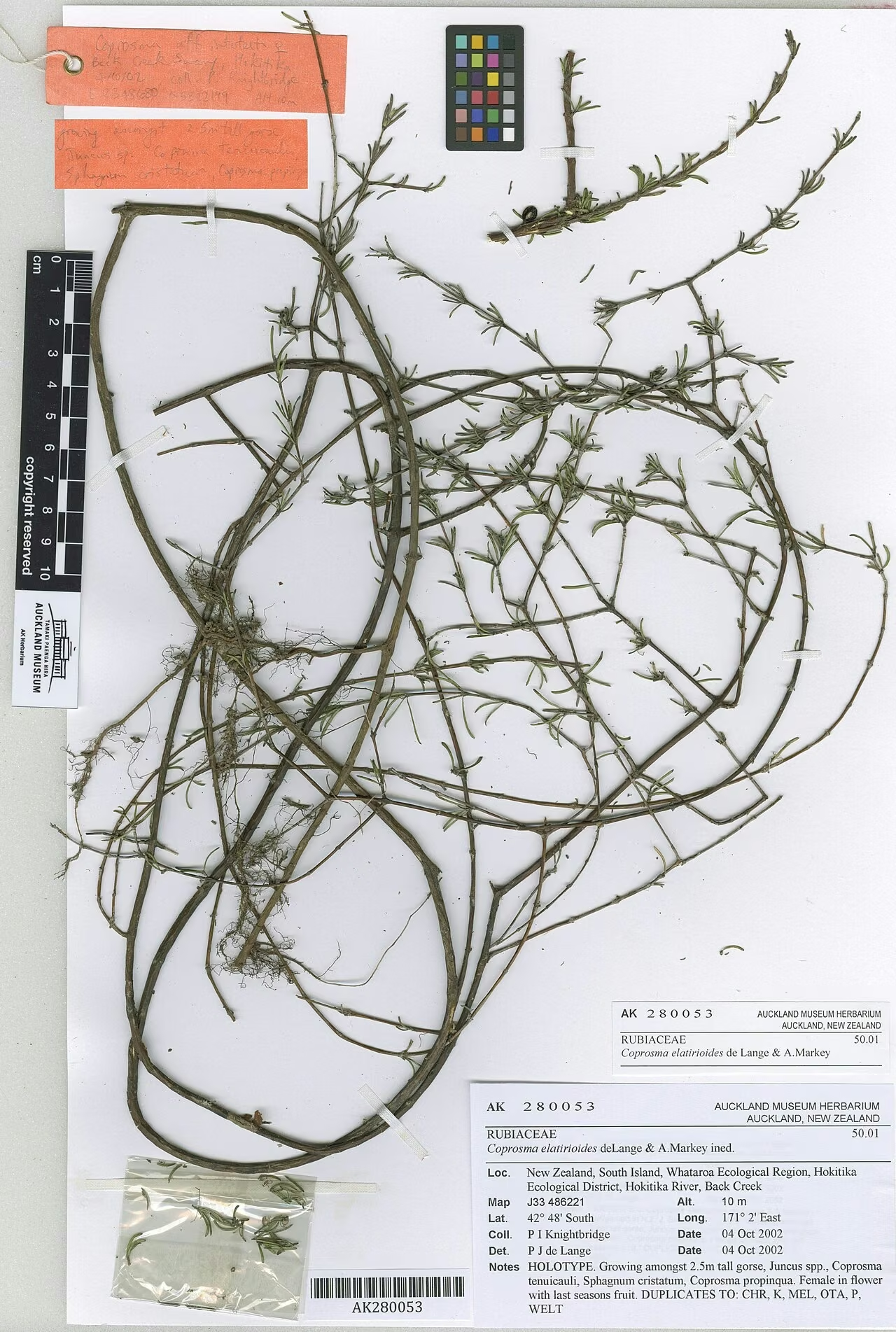
Coprosma elatirioides
Coprosma elatirioides
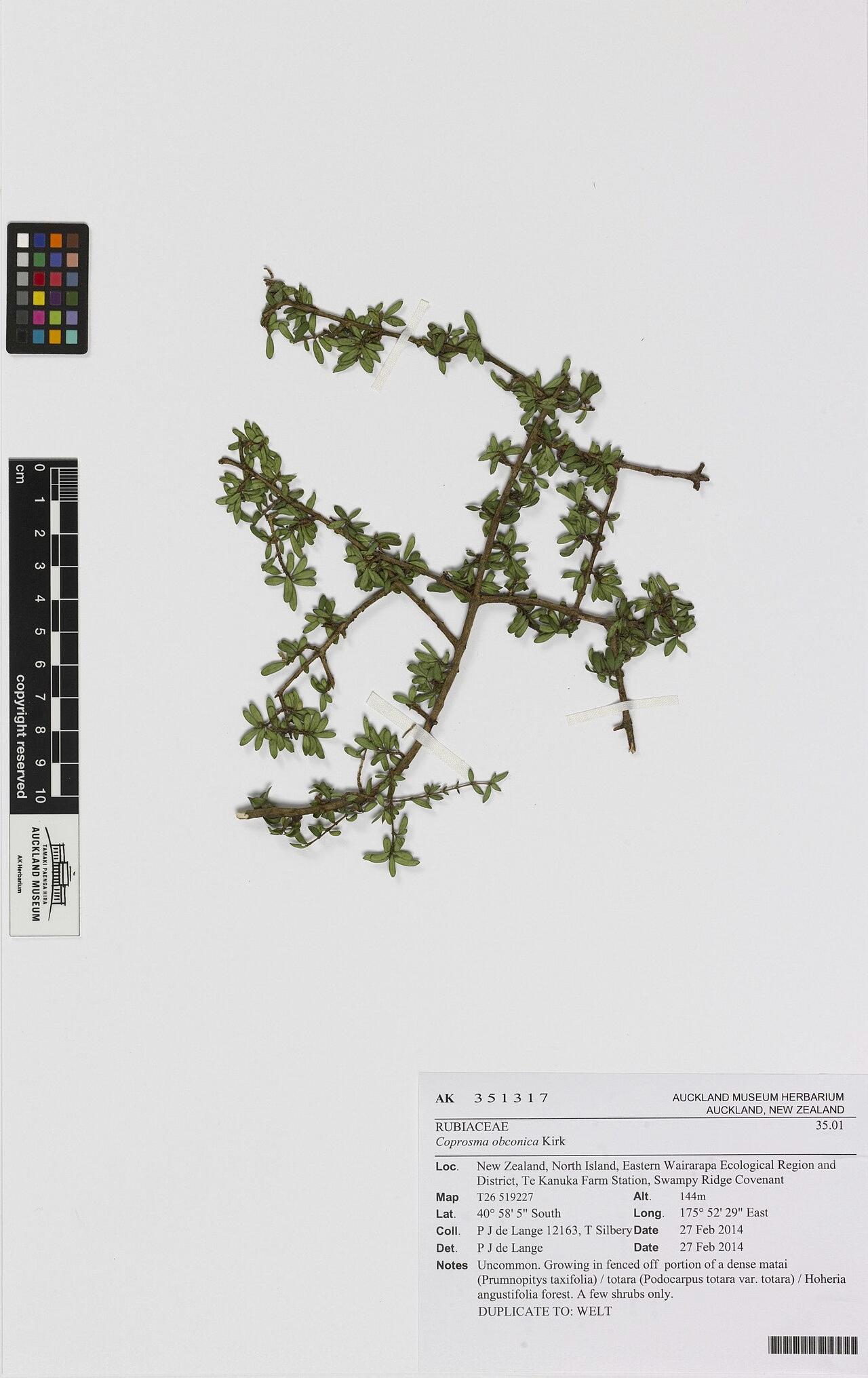
Coprosma obconica
Coprosma obconica
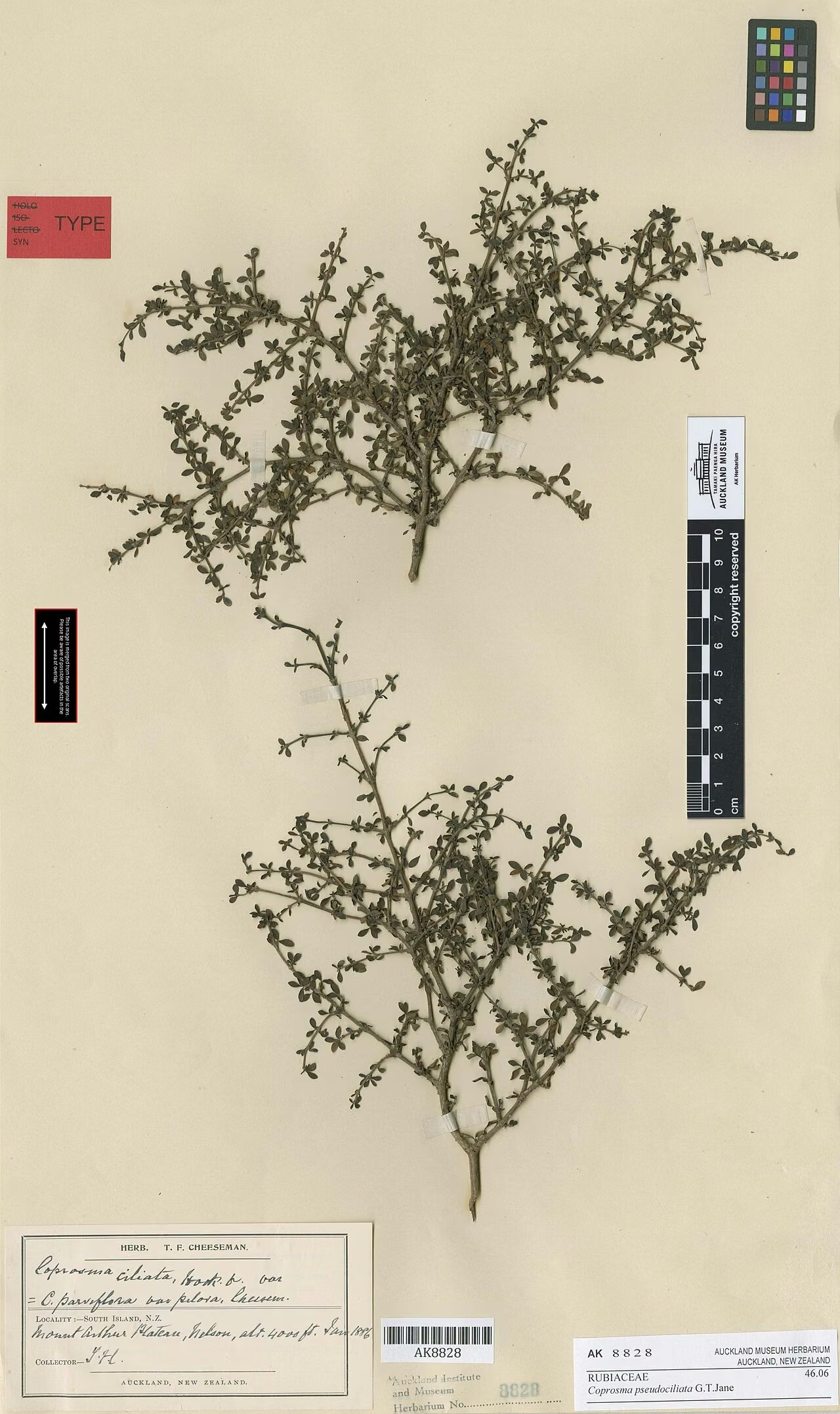
Coprosma pseudociliata
Coprosma pseudociliata
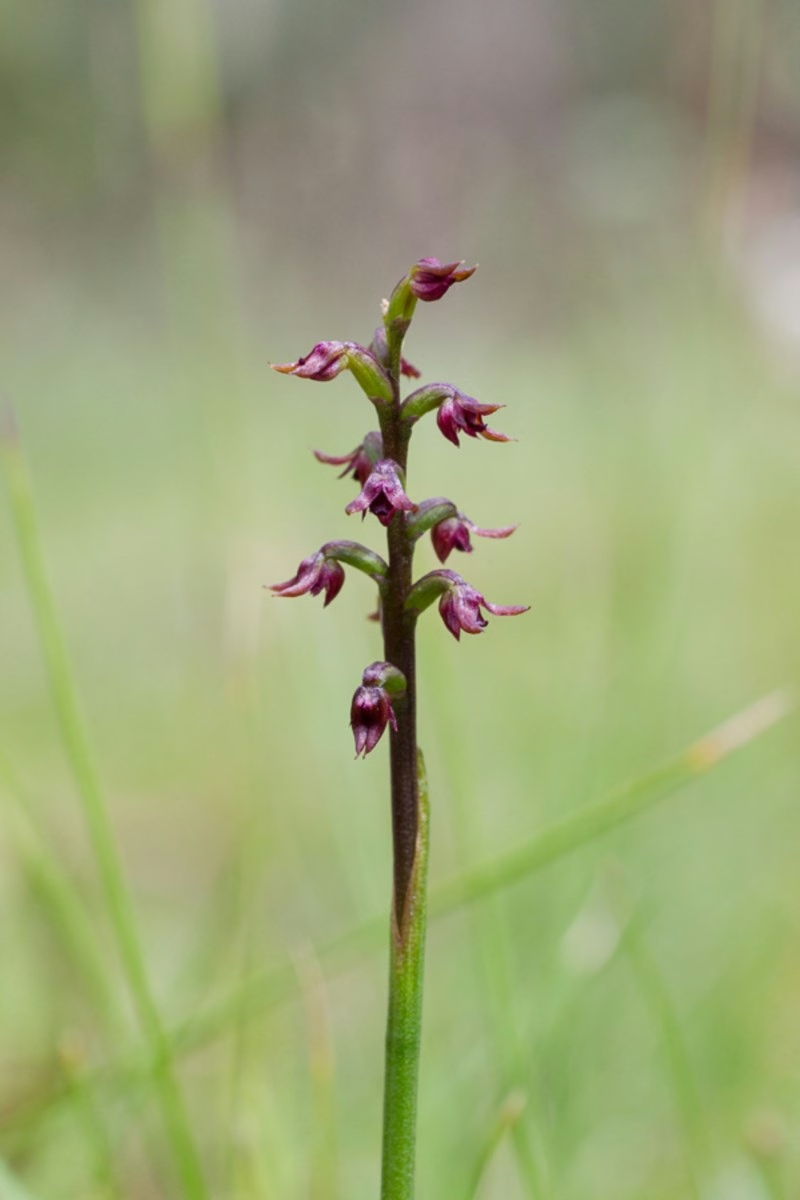
Red Leek Orchid
Corunastylis nuda
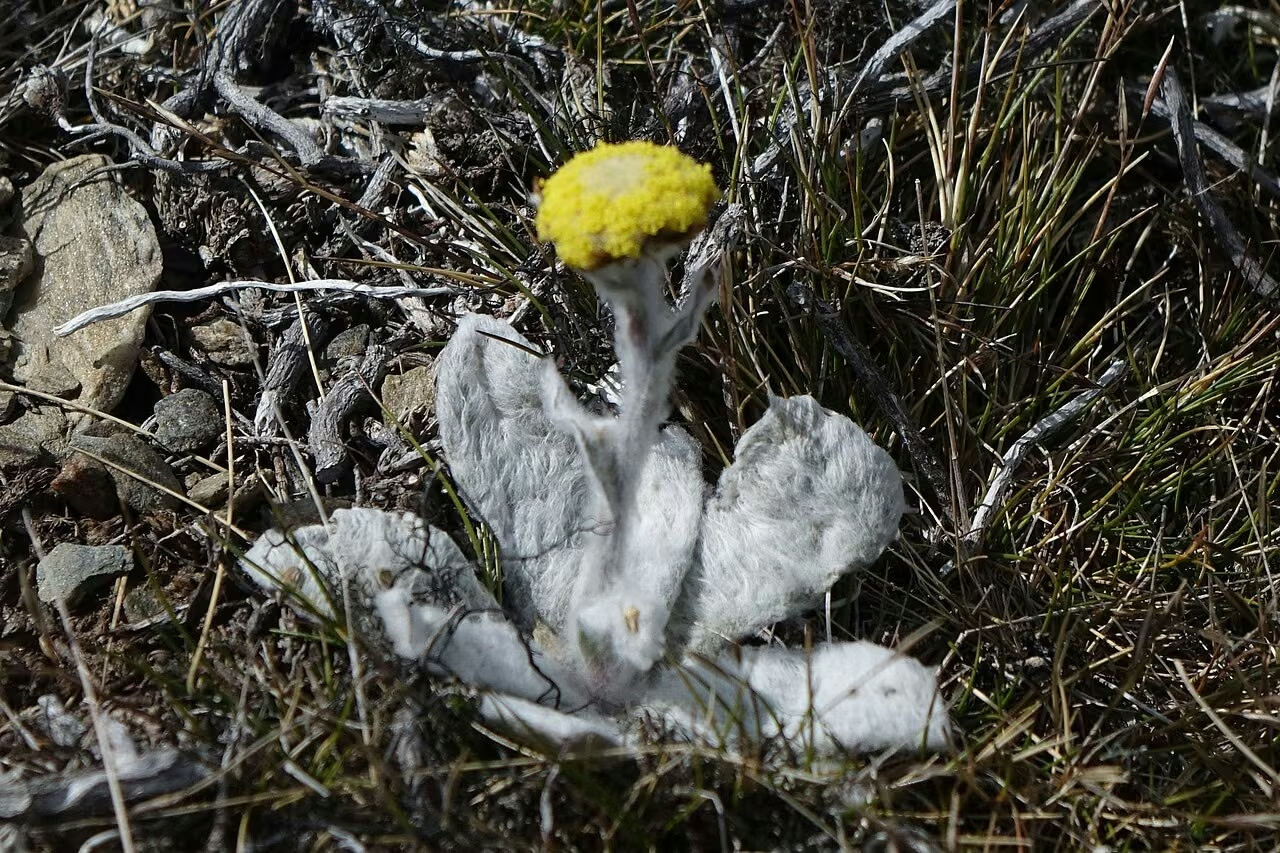
Craspedia incana
Craspedia incana
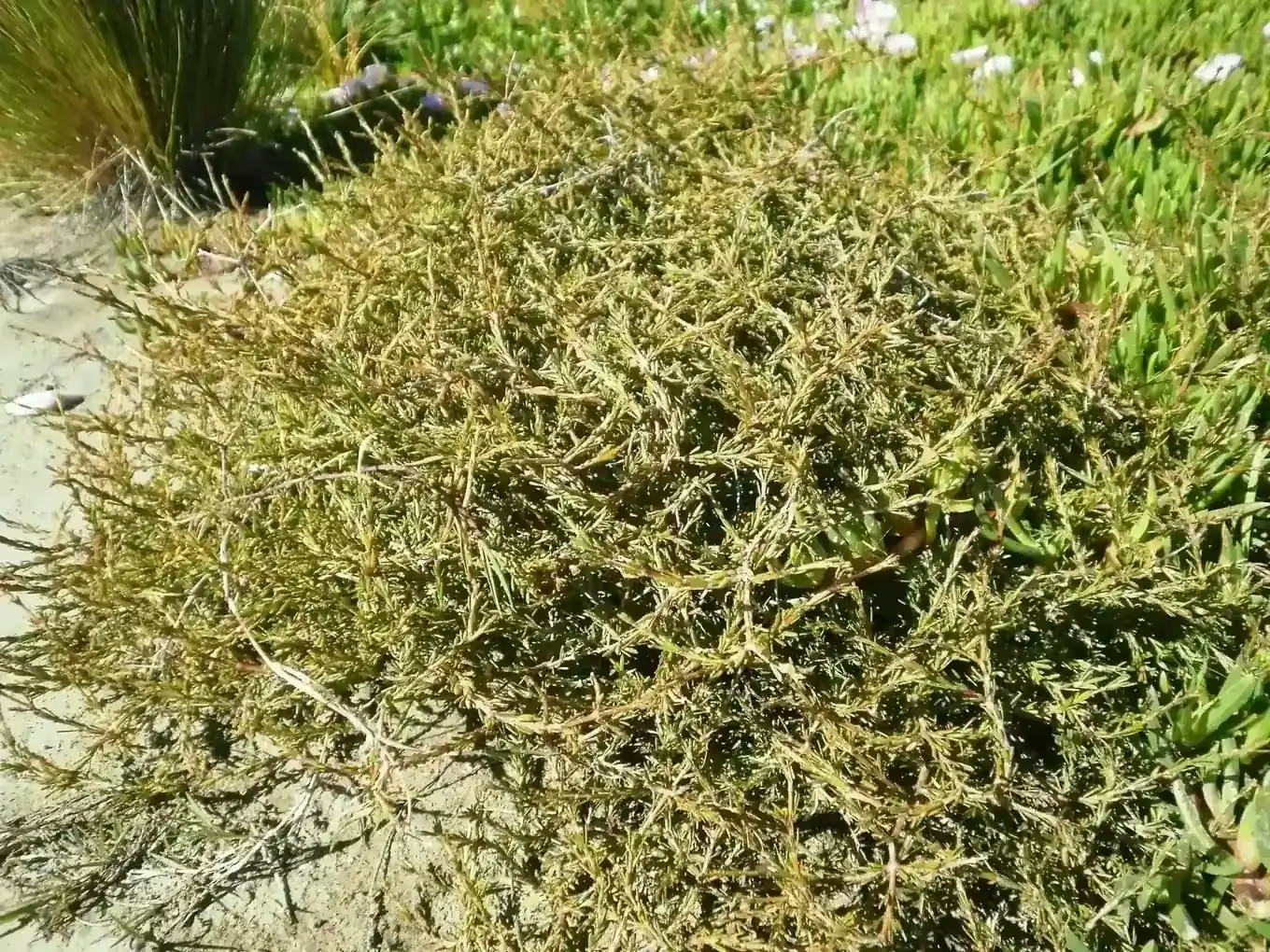
Sand Coprosma
Sand Coprosma
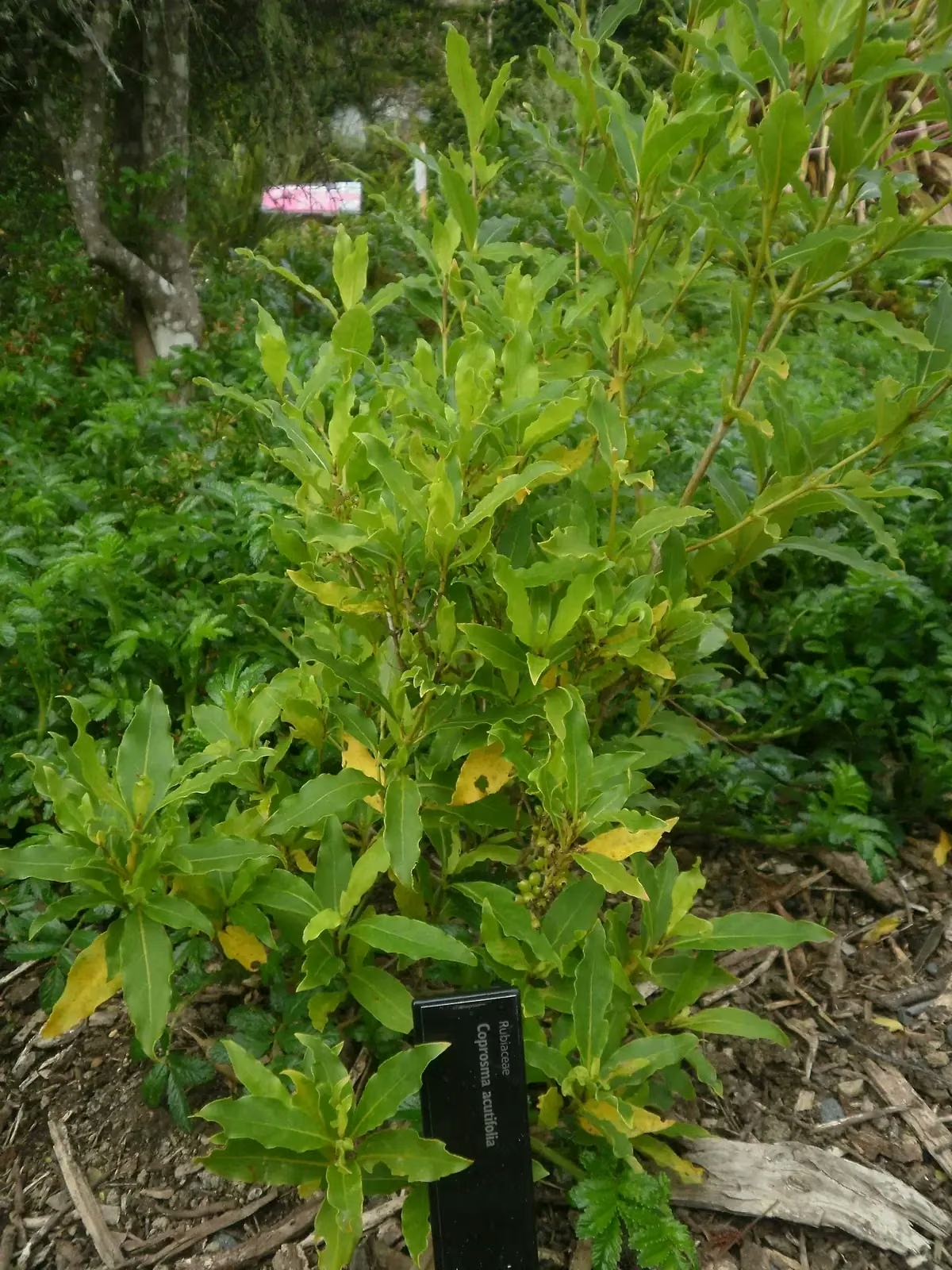
Sharp-Leaved Coprosma
Sharp-Leaved Coprosma
Plant Conservation
Coprosma serrulata has been assessed as Not Threatened consistently since 2004, most recently in 2023. Much of its montane and subalpine habitat lies within conservation land.
Browsing by introduced mammals and the spread of weeds in montane grassland and shrubland are general pressures on plants of these habitats. Plants are occasionally offered by specialist native nurseries, so there is no need to collect from the wild.
Frequently Asked Questions
How do you recognise Coprosma serrulata?
Its thick, leathery, wrinkled leaves 40 to 70 mm long are unusually large for a mountain coprosma, with finely notched (crenulate-serrulate) margins visible under a lens. Flaking white bark and small dark teeth on the stem between the leaf bases confirm it.
Where does Coprosma serrulata grow?
It is endemic to the South Island, from Marlborough and North-west Nelson southward, in montane to lower subalpine forest clearings, shrubland, grassland, herbfield and talus slopes.
Is Coprosma serrulata easy to grow in a garden?
It grows easily from fresh seed and semi-hardwood cuttings, but NZPCN notes that it is slow and does not tolerate warm or humid conditions. It does best in a cool, south-facing spot with deep, fertile, well-drained soil.
What does serrulata mean?
The epithet refers to the finely serrated or rough-edged leaf margins, which are one of the plant's diagnostic features.
Sources and Further Reading
The botanical, growing, and conservation details for Coprosma (Coprosma serrulata) on this page draw on the New Zealand plant references below. Consult them for full technical records and the latest distribution data.