Coprosma
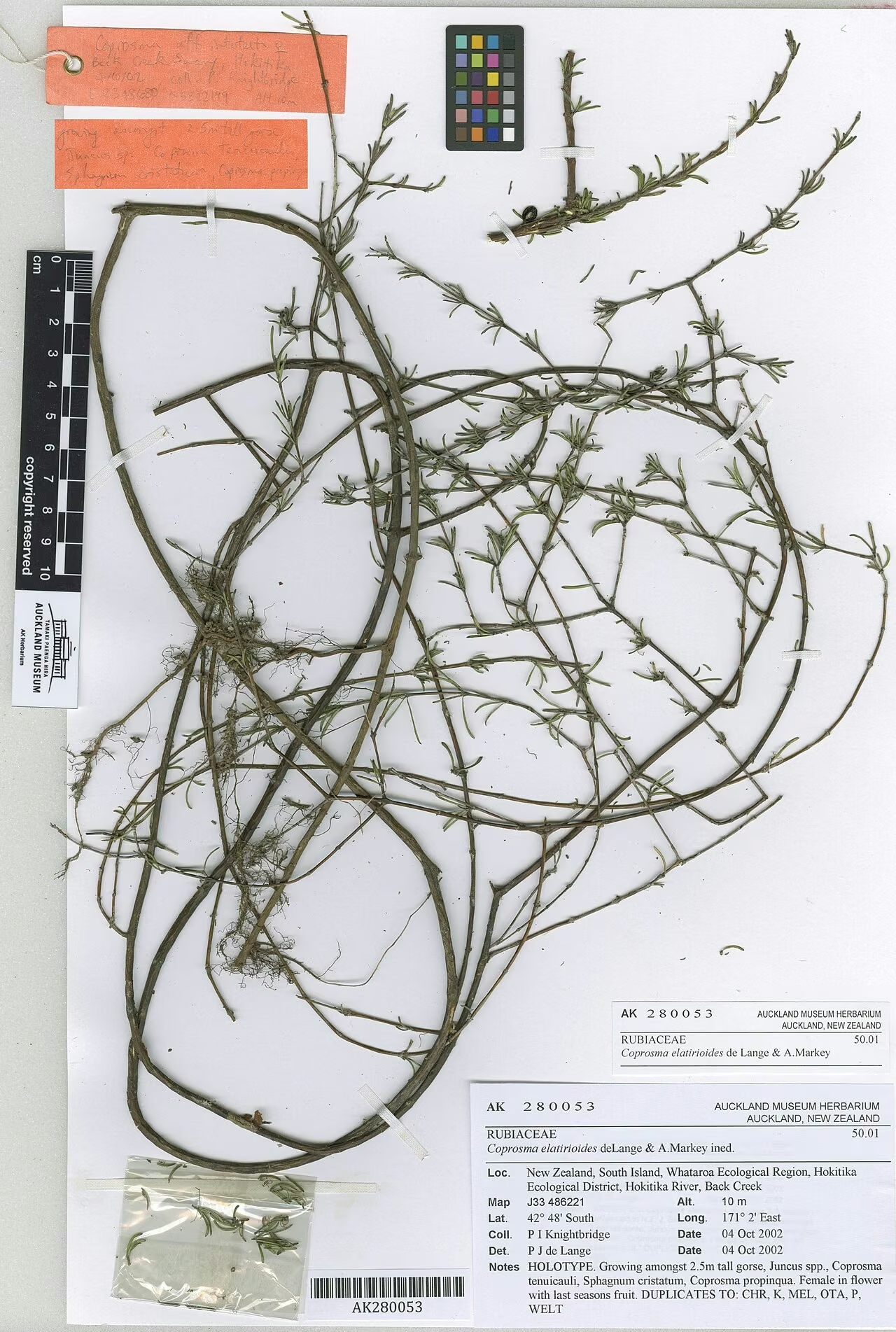
Coprosma elatirioides
Last updated:
Coprosma elatirioides is a trailing, wiry shrub endemic to the South Island and Stewart Island/Rakiura, where it scrambles through red tussock and wire rush in swamps, mires and pakihi. It grows 0.5 to 1 m tall but can sprawl 2 to 6 m or more, rooting from its stems as it goes. Its thread-like leaves, usually only about 1 mm wide, are often a striking wine-red, and female plants carry white fruit stippled with dark blue. Only formally named in 2003, it is ranked Not Threatened and is easy to grow from fresh seed or cuttings, making it an excellent plant for wetland restoration. Explore more native shrubs in our native plant guide.
Plant Description
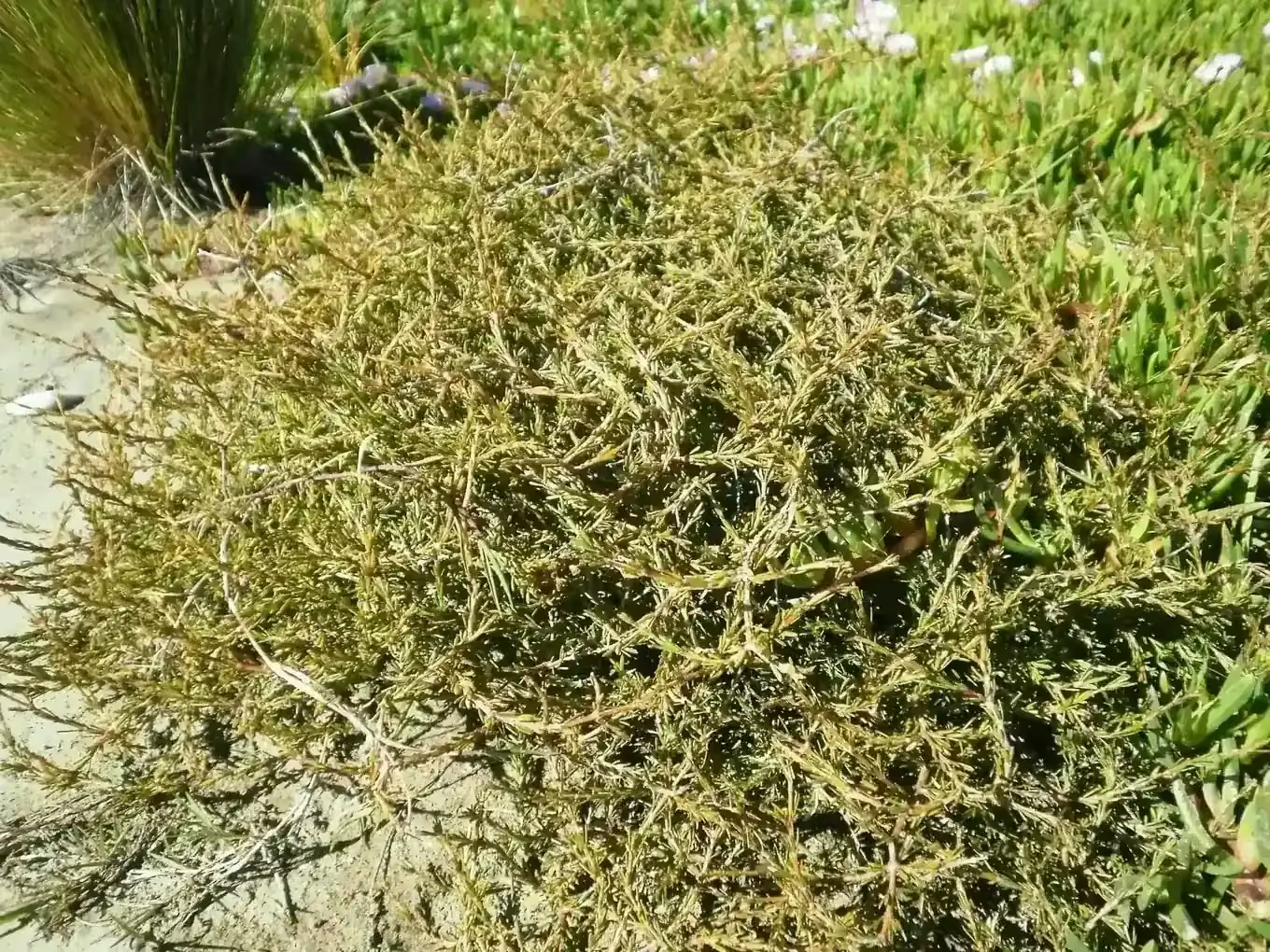
Coprosma elatirioides is a semi-erect to prostrate shrub with slender, wiry stems that trail across the ground and through surrounding tussock, frequently rooting where the nodes touch moist soil. Short side shoots (brachyblasts) are densely clothed in leaves, while the long runners give the plant a scrambling, almost lianoid look. A single plant can spread 2 to 6 m, occasionally up to 8 m.
The leaves are linear and thread-like, slightly curved, usually about 10 mm long (range 4 to 30 mm) and only 0.3 to 1.2 mm wide. They are most often wine-red, but light green or dark green leaves with red margins also occur. Like all coprosmas the species is dioecious: male plants carry funnel-shaped pale yellow flowers flecked red or pink, and female plants have long, densely papillose stigmas. Flowers appear from October to November.
Female plants ripen ellipsoid drupes 4 to 6 mm long from March to July. These are white, stippled with dark blue flecks, a distinctive combination among New Zealand coprosmas. The closest look-alike is Coprosma intertexta, but that species lacks the long trailing runners and different stipules of C. elatirioides and does not share its strong preference for wetlands.
Quick Facts
| Scientific Name | Coprosma elatirioides |
|---|---|
| Height | 0.5-1 m |
| Spread | 2-6 m, occasionally to 8 m |
| Water Needs | High; permanently moist to wet, poorly drained ground |
| Light | Full sun to light shade |
| Frost Tolerance | High; reaches subalpine bogs |
| Salt Tolerance | Low; an inland wetland plant, no coastal records found |
| Growth Rate | Moderate |
| Lifespan | Long-lived perennial |
Climate Best Suited to
It suits cool, moist temperate climates with reliable rainfall, from lowland to subalpine, and tolerates hard frost. Warm, humid northern summers and dry soils are less suitable.
Regional Suitability
| City | Climate Suitability |
|---|---|
| Auckland | Low |
| Wellington | Medium |
| Christchurch | Medium |
| Dunedin | High |
Plant Habitat
Coprosma elatirioides is endemic to New Zealand and confined to the South Island and Stewart Island/Rakiura. It occurs from lowland to subalpine elevations and is regionally uncommon in Otago, where it is ranked Regionally Naturally Uncommon.
Its home is open wetland: swamps, mires, pakihi and the poorly drained soils around them. It typically grows among red tussock (Chionochloa rubra) and wire rush (Empodisma minus), sending its wiry stems through and over these plants.
Growing Requirements
Soil Requirements
Wild plants grow in waterlogged, often peaty or infertile wetland soils, so in cultivation it needs ground that never dries out.
- Peaty, acidic or poorly drained soils suit it well
- Tolerates low fertility typical of pakihi and bogs
- Avoid free-draining, dry soils that dry out in summer
Light Requirements
In the wild it grows in open, unshaded wetlands among tussock and rushes, so it performs best in full sun or light shade.
- Full sun gives the strongest red leaf colour
- Tolerates light shade from nearby tussocks or shrubs
Water Requirements
This is a true wetland plant. Keep its roots constantly moist, and it will happily grow at the edge of standing water.
- Plant in bog gardens, pond margins or seepages
- Water during dry spells if not in a naturally wet site
- Do not let the root zone dry out
Planting and Establishing
Plant in autumn or spring into wet or permanently damp ground, spacing plants about 1.5 to 2 m apart so their trailing stems can knit together. In restoration work it is best planted among existing red tussock or rushes, which it naturally scrambles through.
Because the species is dioecious, plant several individuals of both sexes if you want the blue-flecked white fruit. Mulching is rarely needed in naturally wet sites, but control competing weeds such as rank pasture grasses until plants establish.
Ecological Role
Coprosma elatirioides is wind-pollinated like other coprosmas, with long exserted stigmas on female plants catching pollen released from the dangling stamens of male flowers. Its fleshy drupes are dispersed by fruit-eating animals, most likely birds feeding in open wetlands.
Its sprawling, node-rooting stems help bind loose peat and fill gaps between tussocks, adding woody structure to wetland vegetation dominated by red tussock and wire rush. It is one of several wetland coprosmas in southern New Zealand mires.
Uses & Significance
Garden Uses
It is an unusual, colourful groundcover for wet places where few native shrubs thrive.
- Bog gardens and pond edges
- Wetland restoration among red tussock and rushes
- Textural contrast with its fine wine-red foliage
- Trailing over low banks in damp sites
Ecological Value
As a fruiting shrub in open wetlands it adds food and cover to habitats that are often short of woody plants.
- Fleshy fruit for birds in autumn and winter
- Woody cover for invertebrates and lizards in bogs
- Helps stabilise peat and soft wetland soils
Landscaping Uses
Use Coprosma elatirioides as a loose, trailing mat at the margin of ponds, swales and rain gardens, where its red, needle-fine foliage contrasts well with the broad leaves of flax and the upright clumps of sedges and red tussock.
It can also be grown to spill over the edge of a large container or a low wall if kept constantly moist, though it is happiest in ground where the stems can root as they spread.
Seasonal Care Calendar
Spring
New shoots appear and flowering begins in October.
- Flowers October to November
- Good time to plant or take cuttings
Summer
Plants put on most of their growth; keep the soil wet through dry weather.
- Trailing stems lengthen and root
- Water if the site dries out
Autumn
Female plants ripen their white, blue-flecked fruit from March.
- Fruit from March to July
- Collect fresh fruit for sowing
Winter
Plants are dormant but evergreen, and the red foliage often looks its richest in cold weather.
- Fruit may persist into July
- Very frost hardy
When to Prune and How Much
Little pruning is needed. Trim back runners that wander beyond where you want them, and cut out any dead stems in spring.
If a plant becomes sparse in the middle, light shearing after flowering encourages denser growth, and rooted runners can be lifted and replanted elsewhere.
How to Grow Coprosma
Coprosma elatirioides is one of the easier native wetland shrubs to propagate. NZPCN notes that it grows readily from fresh fruit and from cuttings, and its habit of rooting along the stems means that natural layers are often already present on established plants. Seed raising produces a mix of male and female plants, whereas cuttings let you choose the sex and leaf colour of the parent plant, which is useful if you want reliable fruit or the deep wine-red foliage form.
From Seed
Collect ripe white fruit, flecked with dark blue, from female plants between March and July. Sow it fresh, because coprosma seed generally loses viability if stored dry for long.
- Squash the fruit and rinse away the pulp to expose the seeds
- Sow on a damp, peat-rich seed mix and cover lightly
- Keep the tray constantly moist in a sheltered, cool spot
- Prick out seedlings once they have a few pairs of leaves
- Grow on in pots stood in a tray of water before planting out
From Cuttings and Layering
Semi-hardwood cuttings taken in late spring to autumn strike readily. Rooted sections of the trailing stems can also be cut from the parent and potted up, which is the quickest route to a sizeable plant.
- Take 8 to 10 cm cuttings of wiry side shoots
- Remove the lower leaves and insert into a moist, free-draining propagating mix
- Keep humid and out of direct sun until roots form
- Alternatively, sever a stem that has already rooted at a node and pot it up
- Keep young plants wet and pot on before planting into the wetland
Pests & Diseases
No serious pests or diseases are recorded for this species. Like other small-leaved coprosmas it may occasionally carry scale insects, which can encourage sooty mould.
The main risk in cultivation is drought stress. A plant whose roots dry out will drop leaves and die back quickly, so siting it in reliably wet ground is the best protection.
Cultural Significance
No Māori name or traditional use specific to Coprosma elatirioides is recorded in the sources consulted. The species was only recognised and formally named in 2003 by Peter de Lange and Adrian Markey, having previously been overlooked among other small-leaved coprosmas.
The genus name Coprosma comes from the Greek kopros (dung) and osme (smell), a reference to the foul odour some species release when their leaves are crushed.
Bonus Tip
If you want fruit, choose cutting-grown plants of known sex and plant at least one male near your females. The white fruit with fine dark blue flecks is a striking sight against the red foliage, and the plants grow best when they can trail through clumps of red tussock or rushes rather than standing alone.
Related Plants
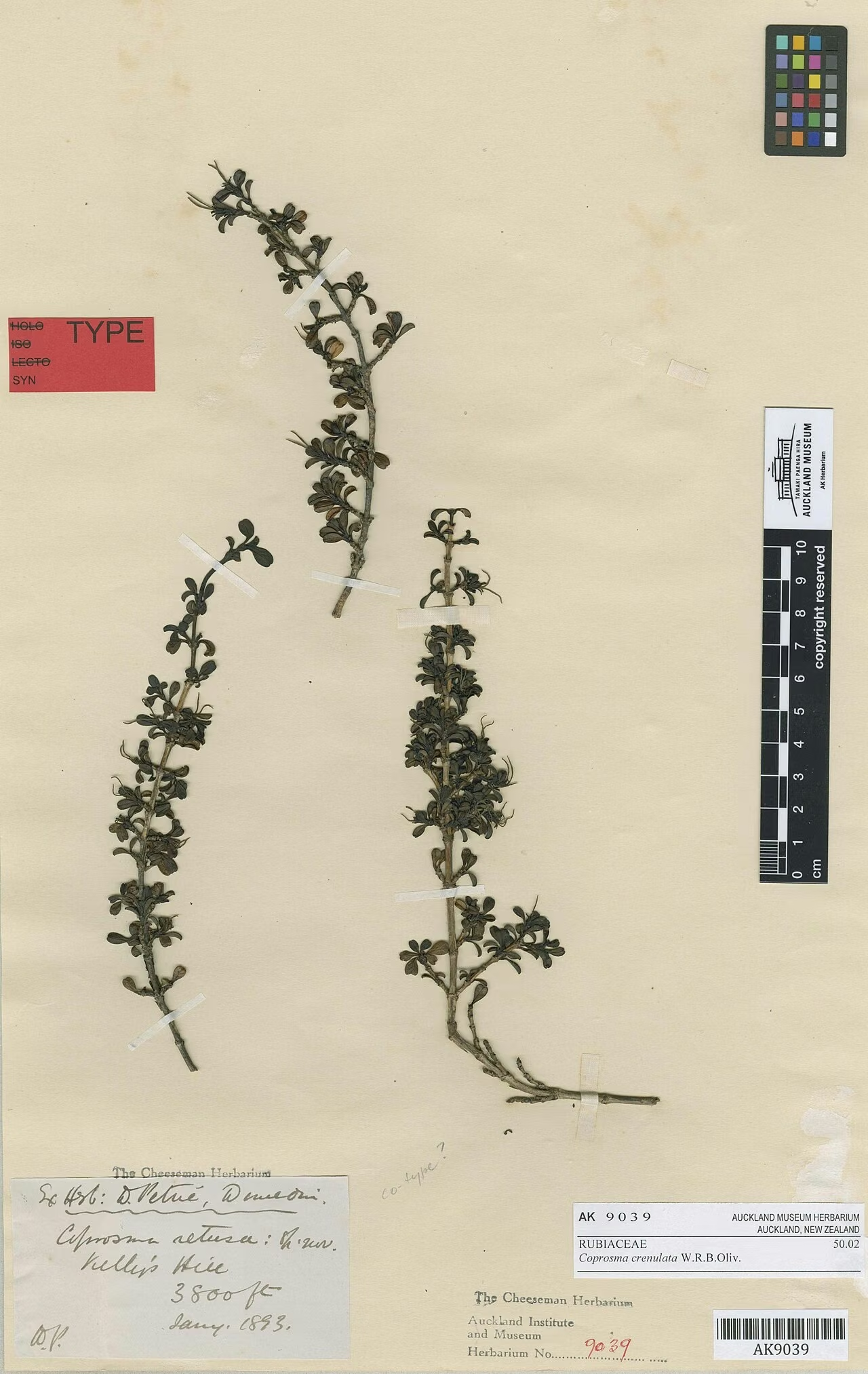
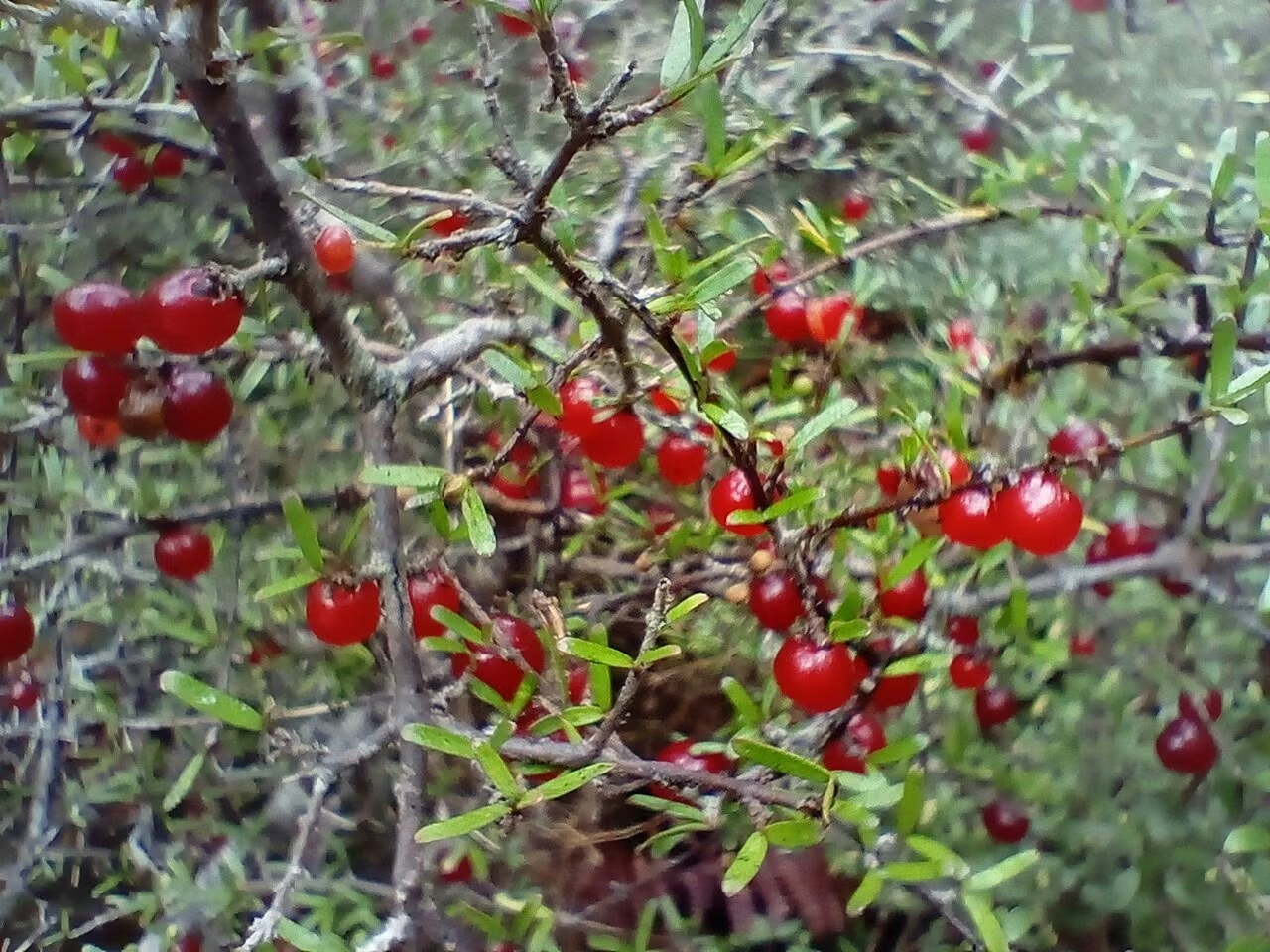
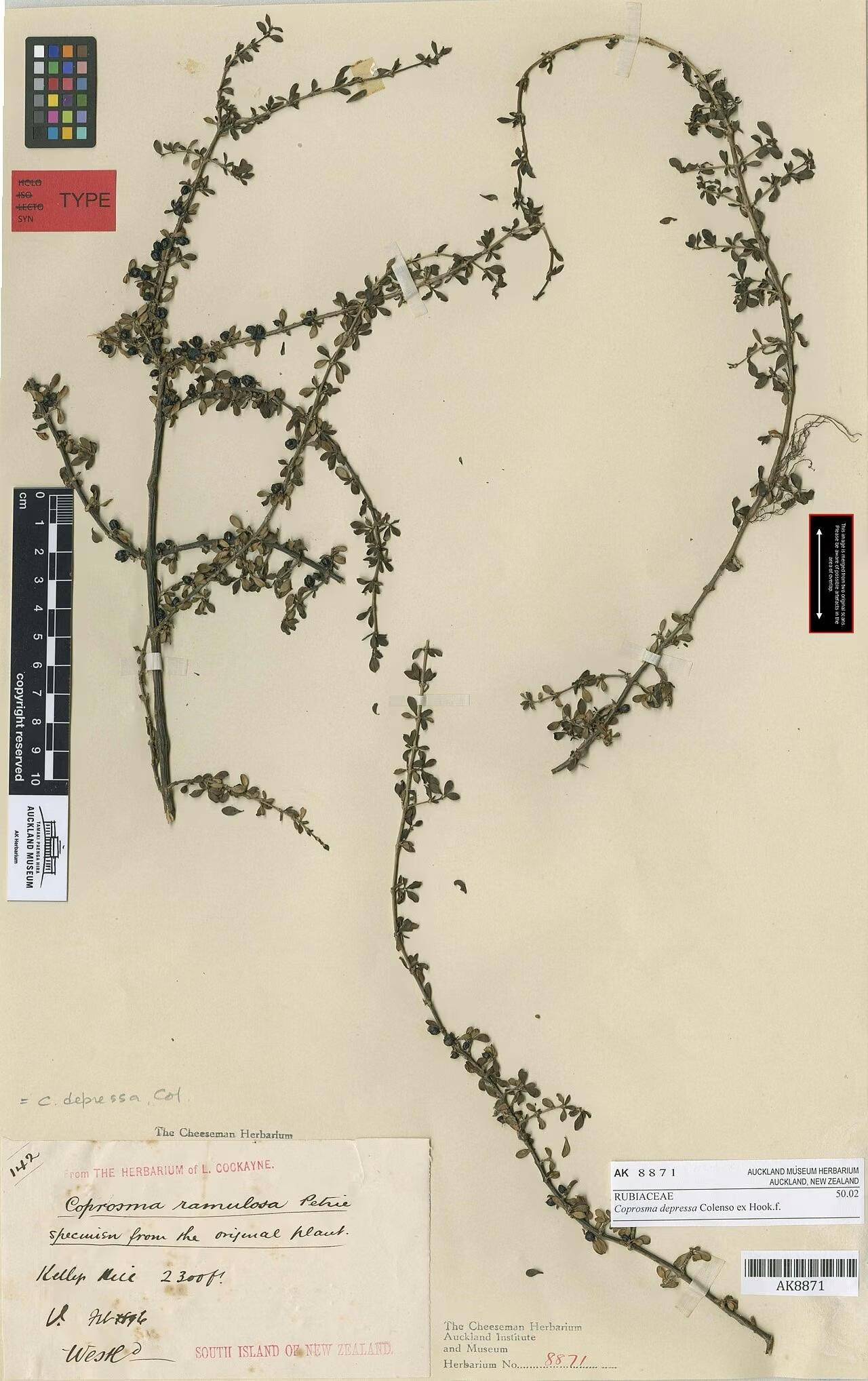
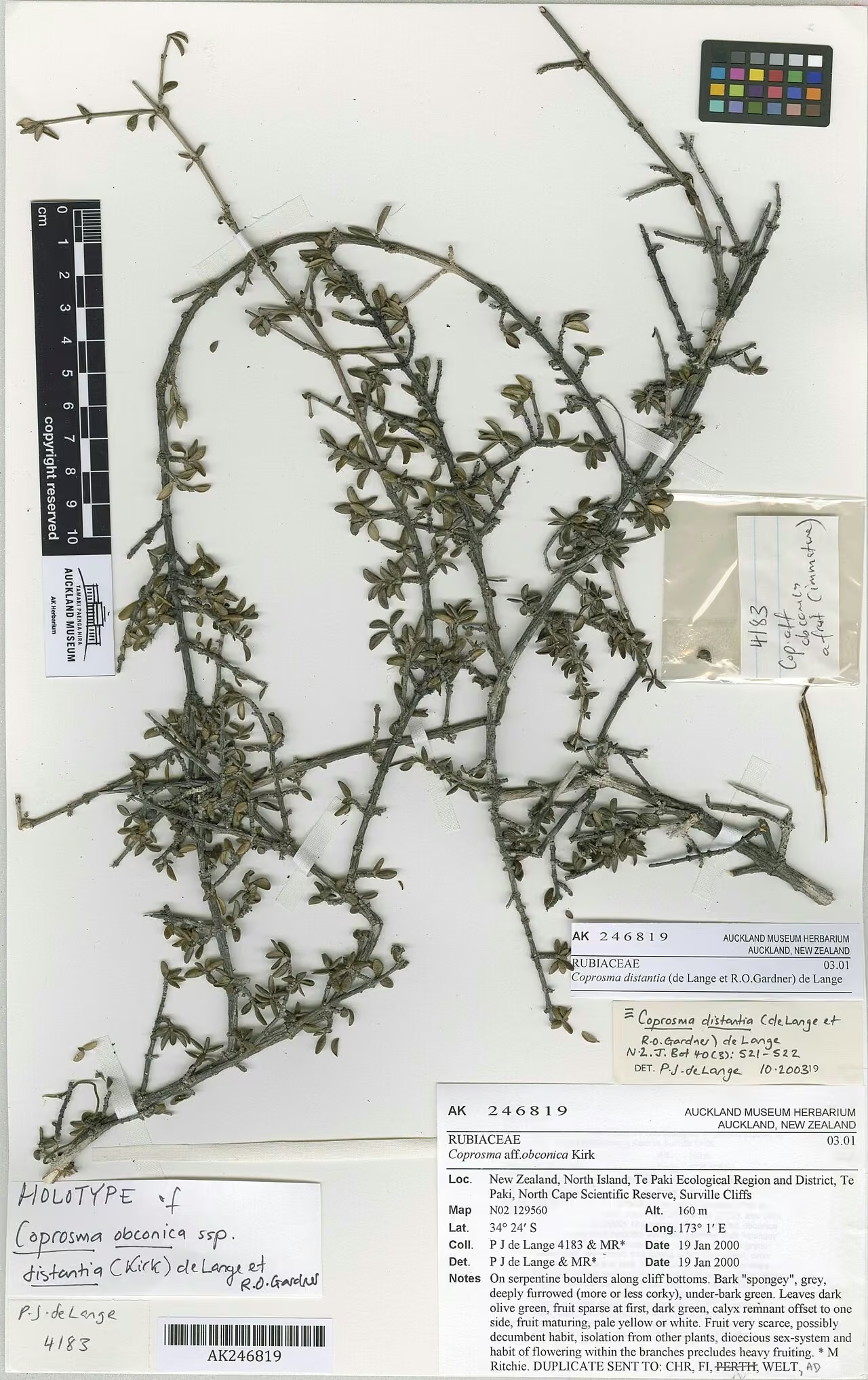
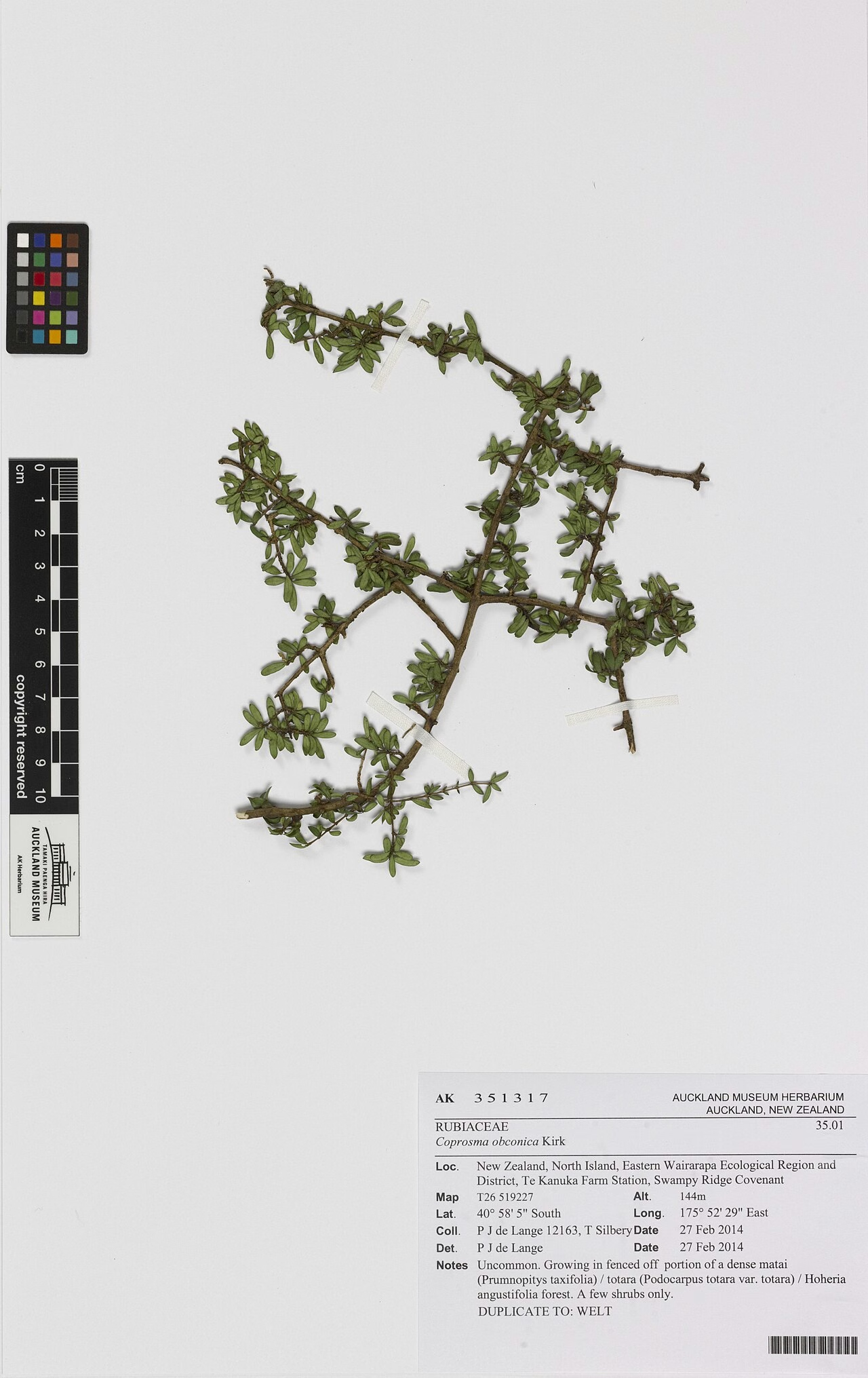
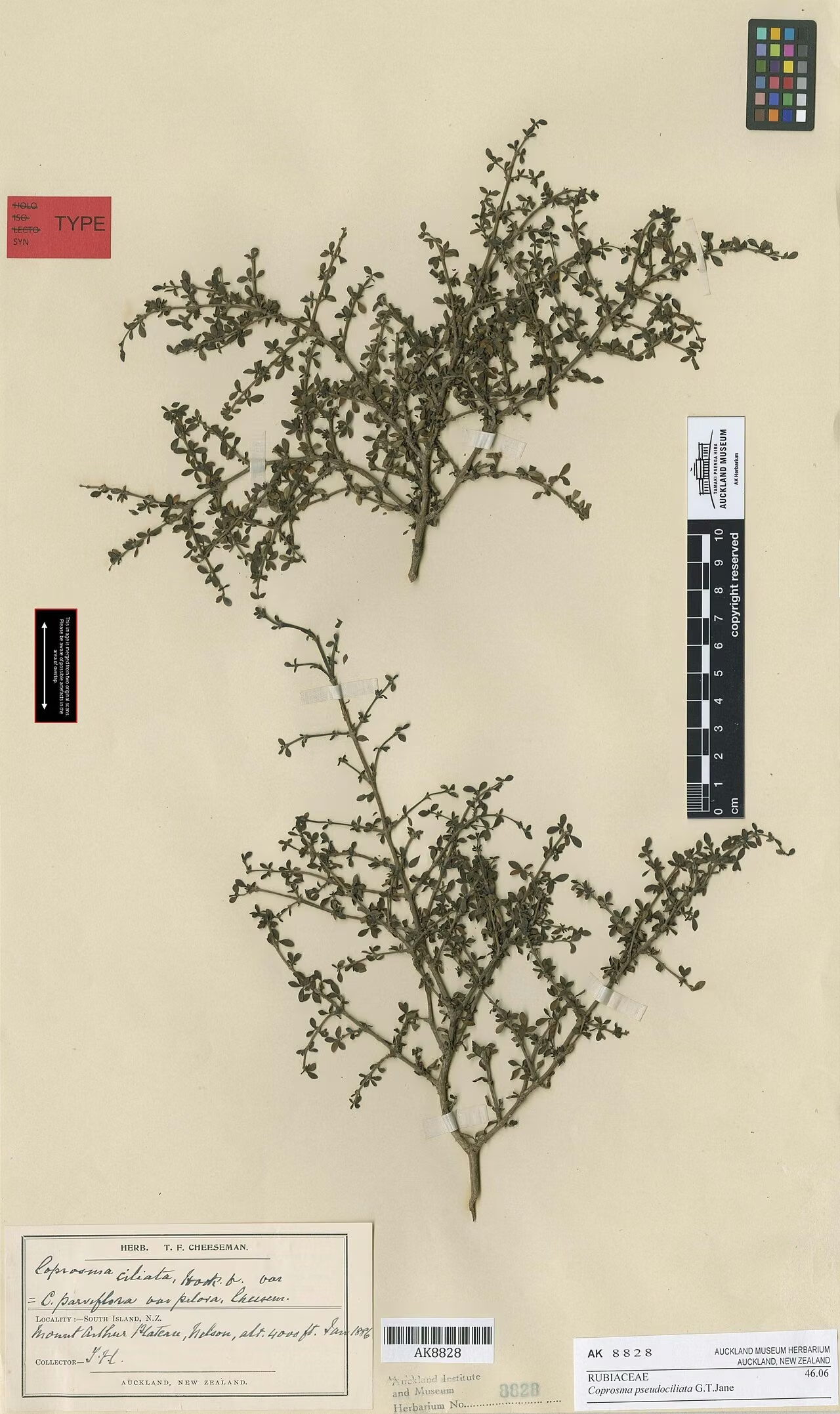
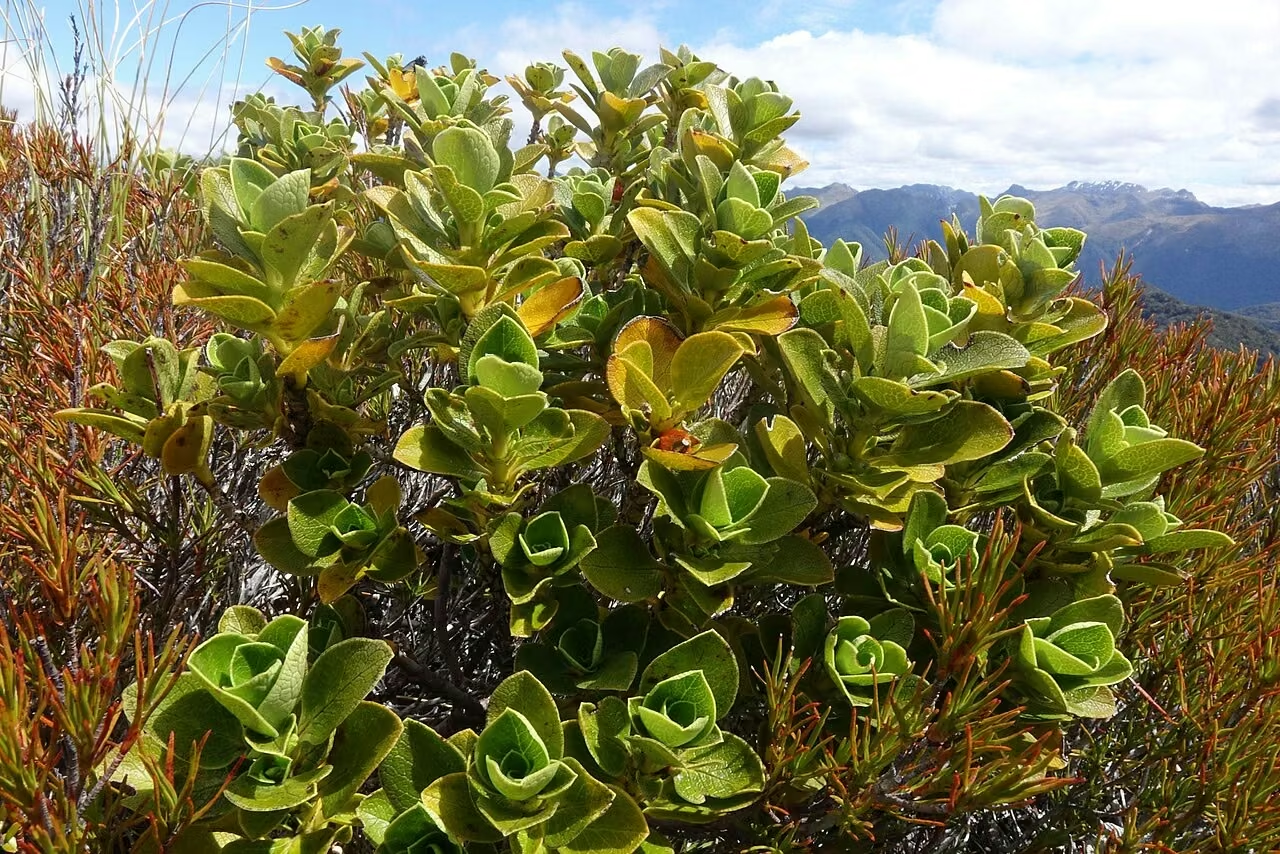
Explore other native plants that share similar characteristics or habitats with Coprosma (Coprosma elatirioides), offering further insights into New Zealand's diverse flora. These related species provide context and opportunities for complementary planting in your garden.
Plant Conservation
Coprosma elatirioides is ranked Not Threatened nationally (2023). In Otago it is uncommon and ranked Regionally At Risk - Regionally Naturally Uncommon (2025).
Wetland drainage is the most obvious pressure on habitats like those it occupies, as large areas of South Island swamp and pakihi have been converted to farmland. Protecting remaining mires and using local stock in wetland restoration both help secure the species.
Frequently Asked Questions
Where does Coprosma elatirioides grow naturally?
It is found only in the South Island and on Stewart Island/Rakiura, from lowland to subalpine elevations, in open swamps, mires, pakihi and other poorly drained ground dominated by red tussock and wire rush.
How do you tell Coprosma elatirioides from Coprosma intertexta?
The two look alike vegetatively, but Coprosma elatirioides has a long-trailing, almost vine-like habit with extended wiry branchlets, differs in its stipules, and grows in wetlands rather than the drier sites favoured by C. intertexta.
Why are the leaves of Coprosma elatirioides red?
Wine-red foliage is the usual colour of this species, although plants with light or dark green leaves edged in red also occur, and most populations contain more than one colour form.
Is Coprosma elatirioides a good plant for a wet garden?
Yes. NZPCN describes it as an excellent wetland plant that is easily grown from fresh fruit and cuttings, so it suits boggy ground where many shrubs fail.
Sources and Further Reading
The botanical, growing, and conservation details for Coprosma (Coprosma elatirioides) on this page draw on the New Zealand plant references below. Consult them for full technical records and the latest distribution data.