Coprosma
Coprosma obconica
Last updated:
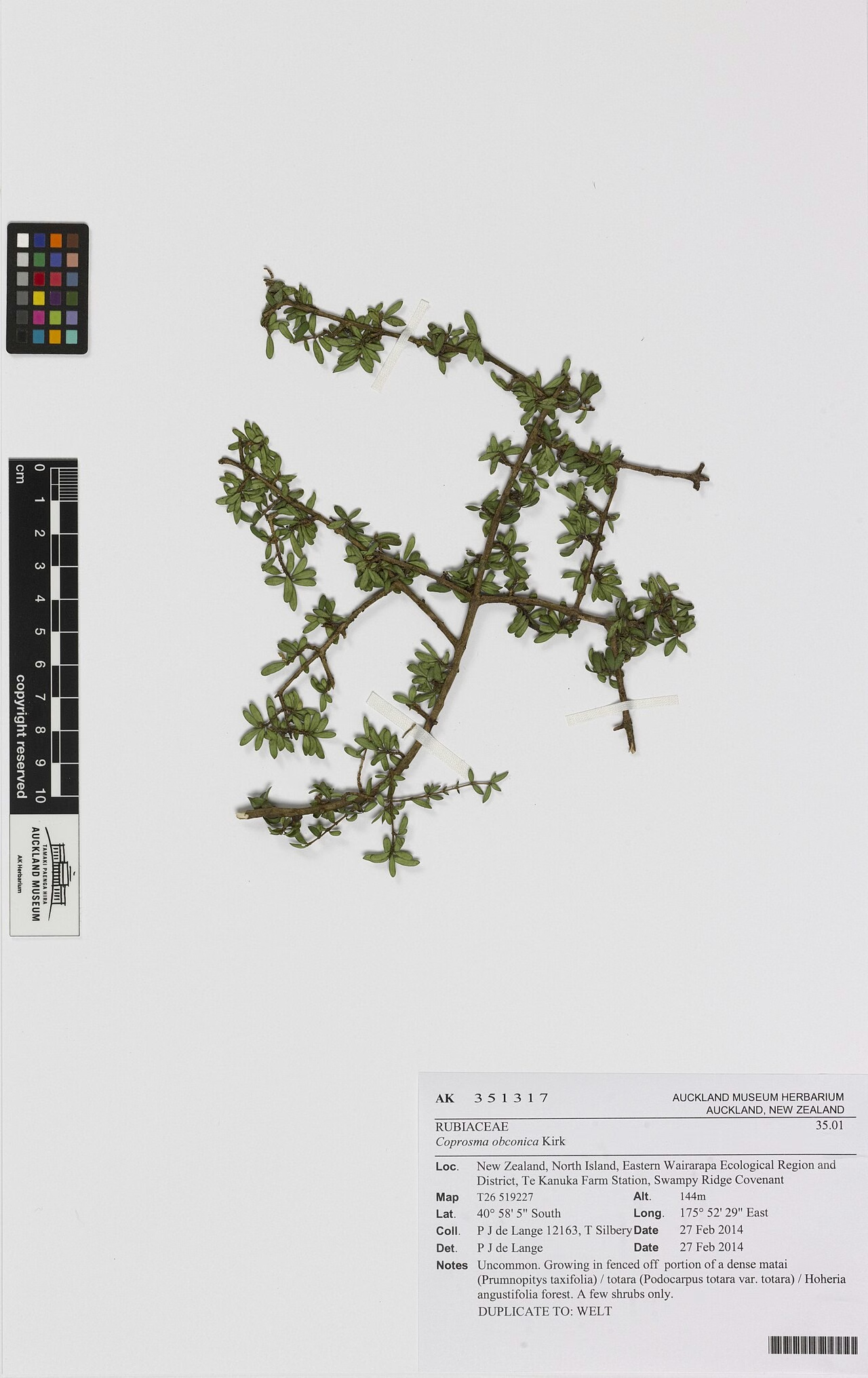
Coprosma obconica is a rare, densely branched divaricating shrub endemic to New Zealand, growing 2 to 3.5 m tall but rarely more than 1 m wide. Its tiny greyish-green leaves end in a nipple-like 'bull nose' tip found on no other New Zealand coprosma, and female plants bear flattened white fruit striped or blotched violet-purple. It grows in scattered places from near Taihape and Masterton through much of the South Island (but not Westland), often on limestone, marble or dolomite. Habitat loss and weeds have made it At Risk - Declining. Explore more native shrubs in our native plant guide.
Plant Description
Coprosma obconica is an evergreen divaricating shrub with a heavily interlaced framework of branches, forming a tall, narrow bush 2 to 3.5 m high and 0.8 to 1 m wide. Juvenile plants, and juvenile shoots that often persist at the base of older shrubs, have mottled brown or green leaves.
Adult leaves are very small, 3.5 to 12 mm long and 1.5 to 2.5 mm wide (occasionally 3.5 mm), broadly elliptic to oblanceolate, light greyish green, glabrous and with strongly recurved margins. The feature that separates it from every other New Zealand coprosma is the apex, which ends in a small nipple-like 'bull nose' prolongation. Male and female flowers are borne on separate plants between April and August.
The fruit is a subglobose drupe about 5 mm across when fresh, greenish white or translucent white and variously striped or blotched dark violet-purple. On drying it becomes flattened and obconic, which gives the species its name. Fruit may be found from January to September. It most resembles Coprosma distantia, which differs in habit, unstriped fruit and genetics.
Quick Facts
| Scientific Name | Coprosma obconica |
|---|---|
| Height | 2-3.5 m |
| Spread | 0.8-1 m |
| Water Needs | Low to moderate; occurs on drought-prone sites |
| Light | Full sun to partial shade |
| Frost Tolerance | High; often grows in frost hollows |
| Salt Tolerance | Some; occurs in estuarine shrublands, though no detailed data were found |
| Growth Rate | Slow |
| Lifespan | Long-lived perennial |
Climate Best Suited to
It suits cool to cold temperate climates with frost and dry spells, as it naturally favours frost hollows and drought-prone sites. Warm, humid lowland climates are less suitable.
Regional Suitability
| City | Climate Suitability |
|---|---|
| Auckland | Low |
| Wellington | Medium |
| Christchurch | High |
| Dunedin | High |
Plant Habitat
Coprosma obconica is endemic to New Zealand. In the North Island it is known only from scattered populations near Taihape and Masterton. In the South Island it ranges from D'Urville Island and North-west Nelson south to Southland and Otago, but is absent from Westland.
Its habitats are unusually varied: estuarine shrublands, braided river bars, lowland podocarp forest and montane karst on marble, limestone and dolomite. It favours base-rich substrates and typically grows where plants are stressed by drought or frost, such as frost hollows and dry river terraces.
Growing Requirements
Soil Requirements
In the wild it prefers base-rich soils, often derived from limestone, marble or dolomite, but also grows on alluvial river gravels.
- Free-draining soils suit it best
- Tolerates stony and limestone-derived ground
- Avoid heavy soils that stay waterlogged
Light Requirements
It grows both in open shrubland and in lowland forest, so it tolerates a range of light conditions.
- Full sun gives the densest growth
- Tolerates partial shade at forest margins
Water Requirements
Coprosma obconica is adapted to drought-prone sites and does not need generous watering once established.
- Water regularly during the first summer
- Established plants cope with dry spells
- Good drainage matters more than extra water
Planting and Establishing
Plant in autumn or spring in a sunny, sheltered spot with good drainage. Because it grows slowly and stays narrow, it can be planted closer than most shrubs, about 1 m apart in a group.
Plant both male and female plants if you want fruit, since NZPCN notes that fruit is rarely set without both sexes present. For restoration, use stock grown from the nearest wild population to protect local genetic variation.
Ecological Role
Like other coprosmas, C. obconica is wind-pollinated, with flowers produced in autumn and winter. Its fleshy fruit is suited to dispersal by birds, and the dense divaricating framework offers sheltered perches and nest sites for small birds and invertebrates.
Its tolerance of frost and drought allows it to persist on braided river terraces, frost flats and limestone outcrops where many forest plants struggle. Such habitats are naturally patchy, which helps explain its scattered distribution.
Uses & Significance
Garden Uses
A specialist plant for collectors and conservation plantings, valued for its rarity and fine, wiry form.
- Narrow screen or hedge in cold, dry gardens
- Conservation collections and botanic gardens
- Limestone or rock gardens
- Textural contrast with broad-leaved shrubs
Ecological Value
Planting this declining species helps keep its genetic diversity in cultivation and provides food and shelter in dryland plantings.
- Berries for birds over a long fruiting season
- Dense cover for insects, lizards and small birds
- Adds a threatened species to river terrace restoration
Landscaping Uses
The upright, column-like form of Coprosma obconica works well as a vertical accent in dryland or rock gardens, or in a mixed planting of divaricating shrubs such as other small-leaved coprosmas and Muehlenbeckia.
Its greyish-green foliage and pale, violet-marked fruit stand out best against darker backgrounds. Allow for its slow growth: it may take several years to reach screening height.
Seasonal Care Calendar
Spring
New growth appears as days lengthen, and late fruit may still be present.
- Plant out or take cuttings
- Remove competing weeds
Summer
Fruit begins to colour from January.
- Water young plants in dry spells
- Fruit ripens from January
Autumn
Flowering begins in April, while fruit is still present on female plants.
- Flowers April to August
- Collect fresh fruit for sowing
Winter
Flowering continues through winter and the shrub is fully frost hardy.
- Fruit may remain until September
- Hardwood cuttings can be taken
When to Prune and How Much
Pruning is rarely needed because of its slow growth and naturally compact shape. Trim lightly in spring if you want a tighter hedge or to remove dead twigs.
Avoid heavy cutting into old wood on slow-growing plants, as regrowth takes a long time.
How to Grow Coprosma
NZPCN describes Coprosma obconica as moderately easy to propagate from semi-hardwood or hardwood cuttings. Seed germinates readily, but the resulting seedlings grow slowly, so cuttings are usually preferred when a plant of a known sex is needed. Because the species is declining and is Regionally Critical in some areas, collect material only with permission and from plants already in cultivation or from the local population being restored.
From Cuttings
Semi-hardwood cuttings from late summer to autumn, or hardwood cuttings in winter, both strike moderately well. Taking cuttings from known male and female plants lets you plan for fruit.
- Select healthy, firm side shoots 8 to 12 cm long
- Strip the lowest leaves and wound the base lightly
- Dip in rooting hormone if available
- Insert into a free-draining mix of bark and pumice or perlite
- Keep in a cool, humid propagating area out of direct sun
- Pot on once a good root system has formed
From Seed
Fresh fruit germinates readily. Sow it soon after collection and be patient, as seedlings are slow to grow on.
Seed raising produces a mix of male and female plants, which cannot be told apart until they first flower several years later.
- Collect ripe, striped white fruit from female plants
- Remove the flesh and sow the seed into a free-draining seed mix
- Keep moist and sheltered
- Prick out seedlings when large enough to handle
- Grow on in pots for one to two years before planting out
Pests & Diseases
No serious pests are documented for this species in cultivation. Scale insects and associated sooty mould sometimes affect coprosmas, and can be controlled by improving air flow or with horticultural oil.
In the wild the main threats are not pests but competing weeds, which smother small slow-growing shrubs, and grazing animals in unfenced habitats.
Cultural Significance
No Māori name or traditional use specific to Coprosma obconica is recorded in the sources consulted. The species was described by Thomas Kirk, and its epithet means 'inverted cone', describing the shape of the dried fruit.
It is grown by specialist nurseries and several botanic gardens, which helps conserve it outside the wild.
Bonus Tip
Check for the bull-nosed leaf tip before buying or collecting: it is the quickest way to confirm you have true Coprosma obconica rather than one of the many similar small-leaved divaricating coprosmas. A 10x hand lens makes it easy to see.
Related Plants
Explore other native plants that share similar characteristics or habitats with Coprosma (Coprosma obconica), offering further insights into New Zealand's diverse flora. These related species provide context and opportunities for complementary planting in your garden.
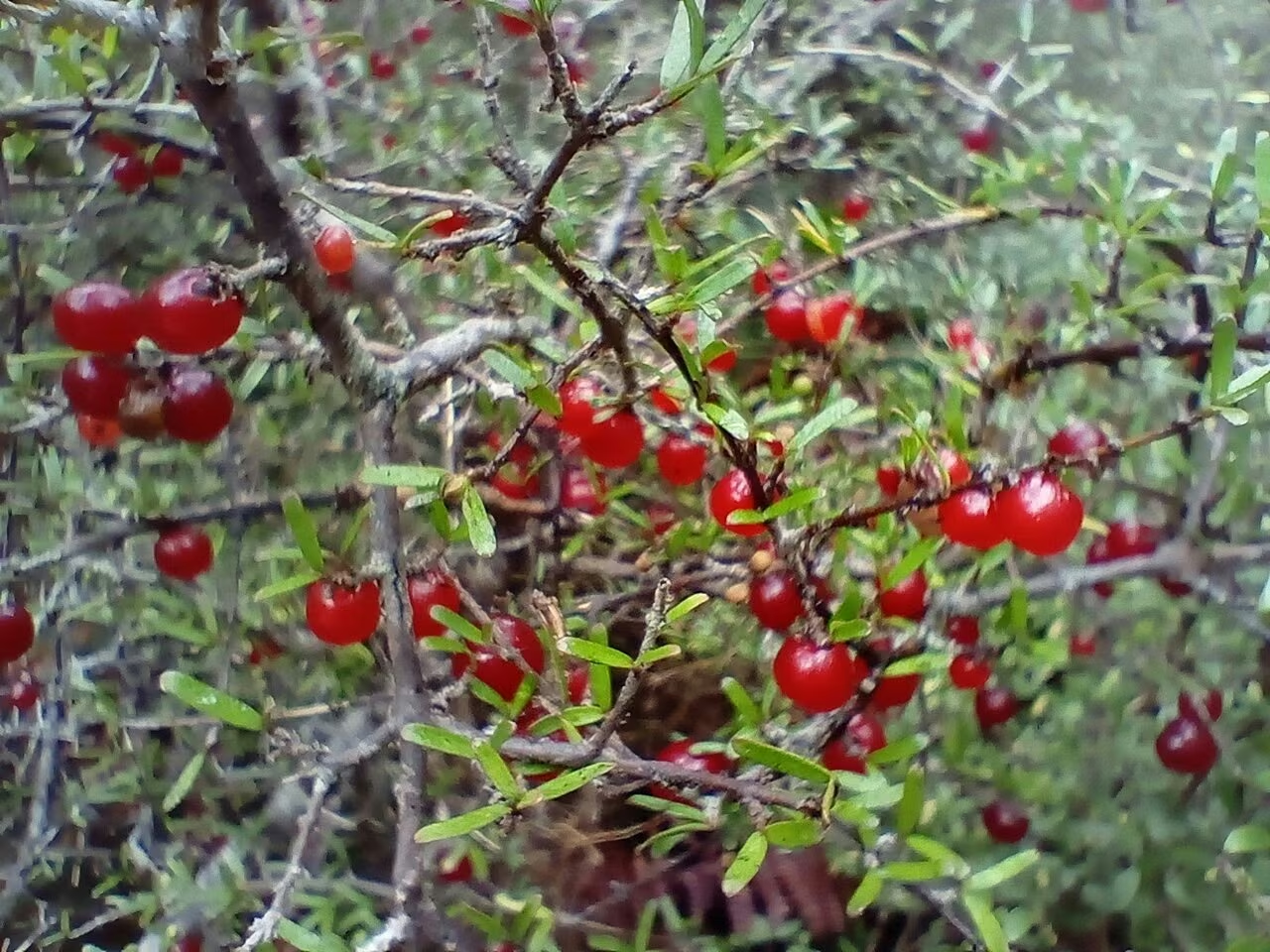
Coprosma decurva
Coprosma decurva
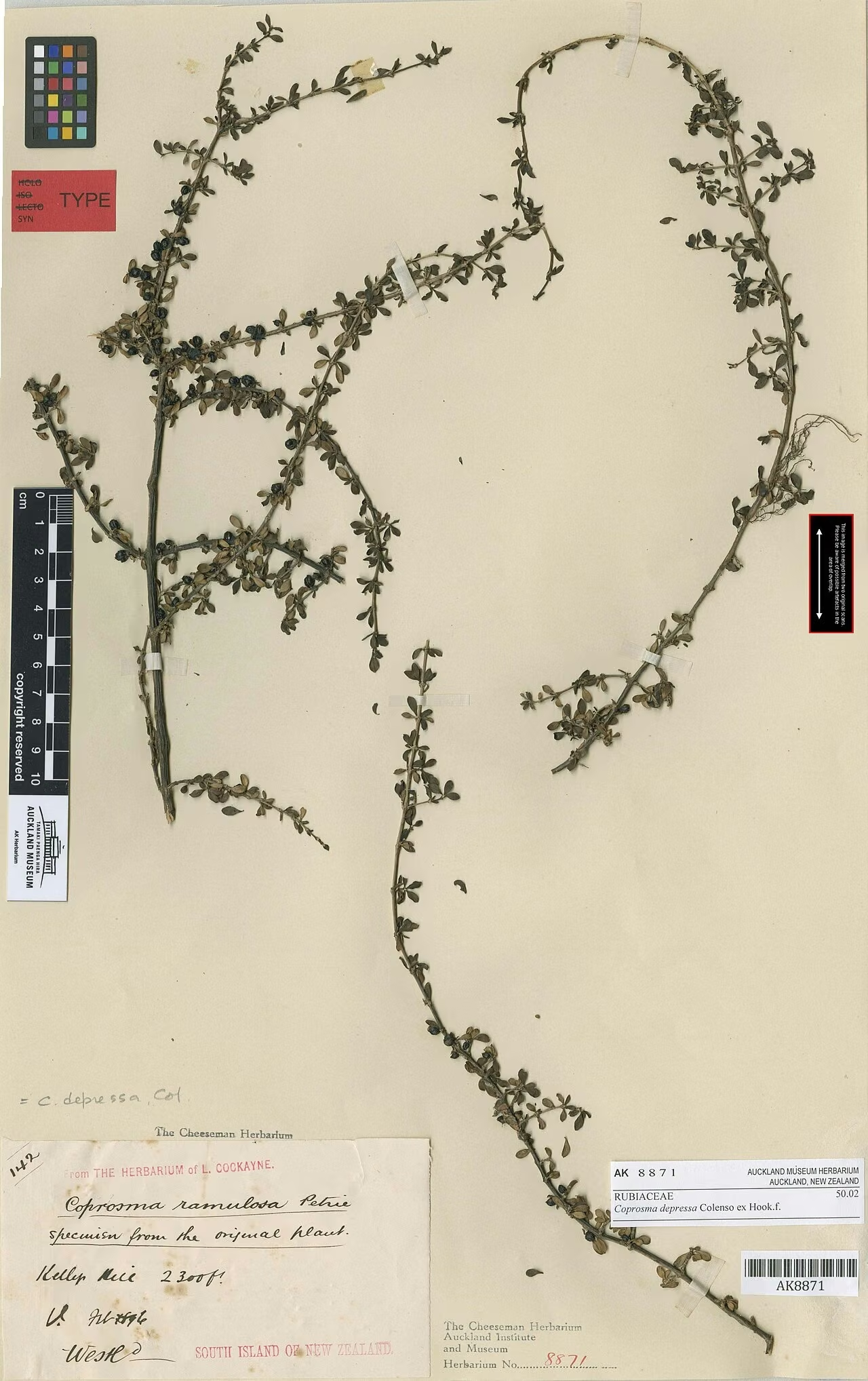
Coprosma depressa
Coprosma depressa
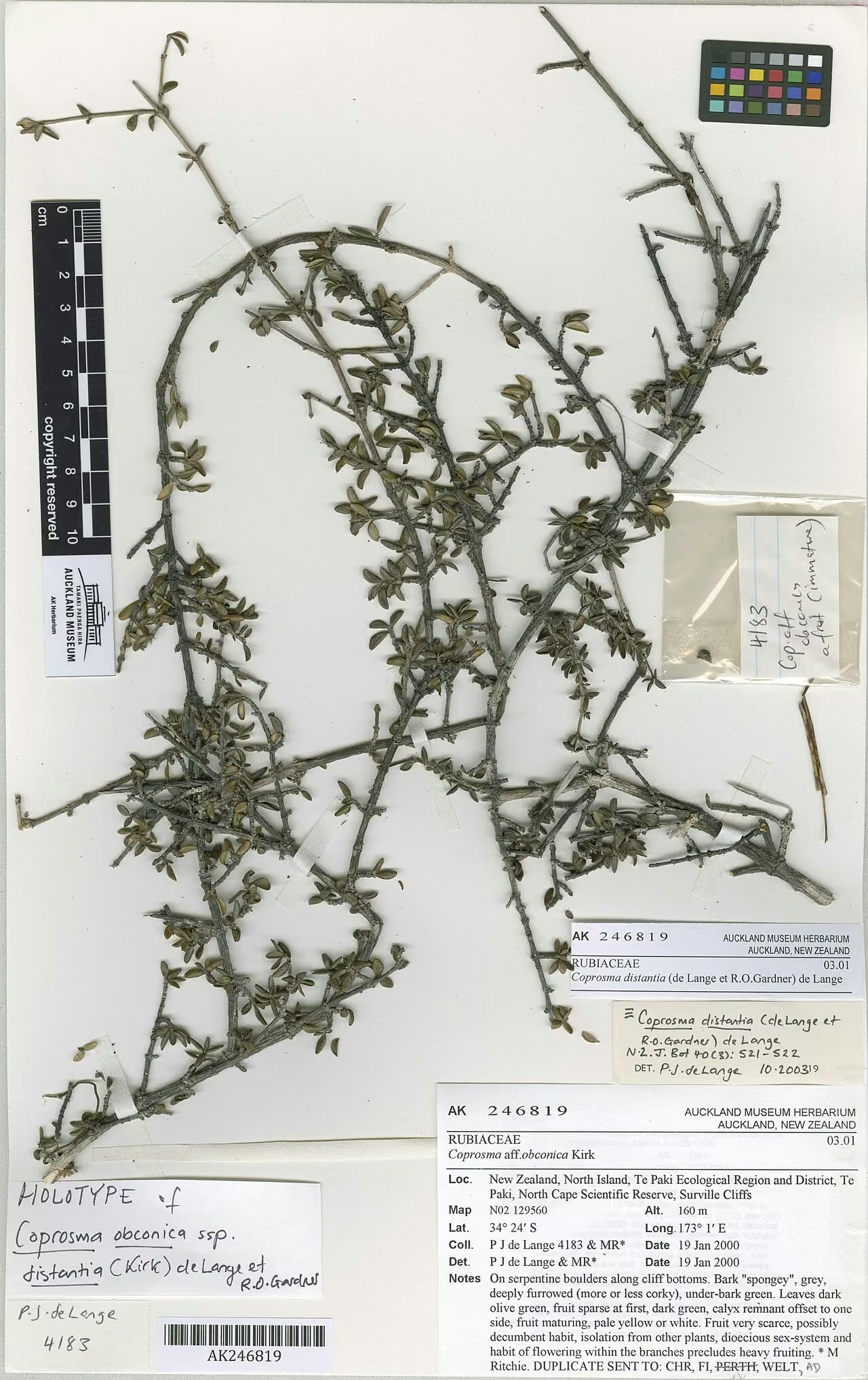
Coprosma distantia
Coprosma distantia
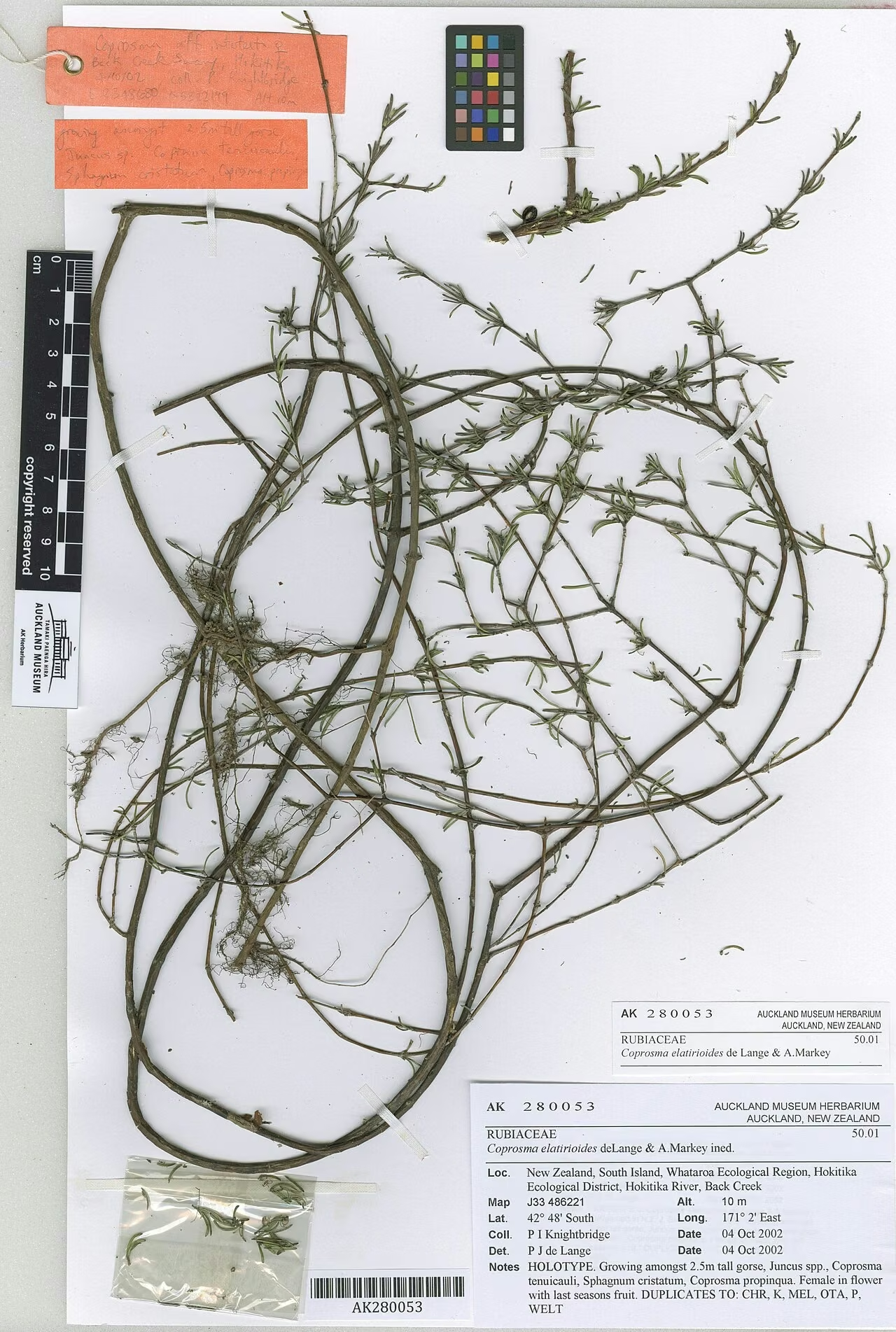
Coprosma elatirioides
Coprosma elatirioides
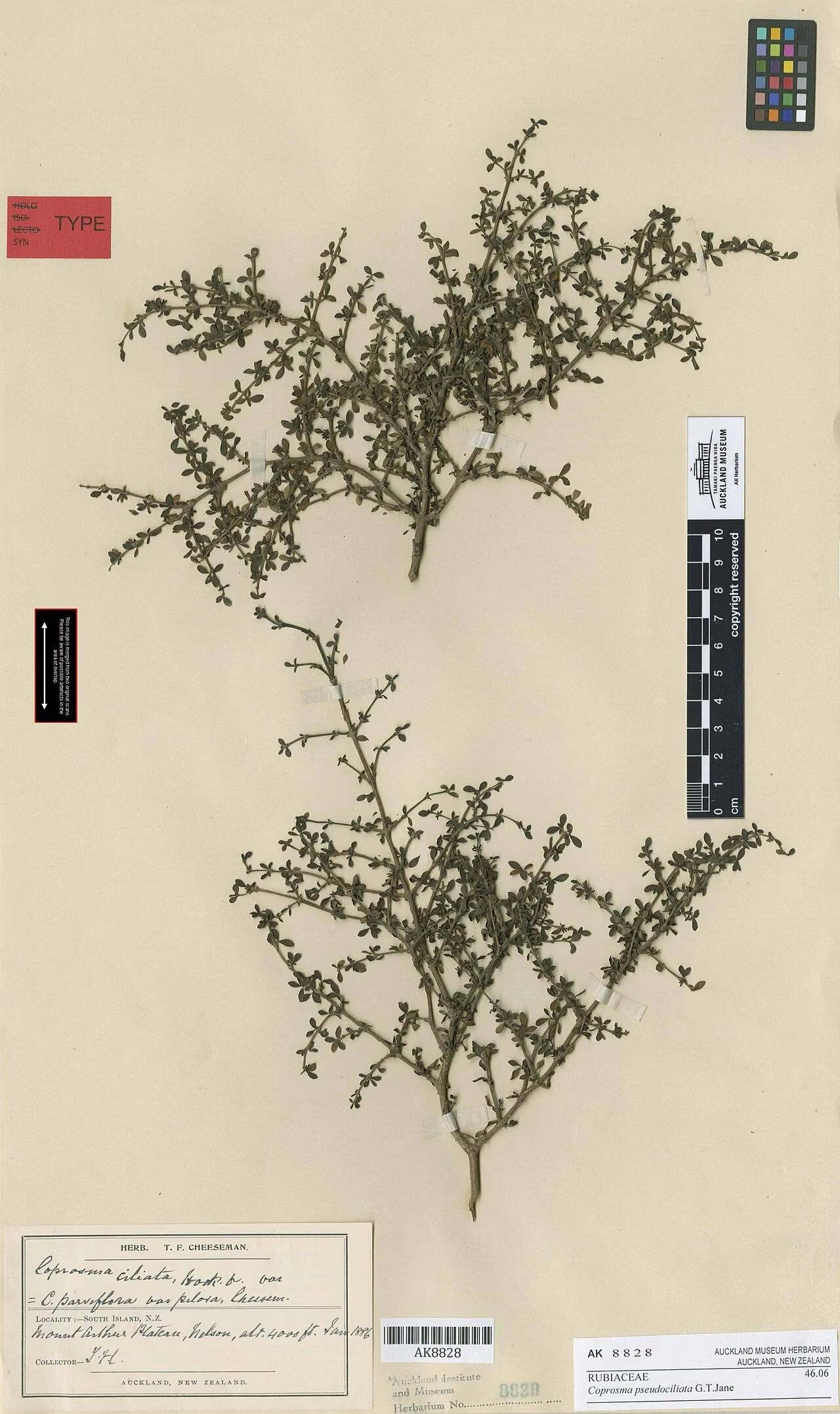
Coprosma pseudociliata
Coprosma pseudociliata
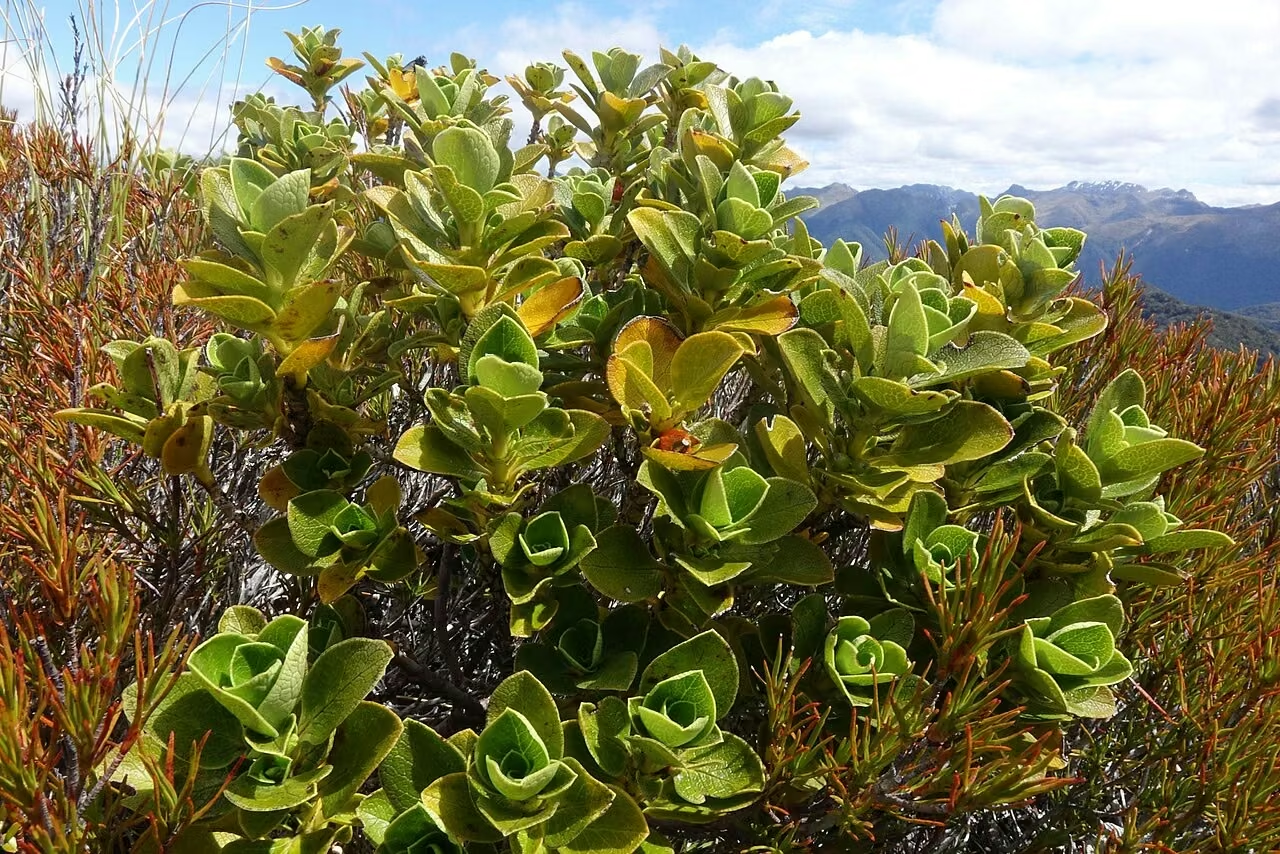
Coprosma serrulata
Coprosma serrulata
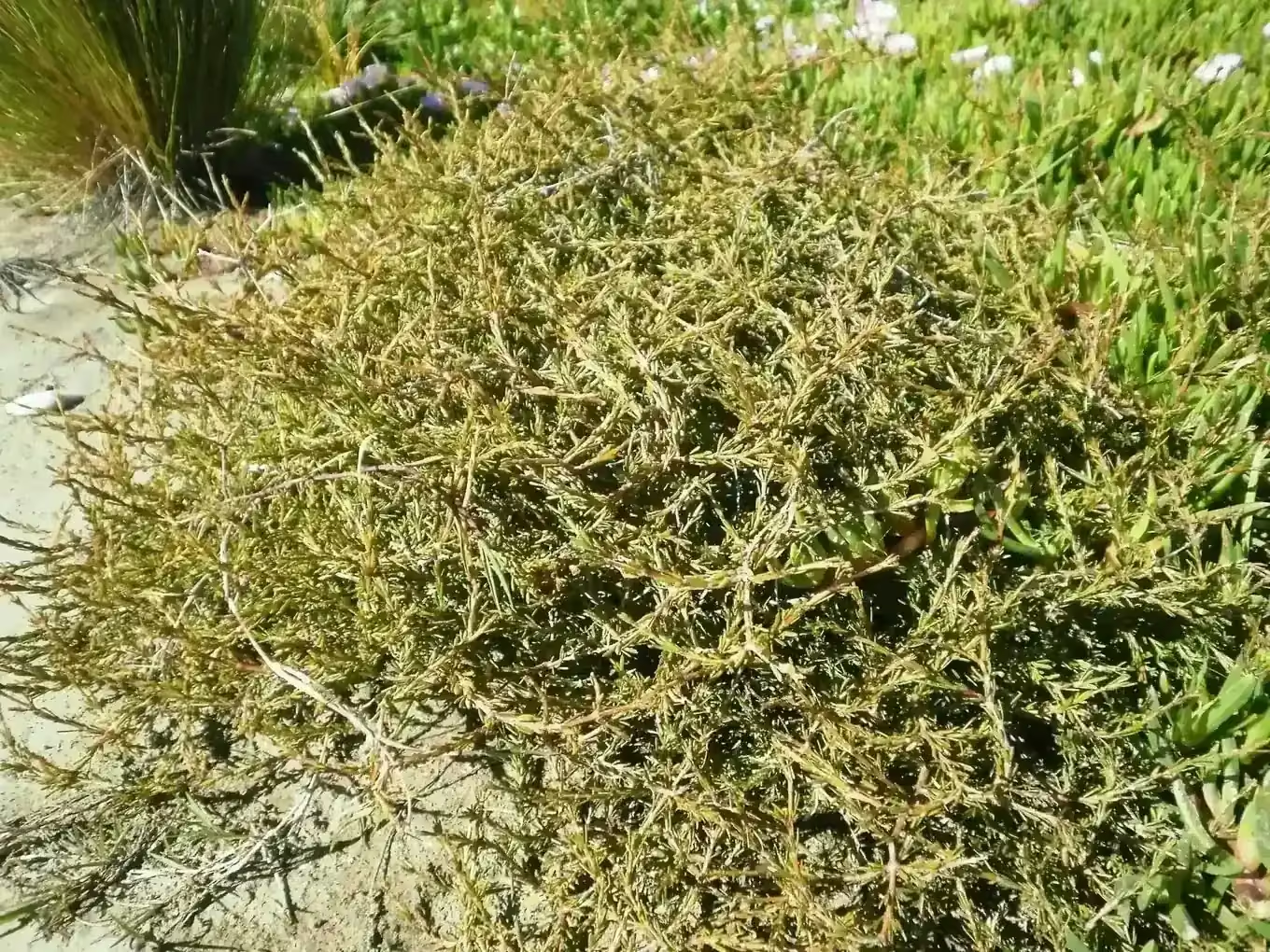
Sand Coprosma
Sand Coprosma
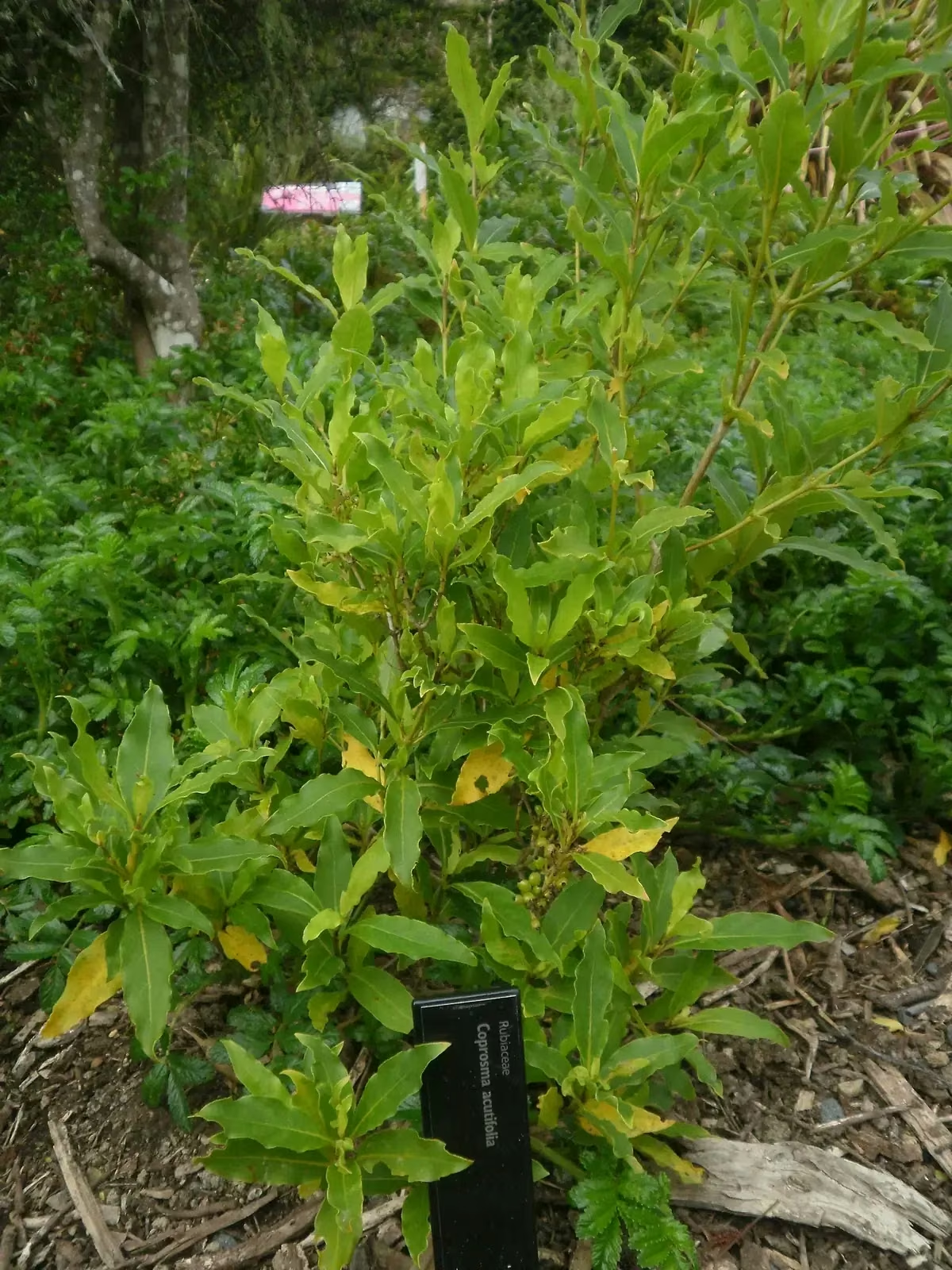
Sharp-Leaved Coprosma
Sharp-Leaved Coprosma
Plant Conservation
Coprosma obconica is ranked At Risk - Declining (2023), an improvement on its earlier Threatened - Nationally Vulnerable listing (2017), and is Regionally Critical in both Otago and Wellington.
Its main threats are weed competition and the loss of mainly lowland podocarp forest habitat. One major population at Mt Burnett is at serious risk from ongoing dolomite mining. Weed control, fencing, and growing plants of both sexes for restoration all help.
Frequently Asked Questions
How do you identify Coprosma obconica?
Look at the leaf tips with a hand lens: Coprosma obconica has a distinctive nipple-like 'bull nose' prolongation at the apex that no other New Zealand coprosma shares. Its white, violet-striped fruit and narrow, upright divaricating habit also help.
Where does Coprosma obconica grow?
It has a few North Island sites near Taihape and Masterton and is scattered through the South Island from D'Urville Island and North-west Nelson to Southland and Otago, though it is absent from Westland.
Is Coprosma obconica endangered?
It is ranked At Risk - Declining (2023) and is Regionally Critical in Otago and Wellington. Weed competition, loss of lowland podocarp forest and dolomite mining at Mt Burnett all threaten it.
What is the difference between Coprosma obconica and Coprosma distantia?
Coprosma distantia was once treated as a subspecies of C. obconica. NZPCN separates them, noting that C. obconica has a more erect habit, striped fruit and genetic differences.
Sources and Further Reading
The botanical, growing, and conservation details for Coprosma (Coprosma obconica) on this page draw on the New Zealand plant references below. Consult them for full technical records and the latest distribution data.