Coprosma
Coprosma depressa
Last updated:
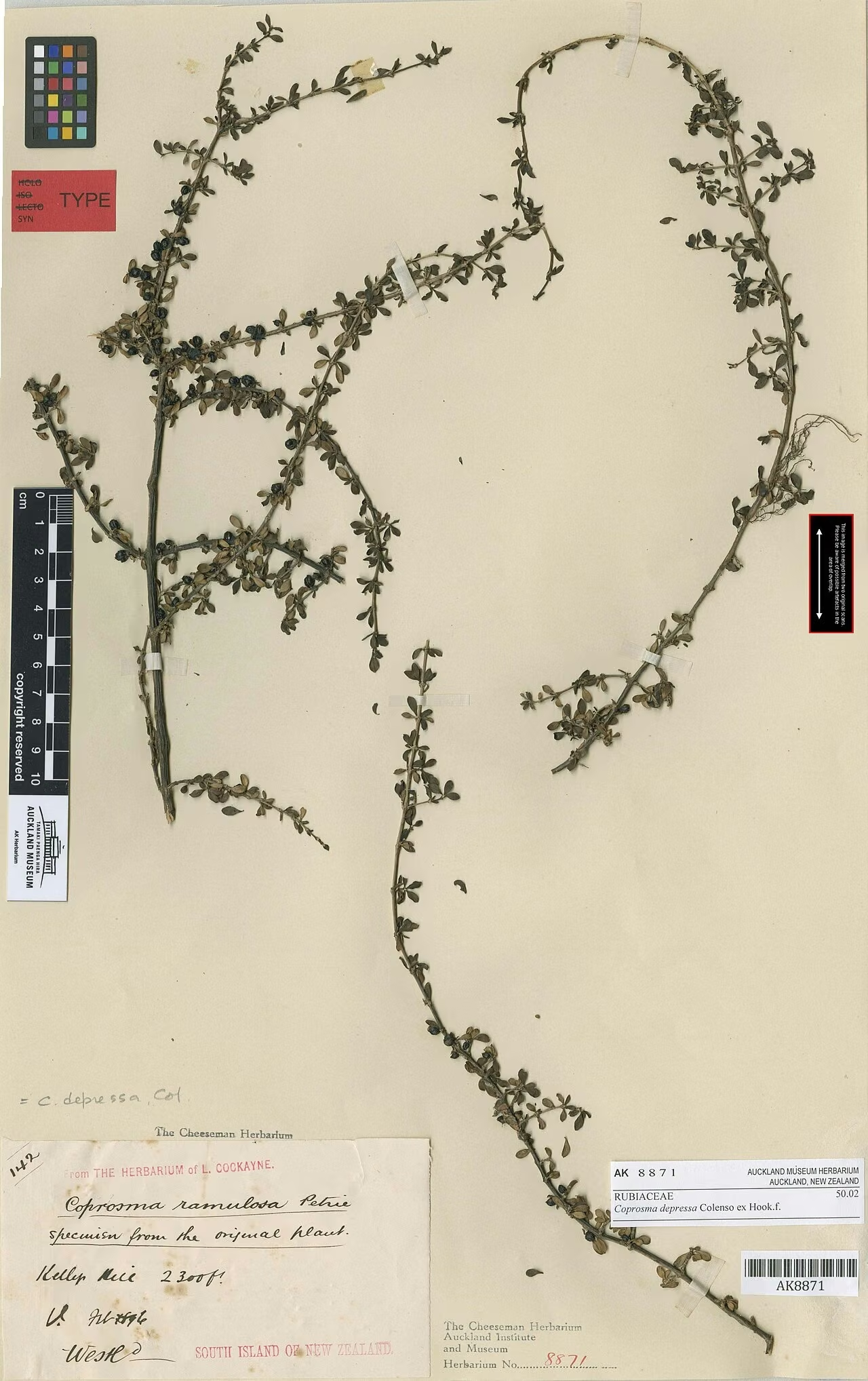
Coprosma depressa is a flattened, sprawling shrub endemic to New Zealand, usually well under 0.3 m tall, with long slender branches that root as they criss-cross over the ground and around boulders. Its small, fresh green, leathery leaves are broad-ovate, 5 to 9 mm long, with a blunt tip turned downwards, and the leaf pairs are joined by relatively large, pale, triangular stipules, a combination that makes it easy to recognise. Female plants bear bright red, round fruits 5 to 6 mm across. It grows on rocky, well-drained sites from 600 to 1300 m in the North Island from Hikurangi southwards and throughout the South and Stewart Islands, and is ranked Not Threatened. Explore more native ground covers in our native plant guide.
Plant Description
Coprosma depressa is prostrate, reaching up to 0.3 m but usually less, with long, slender branches that root as they spread and criss-cross. The branchlets are finely hairy. The leaves are fresh green on stalks 2 to 4 mm long. Between each leaf pair are rather large, pale, long-triangular stipules that are slightly hairy and fringed, joined by a short whitish sheath.
The leaf blades are leathery and broad-ovate, usually 7 to 9 mm long (sometimes 5 mm) and 1 to 3 mm wide (up to 5 mm), with a blunt tip that is turned down and fringed with tiny hairs. The midrib and usually a few side veins are visible, at least below. Flowers are solitary at the ends of short branchlets, with male and female flowers on separate plants: male flowers have a funnel-shaped corolla, and female flowers have narrow, pointed calyx teeth and narrow corolla lobes. The fruit is a round drupe 5 to 6 mm across, bright red or occasionally orange-red, containing two seeds 3 to 4 mm long.
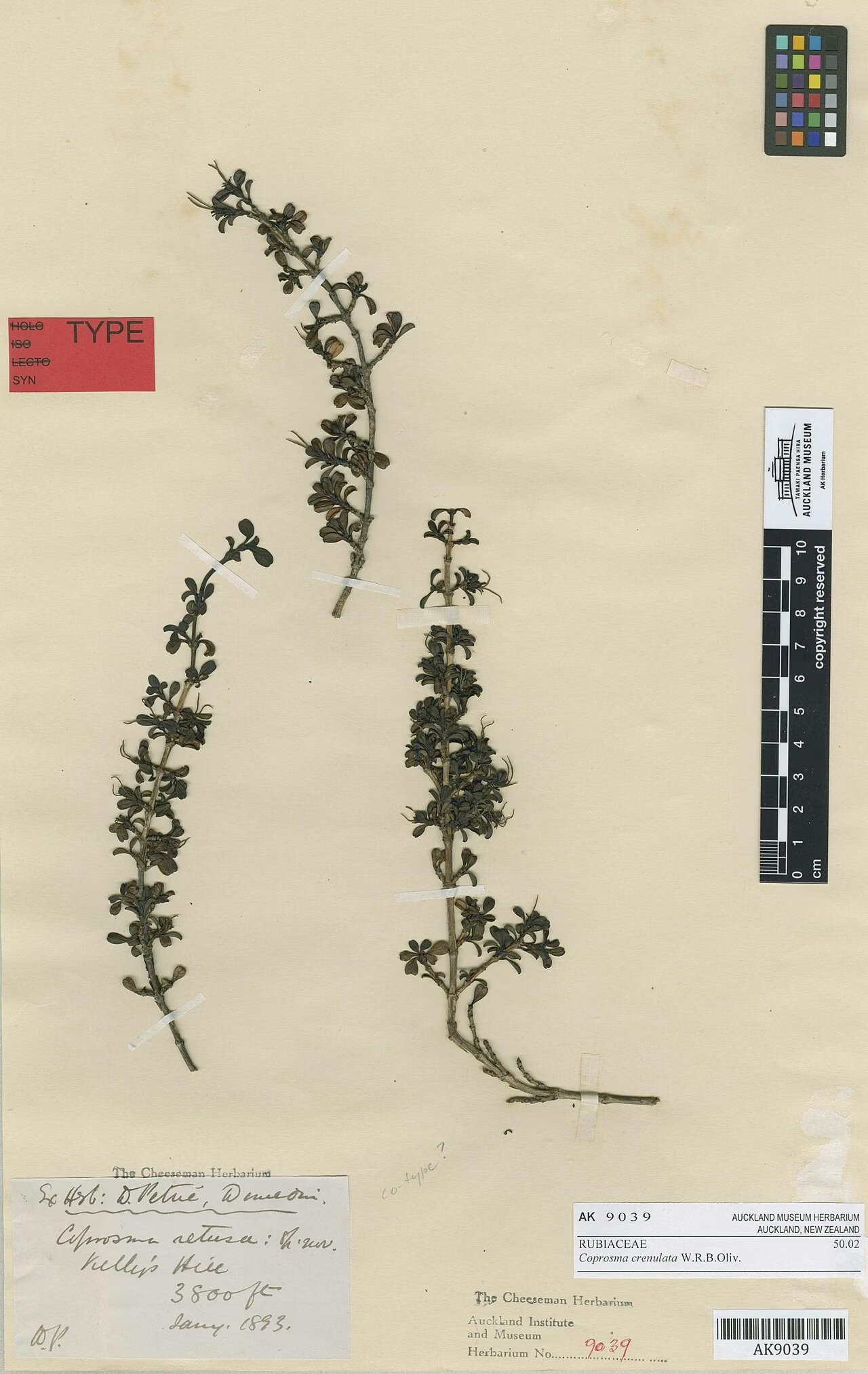
The low sprawling habit combined with large whitish stipules is distinctive. Coprosma crenulata has glossier, larger, more leathery leaves with more obviously dented tips and short, thick, toothed stipules. Other sprawling species such as C. cheesemanii and C. cuneata have much narrower leaves.
Quick Facts
| Scientific Name | Coprosma depressa |
|---|---|
| Height | Up to 0.3 m, usually less |
| Spread | Long trailing, rooting branches forming mats |
| Water Needs | Moderate; prefers well-drained ground |
| Light | Full sun on open rocky sites |
| Frost Tolerance | High; montane to low alpine |
| Salt Tolerance | No information available |
| Growth Rate | Slow |
| Lifespan | Long-lived perennial shrub |
Climate Best Suited to
It suits cool montane to low alpine climates with frosts and snow, from the central North Island mountains to Stewart Island.
Regional Suitability
| City | Climate Suitability |
|---|---|
| Auckland | Low |
| Wellington | Medium |
| Christchurch | Medium |
| Dunedin | High |
Plant Habitat
Coprosma depressa is endemic and widespread from Hikurangi southwards in the North Island, and through the South Island and Stewart Island/Rakiura.
It is a montane to low alpine plant, found from about 600 to 1300 m above sea level on well-drained or rocky sites, where it often trails over or around boulders.
Growing Requirements
Soil Requirements
It favours well-drained, stony or rocky ground rather than the wet peat preferred by some related species.
- Free-draining, gritty soil
- Low to moderate fertility
- Rocky ground or boulders to trail over
Light Requirements
It grows in open montane and low alpine sites with good light.
- Full sun
- Tolerates light shade from neighbouring shrubs
Water Requirements
Its rocky habitats drain freely, but mountain rainfall keeps them moist.
- Water during long dry periods
- Avoid wet, poorly drained soil
Planting and Establishing
Coprosma depressa is a good candidate for a rock garden or scree bed in cooler districts, where its stems can sprawl over stones and root as they go. Plant in spring or autumn in gritty, well-drained soil.
Plant at least one male near female plants if you want the bright red fruit. Plants from specialist native nurseries should be used; do not dig from the wild.
Ecological Role
The fleshy red fruits are dispersed by frugivory, according to NZPCN citing Thorsen et al. (2009). Low-growing Coprosma with bright fruit in mountain areas are typically eaten by birds and lizards.
Like most Coprosma it is dioecious, and Allan (1961) records only slight irregularities in its flowers in studies of abnormal and hermaphrodite flowers in the genus. Its rooting stems help bind stony ground on rocky mountain slopes.
Uses & Significance
Garden Uses
A neat, ground-hugging shrub for rock gardens and alpine plantings.
- Trailing over rocks and walls
- Scree and gravel gardens
- Native ground cover in cool districts
Ecological Value
It is a common component of the low shrub flora of rocky montane and low alpine areas.
- Red fruit in late summer for frugivores
- Rooting stems stabilise rocky ground
- Widespread endemic Coprosma
Landscaping Uses
Its fresh green foliage and flat, sprawling form make it useful for softening rock edges and spilling over boulders. Female plants add bright red fruit in late summer.
Combine it with small tussocks, hebes and other alpine shrubs in a naturalistic rock garden.
Seasonal Care Calendar
Spring
New shoots extend from the trailing stems.
- Weed around plants
- Top-dress with grit
Summer
Flowering is recorded in December, and fruit begins to ripen from January.
- Water in dry spells
- Watch for red fruit on female plants
Autumn
Fruiting continues until about March.
- Collect fruit for seed
- Take semi-hardwood cuttings
Winter
The plant is evergreen and tolerates frost and snow.
- No pruning needed
- Ensure good drainage
When to Prune and How Much
Pruning is rarely necessary. Trim back any stems that spread too far in spring.
Rooted stem sections removed while tidying can be potted up as new plants.
How to Grow Coprosma
No species-specific propagation guide for Coprosma depressa was found, but its natural habit makes it straightforward to increase. NZPCN describes its long slender branches as rooting as they spread, so naturally layered stems are the simplest source of new plants. Small-leaved Coprosma are also commonly grown from semi-hardwood cuttings and from fresh seed. Because the species has separate male and female plants, vegetative methods preserve the parent's sex, which matters if fruit is wanted. NZPCN records two seeds per fruit, 3 to 4 mm long, ripening between January and March.
By Layering
The trailing stems root where they touch the ground. These rooted sections can be cut away and potted.
- Find a stem that has rooted into the soil
- Cut it from the parent plant with a few centimetres of stem either side of the roots
- Pot into a gritty mix and keep lightly shaded and moist
- Plant out once new growth shows it is established
From Cuttings
Semi-hardwood cuttings from the tips of trailing stems root readily in most small-leaved Coprosma.
- Take 5 to 8 cm cuttings in late summer or autumn
- Remove the lower leaves and insert into sand and pumice
- Keep humid and shaded until rooted
- Pot on into a free-draining mix
From Seed
Seed from ripe red fruit can be sown fresh, but germination may be slow.
- Collect ripe fruit between January and March
- Clean off the flesh and sow immediately
- Keep the tray cool and moist outdoors
Pests & Diseases
No specific pests are recorded for this species. In gardens, scale insects can occasionally infest small-leaved Coprosma.
In the wild, no particular threats are documented; browsing animals may graze low shrubs in mountain areas.
Cultural Significance
No Māori name or traditional use specific to Coprosma depressa is recorded in the sources consulted.
The name was first published by Joseph Hooker in 1853 from material collected by William Colenso, which is why the authority is Colenso ex Hook.f. The epithet depressa comes from the Latin for pressed down, referring to its flattened habit. Donald Petrie later described the same plant twice, as Coprosma pubens and C. ramulosa, names now treated as synonyms.
Bonus Tip
When identifying low Coprosma on a mountain track, look between the leaf pairs before looking at the leaves. Large, pale, papery triangular stipules on a flat, sprawling plant are the quickest sign you have found Coprosma depressa.
Related Plants
Explore other native plants that share similar characteristics or habitats with Coprosma (Coprosma depressa), offering further insights into New Zealand's diverse flora. These related species provide context and opportunities for complementary planting in your garden.
Colobanthus muelleri
Colobanthus muelleri
Colobanthus strictus
Colobanthus strictus
Coprosma crenulata
Coprosma crenulata
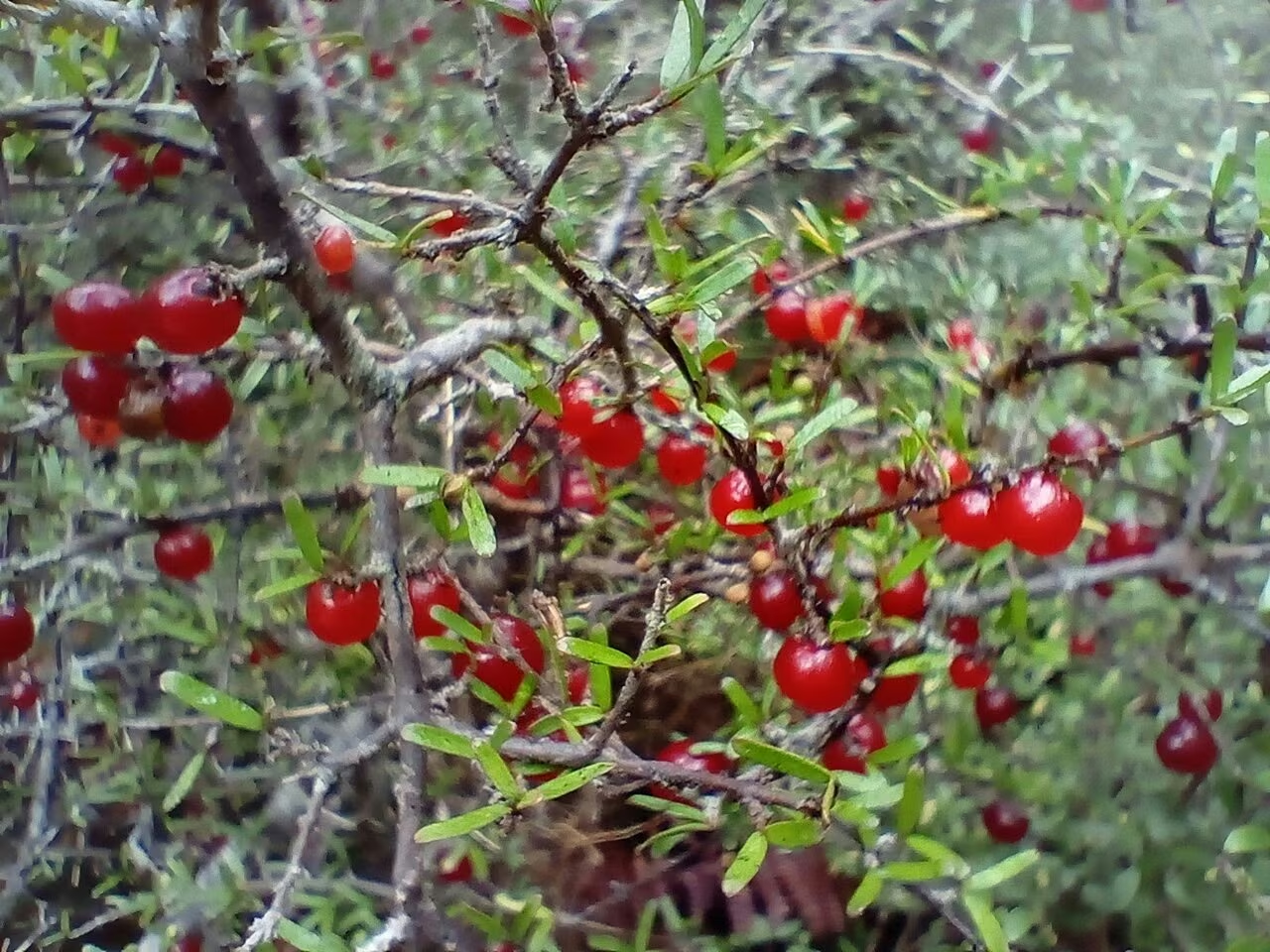
Coprosma decurva
Coprosma decurva
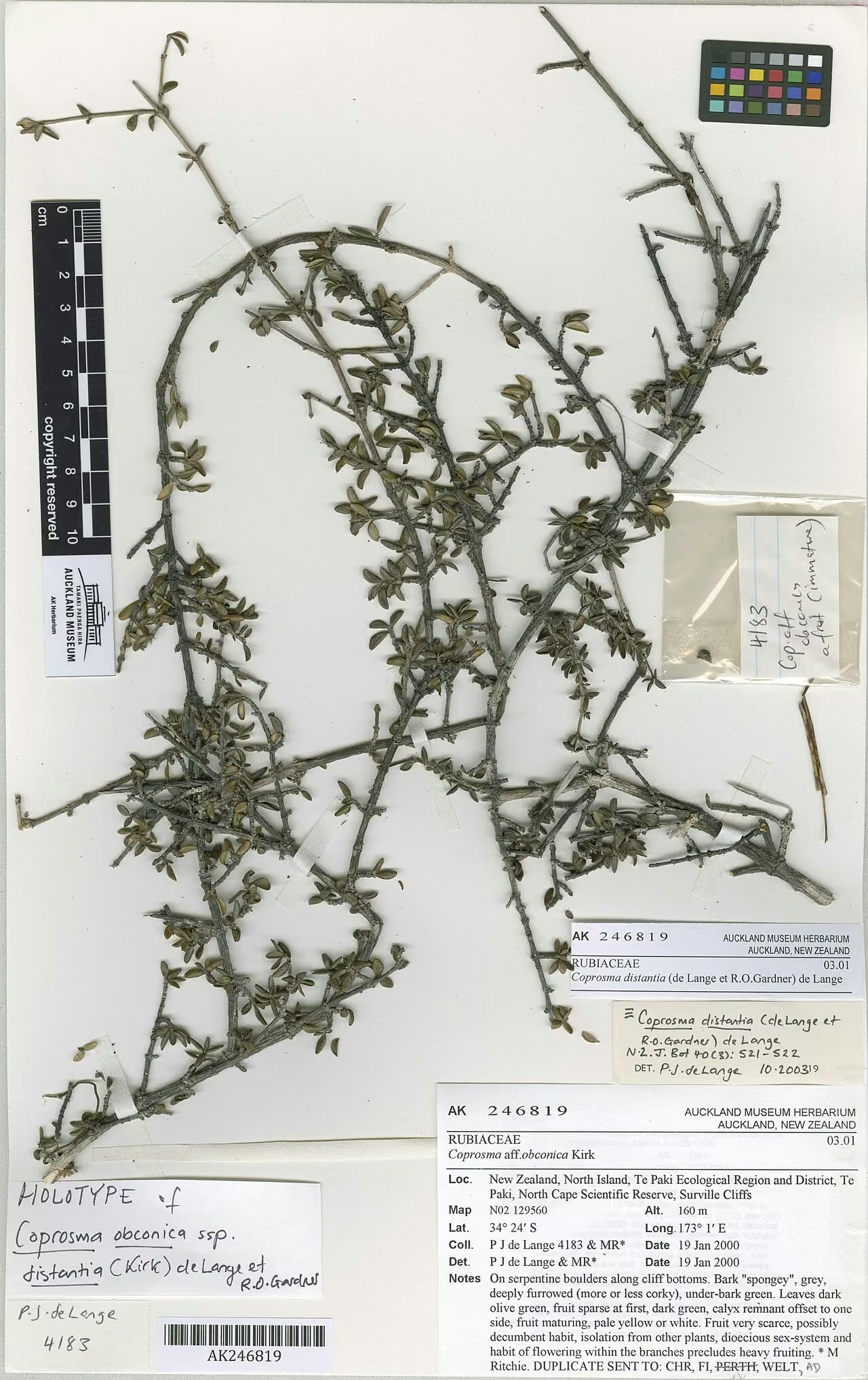
Coprosma distantia
Coprosma distantia
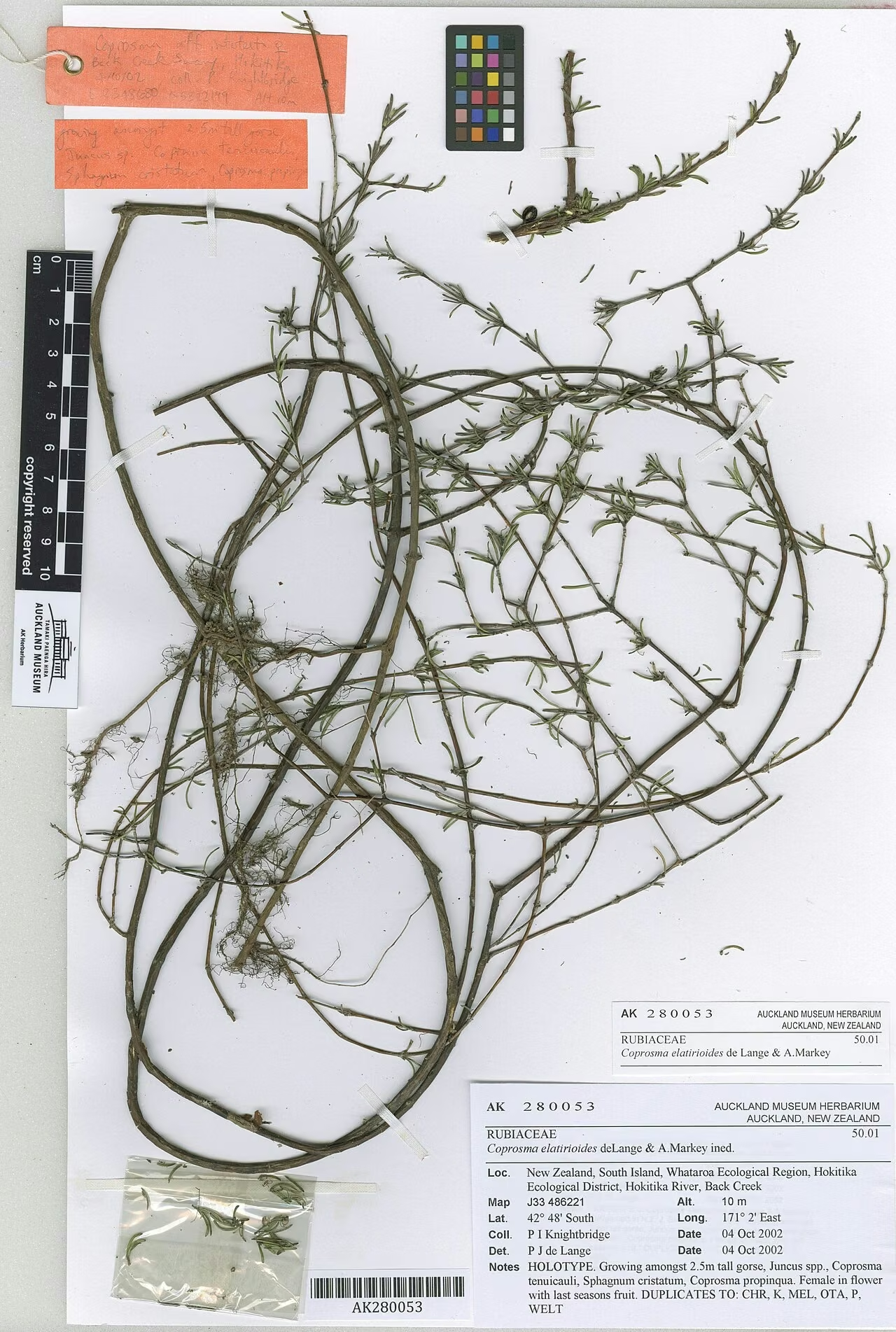
Coprosma elatirioides
Coprosma elatirioides
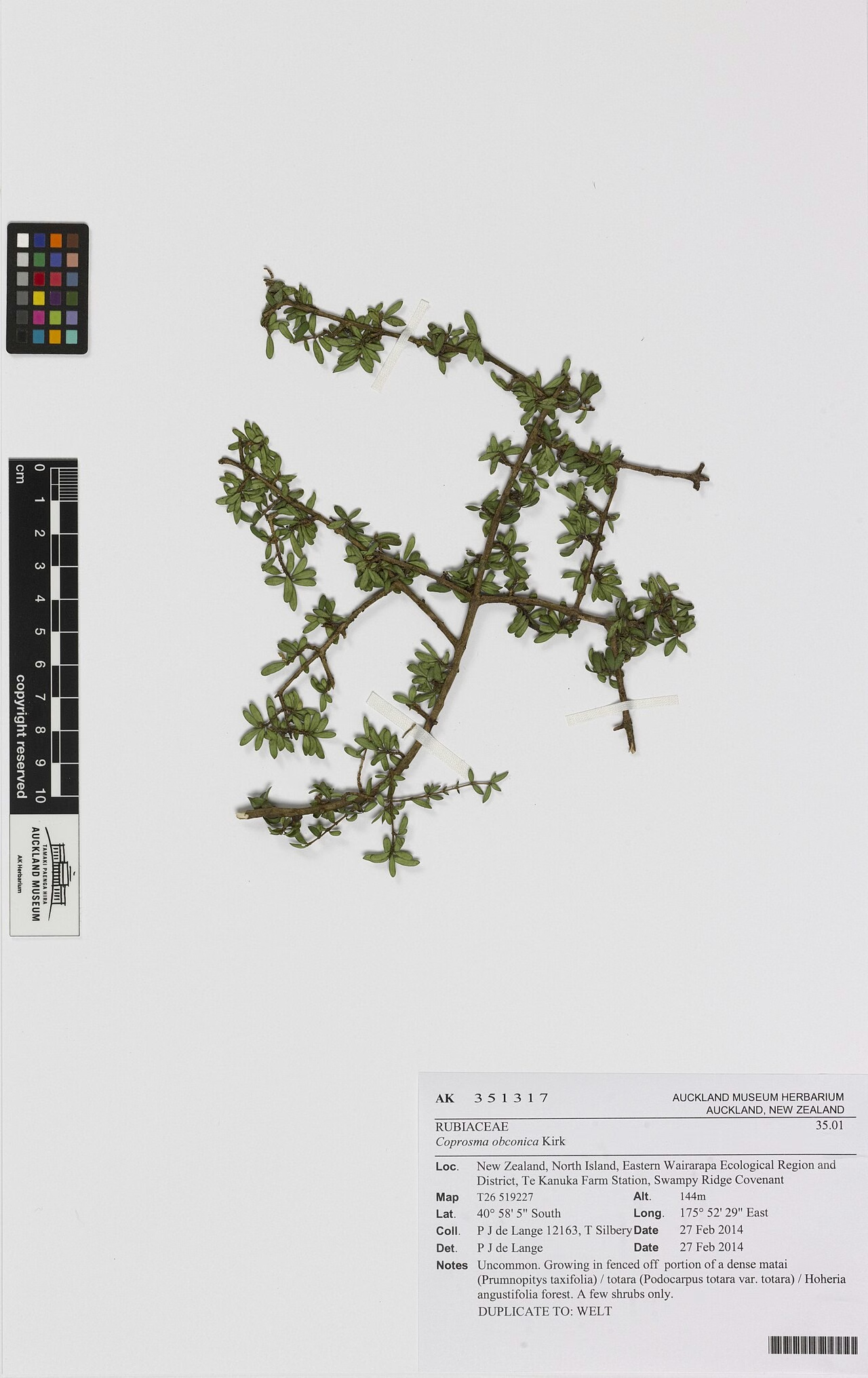
Coprosma obconica
Coprosma obconica
Coprosma pseudociliata
Coprosma pseudociliata
Plant Conservation
Coprosma depressa is ranked Not Threatened (2023) and has been since 2004. It is Regionally Not Threatened in Otago, but in the Wellington region it is listed as Regionally Naturally Uncommon (2025), reflecting the limited montane habitat there.
Most populations lie within national parks, forest parks and other conservation land. Controlling browsing animals and weeds in montane rocky habitats helps keep it secure.
Frequently Asked Questions
What is Coprosma depressa?
It is an endemic prostrate shrub in the coffee family (Rubiaceae) that forms flat, sprawling mats of rooting stems with small leathery leaves and bright red fruit, mainly in montane to low alpine areas.
How can you tell Coprosma depressa from other low Coprosma species?
NZPCN notes that no other species combines a low sprawling habit with large whitish stipules. Coprosma crenulata has glossier, thicker leaves with dented tips and short toothed stipules, while C. cheesemanii and C. cuneata have much narrower leaves.
Where does Coprosma depressa grow?
It is widespread from Hikurangi southwards through the North Island, South Island and Stewart Island/Rakiura, on well-drained or rocky montane to low alpine sites between about 600 and 1300 m, often trailing over boulders.
When does Coprosma depressa flower and fruit?
NZPCN records flowering in December and fruiting from January to March, when the bright red to orange-red round fruits are visible on female plants.
Sources and Further Reading
The botanical, growing, and conservation details for Coprosma (Coprosma depressa) on this page draw on the New Zealand plant references below. Consult them for full technical records and the latest distribution data.