Colobanthus
Colobanthus muelleri
Last updated:
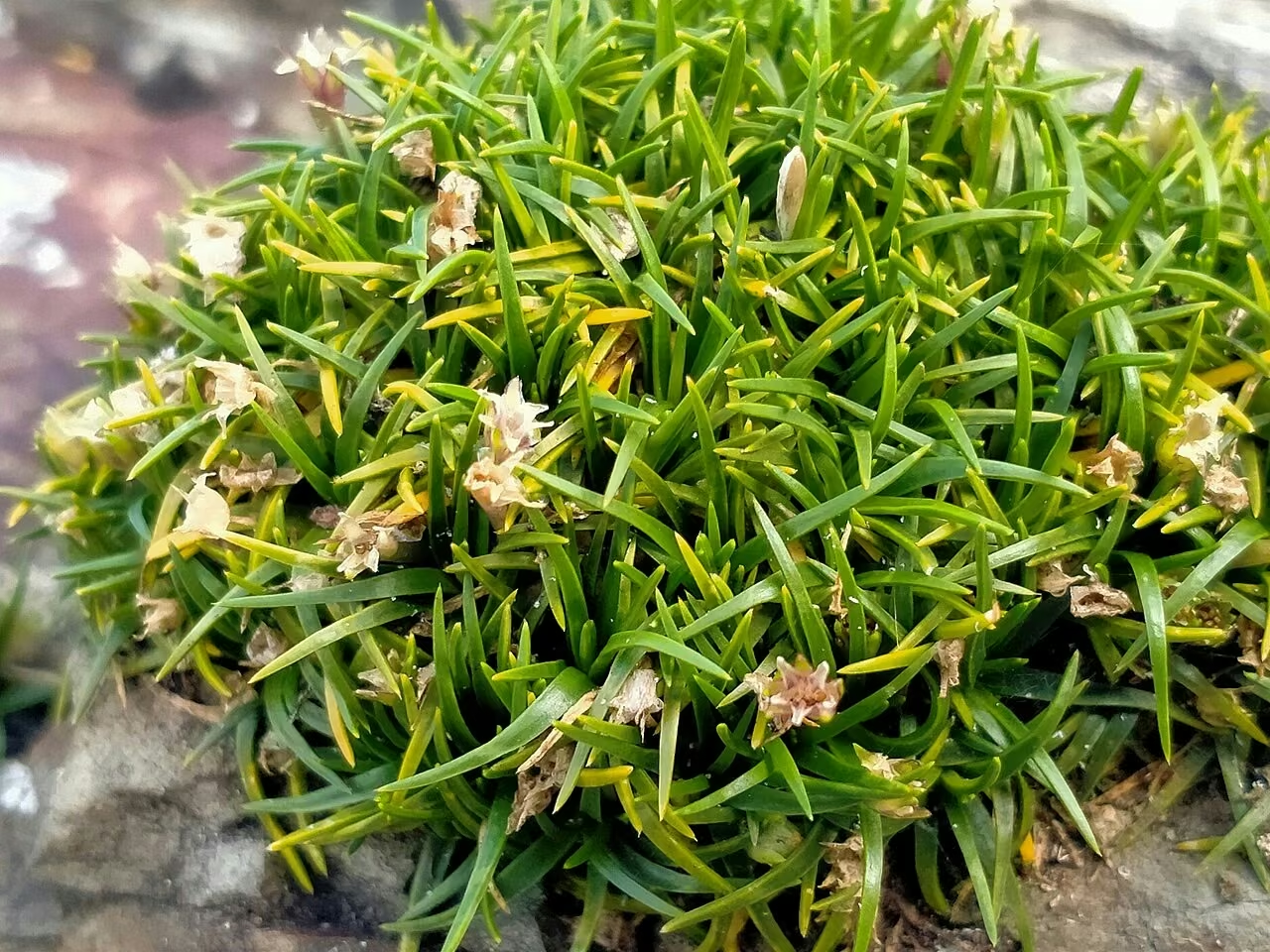
Colobanthus muelleri is a small coastal herb in the carnation family (Caryophyllaceae), endemic to New Zealand. It grows as a few flat rosettes, each 1 to 2 cm across, of firm, green, recurved leaves 10 to 15 mm long, rising from a short woody crown. Its petal-less green flowers stand among the leaves for much of the year. Unlike most of its alpine relatives it lives by the sea, on coastal cliffs and fixed shingle, and is plentiful around Cook Strait, ranging south to Stewart Island and east to the Chatham Islands. It is ranked Not Threatened, though data on its population size and trend are poor. Explore more native ground covers in our native plant guide.
Plant Description
Colobanthus muelleri forms distinct flat rosettes, usually only a few, each about 1 to 2 cm across. The branches are few and very short, building up a small woody crown. The leaves are green, firm and recurved. Each has a broad sheath that narrows abruptly into a blade 10 to 15 mm long and 1 to 1.5 mm wide, channelled on the upper side when dry, and ending abruptly in a colourless point that is longer than the width of the leaf just below it.
The flower stalks are shorter than the leaves but often stand erect from among them. The flowers are narrow at the base and have no petals; the five green sepals are about 4 mm long with membranous margins that are often turned in towards the top, and each narrows abruptly to a definite point. The capsule has five valves and is often barely two-thirds the length of the sepals when mature.
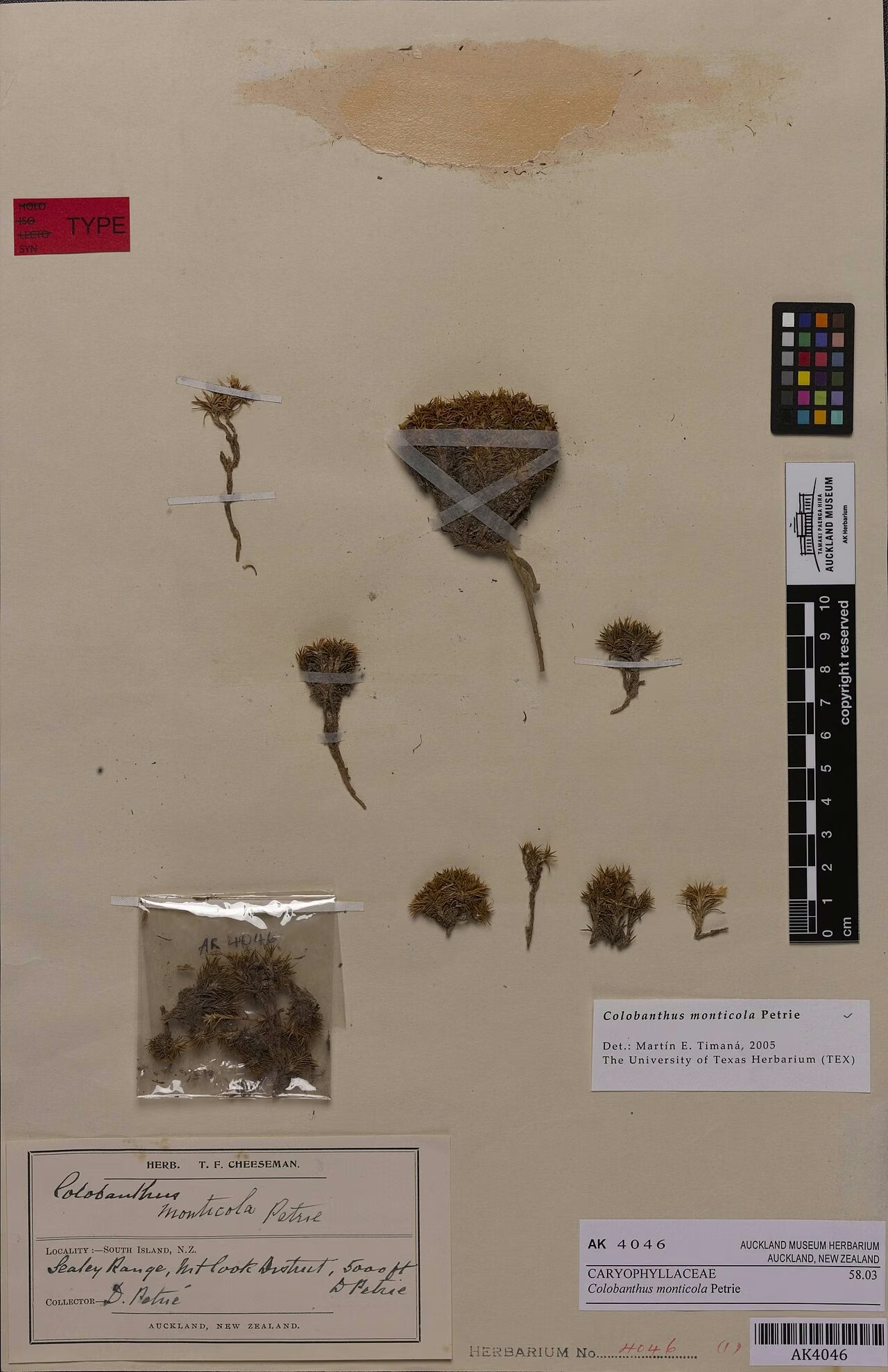
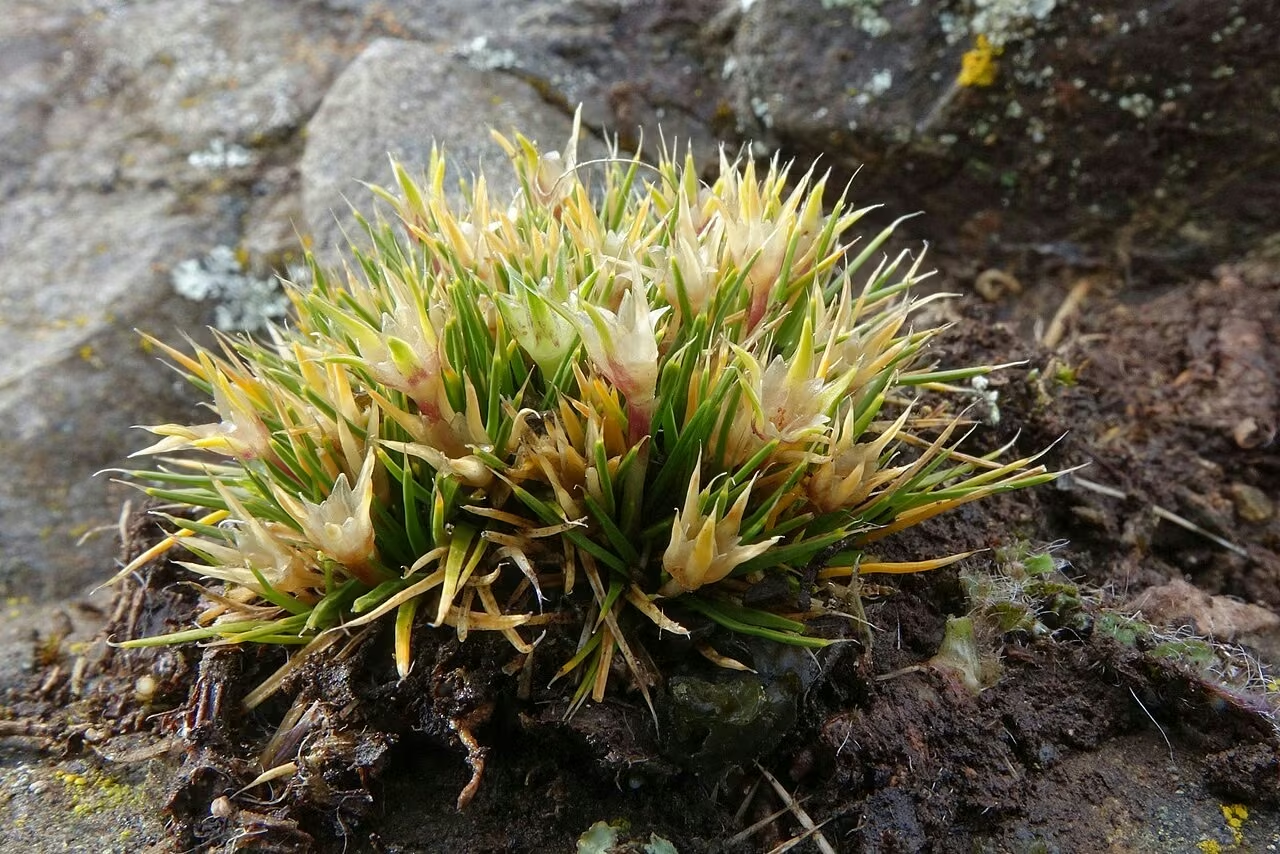
Its coastal habitat, flat rosettes and recurved green leaves separate it from Colobanthus strictus, a mainly inland species with erect yellowish leaves that taper gradually to a long needle tip, and which was once treated as a variety of C. muelleri. It is also very different from the tiny, short-leaved alpine cushions of C. canaliculatus and C. monticola.
Quick Facts
| Scientific Name | Colobanthus muelleri |
|---|---|
| Height | A few cm; flat rosettes |
| Spread | Rosettes 1-2 cm across, usually few together |
| Water Needs | Low to moderate; free-draining coastal sites |
| Light | Full sun on open coastal cliffs and shingle |
| Frost Tolerance | Moderate; ranges to Stewart Island and the Chathams |
| Salt Tolerance | High; grows on coastal cliffs and shingle |
| Growth Rate | Slow |
| Lifespan | Perennial |
Climate Best Suited to
It suits windy, temperate coastal climates from Taranaki and Cook Strait south to Stewart Island and the cool, oceanic Chatham Islands.
Regional Suitability
| City | Climate Suitability |
|---|---|
| Auckland | Low |
| Wellington | High |
| Christchurch | Medium |
| Dunedin | Medium |
Plant Habitat
Allan (1961) describes Colobanthus muelleri as plentiful on the shores of Cook Strait, and quotes Cheeseman as saying it is not uncommon from Manaia in Taranaki and from East Cape southwards. It also occurs in the South Island, on Stewart Island and on the Chatham Islands, where Ferdinand von Mueller first described it in 1864 as a variety of Colobanthus billardierei.
Its habitat is coastal cliffs and fixed (stable) shingle, where it grows in open, salt-exposed sites with little competition. It is listed as Regionally Naturally Uncommon in both the Wellington and Otago regional assessments.
Growing Requirements
Soil Requirements
It roots into thin soils on coastal cliffs and into stable gravel and shingle beaches.
- Gritty or shingly, free-draining substrate
- Low fertility
- Stable rather than mobile shingle
Light Requirements
Coastal cliffs and shingle are open and sunny, with no overhead cover.
- Full sun
- Keep clear of taller grasses and weeds that would shade the rosettes
Water Requirements
It copes with the wind and drying of exposed coasts, relying on rain and sea spray.
- Water only in prolonged dry spells in cultivation
- Avoid waterlogging
Planting and Establishing
Colobanthus muelleri is not a standard nursery plant, but its coastal habit makes it a better candidate for cultivation than the alpine Colobanthus. It needs a sunny, open position in very gritty, free-draining soil.
It is best suited to coastal rock gardens, gravel gardens or troughs where it will not be swamped by vigorous neighbours. Do not collect plants from the wild.
Ecological Role
NZPCN notes that Colobanthus seeds are winged and dispersed by water and possibly also by wind and ballistic release. For a plant of shores and cliff bases, water dispersal along the coast may help explain its wide range from Taranaki to the Chatham Islands.
The pollinators of its small green flowers are not recorded in the sources consulted. It is one of the small herbs that occupy bare gaps on coastal cliffs and stable shingle, habitats that are easily invaded by weeds.
Uses & Significance
Garden Uses
A curiosity for collectors of small native coastal plants rather than a mainstream garden plant.
- Coastal gravel or rock gardens
- Troughs and containers with gritty mix
- Educational plantings of native coastal herbs
Ecological Value
It is part of the specialised native herb flora of coastal cliffs and shingle.
- Endemic coastal herb found from the North Island to the Chatham Islands
- Occupies open microsites on cliffs and fixed shingle
- Regionally uncommon in Wellington and Otago
Landscaping Uses
In coastal restoration it could be included among small native herbs on stable shingle or cliff-base plantings, but it is too small to make a visual impact on its own.
In a garden, group several rosettes among pebbles so that their neat form is visible.
Seasonal Care Calendar
Spring
Flowering begins as early as September, unusually early for the genus.
- Weed around rosettes to keep them open
- Top up gravel mulch
Summer
Flowering and fruiting continue, with capsules ripening from November.
- Collect seed from cultivated plants
- Water only in long droughts
Autumn
Flowering and fruiting taper off by April.
- Remove smothering weeds
- Leave capsules to self-seed if desired
Winter
Growth slows in the cooler months.
- Ensure good drainage during wet weather
- No feeding needed
When to Prune and How Much
No pruning is needed for these small rosettes.
Simply remove dead leaves or spent stems by hand if they collect at the base of cultivated plants.
How to Grow Colobanthus
No published propagation guide for Colobanthus muelleri was found in the sources consulted, so the advice below applies general methods for small rosette-forming members of the carnation family to what is known of this species. It has a long flowering and fruiting season, from September to April, which gives plenty of opportunity to collect seed from cultivated plants. The seeds are small and winged, and the five-valved capsule is often shorter than the sepals at maturity, so seed can be hidden inside the persistent sepals. Because it is a coastal plant of relatively low altitude, it is likely to be more tolerant of lowland nursery conditions than its alpine relatives, but sharp drainage is still essential.
From Seed
Seed is the most practical method. Collect from ripe capsules on cultivated plants and sow promptly.
- Gather ripe capsules between November and April
- Sow seed on the surface of a gritty seed mix and dust over with fine sand
- Keep in a bright, airy place and water from below
- Pot seedlings individually into a free-draining mix once they form small rosettes
By Division
Where a plant has formed several rosettes on a woody crown, a rosette with some root attached can sometimes be separated.
- Lift a multi-rosette cultivated plant carefully in spring
- Separate a rosette with its own roots using a clean knife
- Replant into gritty mix and keep lightly shaded for two weeks
- Return to full sun once established
Pests & Diseases
No specific pests are recorded. The main hazard in the wild is competition from weeds and coastal grasses, which can overgrow small herbs on cliffs and shingle.
In cultivation, poor drainage and humid, still air are the most likely causes of failure.
Cultural Significance
No Māori name or traditional use is recorded for Colobanthus muelleri in the sources consulted.
The species carries the name of Ferdinand von Mueller, who described the Chatham Islands plant as Colobanthus billardierei var. brachypoda in 1864. Thomas Kirk raised it to species rank as Colobanthus muelleri in his 1895 revision of the genus.
Bonus Tip
Look for this plant on stable shingle and cliffs around the Wellington south coast and Cook Strait, where Allan described it as plentiful. Its long flowering season, from September to April, means you have a good chance of finding flowers or fruit on almost any spring or summer visit.
Related Plants
Explore other native plants that share similar characteristics or habitats with Colobanthus (Colobanthus muelleri), offering further insights into New Zealand's diverse flora. These related species provide context and opportunities for complementary planting in your garden.
Colobanthus brevisepalus
Colobanthus brevisepalus
Colobanthus buchananii
Colobanthus buchananii
Colobanthus canaliculatus
Colobanthus canaliculatus
Colobanthus monticola
Colobanthus monticola
Colobanthus strictus
Colobanthus strictus
Coprosma crenulata
Coprosma crenulata
Coprosma decurva
Coprosma decurva
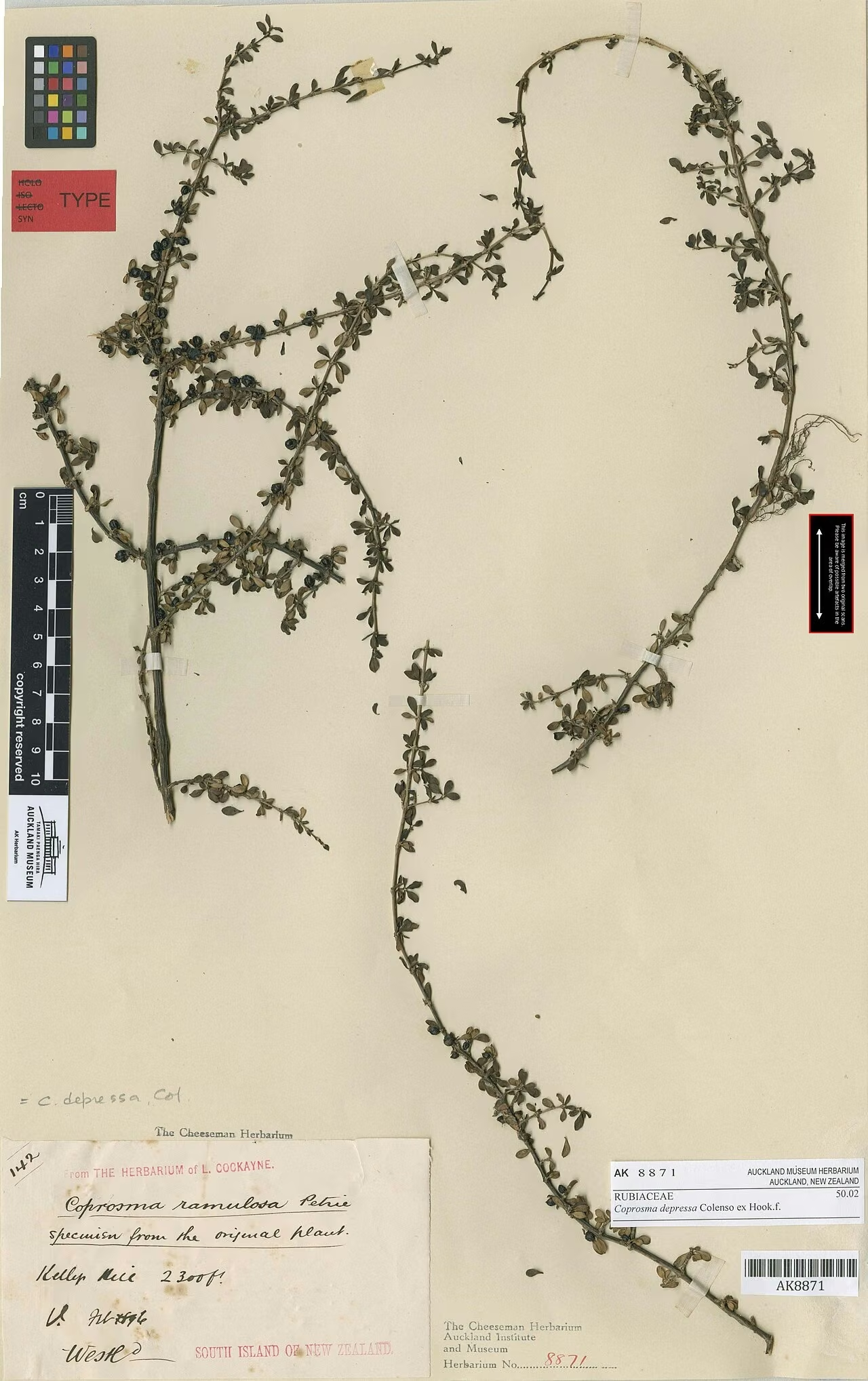
Coprosma depressa
Coprosma depressa
Plant Conservation
Colobanthus muelleri is ranked Not Threatened (2023) with the qualifiers DPS and DPT, meaning information on its population size and trend is poor. It is listed as Regionally Naturally Uncommon in both the Wellington and Otago 2025 regional assessments.
Coastal cliffs and shingle are under pressure from weeds, vehicles and development, so protecting stable shingle beaches and controlling weeds helps this species. Recording observations helps fill the data gaps noted in its ranking.
Frequently Asked Questions
Where does Colobanthus muelleri grow?
It grows on coastal cliffs and fixed shingle. Allan's Flora describes it as plentiful on the shores of Cook Strait and records it from Taranaki and East Cape southwards, plus the South Island, Stewart Island and the Chatham Islands.
Who is Colobanthus muelleri named after?
It honours Baron Ferdinand von Mueller, the nineteenth century German-Australian botanist who founded the National Herbarium of Victoria and wrote an account of the vegetation of the Chatham Islands.
How is Colobanthus muelleri different from Colobanthus strictus?
Colobanthus muelleri has green, recurved leaves abruptly ending in a short colourless point and grows mainly on the coast. Colobanthus strictus has stiff, erect, yellowish leaves tapering gradually to a long needle tip and is mainly a mountain plant.
When does Colobanthus muelleri flower?
It has a long season, with flowering recorded from September to April and fruiting from November to April.
Sources and Further Reading
The botanical, growing, and conservation details for Colobanthus (Colobanthus muelleri) on this page draw on the New Zealand plant references below. Consult them for full technical records and the latest distribution data.