Pink Bindweed
Convolvulus sepium subsp. roseata
Last updated:
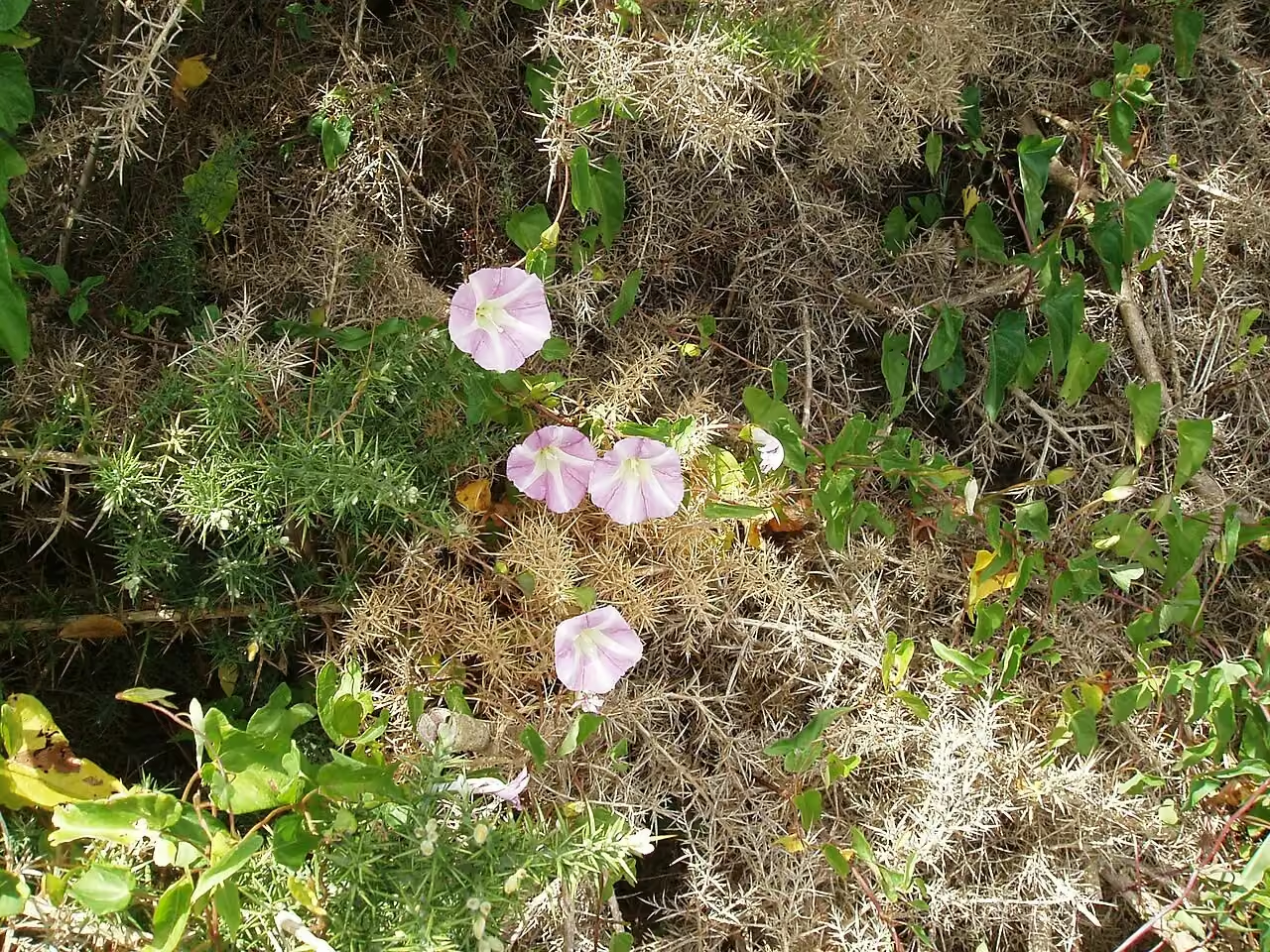
Pink bindweed or pōhue (Calystegia sepium subsp. roseata, now Convolvulus sepium subsp. roseata) is a vigorous native twining vine of coastal and lowland New Zealand. It dies back in winter and regrows each summer from white, fleshy rhizomes, climbing over shrubs, flax and fences on purple stems. Its narrowly triangular, arrow-shaped leaves are 3 to 14 cm long, and from September to April it bears pink to deep pink trumpet flowers 4 to 6 cm across with white bands down each petal. It is indigenous throughout New Zealand and also overseas, and is Not Threatened. Māori ate its starchy roots, but it is aggressive and NZPCN considers it unsuitable for gardens. Explore more native vines in our native plant guide.
Plant Description
Pink bindweed is a summer-green, rhizomatous vine with thickened white roots, and all parts exude a white latex when broken. The twining stems are smooth or nearly so and purple to purple-red.
The leaves are thin, dark to yellow-green, usually narrowly triangular and arrow-shaped (sagittate), 30 to 140 mm long, with a deeply cleft to rounded notch at the base. The flowers are solitary on stalks 30 to 120 mm long, each enclosed at the base by two broad-ovate bracts 12.5 to 30 mm long. The trumpet-shaped corolla is usually about 50 mm long, with a flared limb 40 to 60 mm across that is pink to dark pink with white bands down the middle of each petal. The fruit is a papery, roughly spherical capsule about 10 mm across containing dark brown to almost black seeds.
The introduced great bindweed, Calystegia silvatica, has broader triangular-ovate dark green leaves, non-overlapping bracts and larger white flowers more than 55 to 60 mm across. Hybrids between the two have pale pink and white striped flowers. Pink bindweed also hybridises readily with the native Calystegia tuguriorum and less often with shore bindweed (Calystegia soldanella).
Quick Facts
| Scientific Name | Convolvulus sepium subsp. roseata |
|---|---|
| Height | Twines over shrubs, hedges and fences; height set by its support |
| Spread | Spreads widely by underground rhizomes |
| Water Needs | Moderate to high; common on wetland margins |
| Light | Full sun to partial shade |
| Frost Tolerance | Top growth dies back in winter; rhizomes survive |
| Salt Tolerance | Common in coastal habitats; salt tolerance not documented |
| Growth Rate | Fast |
| Lifespan | Perennial, summer-green |
Climate Best Suited to
Thrives in mild, moist coastal and lowland climates throughout New Zealand. It dies back to its rhizomes in winter, so frosts do not kill established plants.
Regional Suitability
| City | Climate Suitability |
|---|---|
| Auckland | High |
| Wellington | High |
| Christchurch | High |
| Dunedin | Medium |
Plant Habitat
Pink bindweed is indigenous throughout New Zealand, including the Three Kings Islands, the North, South and Stewart Islands and the Chatham Islands. It is also found elsewhere in the southern hemisphere.
NZPCN describes it as a weedy species of coastal and lowland successional habitats that very rarely extends into montane forest. It is often found scrambling along the margins of wetlands, and it has spread into urban areas, where it can be very aggressive over fences, hedges and garden shrubs.
Growing Requirements
Soil Requirements
It grows in a wide range of soils, but is most vigorous in moist, fertile ground such as wetland margins.
- Moist, fertile soils
- Tolerates disturbed and urban soils
- Rhizomes penetrate deeply and spread underground
Light Requirements
It climbs towards the light over supporting vegetation, and flowers best in sun.
- Full sun to partial shade
- Flowers most freely when the stems reach open light
Water Requirements
It favours damp ground, especially along wetland edges, but the fleshy rhizomes help it survive dry periods.
- Grows most strongly in moist soil
- Survives summer dry spells from stored reserves in its rhizomes
Planting and Establishing
NZPCN recommends against cultivating pink bindweed because it is very aggressive and weedy. It spreads by rhizomes and layered stems and quickly smothers garden plants, and the white rhizomes regrow from small fragments.
If it arrives naturally in a wetland restoration area it may be tolerated on margins as part of the native successional vegetation, but keep it away from young plantings it could smother.
Ecological Role
Pink bindweed is a plant of early successional vegetation, quickly covering disturbed ground and the edges of wetlands and shrubland. Its large pink trumpet flowers open over a long season from September to April, and capsules can be present from October to August.
It hybridises readily with Calystegia tuguriorum, and less often with Calystegia soldanella and with the introduced great bindweed, which has blurred the identity of some populations. The insects that pollinate it in New Zealand are not documented in the sources consulted.
Uses & Significance
Garden Uses
It has little place in gardens because of its aggressive spread, although it is attractive when in flower.
- Not recommended for planting in gardens
- Can be tolerated on wild wetland margins
- Of interest as a traditional Māori food plant
Ecological Value
It is part of the native vegetation of coastal and lowland wetland margins and successional scrub.
- Quickly covers disturbed ground
- Long flowering season over spring and summer
- An indigenous member of New Zealand's bindweed group
Landscaping Uses
Pink bindweed is not used in landscaping. For a better-behaved native climber with showy flowers, consider plants such as native clematis, which do not spread by rhizomes.
Where it is already present on a wetland edge, letting it scramble over flax or raupō margins can be accepted, as long as it is cut back from young or desirable plants.
Seasonal Care Calendar
Spring
New shoots arise from the rhizomes and flowering begins in September.
- Pull young shoots where it is not wanted
- Identify it by its pink, white-banded flowers
Summer
Growth and flowering peak as the vines climb over surrounding plants.
- Cut back stems smothering other plants
- Capsules begin to form
Autumn
Flowering continues until April and capsules ripen.
- Remove seed capsules to limit spread
- Dig out rhizomes from garden beds
Winter
The top growth dies back and the plant survives as rhizomes below ground.
- Good time to dig out rhizomes from unwanted areas
- Old capsules may persist until August
When to Prune and How Much
Where it is tolerated, cut stems back whenever they begin to smother shrubs or young plants. The plant regrows from its rhizomes, so cutting does not kill it.
To remove it from a garden, repeatedly pull or cut the shoots and dig out as much of the white rhizome as possible, as fragments left in the soil resprout.
How to Grow Pink Bindweed
NZPCN states that pink bindweed is easy to grow from seed, layered pieces and from the root stock, but adds that it is very aggressive and weedy and not suitable for cultivation. In most situations there is no need to propagate it at all, because it arrives and spreads on its own. The methods below are recorded for completeness, for example for growing a few plants for a study collection, a traditional food garden in a contained bed, or a controlled wetland margin. Grow it only where the rhizomes are confined, and never plant it near native shrubland or garden borders where it could escape and smother other plants.
From Rhizome
The thick white rhizomes regrow readily from sections, which is why the plant is so hard to remove once established.
- Dig up a length of white rhizome in late winter or spring
- Cut it into pieces 5 to 10 cm long
- Lay the pieces horizontally in a pot of moist potting mix and cover lightly
- Keep in a sheltered spot until shoots appear
- Plant only into a contained bed or large pot
From Seed
The papery capsules contain dark brown to almost black seeds that can be sown in spring.
- Collect ripe capsules in late summer or autumn
- Extract the hard, dark seeds
- Sow in spring in a seed tray at about twice their depth
- Pot seedlings on individually
By Layering
Stems that touch moist ground can root, giving another easy method of increase.
- Peg a stem onto the surface of a pot of moist mix
- Sever it from the parent once roots form
Pests & Diseases
No serious pests or diseases are recorded for pink bindweed in New Zealand. The plant itself is more often treated as a garden weed than as a plant needing protection.
Its main management issue is its own spread: rhizome fragments and seed allow it to reinvade cleared areas.
Cultural Significance
Ngā Tipu Whakaoranga records many Māori names for Calystegia sepium, including pōhue, pōhuehue, pōpōhue, akapōhue, panahi, panake, rauparaha and nahinahi. The roots were a significant food: they were described as floury as a potato with a slight bitter taste, and were dried and soaked before steaming. Leaves were eaten in the Tūhoe district, boiled roots were reportedly eaten by nursing mothers, and a proverb compared the hidden roots to the secret thoughts of the human heart.
On the Chatham Islands, Moriori tradition also associates the plant with their ancestral homeland. Note that some of these names, such as pōhuehue, are also applied to other plants, so they are not unique to this bindweed.
Bonus Tip
Before pulling every bindweed out of a hedge, look at the flowers. A pink flower with white bands down each petal is the native pink bindweed, while a large pure white flower is likely the introduced great bindweed. Both spread aggressively, but knowing which is which helps botanists track hybrids between them.
Related Plants
Explore other native plants that share similar characteristics or habitats with Pink Bindweed (Convolvulus sepium subsp. roseata), offering further insights into New Zealand's diverse flora. These related species provide context and opportunities for complementary planting in your garden.
Lees Valley Daisy
Brachyscome pinnata
Grassland Daisy
Brachyscome sinclairii
Callitriche aucklandica
Callitriche aucklandica
Mueller's Starwort
Callitriche muelleri
Beach Bean
Canavalia rosea
Panapana
Cardamine dolichostyla

Campbell Island Bittercress
Cardamine subcarnosa
Aston's Sedge
Carex astonii
Plant Conservation
Pink bindweed is ranked Not Threatened (2023) with the qualifier SO (Secure Overseas). It is Regionally Not Threatened in Auckland but ranked Regionally Naturally Uncommon in the Wellington region.
It needs no active conservation management. Hybridisation with other bindweeds, including the introduced great bindweed, is the main issue affecting the integrity of the native subspecies.
Frequently Asked Questions
Is pink bindweed native to New Zealand?
Yes. Calystegia sepium subsp. roseata is indigenous throughout New Zealand, including the Three Kings, North, South, Stewart and Chatham Islands, and also occurs naturally elsewhere in the southern hemisphere.
How do you tell native pink bindweed from the introduced great bindweed?
Great bindweed (Calystegia silvatica) has broader, dark green leaves, bracts that do not overlap and much larger white flowers over 55 to 60 mm across. Pink bindweed has narrower arrow-shaped leaves and smaller pink flowers with white bands.
Did Māori eat pōhue roots?
Yes. Ngā Tipu Whakaoranga records that the roots of Calystegia sepium were cooked and eaten, described as floury like potato with a slightly bitter taste, and that leaves were eaten in the Tūhoe district.
Should I plant pink bindweed in my garden?
NZPCN advises against it. Although native, it is very aggressive and weedy, especially in urban areas, and spreads by rhizomes that are hard to remove.
Sources and Further Reading
The botanical, growing, and conservation details for Pink Bindweed (Convolvulus sepium subsp. roseata) on this page draw on the New Zealand plant references below. Consult them for full technical records and the latest distribution data.