Lees Valley Daisy
Brachyscome pinnata
Last updated:
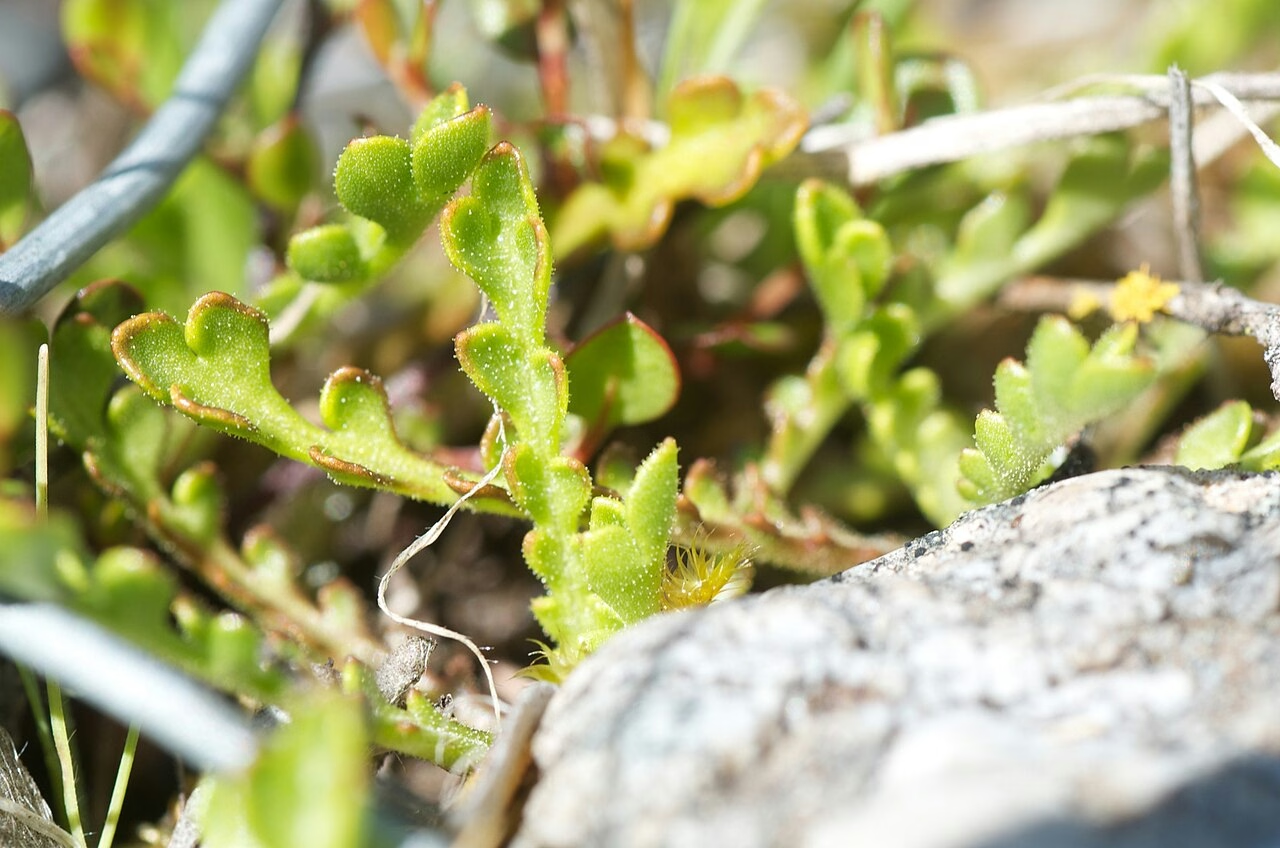
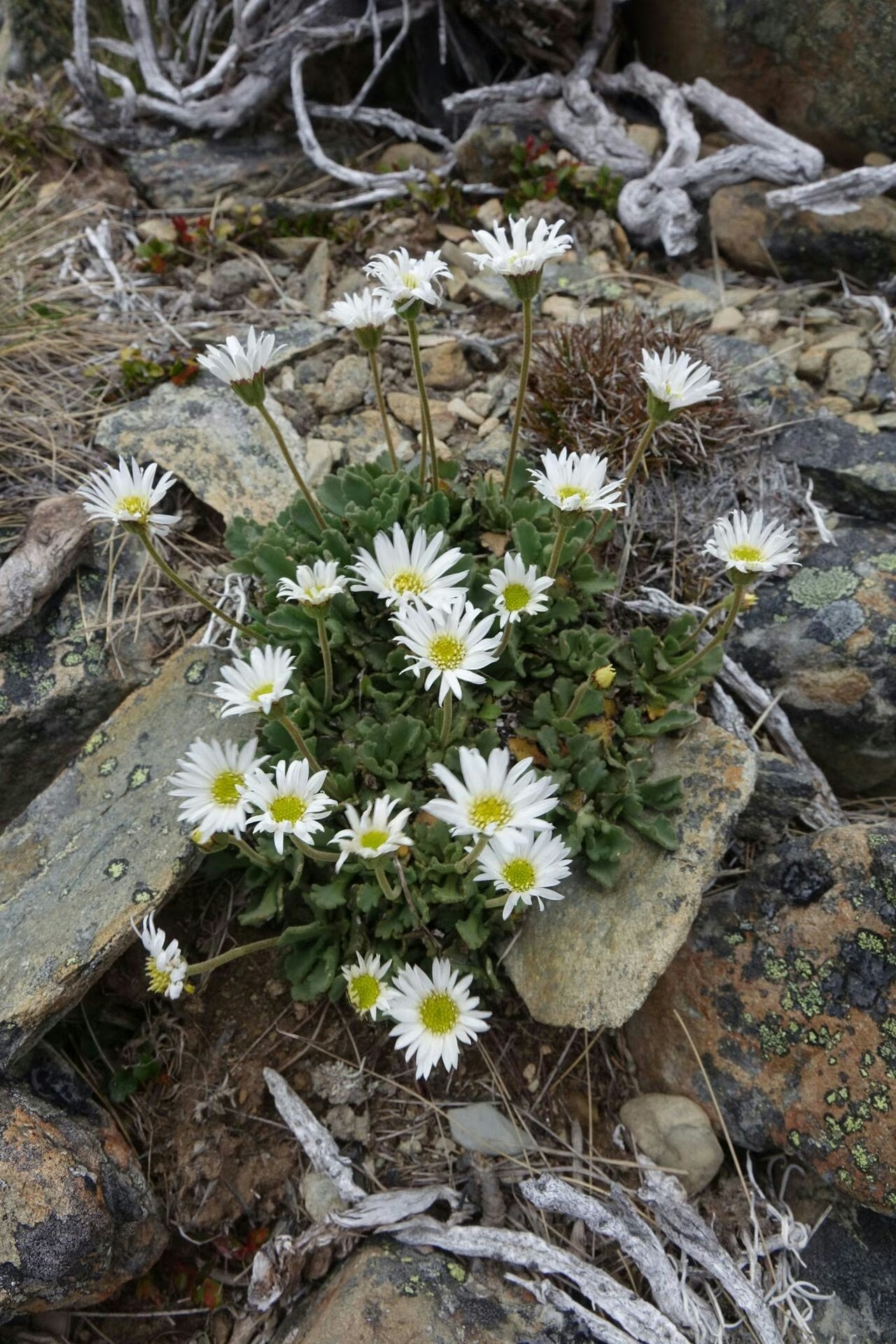
Lees Valley daisy (Brachyscome pinnata) is a small, rosette-forming daisy endemic to Canterbury, and one of New Zealand's rarest grassland plants. It spreads by stolons into small, circular patches of fleshy, dark green to bronze-green leaves that are deeply cut into rows of round lobes. From October to May it carries white-rayed daisies 15 to 25 mm across on slender, dark stalks. Only four patches are known in the wild, at a single site in short tussock grassland on stony alluvium, and they do not appear to set viable seed. It is ranked Threatened - Nationally Endangered, yet it is easy to grow from division in a sunny pot or rock garden. Explore more native flowering plants in our native plant guide.
Plant Description
Brachyscome pinnata is a rosette-forming herb that spreads by stolons into small, diffuse, circular patches in open sites within short tussock grassland.
The leaves are succulent, fleshy and leathery, 15 to 80 mm long and 5 to 8 mm wide, dark green, red-green or bronze-green, narrowly linear-oblong to lanceolate and widening towards the tip. They are pinnatifid or deeply lobed, with eight to ten or more round, close-set lobes that barely overlap and have smooth edges.
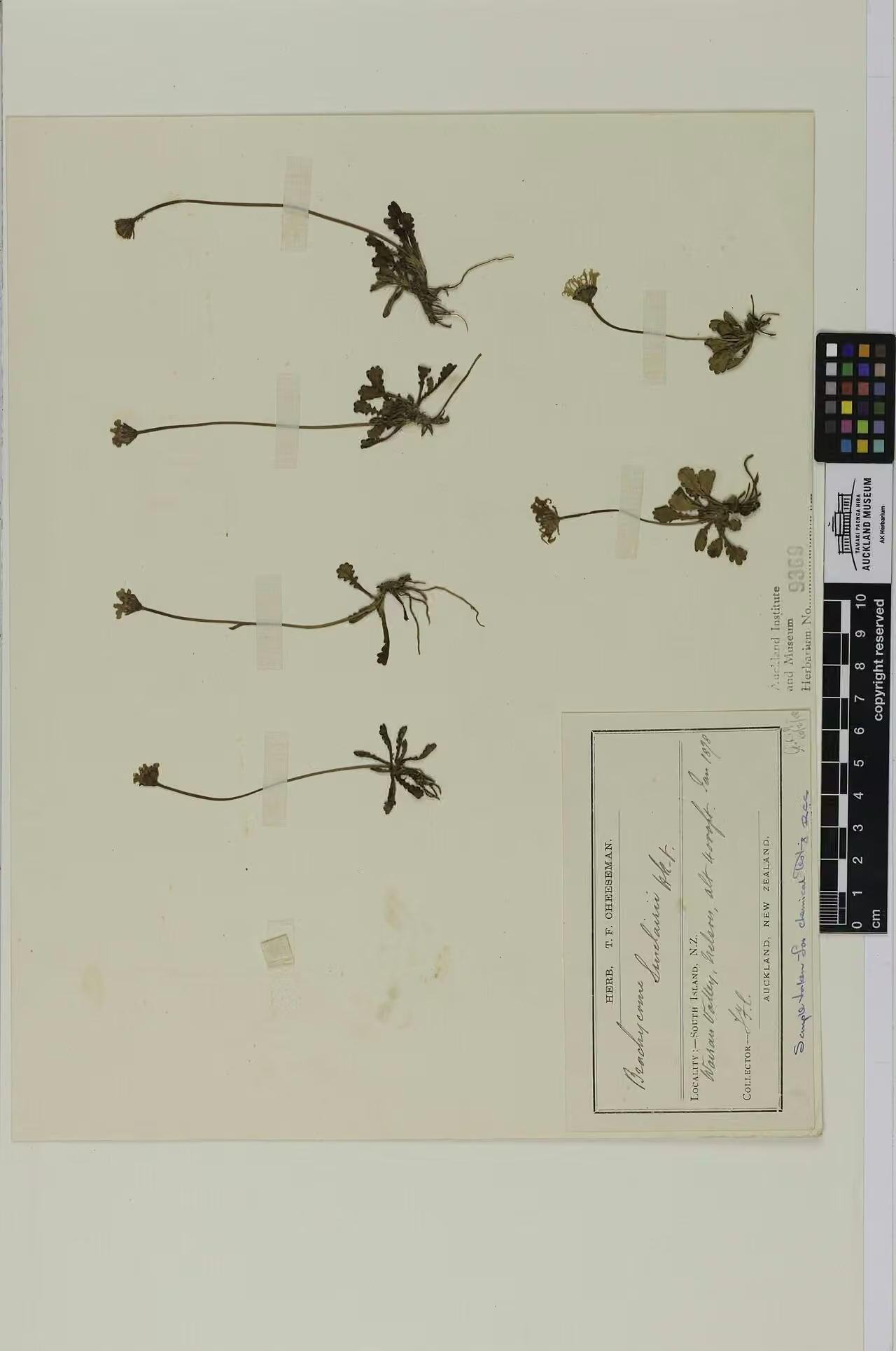
Each rosette produces one to four or more slender, wiry flower stalks 50 to 180 mm long, dark brown to brown-black and slightly glandular-hairy near the flower head. The heads are 15 to 25 mm across, with white ray florets 8 to 12 mm long around a yellow disc. Its closest relative is Brachyscome sinclairii, which has less consistently lobed leaves.
Quick Facts
| Scientific Name | Brachyscome pinnata |
|---|---|
| Height | Flower stalks 5 to 18 cm; leaves 1.5 to 8 cm |
| Spread | Small circular patches spreading by stolons |
| Water Needs | Low to moderate; free-draining soil |
| Light | Full sun; does not tolerate much shade |
| Frost Tolerance | High; an inland Canterbury grassland plant |
| Salt Tolerance | No information available; an inland species |
| Growth Rate | Moderate |
| Lifespan | Perennial |
Climate Best Suited to
Suits the dry, continental climate of inland Canterbury, with hot dry summers, cold frosty winters and periodic drought. In cultivation it needs a sunny, open site.
Regional Suitability
| City | Climate Suitability |
|---|---|
| Auckland | Low |
| Wellington | Medium |
| Christchurch | High |
| Dunedin | Medium |
Plant Habitat
Brachyscome pinnata is endemic to Canterbury in the South Island. Older records suggested a wider eastern South Island range, but herbarium evidence indicates it has always been restricted to Canterbury. In recent times it has been gathered from only one location, which gives it the name Lees Valley daisy; exact site details are generalised to protect the plants.
There it grows among short grasses, mainly Rytidosperma species, small annual weeds and mosses, or at the base of kānuka shrubs on stony alluvium. NZPCN notes that its exact habitat preferences remain uncertain because so little of it survives.
Growing Requirements
Soil Requirements
In the wild it grows on stony alluvium, and in cultivation it does best in free-draining but fertile soil.
- Free-draining, stony or gritty soil
- Reasonably fertile mix in pots
- Avoid wet, heavy soil
Light Requirements
It grows in open, sunny gaps in short tussock grassland and will not tolerate much shade.
- Full sun
- Keep surrounding grass and weeds short so the rosettes are not shaded
Water Requirements
Its habitat is subject to seasonal drought, and the fleshy leaves help it store water, but severe drought is listed as a threat to the wild patches.
- Water pots during prolonged dry spells
- Allow the mix to dry slightly between waterings
- Do not keep constantly wet
Planting and Establishing
Grow divisions from legitimately sourced cultivated stock in a pot, trough or sunny rock garden. Use a free-draining, fertile mix and plant the rosettes at soil level so the crowns stay dry.
Give the stolons room to spread into a small patch, and keep the area weeded, since competition from grasses is one of the main problems the species faces in the wild.
Ecological Role
The wild population does not appear to set viable seed, so it persists by spreading vegetatively through its stolons. Whether this is caused by a lack of compatible partners or another factor is not stated in the sources consulted.
It occupies open gaps among short grasses, mosses and annual herbs and depends on those gaps staying open. When rabbit control reduced grazing, taller grasses grew up and began to crowd it out, showing how dependent it is on short, open vegetation.
Uses & Significance
Garden Uses
One of the few critically rare natives that is easy in cultivation, it makes a charming pot plant.
- Pots and troughs in full sun
- Rock gardens and gravel beds
- Threatened plant collections that help keep it in cultivation
Ecological Value
As one of New Zealand's rarest grassland daisies, every cultivated plant helps safeguard the species against loss of its only wild site.
- A Nationally Endangered Canterbury endemic
- Part of the threatened short tussock grassland flora of inland Canterbury
- Cultivated stock provides insurance against loss of the wild patches
Landscaping Uses
Display it in a shallow, wide pot or gravel bed where the bronze-green, deeply lobed leaves can be appreciated up close, and the long-season white daisies stand above them on dark wiry stalks.
It combines well with other small sun-loving natives of dry Canterbury grasslands, but keep vigorous neighbours away so it is not overrun.
Seasonal Care Calendar
Spring
Flowering begins in October as new rosettes expand.
- Divide and repot crowded plants
- Weed around patches
Summer
Flowering continues through the summer, and the leaves may colour red or bronze in strong sun.
- Water during long dry spells
- Remove competing grasses
Autumn
Flowers continue into May, the end of a long flowering season.
- Remove spent flower stalks
- Reduce watering as growth slows
Winter
Rosettes rest through the frosty inland winter.
- Keep pots on the dry side
- Make sure drainage holes are clear
When to Prune and How Much
No pruning is required. Remove spent flower stalks and dead leaves to keep the rosettes tidy and reduce the chance of rot.
If a pot becomes congested, divide the patch rather than trimming it.
How to Grow Lees Valley Daisy
NZPCN describes Brachyscome pinnata as easily grown from division of whole plants, and because the only known wild population does not appear to set viable seed, division is the practical method. Never collect from the wild site: the species is Nationally Endangered and the four remaining patches are protected. Plants already exist in cultivation, so ask threatened-plant growers, botanic gardens or native nurseries for legitimately propagated stock. Spreading cultivated plants among growers is useful insurance, but keep a record of where each plant came from, because conservation workers may value knowing the origin of cultivated material.
By Division
The plant spreads by stolons into patches of rosettes, each of which can be separated with its own roots and grown on as a new plant.
- In spring, lift or tip out an established patch
- Separate rooted rosettes, cutting the connecting stolons with clean scissors
- Pot each rosette into a free-draining, fertile mix
- Water in and keep in bright light out of harsh midday sun for a week or two
- Move to full sun once new leaves appear
From Seed
Fruiting in the wild is not known, and the only known wild population does not appear to set viable seed. If cultivated plants of different origins produce plump seed, it may be worth sowing, but no tested germination method is recorded in the sources consulted.
- Collect any plump seed heads from cultivated plants
- Sow on the surface of a gritty seed mix
- Keep cool, bright and evenly moist
- Report any successful germination to threatened-plant specialists
Pests & Diseases
No specific pests or diseases are recorded. In pots, rot from overwatering or poor drainage is the most likely problem, and slugs may graze the fleshy leaves.
In the wild, competition from taller grasses and weeds is the main biological threat rather than any pest.
Cultural Significance
No traditional Māori name or use is recorded for Brachyscome pinnata in the sources consulted.
Joseph Hooker described it in 1864. The epithet pinnata refers to its pinnately lobed leaves, and the genus name comes from the Greek brachys, short, and comus, hair, referring to the short pappus on the fruit. The common name honours Lees Valley in North Canterbury.
Bonus Tip
If you grow Lees Valley daisy, keep it in a sunny, open spot and never let grass creep into the pot. In the wild it is losing ground to taller grasses, and the same thing happens in neglected containers, so a few minutes of weeding each month is the best care you can give it.
Related Plants
Explore other native plants that share similar characteristics or habitats with Lees Valley Daisy (Brachyscome pinnata), offering further insights into New Zealand's diverse flora. These related species provide context and opportunities for complementary planting in your garden.
Brachyglottis bifistulosa
Brachyglottis bifistulosa
Castlepoint Daisy
Brachyglottis compacta
Brachyglottis revoluta
Brachyglottis revoluta
Brachyscome montana
Brachyscome montana
Grassland Daisy
Brachyscome sinclairii
Callitriche aucklandica
Callitriche aucklandica
Mueller's Starwort
Callitriche muelleri
Pink Bindweed
Convolvulus sepium subsp. roseata
Plant Conservation
Brachyscome pinnata is ranked Threatened - Nationally Endangered (2023) with the qualifiers DPR (Data Poor: Recognition), DPT (Data Poor: Trend) and RR (Range Restricted). It was ranked Nationally Critical in the 2009 to 2017 assessments.
With a single site of four patches and no viable seed, it is at serious risk of extinction in the wild. Seasonal drought, fire, weed invasion and taller grass growth following reduced rabbit grazing all threaten it, and the site requires regular weeding. Maintaining plants in cultivation is an important safeguard.
Frequently Asked Questions
Why is the Lees Valley daisy so rare?
It is recently known from only one site with four patches, and the wild plants do not appear to set viable seed, so the population cannot readily spread or recover from losses.
What threatens Brachyscome pinnata?
NZPCN lists seasonal drought, fire and weed invasion, together with taller grass growth after rabbit numbers fell, which means the site needs regular weeding to keep the daisy from being smothered.
How is Lees Valley daisy different from Brachyscome sinclairii?
The two are closely related and Brachyscome pinnata was once treated as a variety of Brachyscome sinclairii. It is best told apart by its consistently pinnate, deeply lobed leaves with eight to ten or more round, close-set lobes.
Can you grow Lees Valley daisy in a pot?
Yes. NZPCN describes it as easily grown from division and an excellent pot or rock garden plant, needing full sun and free-draining, fertile soil.
Sources and Further Reading
The botanical, growing, and conservation details for Lees Valley Daisy (Brachyscome pinnata) on this page draw on the New Zealand plant references below. Consult them for full technical records and the latest distribution data.