Grassland Daisy
Brachyscome sinclairii
Last updated:
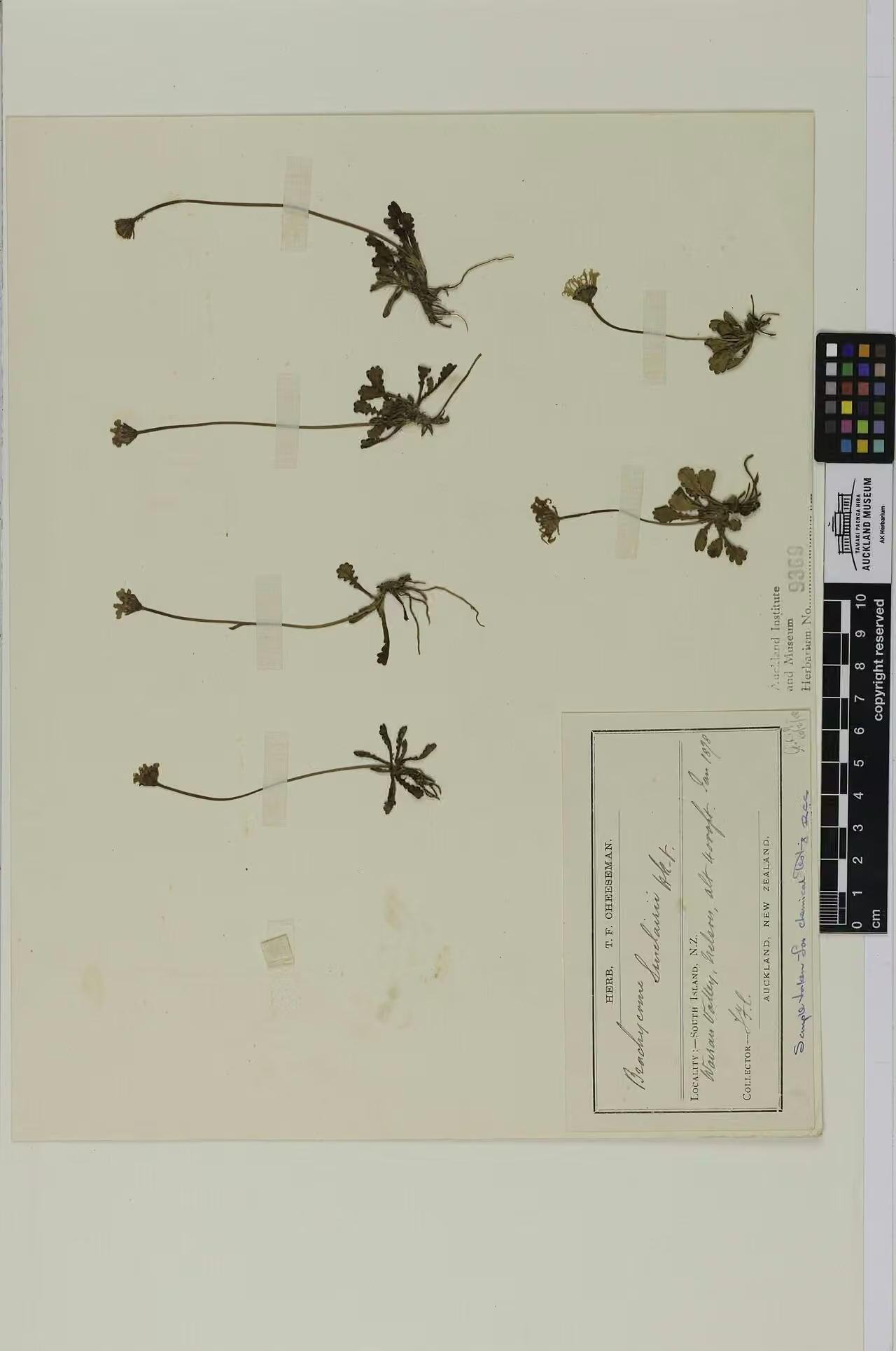
Grassland daisy (Brachyscome sinclairii) is a small, perennial rosette daisy endemic to New Zealand and found throughout the South Island. Its spoon-shaped leaves, 10 to 45 mm long, carry three to nine pairs of rounded teeth or lobes, and leafless, glandular stalks hold single white daisies with yellow centres. It flowers from August to May, mostly November to March. Unusually adaptable, it grows from sea level to the high alpine zone in tussock grassland, frost flats, herbfield, forest margins, cliffs, rocky places and riverbeds. It is ranked Not Threatened and makes a dainty plant for South Island rock gardens. Explore more native flowering plants in our native plant guide.
Plant Description
Brachyscome sinclairii is a perennial herb that forms rosettes of leaves at ground level. The leaves are spoon-shaped or wedge-shaped, narrowing to a winged stalk, with an elliptic-oblong to obovate blade 10 to 45 mm long.
Each leaf has three to nine (usually five to nine) pairs of rounded teeth or lobes and is often lyre-shaped and deeply cut, with a larger lobe at the tip. The flowering stalks are leafless and glandular-hairy, lengthening to as much as 18 cm when in fruit. Each carries a single head with white ray florets 6 to 12 mm long around a yellow disc.
The achenes are obovoid, compressed, 2 to 3 mm long and without glands, with a pappus of only a few tiny bristles 0.1 to 0.3 mm long. These strongly compressed, eglandular achenes separate it from the closely related Brachyscome radicata and Brachyscome montana, while Brachyscome pinnata has consistently deeply pinnate leaves.
Quick Facts
| Scientific Name | Brachyscome sinclairii |
|---|---|
| Height | Flower stalks up to about 18 cm in fruit |
| Spread | Single rosettes or small groups |
| Water Needs | Moderate |
| Light | Full sun to light shade |
| Frost Tolerance | High; grows to the high alpine zone and on frost flats |
| Salt Tolerance | No information available, although it occurs down to sea level |
| Growth Rate | Moderate |
| Lifespan | Perennial |
Climate Best Suited to
Tolerates a very wide range of South Island climates, from mild coastal sites to frost flats and high alpine herbfield. It is best suited to cool temperate gardens.
Regional Suitability
| City | Climate Suitability |
|---|---|
| Auckland | Low |
| Wellington | Medium |
| Christchurch | High |
| Dunedin | High |
Plant Habitat
Brachyscome sinclairii is endemic to New Zealand and occurs throughout the South Island. It ranges from sea level to high alpine elevations and grows on a variety of rock types, including alluvium, greywacke, schist and sandstone.
Its habitats include tussock grassland, frost flats, herbfield, forest margins, cliffs, rocky places and riverbeds, mostly where competition from taller plants is limited.
Growing Requirements
Soil Requirements
It grows on many different substrates, from riverbed gravels to rocky cliff ledges and grassland soils.
- Free-draining, stony or gritty soil
- Tolerates low fertility
- Avoid soil that stays waterlogged
Light Requirements
Most of its habitats are open, but it also grows at forest margins.
- Full sun for best flowering
- Tolerates light, partial shade
Water Requirements
Its range spans dry eastern riverbeds to wet alpine herbfields, so it is fairly tolerant of different moisture levels as long as drainage is good.
- Water in prolonged dry spells in pots
- Avoid standing water around the rosette
Planting and Establishing
Plant in a sunny rock garden, gravel bed, trough or the front of a native border where small plants will not be swamped. Set the rosette at soil level and mulch with fine gravel.
Use nursery-raised or garden-propagated plants rather than collecting from the wild. Several rosettes planted together give a better display of flowers.
Ecological Role
NZPCN records that its fruits are dispersed by wind. The open daisy heads offer nectar and pollen over a long flowering season, but particular pollinators are not documented in the sources consulted.
It is a small herb of open, often disturbed ground such as riverbeds and frost flats, where it can establish in gaps between grasses and stones.
Uses & Significance
Garden Uses
A dainty native daisy for rock gardens and small-scale native plantings in South Island gardens.
- Rock gardens, troughs and gravel gardens
- Edging for native grassland plantings
- Long flowering season from spring into autumn
Ecological Value
As a widespread endemic herb it is a common component of South Island grassland and riverbed flora.
- Long flowering season supports flower-visiting insects
- Colonises open gravel, rock and grassland gaps
- Grows across an exceptional altitudinal range
Landscaping Uses
Use grassland daisy in naturalistic native grassland plantings among small tussocks, where its white daisies dot the gaps between clumps for much of the year.
In a rock garden it looks best tucked into pockets between stones, echoing the cliffs and riverbeds it grows on in the wild.
Seasonal Care Calendar
Spring
New leaves expand and the first flowers can appear from August.
- Plant new rosettes
- Divide clumps
Summer
Peak flowering is from November to March.
- Water pots in dry spells
- Keep competing grasses away
Autumn
Flowering tails off by May and wind-dispersed seed is shed.
- Collect seed from garden plants
- Remove old flower stalks
Winter
Rosettes rest through frost and, at altitude, snow.
- Keep drainage clear
- No feeding needed
When to Prune and How Much
No pruning is required. Remove old flower stalks after seed fall and any dead leaves from the rosette.
If plants become tired after a few years, replace them with fresh divisions or seedlings.
How to Grow Grassland Daisy
NZPCN gives no specific propagation advice for Brachyscome sinclairii, but it notes that the closely related Brachyscome montana and Brachyscome pinnata are easily grown from division, and grassland daisy flowers and sets seed over a long season. The methods below follow the general approach for small native rosette daisies. Collect seed or plants only from your own garden or with permission, and never from public conservation land without a permit. Because Brachyscome species are hard to distinguish, keep a note of the origin of any plants you raise.
From Seed
The flowering stalks lengthen as the seed ripens, holding the heads up to about 18 cm so the light achenes can be caught by the wind. Collect heads when they start to break up.
- Collect ripe seed heads in summer or autumn
- Sow on the surface of a gritty seed-raising mix
- Cover with a fine dusting of grit
- Keep bright and evenly moist
- Prick out seedlings into small pots when they have a few true leaves
By Division
Where a plant has formed several rosettes, these can be separated with roots attached.
Division gives a flowering plant quickly and keeps the exact form of the parent, which is useful if you are growing a population from a known locality.
- Lift the clump in early spring
- Gently separate rosettes, keeping roots on each
- Pot into a free-draining mix
- Keep lightly shaded until re-established
Pests & Diseases
No specific pests or diseases are recorded. Slugs and snails can damage young rosettes in damp gardens.
Rot in heavy, waterlogged soil is the most common cause of loss in cultivation.
Cultural Significance
No traditional Māori name or use is recorded for Brachyscome sinclairii in the sources consulted.
The species honours Andrew Sinclair, Colonial Secretary of New Zealand from 1844 and an enthusiastic naturalist who sent many plant specimens to Joseph Hooker. The genus name comes from the Greek for short hair, a reference to the very short pappus on the fruit.
Bonus Tip
If you are trying to identify a small white Brachyscome daisy in the South Island, look at the ripe fruit with a hand lens. Grassland daisy has flattened, smooth achenes without glands, which is the most reliable way to separate it from Brachyscome radicata and Brachyscome montana.
Related Plants
Explore other native plants that share similar characteristics or habitats with Grassland Daisy (Brachyscome sinclairii), offering further insights into New Zealand's diverse flora. These related species provide context and opportunities for complementary planting in your garden.
Castlepoint Daisy
Brachyglottis compacta
Brachyglottis revoluta
Brachyglottis revoluta
Brachyscome montana
Brachyscome montana
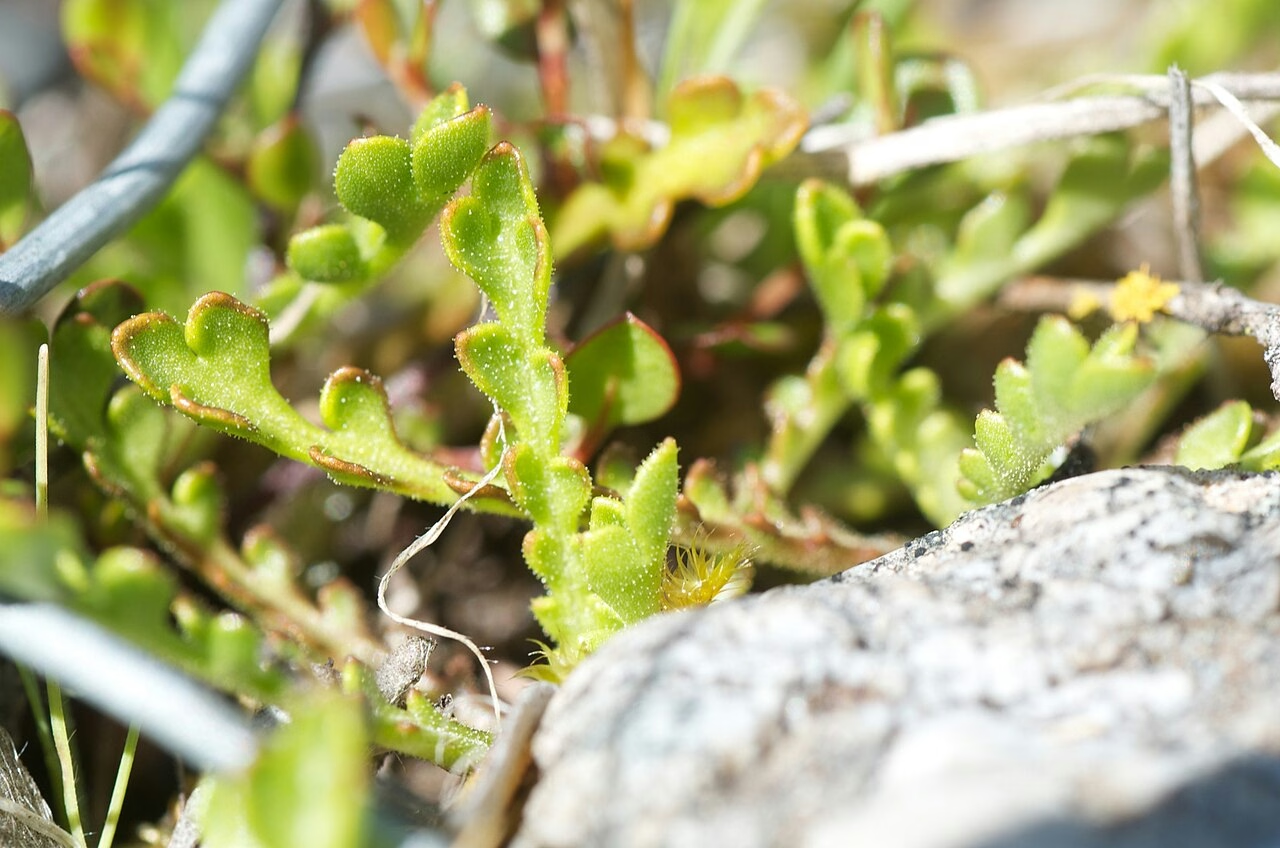
Lees Valley Daisy
Brachyscome pinnata
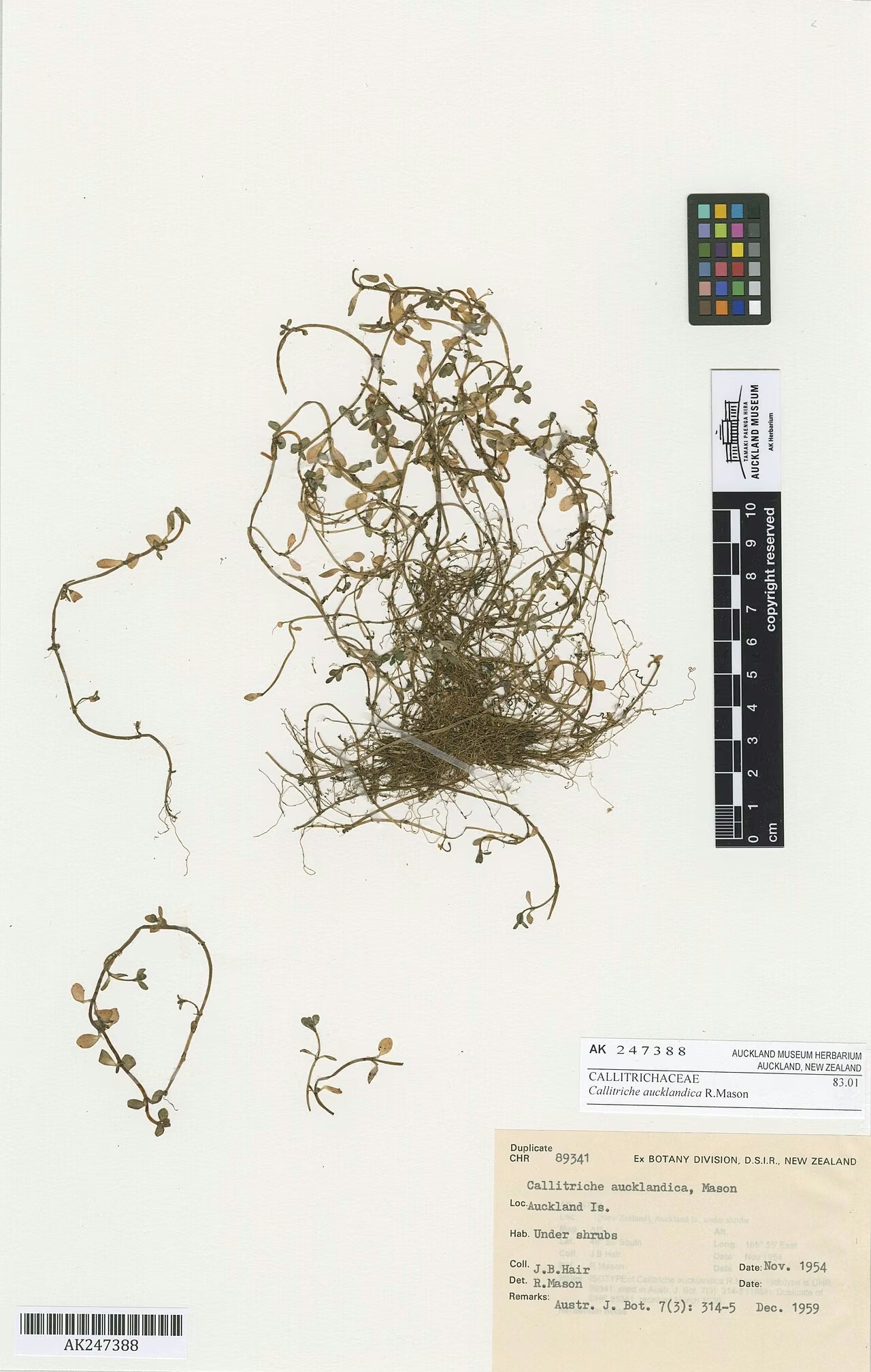
Callitriche aucklandica
Callitriche aucklandica
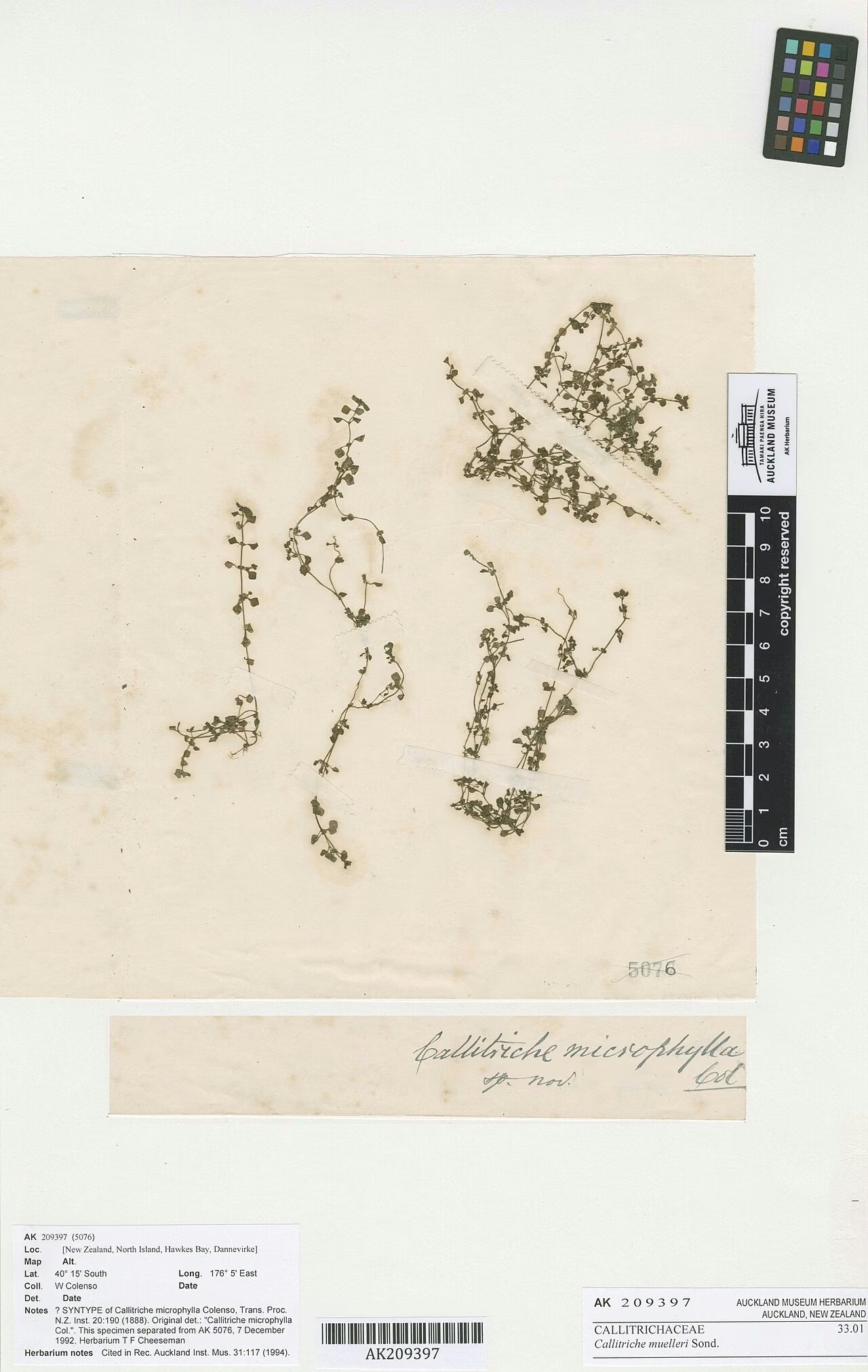
Mueller's Starwort
Callitriche muelleri
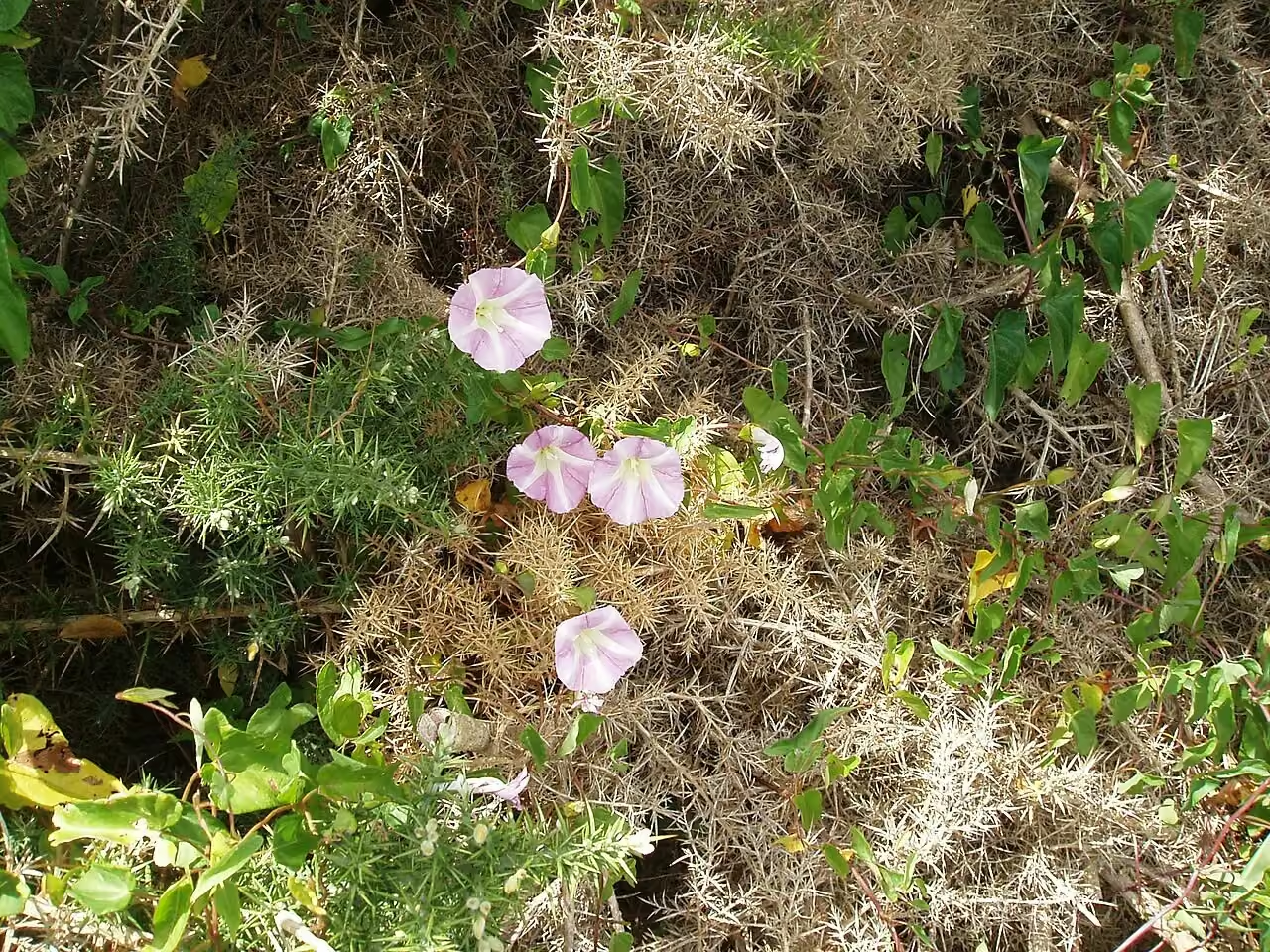
Pink Bindweed
Convolvulus sepium subsp. roseata
Beach Bean
Canavalia rosea
Plant Conservation
Brachyscome sinclairii is ranked Not Threatened (2023) and has held this ranking in every national assessment since 2004.
Its broad habitat range makes it secure, though local populations in lowland grassland and riverbeds can be displaced by weeds and land development. Keeping riverbeds and grasslands free of invasive weeds benefits it along with other small native herbs.
Frequently Asked Questions
Where does grassland daisy grow in New Zealand?
Brachyscome sinclairii grows throughout the South Island, from sea level to the high alpine zone, on alluvium, greywacke, schist and sandstone.
When does Brachyscome sinclairii flower?
It can flower from August to May, but most flowering takes place between November and March.
How can you tell Brachyscome sinclairii from similar daisies?
It is very close to Brachyscome radicata and Brachyscome montana. It differs in its strongly compressed achenes, which lack glandular hairs, and in its rosettes of leaves with three to nine pairs of rounded lobes.
Who is Brachyscome sinclairii named after?
It honours Andrew Sinclair (about 1796 to 1861), Colonial Secretary of New Zealand and a keen naturalist who collected plants.
Sources and Further Reading
The botanical, growing, and conservation details for Grassland Daisy (Brachyscome sinclairii) on this page draw on the New Zealand plant references below. Consult them for full technical records and the latest distribution data.