Mueller's Starwort
Callitriche muelleri
Last updated:
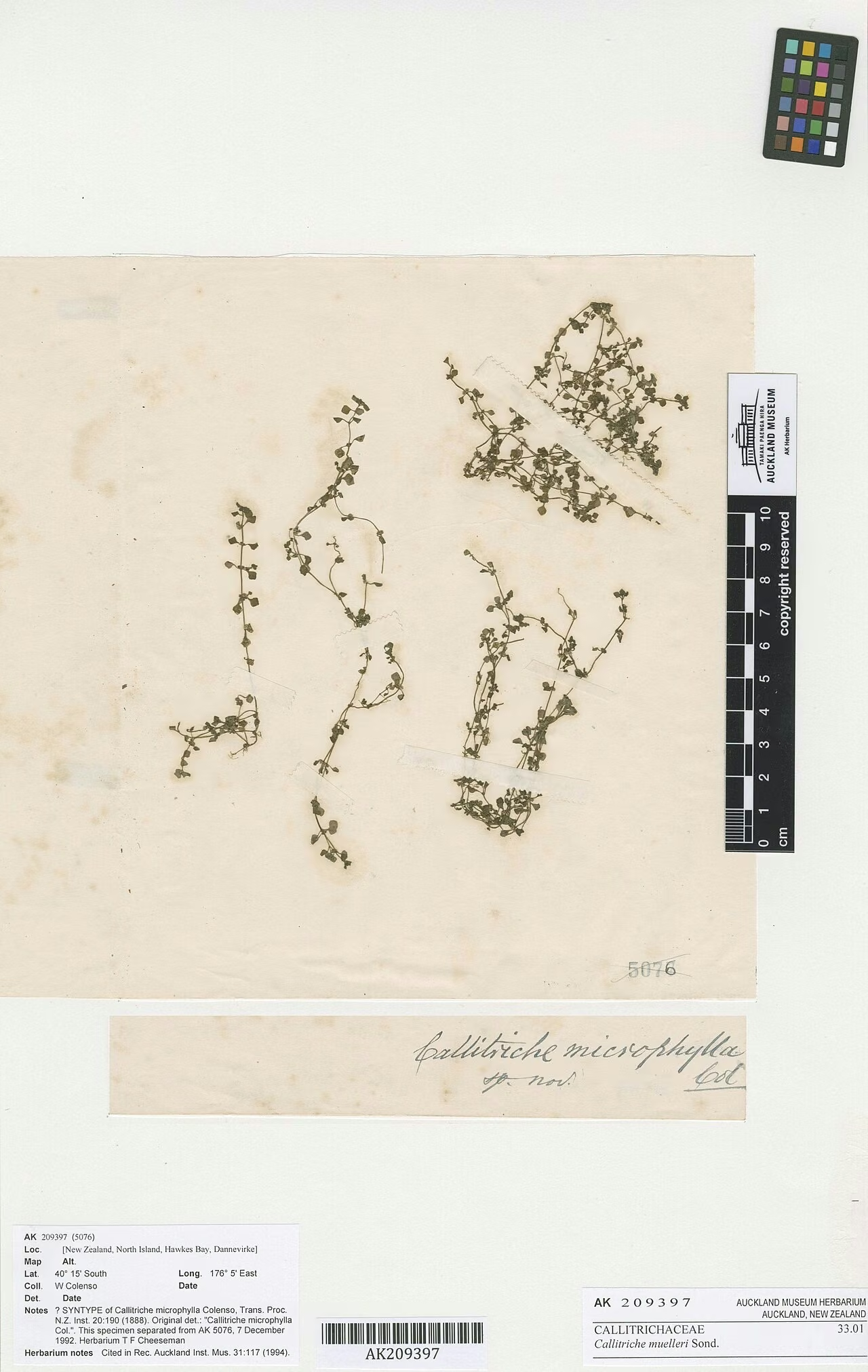
Mueller's starwort (Callitriche muelleri) is a tiny, short-lived perennial or annual herb that forms matted patches on damp ground. Its thread-like, much-branched stems carry bright green, diamond-shaped to rounded leaves only 2 to 5 mm long, each with one or two prominent teeth. It grows from the coast to the mountains on muddy ground, in shallow seasonal pools and along lake and stream sides, often in dense forest. It is native to New Zealand from the Kermadec Islands to Stewart Island and the Chathams, and also to Australia. NZPCN notes it is easy to grow and makes a pleasant ground cover for shaded, poorly drained soils. Explore more native ground covers in our native plant guide.
Plant Description
Callitriche muelleri is a short-lived perennial to annual herb that forms matted patches. Its stems are thread-like and much branched, up to 200 mm long when growing submerged, but usually much shorter when above water.
The leaves are carried on thin stalks up to 3 mm long. The blades are rhomboid to almost round, 2 to 5 mm long and 1 to 5 mm wide, bright green and membranous, usually with one or two prominent teeth on the margins and a pointed tip. Tiny petal-less flowers sit in the leaf axils, either a male and female flower together or a single flower.
The fruit splits into mericarps 1.0 to 1.3 mm long that are obovate, flattened and dull with a netted surface, red-brown to grey-brown, edged with a pale orange-yellow wing. The toothed, diamond-shaped leaves distinguish it from all the other native and naturalised starworts in New Zealand.
Quick Facts
| Scientific Name | Callitriche muelleri |
|---|---|
| Height | A few centimetres; a low mat |
| Spread | Stems up to 20 cm long when submerged, shorter above water |
| Water Needs | High; damp mud or shallow seasonal pools |
| Light | Shade to partial sun; often in dense forest |
| Frost Tolerance | Moderate; grows from coast to montane zone |
| Salt Tolerance | No information available |
| Growth Rate | Fast; NZPCN notes it can become invasive |
| Lifespan | Short-lived perennial to annual |
Climate Best Suited to
Grows across a wide range of New Zealand climates, from the subtropical Kermadec Islands to Stewart Island, wherever ground stays damp. It suits mild, moist, shaded sites best.
Regional Suitability
| City | Climate Suitability |
|---|---|
| Auckland | High |
| Wellington | High |
| Christchurch | Medium |
| Dunedin | High |
Plant Habitat
Mueller's starwort occurs on the Kermadec and Three Kings Islands, throughout the North, South and Stewart Islands, and on the Chatham Islands. It is also native to Australia.
It grows from the coast to the montane zone on damp, muddy ground, in shallow seasonal pools and along lake and stream margins. It is often found in dense forest. Its wetland indicator status is Facultative Wetland, meaning it usually grows in wetlands but sometimes occurs elsewhere.
Growing Requirements
Soil Requirements
It roots into wet mud and silty or organic soils that stay moist.
- Damp, muddy or silty ground
- Poorly drained soils suit it well
- Shallow seasonal pools that dry out in summer
Light Requirements
Often found in dense forest, it is well suited to shade.
- Full to partial shade
- Tolerates more light where the ground stays wet
Water Requirements
It needs constant moisture and tolerates temporary flooding, when its stems grow longer underwater.
- Keep soil permanently damp
- Copes with shallow standing water
- Dies back if the ground dries for long periods
Planting and Establishing
Plant rooted pieces into damp, shaded ground such as a bog garden, the edge of a pond or a shaded, poorly drained corner where little else grows. Press them gently into the surface and keep moist until they establish.
Because it can become invasive, avoid planting it among very small, delicate bog plants it might smother, and keep it out of pots of other plants.
Ecological Role
Like other starworts it has tiny flowers without petals, and its winged mericarps are suited to spreading in water and on mud. Its short-lived habit and ready seeding allow it to colonise seasonally wet ground quickly.
It forms part of the low herb layer on wet forest floors and pool margins, helping to cover bare mud. Particular animals that feed on it are not documented in the sources consulted.
Uses & Significance
Garden Uses
A fine-textured native carpet for damp, shaded ground.
- Ground cover in shaded, poorly drained soil
- Edges of ponds and bog gardens
- Filling gaps between ferns in wet shade
Ecological Value
It is a widespread native component of New Zealand's wet ground flora.
- Colonises bare wet mud in forest and on lake margins
- Part of seasonal pool vegetation
- Native alternative to introduced starworts in ponds
Landscaping Uses
Use it as a living mulch under ferns and shade-loving wetland plants, where its bright green leaves form a soft, fine carpet over wet soil.
In larger wetland restoration plantings it is not usually planted deliberately, as it tends to arrive and spread by itself where conditions suit.
Seasonal Care Calendar
Spring
Growth is active and flowering begins in October.
- Plant rooted pieces
- Keep ground damp
Summer
Flowering continues to December and fruits ripen from November.
- Water if seasonal pools dry out
- Trim back if it spreads too far
Autumn
Fruiting continues until March, and new seedlings may appear as the ground re-wets.
- Collect seed if wanted
- Let seedlings fill gaps
Winter
Plants persist in wet ground, and may grow submerged in pools.
- No care needed
- Remove from areas where it is not wanted
When to Prune and How Much
No regular pruning is needed. If it spreads beyond where it is wanted, simply pull up or cut back the matted stems.
Short-lived patches renew themselves from seed and new growth, so gaps left by old plants usually fill quickly.
How to Grow Mueller's Starwort
NZPCN states that Mueller's starwort is easily grown from rooted pieces and seed, and warns that it can become invasive. This makes it one of the simplest native wetland herbs to propagate. Because the plant is widespread, small amounts can often be obtained from established garden plantings, but do not collect from reserves without permission. As a short-lived perennial to annual, it is worth keeping it going by letting it seed or by replanting rooted pieces each year, rather than expecting individual plants to persist for long.
From Cuttings
The thread-like stems root where they touch damp mud, so rooted pieces can simply be lifted and moved. This is the fastest way to establish a patch.
- Lift a small clump of rooted stems from an established patch
- Break it into pieces a few centimetres across
- Press each piece onto the surface of wet soil or peat
- Keep constantly moist and shaded until growing strongly
From Seed
Fruits ripen from November to March. The tiny winged mericarps can be scattered onto damp mud or sown in a tray.
Seed sown this way gives many small plants at once, which is useful for covering a larger area of damp ground.
- Collect fruiting stems in summer
- Dry them briefly on paper to release the mericarps
- Sow on the surface of saturated seed mix
- Stand the tray in a saucer of water in a shaded place
- Plant out small patches once they cover the surface
Pests & Diseases
No significant pests or diseases are recorded. Slugs may graze it in damp gardens, but it usually recovers quickly.
Its main problem in the wild is competition from introduced weeds on lake and stream margins and drainage of the seasonally wet ground it depends on.
Cultural Significance
No traditional Māori name or use is recorded for Callitriche muelleri in the sources consulted.
The species is named after Baron Ferdinand von Mueller, the nineteenth century German-born botanist who became Government Botanist of Victoria and founded the National Herbarium of Victoria. The genus name comes from the Greek for beautiful hair, referring to the fine stems.
Bonus Tip
If you find a tiny starwort on a muddy forest track, check the leaves with a hand lens. Toothed, diamond-shaped leaves mean it is Mueller's starwort; the other native and naturalised starworts lack those teeth.
Related Plants
Explore other native plants that share similar characteristics or habitats with Mueller's Starwort (Callitriche muelleri), offering further insights into New Zealand's diverse flora. These related species provide context and opportunities for complementary planting in your garden.
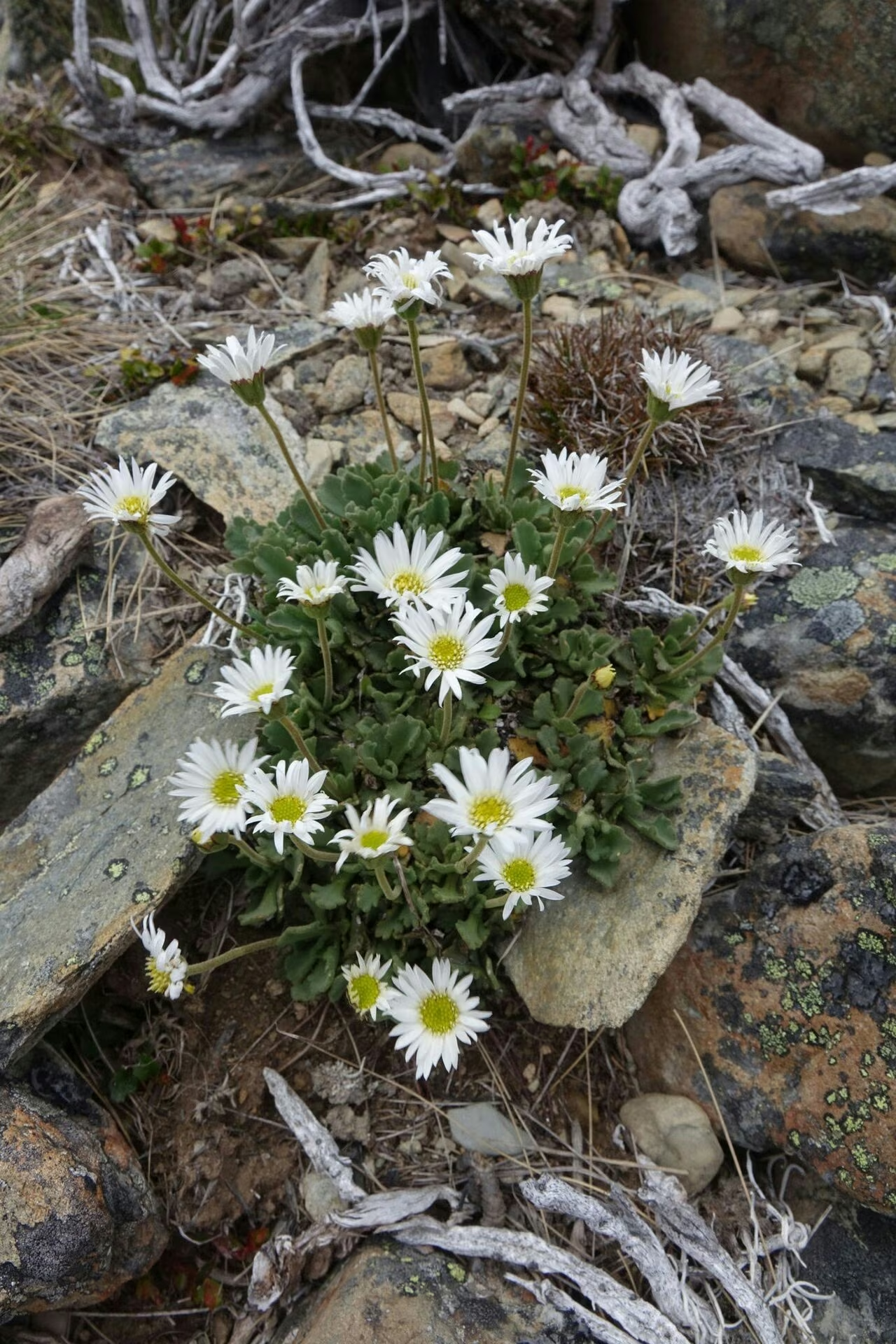
Brachyscome montana
Brachyscome montana
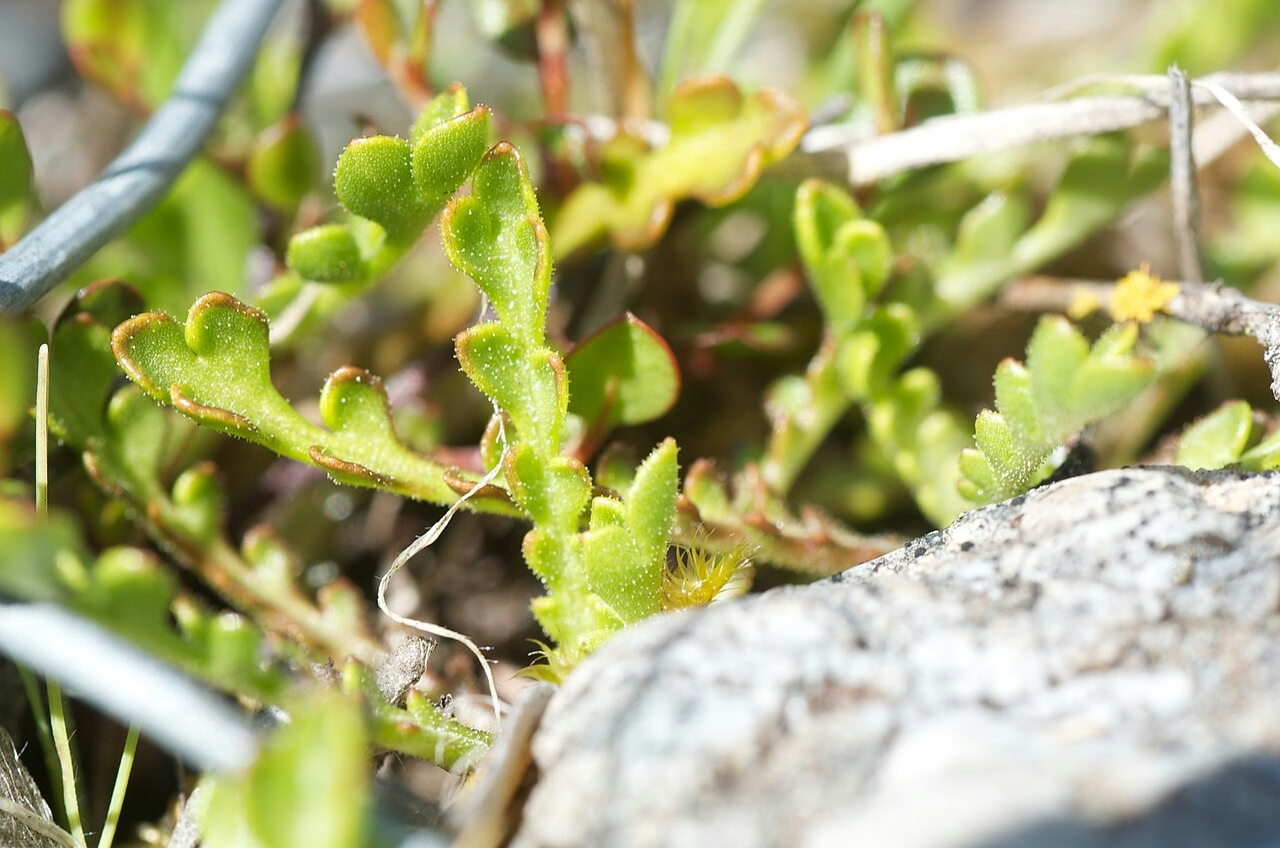
Lees Valley Daisy
Brachyscome pinnata
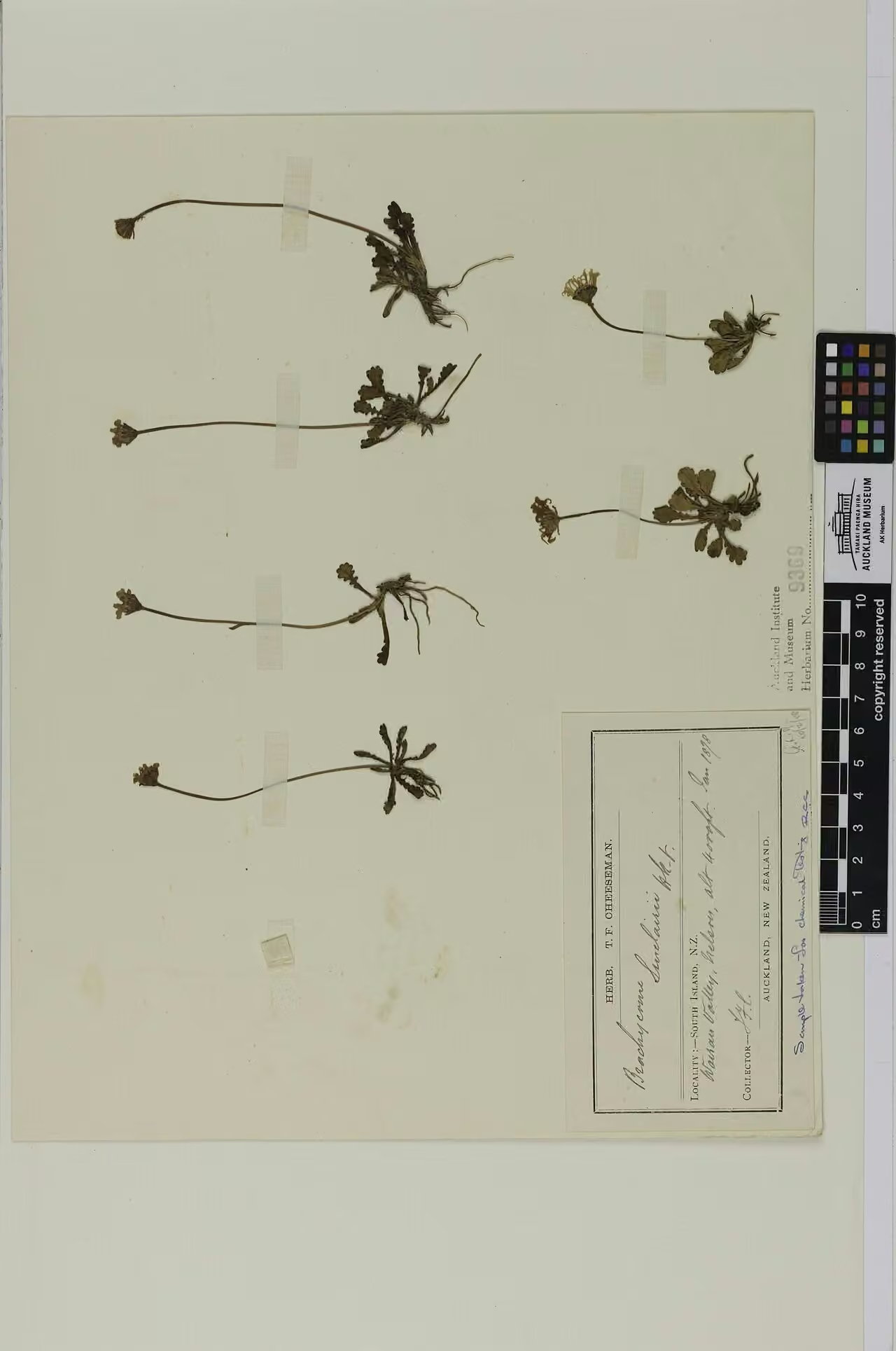
Grassland Daisy
Brachyscome sinclairii
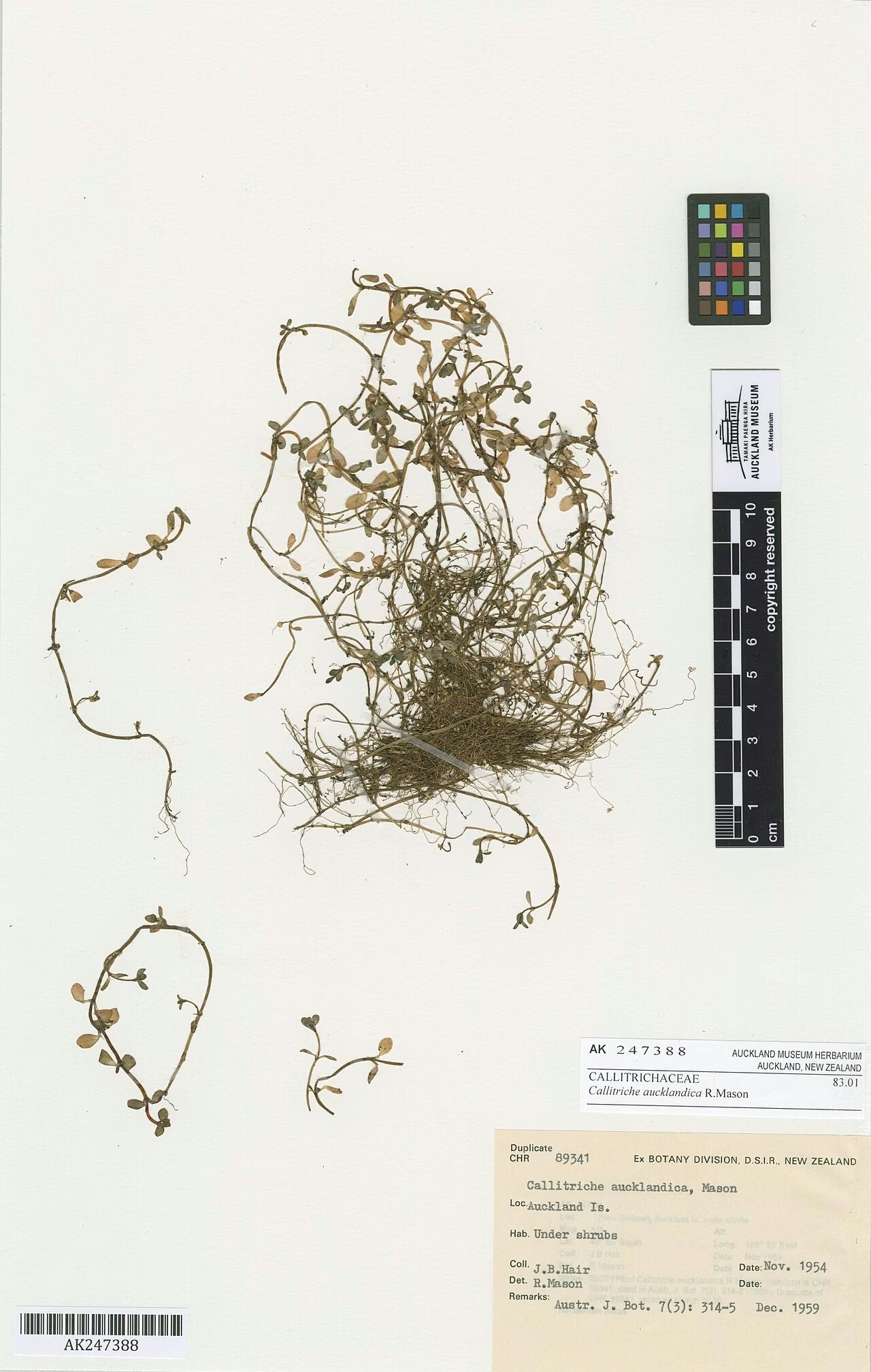
Callitriche aucklandica
Callitriche aucklandica
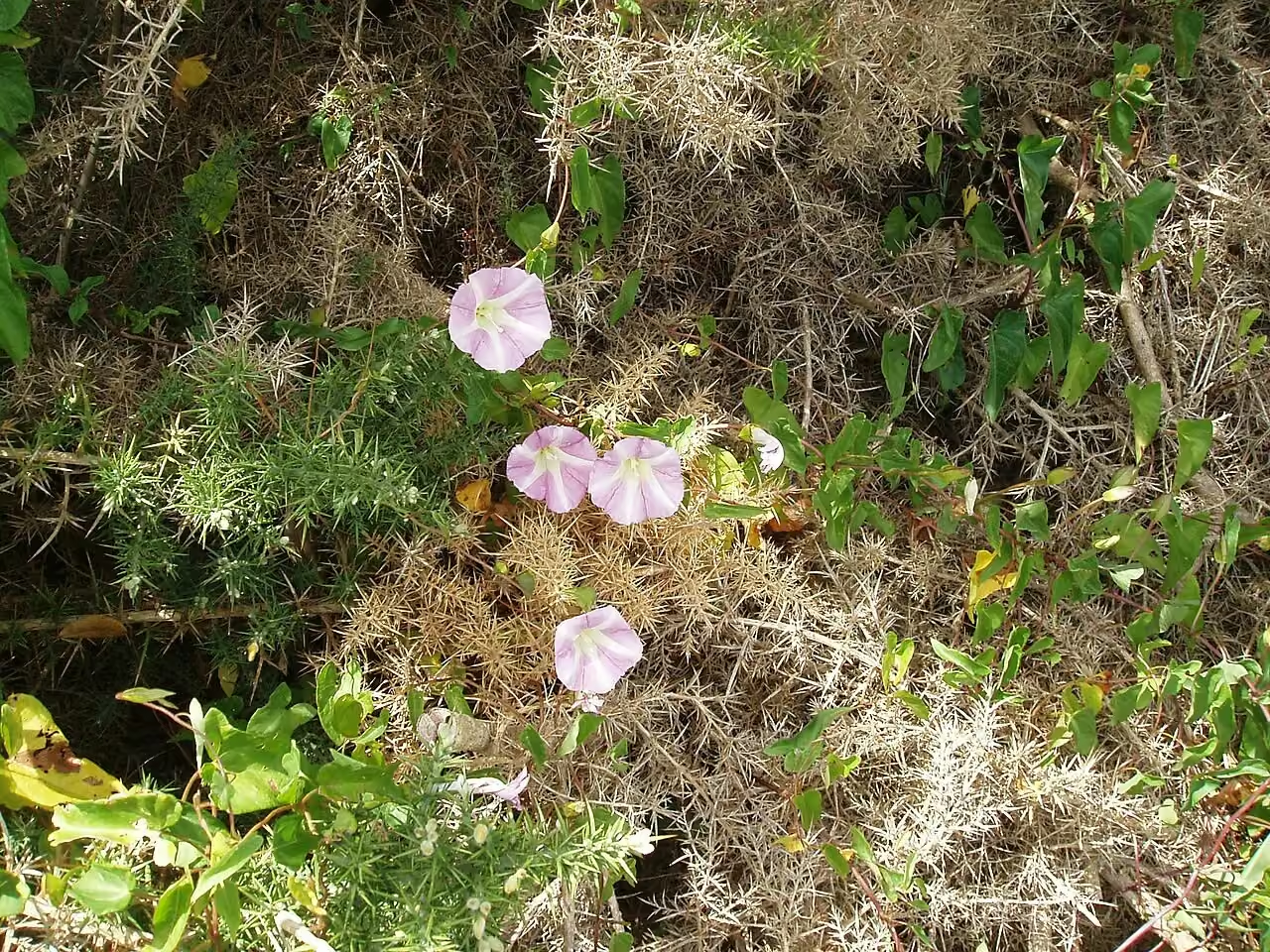
Pink Bindweed
Convolvulus sepium subsp. roseata
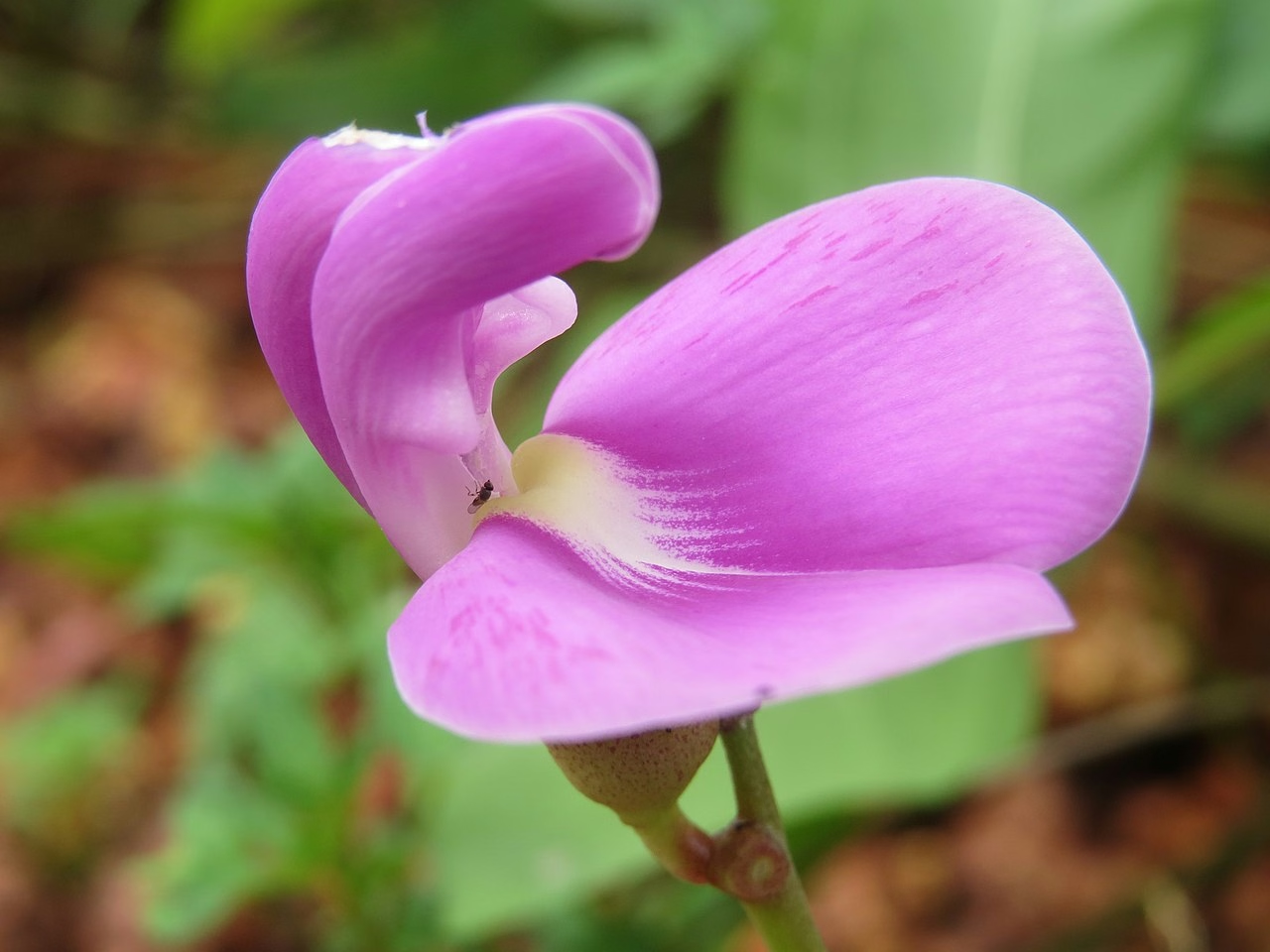
Beach Bean
Canavalia rosea
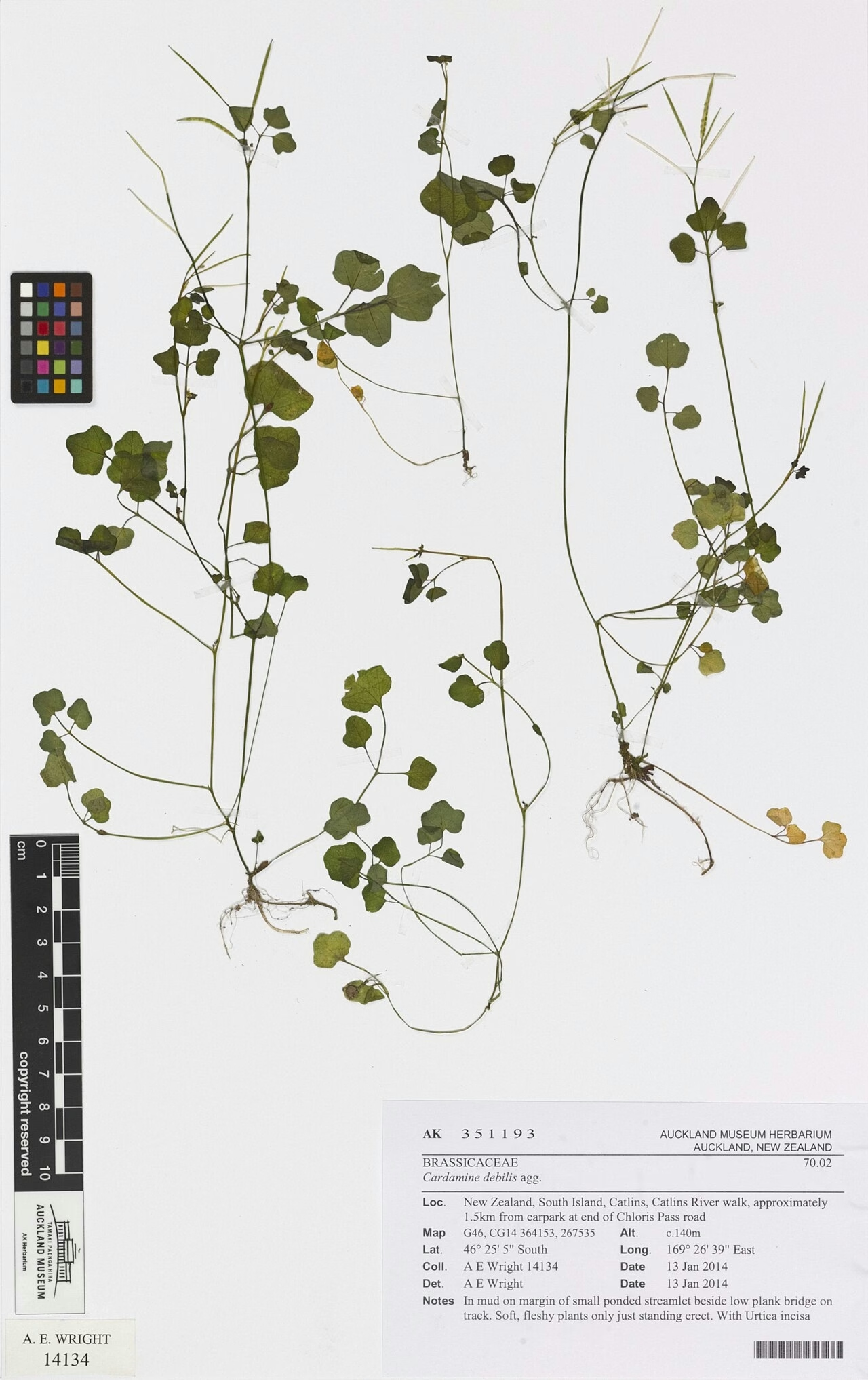
Panapana
Cardamine dolichostyla

Campbell Island Bittercress
Cardamine subcarnosa
Plant Conservation
Callitriche muelleri is ranked Not Threatened (2023) with the qualifier SO (Secure Overseas), and has been Not Threatened in every assessment since 2004. It is ranked Regionally Not Threatened in Northland and Auckland, but Regionally Naturally Uncommon in the Wellington region.
Protecting seasonal wetlands, lake margins and forest from drainage and weed invasion maintains the damp habitats it relies on.
Frequently Asked Questions
How do you identify Mueller's starwort?
Look for tiny, bright green, rhomboid to almost round leaves 2 to 5 mm long on short stalks, each with one or two prominent teeth. NZPCN says these toothed, diamond-shaped leaves readily separate it from other Callitriche in New Zealand.
Is Callitriche muelleri native to New Zealand?
Yes. It is indigenous, occurring naturally from the Kermadec and Three Kings Islands south to Stewart Island and the Chatham Islands, and it is also native to Australia.
Can Mueller's starwort be used as a ground cover?
NZPCN describes it as easily grown from rooted pieces and seed and a pleasant ground cover for shaded, poorly drained soils, though it can become invasive.
Who is Callitriche muelleri named after?
It honours Baron Ferdinand von Mueller, the nineteenth century botanist who founded the National Herbarium of Victoria in Australia.
Sources and Further Reading
The botanical, growing, and conservation details for Mueller's Starwort (Callitriche muelleri) on this page draw on the New Zealand plant references below. Consult them for full technical records and the latest distribution data.