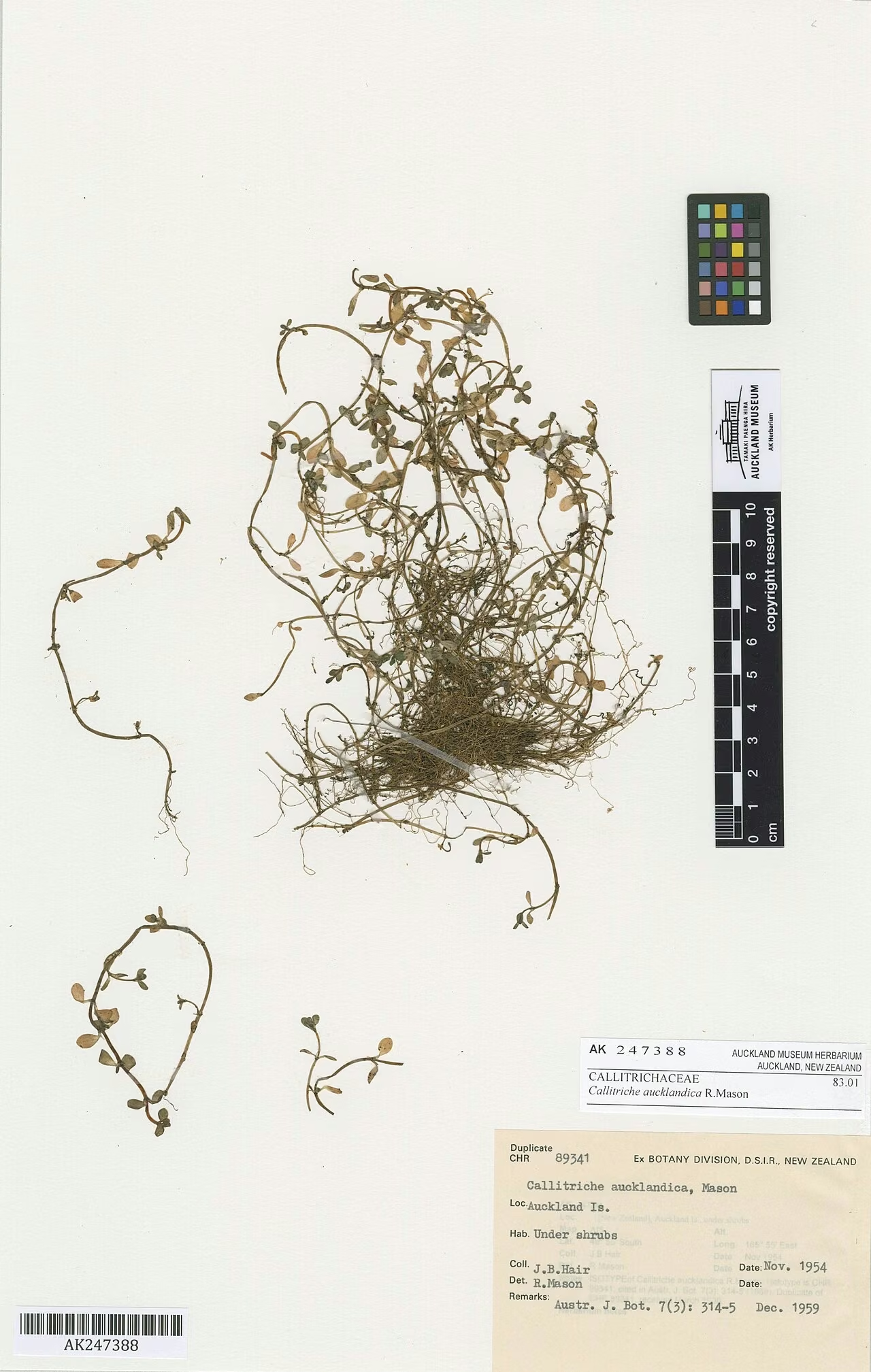
Starwort
Callitriche aucklandica
Last updated:
Callitriche aucklandica is a small, creeping water starwort found only on the subantarctic Auckland Islands. Its lax, sprawling stems grow up to 30 cm long and carry pairs of bright to dark green, fleshy, spoon-shaped leaves 4 to 8 mm long. The tiny flowers sit singly or in pairs in the leaf axils and lack petals. It grows from the coast to the uplands in pools, on sodden peat and on exposed mud, often in heavy shade beneath shrubs and tussocks and frequently near seabird colonies. It is abundant on the islands and is ranked At Risk - Naturally Uncommon only because its whole range is so remote and small. Explore more native ground covers in our native plant guide.
Plant Description
Callitriche aucklandica is a perennial, creeping herb with bright green to dark green, fleshy to membranous stems. The stems are rather lax and sprawling, usually 2 to 10 cm long but reaching about 20 to 30 cm when growing in water.
The leaves are spoon-shaped (spathulate) with thick blades 3.6 to 8 mm long and 1.2 to 4 mm wide, on broad leaf stalks that are joined across the stem. The flowers are tiny, borne singly or in pairs in the leaf axils without bracts, with stamen filaments up to 9 mm long tapering from a broad base. The plant is monoecious, with separate male and female flowers on the same plant.
The fruit splits into small mericarps 1.0 to 1.6 mm long that are flattened, keeled and winged, with a finely bumpy or netted, dull surface coloured pale orange-yellow to light or grey-brown. Its closest relative, Callitriche antarctica, is smaller and more erect with rounded mericarps.
Quick Facts
| Scientific Name | Callitriche aucklandica |
|---|---|
| Height | Low creeping herb, a few centimetres tall |
| Spread | Stems sprawl up to 30 cm |
| Water Needs | High; pools, sodden peat and wet mud |
| Light | Heavy shade to open, exposed sites |
| Frost Tolerance | Tolerates a cold subantarctic climate |
| Salt Tolerance | Grows from the coast inland; salt tolerance not documented |
| Growth Rate | No information available |
| Lifespan | Perennial |
Climate Best Suited to
Adapted to the cold, wet, windy and cloudy climate of the subantarctic Auckland Islands, with cool summers and frequent rain. It is unlikely to suit warm or dry mainland conditions.
Regional Suitability
| City | Climate Suitability |
|---|---|
| Auckland | Low |
| Wellington | Low |
| Christchurch | Low |
| Dunedin | Medium |
Plant Habitat
Callitriche aucklandica is endemic to the Auckland Islands, the subantarctic island group south of the South Island. It occurs from the coast to the montane zone of the islands.
It grows in exposed places as well as in pools and on sodden peat in heavy shade under shrubs and tussocks. It is often found near seabird colonies, and it is also common on exposed mud within forest and scrub.
Growing Requirements
Soil Requirements
It roots into wet peat and mud, including ground enriched by seabird colonies.
- Permanently wet peat or mud
- Shallow pools and puddles
- Organic, nutrient-enriched soils near bird colonies
Light Requirements
It tolerates a wide range of light, from exposed open sites to heavy shade under shrubs and tussocks.
- Heavy shade beneath scrub and tussock
- Open, exposed wet ground
Water Requirements
It is a plant of permanently wet ground and can grow partly submerged, when its stems become longer.
- Never allow it to dry out
- Tolerates shallow standing water
Planting and Establishing
This species is not in cultivation and is not available to gardeners. The Auckland Islands are a nature reserve and World Heritage Site where collecting is prohibited without a permit.
If it were ever grown for conservation or research, it would need a cool, constantly wet position such as a shaded bog bed or a tray of wet peat.
Ecological Role
Like other water starworts, it has tiny, petal-less flowers, and its winged mericarps are well suited to dispersal by water. Its frequent occurrence near seabird colonies suggests it thrives on wet, nutrient-rich ground, though its exact relationships with birds are not documented in the sources consulted.
It forms low, creeping patches on mud and peat where taller vegetation is sparse, and is a common part of the wet ground flora of the islands.
Uses & Significance
Garden Uses
It has no garden use because it is not in cultivation.
- Not available to gardeners
- Of interest to botanists studying subantarctic flora
- Seen only by visitors on permitted trips to the Auckland Islands
Ecological Value
It is one of the endemic plants that make up the unique flora of New Zealand's subantarctic islands.
- Abundant on wet ground of the Auckland Islands
- Part of the plant community of seabird-enriched soils
- Found nowhere else in the world
Landscaping Uses
It is not used in landscaping. Gardeners wanting a similar small creeping plant for shaded wet ground can grow the mainland native Callitriche muelleri, which NZPCN describes as a pleasant ground cover for shaded, poorly drained soils.
In a bog garden, small water starworts work best as a fine green carpet between larger wetland plants.
Seasonal Care Calendar
Spring
Flowering takes place in October and November.
- Wild plants require no care
- Look for tiny flowers in the leaf axils
Summer
Fruits develop from November onwards.
- Mericarps ripen through the cool subantarctic summer
Autumn
Fruiting continues until April.
- Seed is shed onto wet mud and into pools
Winter
Plants persist on wet ground through the cold, stormy subantarctic winter.
- No information is available on winter dormancy
When to Prune and How Much
No pruning is relevant for this species. In the wild it forms naturally low, creeping patches.
If grown for research, overly long stems could simply be pinched back to keep the plant compact.
How to Grow Starwort
NZPCN states that propagation is probably easy but that Callitriche aucklandica is currently not in cultivation, so there is no tested method for this species. The Auckland Islands are a protected nature reserve and part of the New Zealand Subantarctic Islands World Heritage Area, and material may only be collected under a permit, normally for research. The methods below are those used for related mainland starworts, such as Callitriche muelleri, which NZPCN notes is easily grown from rooted pieces and seed. They are given for background only and should not be taken as an invitation to obtain this species.
From Cuttings
Starworts root readily at the nodes of their creeping stems, so rooted pieces are the simplest way to increase them.
Because the plant grows naturally in heavy shade on sodden peat, any cultivated material would likely need cool, shaded, saturated conditions rather than the open sun suited to many bog plants.
- Take rooted stem pieces a few centimetres long
- Lay them on the surface of wet peat or a peat-based mix
- Keep the mix saturated, or stand the pot in a tray of water
- Grow in a cool, shaded position until new shoots appear
From Seed
Fruiting runs from November to April. The small mericarps would need to be sown onto permanently wet media.
- Collect ripe mericarps only under permit
- Sow on the surface of saturated peat
- Keep cool and constantly wet
- Transplant small patches once established
Pests & Diseases
No pests or diseases are recorded for this species.
On the Auckland Islands, introduced animals such as pigs have damaged vegetation, but no specific effect on this species is documented in the sources consulted.
Cultural Significance
No traditional Māori name or use is recorded for Callitriche aucklandica in the sources consulted.
It was described by Ruth Mason in 1959. The genus name comes from the Greek for beautiful hair, referring to the slender stems, and aucklandica means of the Auckland Islands.
Bonus Tip
To tell this species apart from Callitriche antarctica, which also grows in the subantarctic, look at the leaf stalks and fruit. Callitriche aucklandica has broad leaf stalks joined across the stem and flattened, keeled and winged mericarps, while Callitriche antarctica has rounded fruit and a more upright habit.
Related Plants
Explore other native plants that share similar characteristics or habitats with Starwort (Callitriche aucklandica), offering further insights into New Zealand's diverse flora. These related species provide context and opportunities for complementary planting in your garden.
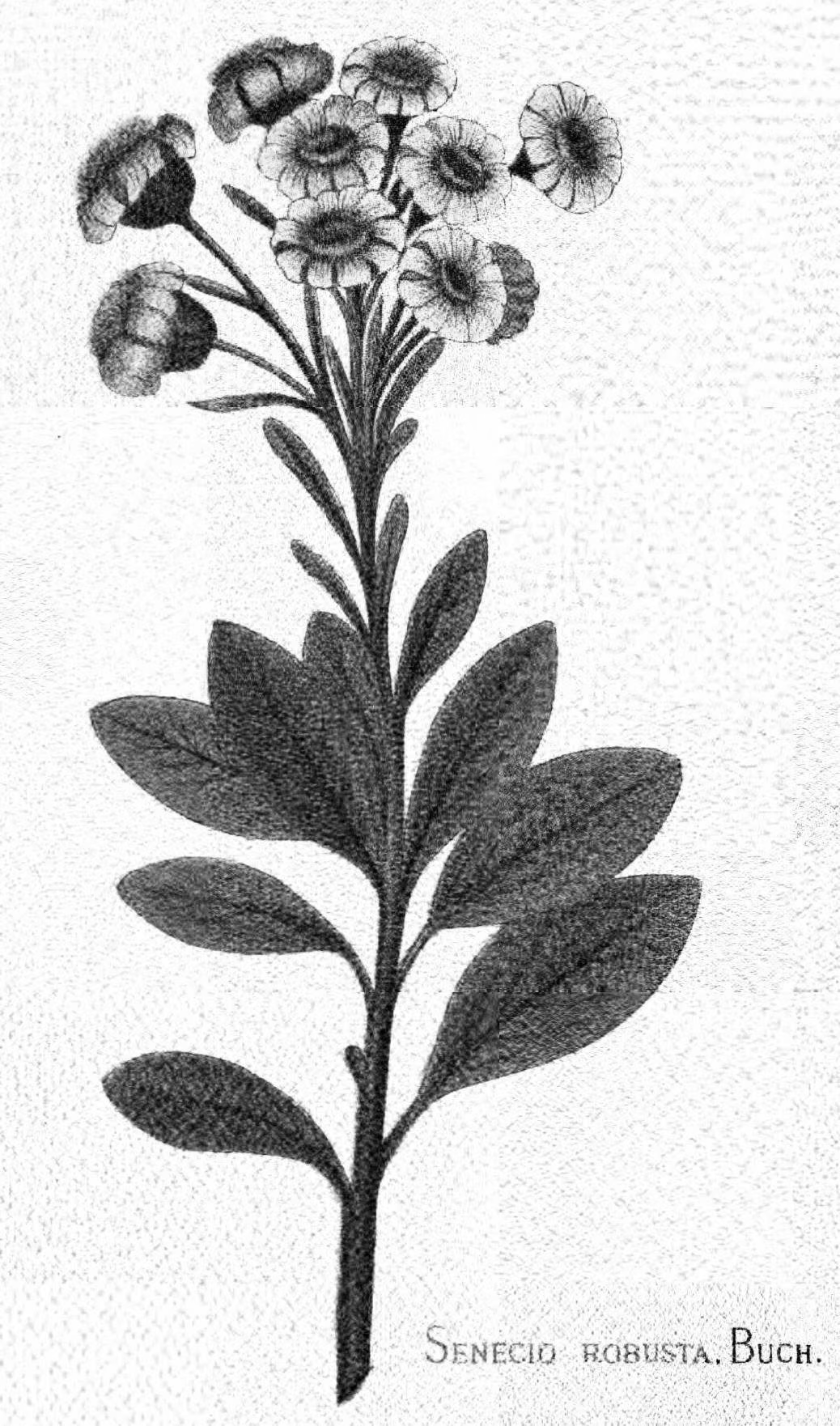
Brachyglottis revoluta
Brachyglottis revoluta
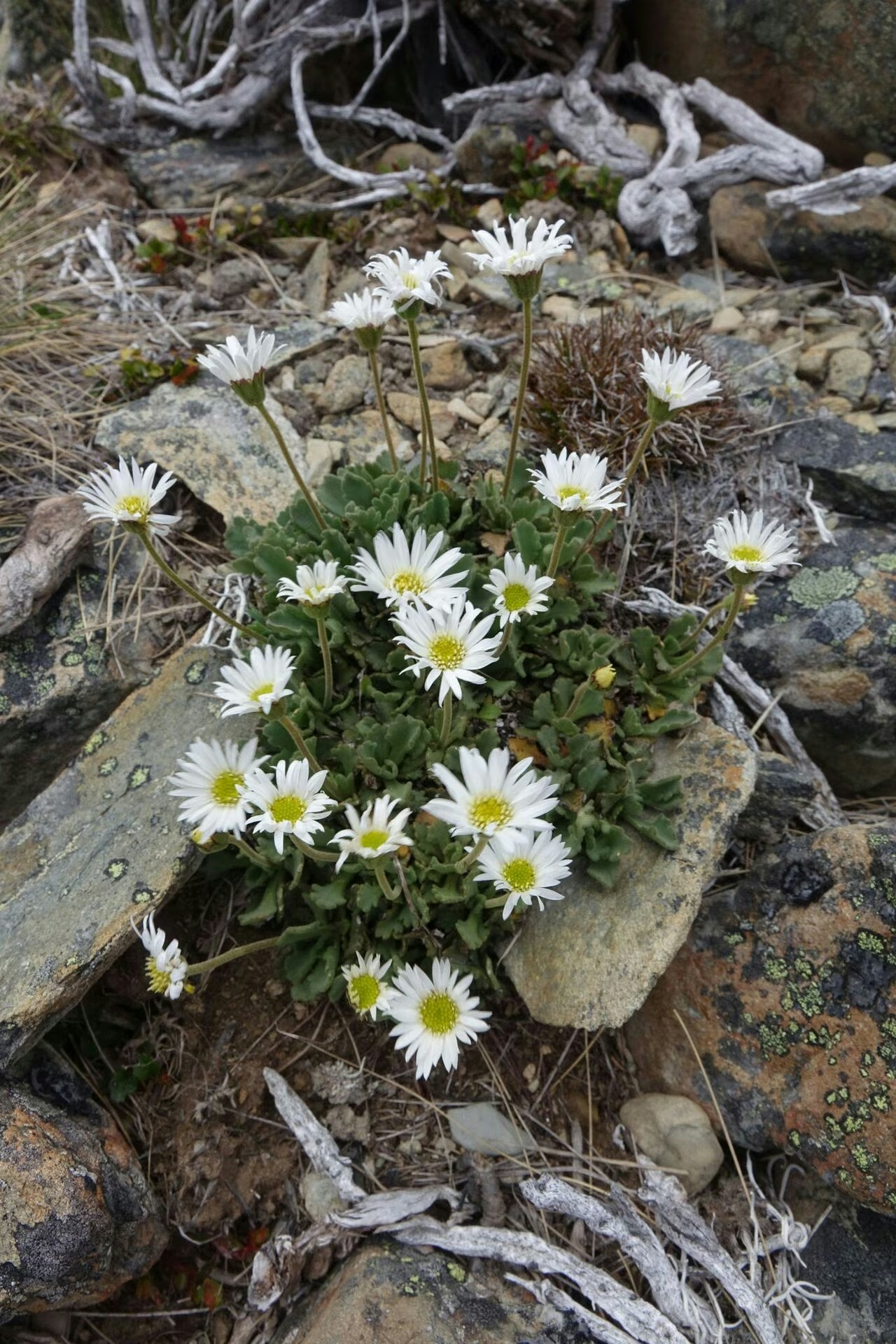
Brachyscome montana
Brachyscome montana
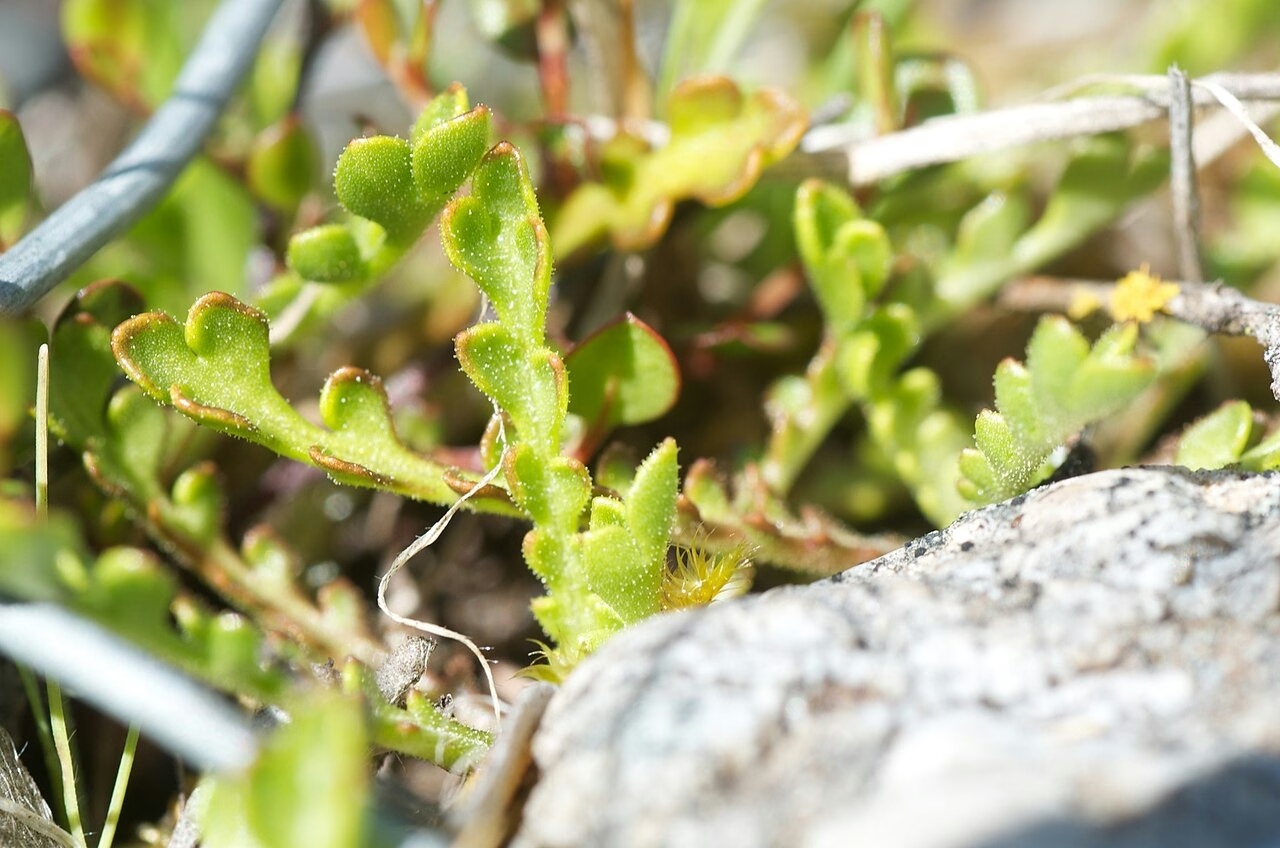
Lees Valley Daisy
Brachyscome pinnata
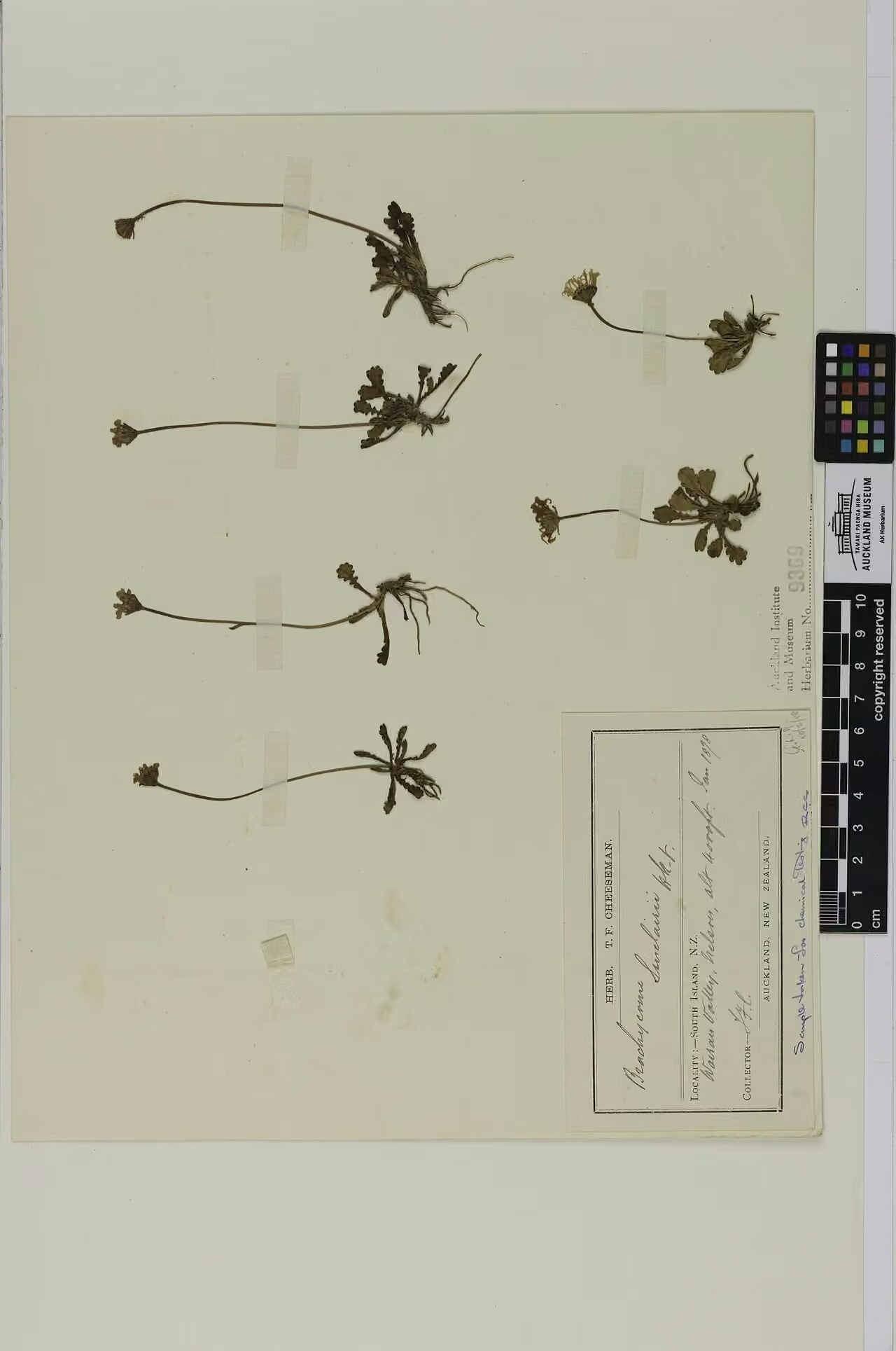
Grassland Daisy
Brachyscome sinclairii
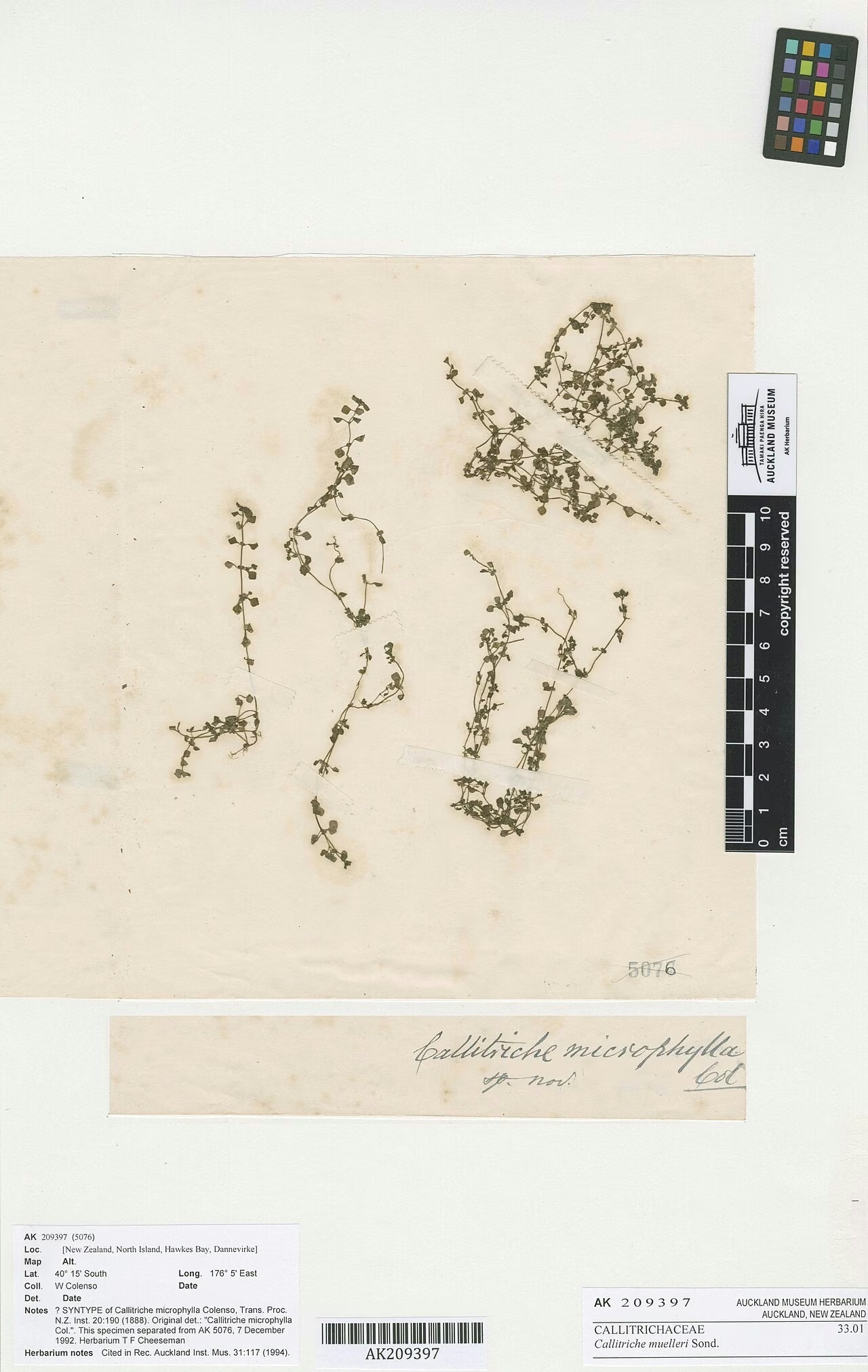
Mueller's Starwort
Callitriche muelleri
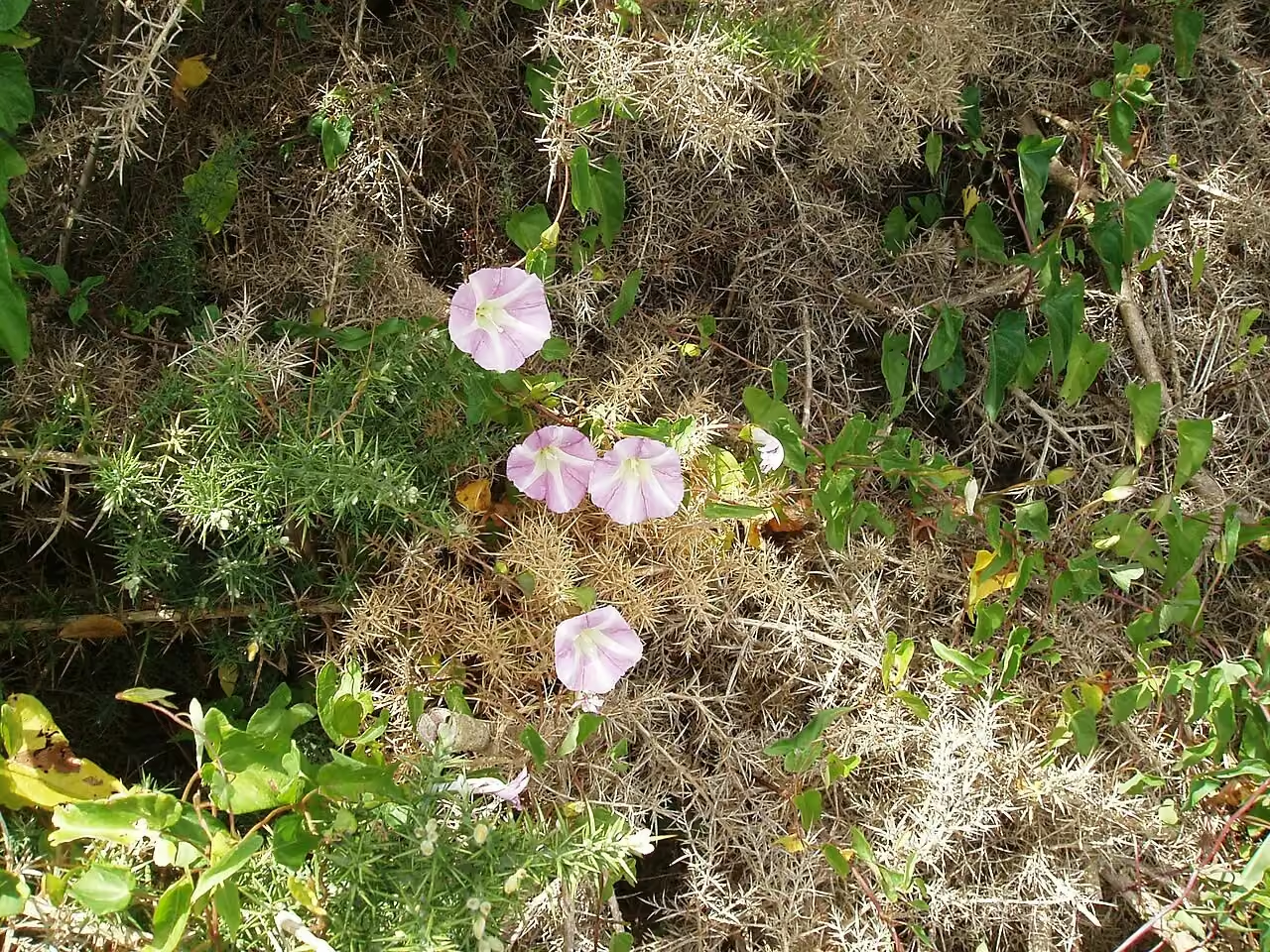
Pink Bindweed
Convolvulus sepium subsp. roseata
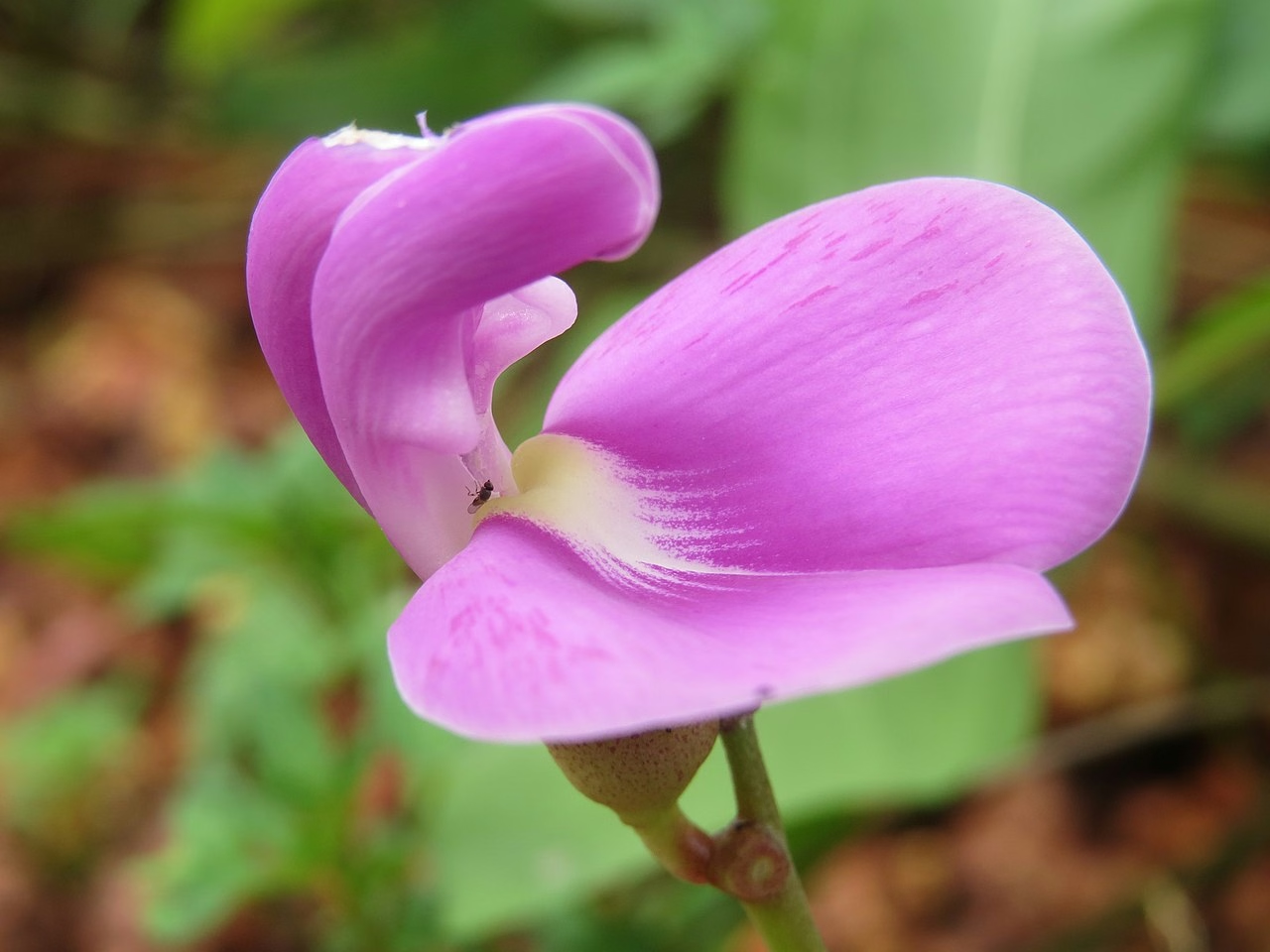
Beach Bean
Canavalia rosea
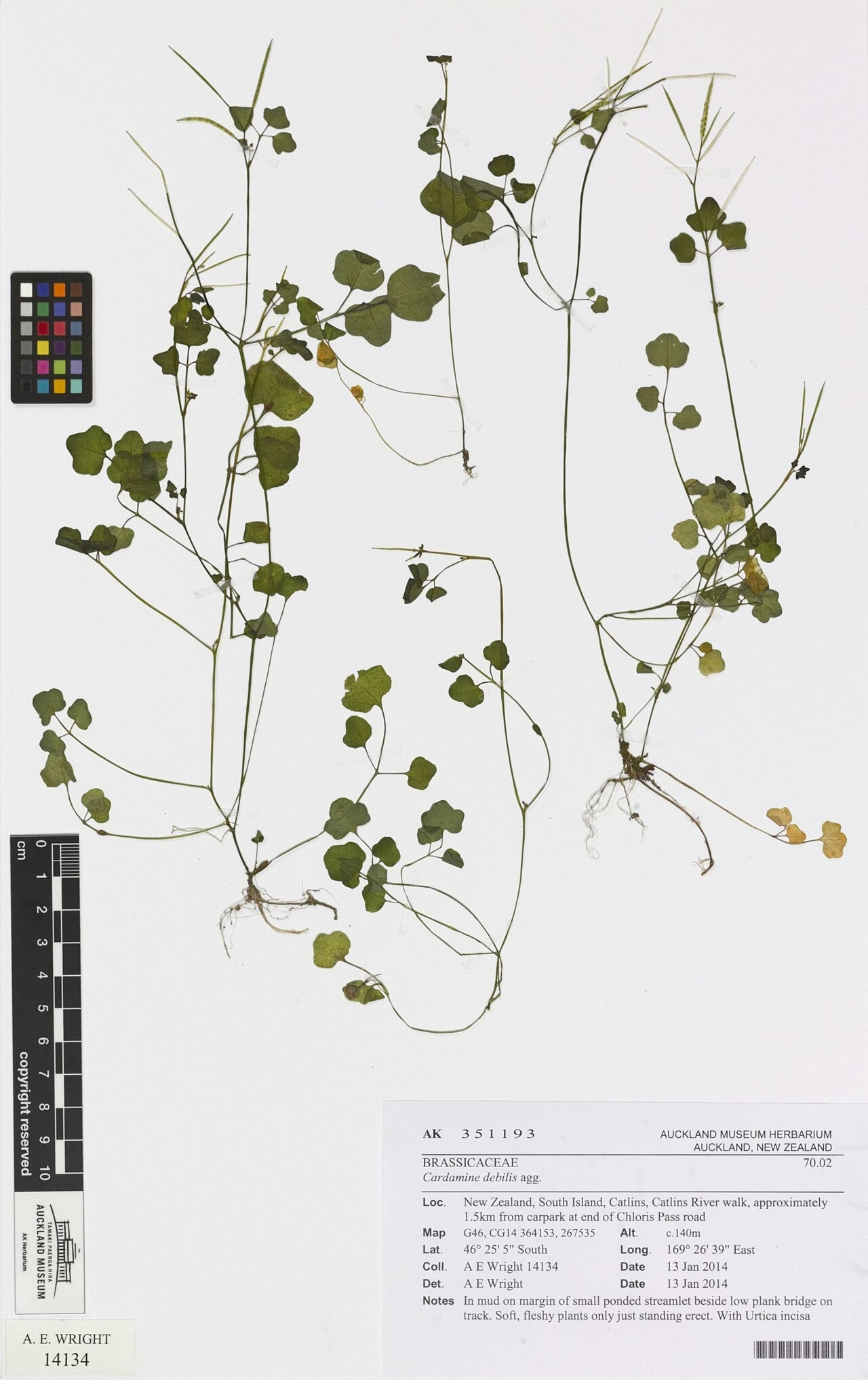
Panapana
Cardamine dolichostyla
Plant Conservation
Callitriche aucklandica is ranked At Risk - Naturally Uncommon (2023) with the qualifiers IE (Island Endemic), RR (Range Restricted) and Sp (Sparse). NZPCN notes it is effectively not threatened and is listed because of its endemism to the Auckland Islands, where it is abundant.
The Auckland Islands are a protected nature reserve with strict biosecurity rules for visitors. Keeping new weeds and pests off the islands is the most important protection for this and the other subantarctic endemics.
Frequently Asked Questions
Where does Callitriche aucklandica grow?
It is endemic to the Auckland Islands, New Zealand's subantarctic island group, where it grows from the coast to montane areas in pools, sodden peat and wet mud.
Is Callitriche aucklandica rare?
It is abundant on the Auckland Islands. NZPCN explains that it is listed as At Risk - Naturally Uncommon only because it is endemic to that one island group.
How is Callitriche aucklandica different from Callitriche antarctica?
It is larger, with fleshy rather than succulent leaves, lax rather than erect branches, broad joined leaf stalks and keeled, winged fruits rather than rounded ones.
Can you grow Callitriche aucklandica?
NZPCN says it would probably be easy to grow, but it is currently not in cultivation, and access to the Auckland Islands is strictly controlled.
Sources and Further Reading
The botanical, growing, and conservation details for Starwort (Callitriche aucklandica) on this page draw on the New Zealand plant references below. Consult them for full technical records and the latest distribution data.