Panapana
Cardamine dolichostyla
Last updated:
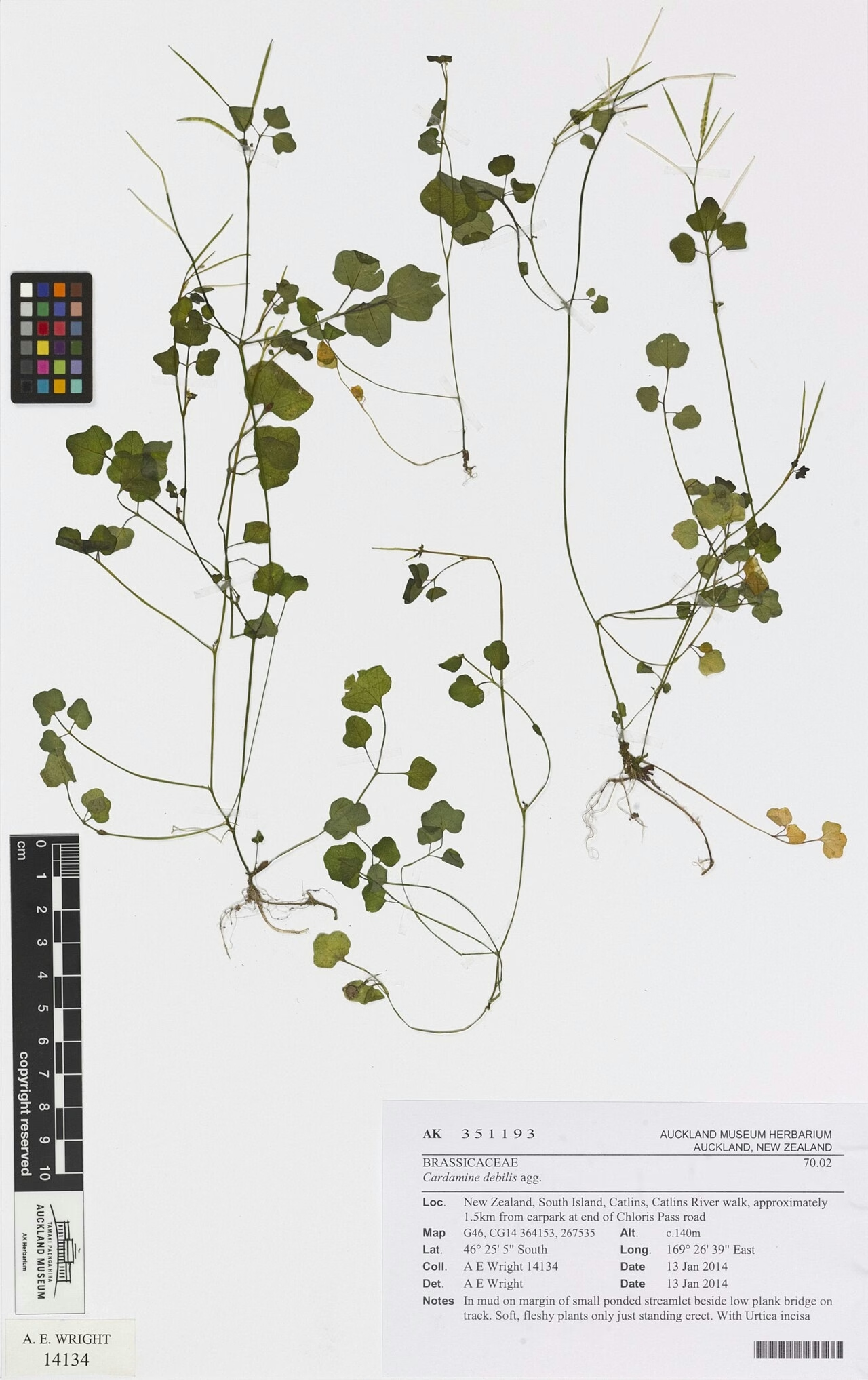
Panapana, or New Zealand bittercress, is the native perennial cress long known as Cardamine debilis or the Cardamine debilis aggregate. It is a small herb with a rosette of pinnate leaves and stems roughly 15 to 30 cm tall bearing small white four-petalled flowers and slender upright seed pods. In 2017 Peter Heenan split the aggregate into many endemic species; plants formerly called C. debilis are now C. dolichostyla, widespread in damp forest, forest margins, track edges and river flats of the North and South Islands. Māori boiled the leaves as a green vegetable, and the plant is rated Not Threatened. Explore more native flowering plants in our native plant guide.
Plant Description
Plants once grouped as Cardamine debilis are perennial herbs that grow from a single rosette or from several rosettes with short lateral branches. In C. dolichostyla the leaves reach 130 mm long and are pinnatisect, divided into pairs of leaflets with a larger terminal leaflet 3 to 33 mm long, simple or shallowly lobed, with prominent hydathodes (water pores) at the tips of the lobes. Te Aka Māori Dictionary describes panapana as having a rosette of rather hairy leaves with 3 to 7 pairs of leaflets.
Branching flowering stems rise about 15 to 30 cm and carry small white flowers with four petals, 4.8 to 7 mm long in C. dolichostyla. They are followed by erect, slender seed pods (siliques). The species name dolichostyla means long style: the style on the pod is (1.8) 2.5 to 8.5 mm long, which, with narrower sepals, longer filaments and longer, narrower pods, separates it from the similar C. chlorina. Some plants from Whanganui to Mount Taranaki have leaves that are conspicuously purple-violet underneath.
Other members of the old aggregate differ in detail. Cardamine forsteri, once included as C. 'Narrow Petal', has narrow white petals and is recognised by hydathodes in the leaflet axils. Because Heenan recognised 41 indigenous Cardamine taxa, identifying a particular plant now needs the 2017 key.
Quick Facts
| Scientific Name | Cardamine dolichostyla |
|---|---|
| Height | About 0.15-0.3 m in flower |
| Spread | Single rosette or a small clump; leaves to 130 mm long |
| Water Needs | Moderate to high; likes damp ground |
| Light | Partial shade to sun |
| Frost Tolerance | Hardy across its North and South Island range |
| Salt Tolerance | Not documented |
| Growth Rate | Not documented |
| Lifespan | Perennial |
Climate Best Suited to
A cool to mild temperate herb that grows from the volcanic plateau and Wellington to Westland, Canterbury and Otago. It needs reliable moisture rather than warmth.
Regional Suitability
| City | Climate Suitability |
|---|---|
| Auckland | Medium |
| Wellington | High |
| Christchurch | High |
| Dunedin | High |
Plant Habitat
As currently circumscribed, Cardamine dolichostyla is endemic and widespread in the North and South Islands, recorded from the volcanic plateau, Taranaki, Wellington, Nelson, Westland, Marlborough, Canterbury and Otago. NZPCN describes the related C. forsteri, also split from the old aggregate, as widespread in New Zealand. Te Aka Māori Dictionary notes panapana is common in lowland forest and scrub.
The Flora of New Zealand describes C. dolichostyla growing in damp and moist situations in forest and on forest margins, and in open places such as track margins, river flats and terraces.
Growing Requirements
Soil Requirements
It grows in moist forest soils and on river flats, so humus-rich soil that holds moisture suits it best.
- Moist, humus-rich loam
- Damp alluvial soils near streams
- Avoid soils that dry out hard in summer
Light Requirements
It is found both under forest and in open places such as track edges and river terraces.
- Partial shade is ideal
- Tolerates sun where the soil stays moist
- Avoid deep, dry shade
Water Requirements
Consistent moisture is the key requirement, reflecting its damp natural habitats.
- Keep soil evenly moist
- Water during dry spells in summer
- Tolerates periodically wet ground
Planting and Establishing
Plant in autumn or spring into a damp, partly shaded spot such as the edge of a woodland bed, a shady path margin or beside a stream. Small rosettes can be planted 15 to 20 cm apart to form a loose drift.
Mulch lightly with leaf litter to keep the roots cool and moist, as it would be on the forest floor.
Ecological Role
Panapana is a small forest-floor and margin herb that readily occupies open, moist ground such as track edges and river flats. Its small white flowers flower from August to March and are likely visited by small native insects, although specific pollinators are not documented in the sources consulted.
Fruits form from August to April. Like other bittercresses, the slender pods split open when ripe and release small seeds close to the parent plant. As a member of the cabbage family it may host native insects that feed on Brassicaceae, but no specific associations are recorded in the sources consulted.
Uses & Significance
Garden Uses
A modest native herb for shady, damp corners and for growers interested in traditional Māori food plants.
- Woodland and fern garden underplanting
- Damp path and stream edges
- Native edible and heritage food gardens
- Restoration plantings of forest margins
Ecological Value
It is part of the native herb layer of damp forests and margins, a layer often displaced by exotic weeds.
- Endemic herb of moist forest and river flats
- Represents one of 41 native Cardamine taxa recognised in 2017
- Helps restore a natural forest-floor flora
Landscaping Uses
Use panapana in loose drifts among ferns and low sedges where its fine white flowers lift a shady planting through spring and summer.
It is small and easily overrun, so keep vigorous groundcovers and exotic weeds away from it.
Seasonal Care Calendar
Spring
Flowering is underway, having begun from about August.
- Plant new rosettes
- Weed around clumps
Summer
Flowering continues until about March and pods ripen.
- Water in dry spells
- Collect seed from ripening pods
Autumn
The last fruit forms by about April.
- Sow fresh seed
- Divide multi-rosette plants
Winter
Plants persist as leafy rosettes.
- Harvest a few leaves if desired
- Check for slug damage
When to Prune and How Much
No pruning is needed. Remove spent flowering stems if you do not want seedlings, or leave them to self sow.
Pick off yellowing outer leaves to keep rosettes tidy.
How to Grow Panapana
No published propagation protocol was found for Cardamine dolichostyla or the other species split from the debilis aggregate, so the methods here follow the plant's biology. Plants flower from August to March and fruit from August to April, producing slender pods full of small seeds, and some plants form several rosettes that can be separated. Collect seed or divisions only from plants you know are native perennials, because several exotic bittercresses are common garden weeds and look similar at a glance. Where possible, use eco-sourced material from your own district, as Heenan's revision shows many regional species, and label pots with the collection site so the plants can be identified later if needed.
From Seed
Pick pods as they begin to turn from green to straw coloured, before they split. Place them in a paper bag to finish ripening and release the seed.
- Collect nearly ripe pods into a paper bag
- Sow seed on the surface of a moist, fine seed mix and press in lightly
- Keep in a cool, shaded spot and never let the mix dry
- Prick out seedlings into small pots when they form small rosettes
- Plant out in autumn or spring
By Division
Plants with several rosettes joined by short lateral branches can be split in autumn or early spring.
- Lift the clump gently with a fork
- Tease apart rosettes, each with its own roots
- Replant immediately into moist, shaded soil
- Water in well and keep damp until established
Pests & Diseases
Slugs and snails readily graze the soft leaves of small herbs in damp, shaded sites, so protect young plants. Specific pests of panapana are not documented in the sources consulted.
Being in the cabbage family, it may be attacked by cabbage white butterfly caterpillars in gardens; check the leaves in summer.
Cultural Significance
Panapana is the Māori name recorded for Cardamine debilis in Ngā Rauropi Whakaoranga (Manaaki Whenua Landcare Research) and Te Aka Māori Dictionary. Ngā Rauropi Whakaoranga records that it was boiled and eaten as cabbage, and was said to taste like common cress. In more recent times the leaves have been chopped into sandwiches, though they are rather hot to eat on their own.
Because the name C. debilis covered several species before 2017, these food records cannot be tied to one of today's segregate species. Anyone gathering wild greens should be confident of identification and avoid threatened Cardamine species.
Bonus Tip
Before you weed out a bittercress, look at its habit. A lasting perennial rosette in damp forest or along a bush track may well be native panapana, while the fast-cycling annual bittercress popping up in pots and vegetable beds is usually an exotic weed.
Related Plants
Explore other native plants that share similar characteristics or habitats with Panapana (Cardamine dolichostyla), offering further insights into New Zealand's diverse flora. These related species provide context and opportunities for complementary planting in your garden.
Callitriche aucklandica
Callitriche aucklandica
Mueller's Starwort
Callitriche muelleri
Pink Bindweed
Convolvulus sepium subsp. roseata
Beach Bean
Canavalia rosea

Campbell Island Bittercress
Cardamine subcarnosa
Aston's Sedge
Carex astonii
Grassland Sedge
Carex breviculmis
Corymbosa Plant
Corymbosa Plant
Plant Conservation
Cardamine dolichostyla. is no longer a recognised taxon, so it has no current threat ranking of its own. Its main successor, C. dolichostyla, is endemic and assessed Not Threatened, as is C. forsteri, although Northland and Auckland list C. forsteri as regionally At Risk.
Heenan's 2017 revision named 31 new species and gave conservation information for every taxon, so check the current NZTCS status of any segregate species before collecting from the wild. Accurate identification and protection of damp forest margins and river flats from weed invasion help these small herbs.
Frequently Asked Questions
What is the current name for Cardamine debilis?
Cardamine debilis DC. is an illegitimate name. Heenan's 2017 revision gave these plants the new name Cardamine dolichostyla, and split other forms into separate species.
What is panapana?
Panapana is the Māori name for New Zealand bittercress, recorded as Cardamine debilis in Ngā Rauropi Whakaoranga and Te Aka Māori Dictionary.
Is New Zealand bittercress edible?
Historical records say panapana was boiled and eaten like cabbage and tasted like common cress; raw leaves are hot and peppery.
How do I tell native bittercress from the weedy exotic species?
The native species are perennials forming lasting rosettes, while several naturalised bittercresses are annual weeds; exact identification needs Heenan's 2017 key.
Sources and Further Reading
The botanical, growing, and conservation details for Panapana (Cardamine dolichostyla) on this page draw on the New Zealand plant references below. Consult them for full technical records and the latest distribution data.