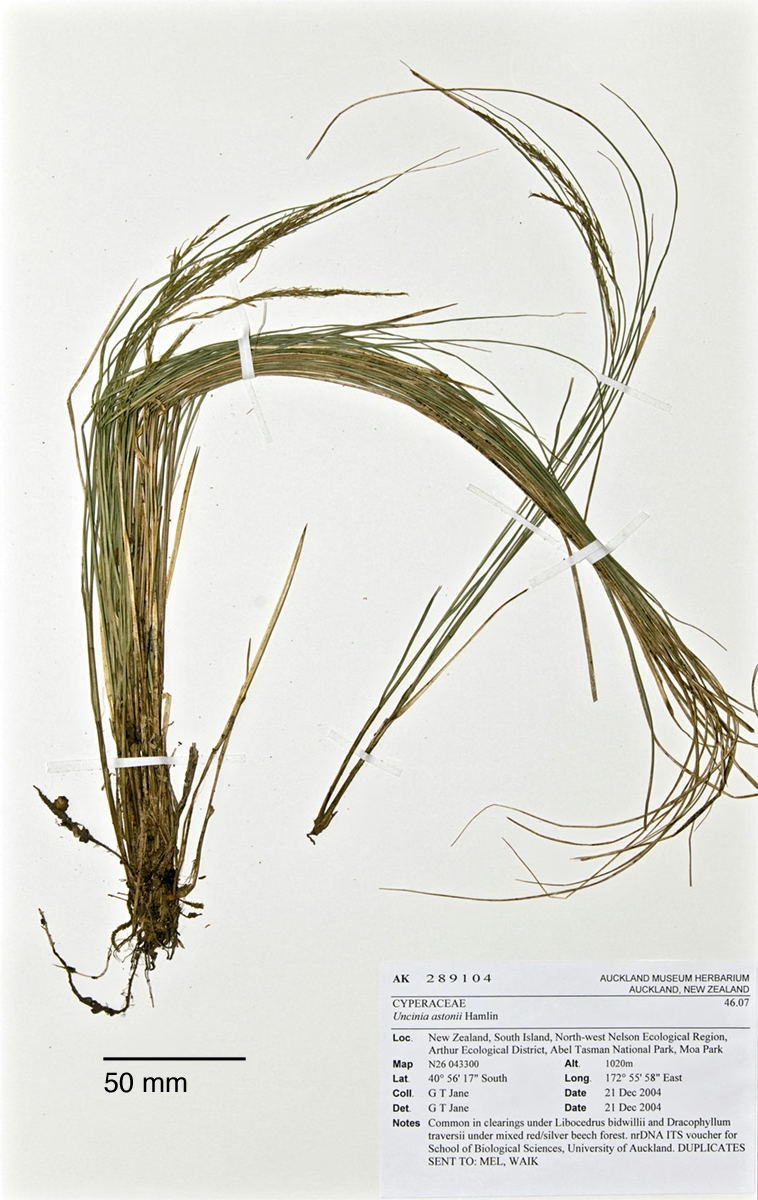
Aston's Sedge
Carex astonii
Last updated:
Aston's sedge (Carex astonii) is a small, reddish, tufted sedge endemic to the North Island of New Zealand, where it is known only from the Kaimanawa and Ruahine Ranges. Its leaves, up to 350 mm long, are longer than the 100 to 200 mm flowering stems and end in distinctive curled tips. It grows on montane to alpine river terraces, in back swamps and around the margins of mires. It is ranked At Risk - Naturally Uncommon because it is range restricted and sparse, and some sites recorded in the 1950s and 1960s are now overrun by taller weeds. It grows easily from seed or division in moist, sunny, weed-free conditions. Explore more native grasses and flaxes in our native plant guide.
Plant Description
Carex astonii forms small, reddish tufts. The mature culms (flowering stems) are 100 to 200 mm tall, and the leaves are longer than the culms, reaching about 350 mm. The leaves are reddish and finish in curled, tendril-like (cirrhose) tips, a feature that gives the tufts a slightly tousled look.
Each culm carries 4 to 6 stalkless spikes bearing both male and female flowers. The utricles, the small flask-shaped sacs enclosing each nut, are only about 2 mm long and 1 to 1.3 mm wide.
Carex druceana is its closest look-alike, but it has wider leaves, more closely spaced spikes and larger utricles. Carex petriei shares the reddish leaves with curled tips, but has characteristically wide leaf sheaths, which Carex astonii lacks.
Quick Facts
| Scientific Name | Carex astonii |
|---|---|
| Height | 0.1-0.2 m flowering stems; leaves to 0.35 m |
| Spread | Small tuft, about 0.2-0.3 m |
| Water Needs | Moist to wet |
| Light | Full sun |
| Frost Tolerance | High; montane to alpine |
| Salt Tolerance | No information available |
| Growth Rate | No information available |
| Lifespan | Perennial |
Climate Best Suited to
Suited to the cool, frosty, high-rainfall climate of the central North Island ranges. It needs cool summers and constant moisture, and is unlikely to thrive in hot, humid lowland gardens.
Regional Suitability
| City | Climate Suitability |
|---|---|
| Auckland | Low |
| Wellington | Medium |
| Christchurch | Medium |
| Dunedin | Medium |
Plant Habitat
Aston's sedge is endemic to the North Island and is apparently known only from the Kaimanawa and Ruahine Ranges, east and south-east of Lake Taupō. Within this small area it is rather local in its occurrence.
It grows from montane to alpine elevations on river terraces, in back swamps and around the margins of mires. These are open, damp, low-growing communities where competition from taller plants is naturally limited.
Growing Requirements
Soil Requirements
Its habitats are moist terrace soils and swampy ground beside rivers and mires, typically low in fertility.
- Consistently moist soil
- Low-fertility, open ground
- Free of competing weeds
Light Requirements
NZPCN recommends a sunny aspect, matching its open terrace and mire-margin habitats.
- Full sun
- Overtopping by taller plants weakens it
Water Requirements
It grows where the ground stays damp, so soil should never dry out.
- Keep moist year round
- Suits the edge of a pond or bog garden
Planting and Establishing
Plant in a sunny, consistently moist spot such as the margin of a bog garden or pond, or in a pot stood in a shallow saucer of water. Use a low-fertility, gritty or peaty mix rather than rich garden soil.
Keep the area weeded, since NZPCN identifies competition from taller, faster-growing weeds as the reason it has disappeared from some former sites. Small plants are easily smothered.
Ecological Role
Like other Carex, it is wind pollinated. Its nuts, enclosed in utricles, are dropped near the parent and may be moved by water along river terraces and mire margins.
It is part of the low turf and sedge communities of montane river terraces and wetland edges in the Kaimanawa and Ruahine Ranges. These communities rely on natural disturbance, wetness and low fertility to stay open, and are easily invaded by taller exotic grasses and herbs.
Uses & Significance
Garden Uses
Aston's sedge is a small specialist plant for wetland and conservation collections rather than a mainstream landscaping sedge.
- Bog garden or pond margin
- Container display in a water-filled saucer
- Conservation and botanic garden collections
Ecological Value
As a range-restricted endemic, it adds to the distinctive wetland flora of the central North Island ranges.
- Part of montane wetland and river terrace turfs
- Seeds are a food source for small birds and invertebrates in sedge communities
- An indicator of open, weed-free wetland margins
Landscaping Uses
Its reddish foliage with curled tips looks attractive in a small group at a pond edge, contrasting with green mosses and small wetland herbs. It is too small to be used for mass planting or erosion control.
Combine it with other low wetland natives in a damp trough or bog garden, keeping taller plants away so it is not shaded.
Seasonal Care Calendar
Spring
New leaves begin to grow as the ground warms in the ranges.
- Divide established clumps
- Weed around plants
Summer
Flowering stems with clustered spikes develop and seed matures later in the season.
- Keep soil moist in dry spells
Autumn
Ripe nuts can be collected for sowing fresh.
- Collect and sow fresh seed
Winter
Plants persist through frosts and snow in the ranges.
- No protection needed in cool gardens
When to Prune and How Much
Little pruning is needed. Old, dead leaves can be combed out of the tuft by hand in spring to keep it looking fresh.
Avoid cutting the plant back hard, as small sedges like this recover slowly.
How to Grow Aston's Sedge
NZPCN describes Carex astonii as easy from fresh seed and by division of whole plants. It prefers moist soils in a sunny aspect, free from weeds. Because it is ranked At Risk - Naturally Uncommon, propagation material should come from cultivated plants or be collected only with appropriate permission, for example from the Department of Conservation where sites are on public conservation land.
From Seed
Sedge seed is best sown fresh, as soon as the utricles turn brown and come away easily from the spike. Sow onto a moist, fine seed mix and keep the tray wet, since this is a plant of damp ground.
- Collect mature, brown spikes when the utricles detach easily.
- Sow seed on the surface of a moist seed-raising mix.
- Cover with a thin layer of fine grit.
- Stand the tray in a shallow dish of water in a bright spot.
- Prick out seedlings into individual pots once large enough to handle.
By Division
Division of whole plants is quick and reliable. Lift a well-established tuft and pull or cut it into a few rooted pieces, then pot or plant them straight away into moist ground. Divisions taken in spring establish fastest, because the plant is starting into active growth while the ground is still cool and moist in its montane home.
- Lift the clump in spring.
- Separate into pieces each with several shoots and roots.
- Trim long leaves to reduce water loss.
- Replant at once and keep wet until established.
Pests & Diseases
No specific pests or diseases are recorded for Aston's sedge. The main threat in the wild and in cultivation is smothering by taller, faster-growing weeds and grasses.
Small pot-grown sedges can be damaged by slugs and by drying out, so keep them moist and check seedlings regularly.
Cultural Significance
No Māori name or traditional use specific to Carex astonii is recorded in the sources consulted.
The species was named by the botanist Bruce Hamlin, who worked extensively on New Zealand sedges. The person honoured by the epithet astonii is not stated in the sources consulted.
Bonus Tip
If you are unsure whether a reddish sedge with curled leaf tips from the central North Island is Carex astonii or Carex petriei, look at the leaf bases: Carex petriei has noticeably wide, inflated sheaths, while Aston's sedge does not.
Related Plants
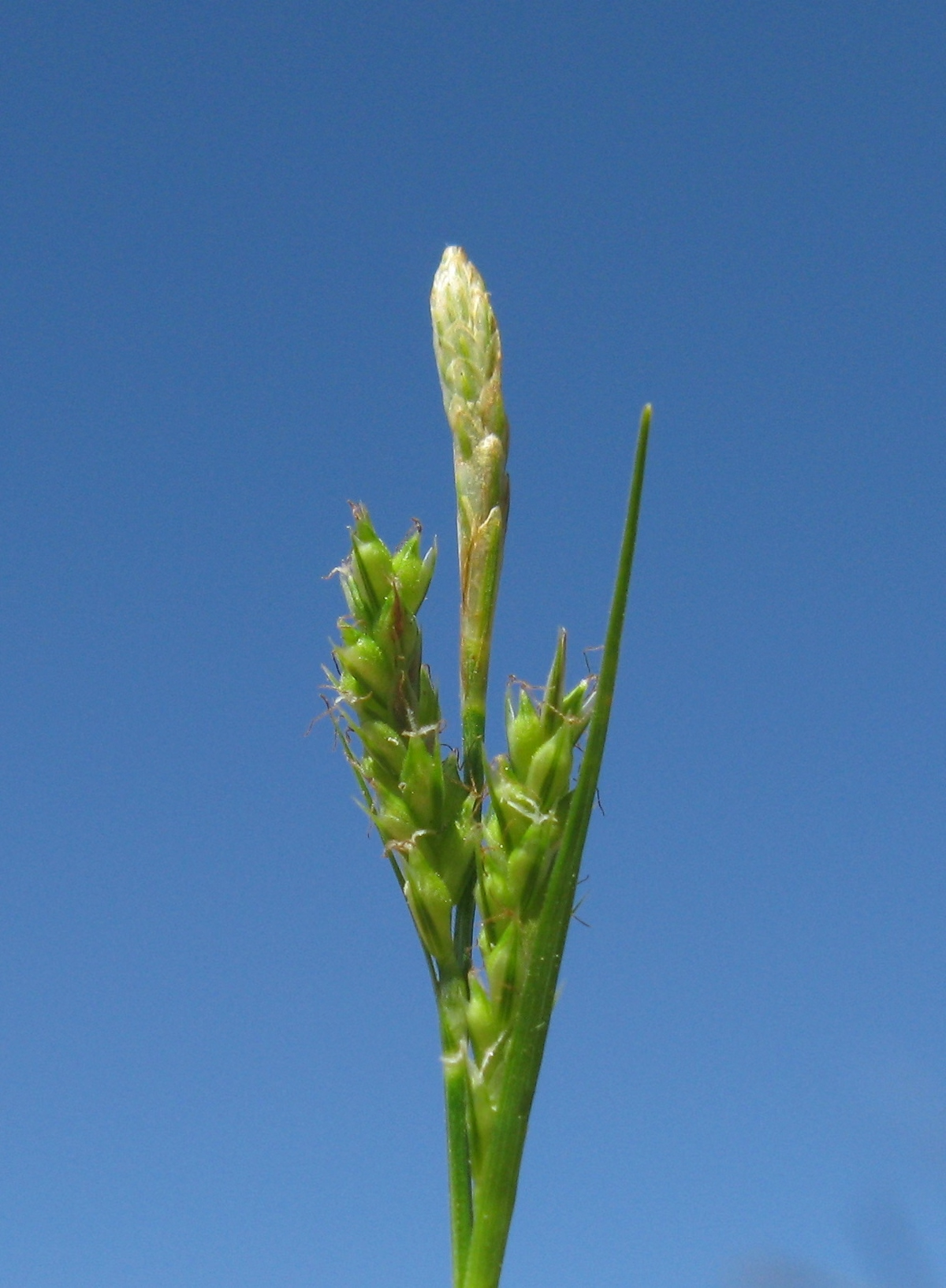
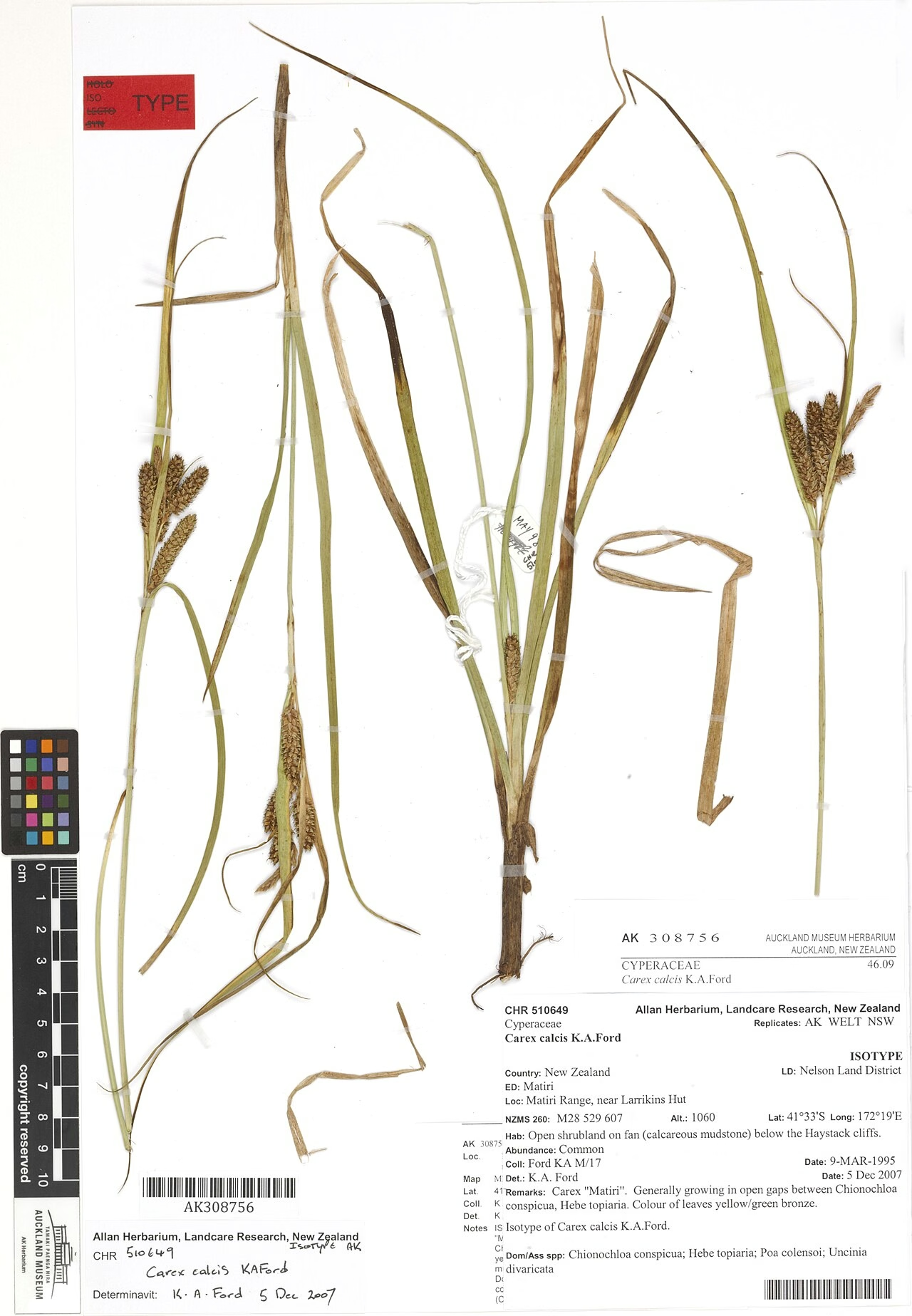
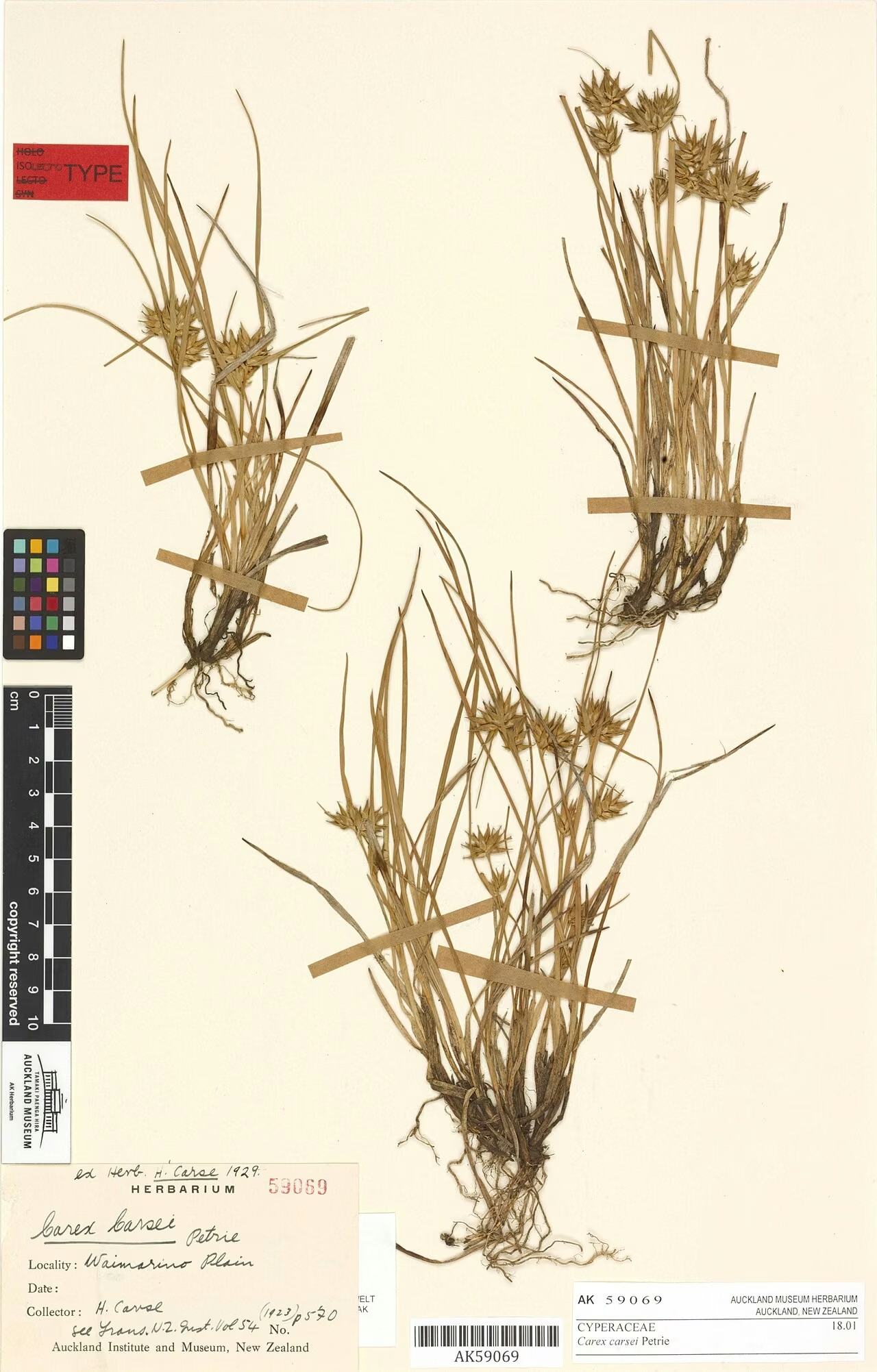
Explore other native plants that share similar characteristics or habitats with Aston's Sedge (Carex astonii), offering further insights into New Zealand's diverse flora. These related species provide context and opportunities for complementary planting in your garden.

Plant Conservation
Carex astonii is ranked At Risk - Naturally Uncommon (2023), with the qualifiers Range Restricted and Sparse. It is rather local within its small range in the Kaimanawa and Ruahine Ranges.
NZPCN reports that many of the habitats it was recorded from in the 1950s and 1960s are now occupied by taller, faster-growing weeds. Weed control on river terraces and mire margins, and protecting these wetlands from drainage and disturbance, are the main actions that would help it.
Frequently Asked Questions
Where is Carex astonii found?
It is endemic to the North Island and apparently known only from the Kaimanawa and Ruahine Ranges, on montane to alpine river terraces, back swamps and mire margins.
How do you identify Aston's sedge?
Look for a small reddish tuft whose leaves overtop the flowering stems and end in curled tips. Compared with Carex druceana it has narrower leaves, more widely spaced spikes and smaller utricles about 2 mm long.
Is Carex astonii the same as Carex druceana?
Edgar reduced it to Carex druceana var. astonii, and Landcare Research's name database still prefers that name. NZPCN treats it as a separate species, distinguished by narrower leaves, more distant spikes and smaller utricles.
Is Aston's sedge easy to grow?
NZPCN describes it as easy from fresh seed and by dividing whole plants, preferring moist soil in a sunny position kept free of weeds.
Sources and Further Reading
The botanical, growing, and conservation details for Aston's Sedge (Carex astonii) on this page draw on the New Zealand plant references below. Consult them for full technical records and the latest distribution data.