Colobanthus
Colobanthus canaliculatus
Last updated:
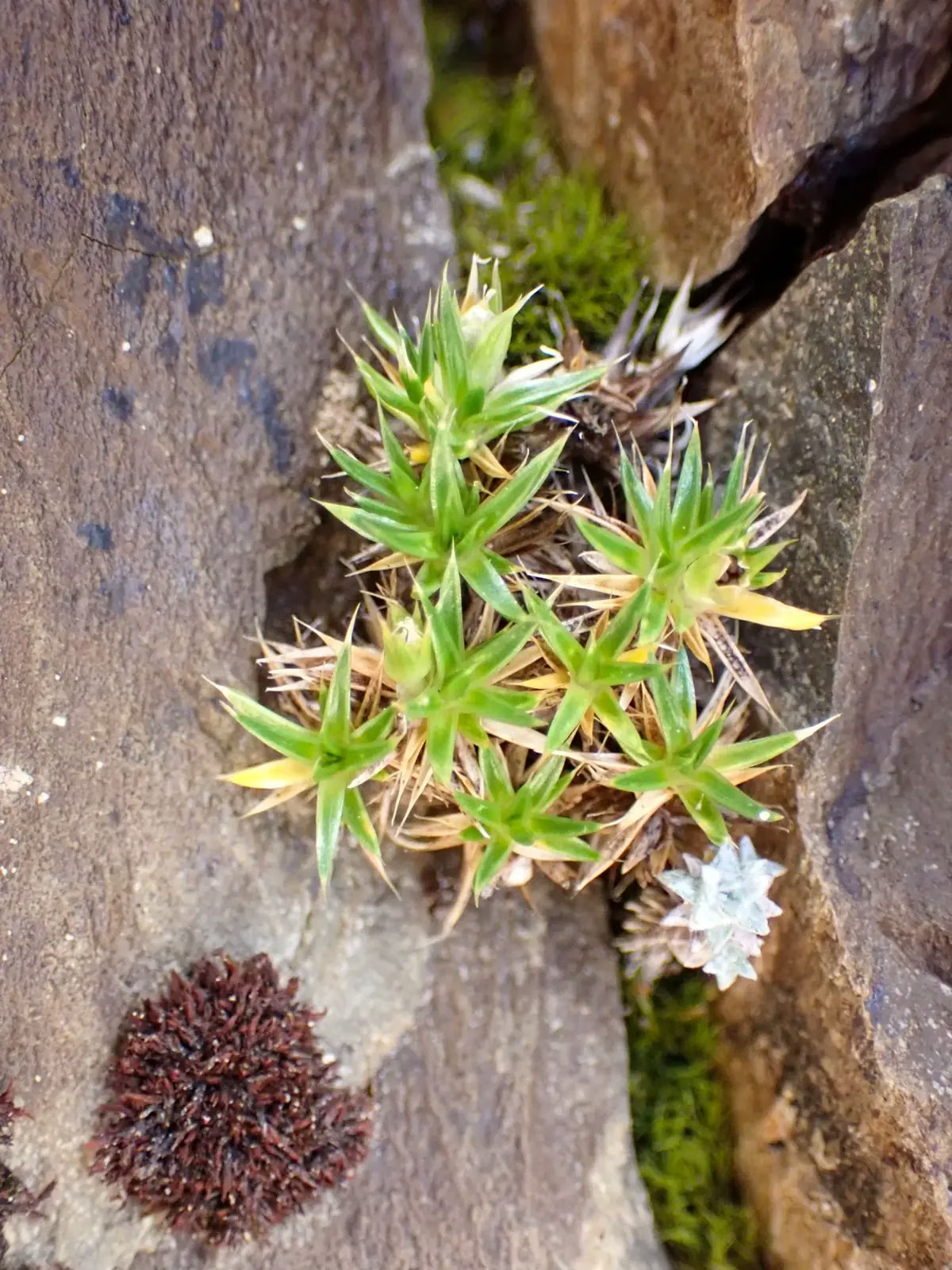
Colobanthus canaliculatus is a small, compact alpine cushion plant in the carnation family (Caryophyllaceae), endemic to New Zealand. Its tightly packed branches are clothed along their length in stiff, spreading, needle-tipped leaves only 3 to 4 mm long, each with a groove along its upper surface. The flowers have no petals and are green, sitting on short stalks among the leaves. It grows in the mountains of the South Island, mainly Nelson and Otago, often on rock. It is ranked Not Threatened, but it is rarely seen in cultivation and is best known to alpine botanists rather than gardeners. Explore more native ground covers in our native plant guide.
Plant Description
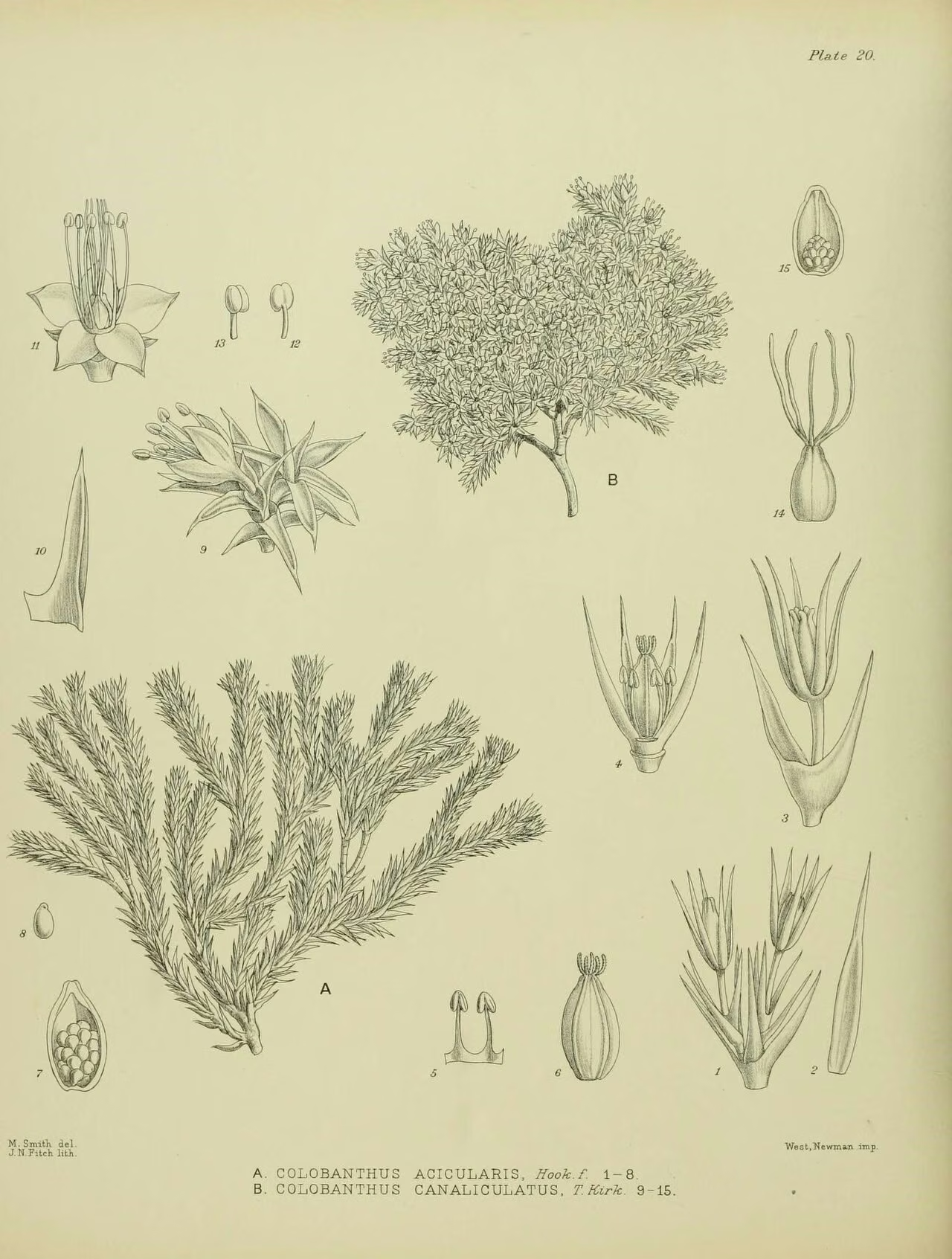
Colobanthus canaliculatus is a compact cushion plant whose branches grow close together and are leafy along their whole length. The leaves are stiff and squarrose, meaning they spread out at a wide angle from the stem. Each leaf has a short, inconspicuous sheath and a blade about 3 to 4 mm long that is awl-shaped, channelled on the upper surface (canaliculate) and narrowed into a short needle-like tip. The leaf edges are strongly thickened, and in younger leaves a groove can be seen between the border and the broad, rounded midrib when dry.
The flowers sit on short stalks and are 2.5 to 3 mm long. Like all Colobanthus they have no petals; instead there are five ovate to broadly triangular green sepals with a thickened keel and often a thickened margin, blunt or tapering to a short point. The fruit is a capsule that splits into five narrow lobes and is about as long as, or slightly longer than, the sepals. The seeds are small and winged.
Among New Zealand Colobanthus, the combination of very short (3 to 4 mm), squarrose, grooved leaves and five sepals helps identify it. Colobanthus monticola has slightly longer leaves without a midrib and only four sepals, while C. muelleri and C. strictus have much longer leaves of 10 mm or more. Identification in this genus can be difficult, and alpine specimens from the North Island have proved hard to place.
Quick Facts
| Scientific Name | Colobanthus canaliculatus |
|---|---|
| Height | Low compact cushion; height not stated in the floras |
| Spread | Small cushion; diameter not recorded in the sources consulted |
| Water Needs | Moist but free-draining alpine conditions |
| Light | Full sun on open alpine rock |
| Frost Tolerance | High; a mountain species |
| Salt Tolerance | No information available |
| Growth Rate | Slow |
| Lifespan | Perennial |
Climate Best Suited to
Suited to the cold, frosty, snowy climate of South Island mountains, with cool summers and long winters. It is not adapted to warm, humid lowland conditions.
Regional Suitability
| City | Climate Suitability |
|---|---|
| Auckland | Low |
| Wellington | Low |
| Christchurch | Low |
| Dunedin | Low |
Plant Habitat
Allan (1961) gives the distribution as the mountains of Nelson and Otago, and the species was first described by Thomas Kirk from Central Otago. Herbarium records also come from Marlborough and Canterbury. Plants from high altitudes on Mt Taranaki (to about 2100 m), and more rarely Mt Hikurangi and the Kaimanawa, Ruahine and Tararua ranges, have been referred to this species, but their relationship to Colobanthus buchananii remains unresolved.
It is a lithophytic cushion plant, meaning it grows on rock, typically in crevices and on rocky ground in the alpine zone where competition from taller plants is low.
Growing Requirements
Soil Requirements
In the wild it roots into rock crevices and thin mineral soil on exposed alpine ground.
- Very gritty, low-fertility substrate
- Sharp drainage around the crown
- Rock crevices or scree-like conditions
Light Requirements
It grows on open alpine rock where there is little shade from other plants.
- Full sun
- Avoid shading by taller plants, which would smother the cushion
Water Requirements
Alpine rock sites are cool and receive regular rain and snowmelt, but water drains away quickly.
- Keep the root zone cool and evenly moist in cultivation
- Never let the cushion sit in water
Planting and Establishing
Colobanthus canaliculatus is a plant for specialist alpine growers rather than general gardens, and it is seldom offered by nurseries. Plants should never be dug from the wild.
If material is available legally, grow it in a deep pot, trough or alpine house in a very gritty mix, with the cushion tucked against a stone so the crown stays dry while the roots run into cool, moist grit below.
Ecological Role
NZPCN notes that the winged seeds of Colobanthus are dispersed by water and possibly also by wind and by being flicked out of the capsule (ballistic dispersal). This suits a plant of rock crevices, where seed can be washed or blown into new cracks.
The pollinators of its small green, petal-less flowers are not documented in the sources consulted. As a compact cushion it traps fine soil and moisture among its packed shoots on otherwise bare rock.
Uses & Significance
Garden Uses
It has almost no role in ordinary gardens and is of interest mainly to alpine plant enthusiasts.
- Alpine house or trough collections using legally sourced material
- Crevice gardens that mimic alpine rock
- Botanical collections of New Zealand Caryophyllaceae
Ecological Value
It is one of several endemic Colobanthus cushions that colonise bare alpine rock in the South Island.
- Part of the endemic alpine rock flora of Nelson and Otago
- Builds small pockets of soil and moisture on bare rock
- Contributes to the diversity of New Zealand's alpine cushion plants
Landscaping Uses
This species is not used in landscaping. In a specialist crevice garden it would sit tightly between vertical slabs of schist or greywacke, where its stiff, prickly cushion contrasts with softer alpine herbs.
Because the cushion is small and the flowers are green and inconspicuous, it is appreciated for form and texture rather than colour.
Seasonal Care Calendar
Spring
Growth resumes as snow melts from the alpine rock.
- Check cultivated plants for winter rot
- Top-dress with fresh grit
Summer
Flowering is recorded in December and January, with tiny green flowers among the leaves.
- Look closely; the flowers are easily missed
- Keep roots cool during hot spells
Autumn
Fruiting is recorded from December to April as the five-lobed capsules ripen.
- Collect seed only from cultivated plants
- Reduce watering as temperatures fall
Winter
In the wild the cushions sit through freezing temperatures and snow cover.
- Protect cultivated plants from prolonged winter wet
- No feeding or pruning needed
When to Prune and How Much
No pruning is needed. The tightly packed shoots form the cushion, and cutting into it leaves gaps where rot can start.
If a patch of a cultivated cushion dies, gently pick out the dead shoots with tweezers and fill the gap with fine grit.
How to Grow Colobanthus
No published propagation protocol for Colobanthus canaliculatus was found in the sources consulted, and it is rarely grown. The methods below describe the approach alpine growers generally use for small cushion-forming members of the carnation family, adapted to what is known of this species: it flowers in December and January, ripens capsules between December and April, and has small winged seeds that NZPCN says are spread by water and possibly wind. Only use seed or shoots from plants already held legally in cultivation, and never collect from wild cushions, which are slow to recover from damage. Expect slow growth and losses from rot in warm or humid conditions.
From Seed
The capsules split into five narrow lobes when ripe, so they need to be watched and harvested before the seed is shed. Fresh seed is the best option for alpine Caryophyllaceae, and some growers give pots a period of winter cold before expecting germination.
- Collect ripe capsules from cultivated plants between late summer and autumn
- Sow the small seed on the surface of a very gritty seed mix and cover lightly with fine grit
- Stand the pot outdoors in a cool, bright place over winter
- Prick out seedlings into individual deep pots once they can be handled
From Cuttings
Single shoots or small clusters of shoots taken from the edge of an established cultivated cushion can sometimes be rooted. This is slow and only suitable where a healthy plant is available.
- Detach a small shoot cluster from the cushion margin in spring or early summer
- Insert it into pure pumice or coarse sand kept just moist
- Keep cool and lightly shaded until new growth shows that roots have formed
- Pot on into a gritty alpine mix with minimal root disturbance
Pests & Diseases
No specific pests or diseases are recorded for this species. In cultivation, the most likely cause of failure is rot of the crown in warm, humid or poorly drained conditions.
In the wild the cushions are small and slow-growing, so trampling and rock disturbance can damage them, although no specific threats are listed.
Cultural Significance
No Māori name or traditional use is recorded for Colobanthus canaliculatus in the sources consulted.
Thomas Kirk described the species in 1895 in his revision of the New Zealand species of Colobanthus. The genus name means mutilated flower, referring to the absence of petals, and canaliculatus is from the Latin canalis, meaning a groove or channel, describing the grooved leaves.
Bonus Tip
To tell this species from other alpine Colobanthus in the field, use a hand lens on a few leaves and flowers: very short, stiff leaves of 3 to 4 mm with a groove along the top and a needle tip, combined with five green sepals, point to Colobanthus canaliculatus rather than the four-sepalled C. monticola.
Related Plants
Explore other native plants that share similar characteristics or habitats with Colobanthus (Colobanthus canaliculatus), offering further insights into New Zealand's diverse flora. These related species provide context and opportunities for complementary planting in your garden.
Colobanthus apetalus
Colobanthus apetalus
Colobanthus brevisepalus
Colobanthus brevisepalus
Colobanthus buchananii
Colobanthus buchananii
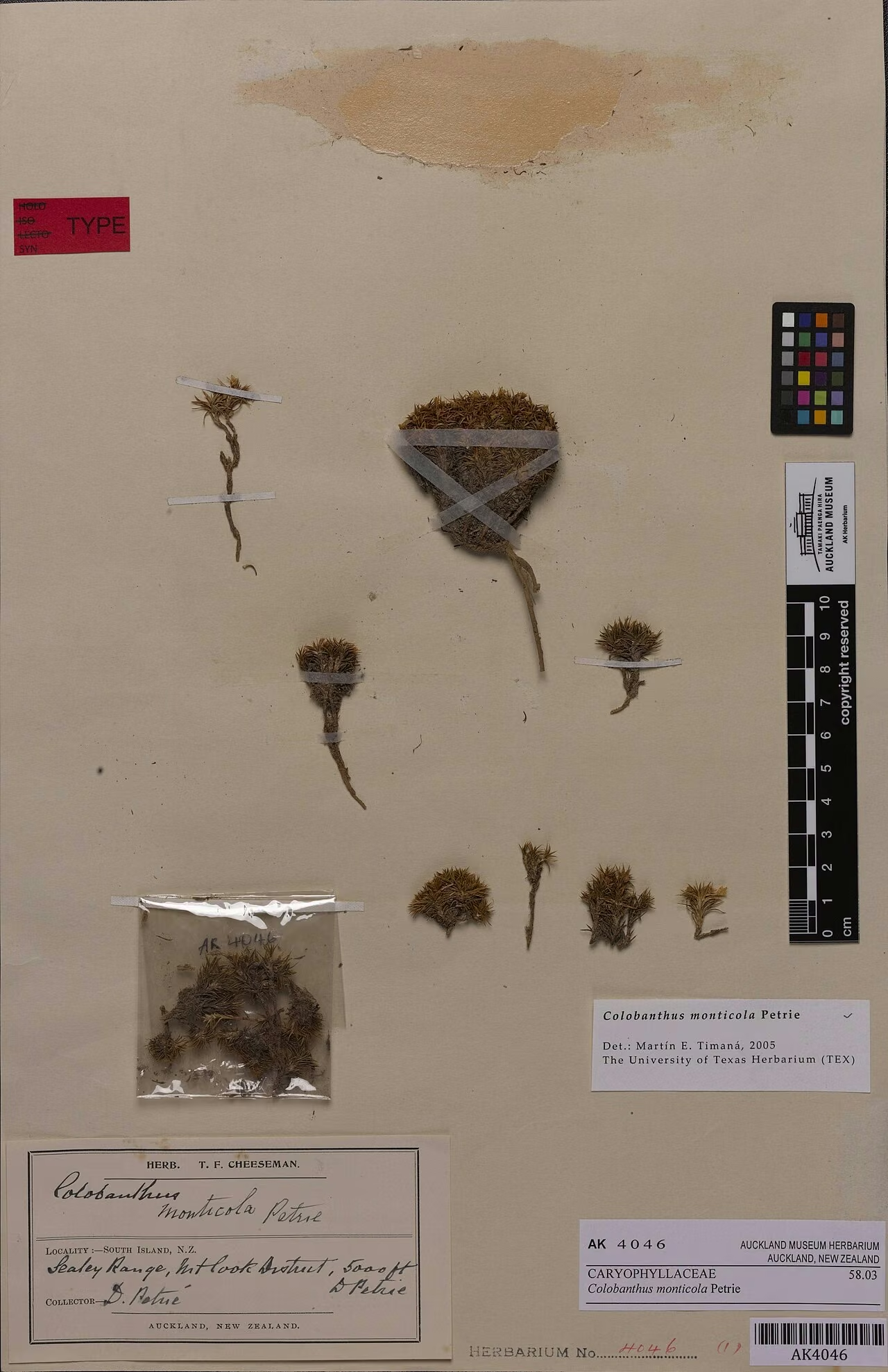
Colobanthus monticola
Colobanthus monticola
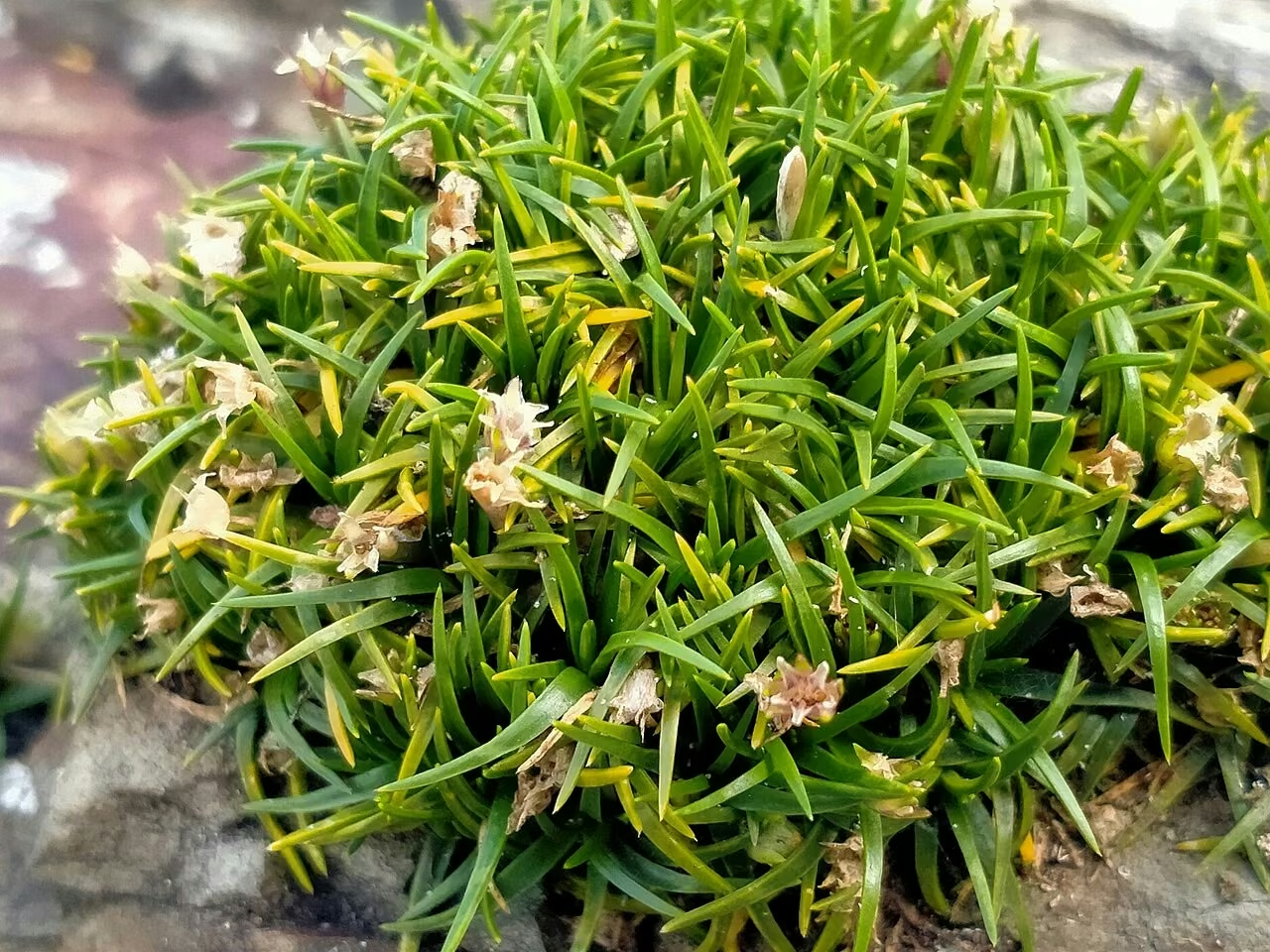
Colobanthus muelleri
Colobanthus muelleri
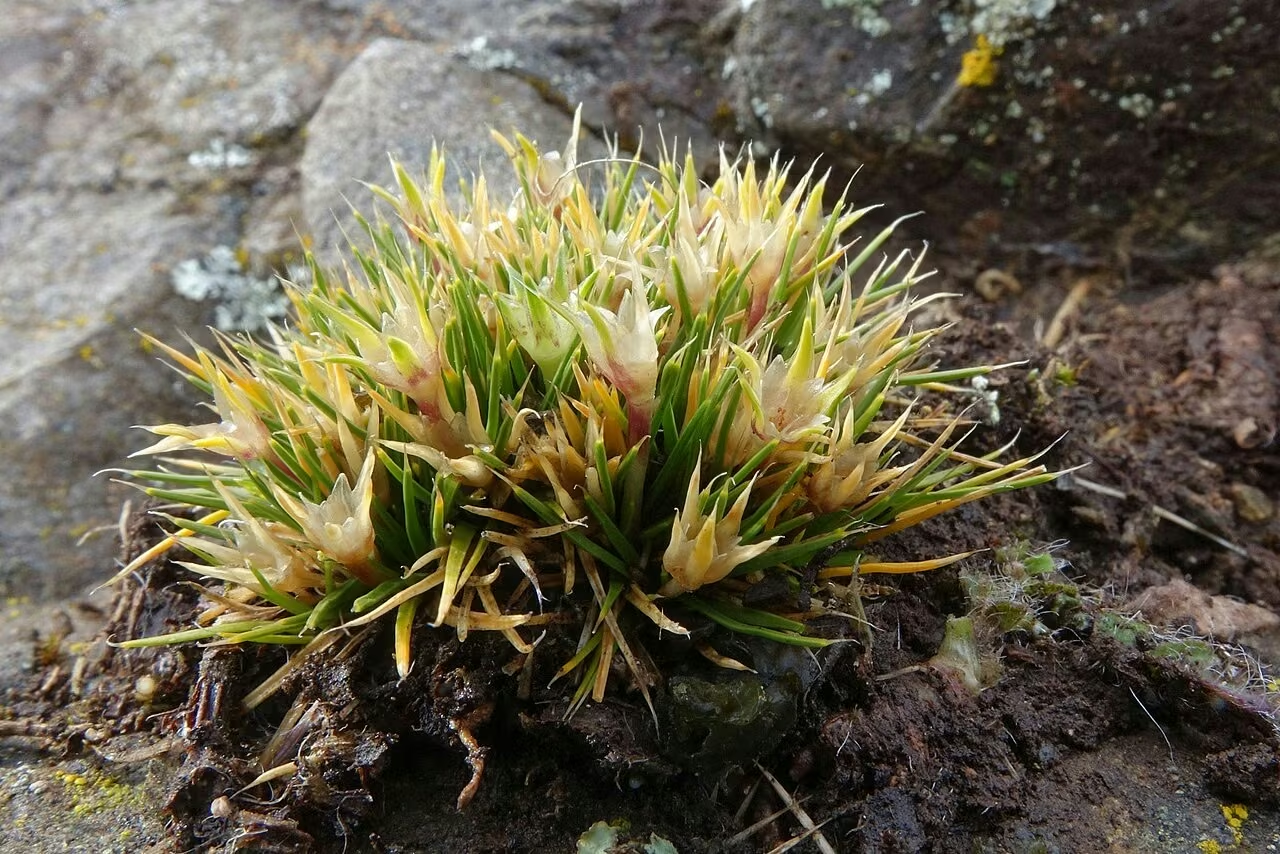
Colobanthus strictus
Colobanthus strictus
Coprosma crenulata
Coprosma crenulata
Colob. Acic.
Colobanthus Acicularis
Plant Conservation
Colobanthus canaliculatus is ranked Not Threatened (2023), as it has been since 2004. In the 2025 Otago regional assessment it is Regionally Not Threatened, while in the Wellington region it is Regionally Data Deficient, reflecting the unresolved identity of North Island plants.
Much of its mountain habitat lies on public conservation land. Staying on tracks and not disturbing rock cushions are the most useful things visitors can do.
Frequently Asked Questions
What does Colobanthus canaliculatus look like?
It forms a compact, firm cushion of crowded leafy branches. The leaves are stiff, about 3 to 4 mm long, grooved on top and finished with a short needle-like tip, and the small flowers are green with no petals.
Where does Colobanthus canaliculatus grow in New Zealand?
Allan's Flora of New Zealand gives its range as the mountains of Nelson and Otago in the South Island. The type locality is in Central Otago. Some North Island alpine plants have been referred to it, but their identity is uncertain.
Why are the flowers of Colobanthus green?
The genus name Colobanthus means mutilated flower, because the flowers have no petals. What you see are the green sepals, which make the flowers easy to overlook among the leaves.
Is Colobanthus canaliculatus threatened?
No. It was ranked Not Threatened in the 2023 national assessment, as it has been in every assessment since 2004. In Otago it is also listed as Regionally Not Threatened.
Sources and Further Reading
The botanical, growing, and conservation details for Colobanthus (Colobanthus canaliculatus) on this page draw on the New Zealand plant references below. Consult them for full technical records and the latest distribution data.