Large Burr Grass
Cenchrus caliculatus
Last updated:
Large burr grass (Cenchrus caliculatus) is a robust, spreading, clump-forming grass that in New Zealand grows only on Raoul Island in the Kermadec Islands. It arises from a stout woody rhizome, with trailing stems that root at the lower nodes, and its spike-like seed heads up to 25 cm long carry clusters of spikelets hidden among backward-barbed bristles that cling to fur, feathers and clothing. It is strictly coastal on Raoul, growing on rocky bluffs, talus and beach sand. Once widespread across the Pacific, it has declined sharply over the last 40 years and is now rare or extinct over much of its former range. Explore more native grasses and flaxes in our native plant guide.
Plant Description
Cenchrus caliculatus forms lax to robust clumps from a stout, woody rhizome. Its culms trail and root freely from the lower nodes, so the plant can spread across rock and sand. The leaf sheaths are firm and papery and the leaf blades are linear-lanceolate, 70 to 200 mm long and 4 to 9 mm wide.
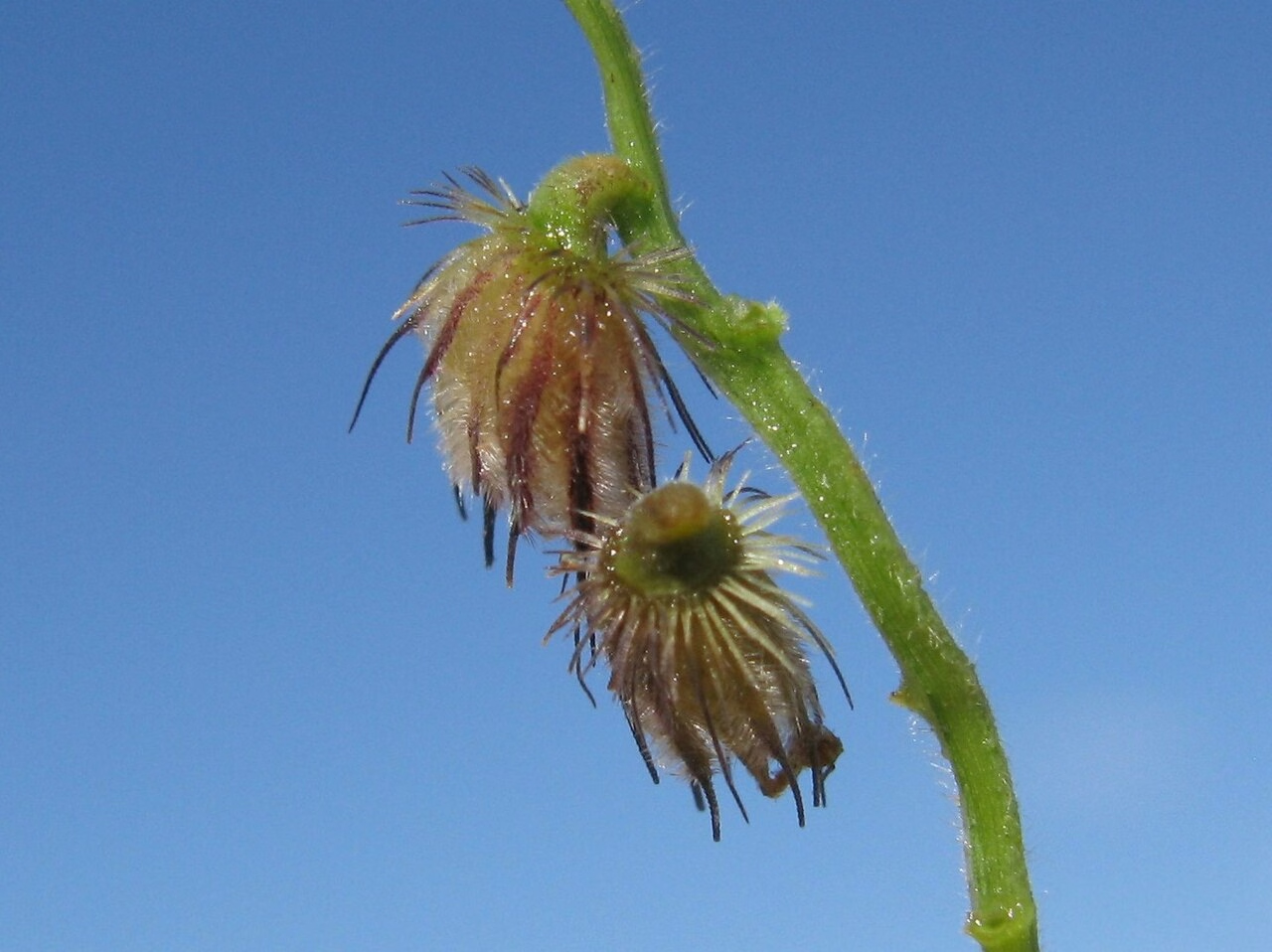
The seed head is a dense, spike-like panicle 100 to 250 mm long and about 15 mm wide. It bears ovoid clusters of spikelets hidden among spirally arranged bristles 0.5 to 11 mm long, which are retrorsely barbed so they catch on anything that brushes past. The spikelets are 5 to 6 mm long, two-flowered and light green to nearly colourless, and the seeds are 2.2 to 2.7 mm long.
NZPCN notes that there is no similar species in New Zealand. The related Cenchrus echinatus, widespread in the Pacific but not recorded in New Zealand, is much smaller and has dark maroon-red to purple seed heads.
Quick Facts
| Scientific Name | Cenchrus caliculatus |
|---|---|
| Height | No reliable figure found; seed heads 10-25 cm long |
| Spread | Spreading clumps with trailing, rooting stems |
| Water Needs | Low to moderate; coastal free-draining sites |
| Light | Full sun |
| Frost Tolerance | None; very cold sensitive |
| Salt Tolerance | High; strictly coastal on Raoul Island |
| Growth Rate | Moderate to fast in warm conditions |
| Lifespan | Perennial |
Climate Best Suited to
Requires a warm, frost-free subtropical maritime climate like that of the Kermadec Islands. It is very cold sensitive and unsuited to mainland New Zealand outdoors except perhaps the warmest frost-free coastal sites.
Regional Suitability
| City | Climate Suitability |
|---|---|
| Auckland | Low |
| Wellington | Low |
| Christchurch | Low |
| Dunedin | Low |
Plant Habitat
In New Zealand this grass is confined to Raoul Island, the largest of the Kermadec Islands, about 1000 km northeast of the North Island. It is indigenous rather than endemic, having once occurred widely through the Pacific islands.
On Raoul it is strictly coastal, growing on rocky bluffs, the talus below them and on beach sands. Elsewhere in the Pacific it has been recorded on inland and coastal basalt exposures, calcarenite, uplifted coral and coral sand.
Growing Requirements
Soil Requirements
It grows on rock, talus and sand in the wild, so in cultivation it needs a very free-draining, gritty or sandy medium.
- Sandy or volcanic gravel mixes
- No waterlogging
- Low to moderate fertility is adequate
Light Requirements
A plant of open coastal bluffs and beaches, it needs full sun and warmth.
- Full sun and a warm, sheltered spot
- Indoors or under glass in cooler areas
Water Requirements
Its coastal rock and sand habitat dries quickly, so it tolerates periods of dryness once established, though young plants need regular moisture.
- Water seedlings and cuttings regularly
- Allow established plants to dry between waterings
Planting and Establishing
Outside the subtropics this grass is best kept as a specimen in a pot under glass or in a frost-free conservatory, since NZPCN describes it as very cold sensitive.
Its barbed burrs cling to clothing and animal fur, so place it away from paths and pets. Plant only nursery or collection material; do not collect from Raoul Island, which is a nature reserve.
Ecological Role
The spiny florets are spread by attaching to passing animals and possibly by wind. This attachment dispersal may help explain how the species came to occur on so many Pacific islands.
Its trailing, rooting stems help bind coastal sand and talus on Raoul Island. The causes of its Pacific-wide decline over the last 40 years remain unclear according to NZPCN.
Uses & Significance
Garden Uses
It has limited garden use in New Zealand because of its cold sensitivity and clinging burrs.
- Botanic garden or conservatory collections of Kermadec flora
- Conservation and research collections
- Educational displays on seed dispersal by attachment
Ecological Value
As a declining Pacific grass, its Raoul Island population has wider conservation significance beyond New Zealand.
- Stabilises coastal sand and talus
- Part of the distinctive indigenous flora of the Kermadec Islands
- A population of a species that is declining across the Pacific
Landscaping Uses
Large burr grass is not used in New Zealand landscaping. In a subtropical conservatory it can be shown in a sandy bed with other Kermadec coastal plants.
Its spreading habit and burrs make it unsuitable for paths, lawns or play areas.
Seasonal Care Calendar
Spring
Growth resumes as temperatures rise.
- Keep under glass until nights are warm
- Repot or divide rooted pieces
Summer
Flowering begins in November and continues through to May.
- Water young plants regularly
- Watch for burrs forming
Autumn
Flowering and fruiting continue, with burrs maturing from December to September.
- Collect ripe burrs for fresh seed
- Move pots under cover before cold weather
Winter
Growth slows; plants must be kept frost-free.
- Protect from cold
- Reduce watering
When to Prune and How Much
Remove old flowering stems and burrs to keep the plant tidy and limit burrs sticking to clothing.
Dead leaves can be combed out in spring. Cut back trailing stems if they spread beyond the pot or bed.
How to Grow Large Burr Grass
NZPCN describes Cenchrus caliculatus as easy to propagate from fresh seed, rooted pieces and node cuttings, though the species is very cold sensitive and all propagation should take place in warmth. Because the trailing stems root freely at the lower nodes, vegetative propagation is straightforward. Seed should be sown fresh. Material should come only from existing cultivated plants or authorised conservation collections, as Raoul Island is a protected nature reserve and the species is declining across its Pacific range.
From Seed
Fruiting runs from December to September. Collect burrs when they are dry and come away easily, handling them with gloves because of the barbed bristles.
- Collect ripe burrs from cultivated plants
- Sow fresh, whole burrs just below the surface of a sandy seed mix
- Keep warm and lightly moist in a frost-free glasshouse
- Pot seedlings individually once large enough to handle
From Cuttings and Rooted Pieces
Trailing culms root at their lower nodes, so pieces with roots already formed can be detached and potted, and unrooted node cuttings strike readily in warmth.
Vegetative propagation is the quickest way to bulk up a conservation collection, because each rooted piece is genetically identical to its parent and establishes faster than a seedling.
- Detach rooted lengths of stem from the parent clump
- For node cuttings, cut stems below a node and insert the node into moist sand
- Keep warm and humid out of direct hot sun until new growth appears
- Pot on into a free-draining mix and grow on under glass
Pests & Diseases
No specific pests are recorded for this species in New Zealand. Cold damage is the main risk in cultivation.
On Raoul Island, past browsing by goats and competition from introduced weeds affected much of the coastal vegetation, and weed control by the Department of Conservation continues there.
Cultural Significance
No traditional Māori use of Cenchrus caliculatus is recorded in the sources consulted. The common names devil grass and owee grass reflect the painful burrs.
The genus name comes from the Greek cenchros, millet, while caliculatus refers to a calyculus or epicalyx, the husk-like ring of bristles around the spikelets.
Bonus Tip
When handling the seed heads, wear gloves and clothing that burrs will not grip, such as smooth nylon. The backward-pointing barbs on the bristles make burrs very hard to pick out of wool or fleece.
Related Plants
Explore other native plants that share similar characteristics or habitats with Large Burr Grass (Cenchrus caliculatus), offering further insights into New Zealand's diverse flora. These related species provide context and opportunities for complementary planting in your garden.
Celmisia rupestris
Celmisia rupestris
Celmisia rutlandii
Celmisia rutlandii
Thomson's Mountain Daisy
Celmisia thomsonii
Celmisia traversii
Celmisia traversii
New Zealand Sneezewort
Centipeda aotearoana
Centrolepis strigosa
Centrolepis strigosa
Ceratocephala pungens
Ceratocephala pungens
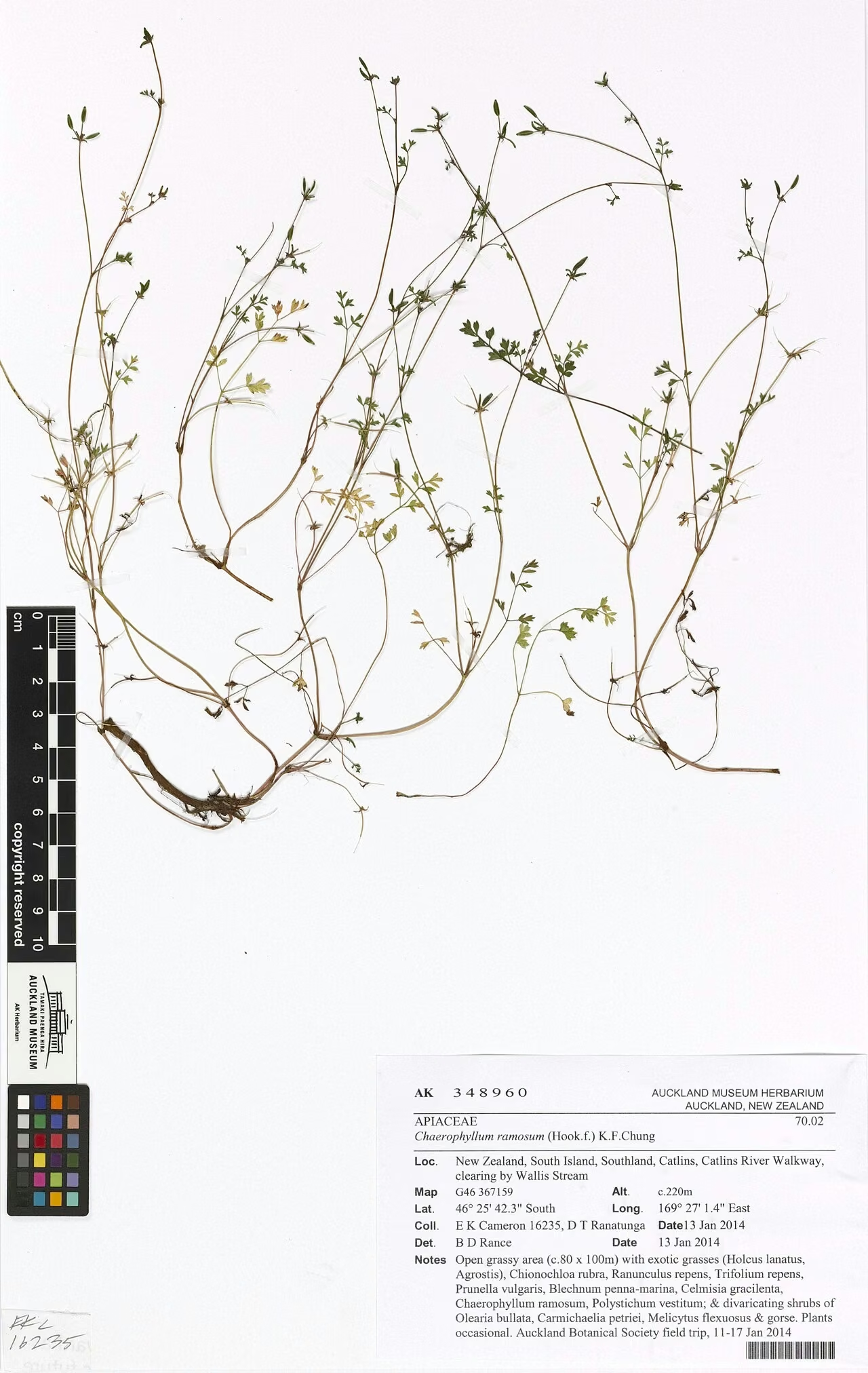
Chaerophyllum ramosum
Chaerophyllum ramosum
Plant Conservation
Cenchrus caliculatus is ranked At Risk - Naturally Uncommon (2023) with the qualifiers Range Restricted and Threatened Overseas. Its New Zealand range is limited to Raoul Island, which is protected within the Kermadec Islands Nature Reserve.
The species has declined markedly across the Pacific over about 40 years for unclear reasons, so the Raoul Island population is important. Ongoing biosecurity and weed control on the island help protect its coastal habitat.
Frequently Asked Questions
Where does Cenchrus caliculatus grow in New Zealand?
It is known in New Zealand only from Raoul Island in the Kermadec Islands, where it grows on coastal rocky bluffs, talus slopes and beach sands.
Why is it called burr grass?
Its spikelets sit among spirally arranged, backward-barbed bristles up to 11 mm long, forming burrs that attach to animals and clothing, which is how the seed is spread.
Is large burr grass declining?
NZPCN reports that this grass has declined markedly over about 40 years and is now extinct or scarce across much of its former Pacific range, for reasons that remain unclear.
Can large burr grass be grown on the New Zealand mainland?
It is easy to propagate from fresh seed, rooted pieces and node cuttings, but it is very sensitive to cold, so it suits only frost-free subtropical conditions.
Sources and Further Reading
The botanical, growing, and conservation details for Large Burr Grass (Cenchrus caliculatus) on this page draw on the New Zealand plant references below. Consult them for full technical records and the latest distribution data.