Mountain Daisy
Celmisia traversii
Last updated:
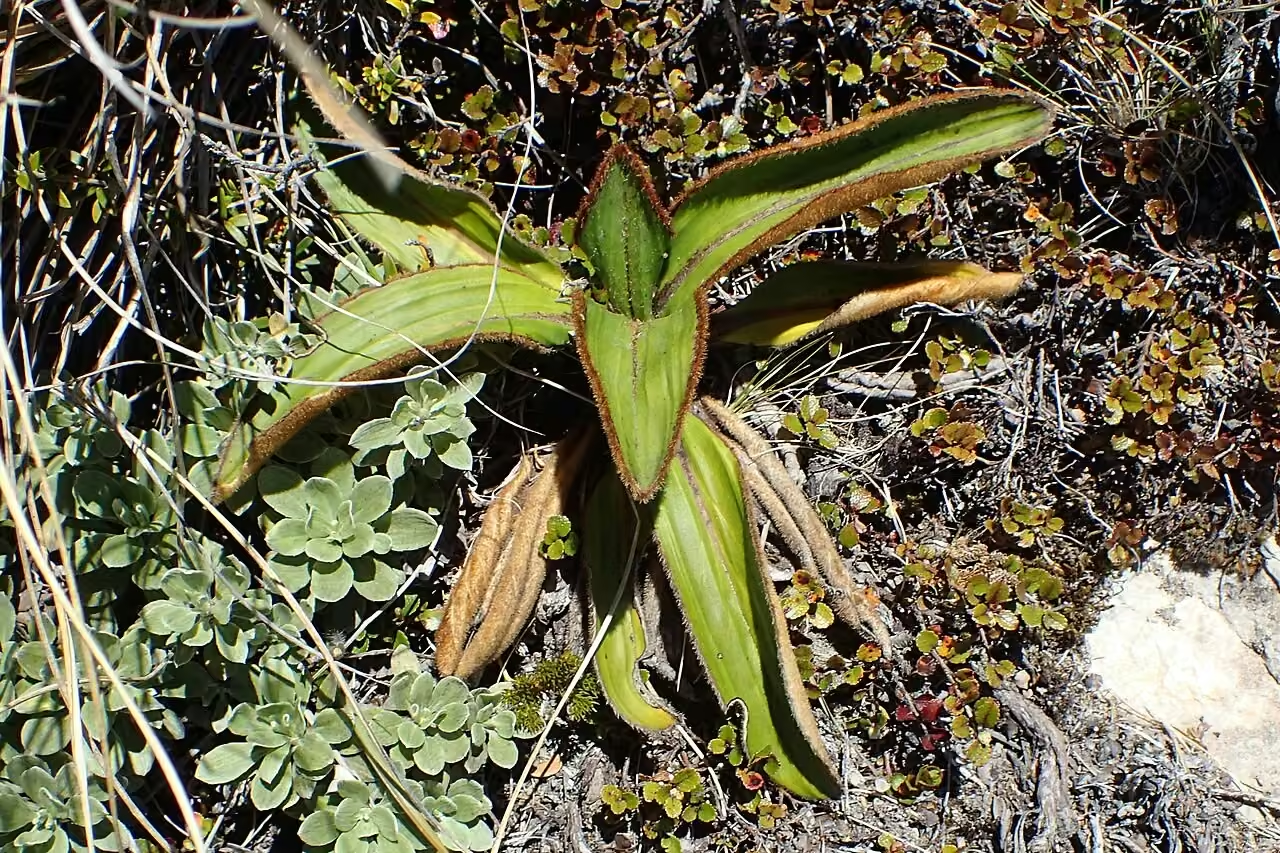
Celmisia traversii, one of the plants called mountain daisy, is a large celmisia endemic to the South Island of New Zealand. It forms clumps of leathery rosettes whose deep green leaves, up to 30 cm long, are thickly felted underneath with rusty brown or deep buff hairs. From November to March purple-tinged stalks up to 30 cm tall carry white daisies up to 6 cm across with yellow centres. It grows in montane to alpine tussockland and rocky herbfield, often on south-facing slopes, from the Tasman Mountains to eastern Fiordland. NZPCN notes it is one of the few celmisias that grows easily in most climates, provided it is kept out of humid air. Explore more native flowering plants in our native plant guide.
Plant Description
Celmisia traversii is a woody-based herb that builds clumps of rosettes from a branching stock. The leaves are thick and leathery, lanceolate to oblong and 50 to 300 mm long by 15 to 90 mm wide. Their upper surface is deep green, while the lower surface is densely clad in a thick rusty or deep buff felt, so a clump seen from below or in wind shows flashes of warm brown.
Flowering stems (scapes) are up to 300 mm tall and often purplish. Each carries a single head up to 60 mm in diameter with about 75 white ray florets surrounding roughly 160 yellow disc florets. The fruits are spindle-shaped achenes about 5 mm long. Flowering runs from November to March and fruiting from December to May.
It is most likely to be confused with Celmisia cordatifolia, which NZPCN separates on the features of the leaf blade and by the brown-tomentose involucral bracts of C. traversii. Few other large celmisias combine dark green upper leaf surfaces with such a strongly coloured brown underside.
Quick Facts
| Scientific Name | Celmisia traversii |
|---|---|
| Height | 0.3-0.5 m in flower |
| Spread | Clumps can exceed 1 m across |
| Water Needs | Moderate to high; evenly moist but free-draining |
| Light | Sun with afternoon shade, or light shade |
| Frost Tolerance | High; a montane to alpine species |
| Salt Tolerance | Low; an inland mountain plant |
| Growth Rate | Slow |
| Lifespan | Long-lived perennial |
Climate Best Suited to
Suits cool, moist, temperate to alpine climates with reliable rainfall. It struggles in hot, humid summers and in prolonged drought.
Regional Suitability
| City | Climate Suitability |
|---|---|
| Auckland | Low |
| Wellington | Medium |
| Christchurch | Medium |
| Dunedin | High |
Plant Habitat
This daisy is endemic to the South Island. It occurs in the Tasman Mountains south to the Wangapeka Saddle, along the main divide from the St Arnaud Range to about Doubtful Valley, in scattered populations south of the Wairau Valley to Hanmer, on Shale Peak in Canterbury, and in eastern Fiordland from Key Summit to the Hump and Cameron mountains, the Mararoa Valley and the Takitimu Mountains.
It grows in the montane to alpine zones, mostly in tussockland and rocky herbfield and especially on south-facing slopes that stay cool and moist. In inland Marlborough it is found on shaded bluffs in river headwaters.
Growing Requirements
Soil Requirements
Grow it in a deep, humus-rich soil that holds moisture but drains freely, mimicking the cool alpine loams it grows in naturally.
- Add leaf mould or compost and grit to heavy soils
- Avoid waterlogged ground, which rots the crown
- Raised beds and scree gardens give reliable drainage
Light Requirements
In the wild it favours south-facing, cooler slopes, and in gardens it does best with morning sun and afternoon shade.
- Shade from hot afternoon sun in warmer districts
- Too much shade reduces flowering
Water Requirements
Keep the root zone evenly moist through spring and summer; drought stress scorches the leaves and weakens the clump.
- Water deeply in dry spells rather than little and often
- Keep water off the crown in humid weather
- A stone mulch keeps roots cool and the crown dry
Planting and Establishing
Plant in autumn or early spring into a cool, sheltered, well-drained site with good air movement. Set the plant so the base of the rosettes sits at soil level, not buried, and firm gently.
Allow room for the clump to spread, as old plants can become more than a metre across. Grouping several plants in a rock garden or on a bank shows off the contrast between the dark leaf tops and brown undersides.
Ecological Role
Celmisia traversii is a component of South Island tussockland and herbfield communities, where its large leathery rosettes occupy cool, often south-facing ground. Its achenes carry a pappus of hairs that aids wind dispersal.
Celmisia flowers in general are visited by native flies, bees and other insects, but specific pollinator studies for this species were not found in the sources consulted.
Uses & Significance
Garden Uses
A handsome foliage and flowering plant for cool gardens, valued for its two-tone leaves as much as its large white daisies.
- Alpine and rock gardens
- Cool, partly shaded borders in southern districts
- Large containers or troughs with gritty mix
- Native plant collections
Ecological Value
As a widespread but endemic mountain daisy, it contributes to the structure and flowering resources of South Island alpine tussock and herbfield.
- Provides summer nectar and pollen in alpine communities
- Contributes to ground cover on rocky montane slopes
- Endemic to New Zealand
Landscaping Uses
Use Celmisia traversii as a feature among rocks, alongside smaller alpine plants such as hebes, aciphyllas and tussocks. The bold, broad rosettes provide contrast to fine-leaved grasses.
Planting on a slight slope lets visitors glimpse the rusty undersides of the leaves, which are one of its best features.
Seasonal Care Calendar
Spring
New leaves expand and flower stems begin to rise.
- Mulch with grit or stone
- Begin regular watering if spring is dry
Summer
Flowering peaks between November and March, with large white daisies held above the foliage.
- Water deeply during dry periods
- Provide afternoon shade in hot spells
Autumn
Seed ripens from December to May and old flower stems dry off.
- Collect fresh seed for sowing
- Remove spent stems
Winter
The rosettes remain evergreen and are fully frost hardy.
- Ensure drainage is good during wet weather
- Clear fallen leaves off the crowns
When to Prune and How Much
No pruning is needed. Cut spent flower stems at the base once seed has been collected or the heads have dried.
Remove dead or rotting leaves from the clump in late winter to improve air flow and reduce the chance of fungal problems.
How to Grow Mountain Daisy
NZPCN records that Celmisia traversii can be divided but is best grown from fresh seed. Seed ripens between December and May, and like many celmisias its viability falls quickly, so it should be sown as soon as it is collected. Division is useful for multiplying a particular garden plant but can set the parent back. Always propagate from cultivated plants or legally collected seed rather than digging from the wild, and give seedlings and divisions cool, airy conditions because the species dislikes high humidity.
From Seed
Collect seed heads when the achenes are plump and the pappus begins to fluff out. Many achenes in a Celmisia head can be empty, so sow thickly to allow for poor germination.
- Collect fresh seed heads from late summer into autumn
- Sow on the surface of a free-draining seed mix and cover lightly with fine grit
- Keep the tray moist in a cool, shaded, well-ventilated place
- Prick out seedlings once they have two or three true leaves
- Grow on in pots for a season before planting out
By Division
Established clumps with several rosettes can be split. Each division needs a portion of the woody stock with its own roots.
- Lift the clump in early spring or autumn
- Separate rosettes with a sharp knife, keeping roots attached
- Pot divisions into gritty, humus-rich mix
- Keep cool and shaded until new roots establish, then plant out the following season
Pests & Diseases
Crown rot is the main problem in warm, humid or poorly drained gardens, which is why NZPCN notes the species dislikes high humidity. Good drainage and air flow are the best prevention.
Slugs and snails may chew young leaves and emerging flower buds, especially on plants grown in shady, damp corners. No other specific pests of this species are recorded in the sources consulted.
Cultural Significance
No traditional Māori use specific to Celmisia traversii is recorded in the sources consulted. The species honours William Thomas Locke Travers, a lawyer, politician and naturalist who explored the Nelson and Marlborough high country and sent plant specimens to Joseph Hooker.
The genus name Celmisia comes from Kelmis, an Idaean Dactyl of Greek mythology. Large-leaved mountain daisies like this one are among the best-known sights of South Island alpine walks.
Bonus Tip
In northern or humid gardens, grow Celmisia traversii in a large terracotta pot of gritty, humus-rich mix placed on the shaded side of the house. The pot can be moved into afternoon shade and kept off wet ground, which greatly reduces the crown rot that kills most celmisias in warm climates.
Related Plants
Explore other native plants that share similar characteristics or habitats with Mountain Daisy (Celmisia traversii), offering further insights into New Zealand's diverse flora. These related species provide context and opportunities for complementary planting in your garden.
Celmisia rigida
Celmisia rigida
Celmisia rupestris
Celmisia rupestris
Celmisia rutlandii
Celmisia rutlandii
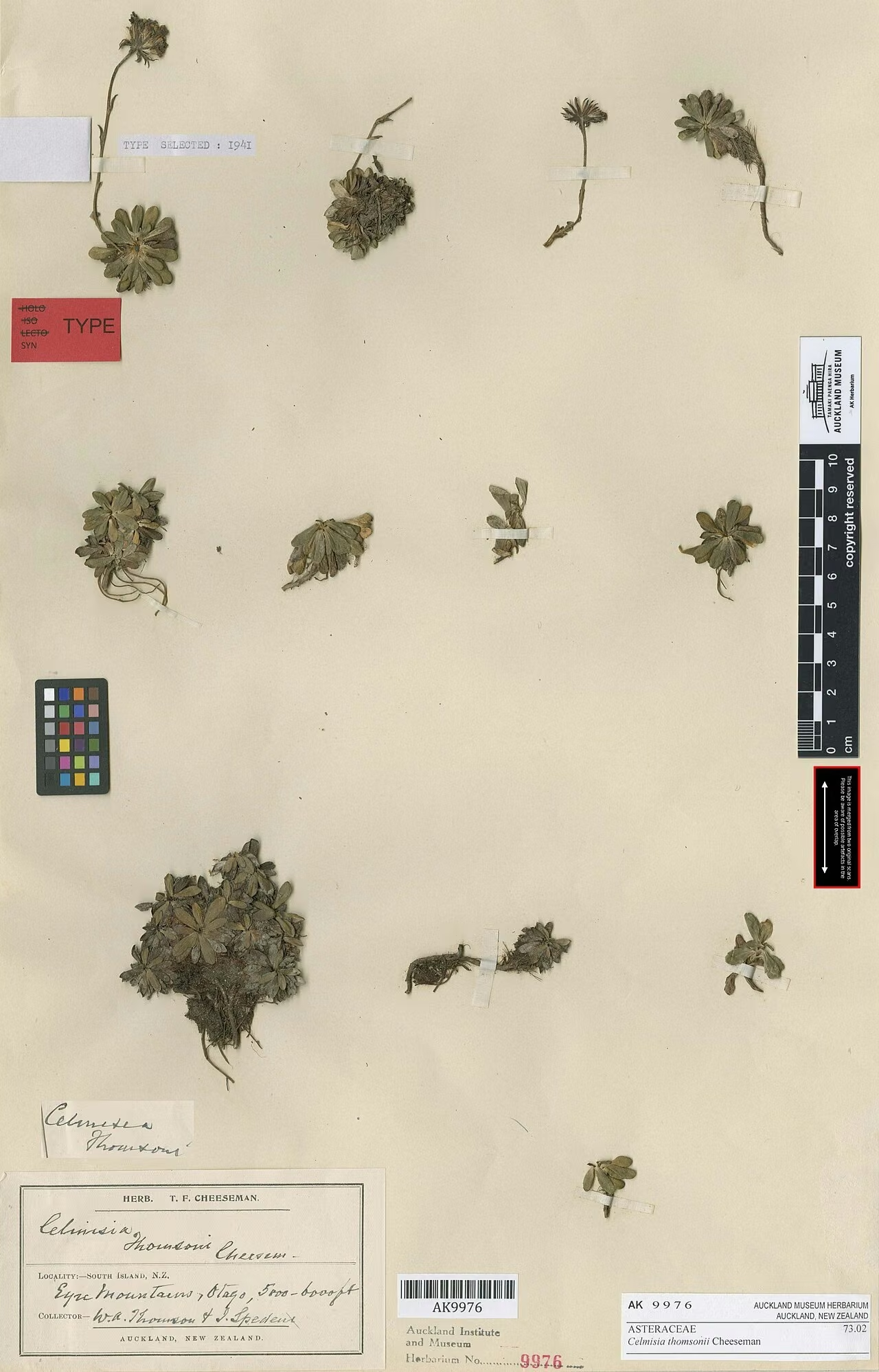
Thomson's Mountain Daisy
Celmisia thomsonii
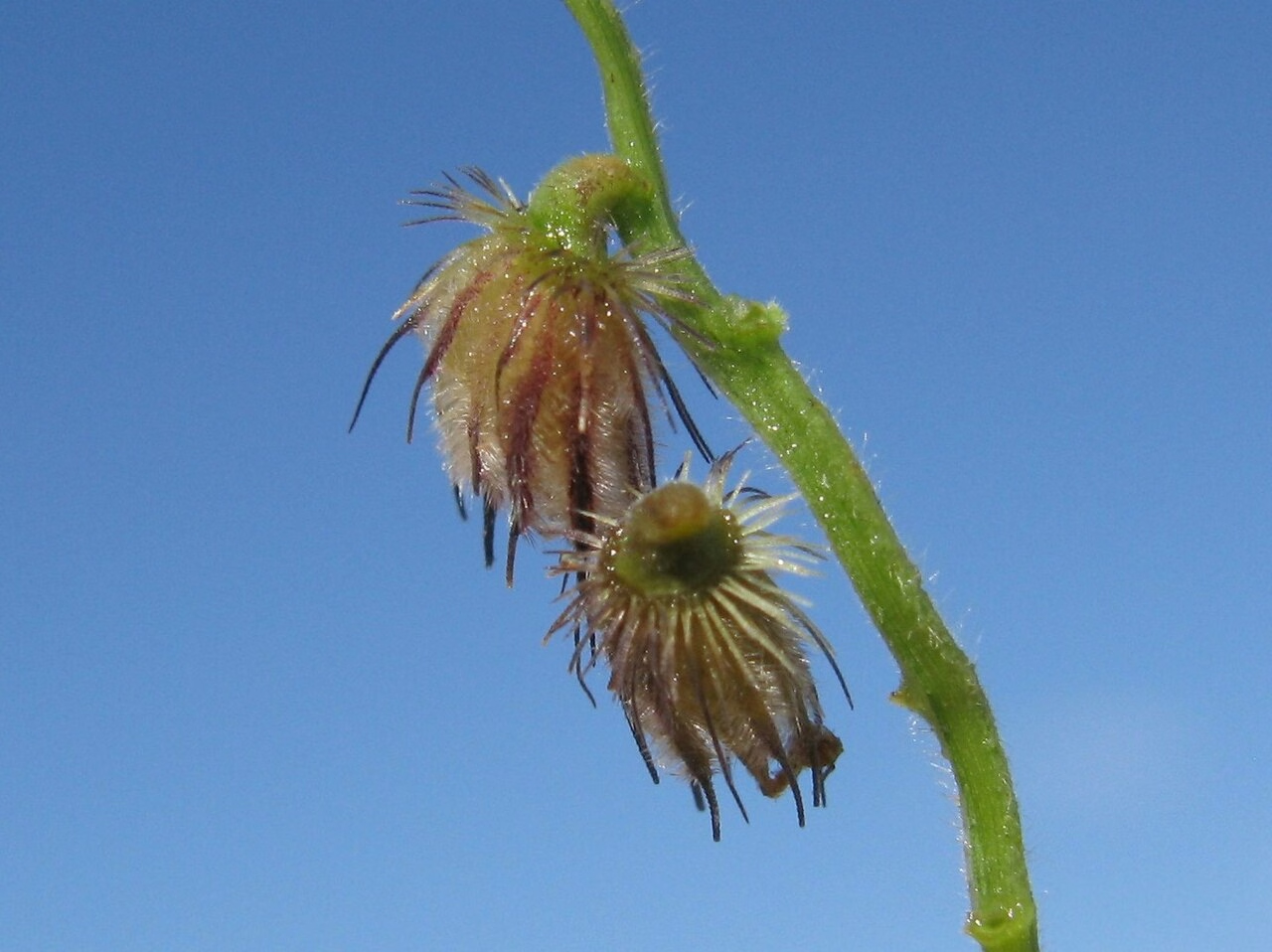
Large Burr Grass
Cenchrus caliculatus
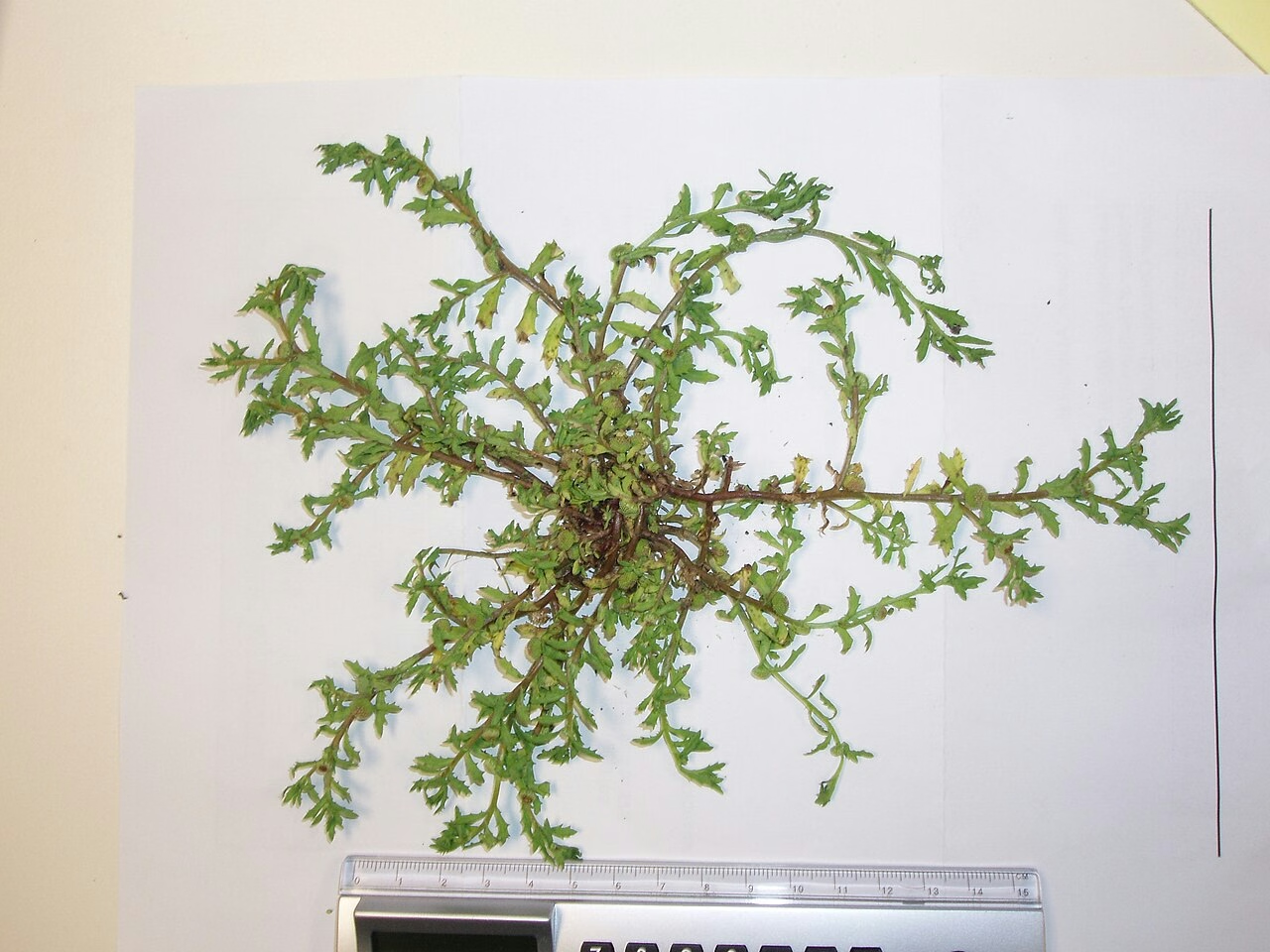
New Zealand Sneezewort
Centipeda aotearoana
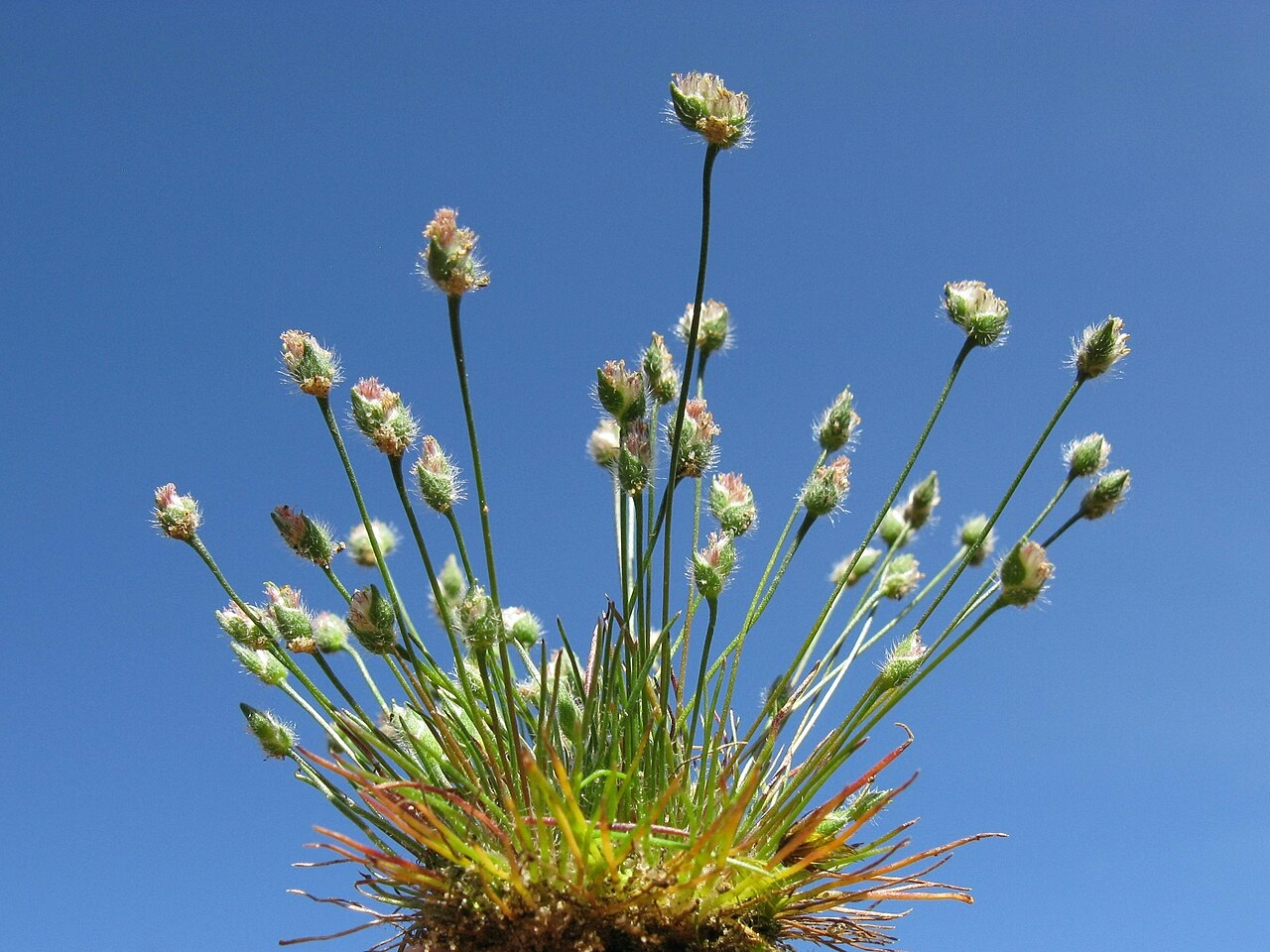
Centrolepis strigosa
Centrolepis strigosa
Ceratocephala pungens
Ceratocephala pungens
Plant Conservation
Celmisia traversii is ranked Not Threatened (2023). It has a broad but patchy distribution through South Island mountains, much of it within conservation land such as Kahurangi, Nelson Lakes and Fiordland national parks.
Browsing animals and weeds in tussockland can affect alpine daisies generally, so pest control in high country benefits it. Gardeners should buy nursery-raised plants rather than collecting from the wild.
Frequently Asked Questions
Why are the leaves of Celmisia traversii brown underneath?
The undersides are densely covered in a thick ferrugineous or deep buff tomentum, a felt of hairs that gives the leaves their striking two-tone look.
Is Celmisia traversii easy to grow?
NZPCN describes it as one of the few Celmisia species that is easily grown in most climates, though it dislikes high humidity and needs moist, free-draining soil with afternoon shade.
Where does Celmisia traversii grow in the wild?
It is found in the South Island mountains, from the Tasman Mountains and the main divide near the St Arnaud Range to eastern Fiordland and the Takitimu Mountains, mainly in tussockland and rocky herbfield.
Who was Celmisia traversii named after?
The epithet honours William Thomas Locke Travers (1819-1903), an Irish-born naturalist and explorer who collected plants in New Zealand.
Sources and Further Reading
The botanical, growing, and conservation details for Mountain Daisy (Celmisia traversii) on this page draw on the New Zealand plant references below. Consult them for full technical records and the latest distribution data.