Mountain Daisy
Celmisia rupestris
Last updated:
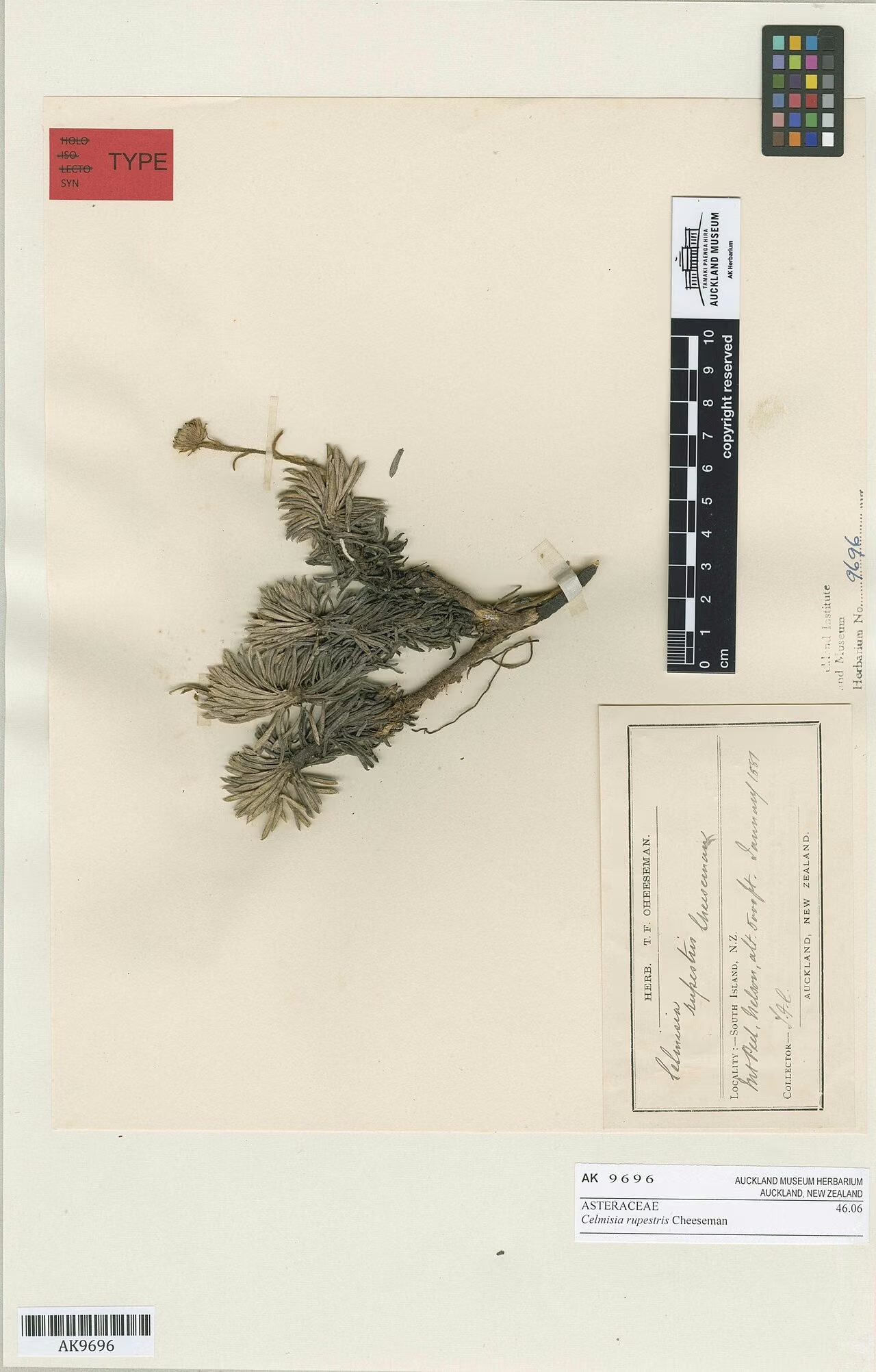
Celmisia rupestris is a prostrate to straggling woody mountain daisy found only in North-West Nelson, chiefly in Kahurangi National Park around Mt Peel, Mt Glasgow, the Cobb Valley and Aorere Peak. Its branches spread up to about 1 m long and are densely covered in narrow, leathery leaves 10 to 25 mm long, felted with soft white hairs on both surfaces. White daisies 25 to 30 mm across appear from October to February. True to its name, which means growing in rocky places, it lives on cliff faces, rock outcrops and fellfield from the upper montane to alpine zones. It is ranked At Risk - Naturally Uncommon. Explore more native shrubs in our native plant guide.
Plant Description
Celmisia rupestris is a prostrate or straggling shrub with slender to stout branches reaching about 1 m long. The leaves are densely overlapping, narrowly linear-spathulate and leathery, 10 to 25 mm long and 2.5 to 3 mm wide, with strongly inrolled margins. Both surfaces are covered with dense, soft white hairs, which on the upper side conceal the midrib and give the plant a silvery look.
Flower heads 25 to 30 mm across bear numerous white ray florets around yellow tubular disc florets. The seeds are subcylindric with whitish pappus bristles and are dispersed by wind.
It belongs to a group of small woody Celmisia that includes C. brevifolia, C. gibbsii, C. lateralis, C. ramulosa and C. walkeri. Its white-haired upper leaf surface separates it from C. gibbsii, and its North-West Nelson distribution and rocky habitat are useful supporting clues.
Quick Facts
| Scientific Name | Celmisia rupestris |
|---|---|
| Height | Low, prostrate to straggling |
| Spread | Branches up to about 1 m long |
| Water Needs | Evenly moist, free-draining; dislikes drying out |
| Light | Sun |
| Frost Tolerance | High; upper montane to alpine |
| Salt Tolerance | No information available |
| Growth Rate | Slow |
| Lifespan | Long-lived perennial |
Climate Best Suited to
Suits the cool, wet mountain climate of North-West Nelson, with frequent cloud, snow in winter and mild summers. It is intolerant of both high humidity and drying out, so it rarely thrives in warm lowland gardens.
Regional Suitability
| City | Climate Suitability |
|---|---|
| Auckland | Low |
| Wellington | Low |
| Christchurch | Medium |
| Dunedin | Medium |
Plant Habitat
This species is endemic to North-West Nelson in the South Island. NZPCN lists Kahurangi National Park, including Mt Glasgow, Mt Peel (Cobb), the Cobb Valley and Aorere Peak. The type was collected on Mt Peel at about 5,000 ft (around 1,500 m).
It grows from the upper montane to alpine zones on cliff faces, rock outcrops, among rocks and in fellfield, where its branches spread across rock surfaces and into crevices.
Growing Requirements
Soil Requirements
It roots into crevices and thin stony soils on rock faces and among loose rocks in fellfield.
- Free-draining yet moisture-retentive gritty mix
- Low fertility
- Rock or stone chips around the collar
Light Requirements
NZPCN recommends a sunny position, but in warmer districts a south-facing rockery protects it from overheating.
- Sun with cool roots
- South-facing aspect in warmer gardens
Water Requirements
It is intolerant of both humidity and desiccation, so even moisture at the roots with dry air around the foliage is the goal.
- Water regularly in summer
- Keep foliage dry and well ventilated
Planting and Establishing
Plant in a free-draining, moist soil in sun, ideally on a south-facing rockery or in a pot in an alpine house, as NZPCN suggests. Place rocks so that the branches can trail over them.
Buy plants only from specialist nurseries that propagate from cultivated stock; do not collect from Kahurangi.
Ecological Role
The dense, spreading stems colonise rock faces and fellfield, where few other plants can establish. Seeds carried on a pappus of whitish bristles are dispersed by wind.
Specific pollinators and invertebrate associates are not documented in the sources consulted.
Uses & Significance
Garden Uses
It suits alpine enthusiasts who can give it a cool, rocky setting.
- South-facing rockery
- Alpine house pots
- Wall crevices and trough gardens
Ecological Value
It is one of the many plants confined to North-West Nelson, a region with exceptional plant endemism.
- Endemic to the Kahurangi area
- Colonises cliffs and rock outcrops
- Wind-dispersed seed
Landscaping Uses
Let it trail across a large rock or down a wall face, where the silvery white foliage stands out against dark stone.
It combines well with other rock-loving alpine plants but should not be crowded, as still, humid air around the stems leads to rot.
Seasonal Care Calendar
Spring
Flowering can begin as early as October.
- Topdress with grit
- Check for winter damage
Summer
Flowering continues through to February.
- Water evenly in dry weather
- Ensure good ventilation in alpine houses
Autumn
Fruiting runs from November to May, so seed can still be collected well into autumn.
- Collect fresh seed
- Take cuttings if needed
Winter
The plant is dormant in the cold.
- Keep pots out of persistent rain
- Do not feed
When to Prune and How Much
Pruning is generally unnecessary. Remove dead flower stalks and any dead branches.
Branches that have outgrown their space can be shortened lightly after flowering, which also supplies material for cuttings.
How to Grow Mountain Daisy
NZPCN describes Celmisia rupestris as difficult to cultivate, but notes that it is best grown from fresh seed and that cuttings are possible. It is occasionally offered by specialist native plant nurseries. Plants need a free-draining but moist soil in a sunny site and are intolerant of both humidity and drying out, so propagation material and young plants must be kept evenly moist with good ventilation. Only use seed or cuttings from cultivated plants, as wild populations in Kahurangi National Park are protected.
From Seed
Fruiting occurs from November to May. Fresh seed gives the best results; stored seed of Celmisia often fails.
- Collect seed heads once the pappus is dry and fluffy
- Sow on the surface of a gritty seed mix
- Cover lightly with fine grit and keep cool and moist
- Provide good air movement to prevent damping off
- Pot on seedlings into individual pots of gritty mix
From Cuttings
NZPCN notes cuttings are possible. Short, semi-ripe shoots from the trailing branches are the most practical material, and because the leaves are densely hairy the cuttings should be kept moist at the base but never misted heavily, which can cause the foliage to rot.
- Take 3 to 5 cm shoot tips after flowering
- Remove the lower leaves
- Insert into a mix of pumice and sand
- Keep in a cool, bright, ventilated place and lightly moist
- Pot on once rooted and harden off gradually
Pests & Diseases
No specific pests are recorded. Slugs and snails may damage flowers and soft shoots.
Rot in humid weather and dieback when the roots dry out are the main problems in cultivation.
Cultural Significance
No traditional Māori name or use is recorded for Celmisia rupestris in the sources consulted.
Its type locality, Mt Peel near the Cobb Valley, lies in Kahurangi National Park, an area that has long attracted botanists for its many endemic plants.
Bonus Tip
In a pot, set a flat stone over the root zone and let the branches drape across it. The stone keeps the roots cool and evenly moist while lifting the hairy leaves off damp soil, addressing both of the conditions NZPCN says this species cannot tolerate.
Related Plants
Explore other native plants that share similar characteristics or habitats with Mountain Daisy (Celmisia rupestris), offering further insights into New Zealand's diverse flora. These related species provide context and opportunities for complementary planting in your garden.
Celmisia prorepens
Celmisia prorepens
Celmisia ramulosa var. ramulosa
Celmisia ramulosa var. ramulosa
Celmisia ramulosa var. tuberculata
Celmisia ramulosa var. tuberculata
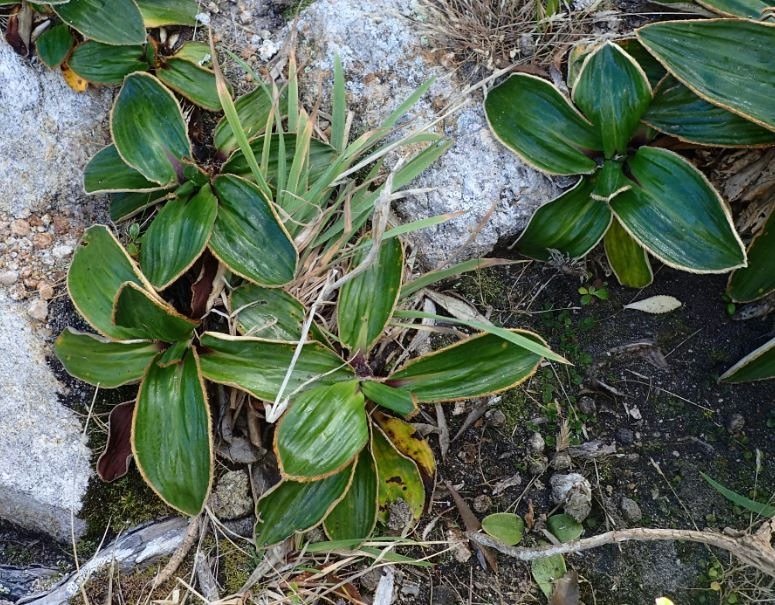
Celmisia rigida
Celmisia rigida
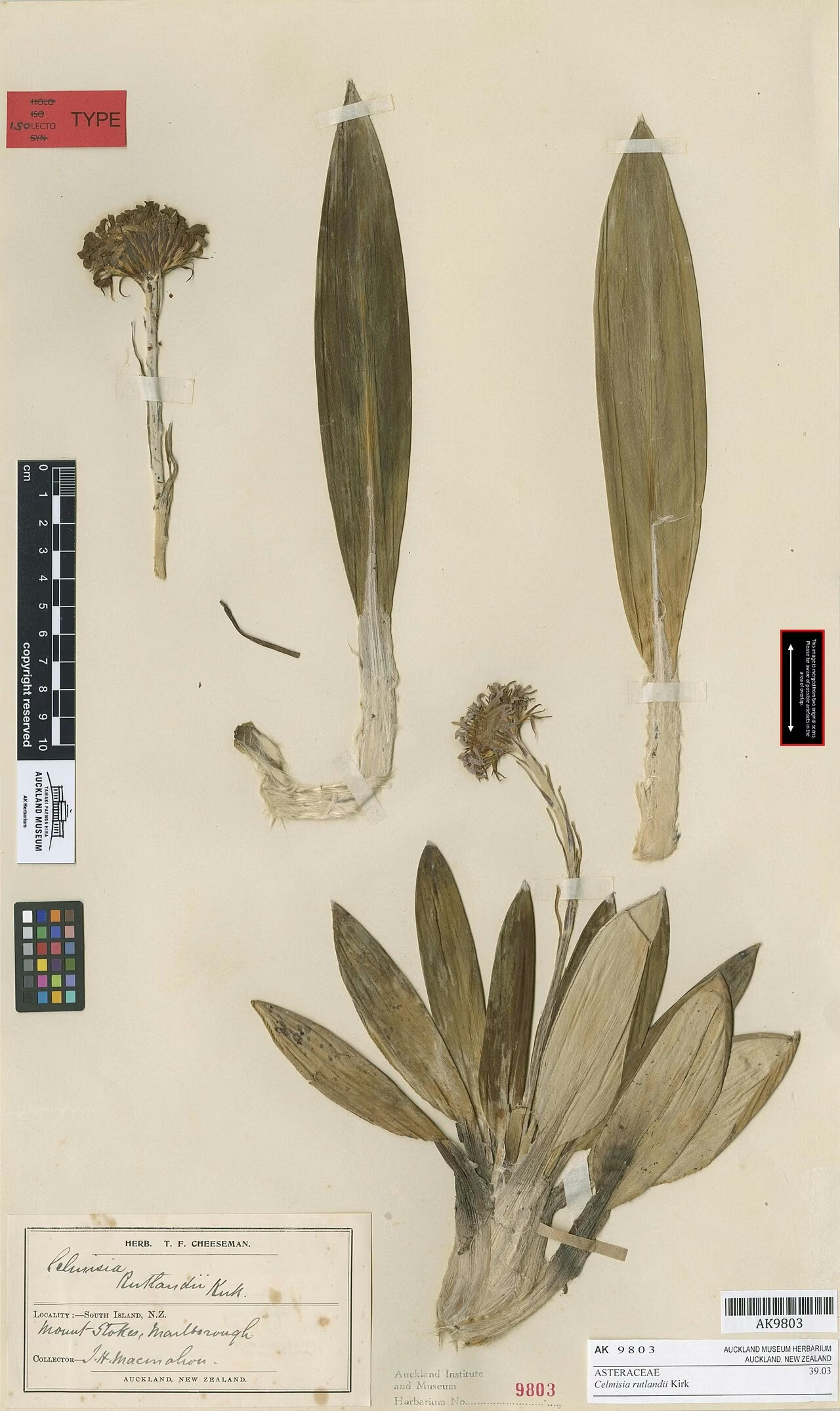
Celmisia rutlandii
Celmisia rutlandii
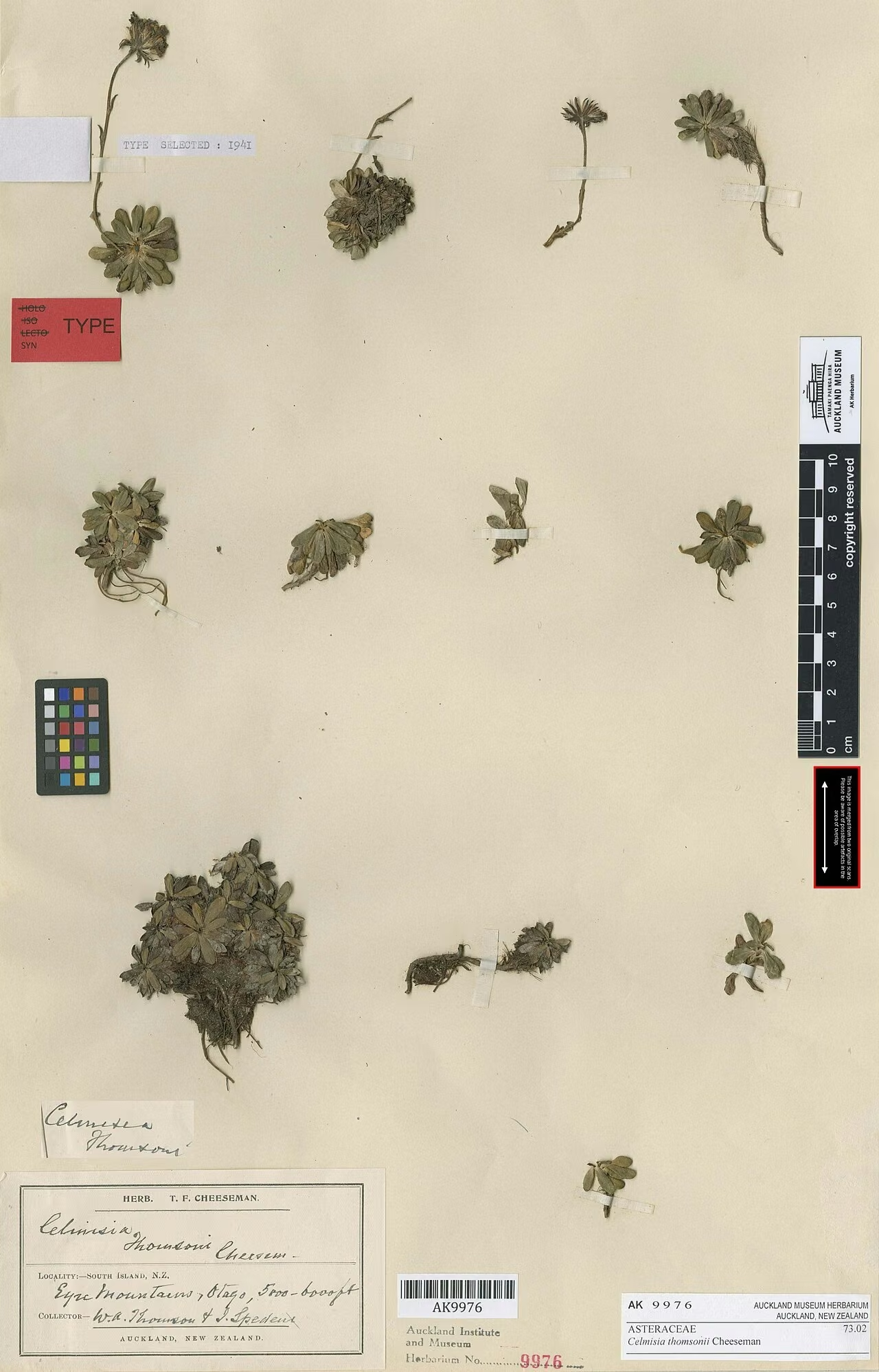
Thomson's Mountain Daisy
Celmisia thomsonii
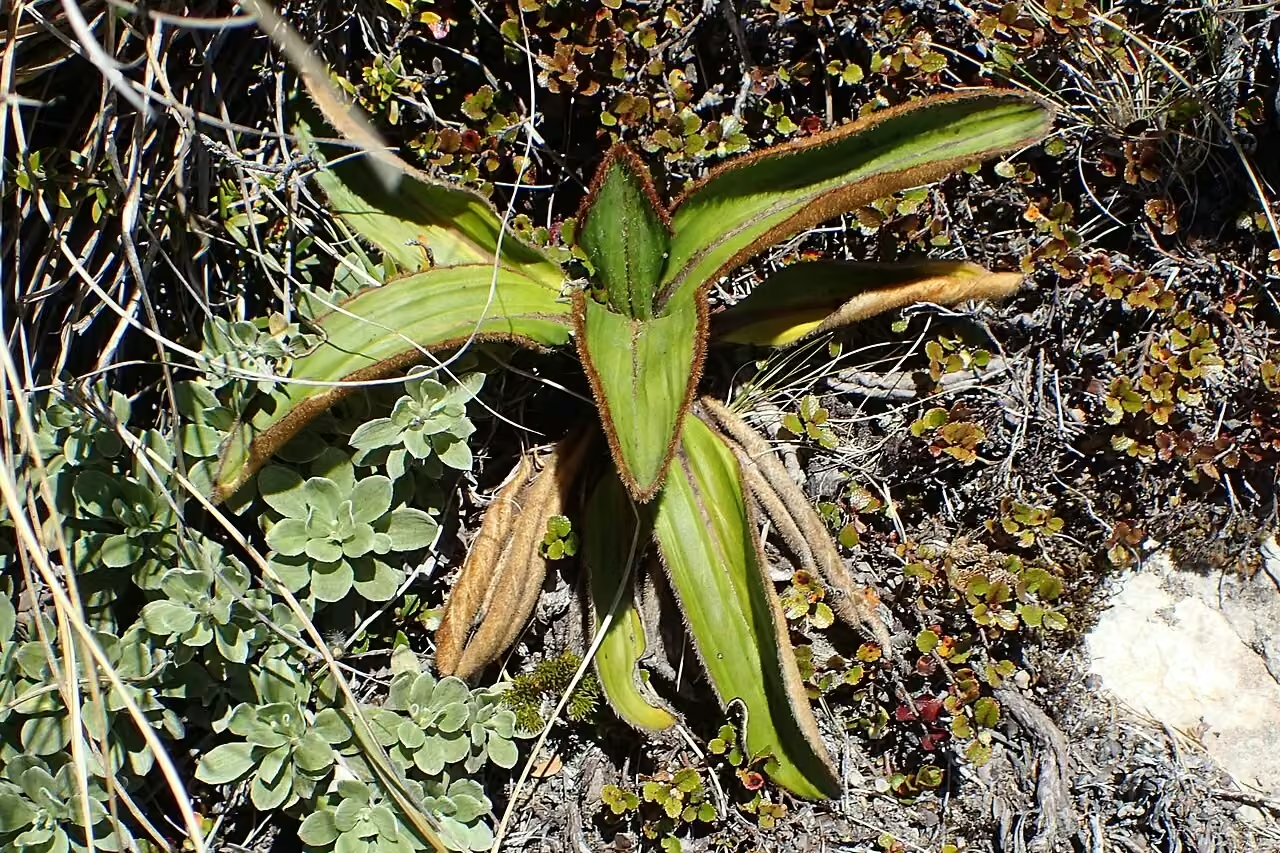
Celmisia traversii
Celmisia traversii
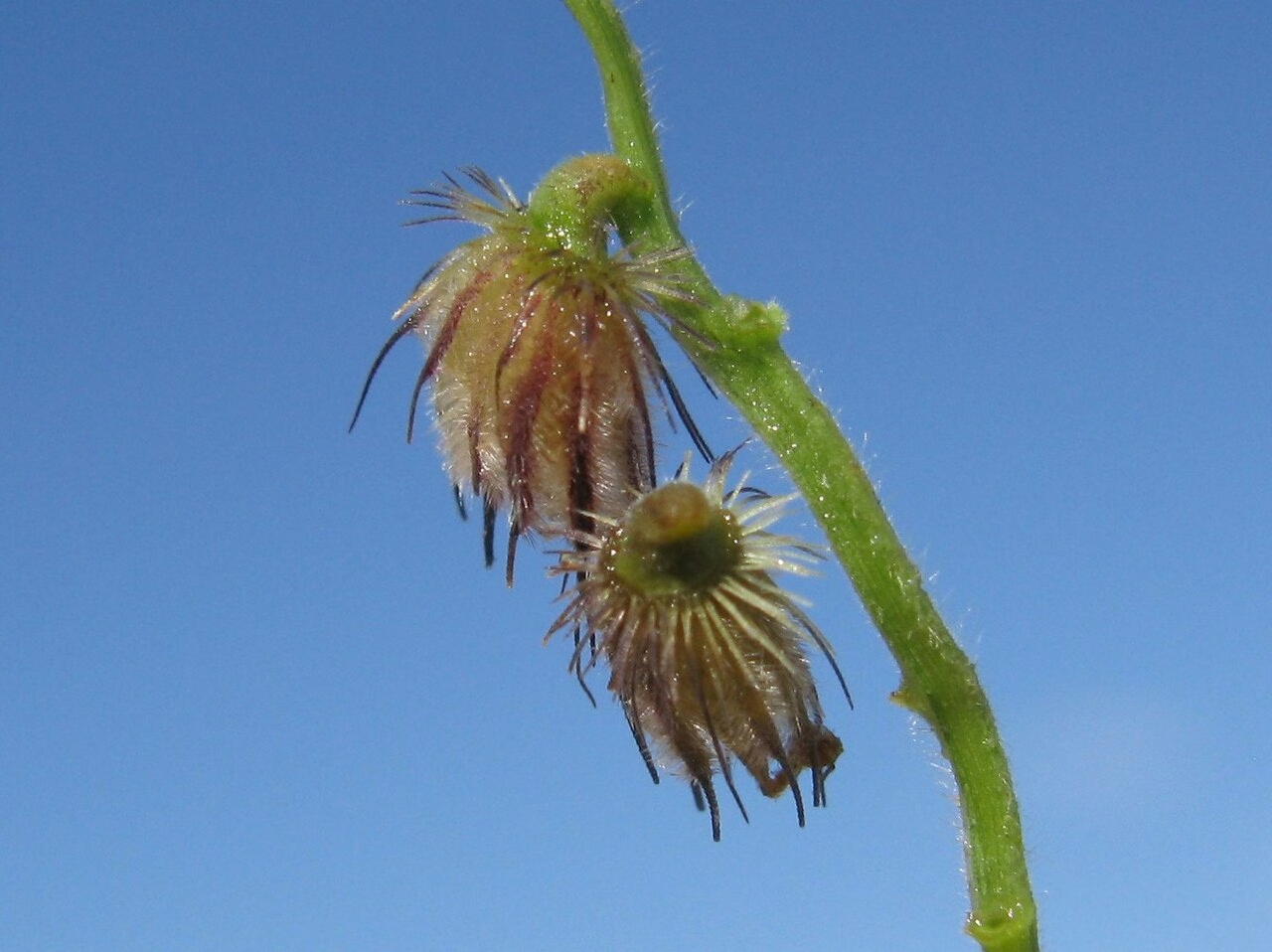
Large Burr Grass
Cenchrus caliculatus
Plant Conservation
Celmisia rupestris is ranked At Risk - Naturally Uncommon (2023) with the qualifiers Sparse, Data Poor Size and Data Poor Trend. NZPCN describes it as a naturally uncommon species that does not appear to be actively threatened.
Almost all of its known range lies within Kahurangi National Park. More survey work is needed to understand its population size and trends.
Frequently Asked Questions
Where is Celmisia rupestris found?
It is endemic to North-West Nelson, including Kahurangi National Park, Mt Glasgow, Mt Peel near the Cobb, the Cobb Valley and Aorere Peak, on cliffs, outcrops and fellfield.
How is Celmisia rupestris different from Celmisia gibbsii?
NZPCN separates it from the similar C. gibbsii by the dense soft white hairs that cover the upper leaf surface and hide the midrib.
Can you buy Celmisia rupestris?
It is occasionally available from specialist native plant nurseries. It is difficult to grow and does best in an alpine house pot or a south-facing rockery.
Sources and Further Reading
The botanical, growing, and conservation details for Mountain Daisy (Celmisia rupestris) on this page draw on the New Zealand plant references below. Consult them for full technical records and the latest distribution data.