Mountain Daisy
Celmisia rigida
Last updated:
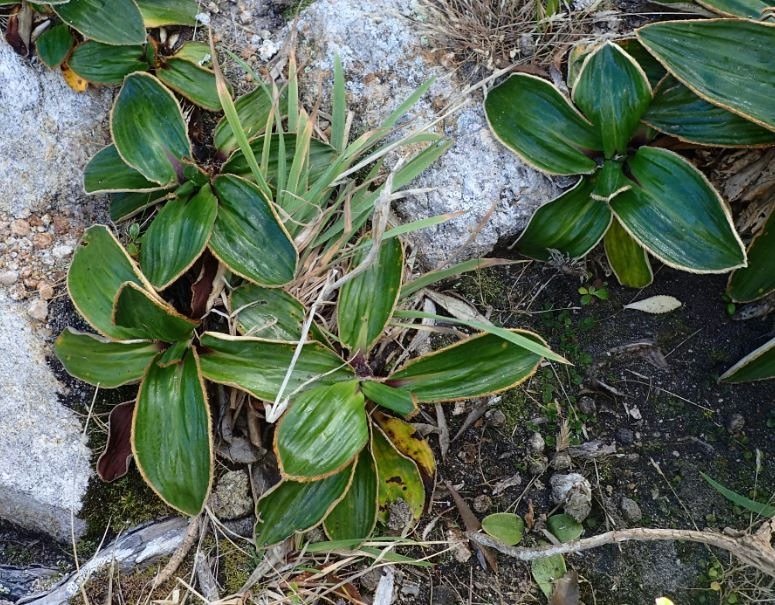
Celmisia rigida is a robust mountain daisy that, unusually for its genus, grows mostly on the coast. It is endemic to Stewart Island/Rakiura and its outliers, including the Masons Bay area, Ruggedy Mountains, Lords River, Long Island and Whenua Hou (Codfish Island), where it clings to ledges and crevices on steep slopes and cliffs. Loose mats of rosettes carry rigid, leathery leaves up to 22 cm long with cream felt beneath, and in early summer large white daisies about 6 cm across rise on purple stalks up to 40 cm. It is ranked At Risk - Naturally Uncommon. Explore more native flowering plants in our native plant guide.
Plant Description
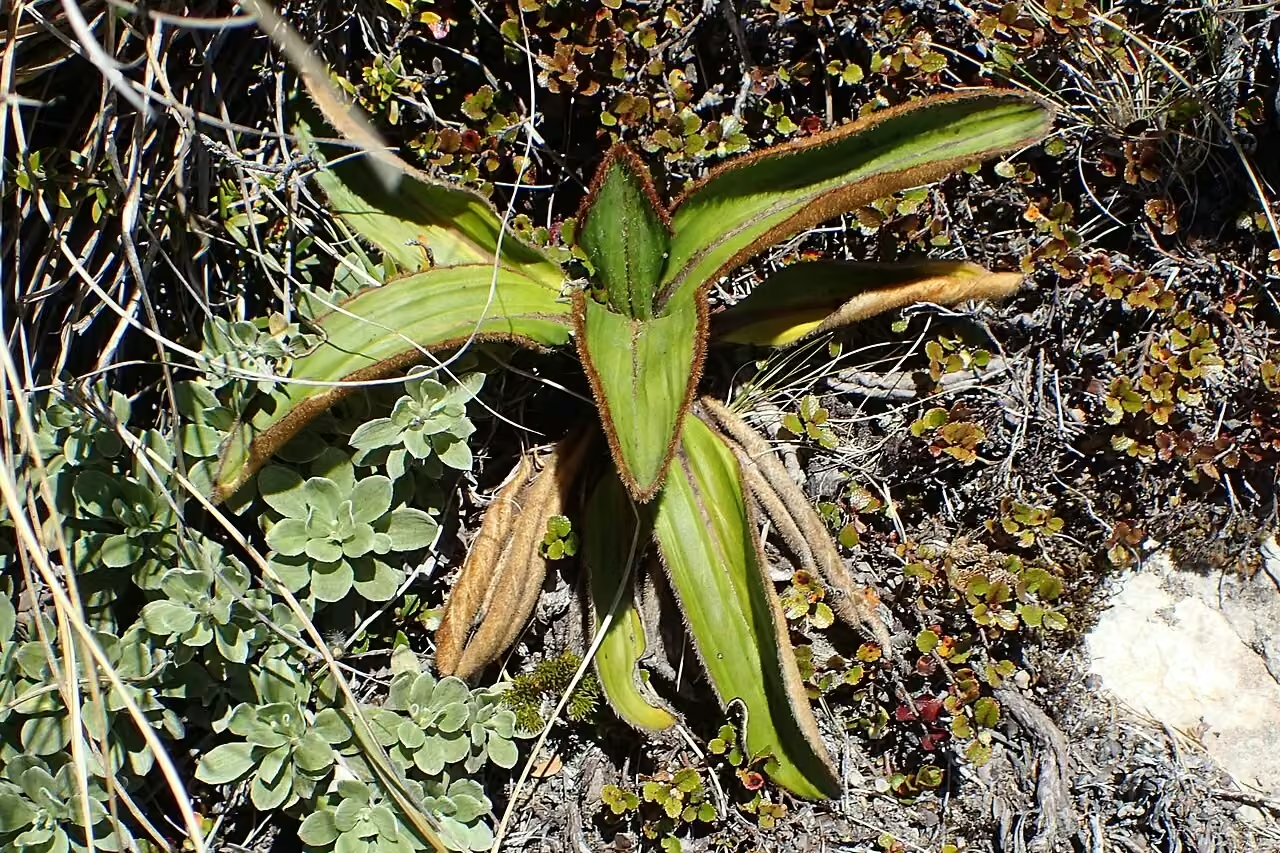
Celmisia rigida is a woody-based herb that forms loose mats of rosettes from branching stocks. Its leaves are thick and leathery, typically 60 to 220 mm long and 12 to 70 mm wide, elliptic to oblong, standing erect at first and becoming decumbent with age. The upper surface is pale to mid-green and nearly hairless, while the underside is lustrous with cream-coloured tomentum.
The purple scapes reach up to 400 mm and carry flower heads about 60 mm across, with 70 to 80 white ray florets around 130 to 170 yellow disc florets. The ribbed seeds are 4 to 5 mm long.
It is closely related to Celmisia verbascifolia, under which it has sometimes been placed as a subspecies. It differs in its rigidly leathery leaves with distinct veins, the dark brownish hairs fringing the leaf margins, and the fine cream hairs pressed flat against the leaf underside.
Quick Facts
| Scientific Name | Celmisia rigida |
|---|---|
| Height | Leaf rosettes to about 0.2 m; flower stalks to 0.4 m |
| Spread | Loose mats of several rosettes |
| Water Needs | Moist but free-draining |
| Light | Shade to part shade in cultivation |
| Frost Tolerance | Moderate; a lowland coastal plant of a cool climate |
| Salt Tolerance | Tolerates coastal exposure in the wild |
| Growth Rate | Slow to moderate |
| Lifespan | Perennial |
Climate Best Suited to
Suits the cool, moist, windy maritime climate of Rakiura, with mild winters and cool summers. Warm, humid climates cause problems in cultivation.
Regional Suitability
| City | Climate Suitability |
|---|---|
| Auckland | Low |
| Wellington | Low |
| Christchurch | Low |
| Dunedin | Medium |
Plant Habitat
This species is endemic to the Stewart Island/Rakiura area. NZPCN records it from Lords River, the Masons Bay area including the Ernest Islands, the Ruggedy Mountains, Long Island and Whenua Hou (Codfish Island).
It is mostly coastal, growing on steep slopes and cliffs, on ledges and in crevices, and beneath Olearia scrub. It is occasionally recorded from coastal river banks.
Growing Requirements
Soil Requirements
Wild plants root into thin, peaty soils on cliff ledges and in rock crevices.
- Moist but free-draining soil
- Humus-rich, gritty mix in pots
- No heavy clay or waterlogging
Light Requirements
On Rakiura it grows on open cliffs and under scrub. In cultivation NZPCN recommends a shaded site.
- Shade or part shade on the mainland
- Avoid hot, reflected sun
Water Requirements
Its native coast is wet and misty for much of the year, but cliff habitats drain freely.
- Keep the soil evenly moist
- Do not let water lie around the crown
Planting and Establishing
Plant in a cool, shaded position with moist, free-draining soil, as NZPCN advises. A south-facing rock bank or the cool side of a wall in a southern garden is suitable.
Because it dislikes high humidity, avoid crowding it among other plants. Give it space and air movement around the rosettes.
Ecological Role
Its large rosettes help hold thin soils on coastal ledges, and its pappate seeds are dispersed by wind along cliffs and slopes.
Pollinator visits to Celmisia rigida have not been documented in the sources consulted. Introduced white-tailed deer on Rakiura may browse some populations.
Uses & Significance
Garden Uses
It is a striking foliage and flowering plant for collectors in cool, southern gardens.
- Shaded rock gardens
- Large containers in a cool, airy position
- Collections of Stewart Island flora
Ecological Value
It is one of the few Celmisia adapted to coastal cliffs and a characteristic endemic of the Rakiura coast.
- Narrow-range endemic of Rakiura and nearby islands
- Grows on Whenua Hou, a key predator-free island sanctuary
- Part of coastal cliff and Olearia scrub communities
Landscaping Uses
The bold, stiff rosettes with cream undersides make a strong foliage feature, and the large white daisies on purple stalks are very showy in early summer.
Pair it with coastal Rakiura plants such as Olearia and small native grasses in a cool, sheltered setting, keeping its rosettes clear of surrounding foliage.
Seasonal Care Calendar
Spring
New leaves expand and flower buds form on the purple scapes.
- Remove old dead leaves
- Protect buds from slugs
Summer
Flowering runs from November to January.
- Keep evenly moist
- Shade from hot sun
Autumn
Seeds ripen from December through March.
- Collect fresh seed for sowing
- Cut down spent stalks
Winter
Rosettes remain evergreen through the mild coastal winter.
- Ensure good drainage in wet spells
- Clear debris from rosettes
When to Prune and How Much
Remove dead leaves and spent flower stalks at the base. No other pruning is needed.
Keeping the base of the rosettes clean reduces fungal problems in humid weather.
How to Grow Mountain Daisy
NZPCN reports that Celmisia rigida is easily grown from fresh seed but is difficult to maintain because it dislikes high humidity, and suggests a shaded site in moist, free-draining soil. Seed is the main method. Division of a multi-rosette mat may also be possible, although this has not been documented for the species and is offered here as general Celmisia practice. Only use seed or plants from cultivated stock or legitimate conservation sources, never from wild populations on Rakiura or its offshore islands, several of which are protected sanctuaries.
From Seed
Fruiting runs from December to March. Sow the seed as soon as it is ripe, since Celmisia seed loses viability quickly.
- Collect seed heads when the pappus is dry and fluffy
- Sow thinly on a moist, free-draining seed mix
- Cover lightly and keep in a cool, shaded place
- Ensure good ventilation to prevent damping off
- Pot seedlings on individually once they have several leaves
By Division
Mats made of several rosettes on separate branches of the stock can be split on cultivated plants. Because the species is hard to keep going for many years, dividing a healthy plant also gives insurance against losing it to rot in a humid summer.
- Divide in early spring before flowering
- Cut through the woody stock so each piece has roots
- Pot into gritty, humus-rich mix and keep shaded and moist
- Plant out once new growth is established, choosing a cool, airy position away from dense surrounding foliage
Pests & Diseases
In the wild, NZPCN notes that white-tailed deer may affect some Stewart Island populations. In gardens, slugs and snails can damage young leaves and buds.
High humidity encourages rot of the rosettes, which is the main reason plants are difficult to keep long term.
Cultural Significance
No traditional Māori name or use is recorded for Celmisia rigida in the sources consulted.
It was first described by Thomas Kirk as Celmisia petiolata var. rigida and later raised to species rank by Leonard Cockayne, who studied the vegetation of Stewart Island in detail.
Bonus Tip
Grow Celmisia rigida in a terracotta pot plunged in a shaded gravel bed, where air moves freely around the leaves. This reduces the humidity around the rosettes, which NZPCN identifies as the main cause of losses in cultivation.
Related Plants
Explore other native plants that share similar characteristics or habitats with Mountain Daisy (Celmisia rigida), offering further insights into New Zealand's diverse flora. These related species provide context and opportunities for complementary planting in your garden.
Tin Range Mountain Daisy
Celmisia polyvena
Celmisia prorepens
Celmisia prorepens
Celmisia ramulosa var. ramulosa
Celmisia ramulosa var. ramulosa
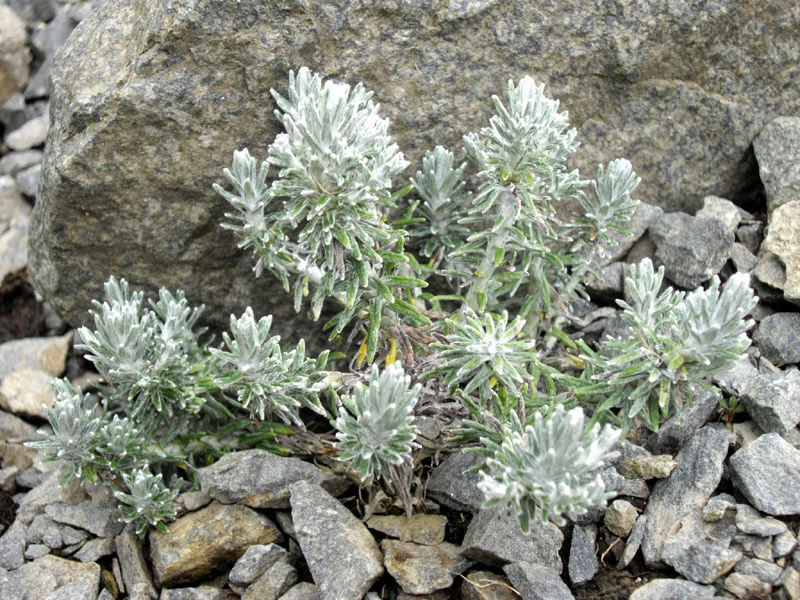
Celmisia ramulosa var. tuberculata
Celmisia ramulosa var. tuberculata
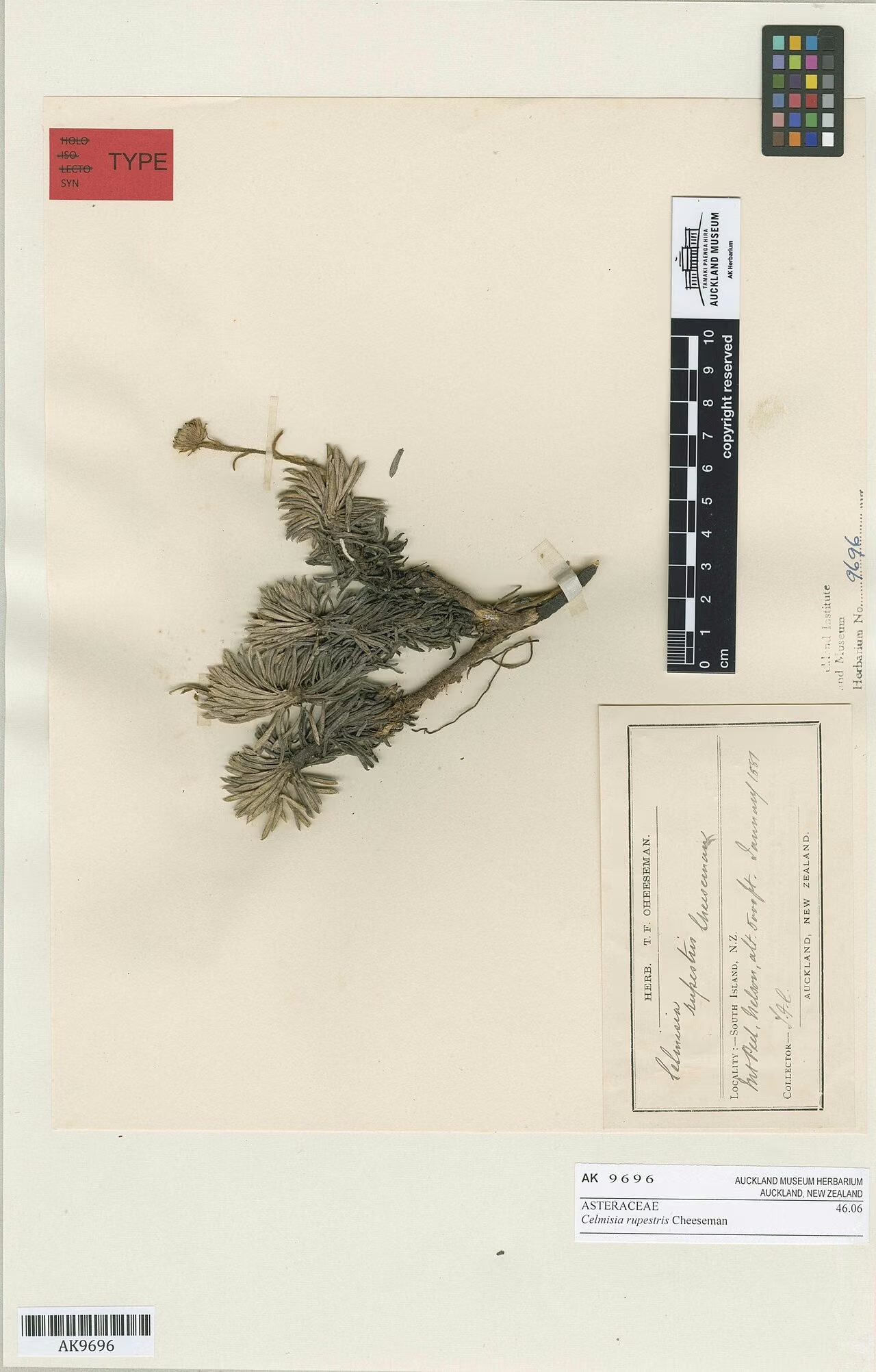
Celmisia rupestris
Celmisia rupestris
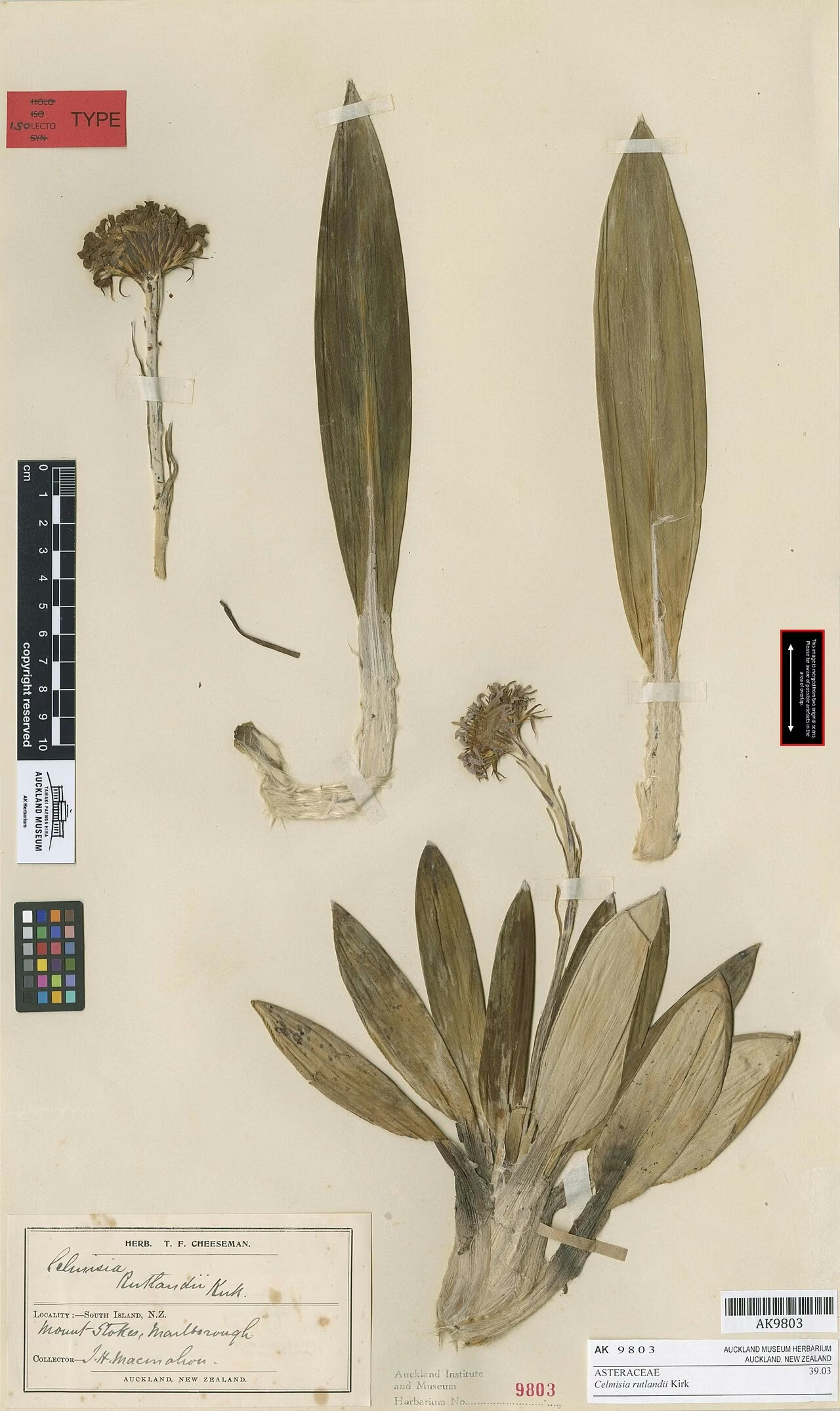
Celmisia rutlandii
Celmisia rutlandii
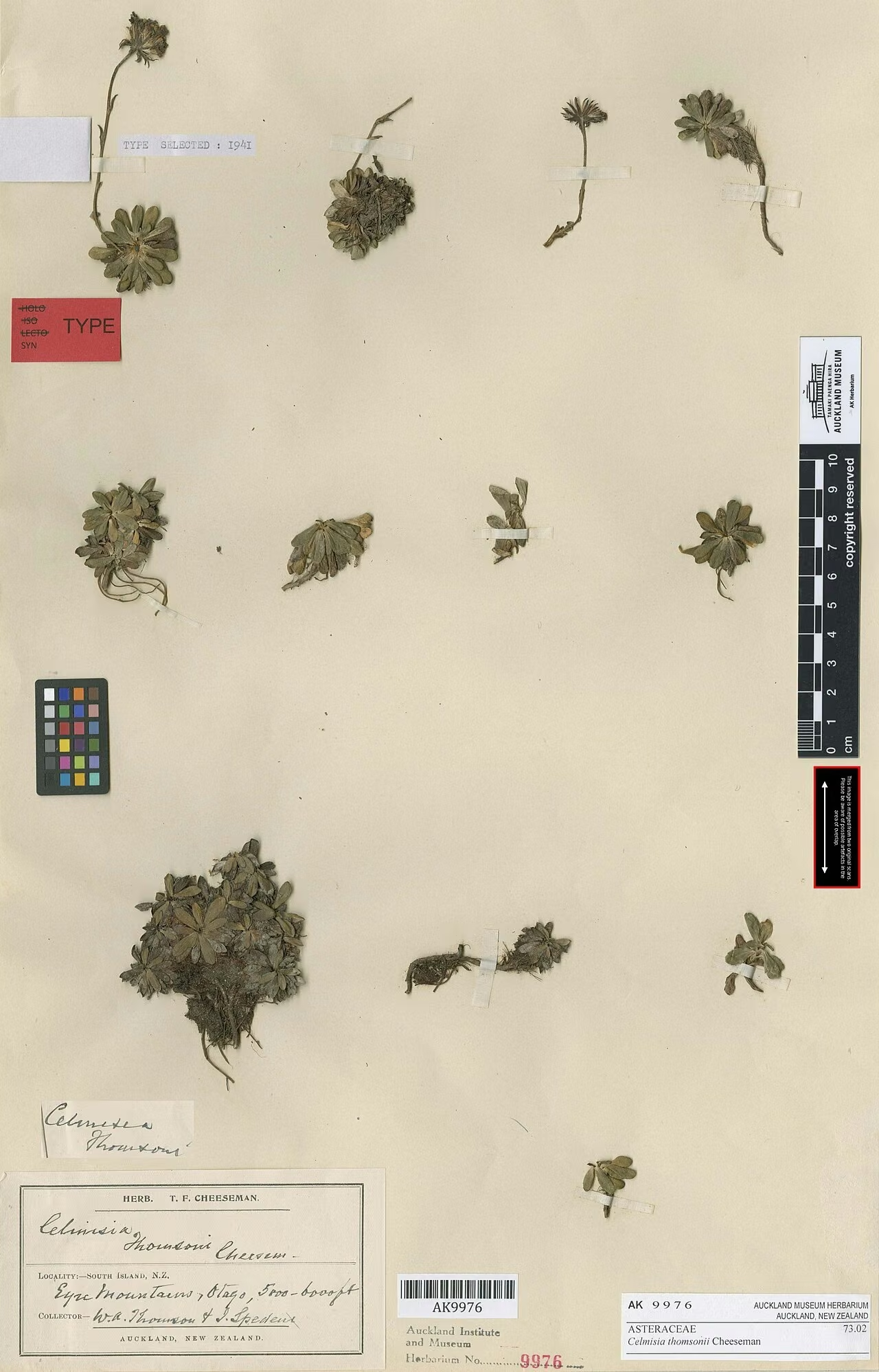
Thomson's Mountain Daisy
Celmisia thomsonii
Celmisia traversii
Celmisia traversii
Plant Conservation
Celmisia rigida is ranked At Risk - Naturally Uncommon (2023) with the qualifiers Sparse and Data Poor Size. NZPCN describes it as a narrow-range endemic that is abundant within its few known locations.
Most populations appear secure. White-tailed deer may affect some sites, so deer control on Rakiura and the protection of Whenua Hou benefit the species.
Frequently Asked Questions
How is Celmisia rigida different from Celmisia verbascifolia?
NZPCN notes that C. rigida has rigidly leathery leaves with distinct veins, dark brownish rather than buff hairs fringing the leaf margins, and fine cream appressed hairs on the leaf undersides.
Does Celmisia rigida grow by the sea?
Yes. It is mostly coastal, growing on ledges and in crevices on steep slopes and cliffs, under Olearia scrub and occasionally on coastal river banks on Rakiura.
Is Celmisia rigida easy to grow?
NZPCN says it is easily grown from fresh seed but difficult to maintain because it dislikes high humidity. A shaded site in moist, free-draining soil suits it best.
Sources and Further Reading
The botanical, growing, and conservation details for Mountain Daisy (Celmisia rigida) on this page draw on the New Zealand plant references below. Consult them for full technical records and the latest distribution data.