Mountain Daisy
Celmisia graminifolia
Last updated:
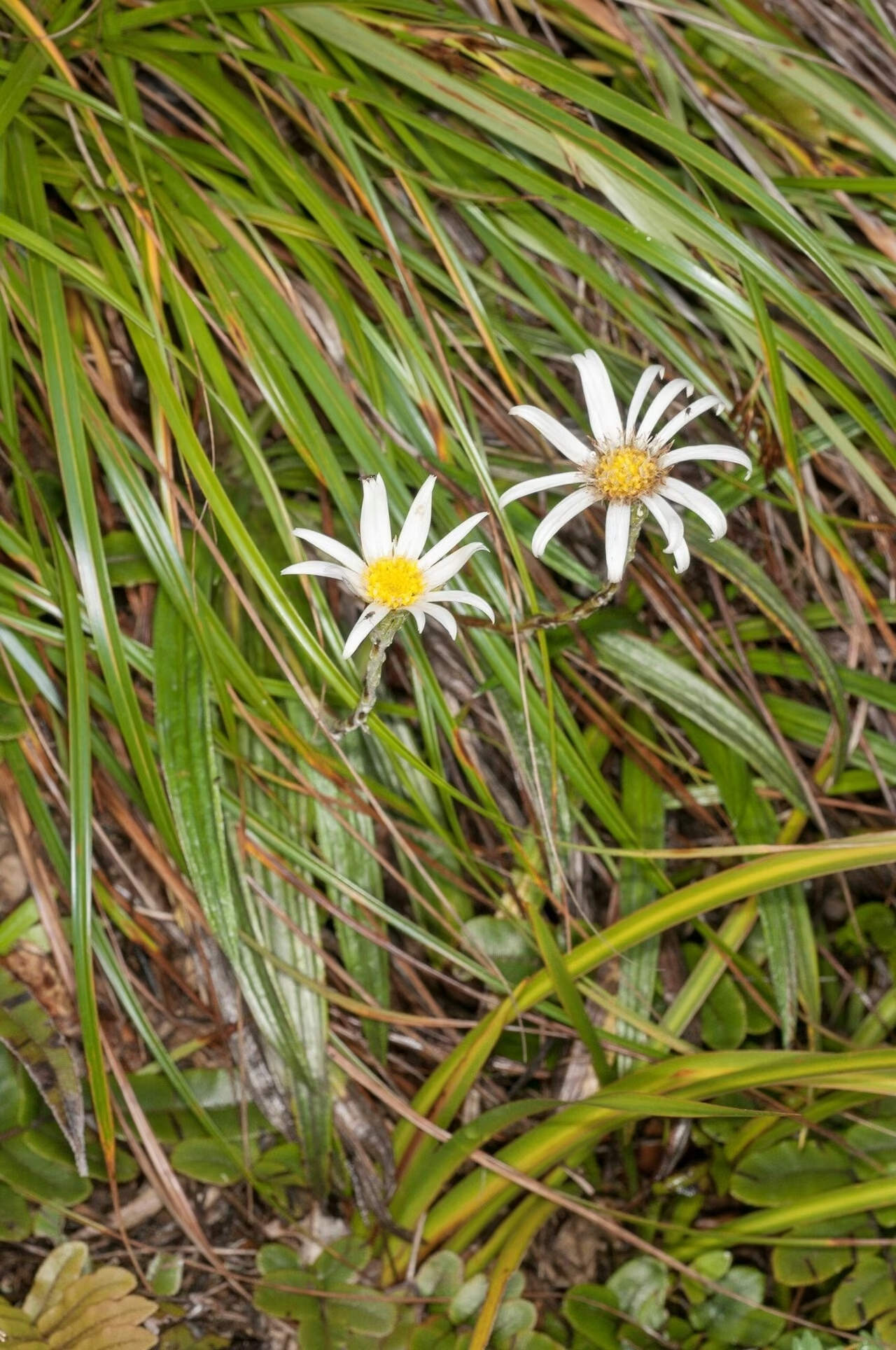
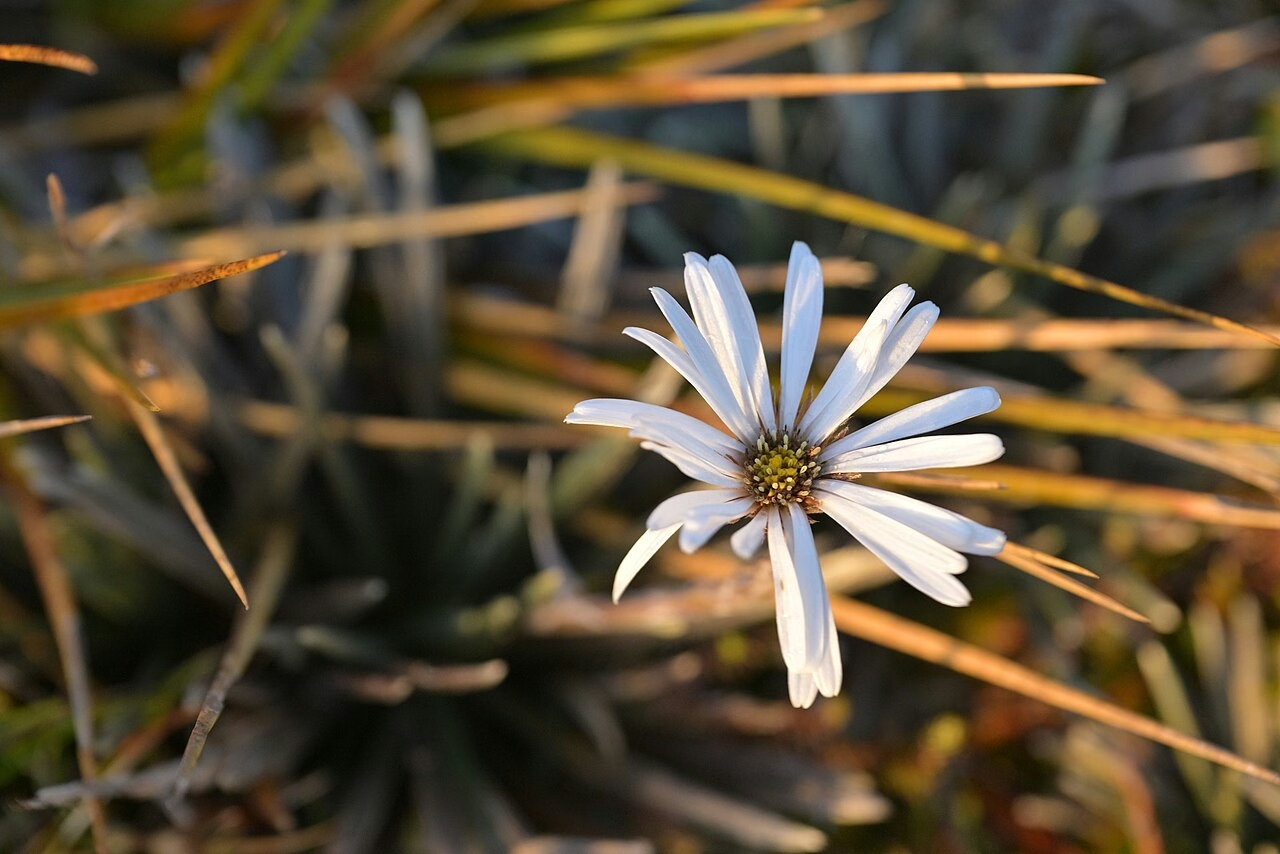
Celmisia graminifolia is a grassy-leaved daisy endemic, as currently understood, to Mount Manaia, Bream Head and nearby high points at Whangārei Heads in Northland, making it one of the very few Celmisia of the northern North Island. It forms tufts of narrow leaves 6 to 25 cm long, dark to yellow-green above and white-felted beneath, and produces white daisies 30 to 50 mm across over a long season from September to April. It grows on steep, sparsely vegetated slopes, rock outcrops, cliff faces and tors within coastal forest. It is ranked Data Deficient and Regionally Critical in Northland, yet it adapts unusually well to cultivation. Explore more native flowering plants in our native plant guide.
Plant Description
Celmisia graminifolia is a tufted herb with a simple or sparingly branched stock and a pseudo-stem up to about 60 mm long. Its leaves are narrowly to broadly oblong-lanceolate or almost linear-oblong, 60 to 250 mm long and 10 to 15 mm wide. The upper surface is dark green to yellow-green with a silvery pellicle, and the underside is covered in white tomentum.
The flower heads are 30 to 50 mm across with white ray florets up to 30 mm long around a yellow disc. Flowering extends from September to April and fruiting from October to July, a much longer season than most mountain daisies.
It is closely related to Celmisia adamsii. NZPCN separates C. graminifolia by its narrower leaves and its more markedly silvery, persistent upper leaf pellicle.
Quick Facts
| Scientific Name | Celmisia graminifolia |
|---|---|
| Height | Tufts with leaves 0.06-0.25 m long; pseudo-stem to about 60 mm |
| Spread | Small tufts; spread not documented |
| Water Needs | Moist but free draining |
| Light | Semi-shade |
| Frost Tolerance | Not documented; grows in a frost-free coastal climate |
| Salt Tolerance | Not documented; grows on coastal headlands within forest |
| Growth Rate | Moderate for a Celmisia; not documented precisely |
| Lifespan | Perennial |
Climate Best Suited to
Suits the mild, humid, almost frost-free climate of coastal Northland, unlike the alpine climates favoured by most Celmisia.
Regional Suitability
| City | Climate Suitability |
|---|---|
| Auckland | High |
| Wellington | Medium |
| Christchurch | Low |
| Dunedin | Low |
Plant Habitat
As treated by NZPCN, Celmisia graminifolia is endemic to the North Island and confined to Mount Manaia, Bream Head and other nearby high points of the Whangārei Heads volcanic landscape in Northland.
It grows within coastal forest, mostly on steep-sided, shaded or exposed, sparsely vegetated slopes, rock outcrops, cliff faces and rock tors, where competition from taller plants is limited.
Growing Requirements
Soil Requirements
In the wild it roots into thin soil and crevices on volcanic rock. In gardens it needs moist, free-draining soil.
- Free-draining, gritty soil with some organic matter
- Rock crevices or raised beds suit it
- Avoid compacted or waterlogged ground
Light Requirements
NZPCN recommends a semi-shaded site, reflecting its natural mix of shaded and exposed rock faces.
- Morning sun with afternoon shade
- Dappled light under open trees
Water Requirements
It needs steady moisture but sharp drainage, as on its natural rock faces where water runs through quickly.
- Water during dry summer spells
- Never leave pots standing in water
Planting and Establishing
Plant into a semi-shaded rock garden, bank or container with moist, free-draining soil. A rocky slope or crevice planting best imitates its natural cliff and tor habitat.
Given its very restricted wild range, plants should come only from cultivated stock or seed, never from the wild, and gardeners in Northland should ideally source plants of Whangārei Heads origin.
Ecological Role
Celmisia graminifolia fills an unusual niche as a daisy of open rock faces in northern coastal forest, where its achenes are carried by wind to new crevices. The insects that pollinate it are not documented in the sources consulted.
Its long flowering season, from September to April, provides flowers on the rocky summits of Whangārei Heads for much of the year.
Uses & Significance
Garden Uses
One of the few Celmisia that suits warmer northern gardens.
- Semi-shaded rock garden or bank
- Container planting
- Conservation and ecosourced plantings around Whangārei Heads
Ecological Value
It is a distinctive local endemic of the Whangārei Heads peaks.
- Found nowhere else in the world as currently understood
- A northern outlier of a mainly southern and alpine genus
- Part of the cliff and rock tor vegetation of Bream Head and Mount Manaia
Landscaping Uses
The narrow, silvery-green leaves form grass-like tufts that soften rocks and walls, and the large white daisies appear over a long season.
Use it in a shady rockery with small ferns and other rock-dwelling natives, or in a pot near a path where the silvery foliage can be seen.
Seasonal Care Calendar
Spring
Flowering begins in September.
- Keep moist as growth starts
- Check for slugs
Summer
Flowering continues, with seed ripening from October onwards.
- Water in dry spells
- Collect seed as heads ripen
Autumn
Late flowers may continue to April and fruiting continues into winter.
- Sow fresh seed
- Remove spent flower stems
Winter
Plants remain evergreen and the last seed is shed by July.
- Keep drainage free
- Clear dead leaves from tufts
When to Prune and How Much
No pruning is needed beyond removing spent flowering stems and dead leaves.
Tidy the base of each tuft occasionally to keep air moving around the crown.
How to Grow Mountain Daisy
NZPCN states that Celmisia graminifolia is easily grown from fresh seed and is one of the few Celmisia that adapts well to cultivation. Its long fruiting season, from October to July, gives plenty of opportunity to collect seed from cultivated plants. Because the wild population is confined to a few peaks at Whangārei Heads and the species is ranked Regionally Critical in Northland, seed should not be collected from wild plants without the landowner's and the Department of Conservation's permission. Established tufts with several crowns can also be divided, a standard method for tufted Celmisia, although the sources consulted only mention seed for this species. Sow seed as soon as it ripens, because Celmisia seed generally loses viability quickly. Keeping a few plants in cultivation also acts as a useful insurance population for this narrow-range species.
From Seed
Harvest heads when the pappus fluffs open and sow immediately into a free-draining seed mix.
- Collect ripe heads from cultivated plants
- Sow on the surface of a moist, free-draining seed mix
- Cover thinly with fine grit
- Keep in a semi-shaded, sheltered spot and do not let dry out
- Pot seedlings individually when they have several leaves
By Division
Divide multi-crowned tufts in autumn or early spring when conditions are mild and moist.
- Lift the tuft and gently separate crowns that have roots
- Pot or replant immediately into moist, free-draining soil
- Keep in semi-shade until new growth appears
Pests & Diseases
No species-specific pests are recorded. Slugs and snails can damage soft new leaves and seedlings.
In heavy or waterlogged soil, crown rot can occur, so drainage is important.
Cultural Significance
No traditional Māori name or use specific to Celmisia graminifolia is recorded in the sources consulted. Mount Manaia itself is a significant landmark for local iwi, but no link to this plant is documented.
Joseph Dalton Hooker named the species. William Colenso later described Celmisia perpusilla and Thomas Kirk published C. longifolia var. graminifolia, names now treated as synonyms. The species concept has narrowed considerably since Allan's 1961 Flora.
Bonus Tip
If you live in Auckland or Northland and have always wanted to grow a Celmisia, this is the one to try. Unlike its alpine relatives it tolerates mild, humid lowland conditions, provided it has semi-shade and a gritty, moist but free-draining soil.
Related Plants
Explore other native plants that share similar characteristics or habitats with Mountain Daisy (Celmisia graminifolia), offering further insights into New Zealand's diverse flora. These related species provide context and opportunities for complementary planting in your garden.
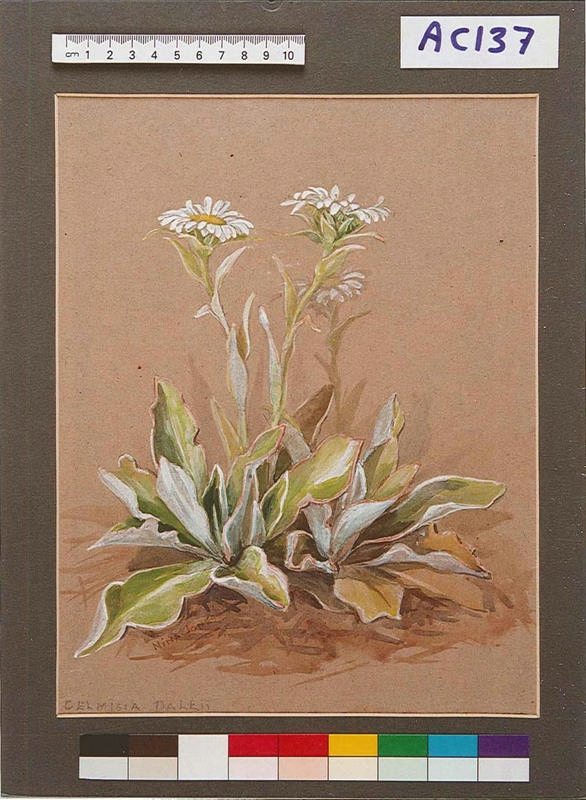
Dall's Mountain Daisy
Celmisia dallii
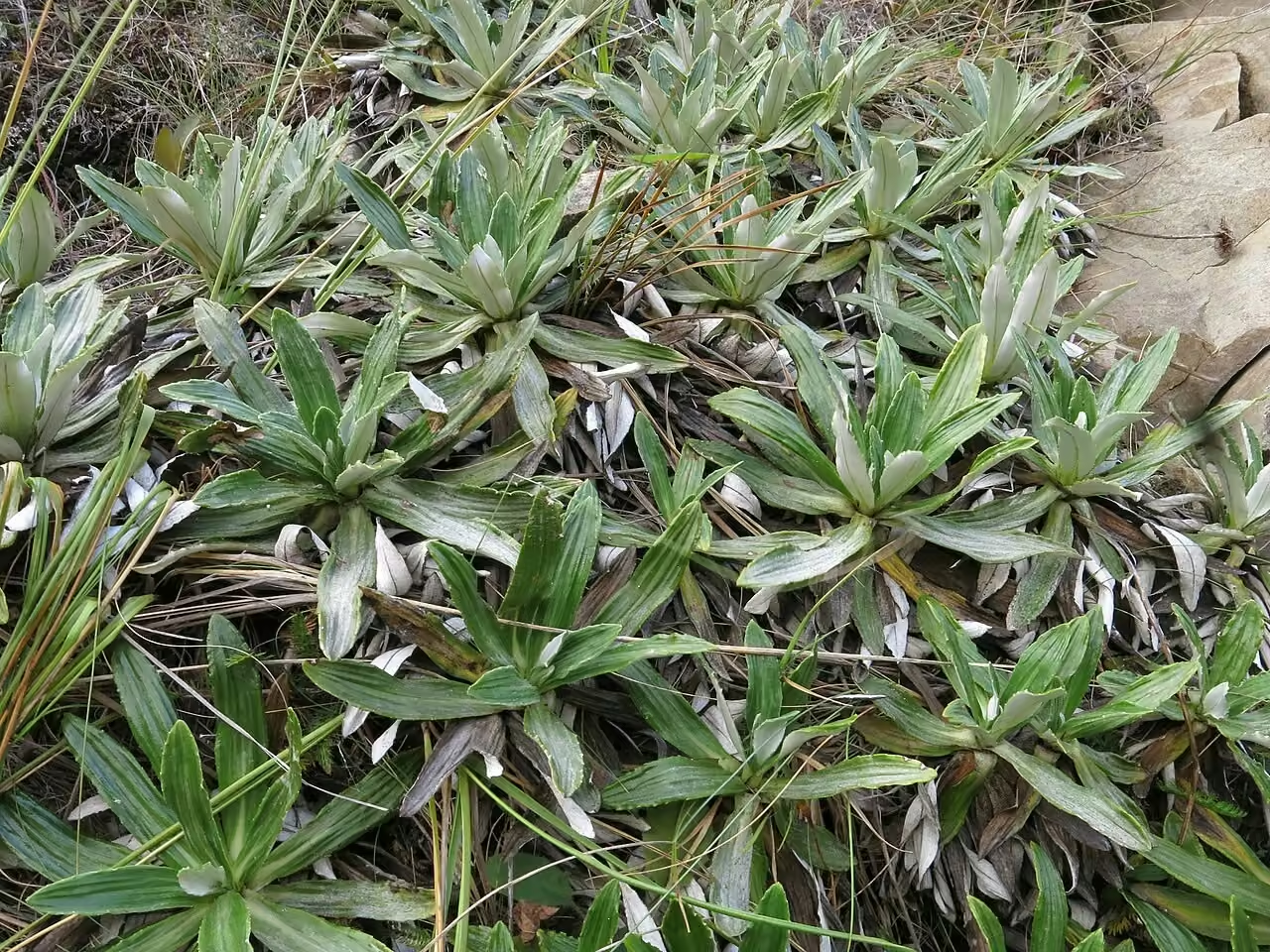
Celmisia densiflora
Celmisia densiflora
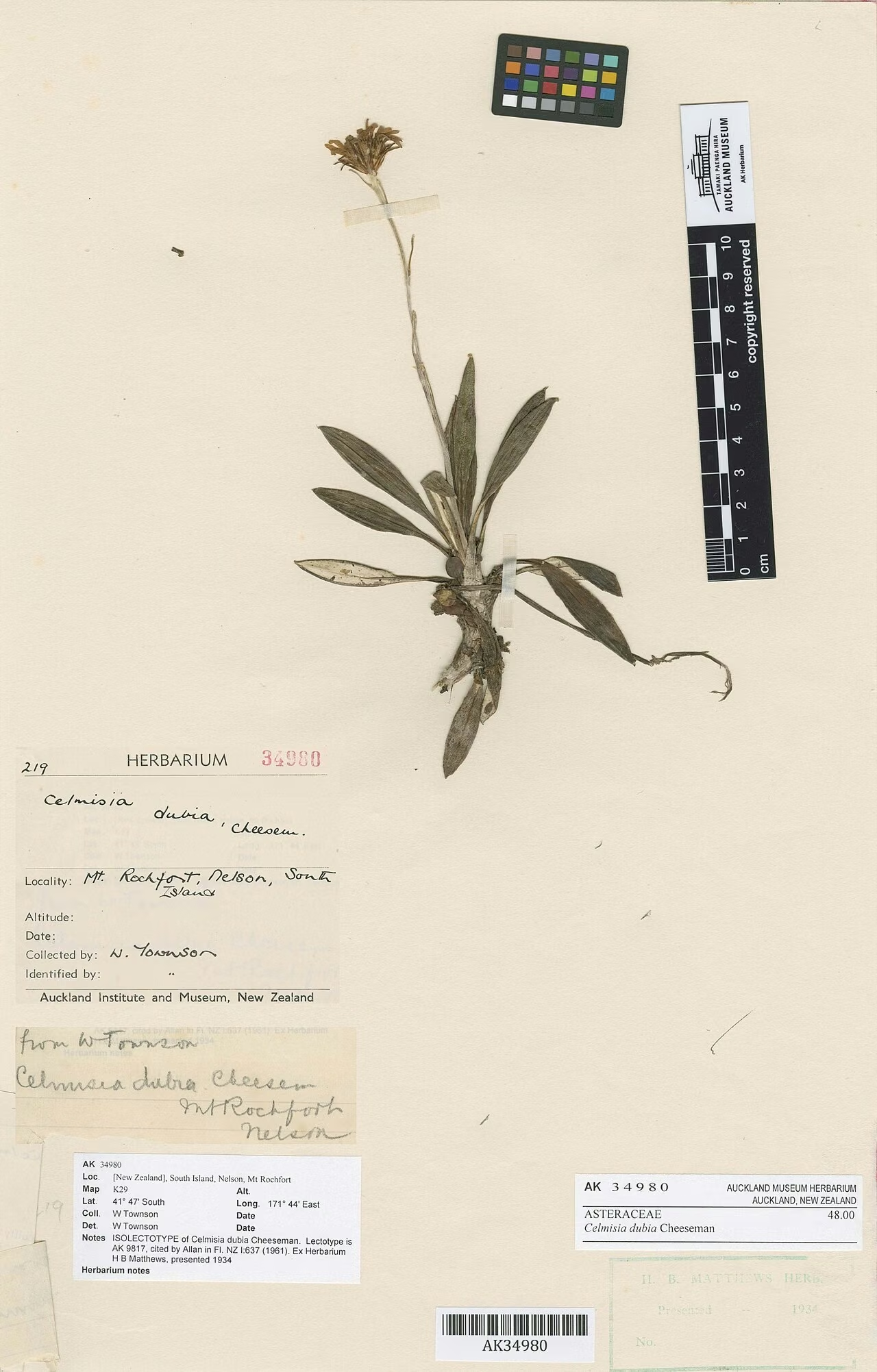
Celmisia dubia
Celmisia dubia
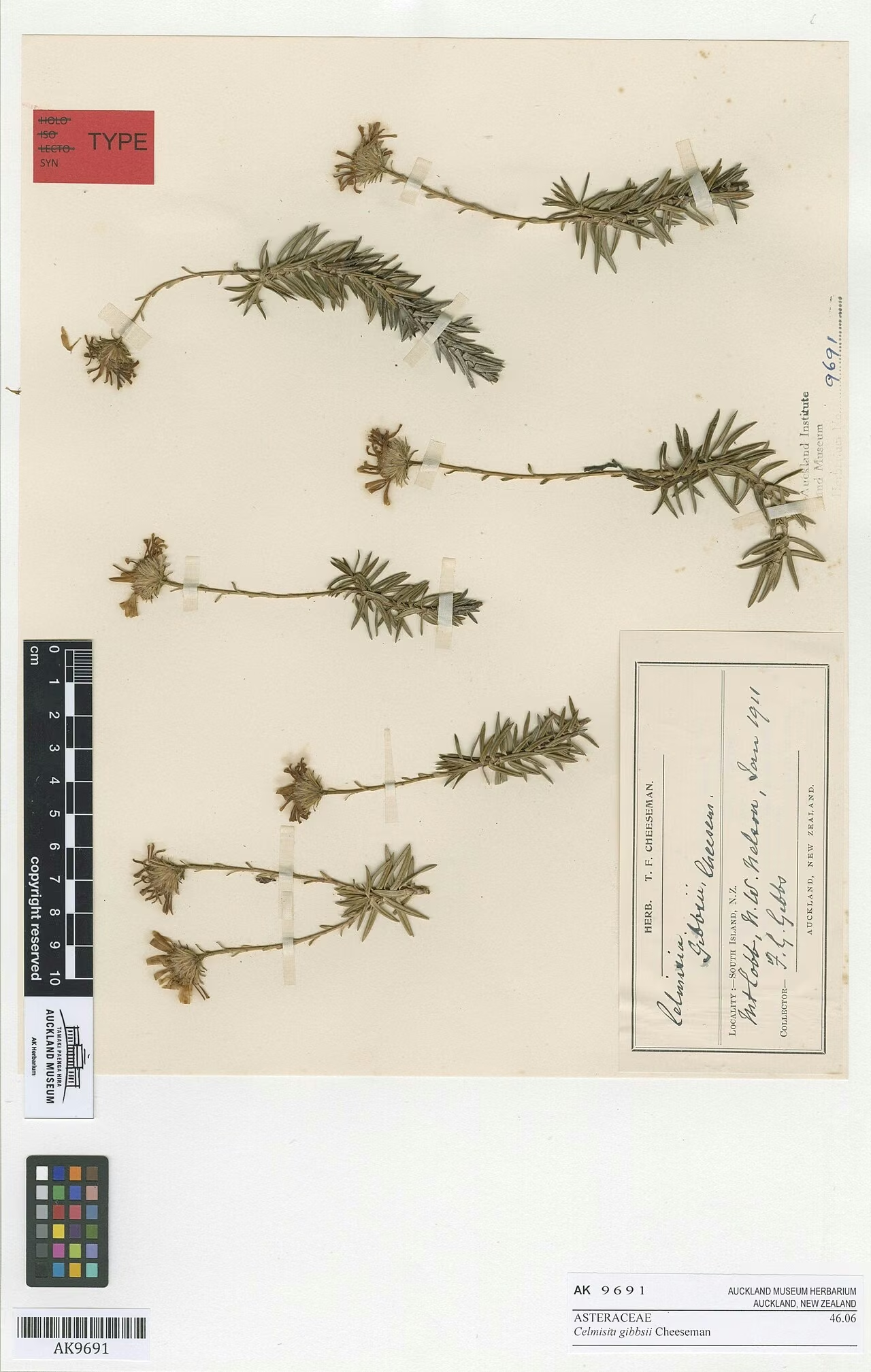
Gibbs's Mountain Daisy
Celmisia gibbsii
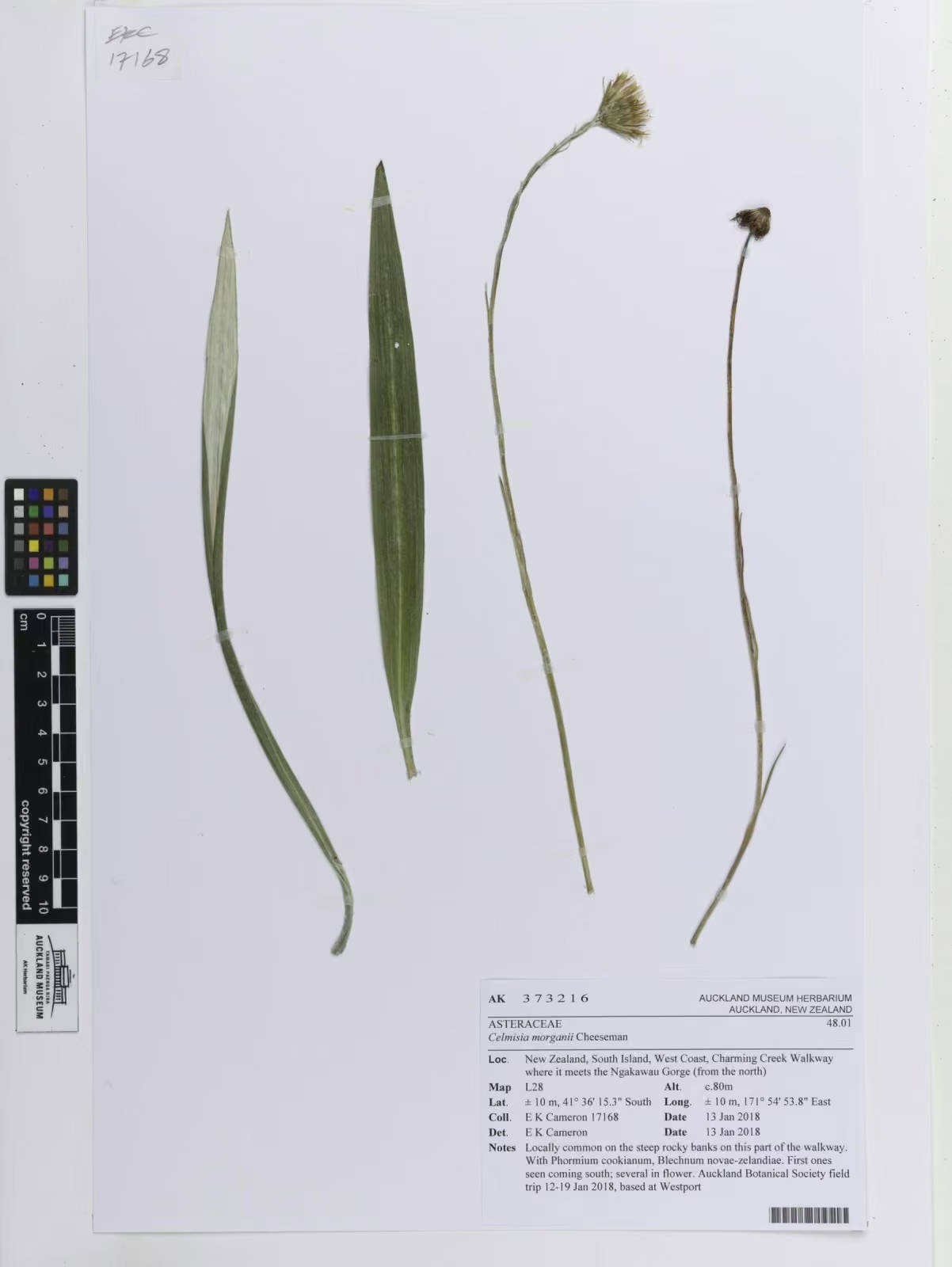
Ngakawau Gorge Daisy
Celmisia morganii
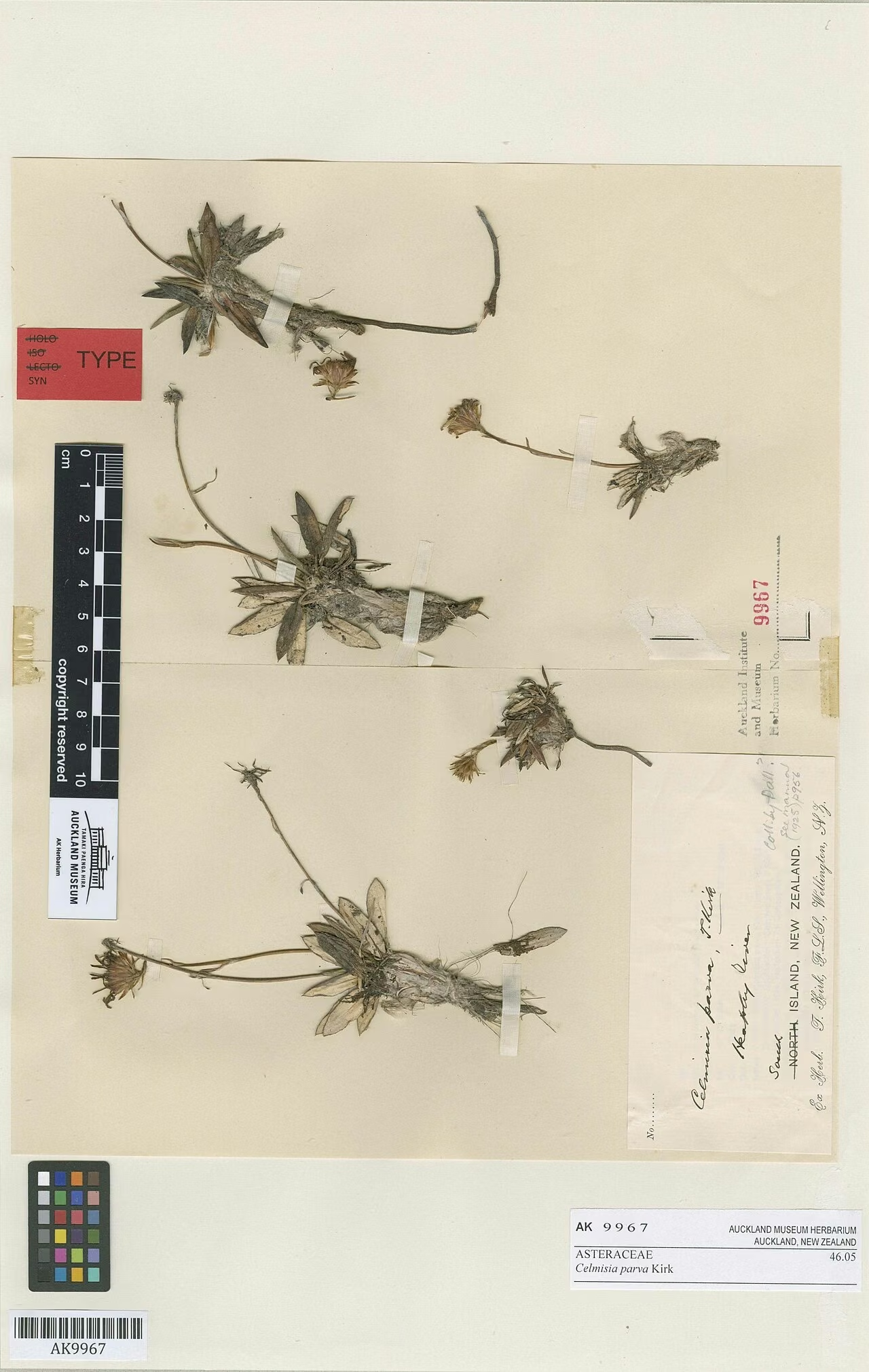
Celmisia parva
Celmisia parva
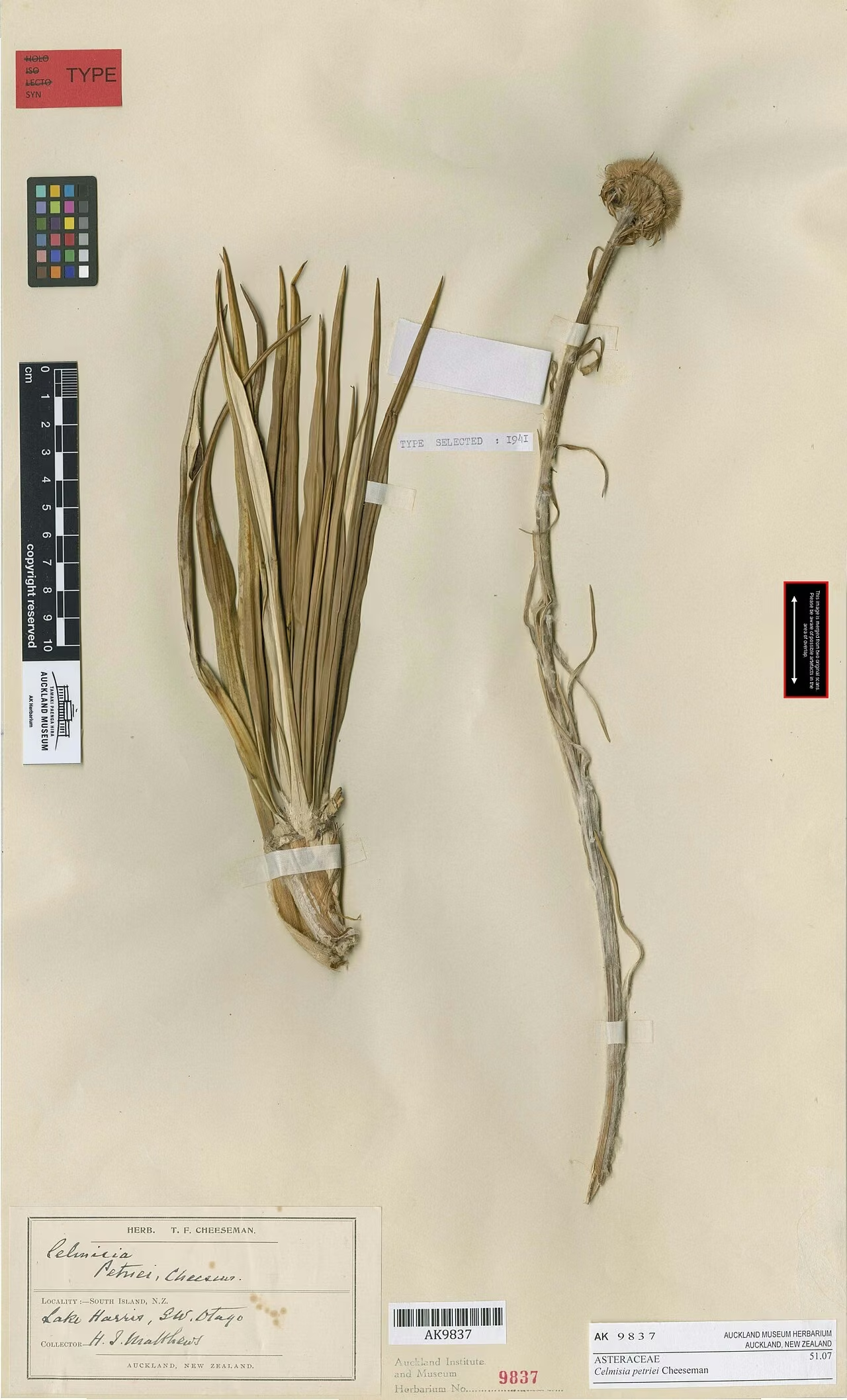
Petrie's Mountain Daisy
Celmisia petriei
Tin Range Mountain Daisy
Celmisia polyvena
Plant Conservation
Celmisia graminifolia is ranked Data Deficient (2023) with the qualifier Range Restricted, meaning there is not yet enough information to assign a threat category. It was ranked At Risk - Naturally Uncommon in 2012, and the Northland regional assessment (2026) ranks it Regionally Critical.
Its tiny range on a few peaks means that any local disturbance, such as fire, weed invasion or trampling near popular summit tracks like Mount Manaia, could affect a large share of the population. Staying on tracks and supporting pest and weed control at Whangārei Heads help protect it.
Frequently Asked Questions
Is there a Celmisia that grows in Northland?
Yes. Celmisia graminifolia grows on Mount Manaia, Bream Head and nearby peaks at Whangārei Heads, on rock outcrops, cliffs and tors within coastal forest.
What does graminifolia mean?
Graminifolia means grassy-leaved, describing the long, narrow leaves that give the tufts a grass-like appearance.
Can Celmisia graminifolia be grown in a garden?
NZPCN says it is easily grown from fresh seed and is one of the few Celmisia that adapts well to cultivation, doing best in semi-shade in moist, free-draining soil.
How is it different from Celmisia adamsii?
It is closely related to Celmisia adamsii but has narrower leaves and a more markedly silvery upper leaf skin (pellicle) that persists on the leaf.
Sources and Further Reading
The botanical, growing, and conservation details for Mountain Daisy (Celmisia graminifolia) on this page draw on the New Zealand plant references below. Consult them for full technical records and the latest distribution data.