Gibbs's Mountain Daisy
Celmisia gibbsii
Last updated:
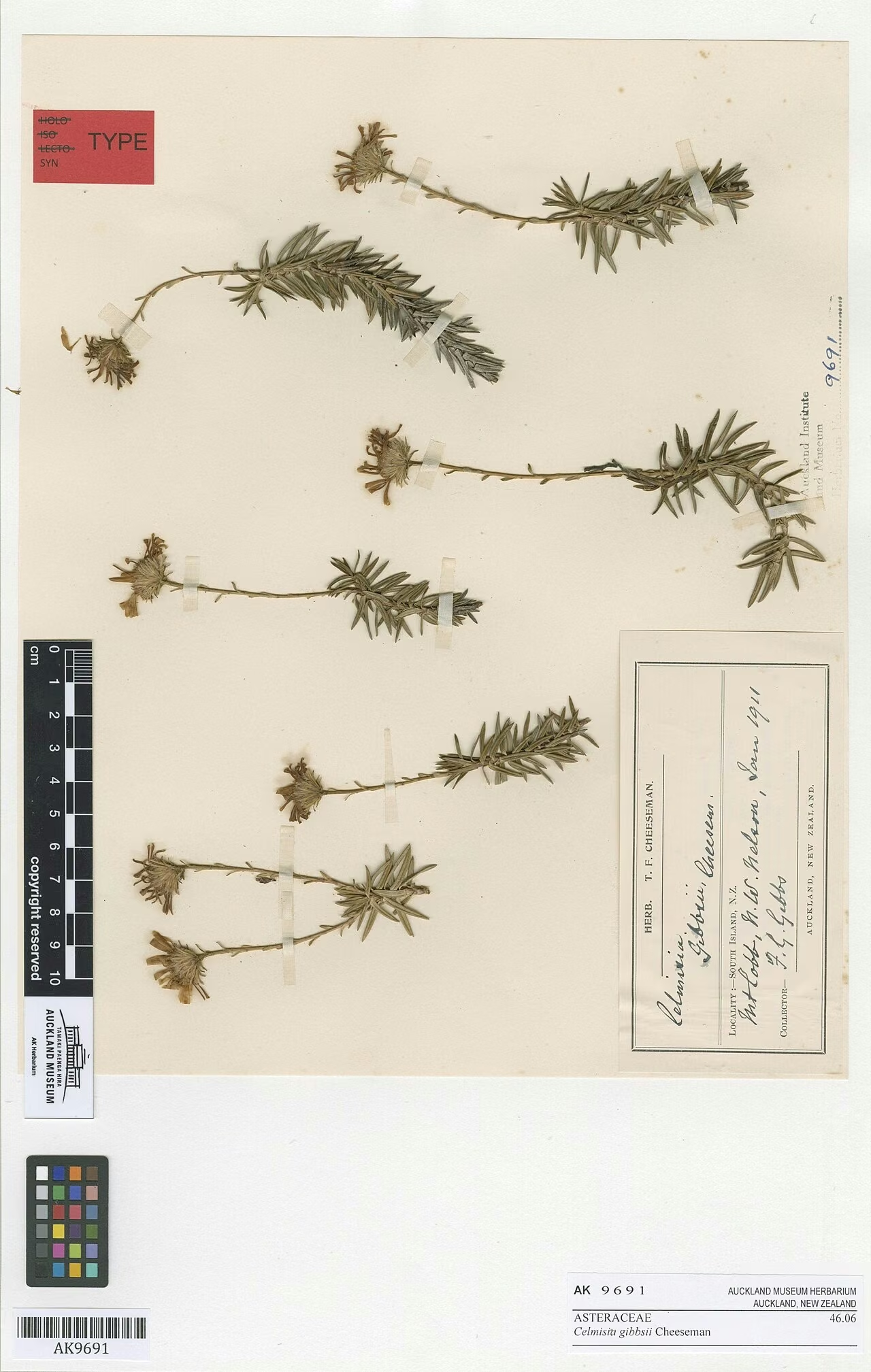
Gibbs's mountain daisy (Celmisia gibbsii) is a compact, woody shrublet endemic to the alpine tops of Kahurangi National Park in North-West Nelson, recorded from Mount Cobb, Waingaro Peak, Mount Lockett and Mount Zetland. Its ascending branchlets are packed with small, leathery, pale green leaves only 10 to 20 mm long, and from October to January slender stems 4 to 6 cm tall carry white daisies 20 to 25 mm across. It grows in moist rocky places and fellfield. Ranked At Risk - Naturally Uncommon because it is sparse, it is difficult to grow and best left to alpine house specialists. Explore more native flowering plants in our native plant guide.
Plant Description
Celmisia gibbsii is a compact shrublet with sparsely branched woody stems. Its leaves are densely packed along ascending branchlets and are 10 to 20 mm long and 2 to 3.5 mm wide, linear-lanceolate, leathery and with rolled-under margins and a thickened, blunt to slightly pointed tip. The upper surface is pale green and hairless, and the underside bears sparse, minute, deciduous scales.
The flowering stems are slender, 40 to 60 mm long and clothed in numerous narrow bracts. Each bears a solitary flower head 20 to 25 mm across, with numerous white ray florets up to 15 mm long that carry appressed hairs, and yellow disc florets about 6 mm long. The achenes are narrow and cylindrical, about 2 mm long.
It is most similar to Celmisia brevifolia but has narrower leaves, up to 5 mm wide rather than 6 to 9 mm, with narrowly blunt to tapering tips. The scurfy scales on both the leaf undersides and the flower stems are also distinctive.
Quick Facts
| Scientific Name | Celmisia gibbsii |
|---|---|
| Height | A low shrublet; flowering stems 40-60 mm |
| Spread | Small compact patches; spread not documented |
| Water Needs | Moist, well-drained rocky sites |
| Light | Open alpine sites; bright, cool conditions |
| Frost Tolerance | High; an alpine species |
| Salt Tolerance | Not documented; an alpine species |
| Growth Rate | Slow |
| Lifespan | Long-lived perennial |
Climate Best Suited to
Suits the cold, wet and often misty alpine climate of the North-West Nelson mountains, with snow in winter and cool summers.
Regional Suitability
| City | Climate Suitability |
|---|---|
| Auckland | Low |
| Wellington | Low |
| Christchurch | Low |
| Dunedin | Low |
Plant Habitat
Celmisia gibbsii is endemic to the South Island and is confined to North-West Nelson, within Kahurangi National Park. Recorded sites include Mount Cobb, north of the Mount Arthur Plateau, where the type was collected, as well as Waingaro Peak, Mount Lockett and Mount Zetland.
It is an alpine plant of moist rocky places and fellfield, growing among rocks where its compact, woody habit helps it withstand exposure.
Growing Requirements
Soil Requirements
In the wild it grows among rocks on thin alpine soils that stay moist but drain freely. In cultivation an alpine house mix of grit and a little organic matter suits it.
- Very gritty, free-draining mix
- Low fertility
- Moisture held deep in the root zone
Light Requirements
It grows in open alpine terrain, so it needs good light, but in lowland cultivation the roots must be kept cool.
- Bright light in an alpine house
- Shade from strong midday sun in warm areas
Water Requirements
Its habitat is moist, so it should not be allowed to dry out, but water must never sit around the stems.
- Water from below or at the edge of the pot
- Reduce watering slightly in winter
Planting and Establishing
NZPCN describes this species as difficult and recommends growing it in an alpine house. It is best kept in a deep clay pot or tufa block plunged in sand, where moisture and temperature stay steady.
It is not a plant for open garden beds, and wild plants must not be collected. Plants should only be grown from seed obtained legally.
Ecological Role
Gibbs's mountain daisy is part of the rich alpine flora of Kahurangi National Park, an area noted for its many local endemic plants. Its white daisies attract alpine insects, though its specific pollinators are not documented in the sources consulted.
Its small, wind-dispersed achenes allow it to reach new crevices and fellfield patches across the rocky tops.
Uses & Significance
Garden Uses
Of interest mainly to alpine plant specialists.
- Alpine house pot or tufa planting
- Collections of rare New Zealand Celmisia
- Botanic garden displays of Kahurangi flora
Ecological Value
It is a narrow-range endemic contributing to the exceptional plant diversity of North-West Nelson's mountains.
- Found only in Kahurangi National Park
- Part of alpine rock and fellfield communities
- A naturally uncommon species of conservation interest
Landscaping Uses
Its small scale and woody habit make it suited only to close-up display, such as a trough or alpine house bench where the neat leaves and white daisies can be seen.
Pair it with other small alpine shrublets and cushion plants rather than vigorous rock garden plants that could crowd it.
Seasonal Care Calendar
Spring
Flowering starts in October as the alpine tops warm.
- Keep evenly moist
- Ventilate the alpine house well
Summer
Flowering continues into January and seed ripens from December.
- Shade from hot sun
- Collect seed promptly
Autumn
Fruiting finishes by March.
- Sow fresh seed
- Check drainage before winter
Winter
Plants rest, covered by snow in the wild.
- Keep slightly drier but never dry
- Maintain airflow to prevent mould
When to Prune and How Much
No pruning is required. The shrublet is naturally compact and slow-growing.
Remove spent flower stems and any dead shoots with fine scissors to reduce the risk of grey mould.
How to Grow Gibbs's Mountain Daisy
NZPCN describes Celmisia gibbsii as difficult and advises that it is best raised from fresh seed and grown on in an alpine house. Seed should only come from cultivated plants or be collected under permit, because wild populations are small. Fruiting is from December to March, and like other mountain daisies the seed is short-lived, so sow it as soon as it is ripe. Cuttings of the woody branchlets are a technique alpine growers use for shrubby Celmisia, but the sources consulted do not describe it for this species, so treat it as experimental. Whatever the method, provide cool, bright, well-ventilated conditions and a very gritty mix, and expect slow growth and some losses.
From Seed
Collect heads when the pappus fluffs open and sow the same week. Sow thickly because many achenes may be empty.
- Sow fresh seed on the surface of a fine, gritty alpine mix
- Cover lightly with grit and stand the pot in a cool, shaded frame
- Keep moist, watering from below
- Move seedlings into individual pots once they have several leaves
- Grow on in an alpine house
From Cuttings
Short shoots taken from a cultivated plant may root in pure grit or pumice under cool, humid but ventilated conditions.
- Take 2 to 3 cm shoot tips in late summer
- Strip the lowest leaves and insert into moist pumice
- Keep cool and shaded until roots form
- Pot on carefully into a gritty alpine mix
Pests & Diseases
No specific pests are recorded for this species. In cultivation, rot and grey mould in stagnant, humid air are the main risks, and aphids or mealybugs can occur in alpine houses.
Slugs may attack seedlings, so keep pots off the ground or protected.
Cultural Significance
No traditional Māori name or use specific to Celmisia gibbsii is recorded in the sources consulted.
Thomas Cheeseman described the species in his Manual of the New Zealand Flora in 1906, naming it after Frederick G. Gibbs (1866 to 1953), an early Nelson plant collector who gathered the type specimens on Mount Cobb.
Bonus Tip
The easiest way to see Gibbs's mountain daisy is to tramp the tops near Mount Cobb or the Mount Arthur area of Kahurangi in early summer. Look for small woody plants with neat, pale green leaves and scurfy flower stalks among the rocks, and compare them with the broader-leaved Celmisia brevifolia.
Related Plants
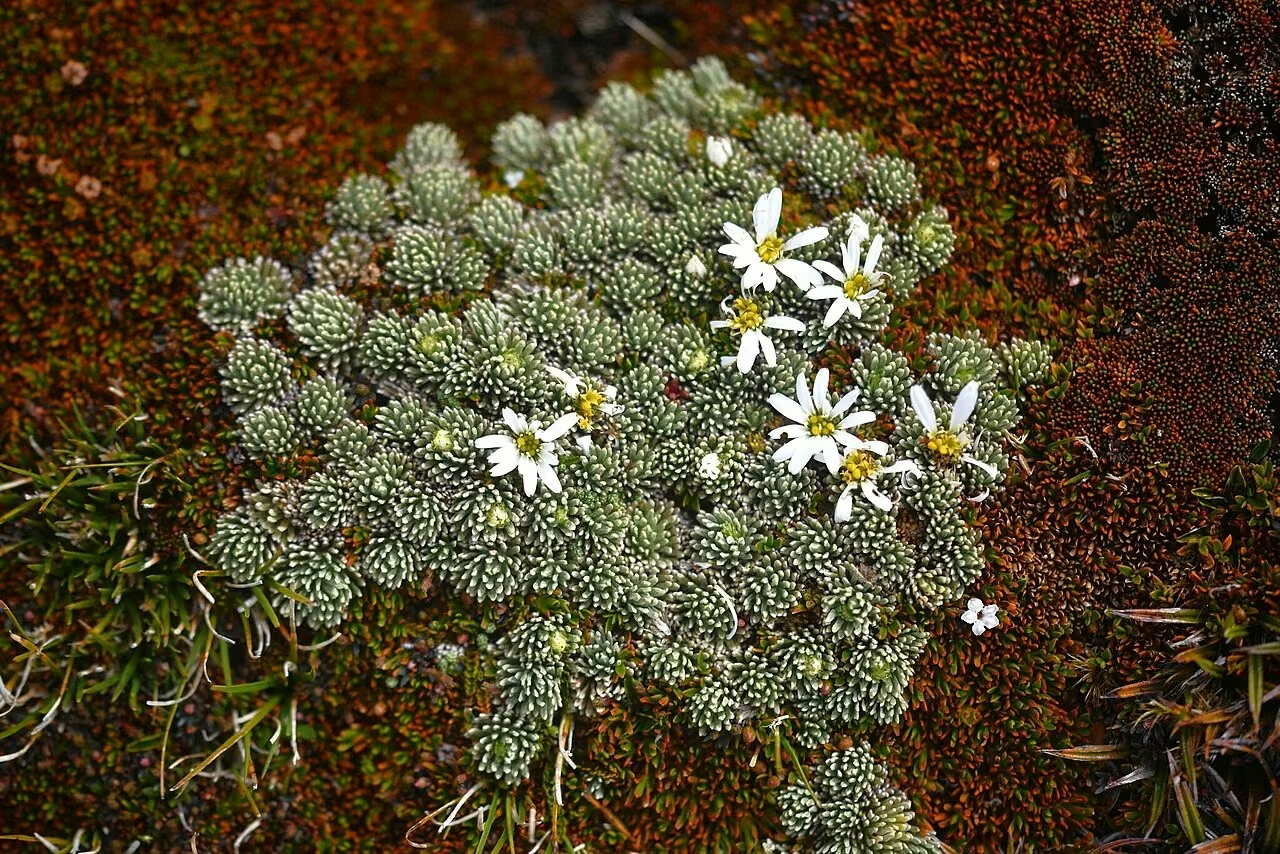
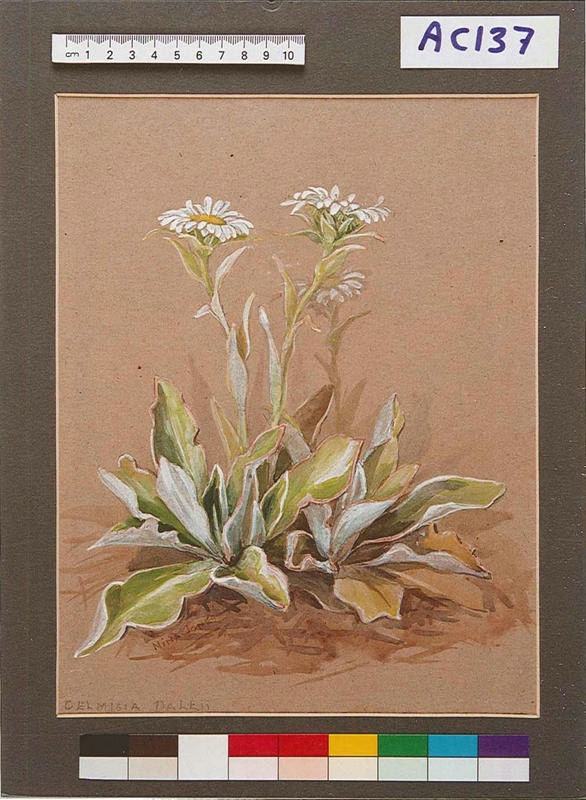
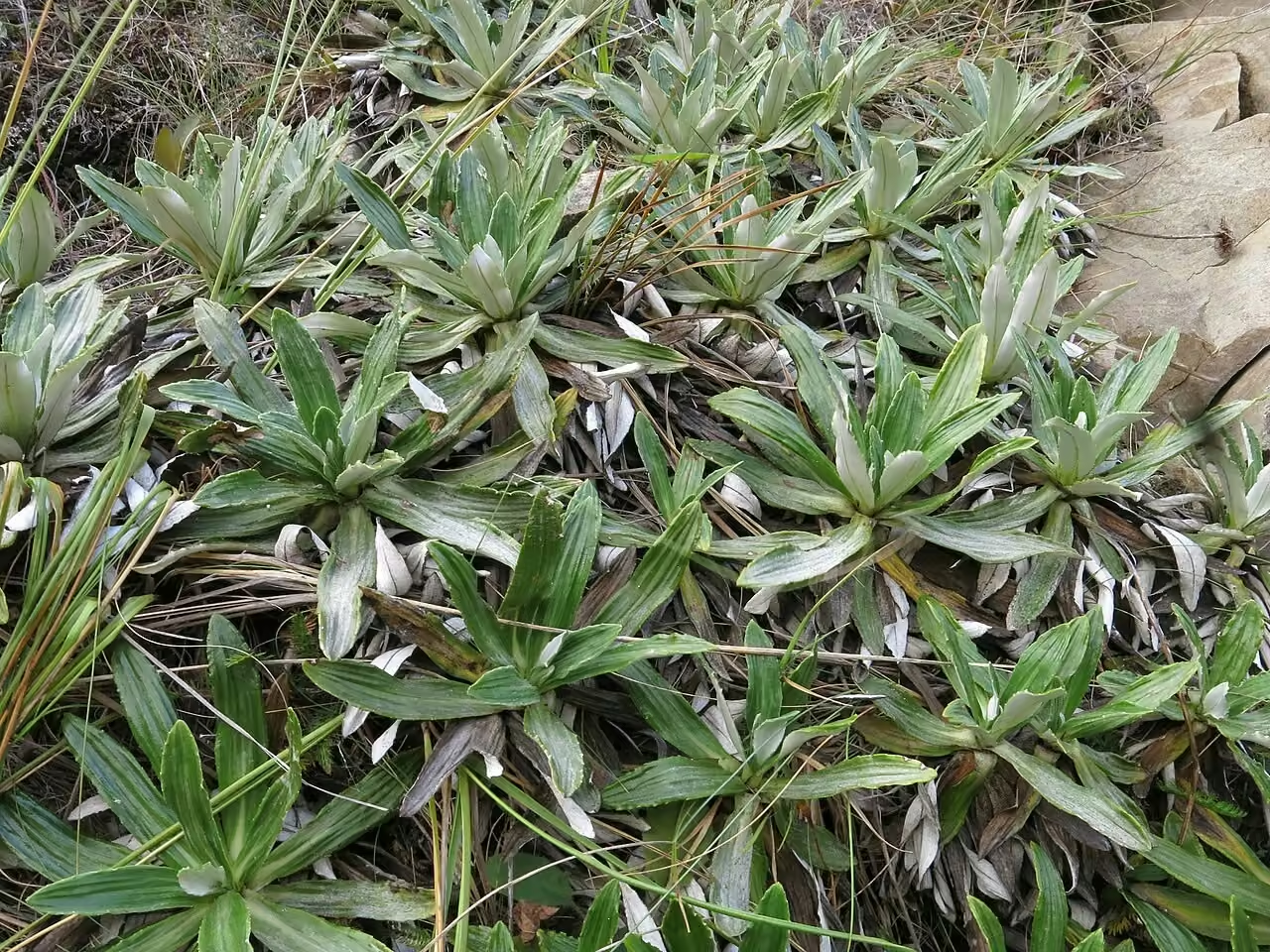
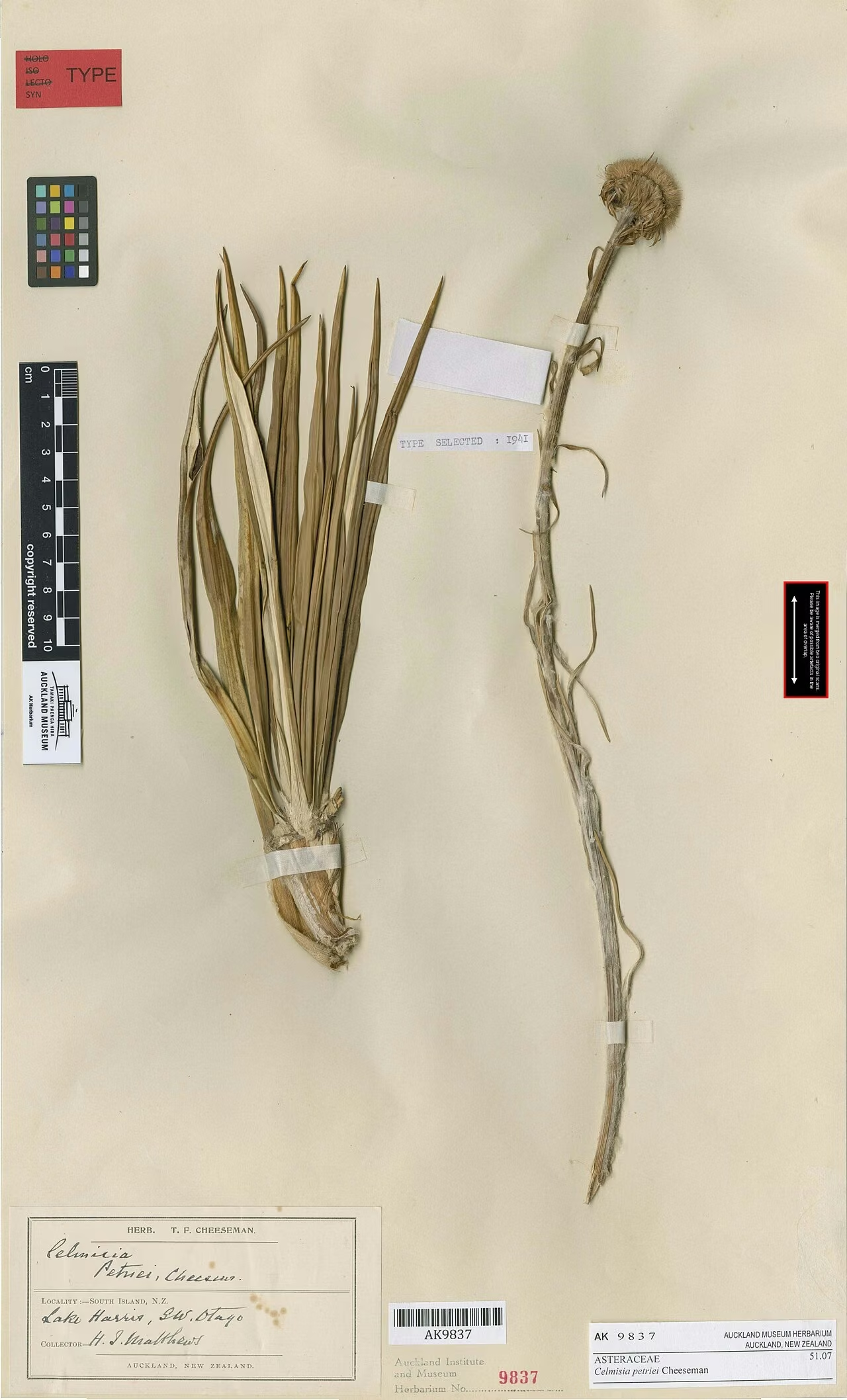
Explore other native plants that share similar characteristics or habitats with Gibbs's Mountain Daisy (Celmisia gibbsii), offering further insights into New Zealand's diverse flora. These related species provide context and opportunities for complementary planting in your garden.
Plant Conservation
Celmisia gibbsii is ranked At Risk - Naturally Uncommon (2023) with the qualifier Sparse. NZPCN notes it is naturally uncommon and shows no active threats.
Its whole range lies within Kahurangi National Park, which protects its habitat. Staying on tracks and never collecting plants are the best ways visitors can help.
Frequently Asked Questions
Where is Celmisia gibbsii found?
Only in the alpine zone of Kahurangi National Park in North-West Nelson, including Mount Cobb, Waingaro Peak, Mount Lockett and Mount Zetland, in moist rocky sites and fellfield.
How is Celmisia gibbsii different from Celmisia brevifolia?
Celmisia gibbsii has narrower, linear-lanceolate leaves up to 5 mm wide, compared with 6 to 9 mm in C. brevifolia, and both its leaf undersides and flower stems are scurfy with small scales.
Who was Celmisia gibbsii named after?
It honours Frederick G. Gibbs (1866 to 1953), an early plant collector in Nelson who gathered the type specimens on Mount Cobb.
Is Gibbs's mountain daisy threatened?
It is ranked At Risk - Naturally Uncommon with the qualifier Sparse. NZPCN notes it is naturally uncommon and shows no sign of active threats.
Sources and Further Reading
The botanical, growing, and conservation details for Gibbs's Mountain Daisy (Celmisia gibbsii) on this page draw on the New Zealand plant references below. Consult them for full technical records and the latest distribution data.