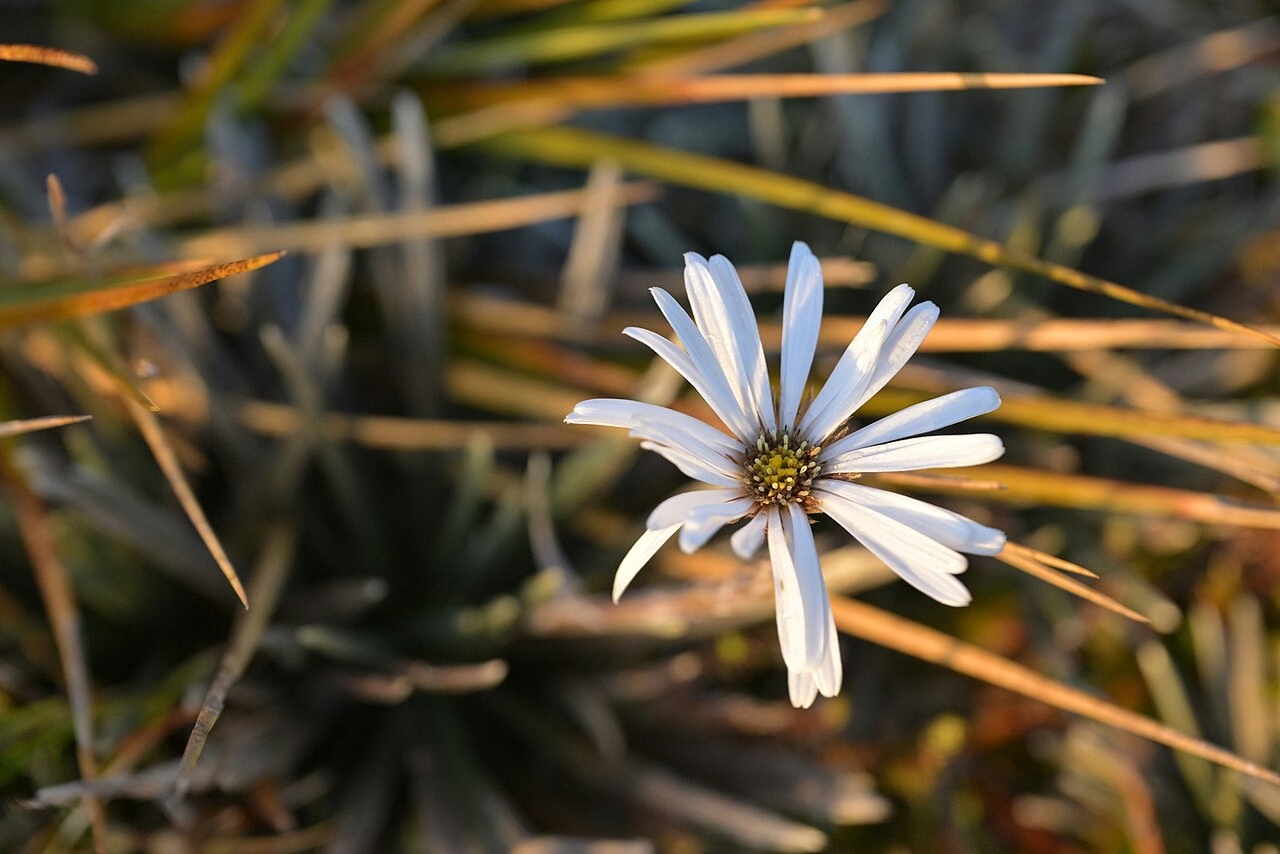
Tin Range Mountain Daisy
Celmisia polyvena
Last updated:
Tin Range mountain daisy (Celmisia polyvena) is a silvery-white mountain daisy found only in the far south of Stewart Island/Rakiura, mostly on the Tin Range and south of Mt Rakeahua. It forms single clumps or extensive patches of narrow, silvery leaves with inrolled margins, and in November and December carries white daisies about 25 mm across on purple stalks. Unlike most Celmisia, which favour well-drained mountain slopes, it grows from the lowlands to the subalpine zone in poorly drained tussockland, mires and seepages among rocks. It is ranked At Risk - Naturally Uncommon because of its very small natural range. Explore more native flowering plants in our native plant guide.
Plant Description
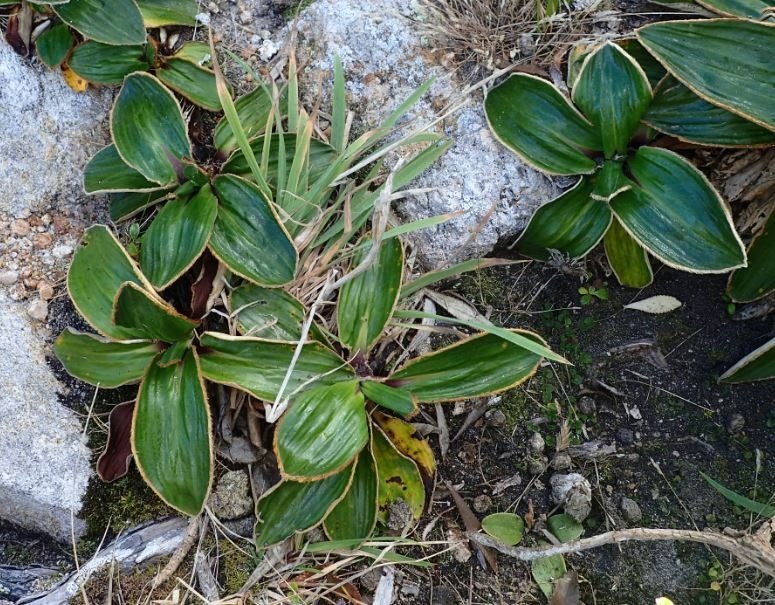
Celmisia polyvena is a silvery-white to white herb that forms solitary clumps or spreads into extensive patches. Its slender branches are clothed in the persistent remains of old leaves, with the living leaves densely arranged towards the tips.
The leaves are 10 to 60 mm long and 5 to 15 mm wide, ranging from narrow-linear to lanceolate, with silvery surfaces and inrolled margins. The many-veined leaves give the species its name. Flower heads about 25 mm across have white ray florets and are carried on purple scapes.
On Rakiura it could be confused with Celmisia graminifolia, but that species lacks the silvery linear leaves and purple scapes. It is larger and broader-leaved than Celmisia alpina, another bog-dwelling mountain daisy.
Quick Facts
| Scientific Name | Celmisia polyvena |
|---|---|
| Height | Low clumps; flower stalks carry heads above the leaves |
| Spread | Solitary clumps or extensive patches |
| Water Needs | High; grows in permanently wet, boggy ground |
| Light | Open sites in the wild; NZPCN suggests shade in cultivation |
| Frost Tolerance | Hardy to the cool Rakiura climate |
| Salt Tolerance | No information available |
| Growth Rate | Slow |
| Lifespan | Perennial |
Climate Best Suited to
Suits the cool, very wet and cloudy climate of southern Rakiura, where rainfall is high and summers are mild. It is poorly suited to warm, dry or humid northern climates.
Regional Suitability
| City | Climate Suitability |
|---|---|
| Auckland | Low |
| Wellington | Low |
| Christchurch | Low |
| Dunedin | Medium |
Plant Habitat
This daisy is endemic to Stewart Island/Rakiura, where it occurs south of and including Mt Rakeahua and is concentrated on the Tin Range in the island's remote south.
It grows from the lowlands to the subalpine zone on poorly draining ground: grassland, tussockland, shrubland, mires and similar boggy sites, and in seepages within rock crevices. This tolerance of waterlogged ground at low altitude is unusual among mountain daisies.
Growing Requirements
Soil Requirements
In the wild it roots into wet peat and mineral soils that rarely dry out, including seepage lines in rock.
- Peaty, acidic, low-fertility soil
- Permanently moist root zone
- Avoid rich garden soil and fertiliser
Light Requirements
Wild plants grow in open tussock and bog, but NZPCN suggests a shaded site is likely to suit it in cultivation away from Rakiura's cloud cover.
- Shade from hot afternoon sun when grown on the mainland
- Do not let taller shrubs smother it
Water Requirements
Water is the key requirement: this is a plant of mires and seepages and will not tolerate drying out.
- Keep soil permanently moist
- A bog garden or pot standing in a saucer of rainwater suits it
- Use rainwater rather than hard tap water where possible
Planting and Establishing
Celmisia polyvena is rarely grown and is not stocked by general nurseries. NZPCN suggests plants are likely to need a shaded site with permanently moist soil, so a cool bog garden is the most realistic setting.
Never collect plants from the wild on Rakiura. Any plants grown should come from seed raised by specialist growers or conservation programmes.
Ecological Role
Its seeds are pappate cypselae, small fruits topped with a tuft of hairs that, as in other Celmisia, are spread by wind. Plants that spread into extensive patches help bind wet peat in open tussock and mire vegetation.
The insects that visit its flowers on Rakiura have not been documented in the sources consulted, though mountain daisies in general are visited by native flies, bees and moths.
Uses & Significance
Garden Uses
It is a collector's plant for cool, wet gardens rather than a general landscaping species.
- Bog gardens in cool southern districts
- Alpine house or shaded trough with a constantly moist mix
- Botanic garden collections of Rakiura flora
Ecological Value
It is part of the unusual endemic flora of southern Rakiura, where several mountain daisies are found nowhere else.
- A narrow-range Stewart Island endemic
- Characteristic of the Tin Range mires and tussocklands
- Wind-dispersed seed helps colonise wet open ground
Landscaping Uses
Where it can be grown, the silvery foliage would contrast well with dark sphagnum moss, sedges and small native bog plants. Place it at the edge of a bog garden where its white daisies can be seen.
Its need for permanently wet soil means it should not be mixed with drought-tolerant alpine plants that prefer gritty, sharply drained beds.
Seasonal Care Calendar
Spring
New leaves expand on the silvery rosettes and flower buds form late in the season.
- Check that bog gardens have not dried out
- Remove slugs near emerging buds
Summer
Flowering runs from November to December, with white daisies on purple stalks.
- Keep plants cool and wet in warm spells
- Provide afternoon shade
Autumn
Fruiting occurs from February to April as the wind-borne seed ripens.
- Collect ripe seed heads from cultivated plants
- Sow seed fresh
Winter
Plants sit dormant in cold, wet conditions typical of their native bogs.
- No feeding is needed
- Clear fallen leaves that could smother rosettes
When to Prune and How Much
No pruning is required. Old leaf remains on the stems are a natural feature and help protect the branches.
Cut spent flower stalks at the base once seed has been collected, and remove any rotting leaves in very humid weather.
How to Grow Tin Range Mountain Daisy
Little has been published on growing Celmisia polyvena. NZPCN says it is probably easy from fresh seed and that plants are likely to need a shaded site in permanently moist soil, but this is an informed expectation rather than a tested protocol. The methods below adapt that advice and general Celmisia practice. Use only seed or plants from legitimate cultivated or conservation sources, since wild Rakiura populations should not be disturbed, and keep seedlings cool and constantly damp, which is the opposite of the sharp drainage most alpine daisies want.
From Seed
Seed ripens from February to April. Celmisia seed loses viability quickly, so sowing it fresh gives the best chance of germination.
- Collect fully ripe, fluffy seed heads from cultivated plants
- Sow on the surface of a peaty, moist seed-raising mix
- Cover very lightly with fine grit
- Stand the tray in a cool, shaded place and keep it damp at all times
- Prick out seedlings into individual pots once they have several leaves
By Division
Plants that have spread into patches produce several rooted branches, which can be separated on established cultivated plants.
- Lift or expose the edge of a patch in early spring
- Separate a branch with its own roots
- Pot into a moist peaty mix and keep shaded until established
- Plant out once new leaves appear, keeping the soil wet through the first summer while the roots grow into the surrounding peat
Pests & Diseases
No pests specific to this species are recorded. In gardens, slugs and snails readily damage the soft young leaves and flower buds of mountain daisies.
Rot can develop if plants are grown warm and humid with poor air movement, even though the soil itself must stay wet.
Cultural Significance
No traditional Māori name or use is recorded for Celmisia polyvena in the sources consulted.
The species was described in 1942 by George Simpson and J. Scott Thomson, two amateur botanists from Dunedin who described a number of southern alpine plants.
Bonus Tip
If you try this daisy outside Rakiura, treat it as a bog plant rather than an alpine. A wide pot of peaty mix kept in a shallow tray of rainwater in a cool, shaded corner mimics the Tin Range seepages far better than a sunny scree bed.
Related Plants
Explore other native plants that share similar characteristics or habitats with Tin Range Mountain Daisy (Celmisia polyvena), offering further insights into New Zealand's diverse flora. These related species provide context and opportunities for complementary planting in your garden.
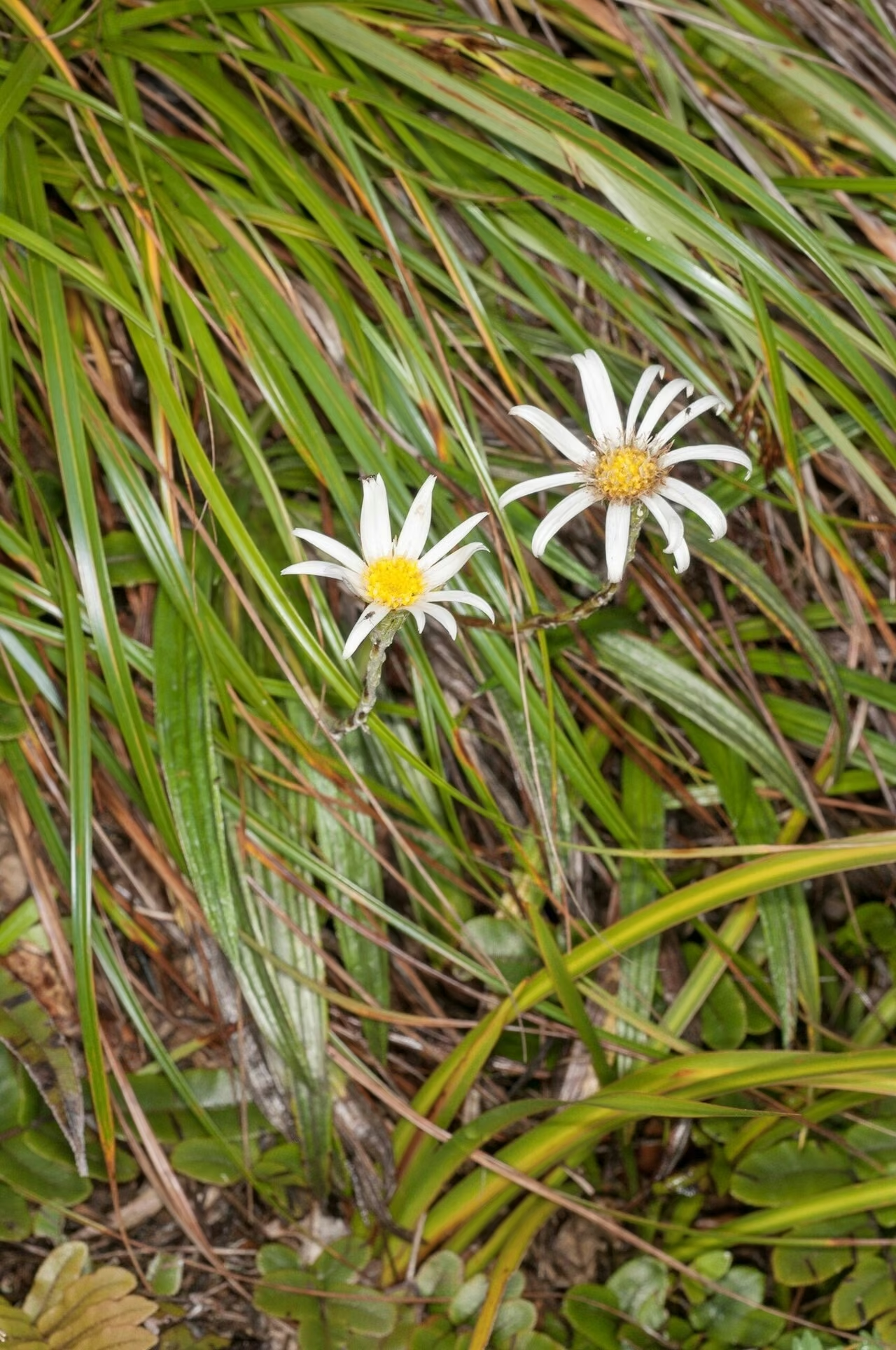
Celmisia graminifolia
Celmisia graminifolia
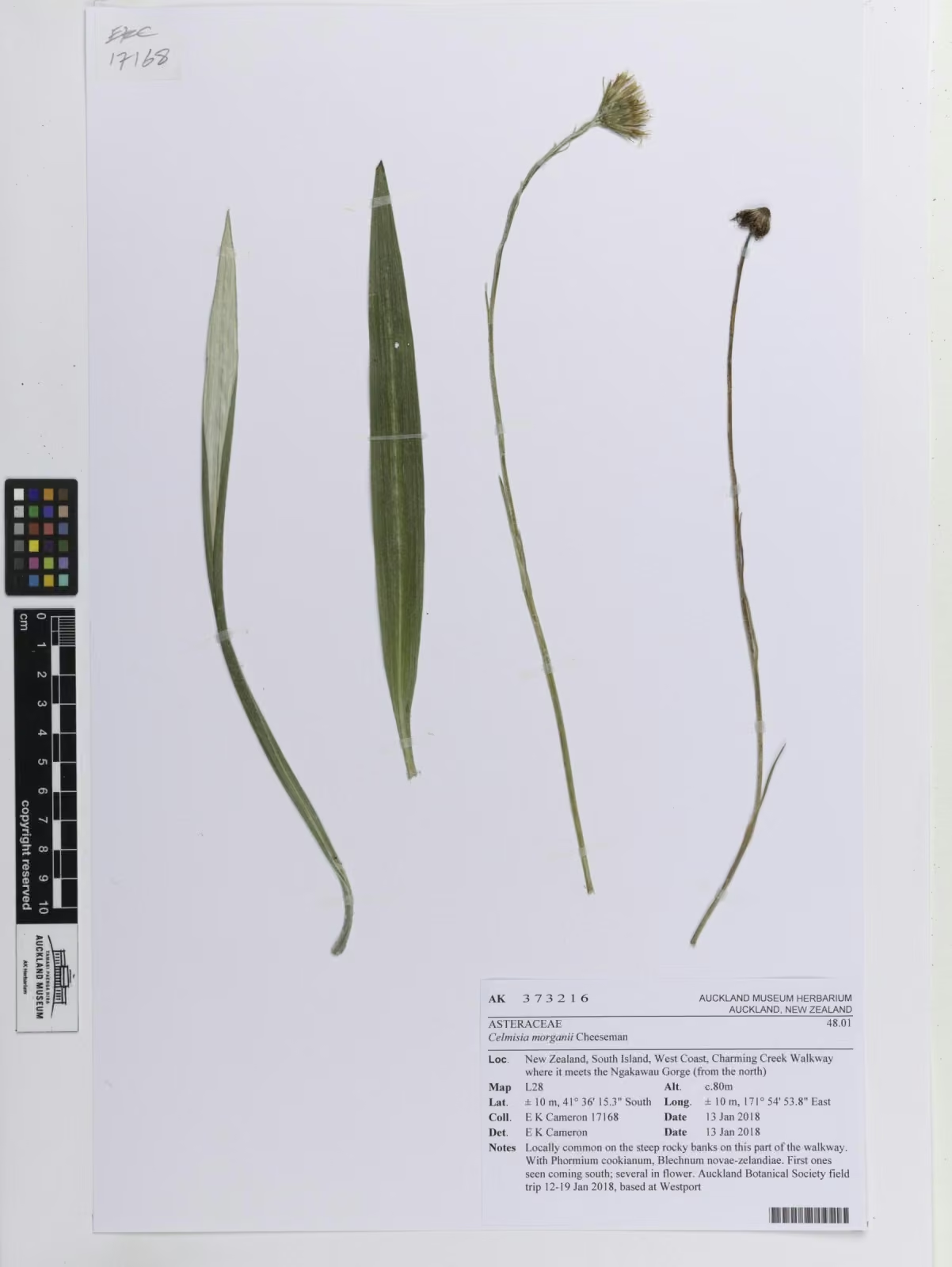
Ngakawau Gorge Daisy
Celmisia morganii
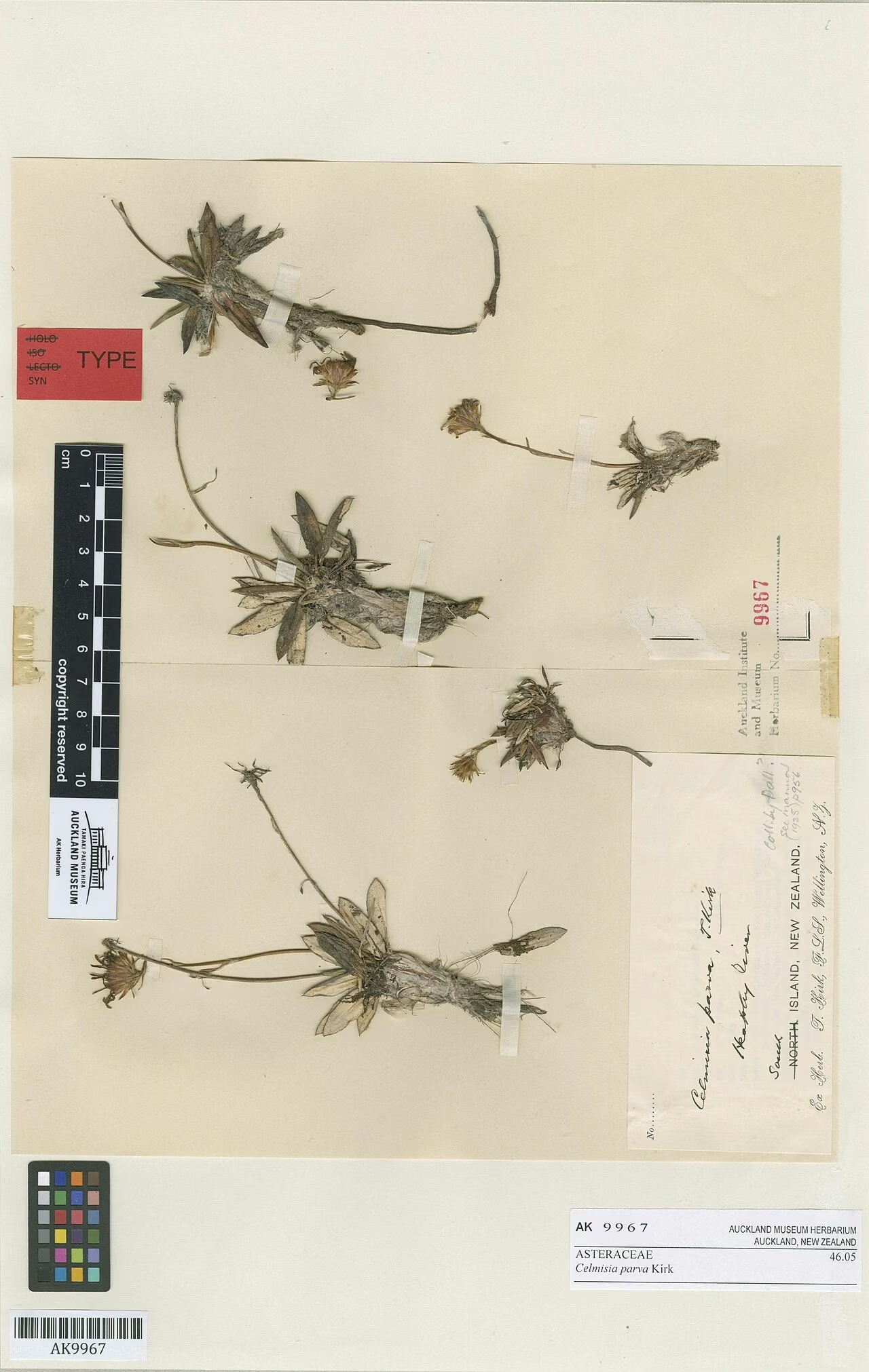
Celmisia parva
Celmisia parva
Petrie's Mountain Daisy
Celmisia petriei
Celmisia prorepens
Celmisia prorepens
Celmisia ramulosa var. ramulosa
Celmisia ramulosa var. ramulosa
Celmisia ramulosa var. tuberculata
Celmisia ramulosa var. tuberculata
Celmisia rigida
Celmisia rigida
Plant Conservation
Celmisia polyvena is ranked At Risk - Naturally Uncommon (2023) with the qualifiers Data Poor Size, Data Poor Trend and Range Restricted. NZPCN states it is a naturally uncommon species that is not actively threatened.
Its range lies within remote country in Rakiura National Park. Better survey data on population size and trend would help clarify its status, and visitors should avoid trampling wet ground where it grows.
Frequently Asked Questions
Where does the Tin Range mountain daisy grow?
Only on southern Stewart Island/Rakiura, from Mt Rakeahua southwards and mostly on the Tin Range, in boggy grassland, tussockland, shrubland, mires and wet rock crevices.
How do you tell Celmisia polyvena from Celmisia graminifolia?
NZPCN separates it from C. graminifolia by its silvery, linear leaves and purple flower stalks, and from C. alpina by its larger size and broader leaves.
What does the name polyvena mean?
Polyvena means many-veined, referring to the veining of the leaves, which is one of the characters used to describe the species.
Is Celmisia polyvena threatened?
It is ranked At Risk - Naturally Uncommon because it is confined to a small part of Rakiura, but NZPCN notes it is not actively threatened there.
Sources and Further Reading
The botanical, growing, and conservation details for Tin Range Mountain Daisy (Celmisia polyvena) on this page draw on the New Zealand plant references below. Consult them for full technical records and the latest distribution data.