Celmisia
Celmisia clavata
Last updated:
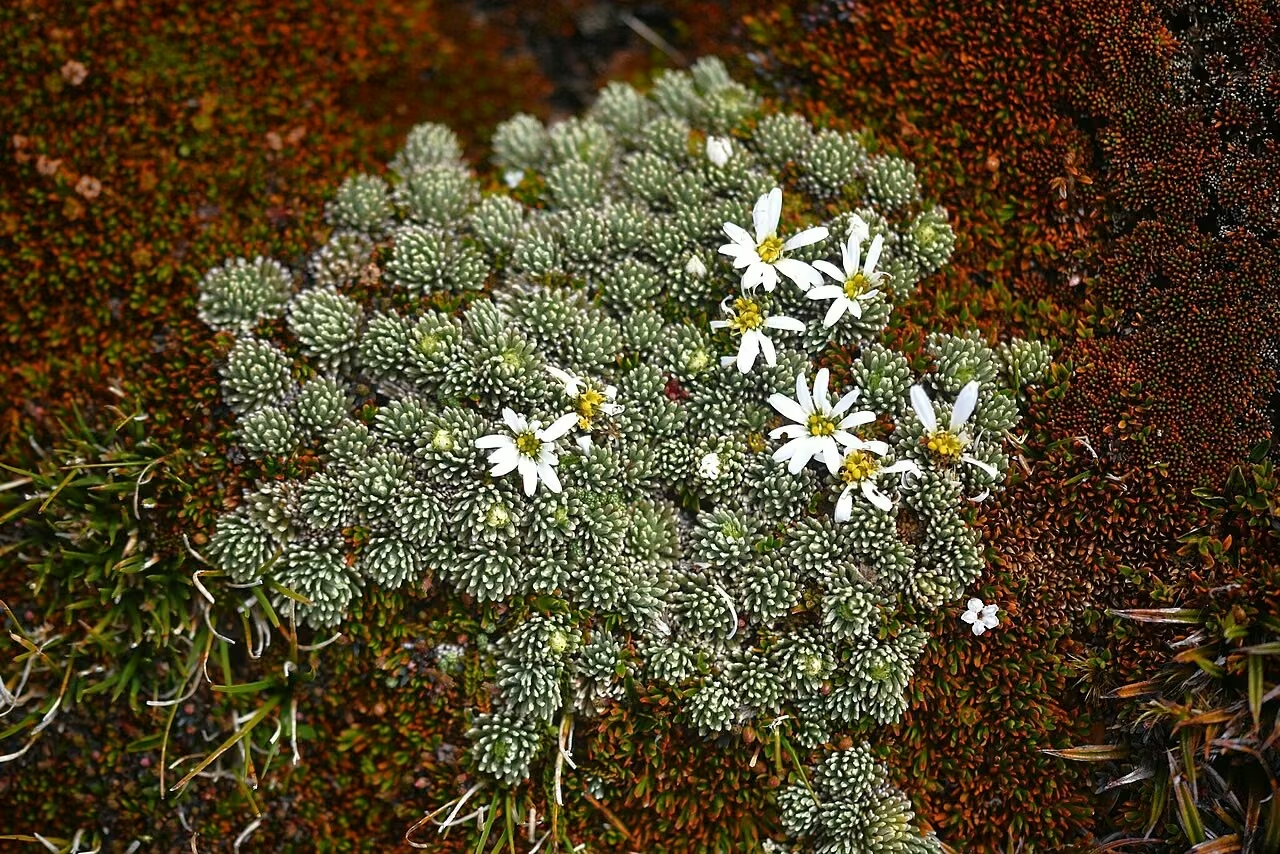
Stewart Island silver cushion daisy (Celmisia clavata) is a small, semi-woody subshrub found only on Stewart Island/Rakiura. Its densely leafy, club-shaped branches form loose patches, cushions or mats up to about 70 cm across but only 10 cm high, clothed in rigid, needle-like leaves 5 to 7 mm long that shine with silvery hairs. From October to January solitary white daisies about 15 mm across appear at the branch tips. It grows in subalpine to alpine peat bogs, mires and poorly drained herbfield and fellfield. It is ranked At Risk - Naturally Uncommon because of its restricted range. Explore more native ground covers in our native plant guide.
Plant Description
Celmisia clavata is a densely branched, semi-woody subshrub forming loose patches, cushions or mats up to about 700 by 100 mm. The branches are densely leafy and club-shaped. Its leaves are erect, rigid and closely packed, linear-subulate, about 5 to 7 mm long and 1 mm wide, with abruptly narrowed blunt tips, and covered in a silvery, closely pressed tomentum.
The flower heads are solitary at the branch tips, about 15 mm across, with white ray florets and yellow disc florets. The achenes are narrow and cylindrical with silky hairs and a pappus for wind dispersal. It flowers from October to January and fruits from November to April.
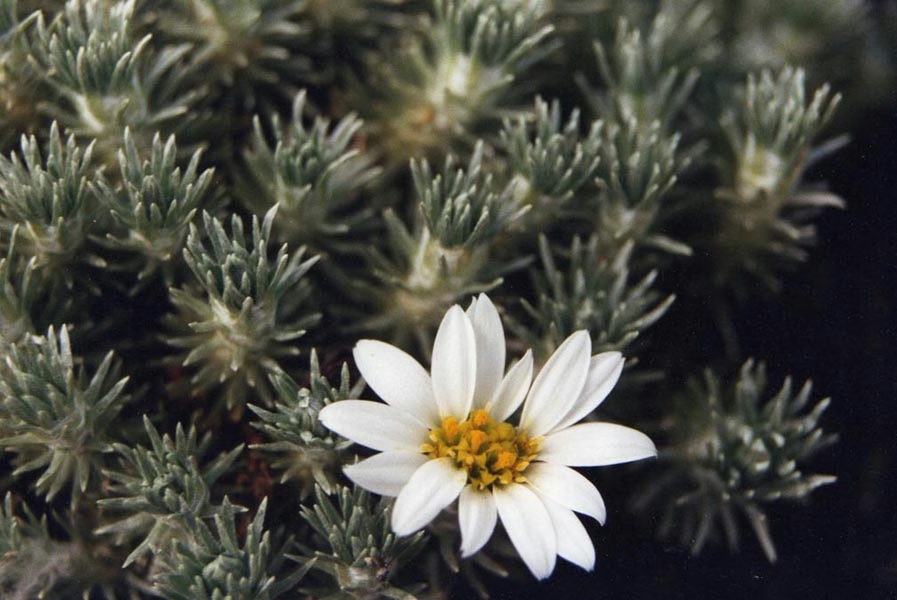
Its closest relative is Celmisia argentea of Otago and Southland, which forms smaller, denser cushions with softer ascending leaves. NZPCN separates C. clavata by its semi-woody, club-shaped leafy branches and its rigid, closely overlapping, blunt-tipped leaves, though intermediate forms make the line between them blurred.
Quick Facts
| Scientific Name | Celmisia clavata |
|---|---|
| Height | Up to about 10 cm |
| Spread | Patches or mats up to about 70 cm across |
| Water Needs | High; wet peaty ground |
| Light | Full sun in open bog and herbfield |
| Frost Tolerance | High; subalpine to alpine |
| Salt Tolerance | No information available |
| Growth Rate | Slow |
| Lifespan | Perennial |
Climate Best Suited to
Grows in the cool, wet, windy and cloudy climate of Rakiura's upland tops, where rainfall is high and summers are mild.
Regional Suitability
| City | Climate Suitability |
|---|---|
| Auckland | Low |
| Wellington | Low |
| Christchurch | Low |
| Dunedin | Medium |
Plant Habitat
Celmisia clavata is endemic to Stewart Island/Rakiura, where it grows on the island's subalpine and alpine tops. NZPCN notes that similar forms occur in Central Otago, but these are not formally included in the species.
Its habitat is peat bogs, mires and poorly draining herbfield and fellfield. It forms silvery patches among cushion plants, low shrubs and mosses on waterlogged peat, alongside other Rakiura specialists such as the Stewart Island vegetable sheep.
Growing Requirements
Soil Requirements
In the wild it grows on wet peat. In cultivation NZPCN advises a free-draining but moist soil.
- Use a peaty, gritty mix that stays damp
- Avoid lime and rich fertilisers
- Do not let the root zone dry out
Light Requirements
It grows in open, treeless bog and herbfield, so it needs good light, but in gardens heat must be avoided.
- Bright, cool positions
- Shade from strong afternoon sun in warmer districts
Water Requirements
Consistent moisture is essential, reflecting its peat bog habitat.
- Water regularly, preferably with rainwater
- Stand pots in a saucer of wet sand during summer
Planting and Establishing
Grow in an alpine house, a deep trough or a cool bog-garden margin with peaty, gritty soil. Plant slightly proud of the surface and top-dress with fine gravel to keep the silvery foliage off wet soil.
This is a plant for experienced alpine growers. Do not collect it on Rakiura, where much of its habitat is within Rakiura National Park.
Ecological Role
Like other alpine daisies its white flowers are probably visited by flies, small moths and native bees, but its pollinators have not been studied. NZPCN notes that its seeds are dispersed by wind.
It is part of the distinctive subalpine bog and herbfield flora of Rakiura, which contains a number of plants found nowhere else. The dense silvery hairs on its leaves likely help protect it from wind, cold and strong light.
Uses & Significance
Garden Uses
A collector's plant for alpine troughs and alpine houses rather than open gardens.
- Alpine house pots
- Peat beds in cool districts
- Collections of Stewart Island plants
Ecological Value
It contributes to the unique bog and herbfield vegetation of Stewart Island's uplands.
- Part of an endemic-rich subalpine flora
- Flowers provide food for alpine insects
- Mats help protect peat surfaces
Landscaping Uses
In a trough, let its silvery mat spread among small rocks and green cushion plants for a striking contrast in colour and texture.
It is too small and specialised for general landscaping. A cool bog garden edge planted with sphagnum, small sedges and cushion plants is the closest garden match to its natural setting.
Seasonal Care Calendar
Spring
Flowering begins in October as daisies open on the branch tips.
- Resume regular watering as growth starts
Summer
Flowering finishes in January while seed ripens.
- Keep cool and moist
- Collect seed from November onwards
Autumn
Seed continues to ripen until April.
- Sow fresh seed
- Remove fallen debris from the mat
Winter
Plants rest and tolerate cold, wet conditions.
- Ensure air circulates in the alpine house
- Avoid waterlogging in pots
When to Prune and How Much
No pruning is required. Remove old flower heads after seed collection to keep the mat clean.
Carefully cut out any dead or rotting branches to stop decay spreading.
How to Grow Celmisia
NZPCN describes propagation as difficult, recommending fresh seed as the best method but noting that cuttings can also be used. Since the species is confined to Rakiura and much of its range is protected, seed or cuttings should come only from cultivated plants or be collected under permit. Young plants must be kept cool and evenly moist in a free-draining peaty mix.
From Seed
Seed ripens from November to April. NZPCN recommends fresh seed, so sow it straight after collection. Germination is often uneven in cushion-forming celmisias.
Rainwater is preferable to hard tap water for keeping seed trays moist, since the species grows naturally on acidic peat.
- Collect seed heads once the pappus is fluffy
- Sow on a moist, peaty and gritty seed mix
- Cover very lightly with fine grit
- Keep in a cool, shaded, airy spot and never let the mix dry
- Prick out seedlings into small pots when large enough
- Grow on in an alpine house or cold frame
From Cuttings
Short club-shaped branch tips can be rooted, which also preserves the exact form of the parent plant.
Rooting can be slow, so resist the urge to tug at cuttings; new growth at the tips is the best sign that roots have formed.
- Take 2 to 4 cm branch tips from the edge of a healthy mat in spring or autumn
- Remove the lowest leaves carefully
- Insert into a mix of fine pumice and peat
- Keep humid but well ventilated, out of direct sun
- Pot on once roots have formed
Pests & Diseases
No specific pests of Celmisia clavata are recorded. In cultivation, rot caused by warmth, humidity or stagnant wet soil is the most likely problem, and slugs may graze young plants.
On Rakiura, introduced browsers such as white-tailed deer may affect upland vegetation, though no damage to this species has been specifically documented.
Cultural Significance
No Māori name or traditional use is recorded for Celmisia clavata. The species was described by George Simpson and John Scott Thomson in 1942, two botanists who studied the flora of southern New Zealand.
Its name comes from the Latin clavatus, club-shaped, describing its leafy branches. The genus name refers to Kelmis, a figure in Greek mythology.
Bonus Tip
When looking for it on Rakiura's tops, check the leaf tips with a hand lens: blunt, abruptly narrowed tips on rigid, closely pressed leaves point to Celmisia clavata rather than other silvery cushions.
Related Plants
Explore other native plants that share similar characteristics or habitats with Celmisia (Celmisia clavata), offering further insights into New Zealand's diverse flora. These related species provide context and opportunities for complementary planting in your garden.
Adams's Daisy
Celmisia adamsii
Silver Cushion Mountain Daisy
Celmisia argentea
Armstrong's Mountain Daisy
Celmisia armstrongii
Common Shrub Mountain Daisy
Celmisia brevifolia
Dall's Mountain Daisy
Celmisia dallii
Celmisia densiflora
Celmisia densiflora
Celmisia dubia
Celmisia dubia
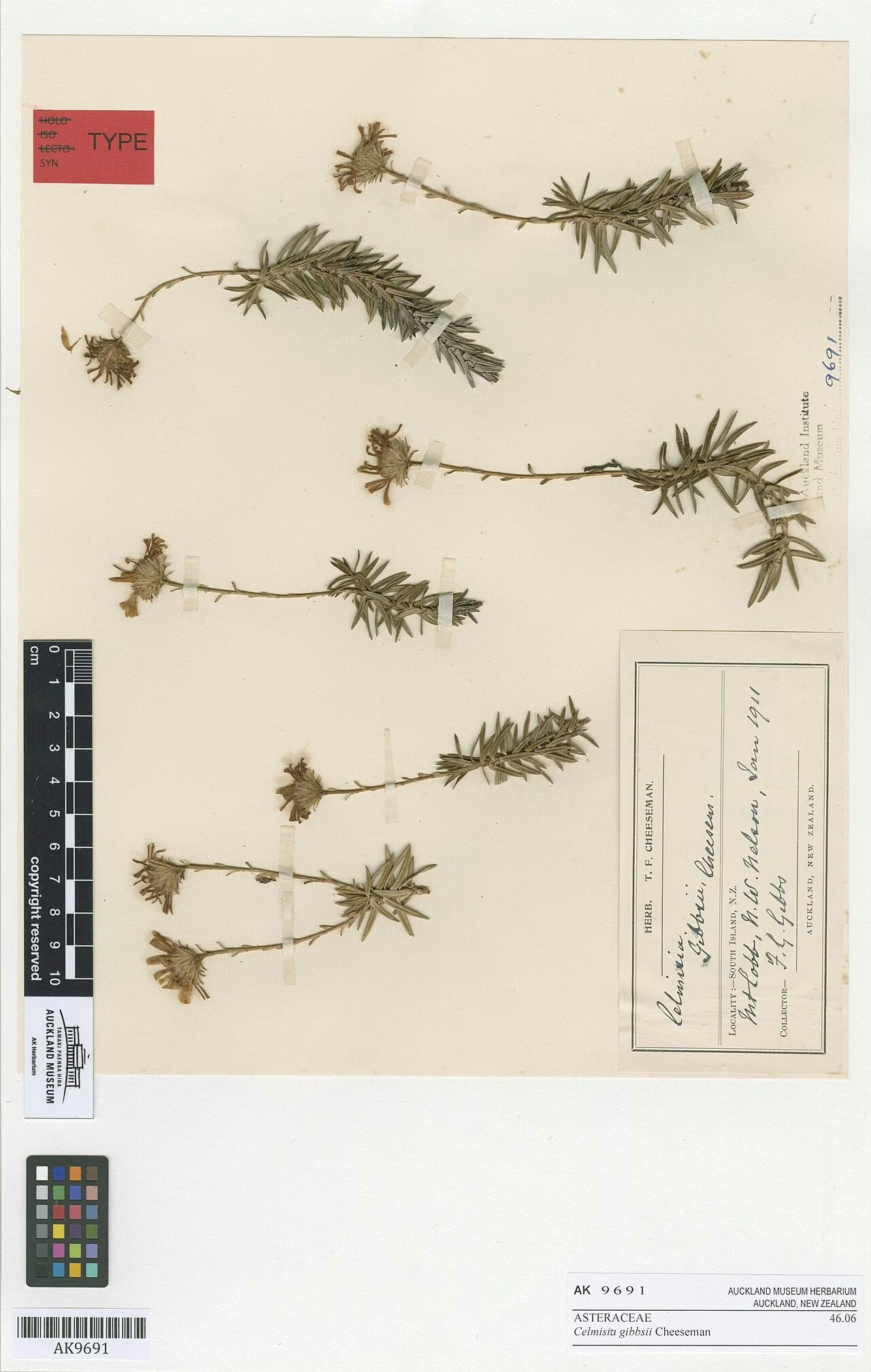
Gibbs's Mountain Daisy
Celmisia gibbsii
Plant Conservation
Celmisia clavata is ranked At Risk - Naturally Uncommon (2023) with the qualifier RR (range restricted), and has held a Naturally Uncommon or Range Restricted listing since 2004. NZPCN notes it does not appear to be actively threatened.
Its upland bog habitat on Rakiura is largely within Rakiura National Park. Keeping trampers on tracks across fragile bog and herbfield and watching for browsing or weed invasion help keep it secure.
Frequently Asked Questions
Where is Celmisia clavata found?
It is endemic to Stewart Island/Rakiura, growing in subalpine to alpine peat bogs, mires and poorly draining herbfield and fellfield. Similar plants occur in Central Otago.
What does the name clavata mean?
Clavata is Latin for club-shaped, referring to its semi-woody branches, which are thickened by densely packed leaves towards their tips.
Is Celmisia clavata a separate species from Celmisia argentea?
It is currently accepted as a species, but NZPCN notes that its delimitation is unclear and some botanists consider it part of the natural variation of Celmisia argentea.
Is the Stewart Island silver cushion daisy threatened?
It is ranked At Risk - Naturally Uncommon because of its restricted range, but NZPCN says it does not appear to be actively threatened.
Sources and Further Reading
The botanical, growing, and conservation details for Celmisia (Celmisia clavata) on this page draw on the New Zealand plant references below. Consult them for full technical records and the latest distribution data.