Common Shrub Mountain Daisy
Celmisia brevifolia
Last updated:
Common shrub mountain daisy (Celmisia brevifolia) is a low, sprawling subshrub endemic to the South Island, forming loose clumps up to about 0.8 m across on stout woody stems. Its small, leathery, oblong leaves, only 10 to 20 mm long, are sticky on top and white-felted underneath, and from October to February it produces white daisies 2 to 3 cm across. It is widespread in montane to subalpine grassland, rocky places and fellfield throughout the South Island. It is Not Threatened and, unlike many celmisias, grows readily from seed and cuttings in cool gardens. Explore more native shrubs in our native plant guide.
Plant Description
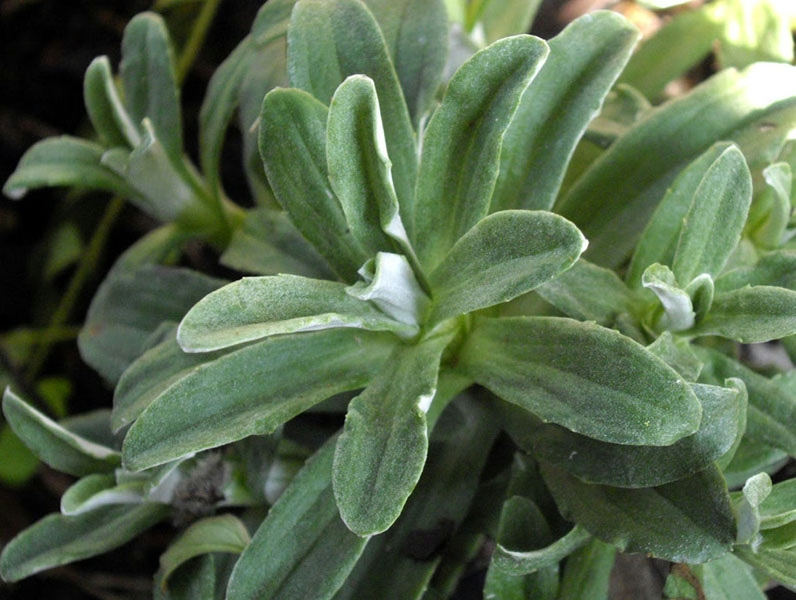
Celmisia brevifolia is a sprawling subshrub with stout, woody stems that forms loose clumps, recorded as up to 0.4 m across in the Flora of New Zealand and up to about 0.8 m by NZPCN. The leaves are leathery, oblong to obovate-oblong, 10 to 20 mm long and 6 to 9 mm wide, with rounded tips. Their upper surface is viscid (sticky) and the underside is covered in soft white tomentum.
The flower heads are 20 to 30 mm across, with narrow, spoon-shaped white ray florets around a yellow disc. Flowering lasts from October to February, and the wind-dispersed, pappus-bearing seed ripens from November to April.
Its short, broad, round-tipped leaves are the best guide to identification. The related shrubby daisies Celmisia gibbsii and Celmisia rupestris have narrower linear or lanceolate leaves that end in a sharp or tapering point.
Quick Facts
| Scientific Name | Celmisia brevifolia |
|---|---|
| Height | Low, usually under 0.3 m |
| Spread | Loose clumps 0.4 to 0.8 m across |
| Water Needs | Moderate; must not dry out |
| Light | Full sun to light shade |
| Frost Tolerance | High; montane to subalpine |
| Salt Tolerance | Low; an inland mountain plant |
| Growth Rate | Slow to moderate |
| Lifespan | Perennial subshrub |
Climate Best Suited to
Suits cool mountain and upland climates with cold winters, frequent frost and snow, and reliable moisture through summer.
Regional Suitability
| City | Climate Suitability |
|---|---|
| Auckland | Low |
| Wellington | Medium |
| Christchurch | Medium |
| Dunedin | High |
Plant Habitat
Celmisia brevifolia is endemic to the South Island, where NZPCN records it throughout the island. The species was described from plants on the plateau of the Old Man Range in Central Otago, at about 1500 m.
It is a montane to subalpine plant, widespread in open grassland, rocky places and fellfield. It sprawls over rocks and among low tussocks in exposed, well-lit sites.
Growing Requirements
Soil Requirements
It needs free-draining soil that still holds enough moisture to stop the plant drying out, like the stony mountain soils it grows in naturally.
- Use a gritty mix with some organic matter
- Rock garden pockets suit it well
- Avoid heavy, waterlogged clay
Light Requirements
Grows in open, sunny sites in the mountains. In warm lowland gardens give it light shade in the afternoon.
- Full sun in cool districts
- Afternoon shade where summers are hot
Water Requirements
NZPCN notes it cannot tolerate drying out, so water consistently in dry weather.
- Keep roots evenly moist
- Water at the base rather than over the sticky foliage
Planting and Establishing
Plant in autumn or spring in a rockery, raised bed or alpine house, letting the stems sprawl over stones. Work grit into the planting hole and finish with a gravel mulch to keep the stem bases dry.
Choose an open, airy position, as it dislikes humidity. It is occasionally available from specialist native plant nurseries.
Ecological Role
Its white flowers attract a range of alpine insects such as flies and native bees, though specific pollinators of this species have not been recorded. Seeds are dispersed by wind across open grassland and fellfield.
The sticky leaf surface and white woolly underside are features shared with other mountain daisies and are thought to help reduce water loss and protect against cold and strong light in exposed habitats.
Uses & Significance
Garden Uses
One of the easier shrubby celmisias for cool gardens, giving a low mound of small dark leaves and bright white flowers.
- Rock gardens and scree beds
- Trailing over walls and large stones
- Alpine house collections
Ecological Value
A widespread member of South Island montane and subalpine plant communities.
- Long flowering season supports alpine insects
- Stabilises stony soils on exposed slopes
- Part of the diverse shrubby Celmisia flora
Landscaping Uses
Let it spill over rocks at the edge of a rockery, where its sprawling woody stems create a natural mountain look. The small leaves contrast well with tussocks and larger-leaved celmisias.
In a scree or gravel garden, combine it with hebes, Raoulia mats and small grasses to suggest a South Island fellfield.
Seasonal Care Calendar
Spring
Flowering begins in October.
- Apply a light dressing of grit around the plant
- Check for slugs
Summer
Flowers continue until February and seed starts ripening.
- Water during dry spells
- Collect fluffy seed heads
Autumn
Seed ripens through to April; a good time for cuttings and planting.
- Sow fresh seed
- Take hardwood cuttings
Winter
Plants are hardy to frost and snow.
- Keep drainage clear
- Avoid heavy mulch over the stems
When to Prune and How Much
Trim off spent flower heads after flowering to keep the plant tidy. Lightly shorten long sprawling stems if they outgrow their space, cutting to a leafy point.
Avoid hard pruning into bare old wood, which may not reshoot.
How to Grow Common Shrub Mountain Daisy
NZPCN describes Celmisia brevifolia as easily grown from fresh seed and from hardwood cuttings, which makes it one of the more straightforward celmisias to propagate. Cuttings reproduce a particular plant exactly, while seed gives a batch of young plants with some natural variation. Whichever method you use, keep young plants cool, moist and well ventilated.
From Seed
Seed ripens between November and April. Sow it fresh for the best germination.
Seed collected from garden plants grown near other celmisias may produce hybrids, as mountain daisies cross readily, so use cuttings if you need plants true to the parent.
- Collect seed heads as the pappus becomes fluffy
- Sow on the surface of a gritty seed raising mix
- Cover lightly with fine grit
- Keep evenly moist in a cool, bright, airy position out of direct sun
- Prick out seedlings into individual pots when large enough
- Grow on for a season before planting out
From Hardwood Cuttings
Woody shoots root readily. Take them from firm, mature growth in autumn or winter.
Choose shoots from healthy, vigorous plants and avoid stems carrying flower buds.
- Cut 5 to 8 cm lengths of firm woody stem with leafy tips
- Remove the lower leaves and dip the base in rooting hormone
- Insert into a mix of pumice or coarse sand and fine bark
- Keep in a cool, sheltered place and do not let the mix dry out
- Pot up when new roots appear, usually after several weeks
- Harden off before planting in the garden
Pests & Diseases
Slugs and snails can damage young growth. In humid lowland gardens, fungal rot of stems and foliage is the main problem, so give plants good air movement.
In the wild, browsing by introduced animals such as hares and deer can damage plants on open grassland.
Cultural Significance
No Māori name or traditional use is recorded specifically for Celmisia brevifolia. The species was described by the botanist Leonard Cockayne in 1925.
The epithet brevifolia means short-leaved, a direct reference to its small leaves, which are much shorter than those of most mountain daisies.
Bonus Tip
Because it roots so readily from hardwood cuttings, take a few cuttings each autumn as insurance: shrubby celmisias in lowland gardens can collapse suddenly in a humid summer, and a pot of rooted replacements saves starting again from seed.
Related Plants
Explore other native plants that share similar characteristics or habitats with Common Shrub Mountain Daisy (Celmisia brevifolia), offering further insights into New Zealand's diverse flora. These related species provide context and opportunities for complementary planting in your garden.
Downy Dodder Laurel
Cassytha pubescens
Adams's Daisy
Celmisia adamsii
Silver Cushion Mountain Daisy
Celmisia argentea
Armstrong's Mountain Daisy
Celmisia armstrongii
Celmisia clavata
Celmisia clavata
Dall's Mountain Daisy
Celmisia dallii
Celmisia densiflora
Celmisia densiflora
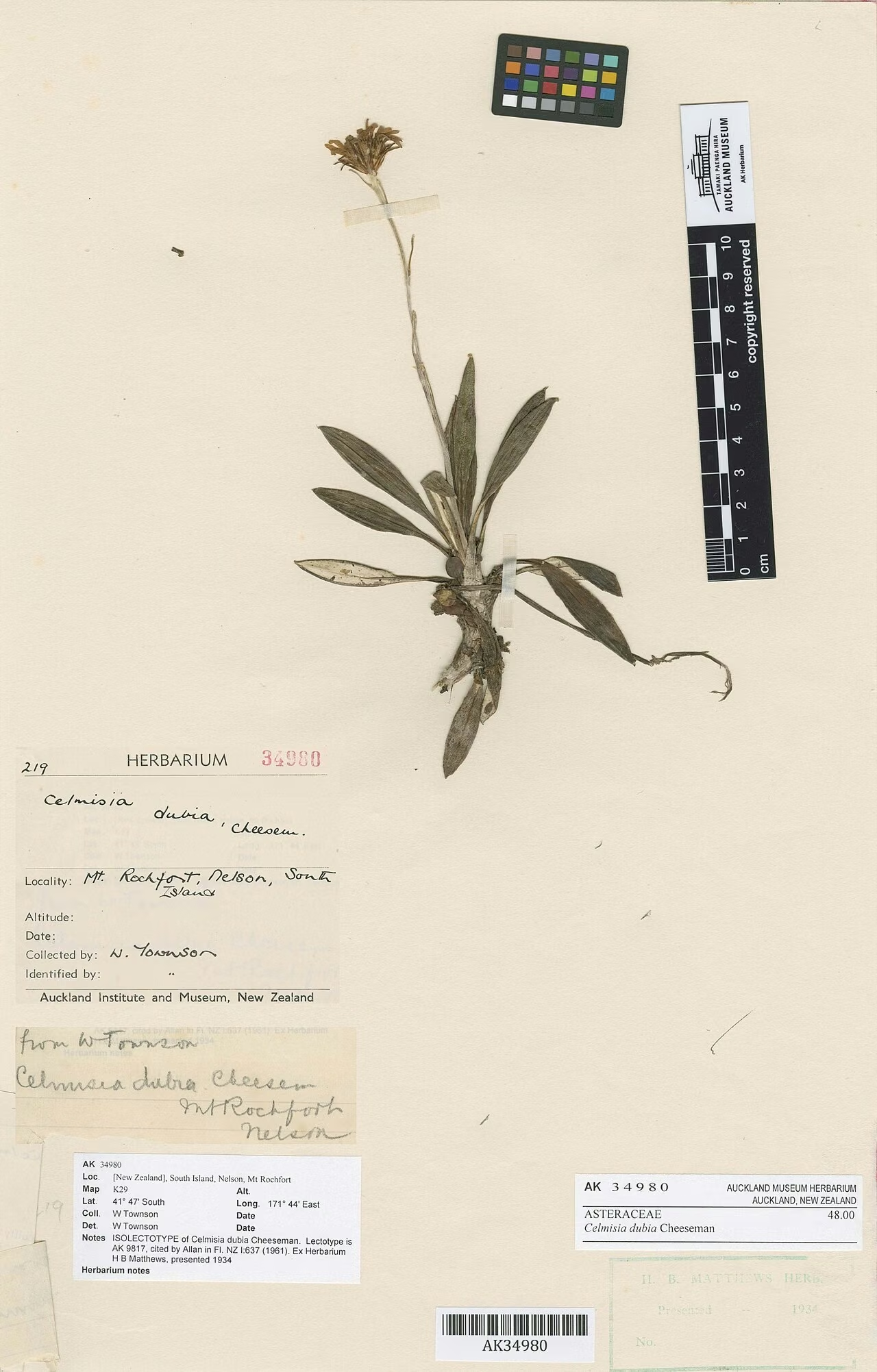
Celmisia dubia
Celmisia dubia
Plant Conservation
Celmisia brevifolia is ranked Not Threatened and has been at every assessment since 2004. In Otago, however, the 2025 regional list rates it Regionally At Risk - Regionally Naturally Uncommon.
Across the South Island it is widespread in montane and subalpine areas, many of them within conservation land. Controlling browsing animals and protecting tussock grassland from intensification help keep it secure.
Frequently Asked Questions
What does Celmisia brevifolia look like?
It is a sprawling woody subshrub with short, oblong leaves 10 to 20 mm long and 6 to 9 mm wide, sticky above and white-woolly beneath, topped by white daisies 2 to 3 cm across.
How do you tell Celmisia brevifolia from Celmisia gibbsii and Celmisia rupestris?
Celmisia brevifolia has oblong leaves 6 to 9 mm wide with rounded tips, while C. gibbsii and C. rupestris have linear or lanceolate leaves with sharp or drawn-out tips.
Can common shrub mountain daisy be grown in a garden?
Yes. NZPCN says it is easily grown from fresh seed and hardwood cuttings, but it dislikes humidity and cannot tolerate drying out, so a rockery or alpine house suits it best.
Sources and Further Reading
The botanical, growing, and conservation details for Common Shrub Mountain Daisy (Celmisia brevifolia) on this page draw on the New Zealand plant references below. Consult them for full technical records and the latest distribution data.