Silver Cushion Mountain Daisy
Celmisia argentea
Last updated:
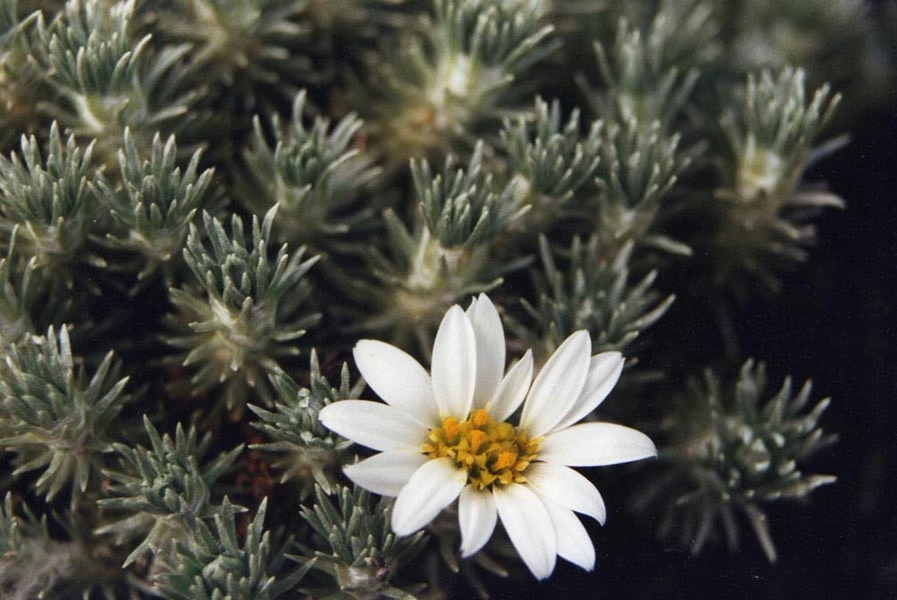
Silver cushion mountain daisy (Celmisia argentea) is a tiny, densely branched subshrub that forms silvery cushions or mats up to about 20 cm across. Its short, needle-like leaves are packed tightly together and coated in greyish-white hairs, and from October to January almost stemless white daisies 6 to 12 mm across sit on top of the cushion. It is endemic to the South Island, growing in damp montane to subalpine grassland and boggy places from the Garvie Mountains south through Otago and Southland. It is ranked At Risk - Naturally Uncommon and is difficult to grow. Explore more native ground covers in our native plant guide.
Plant Description
Celmisia argentea is a densely branched subshrub forming small cushions or mats up to about 200 by 200 mm. Its leaves are very densely overlapping and ascending, linear-subulate (narrow and tapering to a point) and covered with a greyish-white, closely pressed tomentum that gives the whole cushion a silvery sheen.
The flower heads are terminal and sessile or nearly so, sitting directly on the shoot tips. They are about 6 to 12 mm across, with eight to ten white ray florets around yellow disc florets. Flowering runs from October to January and fruit ripens from November to April, the seeds carrying a pappus for wind dispersal.
It is distinguished from Celmisia sessiliflora by its smaller size and much shorter leaves. The Stewart Island Celmisia clavata differs in its semi-woody, club-shaped leafy branches and rigid, closely overlapping leaves with blunt tips, though the two intergrade and some botanists consider them one variable species.
Quick Facts
| Scientific Name | Celmisia argentea |
|---|---|
| Height | A few centimetres; cushions up to about 20 cm |
| Spread | Up to about 20 cm |
| Water Needs | High; constantly moist but well drained |
| Light | Full sun to light shade in cool sites |
| Frost Tolerance | High; a subalpine species |
| Salt Tolerance | Low; an inland mountain plant |
| Growth Rate | Slow |
| Lifespan | Perennial |
Climate Best Suited to
A plant of cold, cloudy and wet southern uplands with snow in winter and cool summers, needing constant moisture and low humidity in cultivation.
Regional Suitability
| City | Climate Suitability |
|---|---|
| Auckland | Low |
| Wellington | Low |
| Christchurch | Medium |
| Dunedin | Medium |
Plant Habitat
Celmisia argentea is a South Island endemic of Otago and Southland, found from the Garvie Mountains southwards. Its range covers the high plateaus and ranges of the deep south.
It grows in montane to subalpine damp grassland and boggy places, and NZPCN rates it a facultative wetland plant, usually found in wet ground. There it forms silvery cushions among cushion bog plants, mosses and low tussock.
Growing Requirements
Soil Requirements
In the wild it grows in wet, peaty soils. In cultivation NZPCN advises a free-draining but moist soil, a balance that is hard to achieve in lowland gardens.
- Use a gritty mix with plenty of peat or fine bark
- Never let the soil dry out
- Avoid stagnant, airless wet soil
Light Requirements
Open, cool sites suit it. In warmer gardens a south-facing rockery protects it from heat while keeping it in good light.
- Good light without baking heat
- Alpine house culture in warm districts
Water Requirements
Keep the cushion's roots constantly moist; it dislikes drying out.
- Water from below if grown in pots
- Avoid wetting the cushion in humid weather
Planting and Establishing
Grow in a deep pot, trough or alpine house, or plant into a south-facing rock garden in a cool district. Set the plant slightly proud of the surrounding soil and top-dress with fine gravel around the cushion.
This is a challenging plant best attempted by experienced alpine growers. It is not commercially available, so it usually has to be raised from seed.
Ecological Role
Its flowers are likely visited by the flies, native bees and moths that pollinate other alpine daisies, though specific pollinators have not been recorded. NZPCN notes that its pappate seeds are dispersed by wind.
Its compact cushion shape reduces exposure to wind and cold and traps moisture and warmth around its shoots, a strategy shared with many of New Zealand's alpine cushion plants.
Uses & Significance
Garden Uses
A specialist plant for alpine troughs and alpine houses, prized for its silvery foliage.
- Alpine house pots and troughs
- Cool south-facing rock gardens
- Collections of southern alpine plants
Ecological Value
It is part of the cushion and wetland vegetation of southern upland bogs and grasslands.
- Nectar for small alpine insects
- Contributes to the diverse cushion bog flora
- Helps bind peaty wet soils
Landscaping Uses
In an alpine trough, use its silver cushion as a focal point among green moss-like plants and small rocks. Its tight form contrasts well with tussocks grown nearby.
It is too small and demanding for general landscaping, but a group in a bog-garden margin can recreate the look of an Otago upland wetland.
Seasonal Care Calendar
Spring
Flowering starts in October as small white daisies appear on the cushion.
- Keep moisture constant as growth begins
Summer
Flowering continues until January and seed starts ripening.
- Shade from hot afternoon sun
- Collect seed as heads become fluffy
Autumn
Seed continues to ripen until April.
- Sow fresh seed promptly
- Clear fallen leaves off the cushion
Winter
Plants rest and tolerate cold well.
- Protect from prolonged winter wet around the cushion
- Do not allow pots to freeze solid and dry
When to Prune and How Much
No pruning is needed. Pinch off old flower heads after seed has been collected so they do not hold moisture on the cushion.
Remove any brown, dead patches carefully, as these can harbour rot.
How to Grow Silver Cushion Mountain Daisy
NZPCN describes propagation as difficult, recommending fresh seed as the best method, although cuttings can also succeed. Because it is not commercially available and is naturally uncommon in the wild, seed should be gathered only from cultivated plants or with permission from the landowner and the Department of Conservation where required. Young plants need the same constant moisture and cool, airy conditions as adults.
From Seed
Seed ripens between November and April. NZPCN specifically recommends fresh seed, so sow it as soon as it is collected rather than storing it. Expect patchy germination, as is usual with cushion celmisias, and sow more seed than the number of plants you want.
- Collect seed heads as they begin to release fluffy seed
- Sow on a moist, gritty seed mix with some peat or fine bark
- Cover very lightly with fine grit
- Keep in a cool, shaded, well-ventilated place and never let the tray dry out
- Prick seedlings out carefully into small pots once large enough to handle
- Grow on in an alpine house or sheltered cold frame
From Cuttings
Short shoots taken from the edge of a healthy cushion can root, though success rates are often low with cushion celmisias.
- Take short rosette shoots 2 to 3 cm long in late spring or early autumn
- Remove the lowest leaves and insert into a mix of fine pumice and peat
- Keep humid but not wet, out of direct sun
- Pot up only once firm roots have formed
Pests & Diseases
Slugs and snails will graze the cushion, particularly seedlings. In cultivation, rot from humid conditions or prolonged wet foliage is the commonest cause of death.
In the wild, cushion plants can be damaged by trampling and by feral animals such as rabbits and deer.
Cultural Significance
No Māori name or traditional use is recorded for Celmisia argentea. The genus name honours Kelmis, a figure from Greek mythology, and argentea is Latin for silvery, describing the cushion.
It was described by Thomas Kirk in 1899. Petrie had earlier treated similar plants as Celmisia sessiliflora var. minor.
Bonus Tip
Grow it in a clay pot plunged into moist sand in an alpine house: the sand keeps the roots cool and evenly damp from below, while the cushion stays dry and airy above.
Related Plants
Explore other native plants that share similar characteristics or habitats with Silver Cushion Mountain Daisy (Celmisia argentea), offering further insights into New Zealand's diverse flora. These related species provide context and opportunities for complementary planting in your garden.
Cassinia amoena
Cassinia amoena
Dodder Laurel
Cassytha paniculata
Downy Dodder Laurel
Cassytha pubescens
Adams's Daisy
Celmisia adamsii
Armstrong's Mountain Daisy
Celmisia armstrongii
Common Shrub Mountain Daisy
Celmisia brevifolia
Celmisia clavata
Celmisia clavata
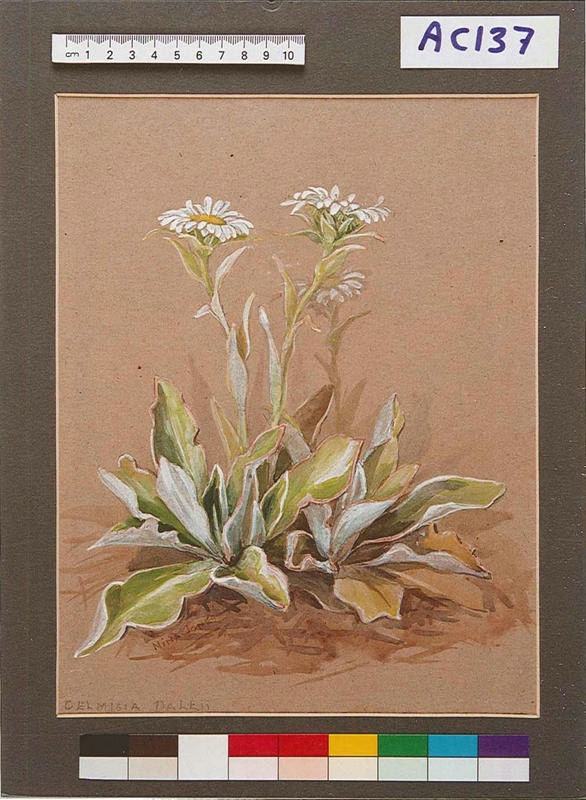
Dall's Mountain Daisy
Celmisia dallii
Plant Conservation
Celmisia argentea was ranked Not Threatened until 2017, but in 2023 it was reclassified At Risk - Naturally Uncommon with the qualifiers DPS (data poor: size) and RR (range restricted). Otago's 2025 regional assessment also rates it Regionally Naturally Uncommon.
Its wet upland habitats are vulnerable to drainage, trampling and changes in land use. Protecting southern upland wetlands and gathering better information on population sizes would help clarify its status.
Frequently Asked Questions
Where does Celmisia argentea grow?
It is endemic to the South Island and grows in Otago and Southland from the Garvie Mountains southwards, in montane to subalpine damp grassland and boggy places.
How is Celmisia argentea different from Celmisia sessiliflora?
It is much smaller than Celmisia sessiliflora, forming cushions only about 20 cm across, and its densely packed leaves are much shorter.
Can you grow silver cushion mountain daisy in a garden?
NZPCN describes it as difficult. It is best grown from fresh seed in an alpine house or a south-facing rockery with moist, free-draining soil, and it dislikes humidity and drying out.
Sources and Further Reading
The botanical, growing, and conservation details for Silver Cushion Mountain Daisy (Celmisia argentea) on this page draw on the New Zealand plant references below. Consult them for full technical records and the latest distribution data.