Travers's Sedge
Carex traversii
Last updated:
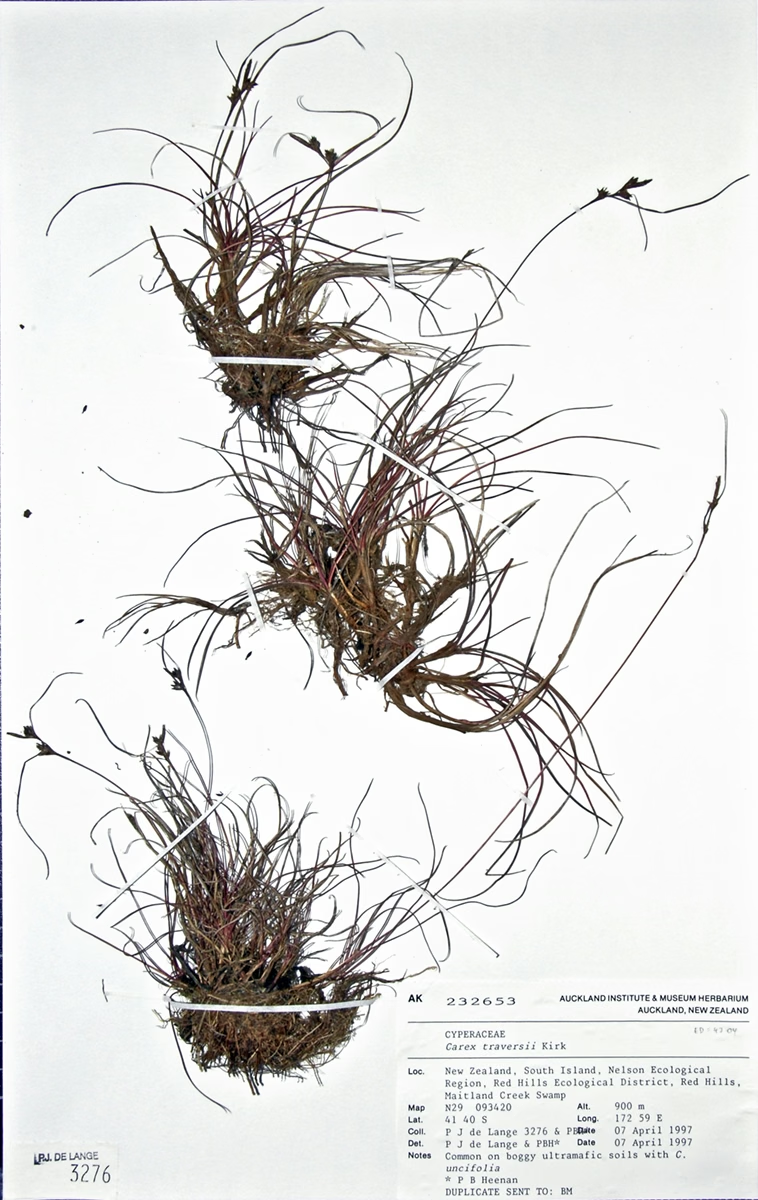
Travers's sedge (Carex traversii) is a short, densely tufted sedge with striking dark red to purple-red foliage, endemic to eastern Nelson. Its tufts reach about 10 to 20 cm tall, with very fine leaves that usually overtop the flowering stems. It is an ultramafic specialist, growing only on the magnesium-rich serpentine soils of the Red Hills and the Mt Dun (Dun Mountain) area, where it occupies open seepages, rubbly ground and damp scree. Because it is confined to this small and unusual landscape it is ranked At Risk - Naturally Uncommon, although it is abundant where it grows. Explore more native grasses and flaxes in our native plant guide.
Plant Description
Carex traversii forms short, dense tufts that are dark red to purple-red in colour. The culms are 100 to 200 mm long and only about 1 mm thick, round in section, with light brown sheaths at the base. The leaves usually exceed the culms and are just 0.5 to 1 mm wide, plano-convex with inrolled margins, so they look almost thread-like.
The inflorescence carries three to six spikes held close together. The uppermost spike is male and the others are female, sometimes with a few male flowers. The female spikes are sessile, up to about 1 cm long and red-brown. The utricles are 2.5 to 3 mm long, dark red-brown with a paler beak and stalk, and enclose a three-angled, light brown nut about 2 mm long. There are three stigmas.
Its closest relative is Carex druceana, which has shorter utricles (about 2 mm) and different colouring. Carex uncifolia can look superficially similar but differs in habitat, leaf form and the arrangement of its spikes. On the ultramafics, the deep red colour and fine plano-convex leaves are the best field characters.
Quick Facts
| Scientific Name | Carex traversii |
|---|---|
| Height | 0.1-0.2 m |
| Spread | Dense tufts, usually under 0.2 m across |
| Water Needs | Moist; seepages and damp scree, though tolerant of drier rubbly ground |
| Light | Full sun in open sites |
| Frost Tolerance | High; grows in cold montane to subalpine country |
| Salt Tolerance | Low; an inland mountain species with no coastal occurrence |
| Growth Rate | Slow |
| Lifespan | Perennial |
Climate Best Suited to
Suits the cool montane to subalpine climate of the Nelson and Marlborough ranges, with cold winters, frosts and periodic snow. It is not suited to humid, warm lowland climates.
Regional Suitability
| City | Climate Suitability |
|---|---|
| Auckland | Low |
| Wellington | Low |
| Christchurch | Medium |
| Dunedin | Medium |
Plant Habitat
Carex traversii is endemic to the South Island and confined to the ultramafic rocks of eastern Nelson, specifically the Red Hills and the Mt Dun (Dun Mountain) area. These are parts of the Dun Mountain Ophiolite Belt, often called the mineral belt, where rocks rich in magnesium, iron, nickel and chromium produce soils that are toxic or infertile for many plants.
Within this landscape it grows in open sites in seepages, on rubbly ground and in damp scree. It is sometimes found on boulders or on open, dry ground. The sparse, stunted vegetation of the mineral belt leaves plenty of open ground where this small sedge can grow without being shaded out.
Growing Requirements
Soil Requirements
It is an ultramafic specialist. NZPCN recommends a free-draining, magnesium-enriched soil in cultivation, reflecting the serpentine-derived soils it grows on in the wild.
- Free-draining, stony or gritty mix
- Magnesium-enriched; ultramafic gravel or added magnesium helps
- Low fertility keeps competing plants down
Light Requirements
It grows in the open, sparsely vegetated ground typical of the mineral belt and is intolerant of competition from larger plants.
- Full sun
- Keep clear of taller neighbours that would shade or crowd it
Water Requirements
It favours seepages and damp scree, but its occasional presence on boulders and dry open ground shows some tolerance of drier conditions provided drainage is good.
- Keep evenly moist but never waterlogged
- Free drainage matters more than constant wetness
Planting and Establishing
Travers's sedge is not commercially available and is suited to specialist growers. Grow it in a pot, trough or open rock garden where it will not be crowded by other plants, using a very free-draining gritty mix.
Its red colour is best in full sun. Plant in spring, firm in lightly and water until established. Source material only from cultivated plants or permitted seed collections, since wild populations are confined to a small area.
Ecological Role
Carex traversii is wind pollinated, like other sedges. NZPCN records that its nuts, enclosed in inflated utricles, are dispersed by granivory and by wind.
It belongs to a suite of plants that have adapted to the harsh ultramafic soils of the Nelson mineral belt, where high magnesium and heavy metal levels exclude most species. Its ability to colonise open seepages and scree helps stabilise these naturally sparse slopes. Associated invertebrates are not recorded in the sources consulted.
Uses & Significance
Garden Uses
It is a collector's plant valued for its deep red colour and its unusual ultramafic origins.
- Alpine troughs and rock gardens
- Pots of contrasting foliage colour
- Displays of plants from the Nelson mineral belt
Ecological Value
It is one of the endemic plants that make the Red Hills and Dun Mountain ultramafics a distinctive botanical area.
- Found nowhere else in the world
- Colonises open seepages and scree on serpentine soils
- Seeds provide food for seed-eating animals
Landscaping Uses
In a rock garden, small groups of Travers's sedge provide points of red among grey stones and green cushion plants. It is too small and slow for mass planting and is best used as a feature in a trough or raised scree bed.
Because it dislikes competition, give each tuft open ground around it rather than tucking it among vigorous groundcovers.
Seasonal Care Calendar
Spring
Flowering begins in September and continues through spring.
- Divide established plants
- Top up gritty mulch around tufts
Summer
Flowering finishes by January, and fruit, which forms from October, ripens through summer.
- Keep pots moist in hot weather
- Collect ripe seed as it forms
Autumn
Fruiting continues into June, and the foliage keeps its deep red colour.
- Sow fresh seed
- Remove weeds that compete with the tufts
Winter
Plants sit through cold and frost in their mountain habitat with little growth.
- Ensure containers drain freely
- No feeding needed
When to Prune and How Much
Pruning is not required. Dead leaves can be combed out by hand in early spring to keep the tuft looking tidy and its red colour visible.
Avoid cutting the whole tuft back hard, as slow-growing sedges can take a long time to recover.
How to Grow Travers's Sedge
NZPCN states that Carex traversii is easily grown by division of whole plants and from fresh seed. It is intolerant of competition and does best in a free-draining, magnesium-enriched soil, so young plants need their own pots or open ground with no aggressive neighbours. Because wild plants are confined to the Red Hills and Dun Mountain ultramafics, start from plants already in cultivation or from seed gathered with the appropriate permission, and avoid taking material from the wild. The long fruiting season, from October through to June, gives plenty of opportunity to gather seed from cultivated plants.
From Seed
Fresh seed germinates best. Sow it soon after collection in a gritty mix rather than storing it, and expect seedlings to grow slowly in their first year.
- Collect red-brown spikes when the nuts loosen from the utricles
- Sow on the surface of a free-draining seed mix with added fine ultramafic grit if available
- Cover with a thin layer of grit and keep moist
- Place in a bright, cool, airy position
- Pot seedlings individually when they have several leaves
By Division
Division of whole plants is the simplest method and gives a quick result. Each piece needs its own roots, and smaller divisions should be grown on in pots before being planted out.
- Lift an established tuft in spring
- Pull or cut it into sections, each with healthy roots and shoots
- Replant at once in a gritty, magnesium-enriched mix
- Water in and keep in light shade until the divisions establish
Pests & Diseases
No specific pests or diseases are recorded for Travers's sedge. In cultivation the main risks are being smothered by more vigorous plants, which it does not tolerate, and root rot in heavy, poorly drained soil.
Slugs may graze young seedlings in damp conditions.
Cultural Significance
No Māori name or traditional Māori use is recorded for Carex traversii in the sources consulted.
The species was named by Thomas Kirk in honour of William Thomas Locke Travers (1819-1903), an Irish lawyer, magistrate, politician, explorer, naturalist and photographer who lived and worked in New Zealand and took a keen interest in its plants.
Bonus Tip
If you cannot obtain ultramafic gravel, a small dressing of magnesium sulphate (Epsom salts) worked into a lean, gritty mix is a practical way to give Travers's sedge the magnesium-rich conditions NZPCN recommends, while keeping fertility low enough to discourage weeds.
Related Plants
Explore other native plants that share similar characteristics or habitats with Travers's Sedge (Carex traversii), offering further insights into New Zealand's diverse flora. These related species provide context and opportunities for complementary planting in your garden.
Carex subdola
Carex subdola
Slender Wine Sedge
Carex tenuiculmis
Southern Cutty Grass
Carex ternaria
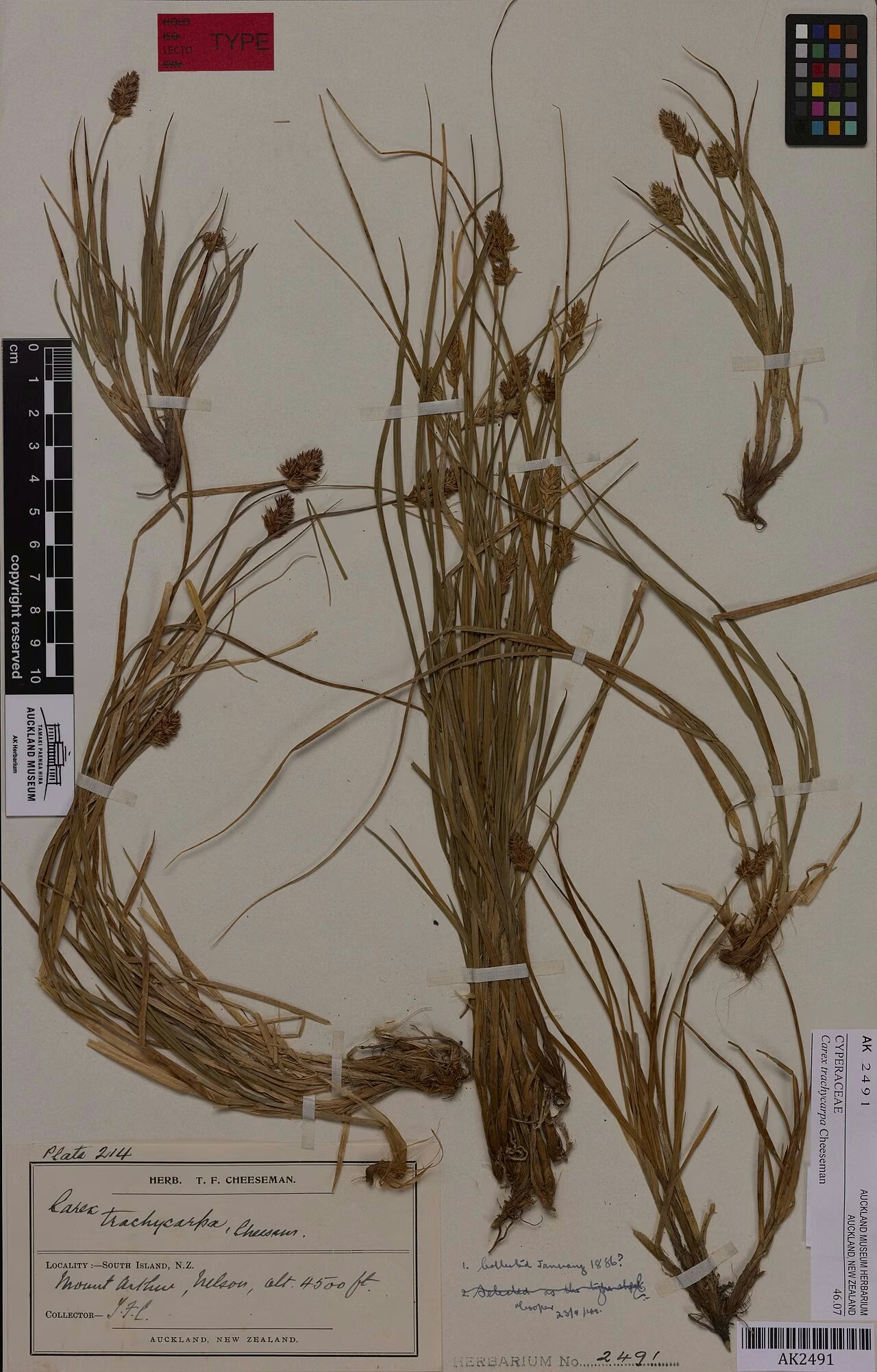
Carex trachycarpa
Carex trachycarpa
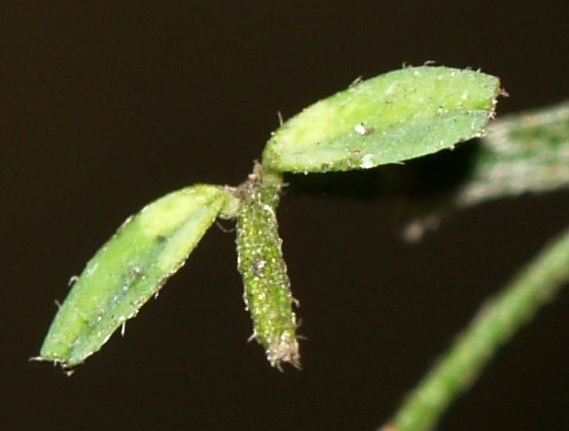
South Island Broom
Carmichaelia arborea
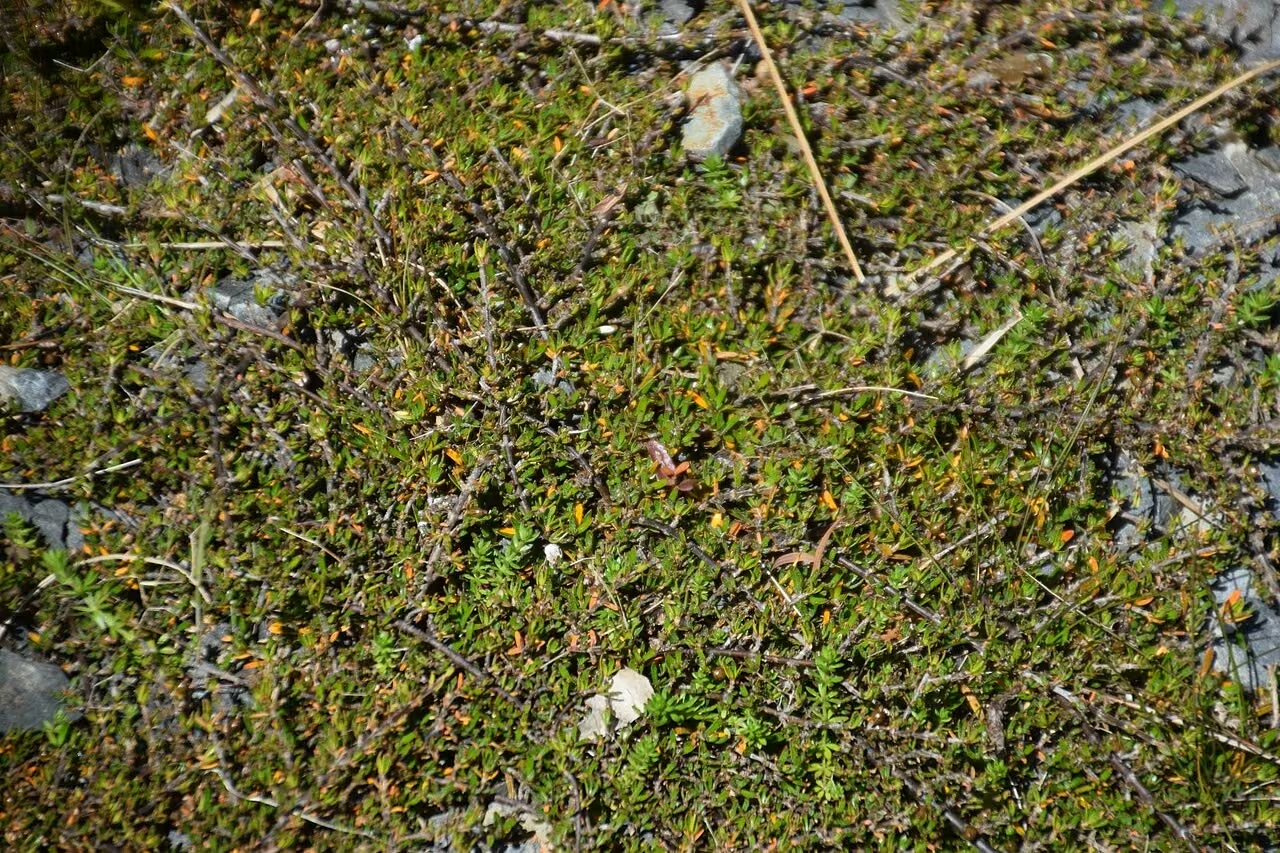
Cromwell Broom
Carmichaelia compacta
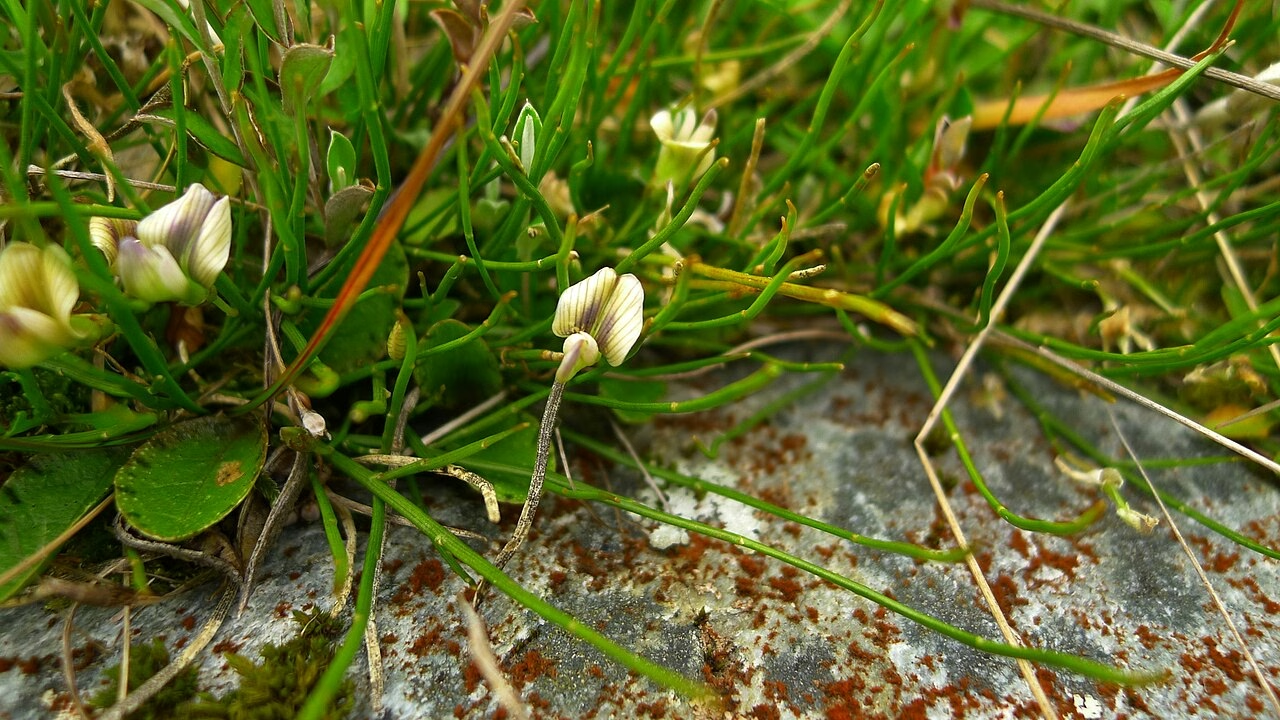
Carmichaelia uniflora
Carmichaelia uniflora
Carmichaelia vexillata
Carmichaelia vexillata
Plant Conservation
Carex traversii is ranked At Risk - Naturally Uncommon (2023) with the qualifiers Sparse, Data Poor: Size, Data Poor: Trend and Range Restricted. NZPCN describes it as a naturally uncommon, range-restricted endemic that is abundant within suitable habitat on the ultramafics of the Red Hills and Mt Dun.
Much of the Red Hills and Dun Mountain ultramafic country is public conservation land, which protects the habitat. Keeping vehicles and feral browsers off the fragile ultramafic slopes and avoiding the spread of weeds onto the mineral belt help keep it secure.
Frequently Asked Questions
What is Travers's sedge?
Travers's sedge is Carex traversii, a small red-leaved tufted sedge endemic to the ultramafic Red Hills and Dun Mountain area of eastern Nelson.
Why is Carex traversii red?
Its leaves and spikes are naturally dark red to purple-red, a colour that NZPCN uses as a key feature for recognising it in the field on ultramafic ground.
Who was Carex traversii named after?
It honours William Thomas Locke Travers (1819-1903), an Irish-born lawyer, magistrate, politician, explorer, naturalist and photographer who collected plants in Nelson.
Can you grow Travers's sedge?
NZPCN says it is easily grown from fresh seed and by division, but it dislikes competition and does best in free-draining, magnesium-enriched soil. It is not commercially available.
Sources and Further Reading
The botanical, growing, and conservation details for Travers's Sedge (Carex traversii) on this page draw on the New Zealand plant references below. Consult them for full technical records and the latest distribution data.