Slender Wine Sedge
Carex tenuiculmis
Last updated:
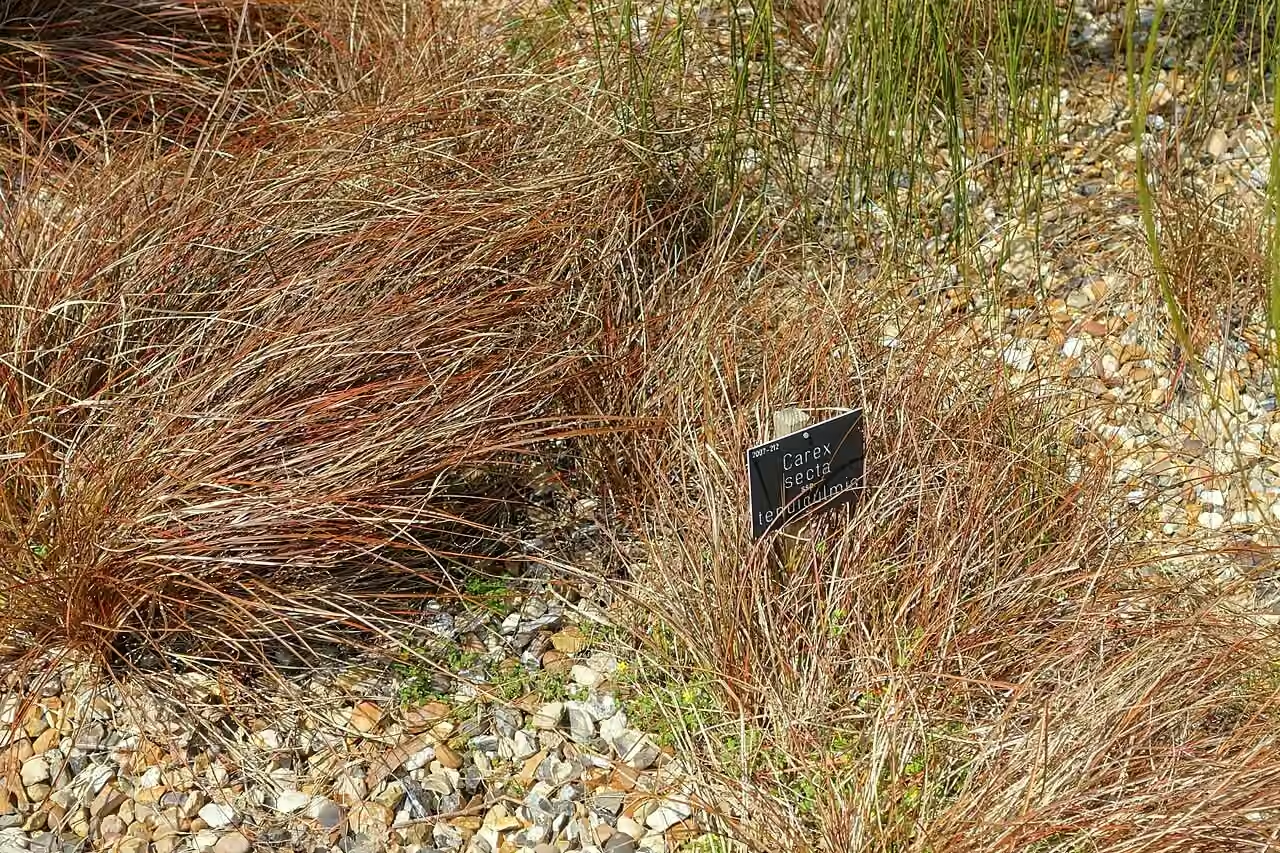
Slender wine sedge (Carex tenuiculmis) is a tussock sedge endemic to New Zealand, prized for its soft, channelled leaves in shades of red, wine-red or red-green. It forms non-trunked tussocks with leaves 25 to 80 cm long and slender flowering stems 20 to 50 cm tall. In the wild it grows beside slow-flowing streams, lake margins, tarns, ponds and wetlands from the lowlands to montane areas of the South, Stewart and Chatham Islands. Although now common in cultivation, wild populations are ranked At Risk - Declining. It is easy to grow and thrives in sunny, permanently damp ground. Explore more native grasses and flaxes in our native plant guide.
Plant Description
Carex tenuiculmis forms tufted tussocks without a trunk. Its leaves are 250 to 800 mm long and 2.4 to 3.2 mm wide, ascending and spreading, channelled and soft, coloured red, wine-red or red-green, with finely rough margins. The culms are 200 to 500 mm long and about 2 mm thick, smooth and nearly three-angled below and rough and three-angled above, and are usually shorter than or equal to the leaves.
The inflorescence is 80 to 140 mm long and spike-like, usually unbranched or with one or two short branches near the base. The spikes are 1.5 to 15 mm long, with the upper ones crowded and almost unstalked. The utricles are 2.3 to 3.5 mm long, plano-convex, ovoid and swollen, light brown to brown, smooth and shining. The nut is 1.7 to 2 mm long, biconvex and light brown.
Its closest relative is pukio, Carex secta. Slender wine sedge differs in forming a non-trunked tussock, in its wine-red leaves 2.4 to 3.2 mm wide rather than green leaves 1.5 to 7 mm wide, in its shorter culms, and in its narrow, spike-like inflorescence rather than a branched panicle.
Quick Facts
| Scientific Name | Carex tenuiculmis |
|---|---|
| Height | 0.2-0.5 m (leaves to 0.8 m long) |
| Spread | Tussocks about 0.4-0.6 m across |
| Water Needs | High; permanently damp soil, tolerates dry spells |
| Light | Full sun |
| Frost Tolerance | High; lowland to montane |
| Salt Tolerance | Low; a freshwater wetland plant |
| Growth Rate | Moderate to fast |
| Lifespan | Perennial |
Climate Best Suited to
Suits cool temperate climates from lowland to montane, with cold winters and moist summers. It also grows well in warmer northern gardens provided the soil stays damp.
Regional Suitability
| City | Climate Suitability |
|---|---|
| Auckland | Medium |
| Wellington | High |
| Christchurch | High |
| Dunedin | High |
Plant Habitat
Slender wine sedge is endemic to New Zealand, occurring in the South Island, on Stewart Island and in the Chatham Islands on both Chatham Island (Rekohu) and Pitt Island. It ranges from lowland to montane altitudes.
It is a sedge of slow-flowing stream sides, lake margins, tarns, ponds and associated wetlands, where it prefers sparse rather than tall vegetation. Its wetland indicator status is Obligate Wetland.
Growing Requirements
Soil Requirements
It grows in wet mineral and peaty soils at the edges of water bodies.
- Permanently damp to wet soil
- Tolerates clay, silt and peat
- Will grow in ordinary garden soil but stays smaller if dry
Light Requirements
Full sun brings out the strongest red colouring and suits its preference for open, sparse vegetation.
- Full sun for best foliage colour
- In shade leaves become greener and growth looser
Water Requirements
NZPCN notes it performs best in a sunny, permanently damp situation, though it tolerates drought with reduced growth.
- Ideal for pond and stream margins
- Water in dry periods to keep growth strong
Planting and Establishing
Plant in autumn or spring in full sun, ideally at the margin of a pond, stream, rain garden or wet swale. Space plants 40 to 60 cm apart for a continuous drift of colour.
It also performs well in ordinary garden beds and large containers if watered through summer, which is why it has become a popular landscape sedge.
Ecological Role
Slender wine sedge is wind-pollinated. It grows in open wetland communities on stream and lake margins, where it can form part of low, sparse vegetation alongside other sedges and rushes.
Its tussocks provide cover for wetland invertebrates and fish at the water's edge, and its seeds are a food source for birds, although specific associations are not documented in the sources consulted.
Uses & Significance
Garden Uses
One of the most attractive native sedges for colour, widely used in gardens and amenity plantings.
- Pond and stream margins
- Rain gardens and swales
- Mass planting for red foliage colour
- Large pots kept moist
Ecological Value
In the wild it is part of declining lowland and montane wetland communities in the South Island and Chatham Islands.
- Obligate wetland species indicating intact wetland margins
- Stabilises stream and lake banks
- Provides cover for aquatic and wetland fauna
Landscaping Uses
The wine-red foliage contrasts strongly with green-leaved plants such as harakeke, ferns and coprosmas, and with pale gravels and stone. Plant in bold groups for impact, or in repeated clumps through a border to carry colour through a planting.
Its soft, arching leaves move in the wind and catch backlight, making it especially effective beside water or on the sunny side of paths.
Seasonal Care Calendar
Spring
New growth is strongly coloured, and flowering begins in November.
- Plant or divide
- Comb out old leaves
Summer
Flowering finishes in December, and fruiting begins in January.
- Water if the soil dries
- Enjoy the deepest foliage colour in full sun
Autumn
Fruit ripens through to May.
- Collect and sow fresh seed
- Plant in autumn rains
Winter
Leaves often hold their red colour through winter, and plants are fully frost hardy.
- Little care needed
- Avoid cutting back hard in frosty areas
When to Prune and How Much
Comb out dead leaves with gloved hands or a rake in late winter or early spring to keep the tussock looking fresh.
If a clump has become untidy, it can be cut back to about 10 cm in spring and will regrow, but combing usually gives a better appearance.
How to Grow Slender Wine Sedge
NZPCN describes Carex tenuiculmis as easily grown from fresh seed and by the division of established plants, and it is now commonly seen in cultivation. Because the species is At Risk - Declining in the wild, restoration plantings should use seed collected from populations close to the planting site, with permission. Garden plants raised in nurseries are widely available and are a good source for division. Seedlings may vary in leaf colour, so select the best-coloured plants if foliage is the main aim. Both methods give plants ready to go out within about a year. Divisions taken from vigorous, well-coloured garden clumps reproduce the parent's foliage exactly, whereas seed raised plants show the natural range of colour found in wild populations.
From Seed
Fruiting runs from January to May. Collect seed when the shining brown utricles come away easily from the spike.
- Gather ripe spikes into a paper bag
- Sow seed on a moist seed mix without delay
- Cover lightly with fine mix or grit
- Keep wet and in good light
- Prick out seedlings once they reach 3 to 5 cm
- Grow on in pots stood in water saucers in summer
By Division
Established tussocks divide readily in spring or autumn, each piece quickly forming a new plant.
- Lift the tussock and shake off loose soil
- Split into rooted sections with several shoots
- Cut leaves back by about half
- Replant in damp, sunny ground and water well
Pests & Diseases
No serious pests are recorded. Aphids can occasionally appear on new growth in sheltered sites, and plants grown too dry may brown off at the leaf tips.
No diseases specific to this species are documented in the sources consulted. Good air movement and avoiding crowded, stagnant plantings keep tussocks healthy.
Cultural Significance
No traditional Māori name or use specific to Carex tenuiculmis is recorded in the sources consulted.
It was first described by Donald Petrie in 1920 as a variety of Carex secta, and was recognised as a separate species by Peter Heenan and Peter de Lange in 1997. The epithet tenuiculmis means slender stem. It has since become one of the most popular native sedges in New Zealand landscaping.
Bonus Tip
For the richest wine-red colour, grow slender wine sedge in full sun with its roots in permanently damp soil. Plants in shade or in very dry ground become greener and thinner, so choose the planting spot carefully if colour is the reason you are growing it.
Related Plants
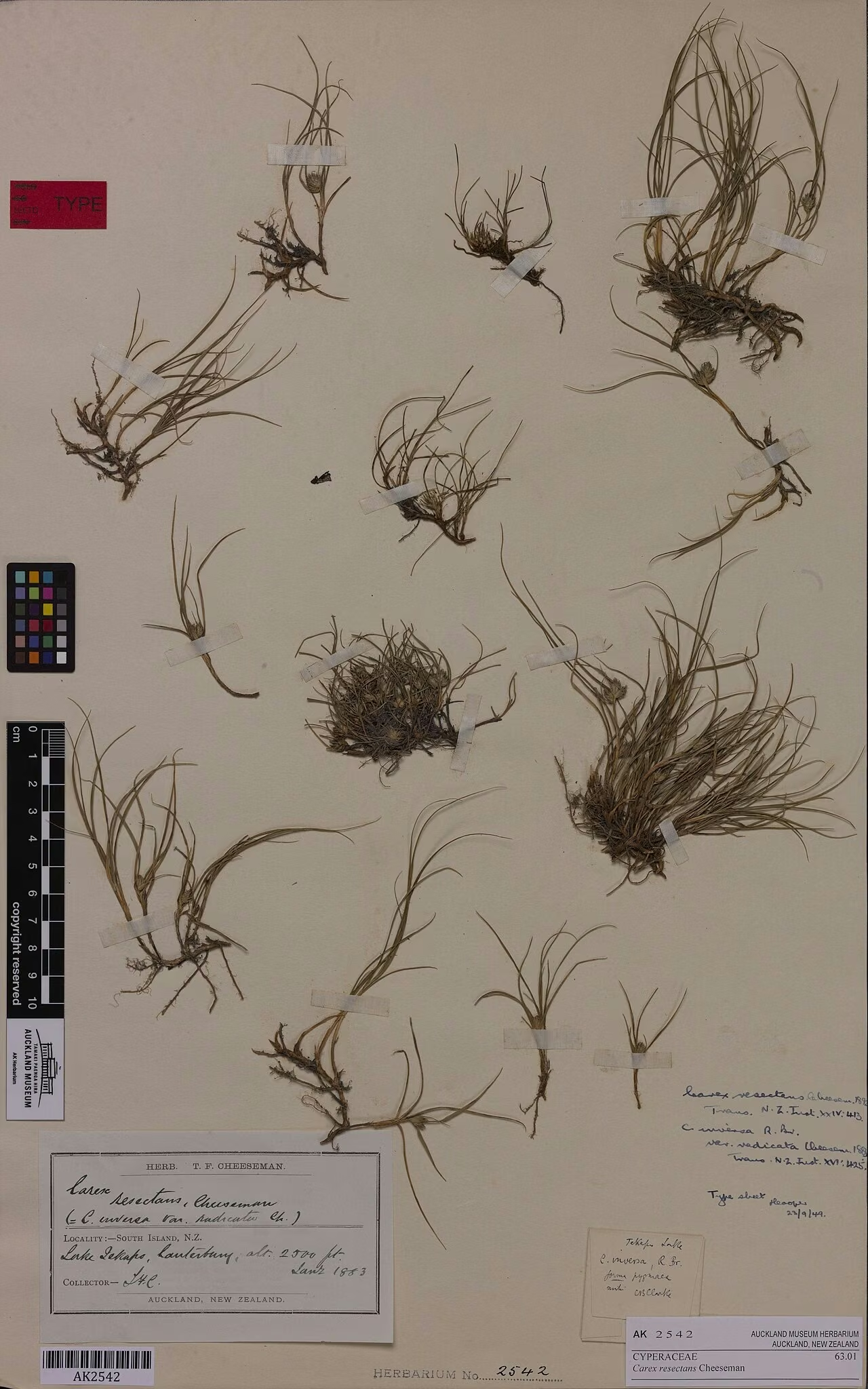
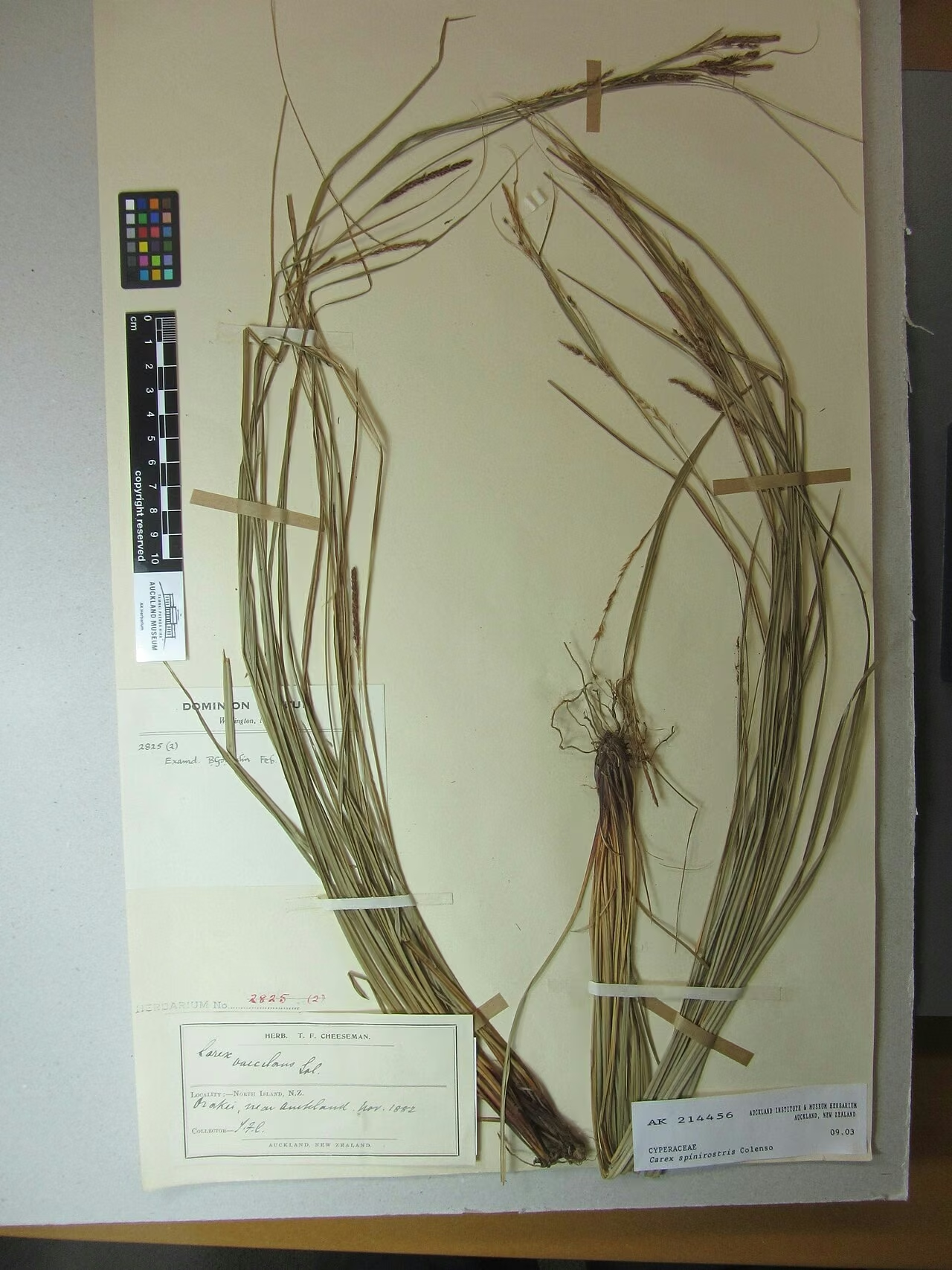
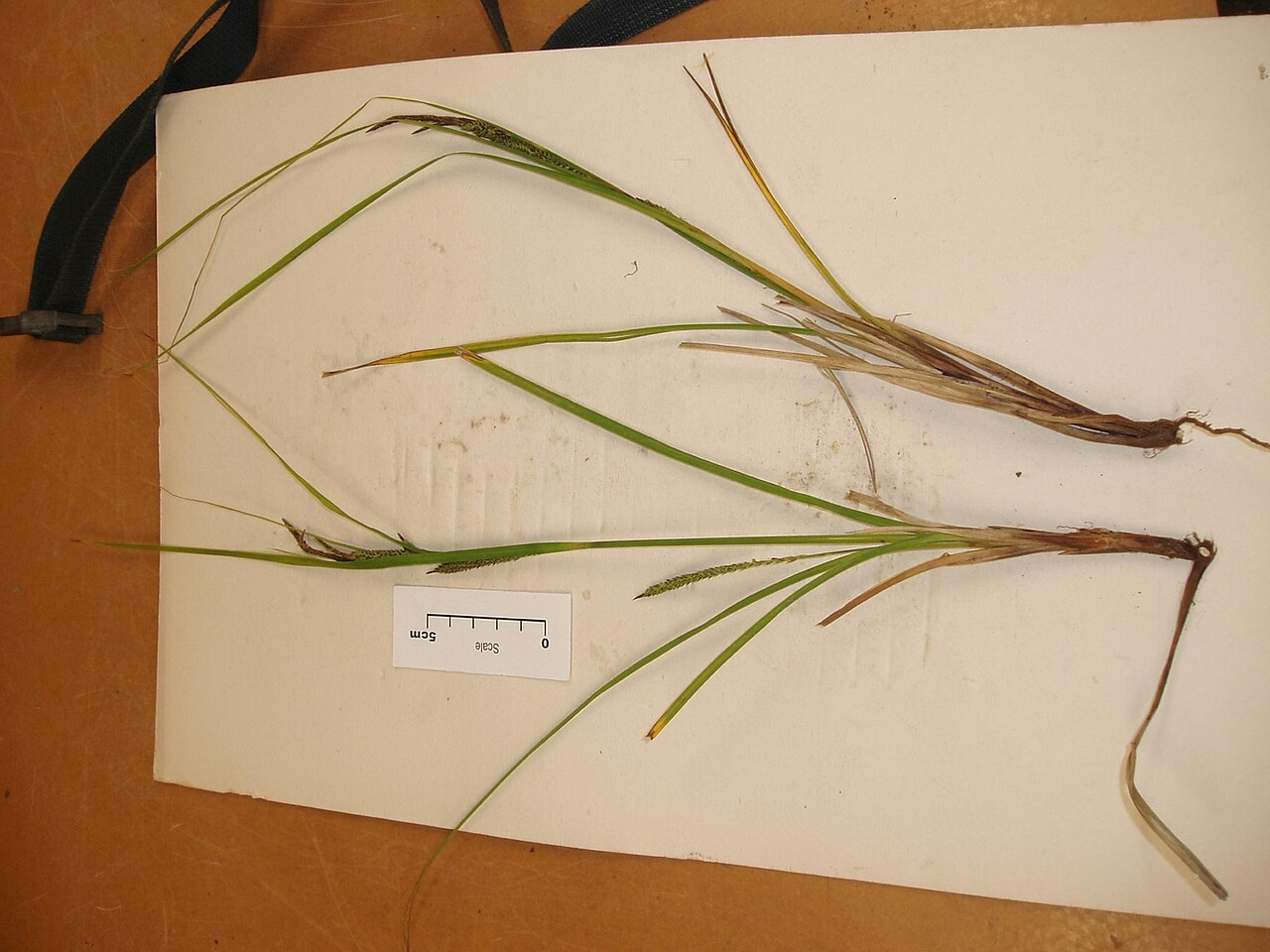
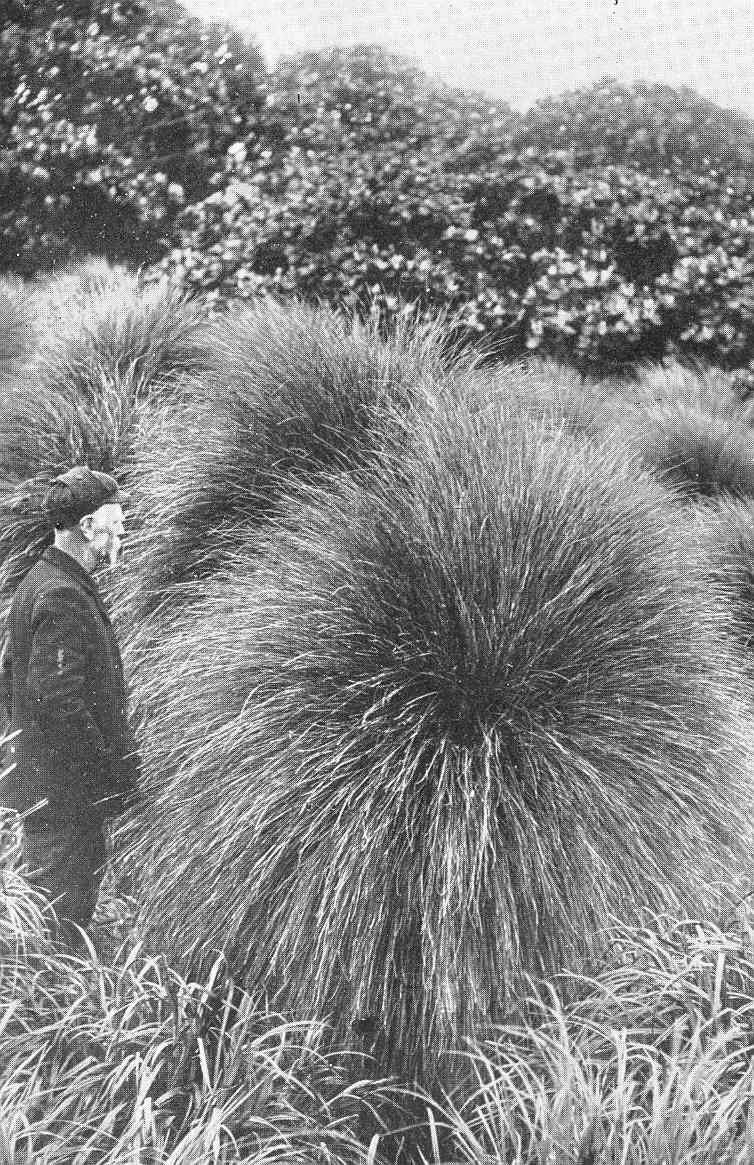
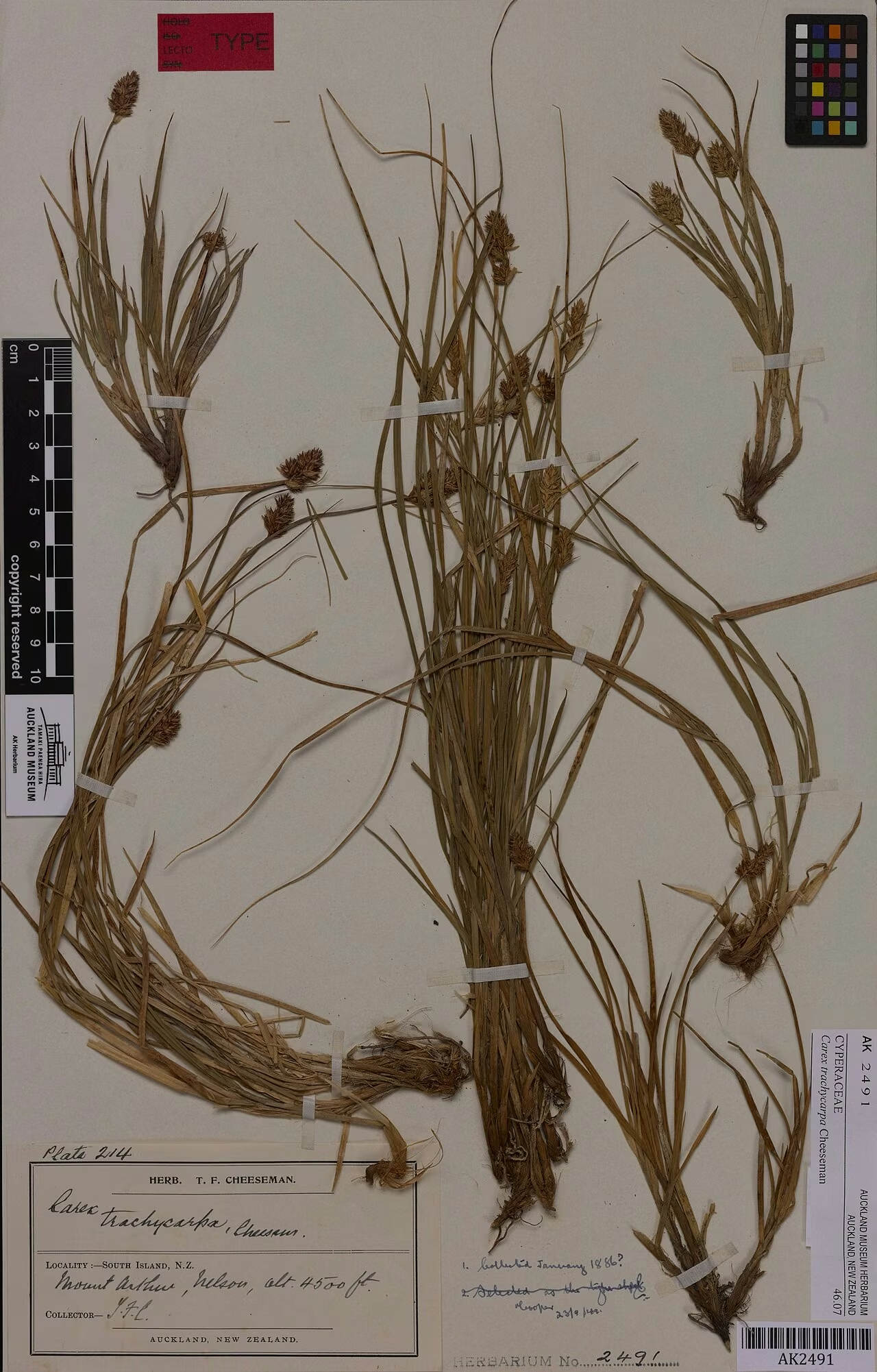
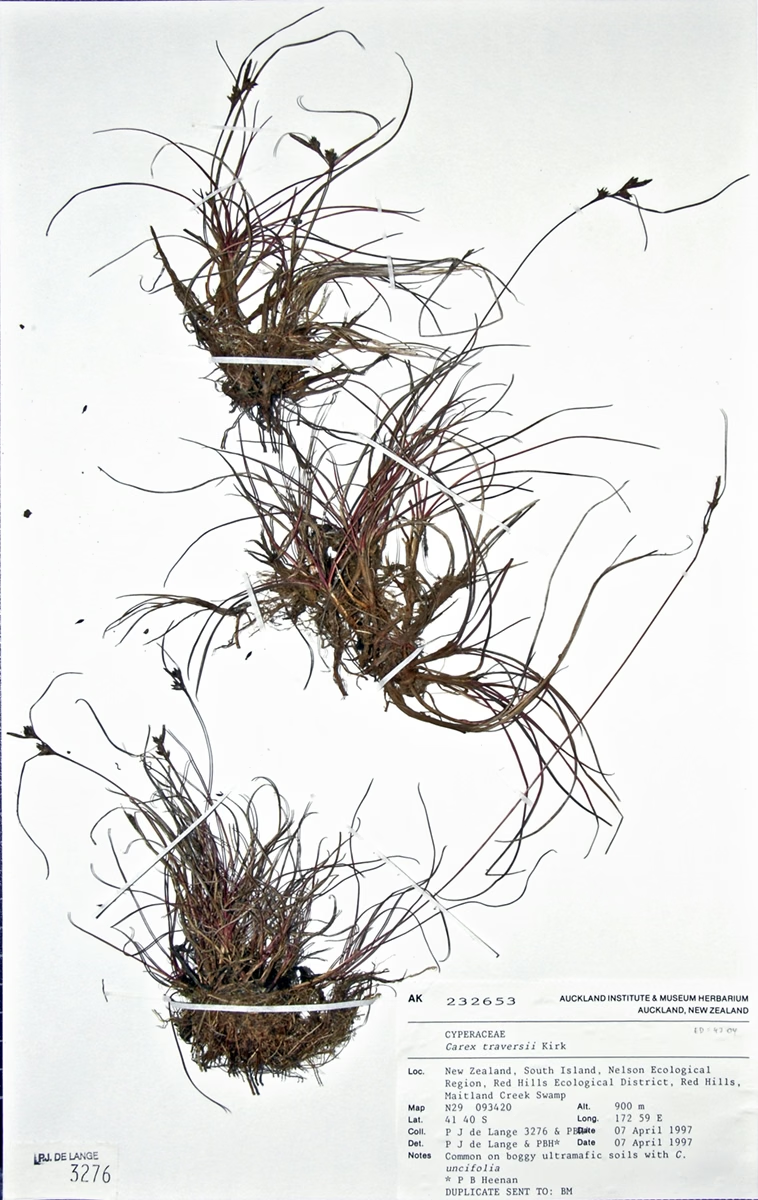
Explore other native plants that share similar characteristics or habitats with Slender Wine Sedge (Carex tenuiculmis), offering further insights into New Zealand's diverse flora. These related species provide context and opportunities for complementary planting in your garden.
Plant Conservation
Carex tenuiculmis has been ranked At Risk - Declining since 2009, and in 2023 with the qualifiers Sparse, Data Poor Size and Data Poor Trend. It is Regionally Endangered in Otago.
NZPCN notes that surveys have found additional populations in secure locations, but some, especially in northern Canterbury, are at risk from development. Protecting wetlands and stream margins, and keeping garden plants from being used in place of local wild seed in restoration, help conserve its natural populations.
Frequently Asked Questions
How is Carex tenuiculmis different from Carex secta?
Carex tenuiculmis forms tussocks without the raised trunk of pukio (Carex secta), has narrower wine-red rather than green leaves, shorter culms, and a spike-like inflorescence with few or no branches.
Where does slender wine sedge grow naturally?
It is found in the South Island, Stewart Island and the Chatham Islands (Rekohu and Pitt Island), beside slow-flowing streams, lake margins, tarns, ponds and associated wetlands.
Is Carex tenuiculmis drought tolerant?
NZPCN says it tolerates drought but grows less vigorously in dry settings. It performs best in a sunny, permanently damp position.
Why is slender wine sedge declining in the wild?
Many of its lowland wetland habitats have been lost, and NZPCN notes that some populations, especially in northern Canterbury, are at risk from development.
Sources and Further Reading
The botanical, growing, and conservation details for Slender Wine Sedge (Carex tenuiculmis) on this page draw on the New Zealand plant references below. Consult them for full technical records and the latest distribution data.