Southern Cutty Grass
Carex ternaria
Last updated:
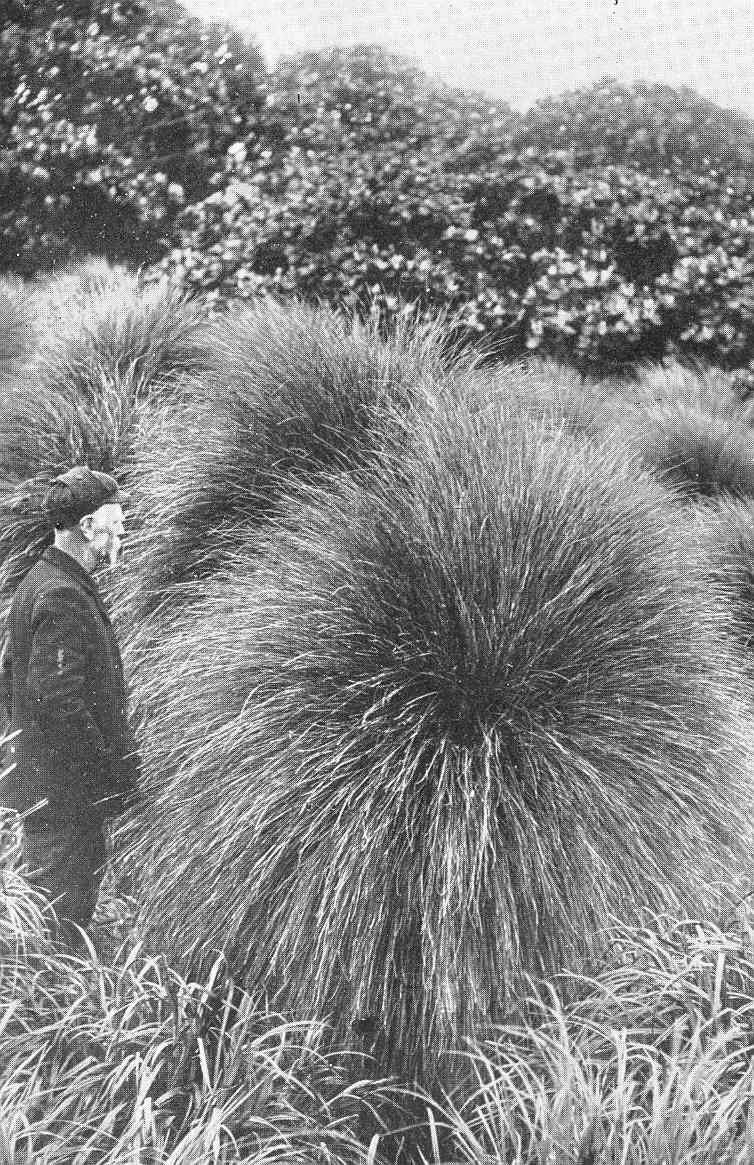
Southern cutty grass (Carex ternaria), also known as rautahi, is a large, robust, rhizomatous sedge endemic to New Zealand's outlying islands: the Chatham, Antipodes and Auckland Islands. It regularly grows over 2 m tall and can reach 3 m, with harshly rough, three-angled stems, dark green leaves up to 17 mm wide and large red-brown spikes with conspicuously awned glumes. It is widespread along streams, lakes and ponds, in seepages and flushes and around ephemeral pools. Ranked At Risk - Declining, it is occasionally sold by mainland nurseries, where it is often hard to separate from its close relatives. Explore more native grasses and flaxes in our native plant guide.
Plant Description
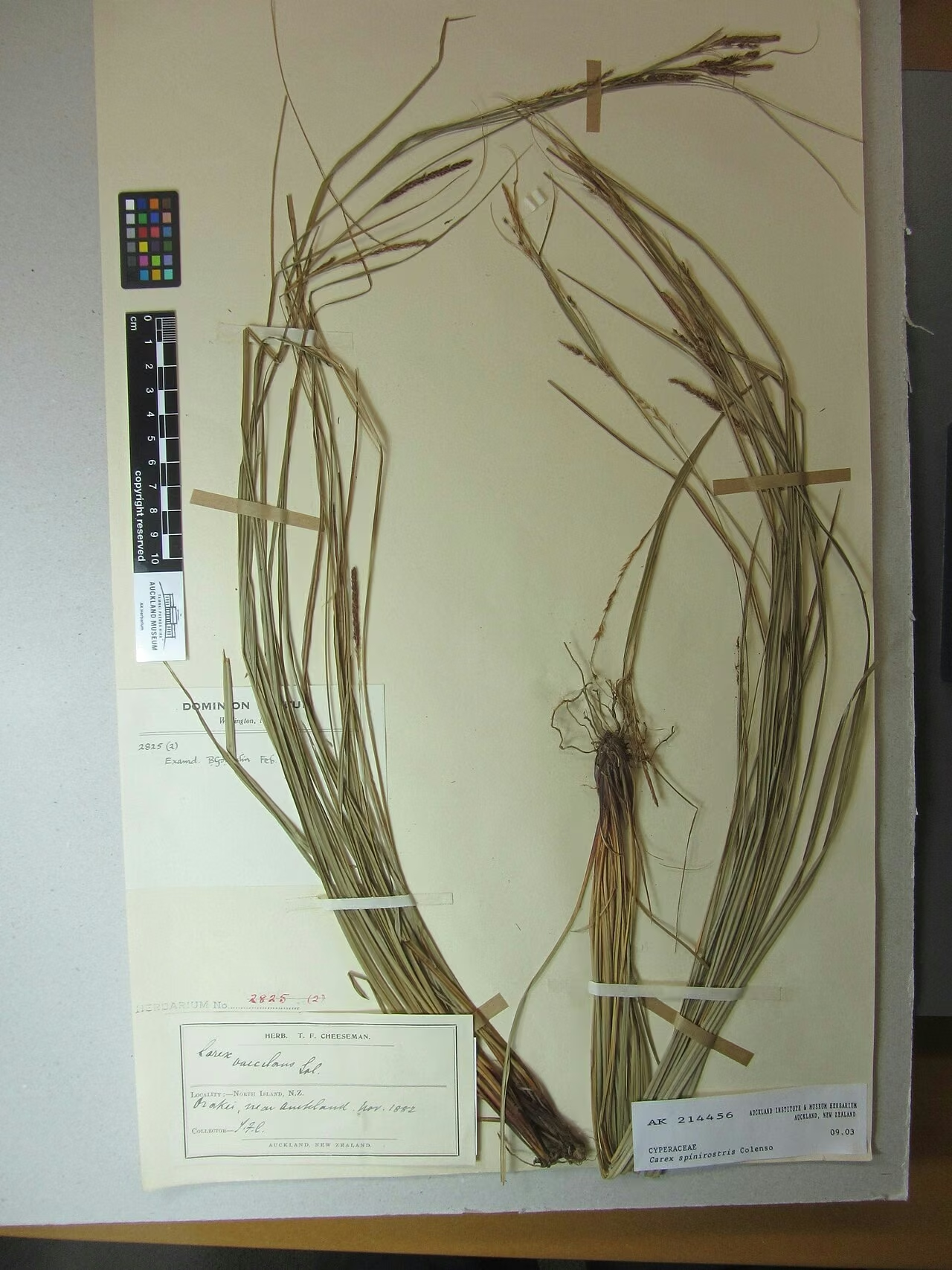
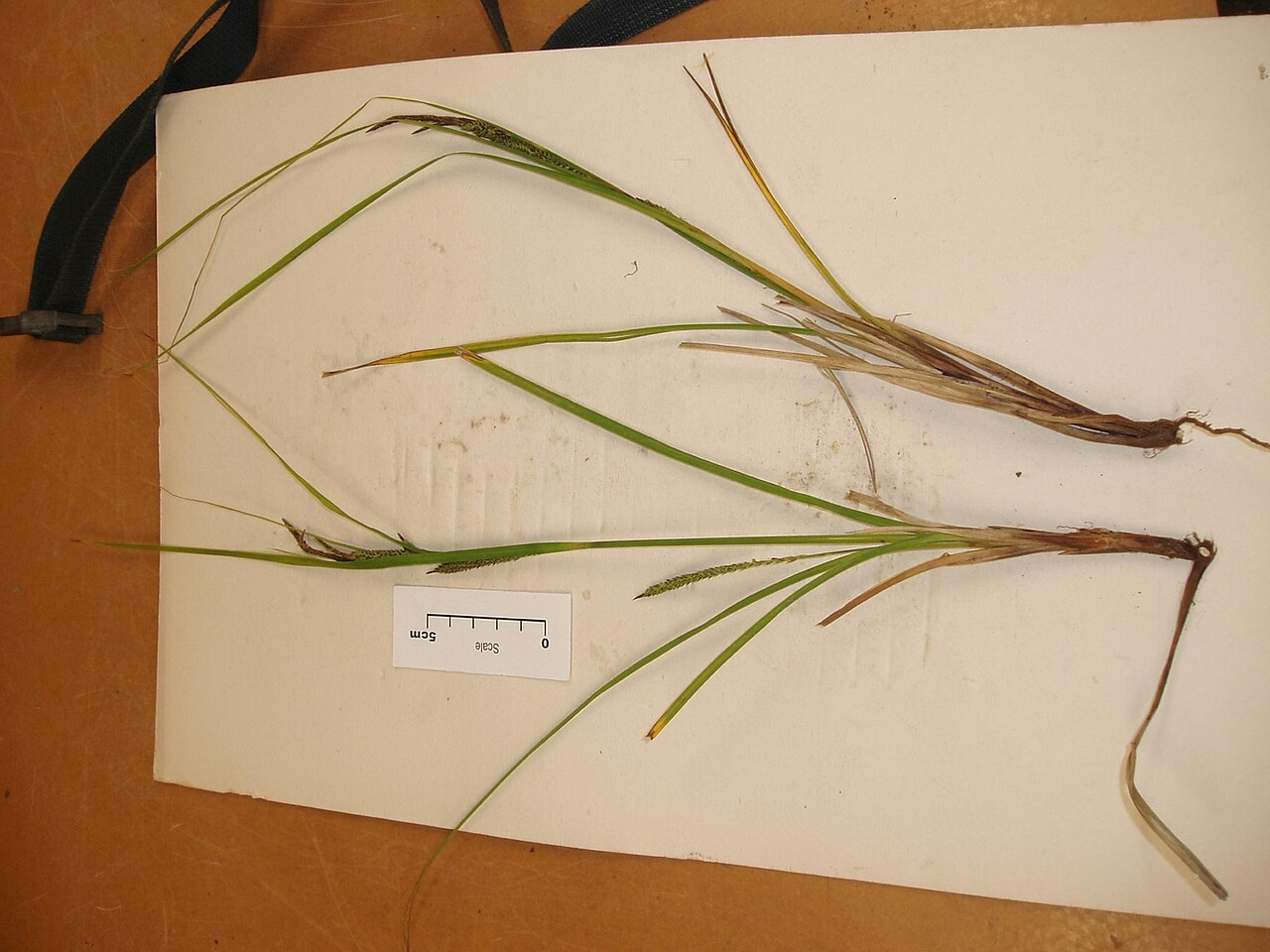
Carex ternaria is a robust, rhizomatous sedge. Its culms are 0.3 to 3 m tall and 3 to 5 mm wide, sharply three-angled and harshly rough, with red-brown basal sheaths. The leaves are longer than the culms, up to 3.2 m long and 4 to 17 mm wide, double-folded, with finely rough margins and keel.
There are 7 to 18 distant spikes, 10 to 80 mm long. The upper 2 to 7 spikes are male, with long-awned glumes, and the lower ones are female, often arranged in twos or threes and red-brown in colour. The utricles are about 2 to 3 mm long and 1.5 to 2 mm wide, plano-convex to biconvex and elliptic-obovoid, with only a minimal beak. Each flower has two stigmas, and the nut is 1.5 to 2 mm long, obovoid, lustrous and brown.
In its natural range it cannot be confused with any other sedge, because its closest relatives, Carex coriacea, Carex geminata and Carex lessoniana, do not grow there. In cultivation it is told from them by its much greater height, regularly over 2 m, its much larger spikes and its conspicuously awned glumes, although nursery plants are not always clearly distinct.
Quick Facts
| Scientific Name | Carex ternaria |
|---|---|
| Height | 1.8-3 m |
| Spread | Spreading clumps via rhizomes, 1 m or more across |
| Water Needs | High; permanently damp soil |
| Light | Full sun to light shade |
| Frost Tolerance | Moderate; cool subantarctic and Chatham climates |
| Salt Tolerance | Not documented; grows on oceanic islands but in freshwater habitats |
| Growth Rate | Fast in wet ground |
| Lifespan | Perennial |
Climate Best Suited to
Suits cool, wet, windy oceanic climates such as those of the Chatham Islands and the subantarctic Auckland and Antipodes Islands. On the mainland it grows best where summers are mild and the soil never dries.
Regional Suitability
| City | Climate Suitability |
|---|---|
| Auckland | Medium |
| Wellington | High |
| Christchurch | Medium |
| Dunedin | High |
Plant Habitat
Carex ternaria is endemic to New Zealand's outlying island groups: the Chatham Islands, the Antipodes Islands and the Auckland Islands. It does not occur naturally on the main islands of New Zealand.
It is widespread along stream, lake and pond margins and in seepages, flushes and around shallow ephemeral pools. It usually grows in open, well-lit places, but also fringes streams running through successional forest.
Growing Requirements
Soil Requirements
NZPCN notes a preference for permanently damp, acidic soil, matching the peaty wetlands of its island homes.
- Permanently damp to wet soil
- Acidic, peaty or organic soils
- Avoid dry or limy ground
Light Requirements
It usually grows in open, well-lit sites but also tolerates the light shade of streamside forest.
- Full sun for the most vigorous growth
- Light shade along stream edges
Water Requirements
Constant moisture is essential.
- Plant at pond or stream margins, or in wet hollows
- Water heavily in dry weather if grown away from water
Planting and Establishing
Plant in autumn or spring into permanently damp, acidic soil with plenty of room, as clumps become very large and spread by rhizomes. Allow at least 1 to 1.5 m between plants.
Wear gloves and long sleeves when handling it, because the culms and leaf edges are rough. On the mainland, keep it away from natural wetlands where it could mix with or be mistaken for local Carex species.
Ecological Role
Carex ternaria is a major sedge of freshwater margins on the Chatham, Antipodes and Auckland Islands, where its tall clumps fringe streams, ponds and seepages and help hold wet ground together.
It is wind-pollinated. The insects, birds and other animals that use it on these islands are not documented in the sources consulted, though its large clumps provide shelter in otherwise exposed island landscapes.
Uses & Significance
Garden Uses
A bold, architectural sedge for large wet sites rather than small gardens.
- Large pond and lake margins
- Wet hollows and stormwater basins
- Chatham Islands wetland restoration using local seed
Ecological Value
It is a characteristic plant of freshwater margins on New Zealand's outlying islands, including the subantarctic Auckland and Antipodes Islands.
- Endemic to three remote island groups
- Binds stream and pond banks
- Forms tall cover in exposed island wetlands
Landscaping Uses
With its great height, dark green foliage and large red-brown spikes, southern cutty grass makes a dramatic screen or backdrop beside large bodies of water. It is out of scale in small gardens.
Use it as a single large clump or a loose line on the far side of a pond, with lower sedges and rushes in front.
Seasonal Care Calendar
Spring
Flowering begins in October, with tall culms carrying awned male spikes above red-brown female spikes.
- Divide large clumps
- Plant new stock
Summer
Flowering finishes in December, when fruiting begins.
- Keep the soil wet
- Watch for spreading rhizomes
Autumn
Fruit continues to ripen through autumn.
- Collect and sow fresh seed
- Remove old flowering culms if untidy
Winter
Fruiting can continue as late as July, and clumps remain evergreen.
- Little care needed
- Avoid planting in frost-prone dry sites
When to Prune and How Much
Remove dead leaves and spent culms in late winter, wearing gloves. Large clumps can be cut back to about 30 cm in early spring if they become untidy, and will regrow strongly in wet ground.
Dig out spreading rhizomes at the edge of the clump if it is growing beyond its allotted space.
How to Grow Southern Cutty Grass
NZPCN describes Carex ternaria as easily grown from fresh seed and by the division of whole plants, and notes that it prefers a permanently damp, acidic soil. Because it is a large, rhizomatous plant, division is quick and reliable. For Chatham Islands restoration projects, raise plants from locally collected seed. On the mainland, be aware that plants sold as C. ternaria are not always clearly distinct from C. geminata, C. coriacea or C. lessoniana, so check for its large spikes and awned glumes before using a plant as a propagation source. Raised plants grow quickly in wet conditions and soon need large containers or planting out.
From Seed
Fruiting runs from December to July. Collect seed when the lustrous brown nuts are mature.
- Cut ripe spikes and dry them in a paper bag
- Rub out the utricles and sow on a moist, acidic seed mix
- Cover lightly with fine mix
- Keep the tray constantly wet in a bright position
- Prick out seedlings into deep pots
- Grow on in wet conditions until robust enough to plant
By Division of Rhizomes
Mature clumps can be split with a sharp spade. Wear gloves, as the leaves and culms are rough.
- Lift a section from the edge of a clump in spring
- Cut it into pieces with rhizome, roots and several shoots
- Cut the leaves back hard to reduce water loss
- Replant directly into wet ground and keep moist until established
Pests & Diseases
No pests or diseases specific to Carex ternaria are recorded in the sources consulted. Robust cutty grasses are generally untroubled in cultivation.
Clumps that dry out in cultivation tend to brown at the leaf tips and lose vigour, so moisture is the main thing to watch rather than pests.
Cultural Significance
NZPCN records the name rautahi for Carex ternaria, and Flora of New Zealand lists the vernacular name toetoe rautahi. No specific traditional Māori or Moriori use of this species is documented in the sources consulted.
The name was published by Francis Boott in 1844, based on a name coined by Georg Forster, and Flora of New Zealand cites it as Carex ternaria G.Forst. ex Boott. The epithet ternaria refers to things in threes. The name Carex martinii, published by Donald Petrie, is treated as an illegitimate synonym.
Bonus Tip
If you buy southern cutty grass for a large pond, check it when it first flowers. True Carex ternaria should be clearly taller than local cutty grasses, with big red-brown spikes and long awns on the glumes of the upper male spikes; if not, you may have Carex geminata or a relative instead.
Related Plants
Explore other native plants that share similar characteristics or habitats with Southern Cutty Grass (Carex ternaria), offering further insights into New Zealand's diverse flora. These related species provide context and opportunities for complementary planting in your garden.
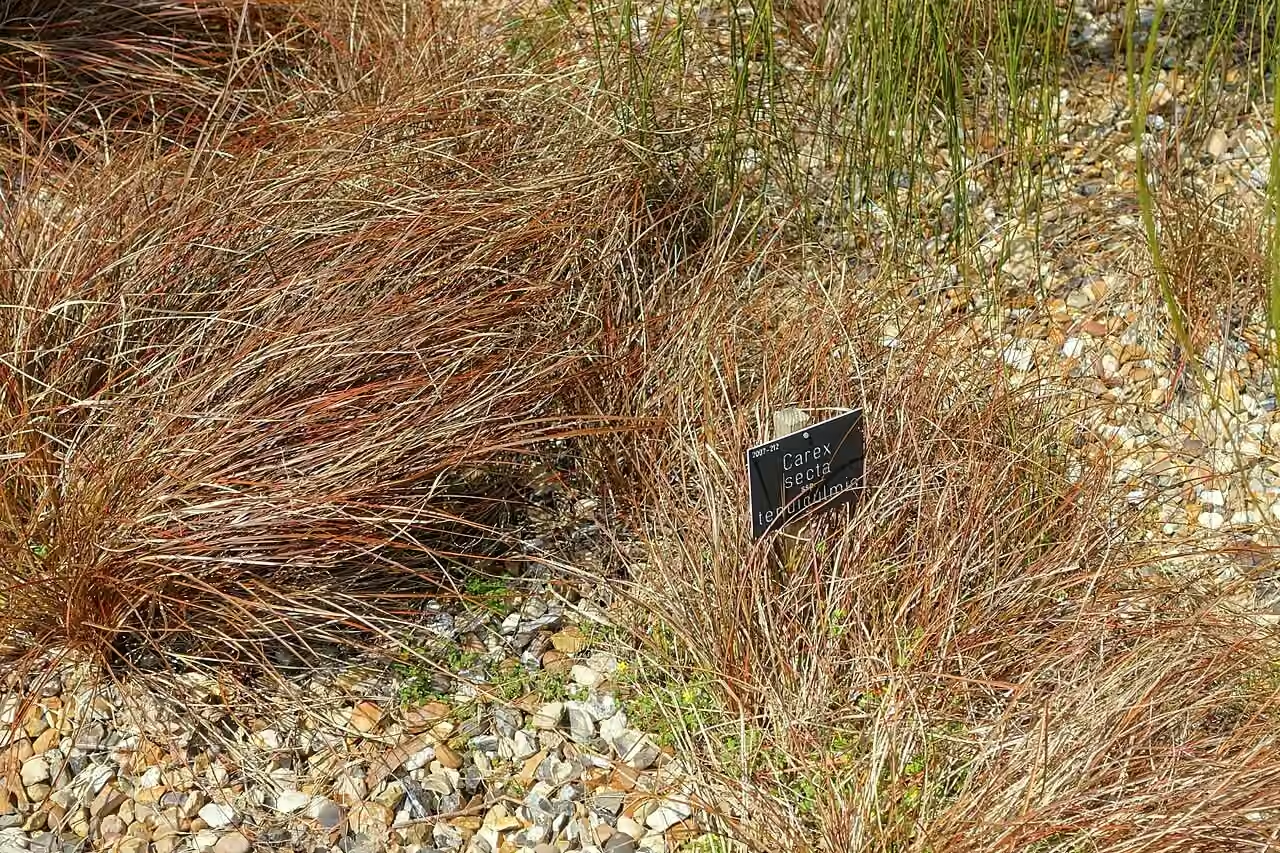
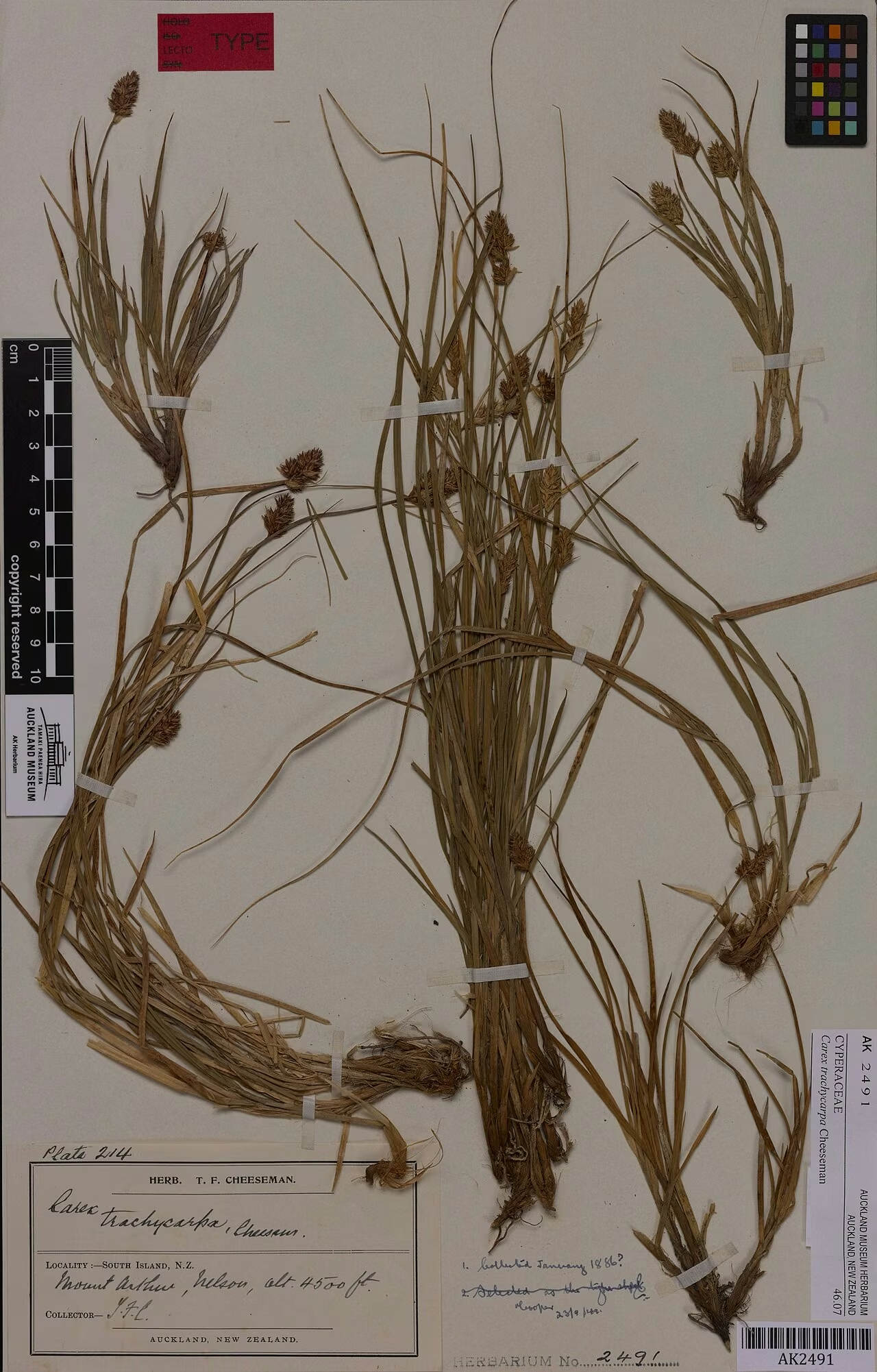
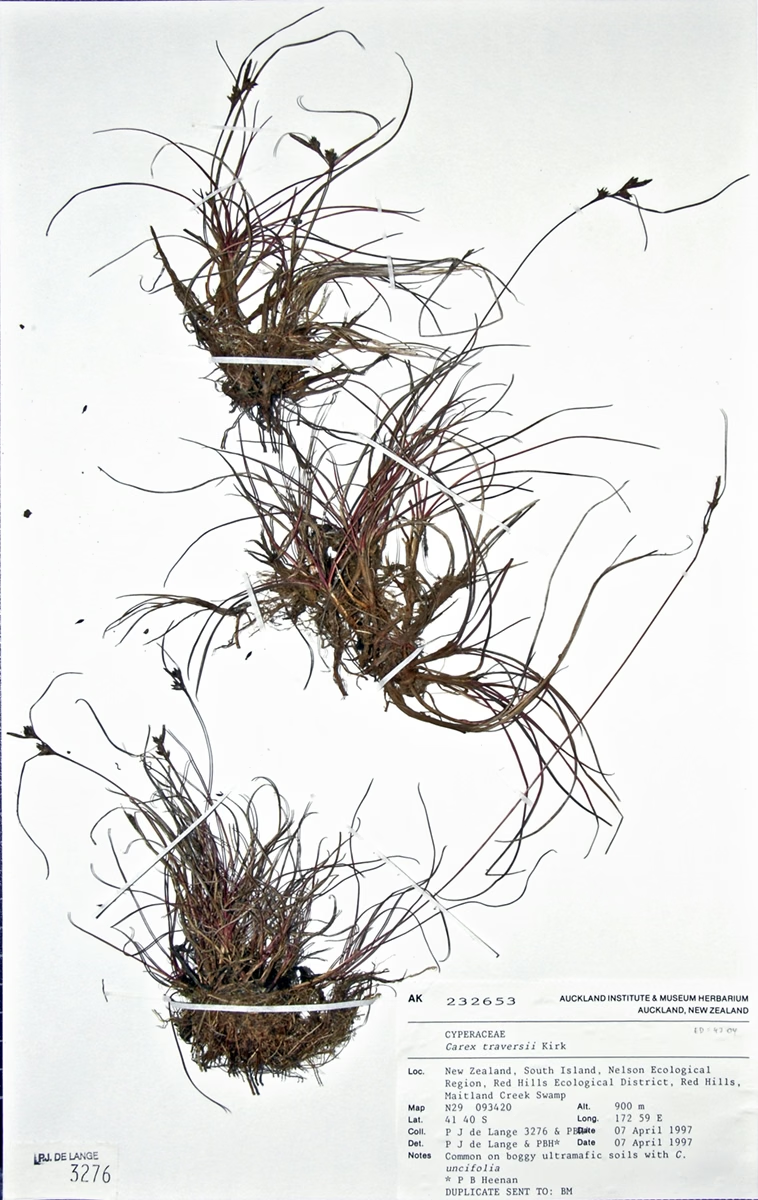
Plant Conservation
Carex ternaria is ranked At Risk - Declining (2023), with the qualifiers Data Poor Recognition, Data Poor Size, Data Poor Trend and Range Restricted. It was previously listed as Not Threatened in 2013 and 2017.
Its range is restricted to the Chatham, Antipodes and Auckland Islands. The Auckland and Antipodes Islands are protected nature reserves, while on the Chatham Islands protecting wetlands and stream margins from drainage and stock helps conserve it.
Frequently Asked Questions
Where does Carex ternaria grow in the wild?
It is endemic to the Chatham, Antipodes and Auckland Islands, where it grows along stream, lake and pond margins, in seepages and flushes, and around shallow ephemeral pools.
How is Carex ternaria different from Carex geminata?
Carex ternaria is much taller, regularly over 2 m and up to 3 m, with much larger spikes and conspicuously awned glumes. In the wild the two never grow together.
Does southern cutty grass cut your hands?
Its culms are described as harshly rough and the leaf margins and keel are finely toothed, so like other cutty grasses it should be handled with gloves.
What soil does Carex ternaria need?
NZPCN says it prefers a permanently damp, acidic soil, and it is easily grown from fresh seed and by division of whole plants.
Sources and Further Reading
The botanical, growing, and conservation details for Southern Cutty Grass (Carex ternaria) on this page draw on the New Zealand plant references below. Consult them for full technical records and the latest distribution data.