Sedge
Carex rubicunda
Last updated:
Carex rubicunda is a diminutive sedge endemic to New Zealand that forms small, stiff, reddish brown tufts usually less than 10 cm high. Its rigid red to red-brown leaves are far longer than the flowering stems and twist and curl at the tips when dry, while the pale yellow-brown spikes are mostly hidden among the foliage. It grows on the margins of montane to subalpine lakes, tarns and ponds and in ephemeral wetlands of the central North Island and the South Island. Ranked At Risk - Declining, it is threatened locally by trampling, vehicles and wetland weeds. Explore more native grasses and flaxes in our native plant guide.
Plant Description
Carex rubicunda forms small, stiff tufts that are reddish brown overall. The culms are 10 to 150 mm long and 0.5 to 1 mm wide, smooth and round, with light brown to grey-brown basal sheaths. The leaves are much longer than the culms, 30 to 300 mm long and 0.5 to 1 mm wide, rigid, red to red-brown and plano-convex, and their tips twist and curl when dry.
There are usually 3 or 4 spikes, occasionally up to 6, pale yellow-brown and shortly stalked to almost unstalked, forming an inflorescence about 1 to 1.5 cm long that is usually hidden among the leaves. The terminal spike is male, the next one down female or mixed, and the rest female. The utricles are tiny, 1.5 to 2 mm long, obovoid and smooth or faintly nerved, with a minute beak about 0.3 mm long. Each flower has two stigmas, and the nut is about 1 mm long and pale grey-brown.
It resembles Carex petriei, under which it was once treated as a variety, but differs in its red, curly-tipped leaves, two stigmas and scarcely beaked utricles. It is separated from Carex cirrhosa by its smaller stature and its utricles with minute rather than distinct beaks.
Quick Facts
| Scientific Name | Carex rubicunda |
|---|---|
| Height | Usually under 0.1 m |
| Spread | Small tufts about 0.1-0.2 m across |
| Water Needs | High; seasonally flooded wetland margins |
| Light | Full sun |
| Frost Tolerance | High; montane to subalpine |
| Salt Tolerance | Low; an inland freshwater species |
| Growth Rate | Slow |
| Lifespan | Perennial |
Climate Best Suited to
Suits cold montane and subalpine climates with frosty winters and seasonal flooding of wetland margins. It is poorly suited to warm, humid lowland gardens.
Regional Suitability
| City | Climate Suitability |
|---|---|
| Auckland | Low |
| Wellington | Low |
| Christchurch | Medium |
| Dunedin | Medium |
Plant Habitat
Carex rubicunda is endemic to New Zealand, but its exact distribution is unclear. In the North Island it is known from swamps on the southern Kaingaroa Plain, the Kaimanawa and Ruahine Ranges, and Tongariro National Park. South Island populations are recorded at lakes Te Anau and Manapouri in Fiordland, Lake Lyndon in Canterbury and Lake Wanaka in Otago.
It is mainly a plant of montane to subalpine lake, tarn and pond margins and of ephemeral wetlands, typically in places that are flooded for part of the year and exposed for the rest. Its wetland indicator status is Facultative Wetland.
Growing Requirements
Soil Requirements
It grows on the damp, often silty or gravelly turf of lake and tarn margins that are flooded seasonally.
- Moist, low-fertility mineral soil or silt
- Tolerates periodic inundation
- In pots, use a gritty mix kept damp
Light Requirements
It is a plant of open turf on wetland margins where taller plants are absent.
- Full sun
- Easily shaded out by rushes and weedy grasses
Water Requirements
Moisture is essential, and it copes with fluctuating water levels.
- Stand pots in a shallow saucer of water in summer
- Tolerates brief flooding
Planting and Establishing
Because it is so small, NZPCN recommends growing Carex rubicunda in pots in an alpine house or in a rockery. A shallow pan of gritty, moisture-retentive mix placed in full sun is ideal.
In a garden it can be planted at the damp margin of a small pond or bog garden, as long as taller plants are kept from overgrowing it.
Ecological Role
Carex rubicunda is wind-pollinated and grows in turf communities on seasonally flooded wetland margins, where fluctuating water levels limit taller competitors. Its small size makes it dependent on these open conditions.
Its relationships with insects and seed dispersers have not been documented in the sources consulted.
Uses & Significance
Garden Uses
A collector's plant for alpine house pots, troughs and the margins of small ponds.
- Alpine house pans and troughs
- Bog garden or pond margins
- Restoration of montane ephemeral wetlands
Ecological Value
It is a member of the specialised turf flora of montane lake margins and ephemeral wetlands, habitats that support many uncommon plants.
- Part of threatened ephemeral wetland communities
- An endemic sedge with scattered, isolated populations
- Helps bind fine sediment on lake shores
Landscaping Uses
Its red-brown, curling foliage gives a striking colour and texture contrast in a trough alongside green cushion and turf plants. It is too small to have any impact in a larger landscape.
Grouping several plants in a shallow bowl creates a miniature wetland scene that shows off its colour well.
Seasonal Care Calendar
Spring
Flowering begins in October, with the small spikes tucked among the leaves.
- Divide crowded pots
- Keep the mix moist
Summer
Flowering continues to January and fruit develops.
- Do not let pots dry out
- Collect ripe seed
Autumn
Fruit can be found over a long period, from October through to August.
- Sow fresh seed
- Remove weeds from around plants
Winter
Plants persist through cold, frosty conditions and may be flooded in the wild.
- No protection needed from frost
- Avoid stagnant water in pots
When to Prune and How Much
No pruning is required. Remove dead leaves with tweezers if a pot-grown tuft looks untidy.
Do not cut the curling leaf tips, as they are a natural and attractive feature of the plant.
How to Grow Sedge
NZPCN describes Carex rubicunda as easily grown from the division of whole plants and from fresh seed. Because it is ranked At Risk - Declining and its wild populations are small and scattered, propagation should start from plants already in cultivation or from seed collected with appropriate permission. Its long fruiting period means seed can be found for much of the year, and young plants grow on well in a moist, sunny pot. Seedlings and divisions can be grown together in a shallow pan, which also makes an attractive display once the red foliage colours up in full sun. Keep a few plants in reserve, as small pots can dry out quickly in hot weather.
From Seed
The tiny utricles are only 1.5 to 2 mm long and sit among the leaves, so look carefully. Sow seed fresh for best results.
- Collect ripe yellow-brown spikes into a small envelope
- Sow on the surface of a moist, gritty seed mix
- Dust with fine grit and keep constantly damp
- Place in full light in a cool position
- Prick out seedlings into small pots once large enough to handle
- Grow on in a saucer of water during summer
By Division
Established tufts can be gently teased apart into smaller clumps, each with roots.
- Tip a mature plant out of its pot in spring
- Tease the tuft into two or three rooted pieces
- Repot into a gritty, moisture-retentive mix
- Keep damp and lightly shaded for a week, then return to full sun
Pests & Diseases
No insect pests or diseases are recorded for this species. In pots, the main risks are drying out and moss or liverwort smothering the small tufts.
In the wild, NZPCN identifies trampling by horses, vehicle traffic and invasive wetland weeds as local threats.
Cultural Significance
No traditional Māori name or use is recorded for Carex rubicunda in the sources consulted.
The epithet rubicunda is Latin for reddish or ruddy, describing the colour of the foliage. The plant was described by Donald Petrie and was later treated by Kükenthal as Carex petriei var. rubicunda before being restored to species rank. NZPCN featured it as Plant of the Month in May 2015.
Bonus Tip
If you have a small sunny pond or water bowl, Carex rubicunda makes a fascinating margin plant: as the water level drops in summer, its red curling leaves stand out against the exposed mud, mimicking the seasonal drawdown of the montane tarns where it grows wild.
Related Plants
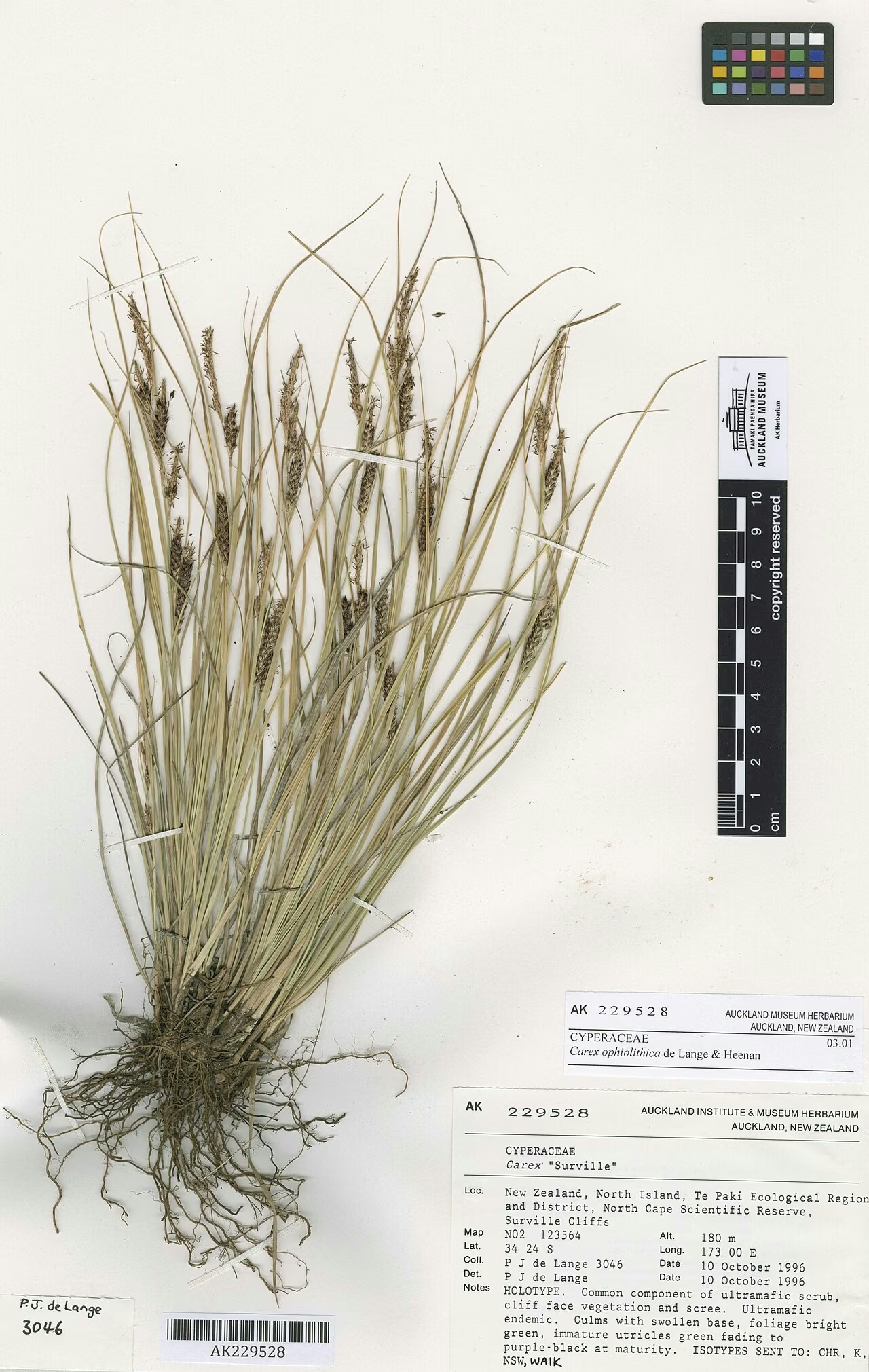
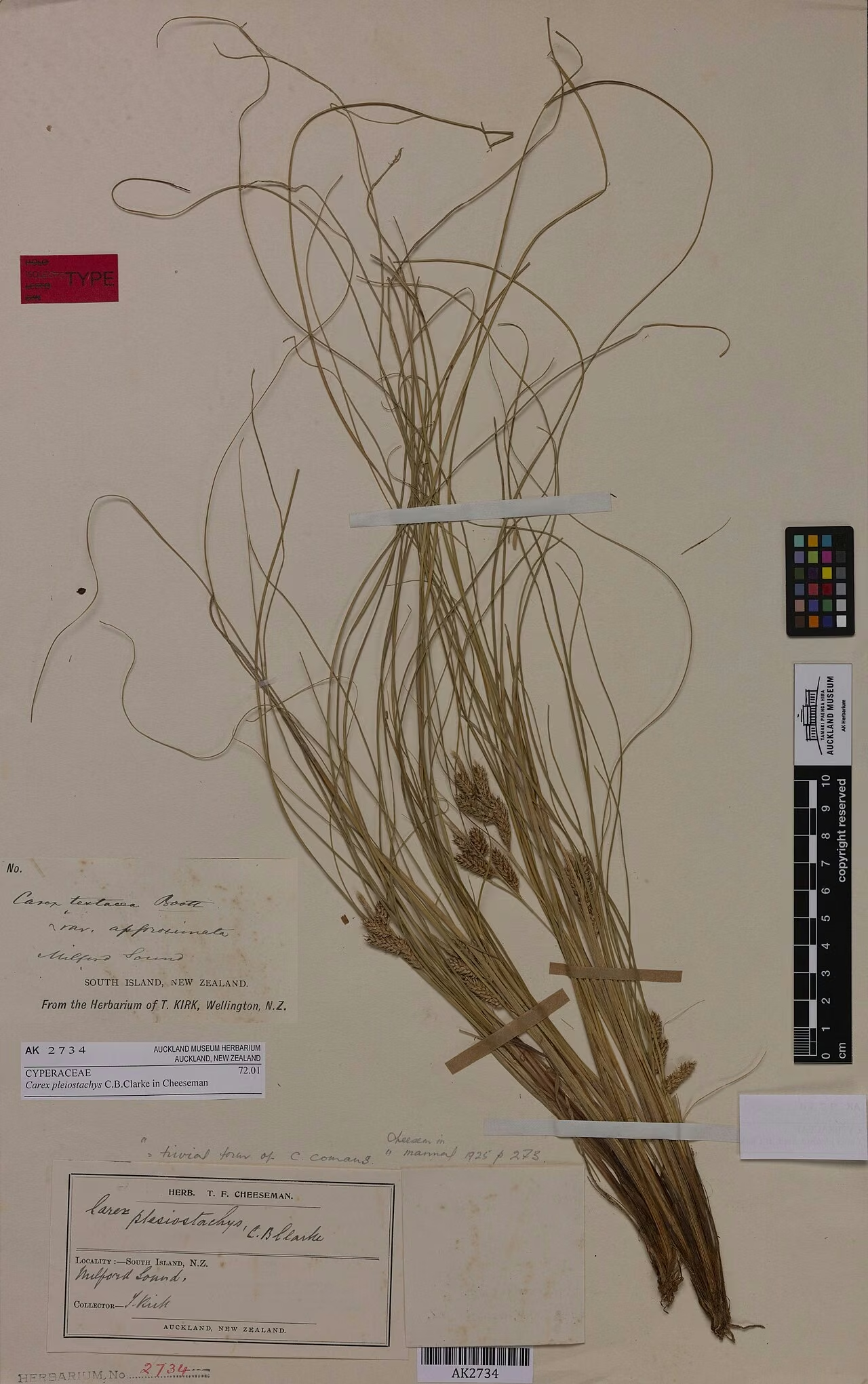
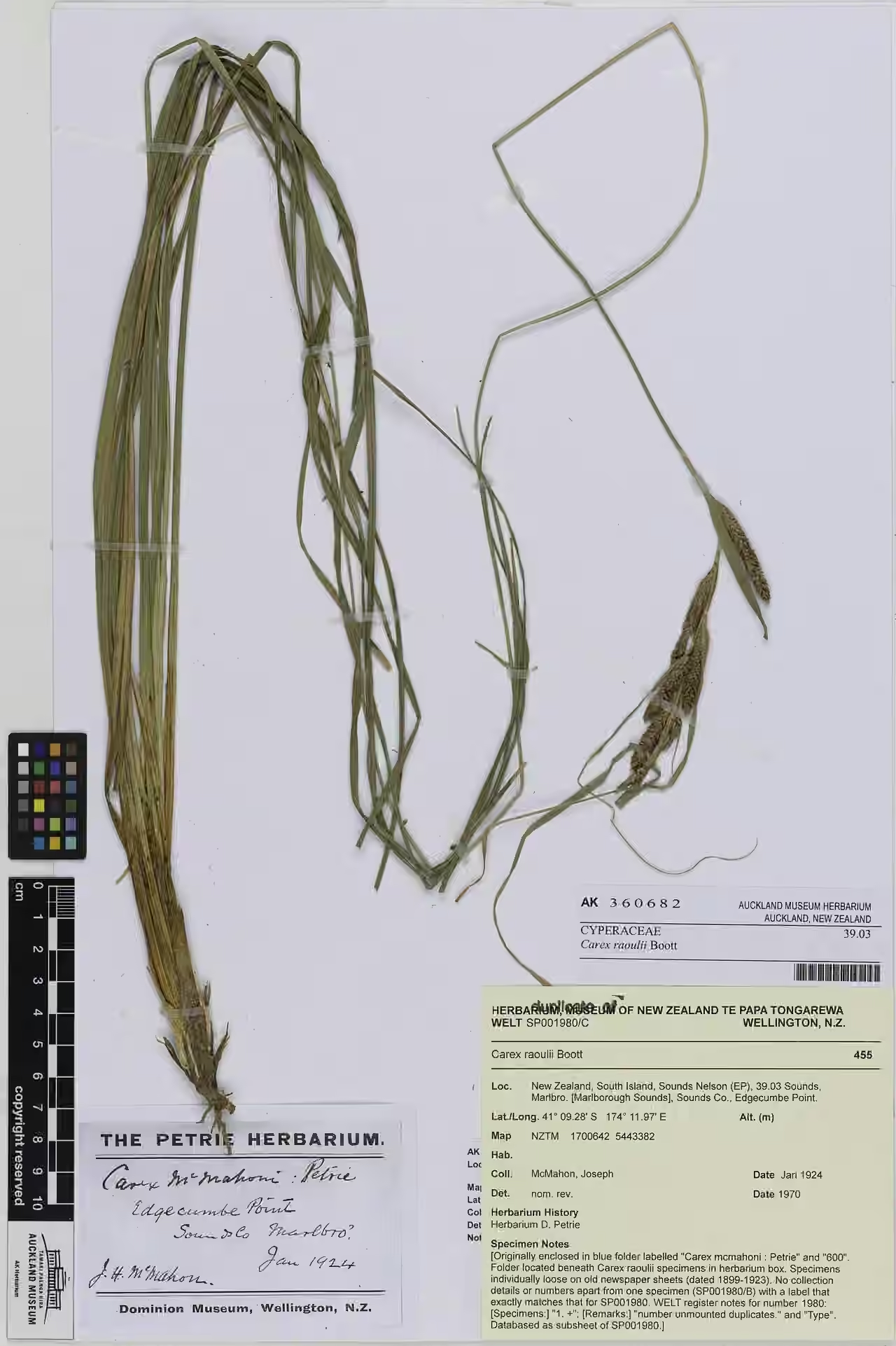
Explore other native plants that share similar characteristics or habitats with Sedge (Carex rubicunda), offering further insights into New Zealand's diverse flora. These related species provide context and opportunities for complementary planting in your garden.
Plant Conservation
Carex rubicunda is ranked At Risk - Declining (2023), with the qualifiers Data Poor Recognition, Data Poor Size, Data Poor Trend, Partial Decline and Range Restricted. It was ranked Threatened - Nationally Vulnerable in 2009, 2012 and 2017, and is Regionally Endangered in Otago.
Local populations are at risk from horse trampling, vehicle traffic and invasive wetland weeds. Fencing or rerouting tracks away from lake margins, controlling weeds and surveying for further populations are the main ways to help.
Frequently Asked Questions
Where does Carex rubicunda grow?
It grows on montane to subalpine lake, tarn and pond margins and in ephemeral wetlands, including the southern Kaingaroa Plain, Kaimanawa and Ruahine Ranges, Tongariro National Park, and lakes Te Anau, Manapouri, Lyndon and Wanaka.
How do you tell Carex rubicunda from Carex petriei?
Carex rubicunda has red, curly-tipped leaves, flowers with two stigmas rather than three, and utricles with only a minute beak about 0.3 mm long.
Why is Carex rubicunda declining?
Its small wetland populations are vulnerable to trampling by horses, vehicle traffic and invasion by weedy wetland plants, according to NZPCN.
Can Carex rubicunda be grown at home?
Yes. It is easily grown from division and fresh seed, and NZPCN suggests it is best kept in pots in an alpine house or in a rockery because of its tiny size.
Sources and Further Reading
The botanical, growing, and conservation details for Sedge (Carex rubicunda) on this page draw on the New Zealand plant references below. Consult them for full technical records and the latest distribution data.