Hook Sedge
Carex silvestris
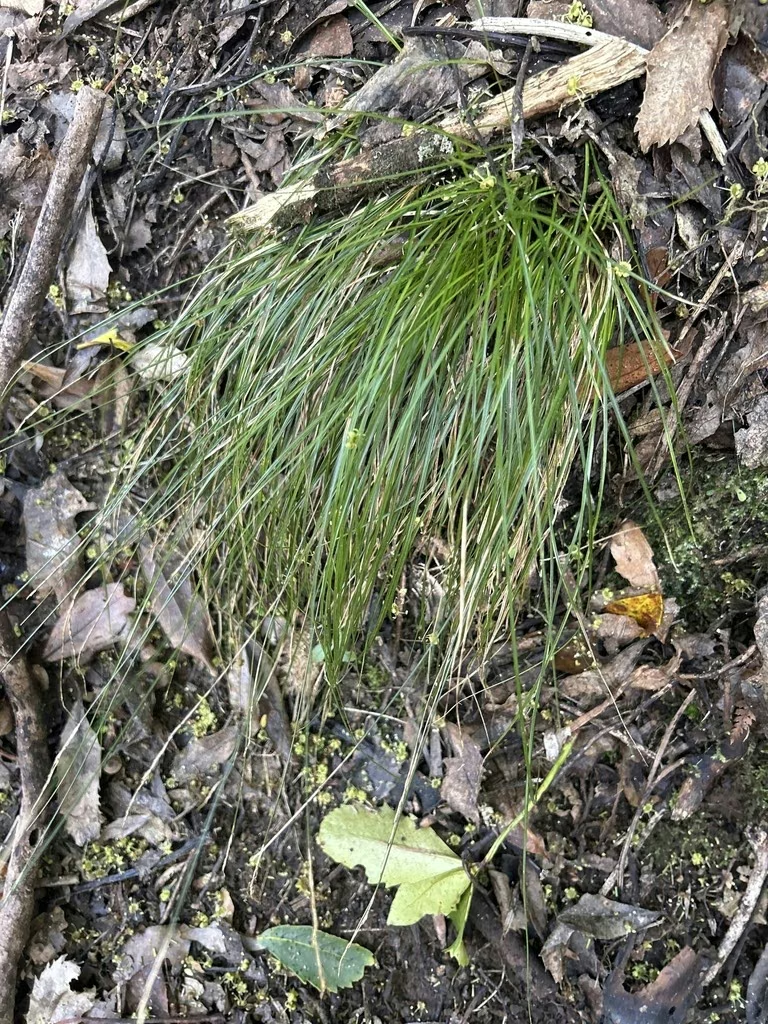
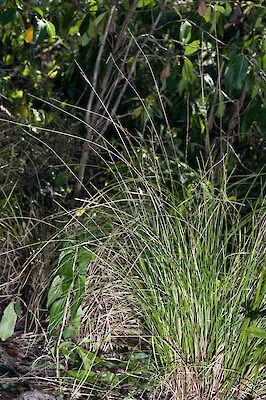
Carex silvestris, the forest hook sedge, is an endemic New Zealand sedge that forms dense, bright-green tufts in lowland to upper montane forest. Plants form dense tufts with hairless stems 200-400 mm tall.
Identification
Plants form dense tufts with hairless stems 200-400 mm tall. Each stem carries four or five bright-green leaves, 0.5-2 mm wide, tapering to a long threadlike tip and rough towards the tip.
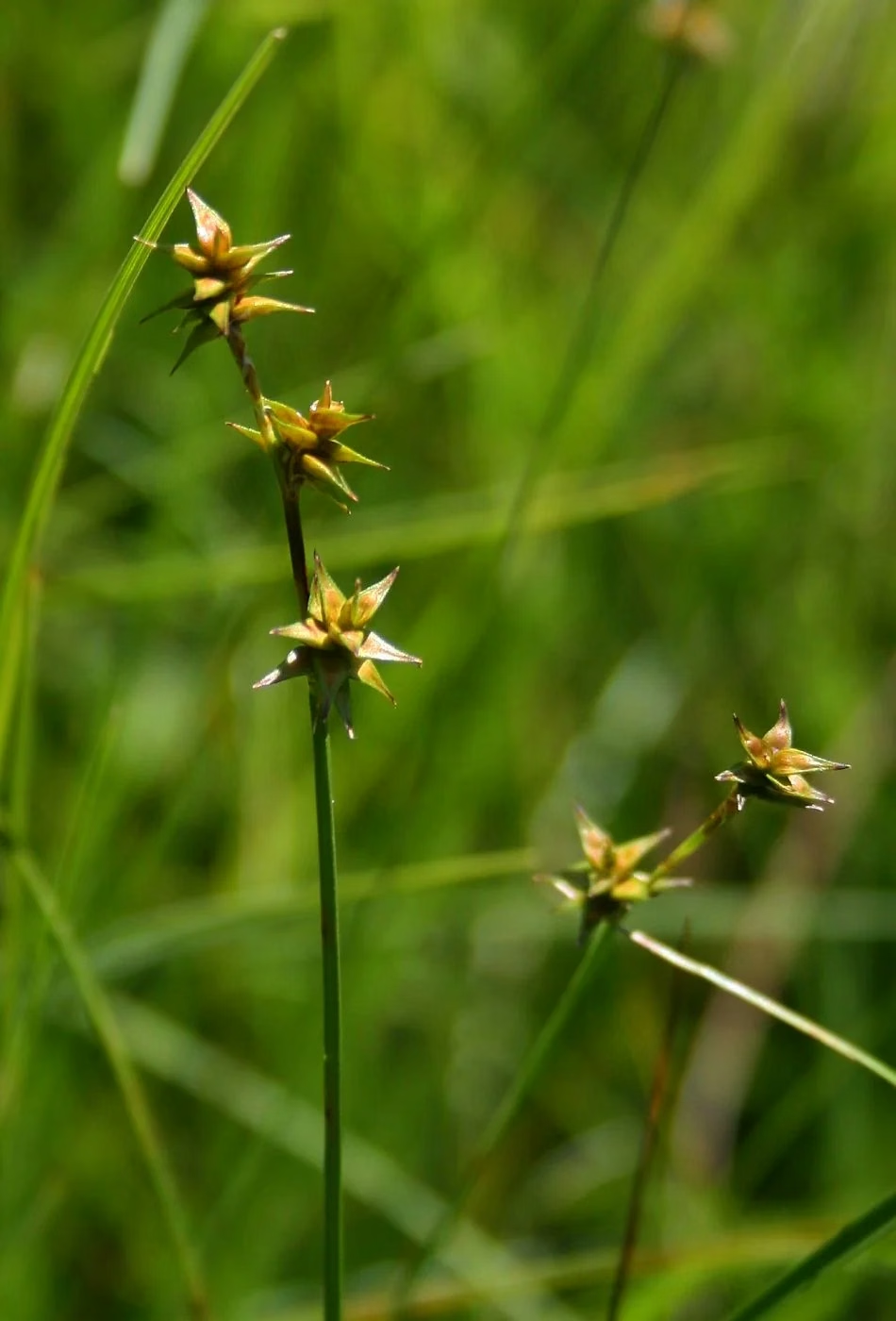
The slender spikes are 35-100 mm long. Their persistent glumes are much shorter than the light-green fruiting structures, which are 3.5-5 mm long.
Quick facts
| Scientific Name | Carex silvestris |
|---|---|
| Former name | Uncinia silvestris |
| Family | Cyperaceae |
| Stem height | 200-400 mm |
| Flowering | October to November |
| Fruiting | November to February |
| National status | Not Threatened (2023) |
| Height | Flowering stems 20-40 cm long; leaves can be slightly longer |
| Water Needs | Permanently moist soil; peat preferred, though other substrates are tolerated |
| Light | Semi-shade |
| Spread | Dense tufts; mature clump width is not specified |
| Frost Tolerance | Minimum tolerated temperature is not documented |
| Salt Tolerance | Salt tolerance is not documented |
| Growth Rate | Annual extension is not quantified in the cited accounts |
| Lifespan | Longevity in years is not documented |
Natural range
NZPCN records forest hook sedge from Pureora and the Kaimai Range south through the North Island, the South Island and Stewart Island/Rakiura. It occupies forest from lowland to upper montane elevations.
| City | Climate Suitability |
|---|---|
| Auckland | Not assessed |
| Wellington | Not assessed |
| Christchurch | Not assessed |
Habitat and distribution
This endemic sedge grows in lowland to upper montane forest and may be local within its range. NZPCN records it from the central North Island south through the South Island to Rakiura.
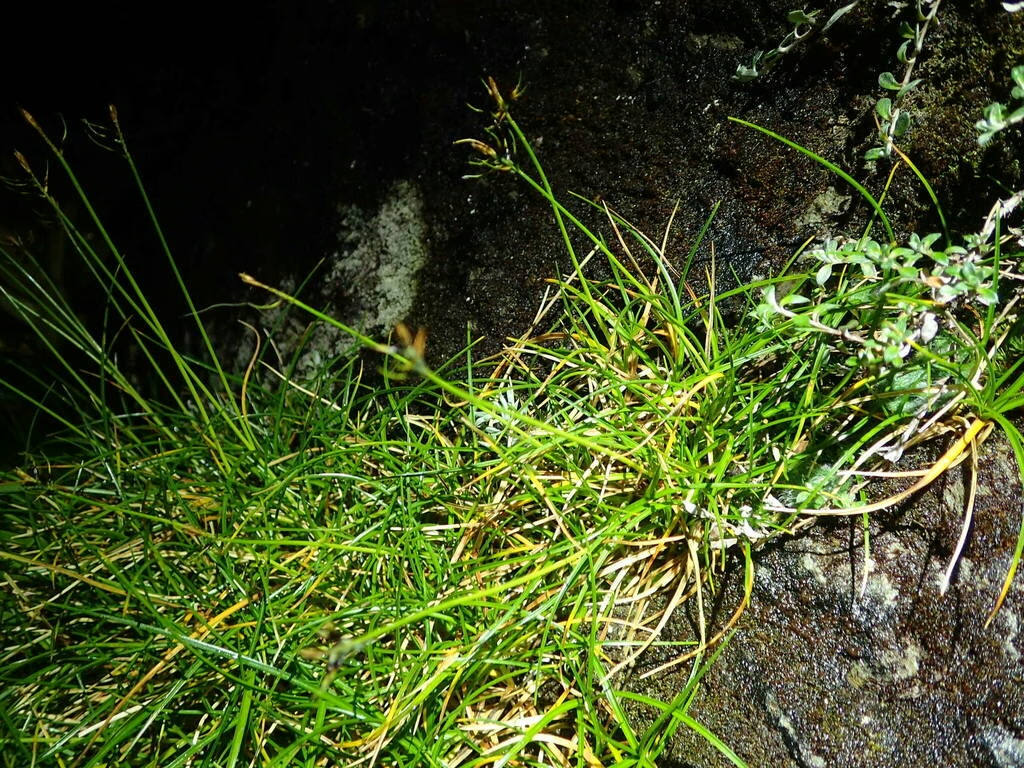
Its dense tufts, long-tapering leaves and slender flowering spikes are useful features to examine in the forest understory.
Growing conditions
NZPCN recommends semi-shade and says the plant prefers permanently moist, peaty soil, although it will grow in most substrates. These observations are specific to the forest hook sedge rather than a general rule for all Carex.
Planting
For cultivated plants, provide a semi-shaded place and keep the soil permanently moist, following NZPCN advice. The network describes peaty soil as preferred but reports that the sedge will grow in most substrates.
Ecology
The forest hook sedge has slender spikes carrying roughly ten to twenty female flowers. The spaces between flowers are longer toward the spike base, generally 3-5 mm, and shorter toward the top.
Observing the plant
Look for a densely tufted plant with bright-green leaves, hairless stems and a long narrow spike. The glumes remain on the spike and are conspicuously shorter than its fruiting structures, an important identification character.
Garden context
NZPCN recommends semi-shade and permanently moist soil for this forest species, with peat preferred. Its slender leaves can equal or exceed the flowering stems, giving a tuft a different outline from a stiffly upright sedge.
Flowering and fruiting
Flowering is recorded from October to November, followed by fruiting from November to February. The spike often has a leaflike bract considerably longer than the spike itself.
Growth form
Forest hook sedge forms dense tufts rather than the widely spreading stolons of Carex drucei. NZPCN does not give a species-specific pruning schedule; mature spikes retain characters useful for identification.
How to Grow Hook Sedge (Carex silvestris)
Fresh seed or division
NZ Plant Conservation Network records both fresh seed and division of established plants as straightforward ways to propagate Carex silvestris. The former name Uncinia silvestris remains useful when reading older collections or checking a nursery label. Its dense tufted habit and long, fine leaf tips are characteristic features of the parent plants.
Peaty Soil and Semi-Shade
The published preference is for permanently moist, peaty soil and semi-shade. Plants are also reported to grow in other substrates, so peat is a preference rather than the only material in which the species can grow. Its natural setting is lowland to upper-montane forest, where populations can be local. Those forest records support attention to shelter and continued moisture rather than treating it as an exposed, dry-ground tussock.
Leaf and stem dimensions
Bright-green leaves are roughly 0.5-2 mm wide and taper to very fine, thread-like tips. Each culm carries four or five leaves, which may equal or slightly exceed the 20-40 cm flowering stems. Roughness occurs along the margins and on the upper blade near the tip. The basal bracts are light cinnamon-brown or yellow-brown and lack a glossy finish.
Recognising the spike
A leafy bract can extend much farther than the narrow, 3.5-10 cm spike itself. Separating that bract from the actual inflorescence is useful when measuring a cultivated plant for identification. Flowering occurs in October and November and fruit is recorded from November to February. The fruiting utricles are approximately 3.5-5 mm long, while the glumes are considerably shorter and remain attached.
Plant health
The NZPCN profile does not list species-specific pest or disease treatments. Its basal bracts are naturally light cinnamon-brown or yellow-brown, while its fruiting structures are usually light green and only rarely greenish brown.
Naming and classification
The epithet silvestris means “of forests”, reflecting its habitat. The species was formerly called Uncinia silvestris; the accepted combination places it in the sedge genus Carex.
Distinguishing similar sedges
NZPCN distinguishes this species from other hook sedges with persistent glumes by its hairless stems and glumes much shorter than the fruiting structures. Compared with Carex egmontiana, its leaves are typically brighter green.
Other New Zealand sedges
Explore other New Zealand Carex species, including sedges of wetlands, forest margins and open ground.
Conservation
Carex silvestris is nationally Not Threatened in the 2023 assessment. NZPCN lists it as Regionally Data Deficient in Otago in 2025, and notes that its forest populations can be local.
Frequently asked questions
Is Uncinia silvestris the same plant?
Yes. NZPCN lists Uncinia silvestris as a synonym of Carex silvestris .
Where does it grow?
It grows in lowland to upper montane forest, from the central North Island south to Stewart Island/Rakiura.
Is the long leaf above the spike part of the flower head?
It can be a leaf-like bract extending beyond the spike. The actual narrow spike of Carex silvestris is about 3.5-10 cm long.
Sources
Botanical description, distribution, flowering, propagation and conservation status: NZPCN: Carex silvestris. Name history and the accepted scientific combination: New Zealand Organisms Register.
Taxonomy and New Zealand biostatus: Flora of New Zealand genus account.
Last updated: