Red Sheath Sedge
Carex erythrovaginata
Last updated:
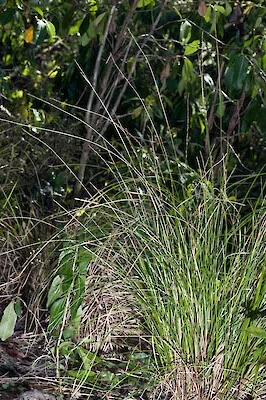
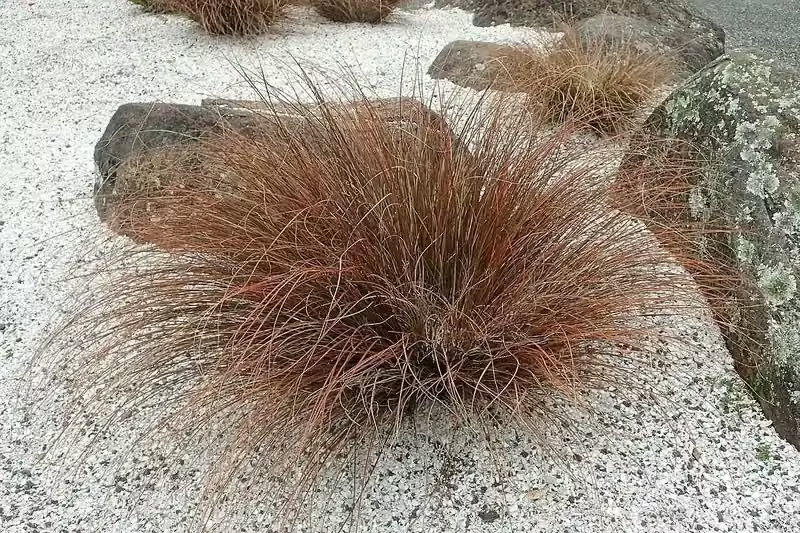
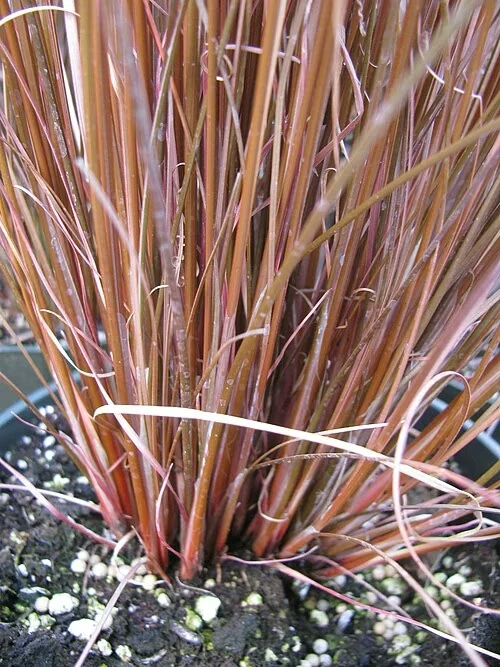
The Red Sheath Sedge (Carex erythrovaginata) is a tussock-forming native sedge that typically grows 30-60 cm tall. Its standout feature, giving rise to both common and scientific names, is the reddish to purple-brown leaf sheaths at the base, which contrast strikingly with the narrow bright-green leaves; slender arched culms carry small brownish flower spikes in spring and summer. It grows naturally in wetlands, swamp margins, damp forests and along stream banks throughout New Zealand, from sea level to around 1000 m, favouring permanently or seasonally wet soils. Frost hardy with a moderate growth rate and a lifespan of around 10-20 years, it forms attractive dense clumps for wetland and garden plantings. Explore more native grasses and flaxes in our native plant guide.
Plant Description
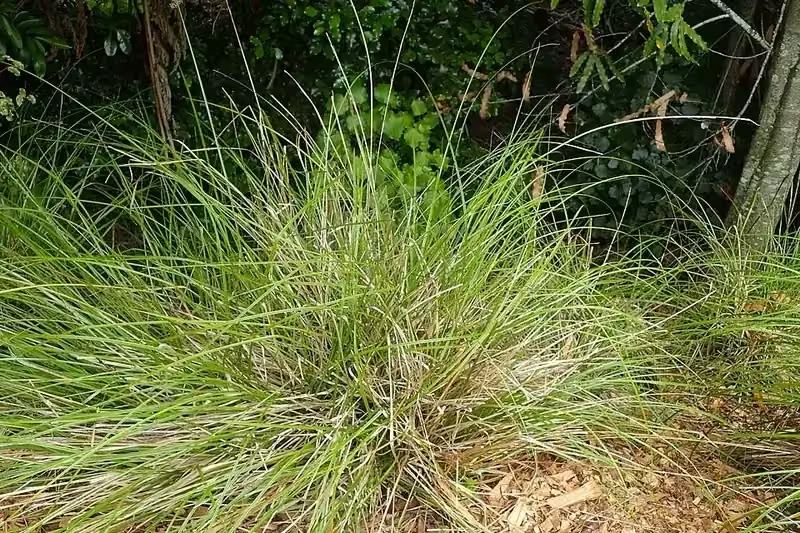
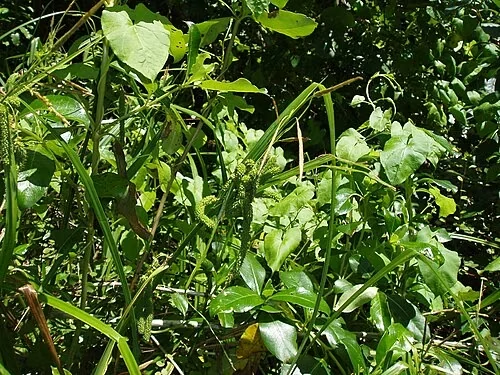
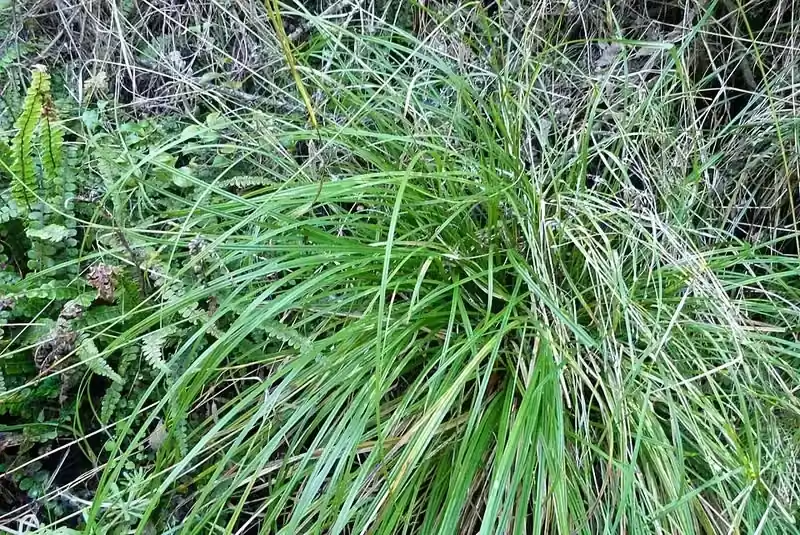
Carex erythrovaginata is a distinctive tussock-forming sedge that typically grows to 30-60 cm in height. The most notable feature of this species is its characteristic reddish or purple-brown leaf sheaths, from which it derives both its common and scientific names. The leaves are narrow, typically 2-4 mm wide, with a bright green colour that contrasts beautifully with the coloured bases. The flowering stems (culms) are slender and slightly arched, bearing small brownish flower spikes in spring and summer. This sedge forms dense clumps that gradually expand over time, creating attractive textural elements in wetland and garden settings.
Quick Facts
| Scientific Name | Carex erythrovaginata |
|---|---|
| Height | 30-60 cm |
| Spread | 40-60 cm |
| Water Needs | High - Prefers consistently moist to wet conditions |
| Light | Full sun to partial shade |
| Frost Tolerance | Hardy - Tolerates moderate to heavy frosts |
| Salt Tolerance | Low to moderate |
| Growth Rate | Moderate |
| Lifespan | 10-20 years |
Climate Best Suited to
Red Sheath Sedge thrives in temperate climates with adequate moisture throughout the year. It performs best in regions with cool to mild temperatures and reliable rainfall. While adaptable to various conditions, it shows optimal growth in areas that replicate its natural wetland habitats. This sedge tolerates both coastal and inland climates, though it prefers protection from hot, drying winds.
Regional Suitability
| City | Climate Suitability |
|---|---|
| Auckland | Excellent |
| Wellington | Excellent |
| Christchurch | Good - May need extra water in summer |
| Dunedin | Excellent |
| Hamilton | Excellent |
| Tauranga | Good |
| Nelson | Good - May need extra water in summer |
| Napier | Moderate - Requires regular watering |
| Palmerston North | Excellent |
| Invercargill | Excellent |
Plant Habitat
In its natural habitat, Carex erythrovaginata is found in wetlands, swamp margins, damp forests, and along stream banks throughout New Zealand. It typically occurs from sea level to about 1000 meters elevation. This sedge is particularly common in areas with permanently or seasonally wet soils, including seepages, spring-fed areas, and the margins of ponds and lakes. It often grows in association with other wetland plants such as rushes, other sedges, and native ferns, forming important components of wetland ecosystems that provide habitat for native birds and insects.
Growing Requirements
Soil Requirements
Red Sheath Sedge prefers soils that are consistently moist to wet, with good organic content. It tolerates a wide pH range from slightly acidic to slightly alkaline.
- Thrives in boggy or swampy soils
- Tolerates periodic flooding
- Benefits from organic-rich substrates
- Adapts to clay, loam, or peaty soils
Light Requirements
This sedge is adaptable to various light conditions, from full sun to partial shade, though it performs best with some direct sunlight.
- Full sun produces most vigorous growth
- Tolerates partial shade well
- Can grow in dappled forest light
- Avoid deep shade for best appearance
Water Requirements
As a wetland plant, Red Sheath Sedge requires consistently moist to wet conditions for optimal growth.
- Keep soil consistently moist
- Tolerates waterlogged conditions
- Can grow in shallow standing water
- Drought intolerant - avoid dry periods
Planting and Establishing
When planting Carex erythrovaginata , choose a site with naturally moist conditions or where regular irrigation can be provided. Plant in spring or autumn when soil moisture is naturally higher. Space plants 30-40 cm apart to allow for natural spreading. Dig planting holes slightly larger than the root ball and backfill with a mixture of the original soil and compost. Water thoroughly after planting and maintain consistent moisture during establishment. In dry areas, consider planting in bog gardens, rain gardens, or near water features. Mulch around plants to help retain soil moisture, but keep mulch away from the crown to prevent rot.
Ecological Role
Red Sheath Sedge plays a vital ecological role in New Zealand's wetland ecosystems. It provides important habitat and food sources for various native insects and birds. The dense tussocks offer shelter for small wetland creatures and nesting sites for ground-dwelling birds. The seeds are eaten by native birds, while the foliage provides food for caterpillars of native moths and butterflies. As a wetland plant, it helps filter water runoff, reducing nutrient loads entering waterways. The extensive root system stabilizes soil in wet areas, preventing erosion along stream banks and wetland margins. This sedge also contributes to the overall biodiversity of wetland habitats, forming part of the complex plant communities that support healthy ecosystem functioning.
Uses & Significance
Garden Uses
Red Sheath Sedge is valued in gardens for its attractive foliage and distinctive coloured leaf bases. It works excellently in various garden situations where moisture is available.
- Rain garden plantings
- Bog garden specimen
- Pond and water feature margins
- Wetland restoration projects
- Naturalistic garden borders
Ecological Value
This sedge provides multiple ecological benefits in both natural and designed landscapes.
- Stabilizes wet soil and prevents erosion
- Filters stormwater runoff
- Provides habitat for beneficial insects
- Food source for native birds
- Contributes to wetland biodiversity
Landscaping Uses
In landscape design, Carex erythrovaginata offers textural interest and natural beauty. It excels in rain gardens and bioswales where it helps manage stormwater while providing aesthetic appeal. The reddish leaf bases add subtle colour interest, particularly effective when backlit by morning or evening sun. Use it to soften the edges of ponds or streams, where its graceful foliage creates natural transitions between water and land. In mass plantings, it creates flowing drifts of fine-textured foliage that move gracefully in the breeze. Combine with other wetland plants like native rushes, ferns, and flowering perennials for diverse, ecologically functional plantings. It also works well in contemporary gardens as a structural element in mixed borders where adequate moisture can be provided.
Seasonal Care Calendar
Spring
Active growth period requiring attention to plant health and moisture levels.
- Remove old damaged foliage
- Apply organic mulch
- Divide congested clumps if needed
- Plant new specimens
Summer
Flowering period requiring consistent moisture to maintain plant vigor.
- Ensure adequate water supply
- Watch for pest issues
- Deadhead spent flowers if desired
- Monitor for signs of drought stress
Autumn
Seed maturation and preparation for winter dormancy.
- Collect seed if propagating
- Plant new specimens
- Reduce watering slightly
- Allow seed heads to remain for birds
Winter
Dormant period with minimal care requirements.
- Leave foliage for winter interest
- Protect from severe frost if needed
- Plan spring divisions
- Check drainage to prevent waterlogging
When to Prune and How Much
Red Sheath Sedge requires minimal pruning, mainly consisting of removing dead or damaged foliage to maintain appearance. The best time for major grooming is late winter to early spring, just before new growth begins.
- Remove dead leaves by pulling gently from the base
- Cut back damaged foliage to ground level
- Thin overcrowded clumps every 3-4 years
- Leave seed heads for winter interest and bird food
- Avoid cutting into the growing crown
When renovating old clumps, you can cut back all foliage to about 10 cm from ground level in early spring. This encourages fresh new growth but should only be done on well-established plants. Regular light grooming throughout the year keeps plants looking tidy without the need for major pruning.
How to Grow Red Sheath Sedge
Cultivating Red Sheath Sedge ( Carex erythrovaginata ) is a rewarding endeavor for any gardener interested in New Zealand's unique flora. This species can be propagated through several methods, each requiring specific conditions to ensure healthy growth and establishment. Successful propagation depends on mimicking the plant's natural environment and providing consistent care during the early stages of development.
From Seed
Propagation from seed is often the most effective way to produce a large number of Red Sheath Sedge plants. Seeds should be collected when they are fully mature. Freshly collected seeds generally have higher germination rates than those that have been stored for long periods.
Seeds of Carex erythrovaginata should be sown fresh for best results. Collect seeds when they turn brown and begin to fall naturally from the plant, typically in late summer to autumn.
- Sow seeds in trays filled with seed-raising mix kept constantly moist
- Cover seeds lightly with fine sand or vermiculite
- Place trays in a shaded area with consistent moisture
- Germination typically occurs within 3-6 weeks
- Transplant seedlings when they reach 5-8 cm tall
Keep young seedlings in consistently moist conditions and gradually acclimatize them to more sun exposure before planting out.
From Division
For those wishing to replicate specific characteristics of a parent plant, vegetative propagation via division is the preferred method. This technique ensures that the new plants are genetically identical to the source. Division is best undertaken in spring or autumn when plants are actively growing.
Division is the quickest and most reliable method for propagating Red Sheath Sedge, particularly for maintaining specific forms or characteristics.
- Lift established clumps carefully with a spade
- Shake off excess soil to expose the root structure
- Divide into sections with 3-5 growing points each
- Replant divisions immediately in moist soil
- Water thoroughly and maintain moisture until established
Additional Methods
Depending on the growth habit of Red Sheath Sedge, other methods such as tissue culture might also be viable options. Division is particularly suitable for plants that form dense clumps or have spreading root systems, while commercial production sometimes utilizes tissue culture for mass propagation.
While less common, rhizome cuttings can also be used for propagation, particularly when only small amounts of plant material are available.
- Select healthy rhizome sections with growing points
- Plant horizontally just below soil surface
- Keep consistently moist in a humid environment
- New shoots should appear within 4-6 weeks
- Transplant once well-rooted and showing vigorous growth
Pests & Diseases
Carex erythrovaginata is generally pest and disease resistant, making it a low-maintenance choice for gardens. Occasionally, aphids may appear on new growth in spring, but these rarely cause significant damage and can be controlled with a strong spray of water. In overly wet conditions with poor air circulation, fungal leaf spots may develop, appearing as brown or black spots on foliage. Improve air circulation and avoid overhead watering to prevent these issues. Slugs and snails may feed on young plants, particularly in very moist conditions. Use organic slug pellets or copper barriers if these become problematic. Root rot can occur in poorly drained soils, so ensure adequate drainage even though the plant prefers moist conditions. Regular division of congested clumps helps maintain plant vigor and reduces disease susceptibility.
Cultural Significance
While not as widely utilized as some other native sedges, Carex erythrovaginata has traditional uses in Māori culture. Various sedge species, known collectively as "pūrei" or similar names, were valued for their practical applications. The leaves of sedges were sometimes used in traditional weaving for certain items, though they were generally considered secondary to preferred materials like harakeke (flax).
- Used occasionally in traditional weaving practices
- Leaves sometimes employed for temporary thatching
- Part of wetland ecosystems important for mahinga kai (food gathering)
- Indicator species for water quality and wetland health
- Component of traditional wetland management practices
Bonus Tip
For the most striking display, plant Red Sheath Sedge where morning or evening light can backlight the foliage, highlighting the distinctive reddish leaf bases. The colour is particularly pronounced in cooler weather and with adequate moisture. Consider planting in groups of odd numbers (3, 5, or 7) for a natural appearance, and combine with other native wetland plants like Carex secta and Juncus edgariae for a diverse, textured wetland garden that provides year-round interest and ecological value.
Related Plants
Explore other native plants that share similar characteristics or habitats with Red Sheath Sedge ( Carex erythrovaginata ), offering further insights into New Zealand's diverse flora. These related species provide context and opportunities for complementary planting in your garden. For another native grass or sedge, explore Knob Sedge.


Plant Conservation
Carex erythrovaginata is currently listed as Not Threatened in New Zealand, with stable populations throughout its range. However, like many wetland plants, it faces ongoing habitat loss due to wetland drainage and modification. Conservation efforts focus on protecting remaining wetland habitats and restoring degraded areas. Home gardeners can contribute to conservation by including this species in rain gardens and wetland plantings, helping to maintain genetic diversity and providing stepping stones for wildlife movement. When sourcing plants, choose nursery-grown specimens from reputable suppliers who practice sustainable propagation. Avoid collecting from wild populations unless you have appropriate permits and are participating in approved conservation programs.
Frequently Asked Questions
How tall does the Red Sheath Sedge grow?
Carex erythrovaginata typically grows 30-60 cm tall with a spread of 40-60 cm.
Why is it called the Red Sheath Sedge?
It has distinctive reddish to purple-brown leaf sheaths at the base of its bright-green leaves.
Where does Carex erythrovaginata grow naturally?
It grows in wetlands, swamp margins, damp forests and stream banks throughout New Zealand up to about 1000 m.
Is the Red Sheath Sedge frost hardy?
Yes, it is hardy and tolerates moderate to heavy frosts in consistently moist soils.
Sources and Further Reading
The botanical, growing, and conservation details for Red Sheath Sedge (Carex erythrovaginata) on this page draw on authoritative New Zealand plant references and citizen-science observation records. Consult the sources below for full technical records and the latest distribution data.