Hook Sedge
Carex cheesemaniana
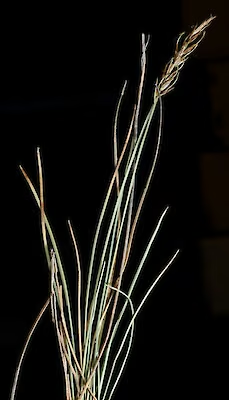
Carex cheesemaniana is a fine-leaved hook sedge native to New Zealand and Tasmania. In New Zealand it grows on wet ground and in bogs in mountain forest and snow-tussock grassland.
Identification
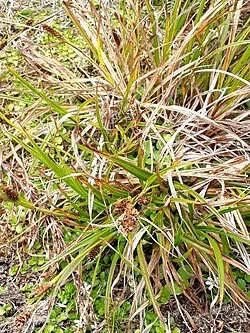
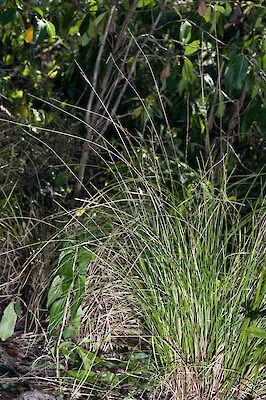
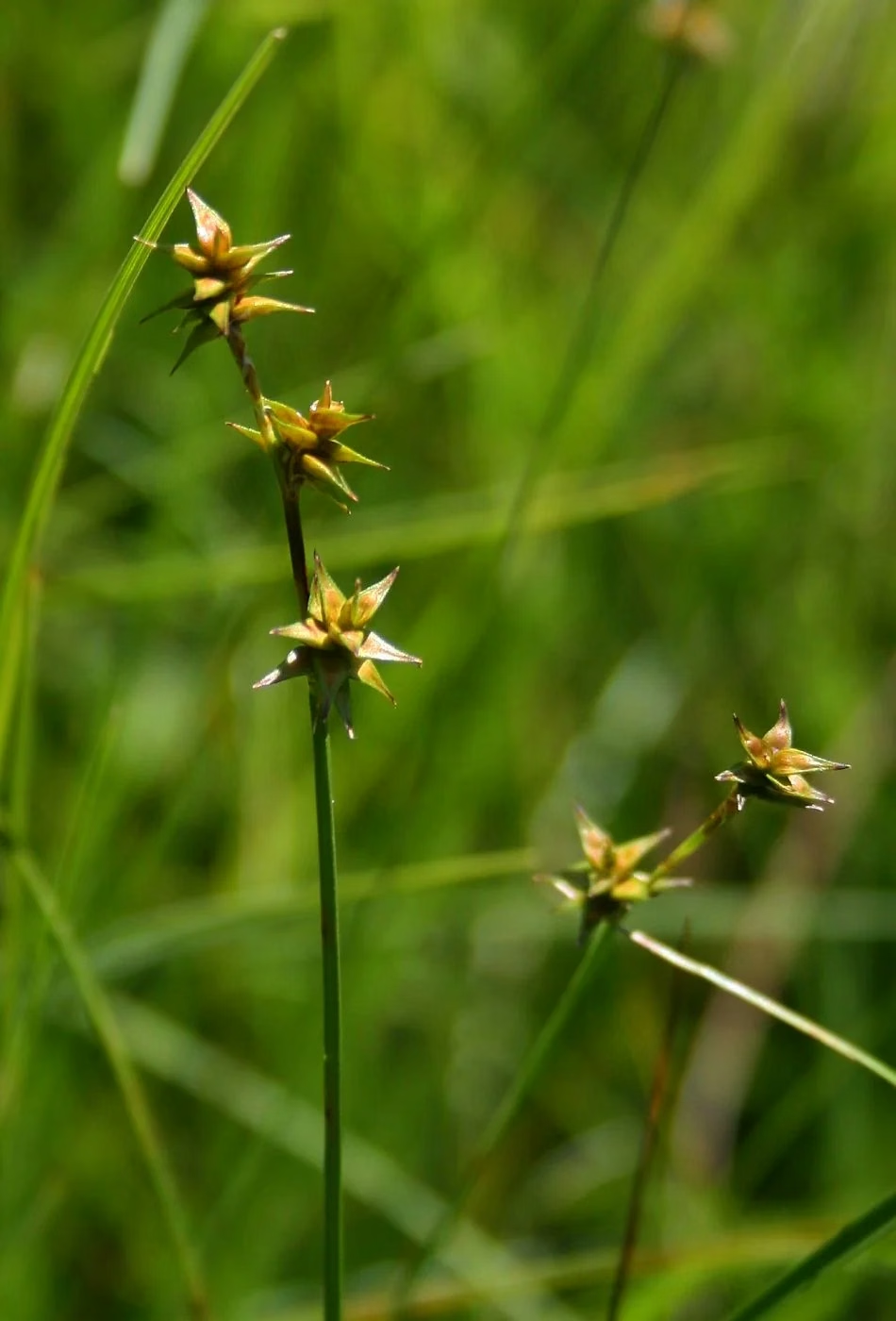
Plants form loose or dense tufts, with bright to dark green foliage. The rigid leaves are only about half a millimetre wide, with rough margins and blunt tips. Smooth stems are 10-30 cm long, bearing short oblong spikes; the shiny greenish-brown to dark-brown utricles are approximately 4-6 mm long.
Quick facts
| Scientific Name | Carex cheesemaniana (Boeckeler) K.A.Ford |
|---|---|
| Earlier name | Uncinia nervosa |
| Common names | Hook sedge; bastard grass |
| Family | Cyperaceae |
| Origin | Native to New Zealand and Tasmania |
| Habitat | Wet montane forest and snow-tussock bogs |
| Flowering | November to January |
| Fruiting | December to March |
| National status | Not Threatened (2023) |
| Height | Flowering stems 10-30 cm long; leaves much shorter |
| Water Needs | Cool, damp ground; established plants tolerate drought |
| Light | Semi-shade |
| Spread | Loose or dense tufts; mature clump width is not specified |
| Frost Tolerance | Minimum tolerated temperature is not documented |
| Salt Tolerance | Salt tolerance is not documented |
| Growth Rate | Annual extension is not quantified in the cited accounts |
| Lifespan | Longevity in years is not documented |
Natural range
NZPCN records this sedge from the South Island and Tasmania, so it is indigenous but not endemic to New Zealand. A 2025 Wellington regional assessment also lists it, indicating that regional records extend beyond the range summarised in that profile.
| City | Climate Suitability |
|---|---|
| Auckland | Not assessed |
| Wellington | Not assessed |
| Christchurch | Not assessed |
Habitat
It occurs locally on wet ground and in bogs, in montane forest or in subalpine and alpine Chionochloa snow-tussock grassland. NZPCN describes populations as local to locally common in these habitats.
Growing conditions
NZPCN recommends cool, damp ground and semi-shade for cultivation. Its account reports that established plants tolerate drought, even though the species is naturally associated with wet ground and mountain bogs.
Planting considerations
Allow for a tufted sedge with very fine rigid leaves and stems 10-30 cm long. NZPCN suggests cool, damp conditions and semi-shade, while its natural habitats include wet mountain forest and snow-tussock bogs.
Wetland association
The revised New Zealand wetland plant list classifies this sedge as facultative wetland: usually associated with wet sites but occasionally found outside them. It grows in bogs and wet ground among mountain forest or snow tussock.
Field identification
Examine the rigid, very narrow leaves and short oblong spikes. The fruiting utricles are glossy, narrow and three-angled, with prominent lateral veins; these small details help separate it from other hook sedges.
Garden context
This small sedge offers a fine-textured tuft rather than the broad foliage of larger Carex. NZPCN reports good results in semi-shade and a preference for cool, damp ground, with greater drought tolerance after establishment.
Flowering and fruiting
NZPCN records flowering from November to January and fruiting from December to March. Each short spike has roughly two to twelve female flowers, and the glossy utricles mature from greenish brown to dark brown.
Growth form
Leaves arise in tufts, typically four to six per flowering stem. The leaf margins are naturally rough, and the basal bracts dull grey-brown. The cited species account does not prescribe a pruning schedule.
How to Grow Hook Sedge (Carex cheesemaniana)
Fresh seed
NZ Plant Conservation Network records fresh seed as a straightforward way to raise this sedge. The fruiting season is December to March, overlapping flowering in early summer. Its short spikes carry only a small number of female flowers, so they differ noticeably from the much denser heads of some larger sedges. Fruiting utricles become glossy greenish brown to dark brown.
Division
Division of whole plants is the other documented propagation route. This species forms either loose or dense tufts, with four to six leaves associated with each flowering stem. Retaining its identity through division is useful where a nursery label still uses the older name Uncinia nervosa.
Moisture and shade
The cultivation recommendation is cool, damp ground in semi-shade. Established plants are reported to tolerate drought; that observation refers to settled plants and does not establish a dry-soil germination method. The distinction matters because the natural populations occur in wet mountain ground and bogs, including sites in forest and snow-tussock grassland.
Allowing for the mature plant
Flowering stems measure 10-30 cm, while the rigid leaves are extremely narrow, about half a millimetre across. Mature stems extend well beyond the foliage. The plant therefore presents a small fine-leaved tuft with taller fruiting stems, rather than the broad leaves or large arching canopy associated with some garden Carex. Its natural range includes Tasmania as well as New Zealand, so a nursery description should identify the species rather than describing it as a New Zealand endemic.
Plant health
The sedge naturally has rough leaf margins and darkening fruiting utricles. Those features are part of its botanical description; the cited NZPCN profile does not list a species-specific pest or disease treatment.
Names and classification
Uncinia nervosa is an earlier name for this sedge. NZPCN and NZOR use the spelling Carex cheesemaniana, while the original combination appeared with a double m; NZPCN explains its spelling correction in the taxonomic notes.
Look closely at the spike
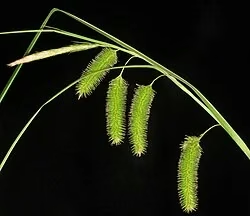
The spike is usually 15-30 mm long, with a small number of female flowers. The narrow, shiny utricles have prominent side veins and a distinct short stalk and beak, useful features under magnification.
Other New Zealand sedges
Explore other New Zealand Carex species, including sedges of wetlands, forest margins and open ground.
Conservation
The 2023 assessment lists Carex cheesemaniana as nationally Not Threatened. NZPCN also lists the 2025 Otago regional assessment as Data Deficient, reflecting the difference between national and regional knowledge.
Frequently asked questions
Is Uncinia nervosa the same sedge?
Yes. NZOR and NZPCN list Uncinia nervosa as an earlier name for Carex cheesemaniana.
Does it occur outside New Zealand?
It is also native to Tasmania. Its indigenous status in New Zealand therefore differs from that of an endemic confined to this country.
How tall are the flowering stems?
The smooth flowering stems are 10-30 cm long. Leaves remain shorter than the mature stems and are only about 0.5 mm wide.
Sources
Identification, habitat, flowering, propagation and conservation: NZPCN. Names and synonymy: New Zealand Organisms Register.
Wetland classification: New Zealand Wetland Plant List 2021.
Taxonomy and New Zealand biostatus: Flora of New Zealand species account.
Last updated: