Fiordland Sedge
Carex pleiostachys
Last updated:
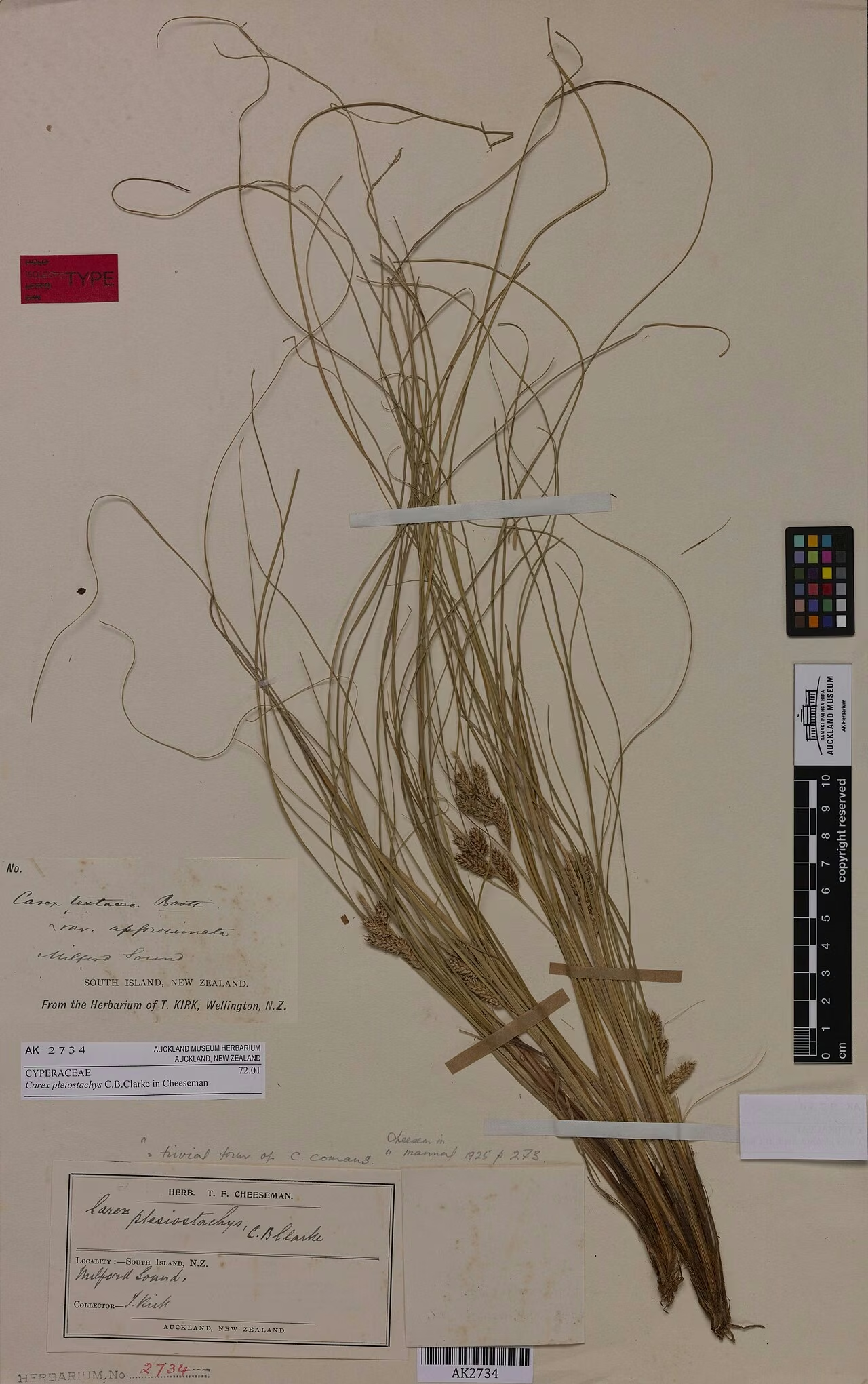
Fiordland sedge (Carex pleiostachys) is a small tufted sedge endemic to New Zealand and found only along the Fiordland coastline of the South Island. It forms dense, leafy, pale green tufts up to about 40 cm high, with leaves that are longer than the slender flowering stems and curve at their tips. It is a conspicuous plant of seal haul-outs and seal and penguin colonies, and also grows on cobble and sand beaches, cliff faces and river-mouth shingle. It is ranked At Risk - Naturally Uncommon because of its very limited range, although it can be locally abundant. Explore more native grasses and flaxes in our native plant guide.
Plant Description
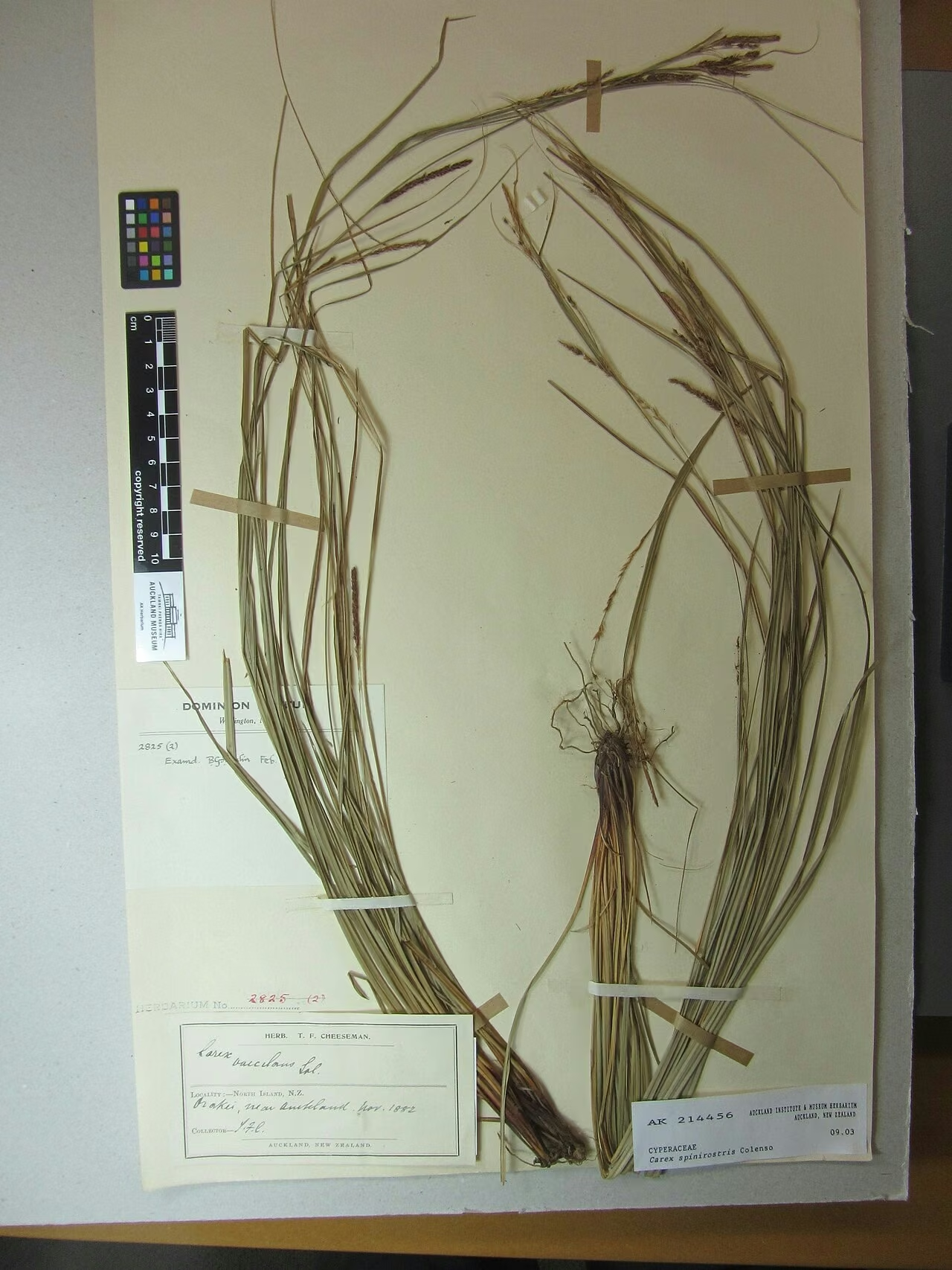
Carex pleiostachys forms dense, leafy, pale green tufts. The culms (flowering stems) are 100 to 300 mm long and only 0.5 to 1 mm thick, round in cross-section and smooth, with light brown to reddish brown sheaths at their bases. The leaves are distinctly longer than the culms, 1 to 1.5 mm wide, usually concave on the upper surface, with finely toothed margins and tips that curve over.
Each culm carries 5 to 7 spikes, each 10 to 20 mm long and 4 to 7 mm wide. The terminal spike is male and the rest are female, with the lowest spike stalked. The utricles (the sac around each seed) are 3 to 4 mm long, narrow-lanceolate and somewhat three-sided, with a smooth beak and a short stalk about 0.5 mm long. Each contains a dark brown, three-angled nut about 2 mm long, and the flowers have three stigmas.
The species belongs to the group of fine-leaved tufted sedges that includes Carex comans and Carex fretalis. It is separated from C. comans by its broader spikes and hairless beaks, and from C. fretalis by its crowded spikes and the shape of the utricle beak.
Quick Facts
| Scientific Name | Carex pleiostachys |
|---|---|
| Height | Up to 0.4 m |
| Spread | Dense tufts about 0.2-0.3 m across |
| Water Needs | Moist; grows in damp coastal sites |
| Light | Full sun to light shade |
| Frost Tolerance | Moderate; mild, wet coastal climate |
| Salt Tolerance | High; grows on the open coast within reach of salt spray |
| Growth Rate | Not recorded; untested in cultivation |
| Lifespan | Perennial |
Climate Best Suited to
Suits the cool, very wet, windy and frost-mild coastal climate of Fiordland. Its performance in drier or warmer climates has not been tested because it has not been cultivated.
Regional Suitability
| City | Climate Suitability |
|---|---|
| Auckland | Low |
| Wellington | Medium |
| Christchurch | Low |
| Dunedin | Medium |
Plant Habitat
Carex pleiostachys is endemic to the South Island and is known only from the Fiordland coastline. Because the coast is so remote and difficult to access, its full distribution is poorly known.
It is a coastal plant, conspicuous at seal haul-outs and in seal and penguin colonies, where the ground is enriched by the animals. It also grows in peaty soil beneath low shrubs, on open cobble and sand beaches, on cliff faces and on the shingle at various river mouths.
Growing Requirements
Soil Requirements
In the wild it grows in peaty soils, cobbles, sand and river-mouth shingle, often enriched by nutrients from seals and penguins.
- Moist, free-draining coastal soil, sand or gravel
- Tolerates nutrient-rich ground around animal colonies
- NZPCN suggests it would likely tolerate most soils if kept moist
Light Requirements
It grows both on open beaches and cliffs and in the light shade of low coastal shrubs.
- Full sun on open coastal sites
- Light shade beneath low shrubs
Water Requirements
Fiordland is one of the wettest parts of New Zealand, and the plant is adapted to constant moisture rather than drought.
- Plant in soil that stays moist year round
- Water through dry spells in cultivation
Planting and Establishing
Carex pleiostachys has not yet been brought into cultivation, so there is no nursery supply and no tested planting guide. NZPCN suggests it would probably be easy to grow and tolerant of most conditions, provided it is planted in moist soil.
Anyone growing it for conservation or study should source material legally, plant into a moist, open position, and treat it like other small coastal tufted sedges, spacing plants about 30 cm apart.
Ecological Role
This sedge is a characteristic plant of the disturbed, nutrient-enriched ground around seal haul-outs and penguin colonies on the Fiordland coast, where it can form part of the low vegetation tolerant of trampling and animal activity.
Like other Carex, its flowers are wind-pollinated. Its specific seed dispersers and associated insects have not been documented in the sources consulted.
Uses & Significance
Garden Uses
It has no current garden role because it is not in cultivation. If material became available it would suit a moist coastal or rock garden setting.
- Conservation collections of Fiordland coastal flora
- Potential small sedge for moist coastal gardens
- Educational plantings about seal and penguin colony vegetation
Ecological Value
It is part of the distinctive vegetation of Fiordland's seal and penguin colonies, a habitat found nowhere else in such remote condition.
- Endemic to a single coastline
- Binds sand, cobble and shingle on exposed shores
- Contributes to habitat around Fiordland penguin and fur seal sites
Landscaping Uses
No landscaping use is recorded. In principle its fine, arching pale green foliage would suit small-scale coastal plantings among rocks or gravel, much as other fine-leaved Carex are used.
Until it is propagated from legally collected seed, gardeners wanting a similar effect should use widely grown fine-leaved native sedges from nursery stock.
Seasonal Care Calendar
Spring
Growth resumes as the coastal weather warms. Flowering times for this species have not been recorded.
- Note any flowering seen in the wild, as records are lacking
- Keep cultivated plants moist
Summer
Summer is the main growing season on the Fiordland coast.
- Water cultivated plants in dry spells
- Avoid disturbing wild plants at colonies
Autumn
Seed is likely to ripen in summer or autumn, though fruiting times are listed as not known.
- Collect seed only from cultivated plants
- Check for ripe brown nuts in the utricles
Winter
Tufts persist through the mild but stormy Fiordland winter.
- No action needed
- Protect pot-grown plants from waterlogging
When to Prune and How Much
Pruning is not required. If a cultivated tuft becomes untidy, comb out dead leaves by hand in late winter rather than cutting the whole plant back.
Leave old flowering stems until seed has been shed if you want to collect it.
How to Grow Fiordland Sedge
NZPCN states that Carex pleiostachys has yet to be cultivated, so there is no published propagation record for this species. It notes that the plant would probably be easy to grow and tolerant of most conditions if kept in moist soil. The methods below are the standard approaches that work for closely related tufted Carex such as Carex comans, adapted for a coastal species, and should be treated as a starting point rather than a proven protocol. Only use seed or plants obtained legally, because the species is naturally uncommon and grows mostly within Fiordland National Park.
From Seed
Most Carex germinate well from fresh seed, which is a hard nut held inside the utricle. Sow it soon after collection, as stored sedge seed often loses vigour.
- Collect brown, ripe spikes from a legally held plant
- Rub the utricles to free the nuts, or sow the whole utricles
- Sow on the surface of a moist seed mix and cover lightly with fine grit
- Keep the tray moist and in good light; germination usually follows within weeks
- Prick out seedlings into small pots once they have several leaves
By Division
Established tufts of most sedges can be lifted and split into smaller clumps, each with roots and several shoots. This gives a faster result than seed.
- Lift a mature cultivated tuft in spring
- Pull or cut it into pieces with roots and three or more shoots
- Trim long leaves by half to reduce water loss
- Pot into a moist, free-draining mix and keep damp until new growth appears
Pests & Diseases
No pests or diseases are recorded for this species. Sedges in general are rarely troubled by pests in cultivation, though pot-grown plants can suffer from aphids or root rot if kept too wet and airless.
In the wild, the main pressure is likely to be natural disturbance around animal colonies rather than introduced pests, but this has not been studied.
Cultural Significance
No traditional Māori name or use is recorded for Carex pleiostachys in the sources consulted.
The name pleiostachys combines Greek words meaning many spikes, a reference to its 5 to 7 spikes per stem, and Carex is the Latin name for a sedge. Its remote coastal home means it has been collected only occasionally, and much remains not known about its life cycle.
Bonus Tip
If you are on a Fiordland boat trip or coastal expedition, look for pale green sedge tufts on the ground around fur seal haul-outs and penguin landing sites, keeping your legal distance from the wildlife. Photographs with a location and date posted to iNaturalist NZ would help fill gaps in what is known about its distribution and flowering time.
Related Plants
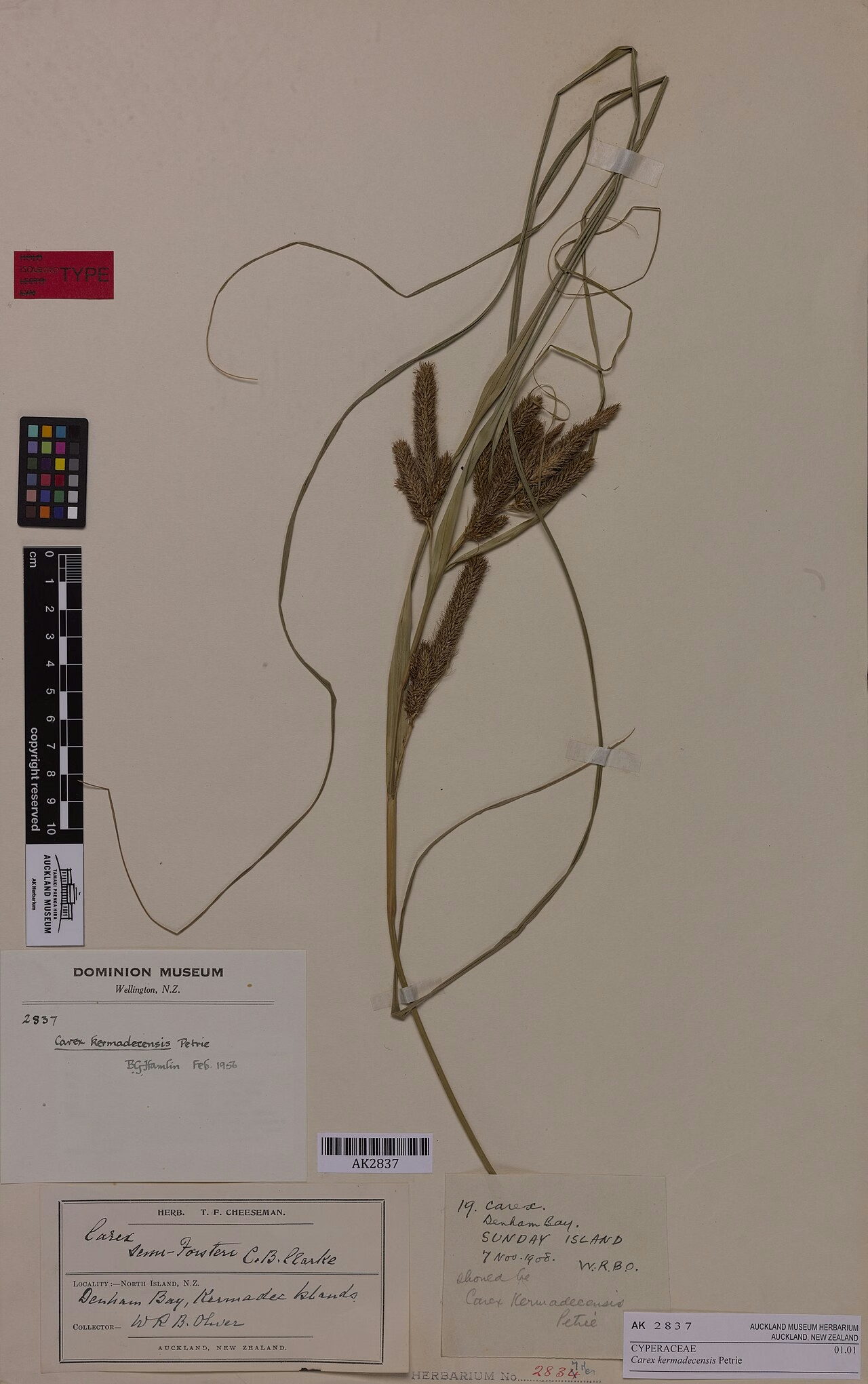
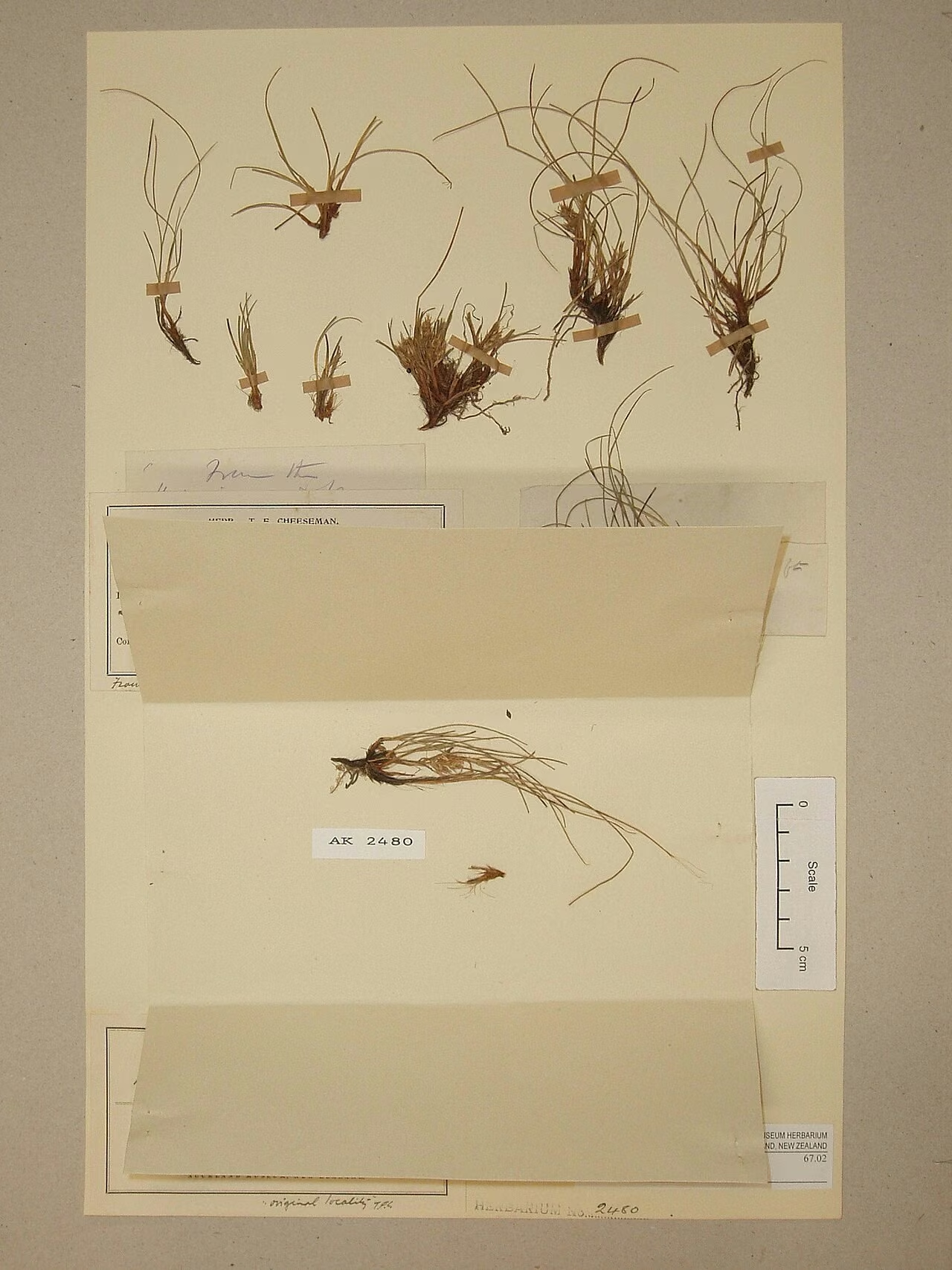
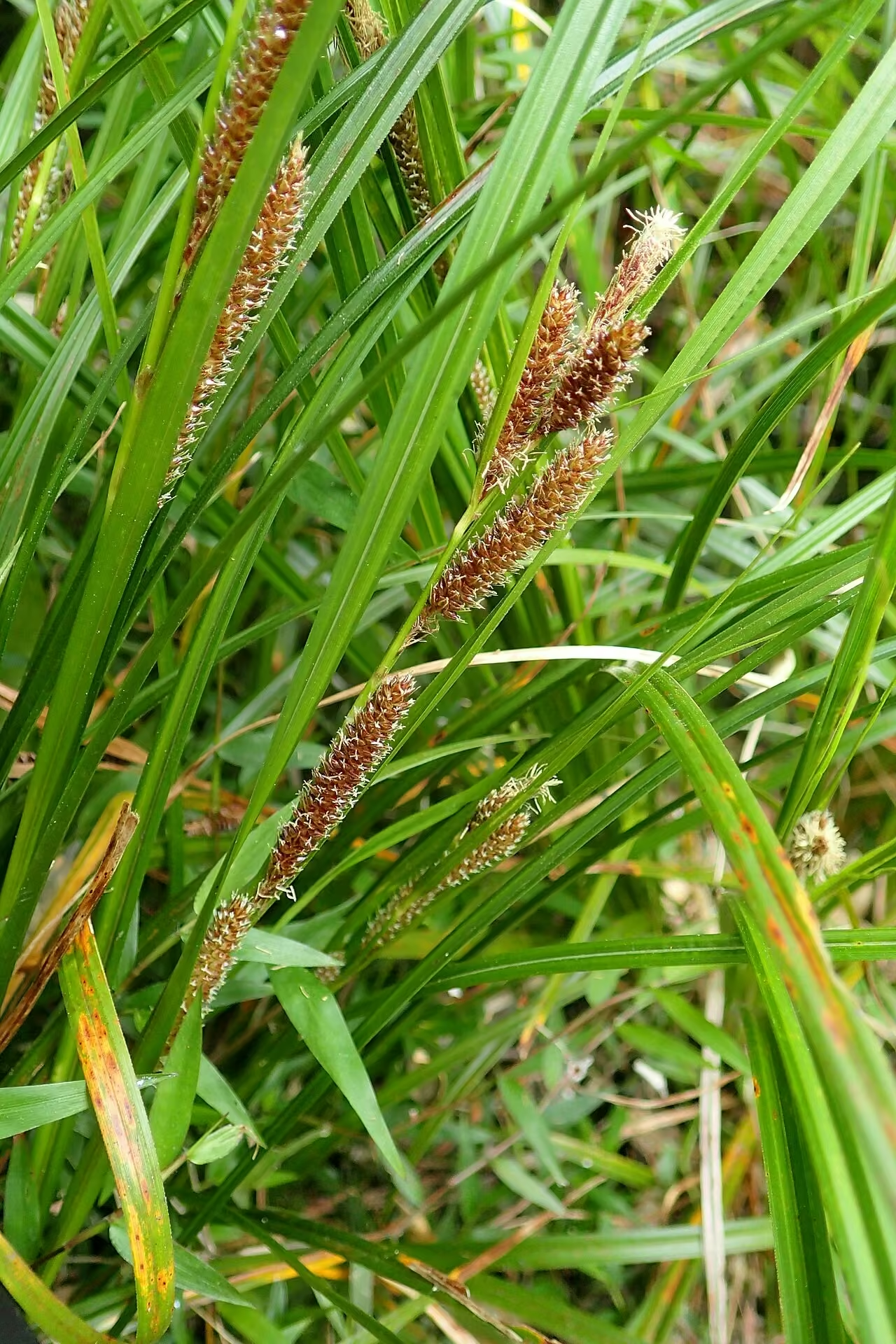
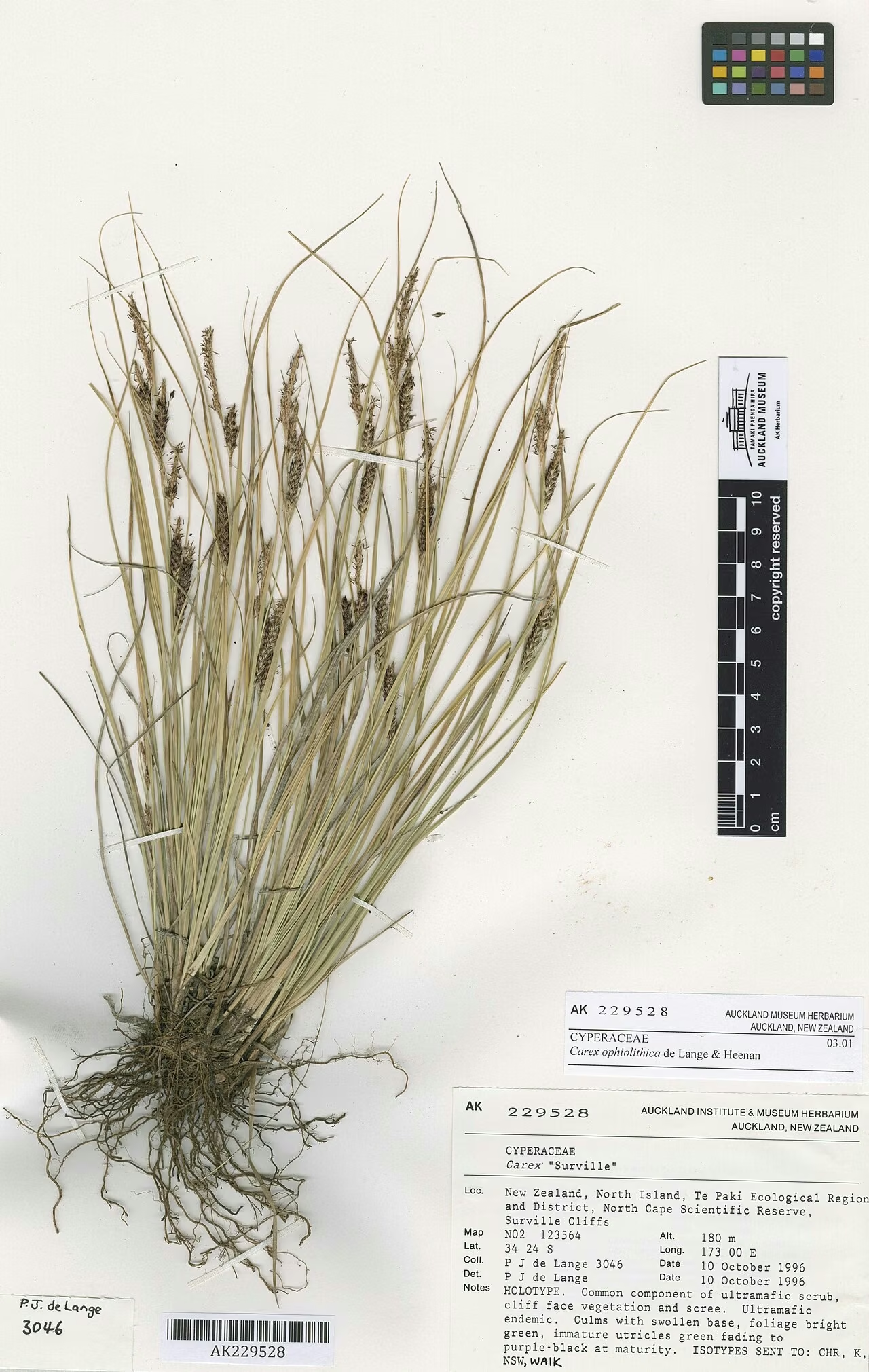
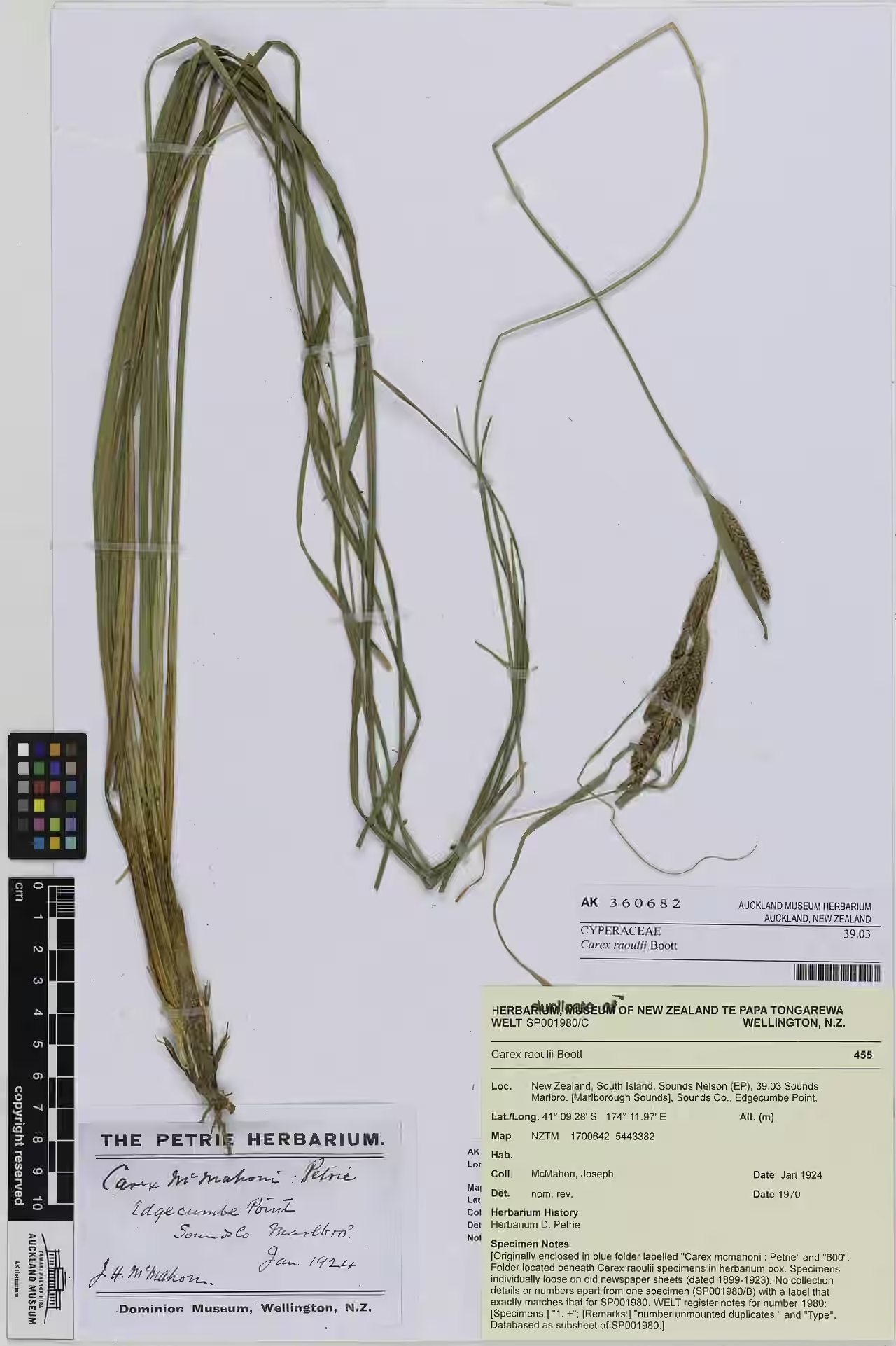
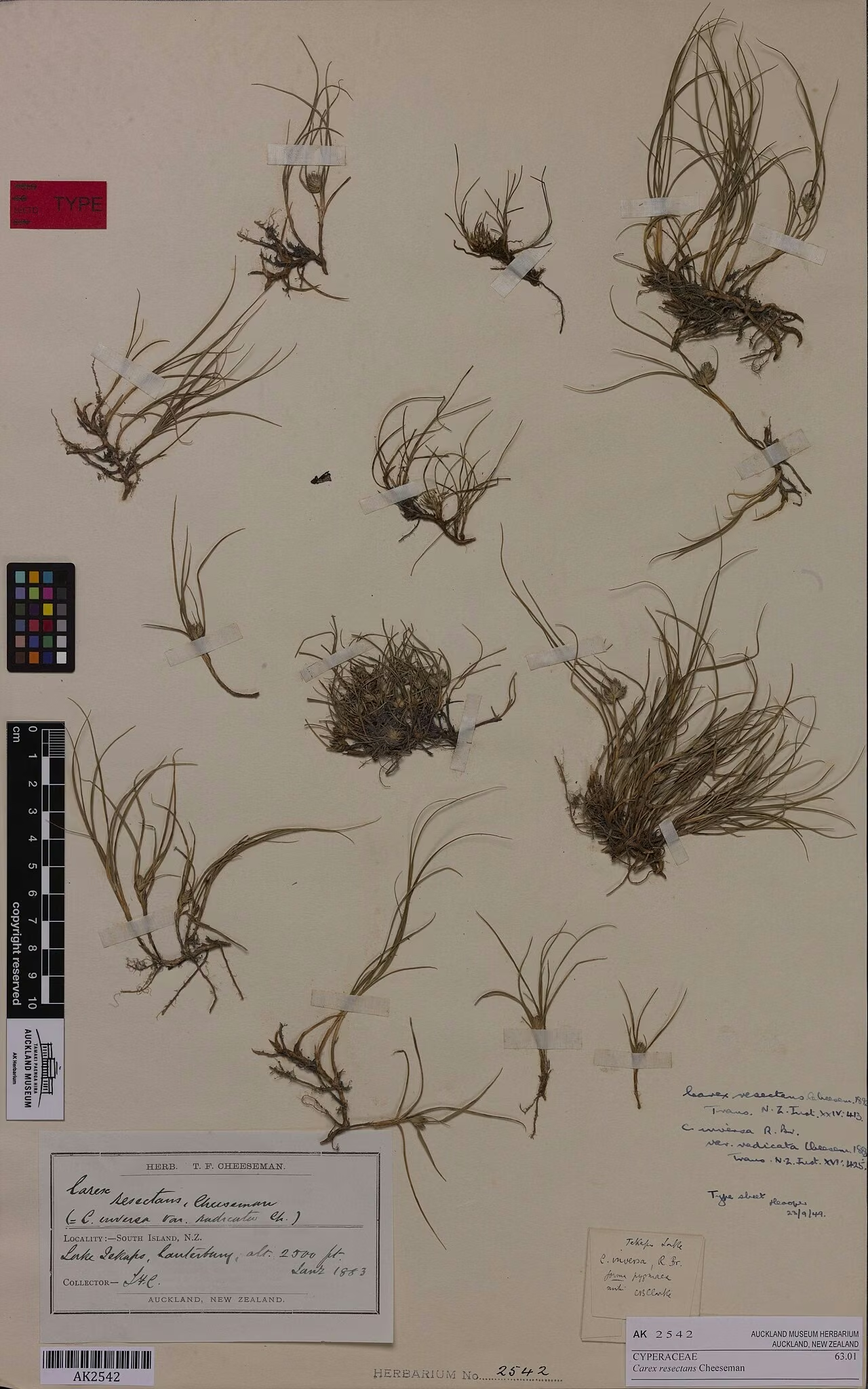
Explore other native plants that share similar characteristics or habitats with Fiordland Sedge (Carex pleiostachys), offering further insights into New Zealand's diverse flora. These related species provide context and opportunities for complementary planting in your garden.
Plant Conservation
Carex pleiostachys is ranked At Risk - Naturally Uncommon (2023) with the qualifiers Sparse, Data Poor Size, Data Poor Trend and Range Restricted. Its rarity reflects a naturally small range on a remote coast rather than known decline, but the lack of survey data means trends are not understood.
Most of its habitat lies within Fiordland National Park. Further survey work, and keeping introduced weeds and disturbance away from coastal seal and penguin sites, are the most useful actions for its conservation.
Frequently Asked Questions
Where does Fiordland sedge grow?
Carex pleiostachys is known only from the Fiordland coastline, where it grows around seal haul-outs, seal and penguin colonies, on beaches, cliff faces and the shingle of river mouths.
Is Carex pleiostachys rare?
It is ranked At Risk - Naturally Uncommon (2023) because its range is restricted to the remote Fiordland coast, but NZPCN notes it is locally abundant along some parts of that coastline.
How do you tell Carex pleiostachys from Carex comans?
Compared with Carex comans it has broader spikes and smooth, hairless utricle beaks. It also differs from Carex fretalis by its closely spaced spikes and distinctive utricle beak.
Sources and Further Reading
The botanical, growing, and conservation details for Fiordland Sedge (Carex pleiostachys) on this page draw on the New Zealand plant references below. Consult them for full technical records and the latest distribution data.